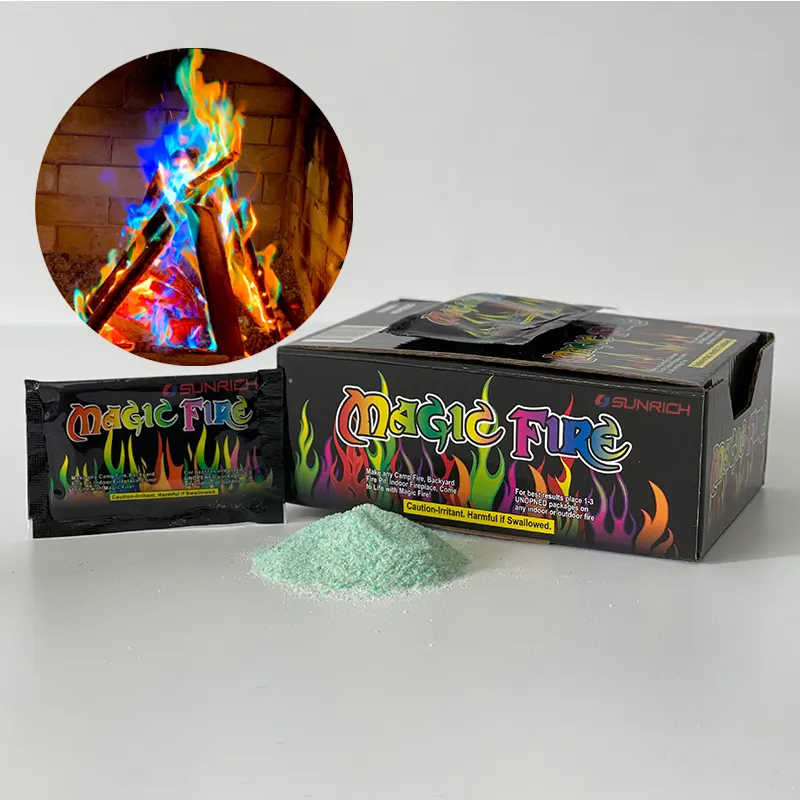
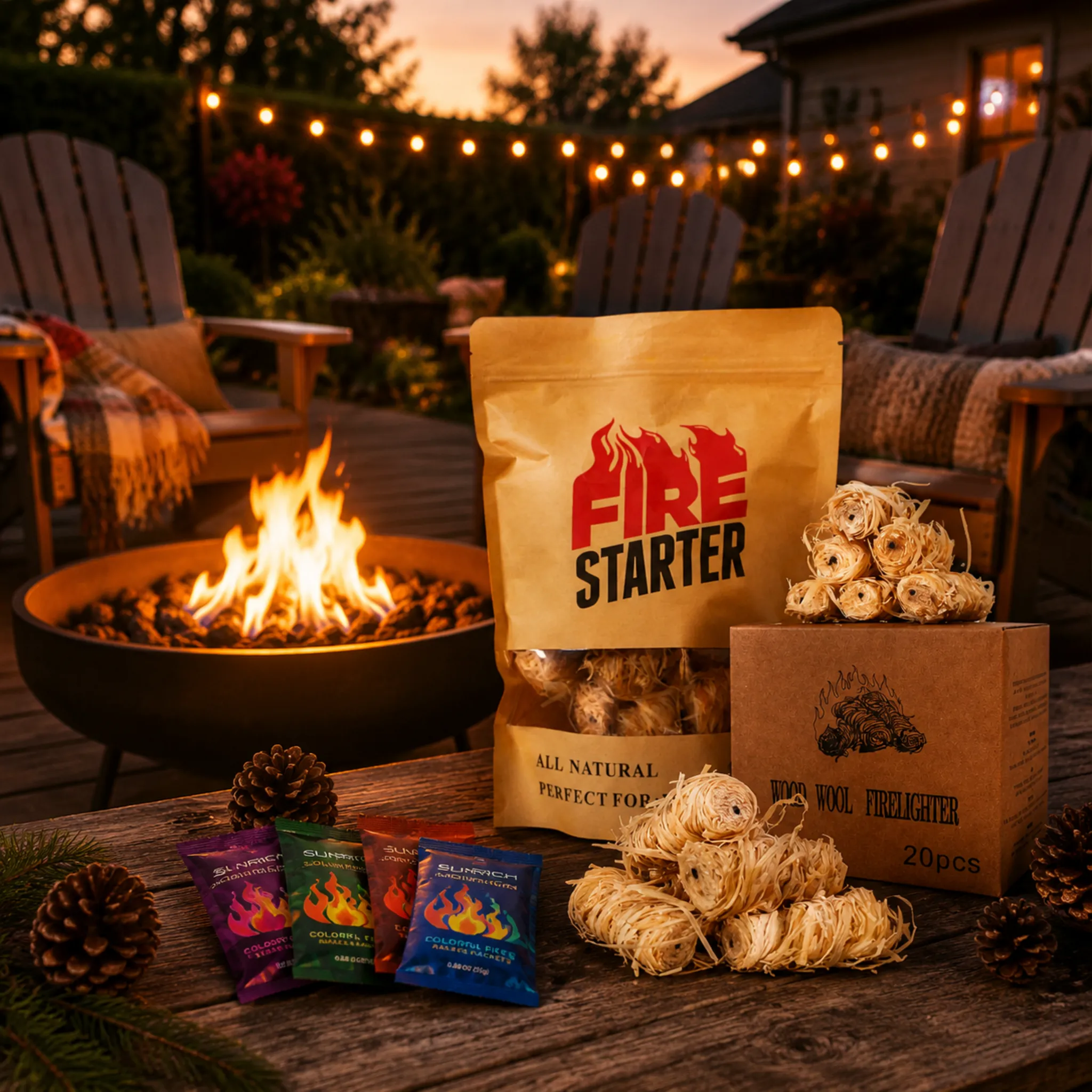
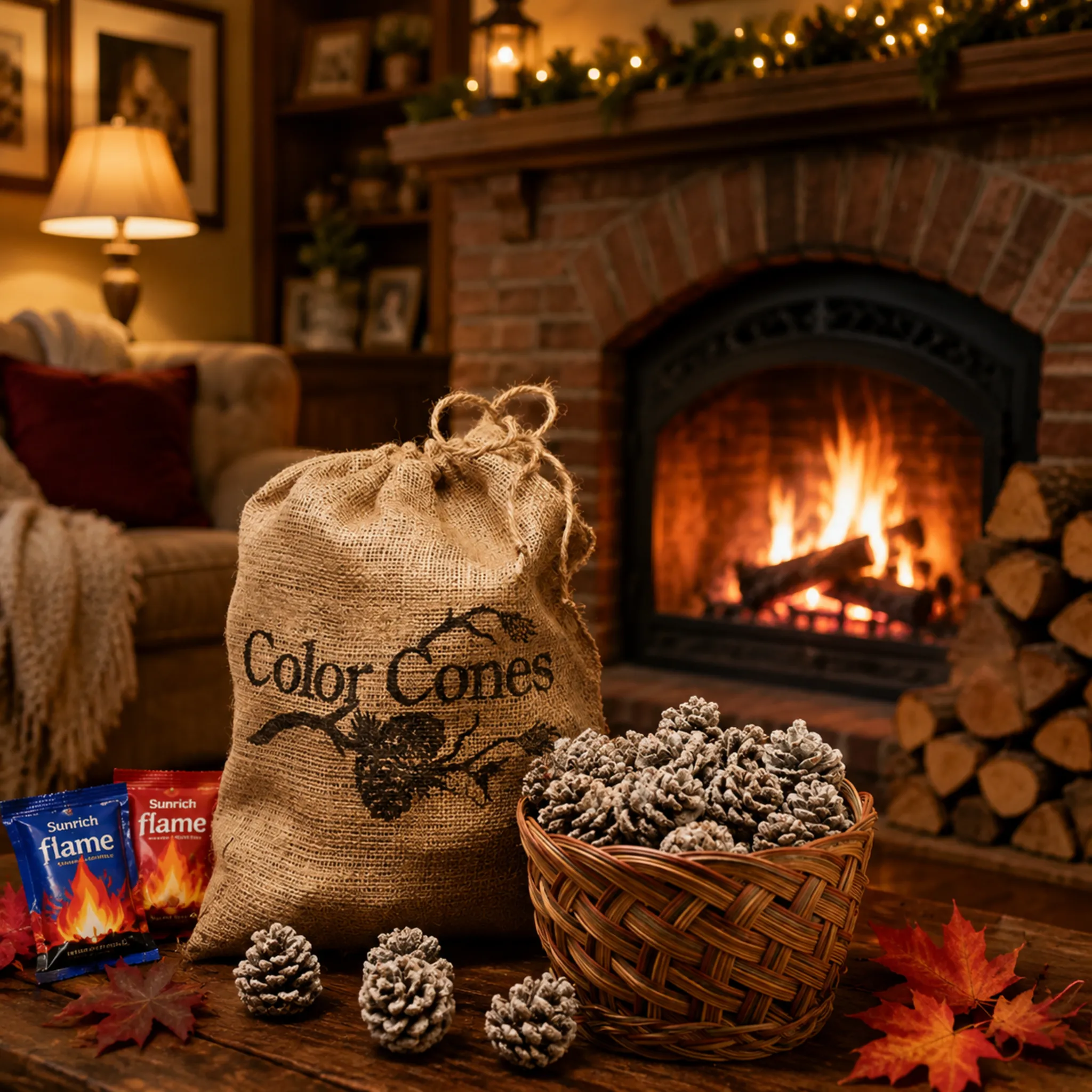
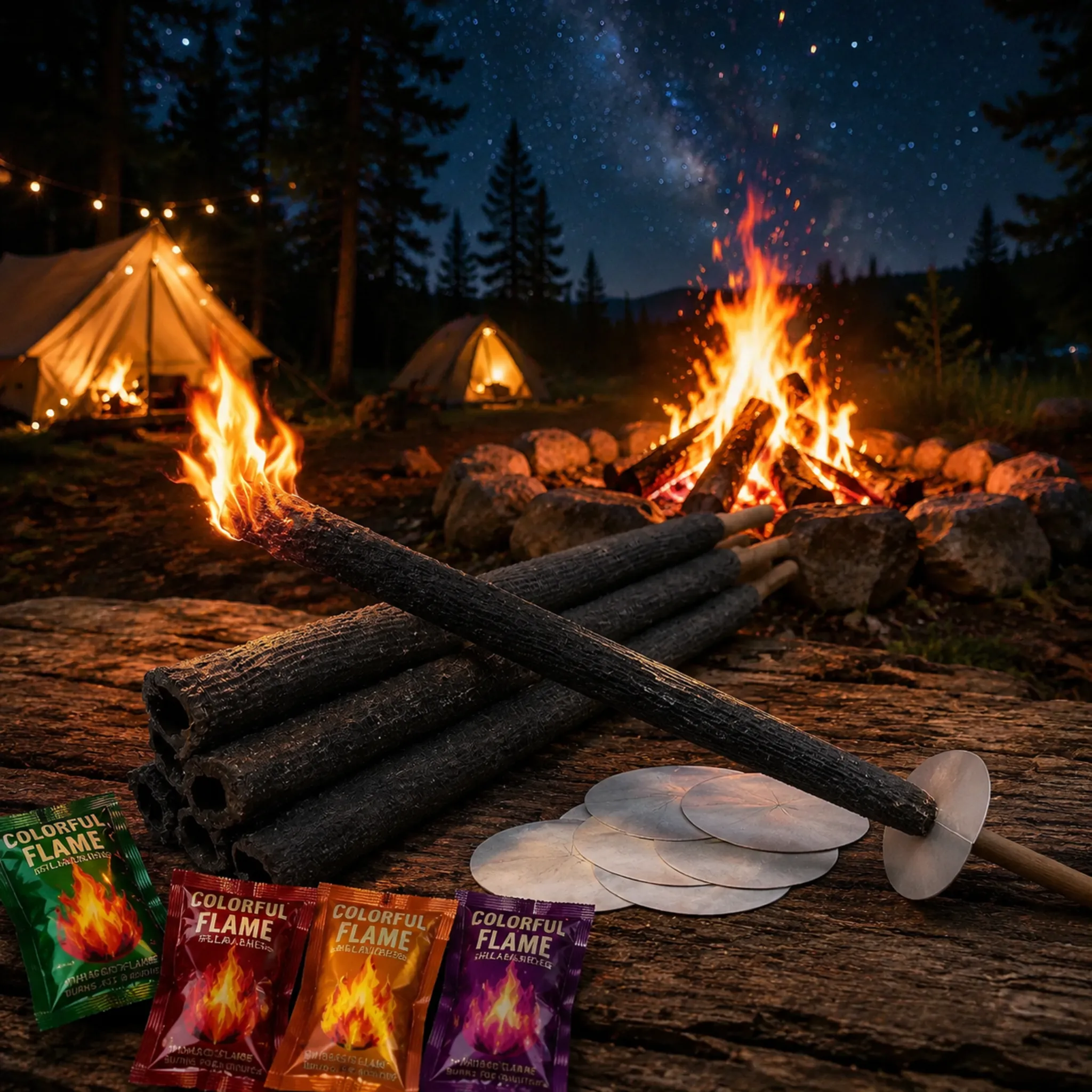
Labeling the dealer name and business address on private label Magic Fire Powder trips up many Canadian buyers we work with. One wrong line, and your shipment stalls at customs.
Under Canada's CPLA, your private label Magic Fire Powder must display the dealer's legal name and principal place of business — a real, postal-addressable location — legibly on a visible panel. This dealer line may appear in English or French, while other mandatory statements must be bilingual.
That sounds simple. In practice, it raises real questions. Who counts as the dealer? Can we pre-print it for you? Does the address need to be Canadian? Let me walk through each one.
What information does Canada's CPLA require me to include on the dealer label?
Last year, a Toronto distributor sent us artwork for a 25g Magic Fire pouch with only a brand logo and a website. We flagged it before printing — that label would have failed CPLA review.
The CPLA requires three mandatory statements on prepackaged consumer goods: the product identity, the net quantity, and the dealer's name with principal place of business. The dealer line may be in English or French alone, but identity and net quantity declarations must be bilingual.

The Consumer Packaging and Labelling Act 1 is Canada's baseline law for prepackaged consumer products. It exists to prevent false or misleading representations and to make sure a consumer can identify who stands behind a product. For a novelty color-flame powder like ours, all three mandatory statements come into play, and each has its own rules.
The three mandatory statements
| Statement | What it means for Magic Fire Powder | Language rule |
|---|---|---|
| Product identity | Common or generic name, e.g., "Colour Flame Powder / Poudre à flamme colorée" | Bilingual (English and French) |
| Net quantity | Metric units, e.g., "25 g", in the required minimum type size | Bilingual, metric symbols accepted |
| Dealer name and principal place of business | Legal entity name plus a real, postal-addressable business address | English or French |
What the dealer line must actually contain
The dealer line needs the legal company name — not just a trade name or brand — plus an address sufficient for postal delivery. In our experience preparing Canadian labels, that means street, city, province, and postal code. A bare PO box on its own is generally not acceptable, and a website URL never substitutes for a physical address.
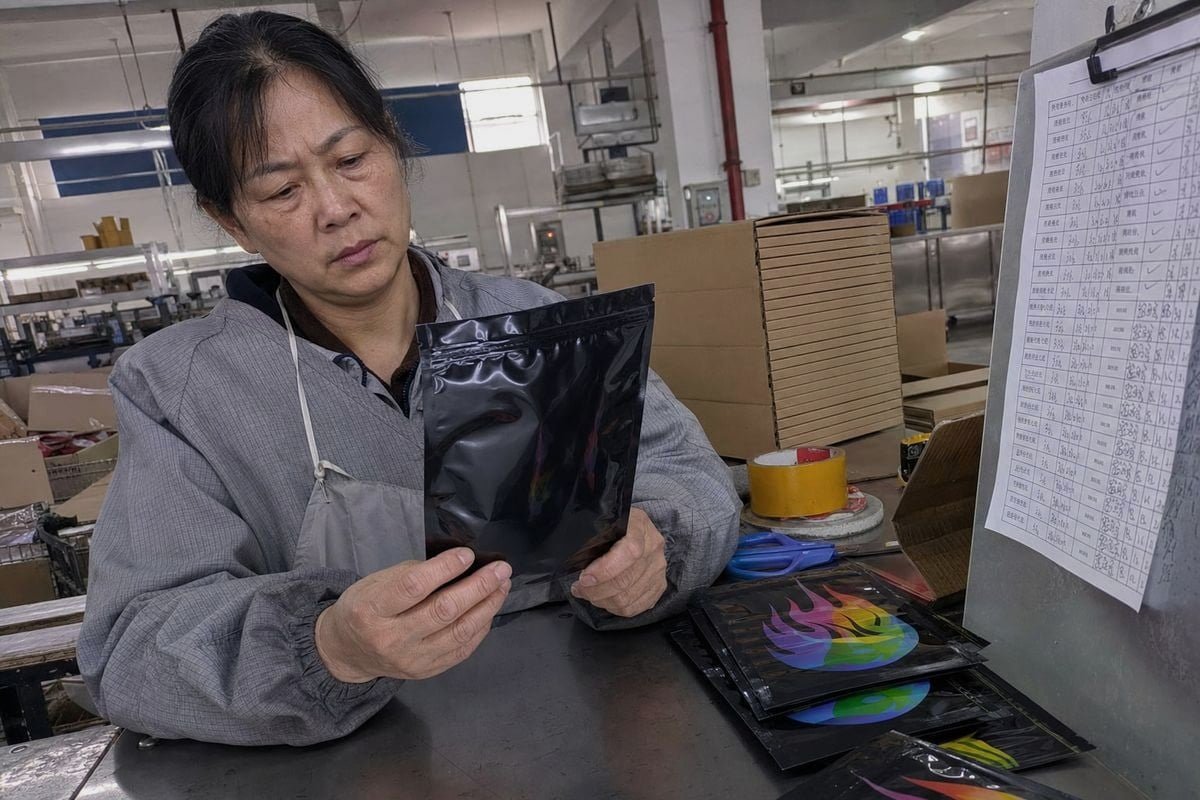
Placement matters too. The dealer name and address must be legible under normal purchase conditions and must appear on the principal display panel or another panel visible without opening the package — never hidden on the bottom. On our small foil pouches, panel space is tight, so we typically place the dealer block on the back panel above the batch code, keeping font contrast high against the black film.
One more point buyers often miss: because Magic Fire Powder contains metal salts for the colored-flame effect, Health Canada 2's Consumer Chemicals and Containers Regulations (CCCR, 2001) may also require hazard symbols and warnings. Those elements compete for the same panel space, so we plan the dealer block and hazard text together during artwork review, not after.
Can Sunrich pre-print my company name and address directly on the packaging?
Yes — and this is one of the most common OEM requests we handle at our Ningbo production line. Roughly half of our Canadian and European private label orders ship with the buyer's dealer block already printed.
Yes. Sunrich pre-prints your legal company name and business address directly on Magic Fire Powder pouches, kraft bags, jars, and display boxes as part of our one-stop OEM/ODM service, including barcodes, warning labels, and bilingual text, so packaging arrives shelf-ready for Canada.

Pre-printing the dealer block at the factory is almost always the better option compared to applying stickers after import. Stickered labels peel on glossy foil film, they add a labor step at your warehouse, and misaligned stickers look cheap on a retail shelf. A printed block is permanent, legible, and consistent across every unit in the batch.
Here is how the process works on our side, step by step:
- You send us your legal entity details. Legal name, full civic address, province, and postal code. We ask you to confirm this matches your corporate registration, because we print exactly what you approve.
- Our artwork team builds the label file. We place the dealer block on a visible panel, set the type size for legibility, and check spacing against the net quantity declaration and any CCCR hazard symbols.
- You review a digital proof, then a physical pre-production sample. Because we run complete in-house production lines, the sample you approve reflects mass-production quality — same film, same inks, same print method.
- We print, fill, seal, and batch-code. Every production run gets a lot code, and we keep a compliance registry linking your dealer name and address to specific batches. If Health Canada ever asks you to trace a lot, you can answer in hours, not weeks.
One caution from experience: if you private-label the same formulation for multiple retail chains under different dealer names, keep those artworks strictly separated by lot code. We maintain that registry on our end for exactly this reason — recall traceability is your legal exposure, and clean records are your best defense.
What we can pre-print for the Canadian market
| Element | Included in our OEM service? | Notes |
|---|---|---|
| Dealer name and address block | Yes | English, French, or bilingual — your choice |
| Bilingual product identity and net quantity | Yes | Required for CPLA compliance |
| "Imported by / Importé par" statement | Yes | See next section on when this applies |
| Barcodes (UPC/EAN) | Yes | You supply the codes; we verify scannability |
| CCCR hazard symbols and cautions | Yes | Coordinated with dealer block placement |
| Batch/lot codes | Yes | Linked to our compliance registry |
Do I need a Canadian address, or can I use my US or overseas business address?
A purchasing manager in Vancouver once asked me this exact question mid-negotiation, worried he would need to rent a Canadian office just to sell our color-flame packets. He didn't — but the answer has an important condition.
You do not strictly need a Canadian address. The CPLA accepts a dealer's principal place of business, which can be outside Canada. However, for imported goods labeled with a Canadian dealer's address, an "Imported by / Importé par" or equivalent qualifying statement is generally required.

The key concept here is who the "dealer" legally is. Under the CPLA, the dealer is the party that manufactures, processes, produces, packages, sells, or imports the product. For private label Magic Fire Powder made at our factory in China, that is usually you — the brand owner or importer — not us. Your name goes on the label, and CPLA does not require the true manufacturer's identity to appear, though it must be disclosed to the Competition Bureau 3 if formally requested.
Three common scenarios
| Your situation | What the dealer line should look like | Extra statement needed? |
|---|---|---|
| Canadian company importing directly | Canadian legal name + full Canadian address | "Imported by / Importé par" before the name, unless you substantially transform the product in Canada |
| US company selling into Canada | US legal name + full US address (postal-addressable) | Country of origin disclosure per applicable rules; the foreign address itself signals non-Canadian origin |
| Canadian brand using a fulfillment partner | The responsible legal entity's principal place of business — not the 3PL warehouse | "Imported by / Importé par" typically still required |
A few practical warnings from our export files. First, the address must be genuine and tied to the responsible business — a virtual mailbox with no real business presence invites scrutiny. Second, simple repackaging in Canada does not make you the manufacturer; only substantial transformation, such as reformulation, changes that analysis, and our Magic Fire packets ship ready-filled, so repackaging rarely applies. Third, if you sell through e-commerce alongside retail, several provincial consumer protection statutes expect the same business identity and address on your online listings. Mirror your label's dealer block on your product pages and you close that gap cheaply.
Finally, put compliance responsibility in writing. Your supply agreement with us should state that you act as the CPLA dealer of record, while we warrant that printed artwork matches your approved files. Ambiguity here is what creates liability during an audit — not the label itself.
How do I make sure my private label still meets CPLA rules alongside CE and SGS certifications?
There is a trade-off we weigh on every Canadian artwork: buyers want their CE marks and SGS test claims visible for credibility, but a small pouch only has so much panel space, and CPLA elements have legal priority.
Treat CPLA elements as non-negotiable anchors — product identity, net quantity, and dealer name and address get priority placement and minimum type sizes first. CE marks and SGS certification references are supporting elements; they must never crowd out, shrink, or obscure mandatory Canadian label statements.

Here is the mental model I give our buyers: certifications and label law answer different questions. CE marking 4 speaks to European conformity. SGS and Intertek reports prove our Magic Fire Powder passed independent testing — heavy metals, composition, burn behavior. Canada's CPLA, by contrast, governs what the package itself must say. Passing an SGS test does not make your label compliant, and a compliant label does not replace test reports. You need both, and they must not conflict.
A layered compliance approach
Think of your Canadian label as three layers, built in order:
- Layer one — CPLA mandatory statements. Bilingual product identity, metric net quantity, and the dealer name and business address block. Set these at required type sizes on visible panels before anything else goes on the artwork.
- Layer two — product-specific overlays. Because color-flame powders contain metal salts, check CCCR, 2001 hazard classification. If symbols and bilingual cautions are triggered, they get the next claim on panel space. Also confirm classification itself: our Magic Fire products are consumer fire-enhancement goods, not regulated explosives, and we hold the test reports to support that — but your customs broker should confirm the tariff and regulatory treatment for your import.
- Layer three — voluntary credibility elements. CE marks, "SGS tested" references, eco-friendly claims, brand storytelling. These go in remaining space and must be accurate; an unsupported claim is itself misleading under Canadian law.
On our side, we make this workable in two ways. First, every artwork proof goes through a checklist review where we verify layer one and two elements before approving layer three additions. Second, we supply the underlying CE documentation and SGS/Intertek reports with your shipment, so any claim printed on the pouch is backed by paper you can hand to a border officer or a Health Canada reviewer. Before you print, run one final pass: Is the product correctly classified? Is the legal dealer identified? Is the address postal-addressable? Is the bilingual text complete? Do certifications match the reports in your file? Five yeses, and you print with confidence.
Conclusion
Get the dealer line wrong, and your Magic Fire Powder can't legally sit on a Canadian shelf. Get it right — legal name, real address, correct language, proper placement — and it clears smoothly.
The path is straightforward. Identify who the legal dealer is in your supply chain 6. Print that entity's legal name and a full, postal-addressable business address on a visible panel. Add "Imported by / Importé par" where the goods are imported under a Canadian dealer's name. Keep the identity and net quantity statements bilingual, and layer CCCR cautions and certification marks around — never over — the mandatory elements.
This is exactly the kind of detail work we handle daily for buyers in Canada and 30+ other markets World Trade Organization 7. With 17+ years of production experience, ISO 9001 8, BSCI, CE, and SGS/Intertek certification, and full private-label printing in-house, we deliver Magic Fire Powder that arrives shelf-ready — dealer block, bilingual text, barcodes, and batch traceability included. Send us your legal entity details and target retail format, and we'll return a compliant artwork proof before you commit to a single printed pouch.
Footnotes
1. Provides background on the core Canadian statute governing prepackaged consumer goods labeling. ↩︎
2. Government body overseeing CCCR regulations and hazard labeling ment



 English
 Spanish
 German
 French
 Arabic
 Portuguese
Join the Conversation