







Gathering end-user feedback on wood fire starters is something our factory learned the hard way BSCI 1. A formula that looks perfect in the lab can still frustrate real customers at home.
To gather end-user feedback on wood fire starters, combine short post-use surveys, one-on-one interviews, and structured field testing. Ask about ignition reliability, burn time duration, smoke, and residue. Then translate the patterns into specific formula adjustments and validate every change through compliance testing before relaunch.
That answer sounds simple. The execution is not. Below, I walk through each stage the way we run it with our OEM buyers, step by step.
What methods can I use to collect reliable feedback from end-users on wood fire starter performance?
A few winters ago, a German distributor sent us a spreadsheet of customer complaints instead of a survey. Half the entries said "did not light well" — with zero context. We had to rebuild their feedback process from scratch.
Reliable feedback comes from a mixed-method approach: short post-purchase surveys, in-depth interviews with power users, beta-testing kits sent to different climates, and monitoring of reviews and community forums. Each method covers a gap the others leave, balancing scale with depth.
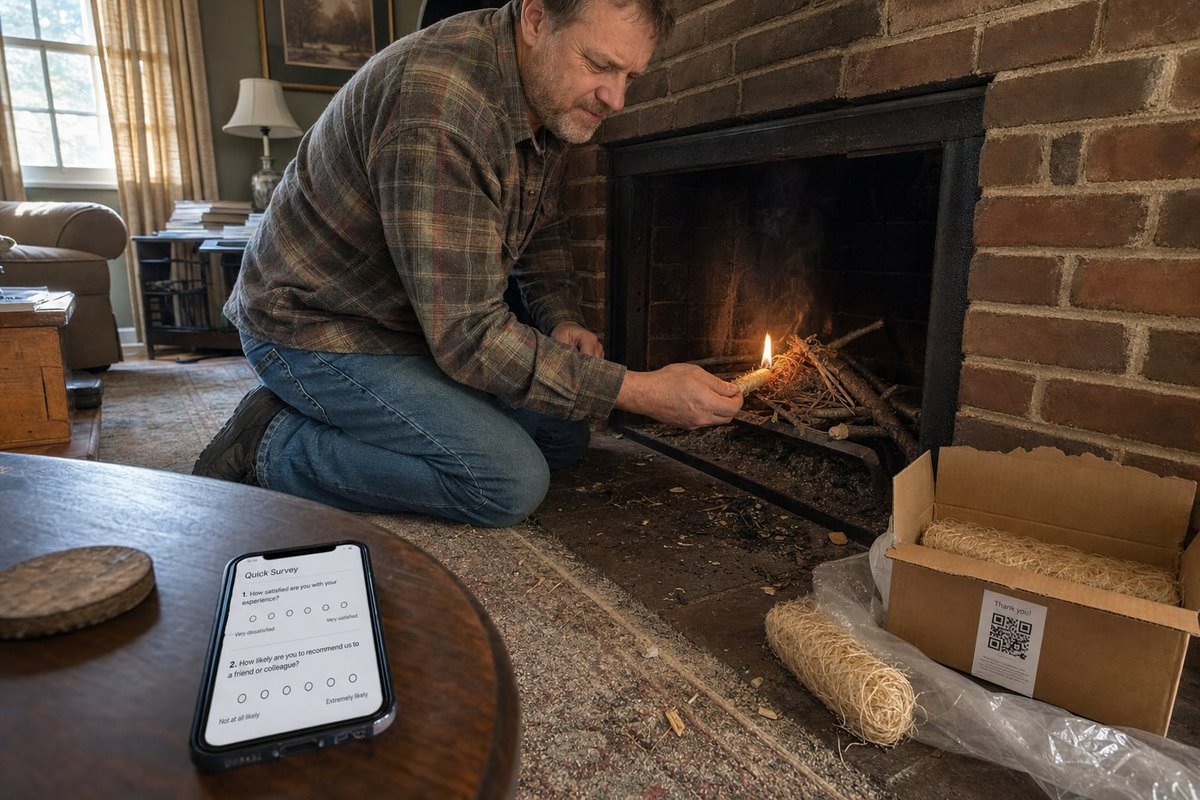
No single method tells you the whole story. Surveys scale well, but they rarely explain why a customer gave a low score. Interviews reveal the "why," but they cover only a handful of people. In our experience supporting brands across the US and Europe, the buyers who improve their formulas fastest run at least three channels at once.
The core feedback methods compared
| Method | Best for | Weakness | Typical sample size |
|---|---|---|---|
| Post-use surveys | Quantitative ratings at scale | Shallow answers | 100–500+ |
| 1:1 interviews | Uncovering reasons behind frustration | Small sample, time-heavy | 5–15 |
| Beta-testing kits | Real-world consumer field testing | Slower turnaround | 20–50 |
| Review and forum monitoring | Spotting recurring complaint themes | No control over questions | Ongoing |
| Advisory board of power users | Deep qualitative user feedback | Not representative of casual users | 6–12 |
Timing matters more than most buyers think
Send the survey right after the use event, not weeks later. A homeowner who lit a fireplace last night remembers ignition speed precisely. Three weeks later, they only remember a vague impression. For physical products, the closest equivalent to in-app timing is a QR code inside the box that links to a two-minute survey.
Recruit testers by use case, not just demographics
A fireplace owner, a weekend camper, and an emergency-preparedness buyer stress the product differently. We advise our clients to recruit testers from each segment separately. Beta kits sent to a humid coastal region and a dry mountain region will surface moisture content issues that a single-location test never reveals.
Which product qualities should I ask my customers about to identify formula improvement opportunities?
There is a trade-off we weigh on every wax-dipped wood roll we produce: more paraffin coating 2 extends burn time duration, but it can raise smoke emission levels 3 if the wax quality is poor. Customer questions must capture both sides of trade-offs like this.
Ask customers about ignition reliability, time to light kindling, burn time duration, smoke and odor, residue and mess, ease of use, performance in damp or windy conditions, packaging usability, storage stability, and value for money. These ten attributes map directly to specific formula levers.

Every question you ask should connect to a lever you can actually pull in production. Otherwise you collect opinions you cannot act on. In our 17+ years making fire-starting goods, the strongest surveys pair a subjective rating with an observable outcome. For example, do not just ask "Was it easy to light?" Also ask "How many starters did you need for one fire?"
Map each quality to a formula lever
| Customer-facing quality | What to ask | Formula lever it points to |
|---|---|---|
| Ignition reliability | Did it light on the first match? | Fiber looseness, wax penetration depth |
| Burn time duration | Did the kindling catch before it burned out? | Wax load, roll density, size |
| Smoke and odor | Any noticeable smell or dark smoke? | Wax grade, eco-friendly additives, binder choice |
| Residue and mess | Any ash clumps or wax pooling left behind? | Wax type, sustainable biomass fiber 4 source |
| Damp-condition performance | Did it work after storage in a garage or tent? | Wax coating coverage, moisture content control |
| Value for money | Would you rebuy at this price? | Piece size, count per box, material cost |
Combine ratings with open-ended prompts
Numeric scales make batch-to-batch comparison easy. Open comments reveal hidden issues. One buyer of ours discovered through open-ended answers that customers loved the burn but hated digging pucks out of a deep box with cold hands. That was a packaging fix, not a formula fix — and we would never have found it from a 1–5 rating alone.
Track objective product performance metrics too
Ask a subset of testers to record hard numbers: time to ignition, first-attempt success rate, and number of starters used per fire. Some brands even run citizen-science protocols 5 with thermal strips. These metrics turn vague satisfaction into engineering targets.
How can I turn customer feedback into actionable formula adjustments with my manufacturing partner?
A UK buyer once emailed us a single line: "Customers say the starters burn out too fast." Our engineers replied with five questions before touching the formula. That exchange taught both sides how much structure the handoff needs.
Translate feedback into formula adjustments by clustering complaints into themes, ranking them by frequency and severity, converting each theme into a measurable specification, and sending your manufacturer a change brief. Then run a small pilot batch, retest with the same users, and compare scores.

The gap between "customers complained" and "change the spec" is where most optimization projects stall. On our production side in Ningbo, we can adjust wax dip time, roll density, fiber cut length, and additive blends — but only if the buyer's brief tells us what outcome to hit. A vague request produces a vague sample.
A five-step feedback-to-formula process
- Cluster the raw feedback. Group survey comments, reviews, and interview notes into themes: ignition, burn time, smoke, residue, packaging.
- Rank by frequency and severity. A complaint mentioned by 40% of damp-climate users outranks a minor gripe from 5% of all users.
- Convert themes into specifications. "Burns out too fast" becomes "extend flame duration from roughly 7 to 10 minutes at current piece size."
- Brief your manufacturing partner. Include the target metric, the segments affected, and any constraints like price per piece or box dimensions.
- Pilot, retest, and compare. Run a trial batch, send it to the same testers, and measure the same metrics side by side against the old formula.
What a good change brief includes
Give your factory the complaint theme, the affected user segment, the target spec, and the acceptable cost impact. We also ask buyers to flag anything that must not change — for example, if the current low smoke emission levels are a selling point, we will not trade them away for longer burn.
Close the loop with your testers
Tell your original testers what changed and invite them to retest. This builds loyalty and gives you a clean before-and-after comparison. Continuous feedback loops beat one-off surveys every time.
What role does compliance testing play when I validate a reformulated wood fire starter based on feedback?
Compliance is the first question our European buyers ask, usually before pricing. When we reformulate a wax-dipped wood roll for a client, the new version goes back through third-party testing before a single retail carton ships.
Compliance testing confirms that a reformulated fire starter still meets safety and flammability standards after the change. Any adjustment to wax load, additives, or fiber density can alter burn behavior, so third-party verification such as SGS or Intertek reports and ASTM flammability testing must be repeated before relaunch.
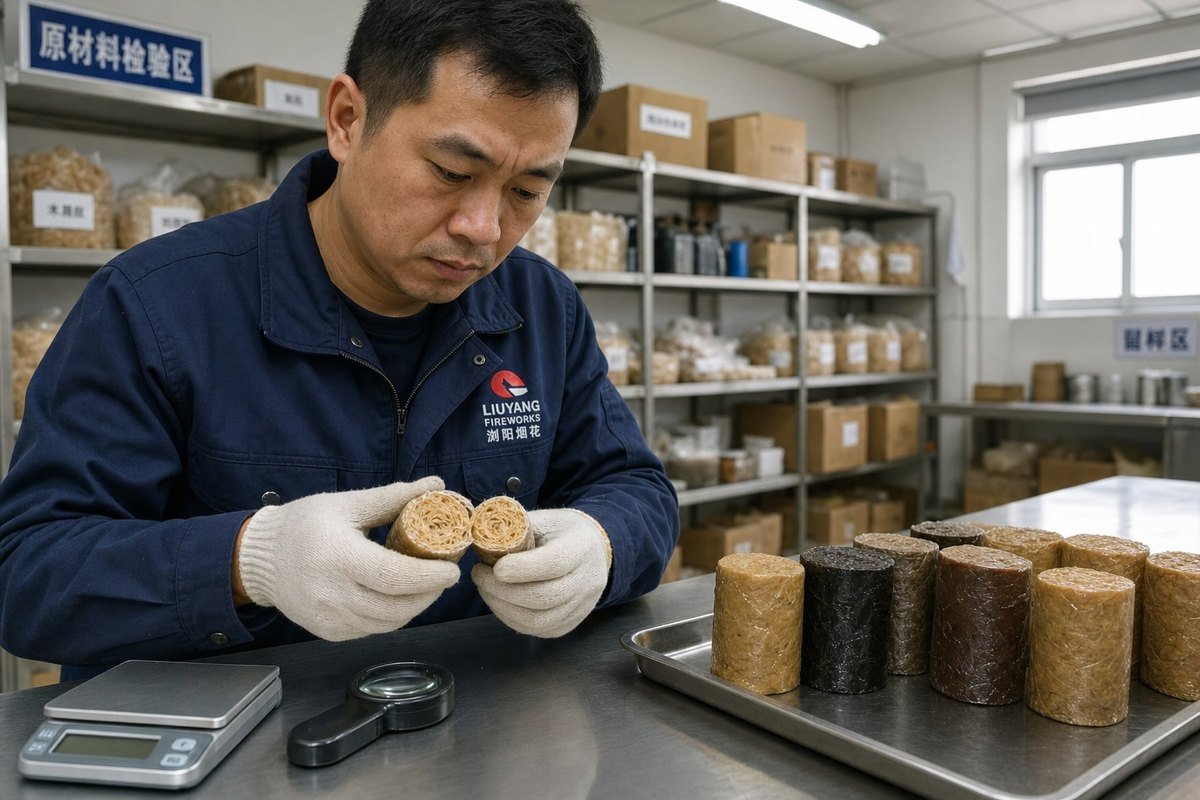
Feedback tells you what customers want. Compliance tells you what the market allows. A formula change that delights testers but fails a flammability screen is worthless — or worse, a liability. In our experience exporting to 30+ countries, retailers like the big US home-improvement chains will not stock a fire product without current test reports, full stop.
Why reformulation triggers retesting
Small changes have outsized effects on burn behavior. Increasing wax load to extend burn time duration changes flame height and drip behavior 6. Swapping in eco-friendly additives or a new sustainable biomass fiber can shift ignition characteristics and smoke output. Each of these touches parameters covered by ASTM flammability testing and by regional consumer-product rules, so the old certificate no longer covers the new product.
A practical validation checklist
| Validation step | What it confirms | When to do it |
|---|---|---|
| Internal batch QC | New formula is consistent roll to roll | Every pilot batch |
| Third-party lab testing (SGS/Intertek) | Flammability, composition, and safety claims | Before mass production |
| Labeling and warning review | Warning labels match the new formula and market | Before packaging print |
| Documentation update | Test reports, barcodes, and SDS reflect the change | Before shipment |
| Retail compliance check | Product meets your channel's requirements | Before relaunch |
Build compliance into the feedback loop, not after it
We advise buyers to plan the lab-testing window into the reformulation timeline from day one. Testing takes weeks, and factories certified under ISO 9001 7 and BSCI can run the paperwork in parallel with the pilot batch. That way, user validation and regulatory validation finish together, and your improved product hits shelves without a compliance gap.
Conclusion
Feedback without structure wastes money. Structure it: mixed collection methods, attribute-level questions, a clear change brief, and repeated compliance testing turn customer voices into a better, safer, shelf-ready formula.
Footnotes
1. Amfori's official site explains the BSCI social compliance certification mentioned for factories. ↩︎
2. Background reference on paraffin wax explains the material used in wood fire starter coatings. ↩︎
3. EPA guidance on wood smoke emissions supports the discussion of wax quality and smoke trade-offs. ↩︎
4. Official Department of Energy resource defining biomass and its role as a sustainable organic material. ↩︎
5. Background concept explaining citizen-science methods used for gathering objective performance data. ↩︎
6. General combustion background supports discussion of how wax load changes flame characteristics. ↩︎
7. Stable, authoritative Wikipedia entry providing a comprehensive overview of the quality management standard. ↩︎



 English
  Spanish
  German
  French
  Arabic
  Portuguese
Join the Conversation