







Wood fire starters with paraffin wax can get stuck at UK customs over one missing label element Guobiao (GB) national standards 1. I have watched it happen to buyers before they found our factory, and it is painful.
To meet GB CLP labeling requirements, first classify the finished wax-and-wood mixture for hazards, then apply a compliant label showing supplier name and address, product identifier, nominal quantity, hazard pictograms, signal word, and hazard and precautionary statements, all firmly attached and clearly legible.
That answer sounds simple. In practice, each step hides details that trip up importers. Let me walk you through the four questions our UK and EU buyers ask most often.
What certifications should I request to confirm CLP compliance for paraffin wax firestarters?
A German distributor once asked us for "a CLP certificate." I had to explain gently that no such single certificate exists. What matters is a documented chain of evidence.
Request a current Safety Data Sheet for the finished mixture, third-party test reports from accredited labs such as SGS or Intertek, the supplier's hazard classification rationale, and quality system certificates like ISO 9001 and BSCI to confirm consistent, compliant production.

Here is the key point I stress with every new buyer: CLP is a self-classification regime for mixtures. There is no government body that stamps your fire starter "approved." Instead, the person placing the product on the GB market is responsible for correct classification and labeling. So your job as an importer is to collect documents that prove the classification was done properly and that production matches the tested sample.
The documents that actually matter
At our factory in Ningbo, we prepare a standard compliance pack for every private-label fire starter order. It has taught me what a serious buyer should demand before signing anything.
| Document | What it proves | Who issues it |
|---|---|---|
| Safety Data Sheet (SDS) | Hazard classification of the finished wax-and-wood mixture | Supplier, based on composition and data |
| Third-party test report | Burning behavior and physical hazard data for the assembled product | Accredited lab (e.g., SGS, Intertek) |
| Classification rationale | Why specific hazard statements were or were not applied | Supplier's technical team |
| ISO 9001 certificate | The factory controls quality batch to batch | Certification body |
| BSCI audit report | Ethical, audited production for retail channels | Audit body |
One more lesson from our seventeen-plus years exporting to the UK, Germany, and France: insist that the SDS covers the finished product, not raw paraffin wax alone. Wax soaked into wood wool burns differently from a block of wax. The classification must reflect the real article your customer lights, because that is what regulators will judge. A supplier who only hands you a wax SDS has not done the work.
How do I verify the hazard classification and warning labels are correct for my target market?
When we developed our wax-dipped wood rolls, we tested the finished pucks, not the raw materials. That decision came from a hard early lesson about how classification really works.
Verify classification by checking that the finished product was tested as a complete article, that the assigned hazard class matches GB mandatory classification lists where relevant, and that the label's pictograms, signal word, and statements correspond exactly to that classification.
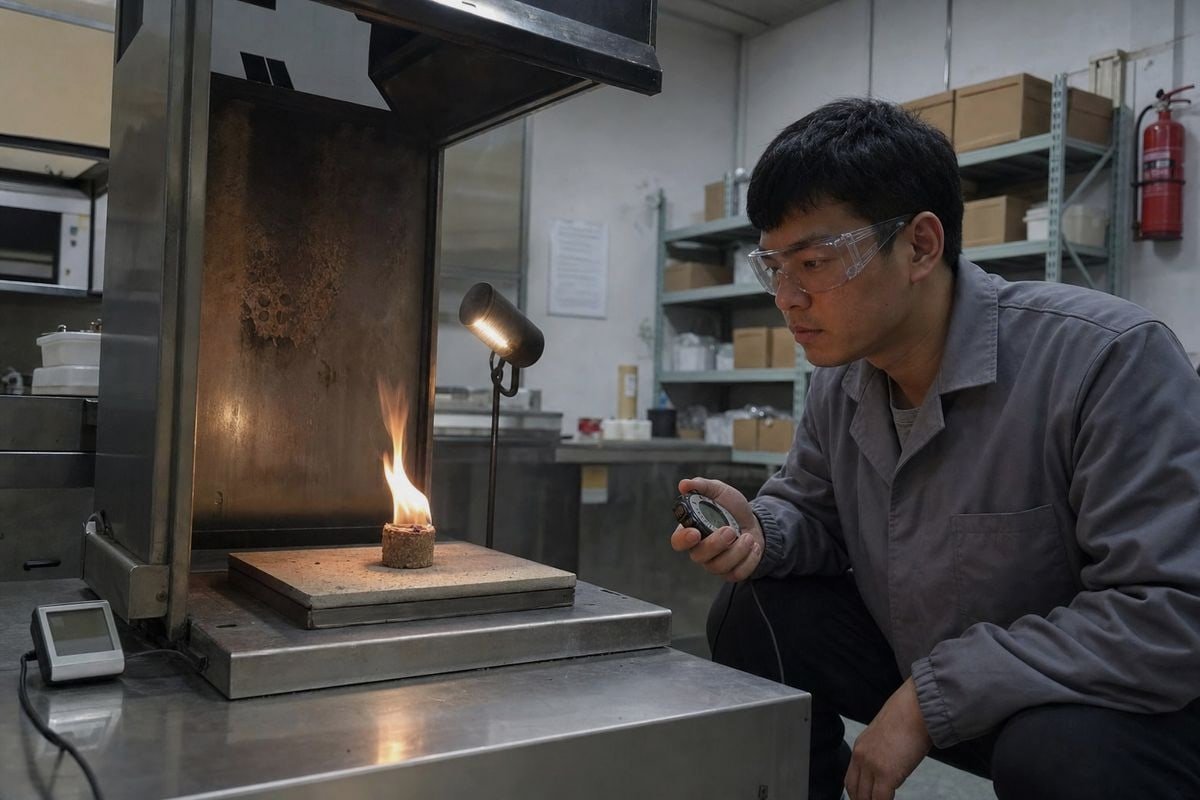
Classification comes first. The label is only the output. So verification means working backward from the label to the data. Ask your supplier: what hazard class did you assign, and what evidence supports it? A paraffin-and-wood fire starter is not automatically hazardous. But many firestarter formulations do land in flammable solid territory, and that depends on standardized burning-rate behavior of the assembled product, not on assumptions about wax.
A step-by-step verification process
I recommend this sequence to every purchasing manager we work with:
- Get the exact formulation. Ours is typically a stated ratio of wood fiber to paraffin, printed right on the box.
- Confirm the product was classified as a mixture in its finished form.
- Check the assigned hazard class against GB rules. Great Britain assimilated the EU harmonised classifications in force at the end of 2020, so GB mandatory classification applies where relevant.
- Match every label element to that class. If the class triggers a flame pictogram 2, it must appear as the standard diamond: black symbol, white background, red border.
- Confirm the signal word 3. CLP uses only "Danger" or "Warning," chosen by severity. The wrong one is an immediate red flag.
- Separate consumer labeling from transport classification. UN transport rules 4 for flammable solids are a different framework. I have seen shipments delayed because a supplier pasted transport marks where CLP consumer elements belonged.
One caution on naming. In our export work we deal with two different "GB" systems: Great Britain's CLP regime 5 and China's Guobiao (GB) national standards. If your supplier sends you documents citing Chinese GB standards when you asked about UK compliance, that is a signal to slow down and clarify before you order.
What labeling details do I need to customize for different EU and UK importers?
Our OEM team keeps separate label templates for GB and EU customers, and there is a good reason. A Dutch buyer and a UK buyer ordering the identical fire starter puck do not receive identical artwork.
Customize the supplier name and address for each market, include a UFI code for EU and Northern Ireland sales but not for Great Britain, translate label text into required local languages, and adapt nominal quantity, barcodes, and legal contact details per importer.

The biggest divergence since Brexit 6 is the UFI code. In the EU and Northern Ireland, mixtures classified for health or physical hazards need a Unique Formula Identifier 7 linked to a poison centre notification. Great Britain does not require the UFI. Many sellers apply one label set to both markets and get it wrong in one direction or the other. Printing a UFI on a GB-only label is harmless clutter; omitting it from an EU label is a compliance failure.
Market-by-market label differences
| Label element | Great Britain | EU / Northern Ireland |
|---|---|---|
| Hazard pictograms and signal word | Required per GB CLP classification | Required per EU CLP classification |
| UFI code | Not required | Required for health or physical hazard mixtures |
| Responsible person address | GB-based supplier or importer details | EU-based supplier or importer details |
| Language | English | Official language(s) of each member state sold in |
| Classification basis | GB mandatory classification list | EU harmonised classification (CLH) |
Language deserves special care. We routinely print fire starter packaging in German, French, Dutch, and Polish for distributors covering multiple EU countries. Space gets tight fast on a small box, so plan multilingual layouts early, not after the artwork is approved.
Also remember the address rule. The label must carry the name, address, and telephone number of a supplier in the relevant market. When we private-label for a UK distributor, their GB details go on the box. When the same product ships to their German sister company, the artwork changes. It is a small file edit for our design team, but it prevents a large problem at the border.
Can my supplier provide test reports and documentation before I place a bulk order?
A UK importer once told me his previous supplier promised documents "after production." The paperwork never matched the goods. That conversation shaped how we now sequence every trial order.
Yes, a credible supplier should provide the SDS, third-party test reports, classification rationale, factory certificates, and draft label artwork before any bulk order. Refusal or delay at this stage is a strong signal to walk away.
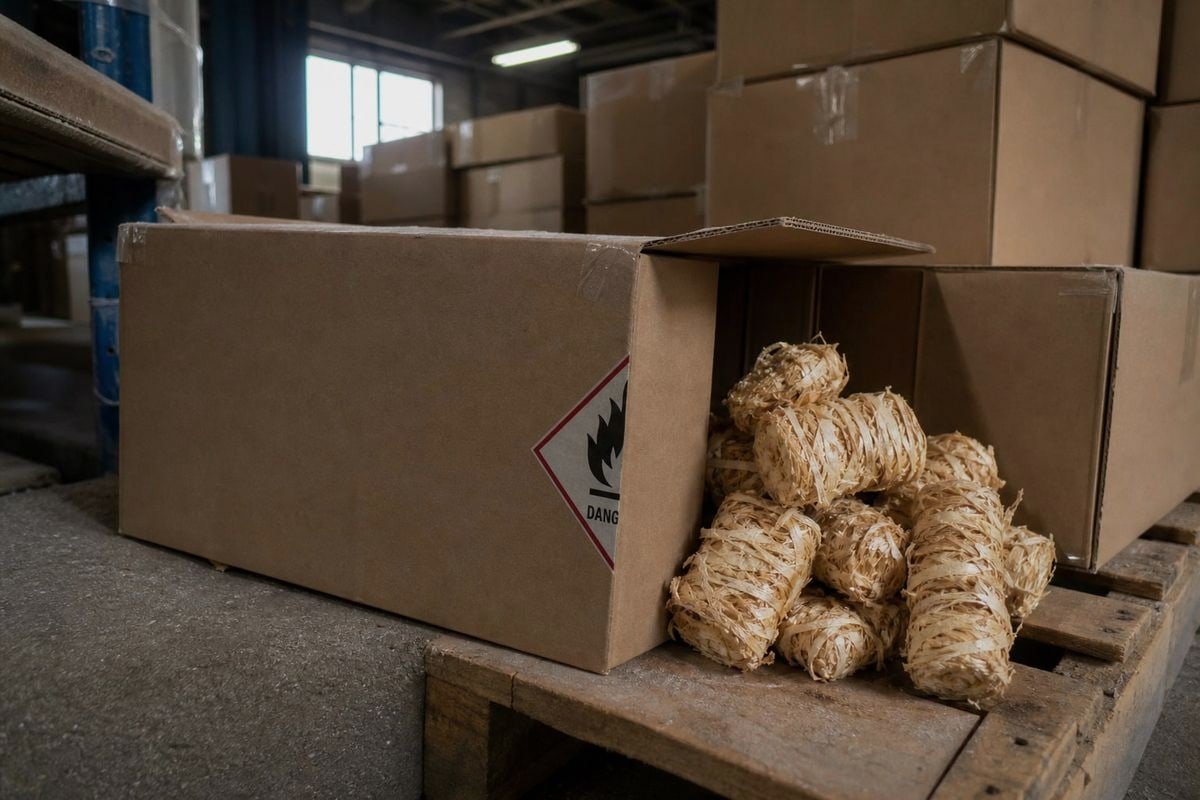
Documentation before deposit is the single best filter for separating real factories from trading companies. A factory that runs its own production lines already holds these files, because it needed them to classify and label its existing products. A middleman has to go ask someone else, and the delay shows.
What to request, and when
Here is the sequencing we follow with new buyers, and that I suggest you demand from any supplier:
| Stage | What you should receive | Why it matters |
|---|---|---|
| First inquiry | ISO 9001, BSCI, and relevant SGS/Intertek certificates | Confirms the factory is audited and real |
| Before sampling | Finished-product SDS and classification rationale | Lets your compliance team review hazards early |
| With samples | Draft label artwork with pictograms, statements, and your details | You can check GB CLP elements on the physical pack |
| Before deposit | Test reports for the exact formulation you will buy | Prevents the tested-sample-versus-mass-production gap |
| At shipment | Batch records and final compliance pack | Supports customs clearance and retailer onboarding |
Two practical tips from our side of the table. First, check that the test report describes your product, not a similar one. Report numbers, formulations, and dates should line up. Second, ask how the factory keeps mass production consistent with the tested sample. In our Ningbo plant, batch-to-batch checks on wax uptake and burn time exist precisely so the certificate you filed still describes the container that arrives six months later. If a supplier cannot explain that link, the documents are decoration, not protection.
Conclusion
GB CLP compliance for wood fire starters comes down to classify first, label second, verify always. Choose a factory that proves compliance before you pay, and your shelves stay stocked.
Footnotes
1. Background on China's Guobiao standards clarifies the naming confusion with UK GB CLP rules noted in the article. ↩︎
2. ECHA's labelling guidance explains required hazard pictograms like the flame symbol discussed here. ↩︎
3. ECHA overview clarifies how CLP signal words like Danger and Warning are assigned by severity. ↩︎
4. UNECE governs transport dangerous goods rules distinct from CLP consumer labeling, as noted in the text. ↩︎
5. Official UK regulator page explaining the CLP self-classification and labeling regime referenced throughout the article. ↩︎
6. Background context on Brexit explains why GB and EU labeling requirements diverged, as described in the article. ↩︎
7. ECHA's official page defines the UFI code requirement mentioned for EU and Northern Ireland labeling. ↩︎



 English
  Spanish
  German
  French
  Arabic
  Portuguese
Join the Conversation