






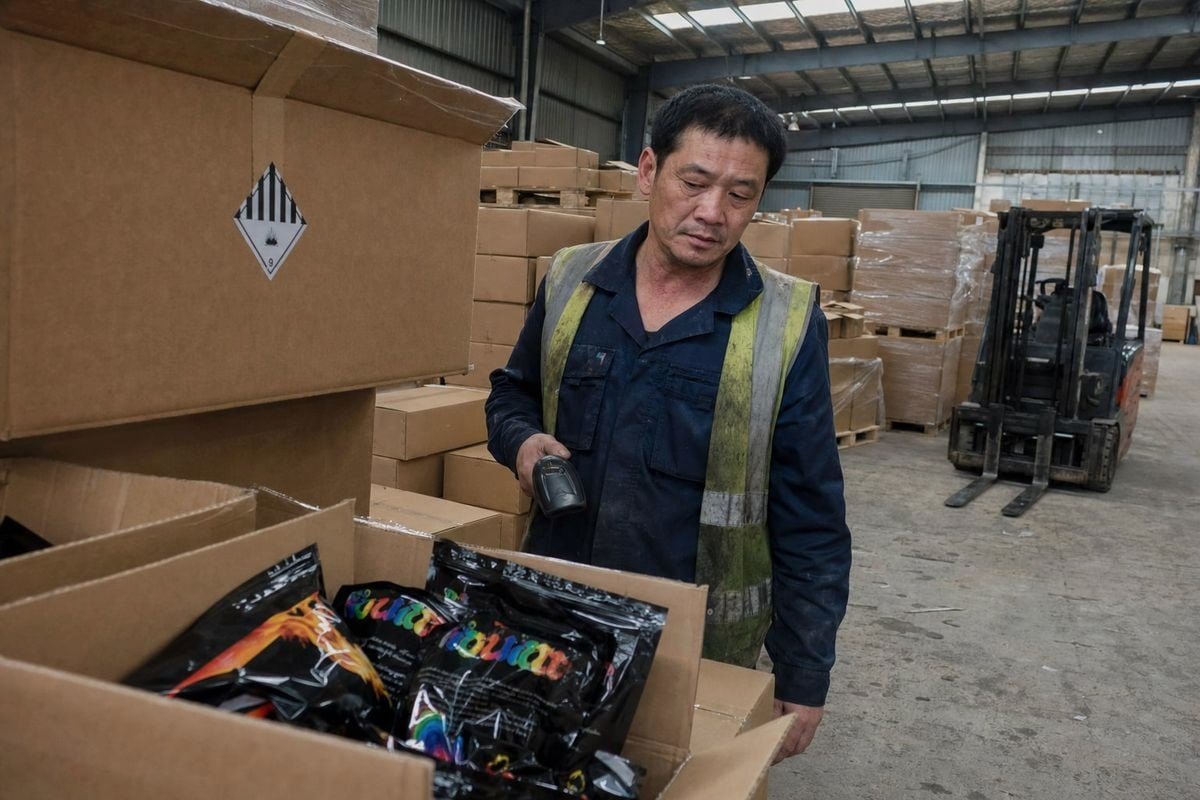
A solid return policy for slow-moving Magic Fire Powder stock protects your cash SGS 1. I have watched buyers from our Ningbo production line struggle when pallets sat unsold past peak season.
To develop a return policy for slow-moving Magic Fire Powder stock, define an aging threshold of 90–180 days, require unopened sealed packets, write return or buyback rights into purchase orders, add a restocking fee structure, and layer in markdown and liquidation fallbacks when returns are not viable.
That short answer covers the framework. But each piece deserves a closer look. Below, I walk through what to include, how to negotiate it, and how to prevent overstock in the first place.
What Should I Include in a Return Policy When Ordering Magic Fire Powder in Bulk?
One of our German distributors once asked me to accept returns on packets that had sat in a humid warehouse for a year purchase orders 2. That conversation taught both of us why written terms matter.
A bulk return policy for Magic Fire Powder should include an unopened-seal requirement, a 90–180 day aging window, a potency expiration clause, a tiered restocking fee, RMA documentation with photo evidence, HAZMAT-compliant shipping terms, and clear credit-note mechanics for accounting.

The biggest mistake I see importers make is treating color-flame powder like any generic consumer good. It is not. The crystalline granules inside each foil pouch are moisture-sensitive. Once a seal is broken or the powder clumps, the product cannot be resold. So your policy must start with condition rules, not just calendar rules.
Define Slow-Moving Before You Define Returnable
Industry guidance flags stock as slow-moving between 90 and 180 days without movement, and many systems treat 180+ days as a dead-stock signal. For a product like ours, I recommend the tighter end. Our packets hold quality well in sealed foil, but non-climate-controlled storage accelerates clumping. A potency expiration clause that voids return eligibility 180 days after the manufacture date is fair to both sides.
The Core Clauses
Here is the structure I encourage our B2B buyers to write into their agreements:
| Clause | What It Covers | Why It Matters |
|---|---|---|
| Unopened seal requirement | Only factory-sealed pouches qualify | Prevents moisture-contaminated returns |
| Aging window | Returns allowed between 90–180 days | Anchors the trigger to data, not intuition |
| Restocking fee | Tiered 15–25% deduction | Offsets inspection and reintegration labor |
| RMA process | Return merchandise authorization with photos | Stops unnecessary shipping of damaged goods |
| Shipping responsibility | Buyer pays for non-defective returns | Margins on novelty powders rarely support free returns |
| Credit mechanics | Store credit vs. cash refund terms | Keeps capital working in the relationship |
| Compliance terms | HAZMAT shipping regulations 3 and labeling | Copper-based colorants may face carrier restrictions |
One more point. Distinguish slow-moving stock from dead stock 4 in the policy itself. Slow movers still have a realistic chance of selling before expiry; they are candidates for return or markdown. Dead stock needs an exit plan, often dead stock liquidation rather than a return request. A single document that treats both the same way will frustrate everyone. In our experience exporting to 30+ countries, the buyers with the cleanest policies always separate these two categories with different action ladders.
How Can I Negotiate Return or Buyback Terms With My Magic Fire Powder Manufacturer?
There is a trade-off I weigh every time a distributor asks for return rights: the more risk we absorb upstream, the more forecasting discipline we need from the buyer downstream.
Negotiate return terms before the first purchase order, not after stock ages. Ask for a vendor buy-back agreement tied to offsetting future orders, embed the return window in the PO, define credit-note timing, and offer volume commitments or forecast sharing in exchange for the supplier absorbing part of the inventory risk.

Let me be direct about how this looks from the factory side. When a buyer asks us for return privileges, we say yes more often when three conditions are met: the request comes with a forward order, the returned goods are sealed and traceable by batch, and the buyer shares sell-through data. That is not us being difficult. It is how risk-sharing actually works.
A Practical Negotiation Playbook
Follow this sequence and you will get better terms than most importers:
- Ask before you order. Return rights written into the purchase order carry legal weight. Verbal promises after stock ages carry none. The rule I give buyers: no return rights in writing, no policy value.
- Offer something in exchange. A vendor buy-back agreement usually rides on an offsetting order. If you return one pallet, place an order for two of your fast movers. Suppliers accept this because the relationship stays net-positive.
- Prefer store credit over cash. Most factories, ours included, will offer a higher credit value than a cash refund. Credit keeps capital in the partnership and clears your stagnant SKUs faster.
- Nail down the credit-note mechanics. Your accounting team needs credit notes issued within a defined window after goods arrive back. Otherwise the return exists in the warehouse but not on the books, and the inventory write-down never resolves cleanly.
- Confirm reverse-logistics feasibility. Some colorant formulations face carrier restrictions. Confirm whether HAZMAT shipping regulations apply on the return lane before you promise anything to your own customers. Our eco-friendly formulation ships without harmful chemicals, but every buyer should still verify their local carrier rules.
- Explore keep-and-credit options. For low-value slow movers, a partial credit where you keep the stock avoids reverse-logistics 5 cost entirely. We have done this with festival gift traders when shipping the goods back cost more than the goods were worth.
A buyer objection I hear often: "My supplier will never accept returns on a niche product." In my experience, that is only true when the buyer offers nothing in return. Suppliers with 17+ years in a category understand that absorbing modest inventory risk wins long-term accounts. Frame the ask as risk-sharing, not risk-dumping, and most serious factories will engage.
What Causes Slow-Moving Stock, and How Can I Prevent It Before I Place My Next Order?
A UK camping brand once ordered a full year of our Magic Fire packets in one shot to save on freight. By month eight, half the stock had crossed the aging threshold. The freight saving vanished into carrying costs.
Slow-moving Magic Fire Powder stock is usually caused by seasonal demand misreads, oversized single orders, weak SKU-level tracking, and poor storage conditions. Prevent it by anchoring orders to sell-through data, monitoring your inventory turnover ratio, splitting orders into smaller cycles, and reviewing aging reports monthly.

Prevention is cheaper than any return policy. Every return, even a smooth one, costs inspection labor, shipping, and administrative time. So before your next order, diagnose why the last batch slowed down.
The Four Root Causes I See Most
| Root Cause | What Happens | Prevention |
|---|---|---|
| Seasonal misread | Fire products peak in autumn and holiday season; spring orders stall | Map orders to your market's campfire and fireplace calendar |
| Oversized orders | Freight savings tempt buyers into 12-month volumes | Order in 3–4 month cycles; accept slightly higher unit freight |
| No SKU-level visibility | Slow packets hide inside healthy category totals | Run SKU aging reports; flag anything past 90 days |
| Storage degradation | Humid warehouses clump the powder before it sells | Store in dry conditions; rotate first-in, first-out |
Build a Disposition Ladder, Not a Single Escape Hatch
Not every slow mover should be returned. The healthiest operations run a ladder of remedies, in this order: reallocate stock between channels, discount it, bundle it with fast movers, return it if vendor terms allow, and liquidate as the last resort. A clearance sale strategy timed just before your potency expiration window recovers far more value than a write-off after it. Bundle-exchange tactics also work well in this category — pairing aging powder with firestarters or wax torches maintains transaction value while clearing the slow SKU.
Track two numbers monthly. First, your inventory turnover ratio 6 by SKU, so you know which items earn their shelf space. Second, an aging report with three stages: healthy, slow-moving, and dead. Each stage triggers a different action. This is also where SKU rationalization 7 comes in. If a specific packaging format — say, the jar version versus the kraft pouch — consistently turns slower in your market, cut it from the next order rather than carrying it out of habit. When our customers share this data with us, we help them adjust pack formats and order sizes before the problem repeats.
Should I Ask My Supplier for Flexible MOQs to Reduce the Risk of Overstocking?
The lesson that reshaped how we structure MOQs came from a Dutch importer who wanted to test three packaging formats without committing to a container of each. We said yes, and that trial order grew into one of our steadiest accounts.
Yes. Flexible MOQs are the single most effective way to reduce overstock risk on a seasonal novelty product. Ask for lower trial-order quantities, mixed-SKU containers, and staged delivery schedules. A slightly higher unit price on smaller orders costs far less than an inventory write-down later.

Here is the honest math from the buyer's side. A large order lowers your unit cost, but it raises three hidden costs: capital tied up in stock, warehouse carrying charges, and write-off exposure if demand disappoints. On a novelty product with a 180-day potency window, those hidden costs compound fast.
Compare the MOQ Approaches
| MOQ Approach | Best For | Pros | Cons |
|---|---|---|---|
| Standard full-container MOQ | Proven SKUs with stable demand | Lowest unit cost | Highest overstock exposure |
| Trial-order MOQ | New markets or new formats | Tests demand cheaply | Higher unit price |
| Mixed-SKU container | Multi-format portfolios | Spreads risk across SKUs | More complex loading and QC |
| Staged delivery | Seasonal peaks | Matches inflow to sell-through | Requires supplier scheduling discipline |
What a Good Supplier Will Actually Offer
Not every factory can flex on MOQs, and it is worth understanding why. Flexibility requires complete in-house production lines and tight batch-to-batch quality control, so that a small trial run genuinely matches the mass-production quality that follows. A trading company reselling someone else's output usually cannot promise that. When we run a trial order in our Ningbo facility, it goes through the same line and the same QC checkpoints as a full container, which means the buyer's demand test is a valid one.
Pair flexible MOQs with the return terms from earlier and you get a complete risk framework. Smaller first orders reduce the chance you ever need the return clause. Staged deliveries let you cancel or adjust later shipments if sell-through lags. Mixed containers let you test the pouch, the kraft bag, and the display box against each other before committing deep. And if a slow SKU still emerges, your negotiated store credit and restocking fee terms cap the downside. Also confirm compliance up front — CE marking 8, SGS or Intertek test reports, and proper warning labels — because non-compliant stock cannot be legally cleared through any channel, which turns a slow mover into a total loss.
Conclusion
Slow-moving Magic Fire Powder stock drains cash quietly until it becomes a write-off. Define aging thresholds, negotiate return rights upfront, run monthly aging reviews, and order with flexible MOQs.
Footnotes
1. Official page for the testing and



 English
  Spanish
  German
  French
  Arabic
  Portuguese
Join the Conversation