






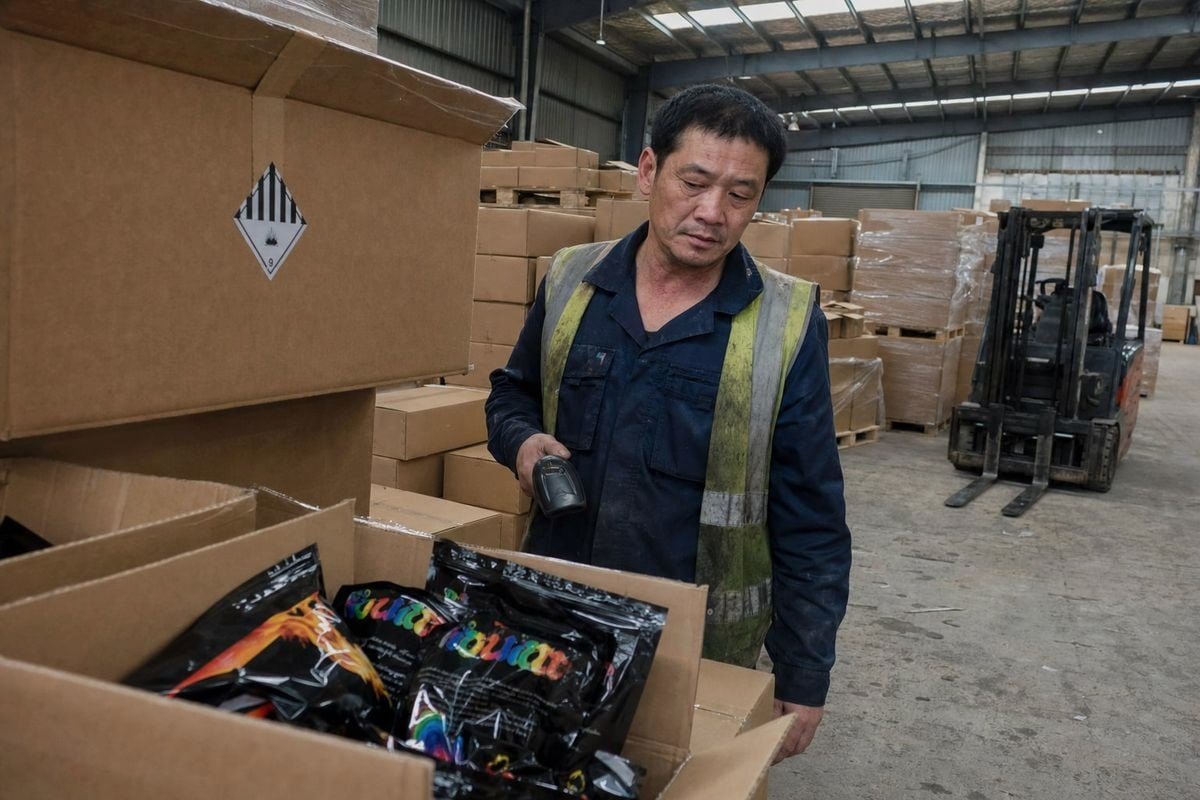
Una política de devolución sólida para el stock de Polvo Mágico de Fuego de baja rotación protege tu efectivo SGS 1. He visto a compradores de nuestra línea de producción de Ningbo luchar cuando los palets se quedaban sin vender pasada la temporada alta.
Para desarrollar una política de devolución para existencias de Polvo Mágico de Fuego de baja rotación, defina un umbral de envejecimiento de 90 a 180 días, requiera paquetes sellados sin abrir, escriba derechos de devolución o recompra en las órdenes de compra, agregue una estructura de tarifa de reposición y establezca planes de contingencia de rebajas y liquidación cuando las devoluciones no sean viables.
Esa respuesta corta cubre el marco. Pero cada pieza merece una mirada más cercana. A continuación, detallo qué incluir, cómo negociarlo y cómo prevenir el exceso de stock en primer lugar.
¿Qué debo incluir en una política de devolución al pedir polvo de fuego mágico al por mayor?
Uno de nuestros distribuidores alemanes me pidió una vez que aceptara devoluciones de paquetes que habían estado en un almacén húmedo durante un año. pedidos de compra 2. Esa conversación nos enseñó a ambos por qué los términos escritos importan.
Una política de devolución a granel para Magic Fire Powder debe incluir un requisito de sello sin abrir, una ventana de envejecimiento de 90 a 180 días, una cláusula de caducidad de potencia, una tarifa de reposición escalonada, documentación RMA con evidencia fotográfica, términos de envío compatibles con HAZMAT y mecanismos claros de nota de crédito para la contabilidad.

El mayor error que veo cometer a los importadores es tratar el polvo de llama de color como cualquier bien de consumo genérico. No lo es. Los gránulos cristalinos dentro de cada bolsa de papel de aluminio son sensibles a la humedad. Una vez que se rompe el sello o el polvo se aglomera, el producto no se puede revender. Por lo tanto, su política debe comenzar con reglas de condición, no solo reglas de calendario.
Definir Baja Rotación Antes de Definir Devolución
La guía de la industria señala el stock como de baja rotación entre 90 y 180 días sin movimiento, y muchos sistemas tratan 180+ días como una señal de stock muerto. Para un producto como el nuestro, recomiendo el extremo más ajustado. Nuestros paquetes conservan bien la calidad en papel de aluminio sellado, pero el almacenamiento sin control climático acelera la aglomeración. Una cláusula de caducidad de potencia que anula la elegibilidad de devolución 180 días después de la fecha de fabricación es justa para ambas partes.
Las Cláusulas Principales
Esta es la estructura que animo a nuestros compradores B2B a incluir en sus acuerdos:
| Cláusula | Qué cubre | Por qué importa |
|---|---|---|
| Requisito de sello sin abrir | Solo las bolsas selladas de fábrica califican | Previene devoluciones contaminadas por humedad |
| Ventana de envejecimiento | Devoluciones permitidas entre 90 y 180 días | Ancla el disparador a los datos, no a la intuición |
| Tarifa de reposición | Deducción escalonada del 15-25% | Compensa la mano de obra de inspección y reintegración |
| Proceso de RMA | Autorización de mercancía devuelta con fotos | Detiene el envío innecesario de productos dañados |
| Responsabilidad del envío | El comprador paga las devoluciones no defectuosas | Los márgenes de los polvos de novedad rara vez soportan devoluciones gratuitas |
| Mecánica de crédito | Términos de crédito en tienda vs. reembolso en efectivo | Mantiene el capital trabajando en la relación |
| Términos de cumplimiento | las regulaciones de envío de materiales peligrosos 3 y etiquetado | Los colorantes a base de cobre pueden enfrentar restricciones del transportista |
Un punto más. Distinguir el stock de baja rotación del stock muerto 4 en la propia política. Los movimientos lentos todavía tienen una posibilidad realista de venderse antes de la fecha de caducidad; son candidatos para devolución o rebaja. El stock muerto necesita un plan de salida, a menudo liquidación de stock muerto en lugar de una solicitud de devolución. Un solo documento que trate ambos de la misma manera frustrará a todos. En nuestra experiencia exportando a más de 30 países, los compradores con las políticas más limpias siempre separan estas dos categorías con diferentes escaleras de acción.
¿Cómo puedo negociar los términos de devolución o recompra con mi fabricante de polvo mágico de fuego?
Hay una compensación que evalúo cada vez que un distribuidor solicita derechos de devolución: cuanto más riesgo absorbemos aguas arriba, más disciplina de pronóstico necesitamos del comprador aguas abajo.
Negocie los términos de devolución antes del primer pedido, no después de que el stock envejezca. Solicite un acuerdo de recompra del proveedor vinculado a la compensación de pedidos futuros, incorpore la ventana de devolución en el PO, defina el momento de la nota de crédito y ofrezca compromisos de volumen o intercambio de pronósticos a cambio de que el proveedor absorba parte del riesgo de inventario.

Permítanme ser directo sobre cómo se ve esto desde el lado de la fábrica. Cuando un comprador nos pide privilegios de devolución, decimos que sí más a menudo cuando se cumplen tres condiciones: la solicitud viene con un pedido futuro, los productos devueltos están sellados y son rastreables por lote, y el comprador comparte datos de venta. No es que seamos difíciles. Es así como funciona realmente el reparto de riesgos.
Un Manual Práctico de Negociación
Sigue esta secuencia y obtendrás mejores términos que la mayoría de los importadores:
- Pregunta antes de ordenar. Los derechos de devolución escritos en la orden de compra tienen peso legal. Las promesas verbales después de que el stock envejece no tienen ninguno. La regla que doy a los compradores: sin derechos de devolución por escrito, sin valor de política.
- Ofrece algo a cambio. A acuerdo de recompra de proveedor generalmente va ligado a un pedido de compensación. Si devuelves un palet, haz un pedido de dos de tus productos de alta rotación. Los proveedores aceptan esto porque la relación se mantiene neta positiva.
- Prefiere el crédito en tienda sobre el efectivo. La mayoría de las fábricas, incluida la nuestra, ofrecerán un valor de crédito más alto que un reembolso en efectivo. El crédito mantiene el capital en la asociación y agiliza la salida de tus SKUs estancados.
- Clava la mecánica de la nota de crédito. Su equipo de contabilidad necesita notas de crédito emitidas dentro de una ventana definida después de que lleguen los productos. De lo contrario, la devolución existe en el almacén pero no en los libros, y la amortización del inventario nunca se resuelve limpiamente.
- Confirme la viabilidad de la logística inversa. Algunas formulaciones de colorantes enfrentan restricciones del transportista. Confirme si las regulaciones de envío de HAZMAT se aplican en el carril de devolución antes de prometer algo a sus propios clientes. Nuestra formulación ecológica se envía sin productos químicos nocivos, pero cada comprador aún debe verificar las reglas de su transportista local.
- Explore las opciones de retención y crédito. Para productos de bajo valor y lenta rotación, un crédito parcial donde usted retiene el stock evita logística inversa 5 el costo por completo. Hemos hecho esto con comerciantes de regalos de festivales cuando el envío de los productos de vuelta costaba más de lo que valían los productos.
Una objeción de un comprador que escucho a menudo: "Mi proveedor nunca aceptará devoluciones de un producto de nicho". En mi experiencia, eso solo es cierto cuando el comprador no ofrece nada a cambio. Los proveedores con más de 17 años en una categoría entienden que absorber un riesgo de inventario modesto gana cuentas a largo plazo. Plantee la solicitud como compartir riesgos, no como descargar riesgos, y la mayoría de las fábricas serias se involucrarán.
¿Qué Causa el Stock de Movimiento Lento y Cómo Puedo Evitarlo Antes de Realizar Mi Próximo Pedido?
Una marca británica de camping pidió una vez un año completo de nuestros paquetes Magic Fire de una sola vez para ahorrar en flete. Al octavo mes, la mitad del stock había cruzado el umbral de envejecimiento. El ahorro de flete se desvaneció en costos de mantenimiento.
El stock de polvo de fuego mágico de baja rotación suele deberse a lecturas erróneas de la demanda estacional, pedidos individuales sobredimensionados, seguimiento deficiente a nivel de SKU y malas condiciones de almacenamiento. Prevénlo anclando los pedidos a los datos de venta, supervisando tu ratio de rotación de inventario, dividiendo los pedidos en ciclos más pequeños y revisando los informes de existencias antiguas mensualmente.

La prevención es más barata que cualquier política de devolución. Cada devolución, incluso una fluida, cuesta mano de obra de inspección, envío y tiempo administrativo. Así que antes de su próximo pedido, diagnostique por qué el último lote se ralentizó..
Las cuatro causas raíz que veo con más frecuencia
| Causa raíz | Qué sucede | Prevención |
|---|---|---|
| Lectura errónea estacional | Los productos de fuego alcanzan su punto máximo en otoño y temporada navideña; los pedidos de primavera se estancan. | Mapee los pedidos al calendario de fogatas y chimeneas de su mercado. |
| Pedidos excesivos | Los ahorros de flete tientan a los compradores a volúmenes de 12 meses. | Pida en ciclos de 3 a 4 meses; acepte un flete unitario ligeramente más alto. |
| Falta de visibilidad a nivel de SKU | Los paquetes lentos se esconden dentro de los totales saludables de la categoría. | Ejecute informes de envejecimiento de SKU; marque todo lo que supere los 90 días. |
| Degradación por almacenamiento | Los almacenes húmedos aglutinan el polvo antes de que se venda. | Almacene en condiciones secas; rote primero en entrar, primero en salir. |
Construya una escalera de disposición, no una única vía de escape.
No todos los productos de lenta rotación deben ser devueltos. Las operaciones más saludables ejecutan una escalera de remedios, en este orden: reasigne el stock entre canales, descuéntelo, empaquételo con productos de rápida rotación, devuélvalo si los términos del proveedor lo permiten y liquídelo como último recurso. Una estrategia de venta de liquidación programada justo antes de su ventana de expiración de potencia recupera mucho más valor que una amortización después de ella. Las tácticas de intercambio de paquetes también funcionan bien en esta categoría: emparejar polvo envejecido con iniciadores de fuego o antorchas de cera mantiene el valor de la transacción mientras se liquida el SKU lento.
Rastree dos números mensualmente. Primero, su relación de rotación de inventario 6 por SKU, para que sepa qué artículos se ganan su espacio en el estante. Segundo, un informe de envejecimiento con tres etapas: saludable, de lenta rotación y muerto. Cada etapa desencadena una acción diferente. Aquí es también donde racionalización de SKU 7 entra en juego. Si un formato de empaque específico, digamos, la versión en frasco frente a la bolsa de kraft, se vende consistentemente más lento en su mercado, elimínelo del próximo pedido en lugar de mantenerlo por costumbre. Cuando nuestros clientes comparten estos datos con nosotros, les ayudamos a ajustar los formatos de empaque y los tamaños de los pedidos antes de que el problema se repita.
¿Debo pedirle a mi proveedor MOQs flexibles para reducir el riesgo de sobreabastecimiento?
La lección que remodeló cómo estructuramos los MOQ provino de un importador holandés que quería probar tres formatos de empaque sin comprometerse con un contenedor de cada uno. Dijimos que sí, y ese pedido de prueba se convirtió en una de nuestras cuentas más estables.
Sí. Los MOQ flexibles son la forma más eficaz de reducir el riesgo de sobreinventario en un producto de novedad de temporada. Solicite cantidades de pedido de prueba más bajas, contenedores de SKU mixtos y programas de entrega escalonados. Un precio unitario ligeramente más alto en pedidos más pequeños cuesta mucho menos que una amortización de inventario posterior.

Aquí están las matemáticas honestas desde el lado del comprador. Un pedido grande reduce su costo unitario, pero aumenta tres costos ocultos: capital inmovilizado en stock, cargos de mantenimiento de almacén y exposición a amortizaciones si la demanda decepciona. En un producto novedoso con una ventana de potencia de 180 días, esos costos ocultos se acumulan rápidamente.
Compare los enfoques de MOQ
| Enfoque de MOQ | Mejor para | Ventajas | Desventajas |
|---|---|---|---|
| MOQ estándar de contenedor completo | SKUs probados con demanda estable | Costo unitario más bajo | Mayor exposición a sobrestock |
| MOQ de pedido de prueba | Nuevos mercados o nuevos formatos | Prueba la demanda de forma económica | Precio unitario más alto |
| Contenedor mixto de SKU | Carteras multiformato | Reparte el riesgo entre SKUs | Carga y control de calidad más complejos |
| Entrega escalonada | Picos estacionales | Coincide la entrada con la venta | Requiere disciplina de programación del proveedor |
Lo que una buena fábrica ofrecerá realmente
No todas las fábricas pueden flexibilizar las MOQ, y vale la pena entender por qué. La flexibilidad requiere líneas de producción internas completas y un estricto control de calidad lote a lote, de modo que una pequeña tirada de prueba coincida genuinamente con la calidad de producción en masa que sigue. Una empresa comercial que revende la producción de otra persona generalmente no puede prometer eso. Cuando ejecutamos un pedido de prueba en nuestras instalaciones de Ningbo, pasa por la misma línea y los mismos puntos de control de calidad que un contenedor completo, lo que significa que la prueba de demanda del comprador es válida.
Combine las MOQ flexibles con los términos de devolución anteriores y obtendrá un marco de riesgo completo. Los primeros pedidos más pequeños reducen la posibilidad de que necesite la cláusula de devolución. Las entregas escalonadas le permiten cancelar o ajustar envíos posteriores si la venta se retrasa. Los contenedores mixtos le permiten probar la bolsa, la bolsa de papel kraft y la caja de exhibición entre sí antes de comprometerse profundamente. Y si aún surge un SKU lento, su crédito en tienda negociado y los términos de tarifa de reposición limitan la desventaja. Confirme también el cumplimiento por adelantado. Marcado CE 8, informes de prueba SGS o Intertek, y etiquetas de advertencia adecuadas, ya que el stock no conforme no se puede liquidar legalmente a través de ningún canal, lo que convierte un artículo de baja rotación en una pérdida total.
Conclusión
El stock de Polvo Mágico de Fuego de baja rotación agota el efectivo silenciosamente hasta que se amortiza. Defina umbrales de envejecimiento, negocie los derechos de devolución por adelantado, realice revisiones mensuales de envejecimiento y ordene con MOQ flexibles.
Notas al pie
Página oficial para las pruebas y



 English
  Spanish
  German
  French
  Arabic
  Portuguese
Únete a la conversación