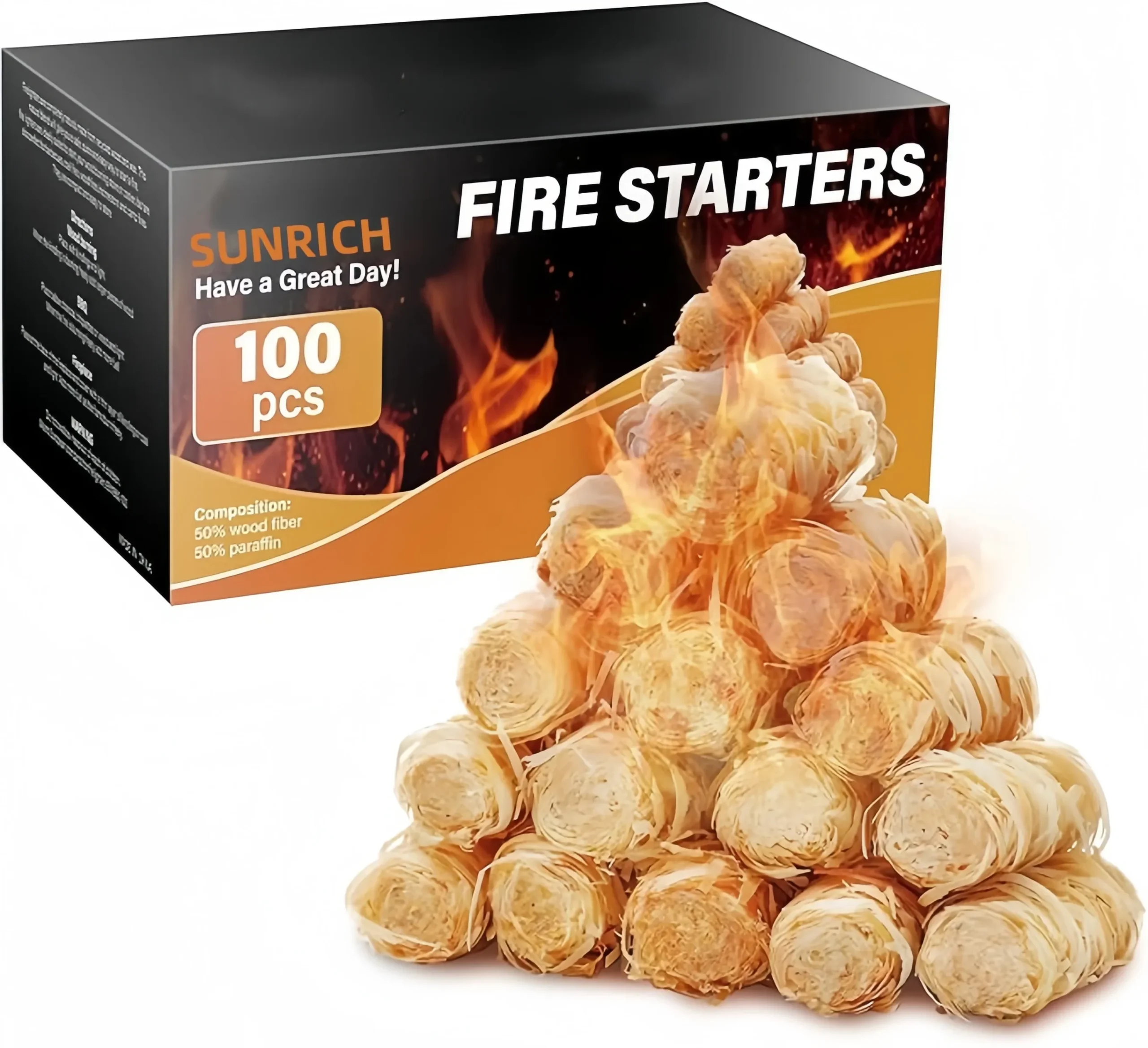
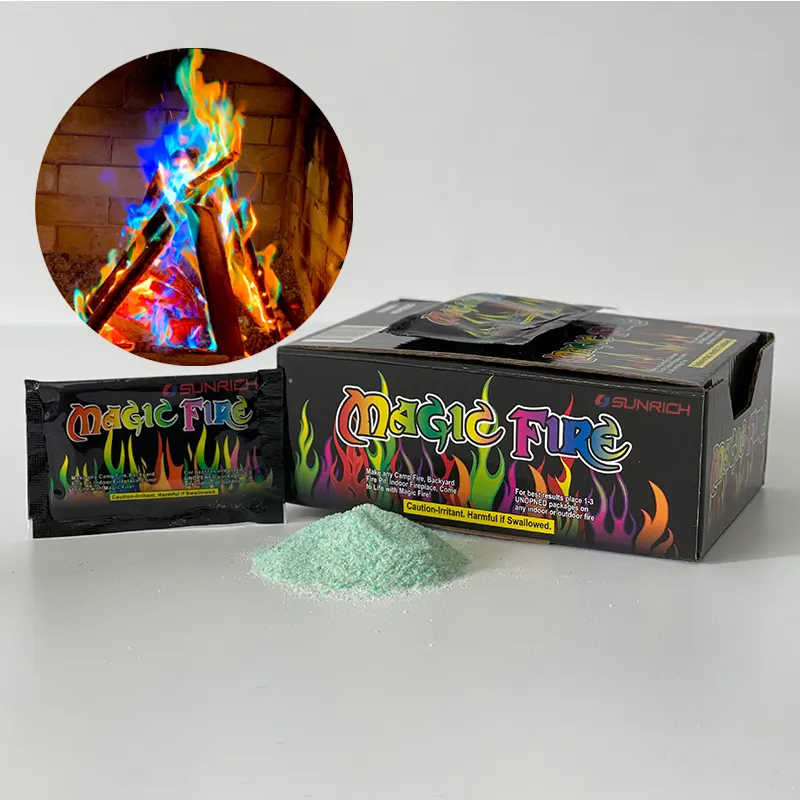






Shipping Magic Fire Powder into the EU without an EU Responsible Economic Operator can freeze your container at customs General Product Safety Regulation 1. We've watched buyers lose whole seasons this way. Our Liuyang factory learned to solve this early.
To designate an EU Responsible Economic Operator for Magic Fire Powder, first classify the product under GPSR, REACH/CLP, or pyrotechnics rules, then appoint an EU-based importer, authorised representative, or fulfilment provider via written mandate, and print that operator's name and address on the packaging.
That is the short version. The details matter, because getting the classification or the mandate wrong can block your goods. Let me walk you through each step, based on real shipments we handle every month.
What documents do I need to appoint an EU Responsible Economic Operator for Magic Fire Powder imports?
A German distributor once asked us for "just one compliance certificate" to cover his whole order. Our export team had to explain that the EU wants a full document chain, not a single paper.
You need a written mandate or Power of Attorney signed by the Chinese manufacturer, the product's technical documentation, a safety data sheet under CLP, test reports, a declaration of conformity where applicable, and packaging artwork showing the EU operator's name and postal address.

The written mandate is the legal core. Under the General Product Safety Regulation 2 (GPSR, Regulation 2023/988) and the Market Surveillance Regulation (2019/1020), a non-EU manufacturer cannot place covered products on the EU market without an EU-established responsible economic operator. That operator only has legal standing if the manufacturer formally authorises them. So the mandate must state the parties, the product scope, and the compliance tasks the operator will perform.
The full document stack
Here is the checklist we prepare for buyers of our Magic Fire color-flame packets:
| Document | Who prepares it | Why it matters |
|---|---|---|
| Written mandate / Power of Attorney | Manufacturer + EU operator | Legally authorises the operator to act in the EU |
| Safety Data Sheet (SDS) | Manufacturer | Required for chemical mixtures under REACH/CLP |
| Test reports (e.g., SGS/Intertek) | Third-party lab | Proves the product meets safety claims |
| Technical documentation file | Manufacturer | Must be available to market surveillance authorities 3 |
| Declaration of conformity (if in scope) | Manufacturer | Needed for CE-marked categories such as pyrotechnics |
| Labeled packaging artwork | Manufacturer + buyer | Must show the EU operator's name and address |
One caution from our side: an EORI number 4 is not one of these documents. It handles customs identification only. It does not satisfy the responsible operator requirement, even though some freight forwarders suggest otherwise. We flag this to every new EU buyer, because mixing up the two creates a false sense of security. Our compliance team keeps SDS files and third-party test reports on record for every batch, so the EU operator can respond to authority requests within the required response period.
How do I verify my Chinese supplier's compliance before designating an EU Responsible Person?
Buyers who visit our Ningbo production site often tell us the same thing: they were burned before by a trading company that faked test reports. Verification, done properly, prevents that pain.
Verify the supplier's factory status, request valid ISO 9001 and BSCI audit reports, confirm SGS or Intertek test reports match the exact product batch, review the SDS for accurate chemical composition, and check whether the product needs REACH registration or pyrotechnic CE assessment.

Verification comes before designation for a simple reason. Your EU Responsible Person takes on legal liability. If the underlying documents are fake or expired, that liability lands on your side of the supply chain. No serious authorised representative in Germany or the Netherlands will sign a mandate for a product they cannot document.
A practical verification sequence
- Confirm you are dealing with a real factory. Ask for a business licence showing manufacturing scope, plus factory audit reports. Trading companies often cannot produce batch-level quality records. We hold BSCI audits precisely because established EU importers ask for them first.
- Match test reports to the actual product. A report for a different formula, packaging, or batch is worthless. Check the report date, the lab (SGS, Intertek, or equivalent), and the tested item description against your order.
- Read the SDS critically. Magic Fire Powder is a chemical mixture. The SDS should list flame-coloring components honestly. If it lists copper chloride, strontium carbonate 6, or potassium perchlorate, check REACH thresholds. High-hazard formulas may need a separate REACH Only Representative — a legally distinct role from the GPSR Responsible Person.
- Resolve the classification question. "Magic fire powder" is not a standard EU regulatory name. It may be treated as a chemical mixture under REACH/CLP or, in some formulations, as a pyrotechnic article under Directive 2013/29/EU. Our eco-friendly color-flame packets are formulated to avoid the pyrotechnic route, but you must confirm this per product, not assume it.
- Test communication speed. Ask a technical question in English. If answers take a week, imagine how authority requests will go.
An EU Commission verification exercise found that only 43% of contacted operators responded identifying an EU responsible economic operator. That gap is exactly what enforcement is now targeting. Do not join the 57%.
What are my legal obligations after appointing a Responsible Economic Operator in the EU?
There is a trade-off we discuss openly with every new EU distributor: appointing an operator is quick, but keeping the role active takes ongoing work. Signing the mandate is the start, not the finish.
After appointment, the operator must keep conformity documents available, cooperate with market surveillance authorities, notify authorities of unsafe products, support corrective actions and recalls, and ensure the operator's name and EU postal address appear on the product, packaging, or accompanying documents.

Some compliance consultants pitch the authorised representative as a cheap paperwork service. Regulators see it very differently. Under Article 4 of Regulation 2019/1020 and under the GPSR, the operator is a legally accountable safety contact. If customs or a market surveillance authority cannot identify or reach the operator, clearance can be refused and market access blocked. We treat this as a shared duty: our factory keeps the technical file current, and the EU operator holds access to it.
Ongoing obligations at a glance
| Obligation | Who acts | Practical consequence if ignored |
|---|---|---|
| Retain technical documentation and SDS | Operator, supplied by manufacturer | Fines; goods pulled from market |
| Respond to authority information requests | Operator | Sales bans, marketplace delisting |
| Notify authorities of risky products | Operator + manufacturer | Personal liability, forced recall |
| Support recalls and corrective action | Both parties | Reputational and financial damage |
| Label operator name and address on packaging | Manufacturer prints, operator confirms | Customs rejection at the border |
Do not forget the platform layer
Amazon, eBay, and Cdiscount now run their own onboarding checks. Sellers of chemical novelty products must upload Responsible Person documentation before listing. This is a compliance gate on top of the law itself. In our experience, buyers who prepared their GPSR documents properly pass these platform checks in days rather than weeks.
One more post-Brexit point. The UK requires a separate UK Responsible Person under its own product safety rules. If you sell into both markets — as most of our German and UK customers do — you need two distinct appointments with separate registered addresses. Budget for both from day one.
A Dutch buyer once asked us to decide this for him. We could not — the choice depends on his supply chain, not our production line. But we could map the options, and here is that map.
Choose the importer if one EU company buys and resells your goods; choose an authorised representative if you sell to multiple EU buyers or direct to consumers; choose a fulfilment service provider only when no importer or representative exists in the EU.

The law recognises four possible operator types, applied in a priority order when the manufacturer sits outside the EU:
| Operator type | Best fit | Strengths | Watch-outs |
|---|---|---|---|
| EU branch of the manufacturer | Large suppliers with EU offices | Full control of compliance | Costly to establish and staff |
| Authorised representative | Sellers with multiple EU channels or D2C sales | One consistent compliance contact across the EU | Requires written mandate and service fees |
| Importer | Single-distributor supply chains | No extra appointment needed; importer is already liable | Ties compliance to one commercial partner |
| Fulfilment service provider | Marketplace sellers with no other EU entity | Fills the legal gap for e-commerce | Least equipped to handle technical files |
How we frame the decision with buyers
Think about who controls the goods. If your Incoterms make one EU distributor the importer of record, that distributor naturally becomes the responsible operator. This is the simplest route for classic B2B wholesale, and it is how most of our Magic Fire packet orders to Germany, France, and Poland are structured.
But if you sell to several smaller EU buyers, or list on marketplaces yourself, you should not hang compliance on one distributor. An independent authorised representative gives you a stable, neutral EU address that survives changes in your distribution network. It also keeps your private-label brand independent of any single reseller.
A fulfilment provider is a legal fallback, not a strategy. They store and ship goods; they rarely understand SDS files or flame-colorant chemistry. Use this option only when nothing better exists.
Finally, remember the distinction in terms. An authorised representative is one type of responsible economic operator, not a synonym for it. Always check which exact term your product's regulation uses before you sign anything.
Conclusion
Unclassified products, missing mandates, and unreachable operators sink EU shipments daily. Classify your Magic Fire Powder first, appoint the right EU operator, and partner with a certified factory that keeps every document ready.
Footnotes
1. Official EU legal text defining GPSR obligations for responsible economic operators. ↩︎
2. Defines the EU regulation central to responsible economic operator obligations. ↩︎
3. EU Commission page describing market surveillance role central to operator obligations. ↩︎
4. EU Commission source clarifying the customs identification system distinct from operator designation. ↩︎
5. Direct link to the EU Market Surveillance Regulation cited for operator accountability. ↩︎
6. Background on the flame-coloring chemical compound referenced in SDS composition discussion. ↩︎
7. Background on pyrotechnic articles classification mentioned as an alternative regulatory route. ↩︎

 English
 Spanish
 German
 French
 Arabic
 Portuguese
Join the Conversation