







Product compatibility guides for wood fire starters 1 keep buyers safe and returns low. On our production line, we have seen one mismatched claim sink an entire retail listing.
To create a product compatibility guide for wood fire starters, organize it by stove type, airflow design, fuel type, and manufacturer restrictions. Test each starter format in pellet stoves, wood stoves, fireplaces, and fire pits, then map results into a recommended, acceptable, or avoid matrix.
That answer sounds simple. But the details decide whether your guide protects your brand or exposes it. Let me walk you through how we build these guides for our export clients.
How do I match wood fire starters to different stove and fireplace types?
A few years back, a German distributor asked us why his wax-dipped rolls performed brilliantly in fire pits but stalled in closed pellet stoves. Our team traced it to airflow, not the product.
Match wood fire starters to stoves by checking airflow design, burn placement, and fuel type. Pellet stoves need burn-pot-safe formats, wood stoves need low-flare kindling igniters, open fireplaces accept most natural starters, and fire pits tolerate nearly all multi-use formats.
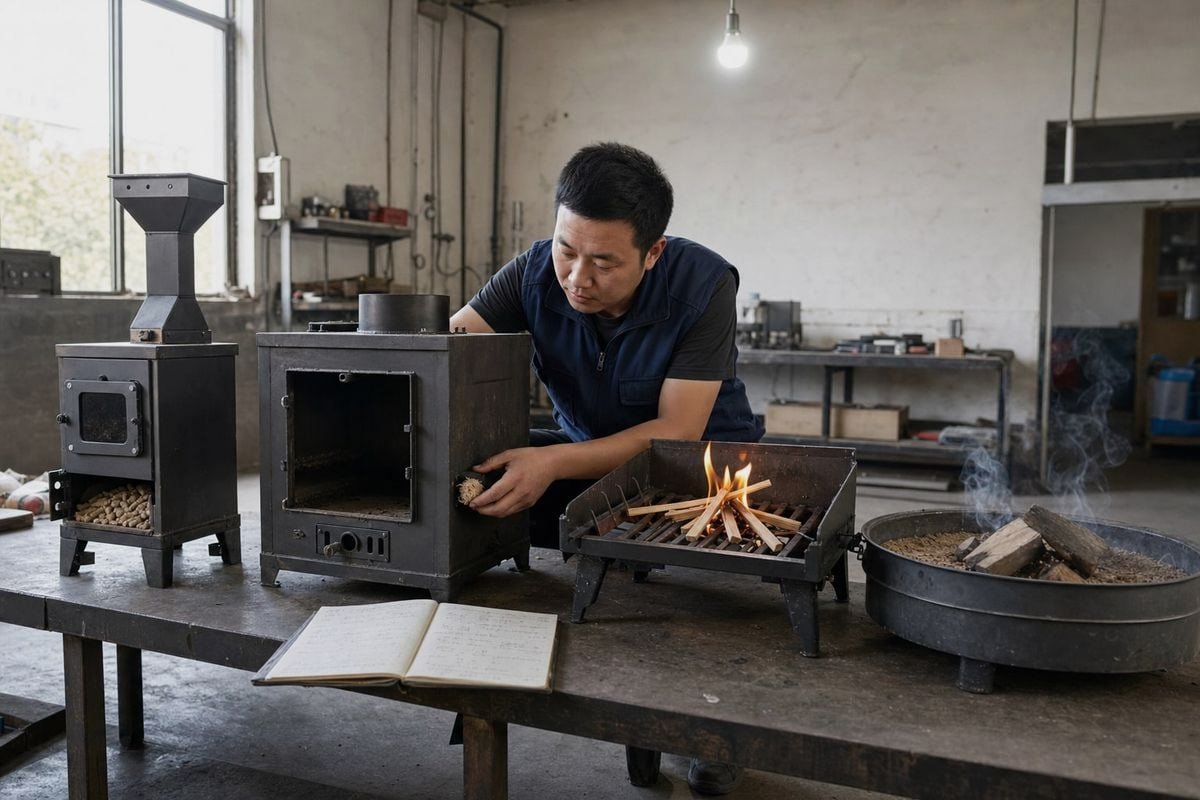
Compatibility is not about whether a starter lights. It is about whether it lights reliably, transfers flame to the fuel, and behaves safely inside the appliance's air environment. When we develop a new wood-wool or wax-dipped roll at our Ningbo facility, we test it against each appliance category separately, because the same product behaves differently in each one.
The core stove categories to cover
Here is the matrix we recommend our B2B buyers adapt for their own markets:
| Stove Type | Best Starter Format | Placement | Key Risk |
|---|---|---|---|
| Pellet stove | Gel or small fatwood stick | Inside the burn pot | Wrong pellet stove ignition zone |
| Wood stove | Wood wool, low-flare wax roll | Under kindling, near air inlet | Flare-up, blocked airflow |
| Open fireplace | Fatwood, wax-dipped rolls, cubes | On the grate, under kindling | Weak chimney draft requirements 2 |
| Fireplace insert (doors) | Only manual-approved starters | Per appliance manual | Restricted airflow |
| Fire pit / campfire | Almost any multi-use starter | Center of the log-cabin stack | Wind and moisture |
| Charcoal grill | Cubes, fatwood | Beneath the charcoal stack | Assuming stove compatibility |
Why airflow decides everything
Wood stoves use primary and secondary air controls. A starter buried under dense logs will smother. Pellet stoves feed fuel by auger into a small pot, so a large starter simply does not fit the ignition zone. Fireplaces rely on chimney draft requirements to pull flame upward, so placement under kindling matters more than raw burn intensity. Multi-fuel stove compatibility adds another layer, because bridging the ignition gap between wood and smokeless coal often needs a longer-burning compressed block.
Your guide should also separate open hearths from door-controlled inserts. Some starters approved for open fireplaces 3 are explicitly not approved for stoves with doors that restrict airflow. If your guide blurs that line, your customers will find out the hard way.
What compliance and safety certifications should I verify before listing compatibility claims?
Compliance is where most compatibility guides quietly fail. In our seventeen-plus years exporting to the US, Germany, and the UK, we have watched buyers lose shelf placements over missing test reports, not product quality.
Before publishing compatibility claims, verify third-party test reports from labs like SGS or Intertek, CE marking for the EU, factory audits such as ISO 9001 and BSCI, and any appliance-specific classifications like UL listings. Never state a compatibility claim your documentation cannot back.

A compatibility guide is a set of claims. Every claim needs paperwork behind it. When we prepare export documentation for a client's private-label line, we treat the compatibility statement on the box as a regulated promise, because in practice that is exactly how retailers and customs officers read it.
The documents your guide should reference
Start with the firelighter chemical composition. A box that lists 50% wood fiber and 50% paraffin, for example, tells buyers and regulators exactly what burns. Vague composition statements invite rejection at inspection. Then confirm the following:
- Third-party lab reports. SGS or Intertek burn tests confirm ignition behavior and support burn-time claims.
- CE compliance for European markets. This is a hard requirement for our EU distributors, not a nice-to-have.
- Factory system audits. ISO 9001 and BSCI audits prove the production process behind batch consistency.
- Appliance-side classifications. Some products carry UL classifications for zero-clearance manufactured fireplaces. If yours does not, do not imply it.
- Warning labels and safety text. These must match the compatibility claims exactly, in the languages of your target market.
Special caution for sensitive appliances
Catalytic combustor safety deserves its own paragraph in any guide. Catalytic EPA-certified wood heaters 4 use a ceramic combustor that wax or chemical residue can mask, permanently reducing emission-control efficiency. If your starter has a high wax load, your guide should flag catalytic stoves for confirmation, not blanket approval. Similarly, high-wax formats can film the glass on stoves with airwash technology 5, causing premature clouding. Being honest about these limits builds trust, and trust is what keeps a purchasing manager reordering.
How can I test burn time and performance across various stove designs before publishing a guide?
There is a trade-off we weigh in every product test: burn time versus flare-up. A starter that burns twelve minutes sounds impressive, but if it flares hard in the first thirty seconds, it fails our wood stove protocol.
Test each starter in every target appliance using controlled trials: measure time to ignition, sustained flame duration, flame transfer to fuel, smoke output, and residue. Repeat tests across multiple batches and humidity conditions, then record results in a standardized scoring sheet before publishing claims.
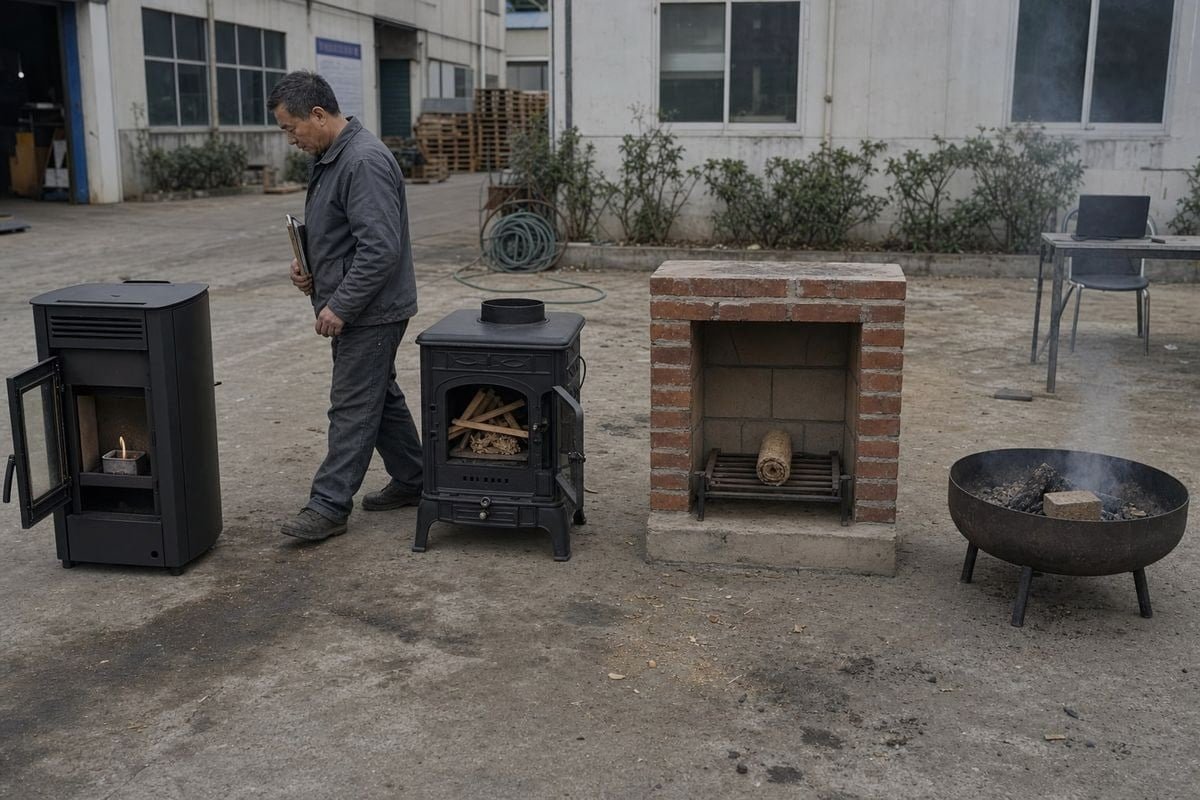
At our facility in Ningbo, we run batch-to-batch burn tests as part of routine quality control. The same discipline applies when a distributor builds a compatibility guide. One test in one stove tells you almost nothing. You need a repeatable protocol.
A practical five-step testing process
- Condition the fuel. Verify moisture content for firewood 6 at 15–20%. Wet wood ruins every test and produces misleading failures.
- Standardize placement. For wood stoves, place the starter under kindling near the air inlet. For EPA-certified wood heaters, also test the top-down method, with the starter at the peak of the stack to pre-heat the flue.
- Measure five metrics. Time to full ignition, total burn duration, flame transfer success, visible smoke, and leftover residue.
- Repeat across conditions. Test at least three production batches, plus one damp-condition trial for outdoor formats.
- Score and map. Convert results into recommended, acceptable, or avoid ratings per appliance.
What the metrics reveal
| Metric | Why It Matters | Red Flag |
|---|---|---|
| Time to ignition | Predicts user satisfaction | Over 60 seconds with a match |
| Burn duration | Supports kindling ignition claims | Under 5 minutes for stove use |
| Flame transfer | The real compatibility test | Starter burns out, fuel stays cold |
| Smoke output | Affects sensors and indoor comfort | Heavy black smoke on ignition |
| Residue | Creosote buildup prevention 7 and combustor safety | Waxy or tarry deposits |
Smoke matters more than most buyers expect. Emerging smart stoves with optical flame sensors can trigger false ignition-failure alerts when a starter produces heavy black smoke. Residue matters for flue pipe maintenance too, since low-residue formulas support creosote buildup prevention over a full heating season. And placement matters for high-efficiency stoves: a high-heat starter positioned directly beneath secondary combustion tubes can cause localized thermal shock. Your guide should record placement, not just product, for each result.
What private-label and packaging details should I include when creating a compatibility guide for my market?
One lesson we learned early in our OEM work: the compatibility guide and the box must tell the same story. A Dutch buyer once printed "for all stoves" on retail packaging while his insert card said otherwise. Returns followed.
Include the stove-type compatibility matrix, composition disclosure, usage instructions per appliance, warning labels in local languages, barcodes, certification logos, and burn-time claims that match test data. Ensure the retail box, insert card, and online listing state identical compatibility limits.

Private-label buyers often treat the compatibility guide as marketing copy. We push our clients to treat it as a specification document that happens to sit on a shelf. Every element on the box either supports or undermines the compatibility claims.
Packaging elements checklist
| Element | Purpose | Common Mistake |
|---|---|---|
| Compatibility icons | Instant appliance matching | Showing a wood stove icon without door-type distinction |
| Composition statement | Regulatory and buyer trust | Vague terms like "natural blend" |
| Quantity and burn time | Sets usage expectations | Claiming lab-best instead of average burn time |
| Placement instructions | Safe, effective use per stove | One generic instruction for all appliances |
| Warning labels | Legal compliance per market | English-only text for EU markets |
| Barcodes and batch codes | Traceability and recalls | Missing batch-level tracking |
Match the format to the market
Different markets want different formats. Our US clients favor bulk boxes with clear piece counts, such as a 100-piece box with bold flame graphics. German and Nordic buyers respond to natural kindling alternatives messaging, like undyed wood-wool rolls on kraft packaging that signal eco-friendly materials. UK multi-fuel households want multi-fuel stove compatibility stated explicitly, because coal-and-wood users read labels carefully.
When we run OEM projects, we customize size, burn time, packaging, and branding together, so the compatibility guide is designed alongside the product rather than written afterward. That sequencing matters. If your guide says "safe for pellet stove ignition" but your piece size does not fit a standard burn pot, no amount of packaging polish will fix the mismatch. Include a "check your appliance manual" line for door-controlled inserts and catalytic models. It costs one sentence and prevents the majority of compatibility complaints.
Conclusion
A weak compatibility guide invites returns, complaints, and delisting. A strong one turns safety into a selling point. Match starter, airflow, and appliance — then document everything.
Building product compatibility guides for wood fire starters comes down to four disciplines: categorize by stove type and airflow, verify certifications before claiming anything, test burn performance across real appliances and batches, and align private-label packaging with your test data. In our years supplying wood firestarters and wax-dipped rolls to distributors across thirty-plus countries, the buyers who succeed are the ones who treat compatibility as engineering, not copywriting. Get the matrix right, back it with SGS-grade documentation, and your guide becomes the reason retailers trust your shelf space.
Footnotes
1. Provides historical and technical context for the development and use of various firelighting materials. ↩︎
2. Explains the importance of chimney draft and maintenance for safe fireplace operation. ↩︎
3. Authoritative guide on different wood-burning appliance categories and their specific operational requirements. ↩︎
4. Official EPA Burn Wise page for selecting certified wood-burning appliances. ↩︎
5. Wikipedia section providing a technical explanation of airwash systems in wood stoves. ↩︎
6. EPA guidelines on optimal firewood moisture levels for efficient and clean burning. ↩︎
7. Expert advice on preventing creosote accumulation to ensure chimney safety and efficiency. ↩︎



 English
  Spanish
  German
  French
  Arabic
  Portuguese
Join the Conversation