






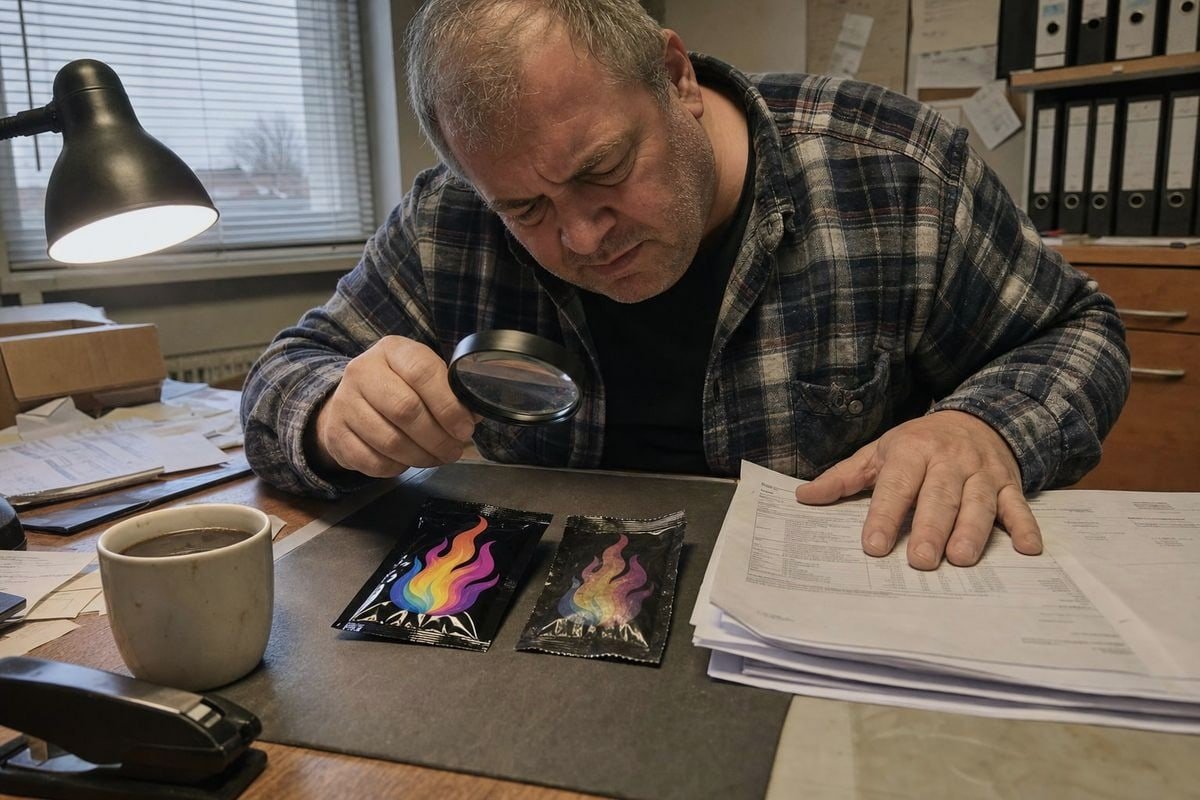
Counterfeit Magic Fire Powder floods online marketplaces every camping season ISO 9001 quality management 1. On our production line in Ningbo, we have seen the fakes buyers bring us — and they worry me every time.
To identify genuine Magic Fire Powder versus counterfeits, verify the supplier's certifications (CE, SGS, ISO 9001), request a Safety Data Sheet, inspect packaging print quality and heat-sealed foil sachets, confirm batch codes and warning labels, and avoid unusually cheap offers from unauthorized retailers.
Appearance alone will not protect you. Counterfeiters copy labels closely. The safest approach is layered verification. Below, I walk through each layer, drawing on 17+ years of making color-flame products for buyers in 30+ countries.
What certifications should I check to confirm a Magic Fire Powder supplier is legitimate?
A German distributor once told me he had rejected three suppliers in a row before finding us — none could produce a single valid test report CE marking 2. That story is more common than you would think.
A legitimate Magic Fire Powder supplier should hold ISO 9001 quality management certification, a factory social audit such as BSCI, CE marking for the European market, and third-party test reports from labs like SGS or Intertek. Always ask for original documents, then verify certificate numbers directly with the issuing body.

Certifications are the single strongest filter you have. Counterfeit operations rarely invest in real audits or lab testing. It costs money, takes months, and exposes their metal salt composition to scrutiny. A genuine factory treats compliance as a hard requirement because major retail buyers demand it before any purchase order is signed.
The core documents to request
Here is what I recommend every buyer request before a first order, based on what our own compliance file contains:
| Document | What it proves | How to verify it |
|---|---|---|
| ISO 9001 certificate | The factory runs a real quality management system | Check the certificate number with the certification body |
| BSCI audit 3 report | The factory meets social and labor standards | Ask for the audit ID and platform record |
| CE documentation | The product meets EU requirements | Request the technical file, not just a logo |
| SGS or Intertek test report | The product composition was independently tested | Contact the lab with the report number |
| Safety Data Sheet 4 (SDS) | The chemical safety warnings and composition are documented | Compare the SDS to the label ingredients |
Watch for certificate tricks
Some traders show a certificate that belongs to a different factory. Others show an expired document or a report for a different product entirely. Always match the company name, the address, and the exact product description on every document. When we host factory visits in Liuyang and Ningbo, buyers can see the certificates on the wall match the paperwork in their inbox. A trading company posing as a factory usually cannot offer that.
If a supplier hesitates, delays, or sends blurry scans with details cropped out, treat that as a firm no. Genuine documentation should arrive within a day of your request.
How can I verify product safety and ingredient authenticity before placing a bulk order?
Before we approve any batch for export, our QC team burns samples from the start, middle, and end of the run. That discipline is exactly what you should demand from your supplier too.
Verify safety and authenticity by requesting a full Safety Data Sheet, confirming the metal salt composition matches the label, ordering paid samples for burn testing, checking flame color duration against claims, and observing smoke behavior. Genuine color-flame products burn steadily with minimal odor and no thick, acrid fumes.
Never place a bulk order on photos and promises. A sample burn test tells you more than any brochure. Here is the process I recommend, and it is the same one our engineers use during batch-to-batch quality control.
A five-step verification process
- Request the SDS first. The Safety Data Sheet should list the active ingredients, hazard classifications, storage guidance, and first-aid instructions hazardous waste characteristics 5. Compare it against the printed label. Mismatches are a serious warning sign.
- Ask about the metal salt composition. Genuine color-flame effects come from specific metal salts — copper compounds produce blues and greens, for example. Some products use copper sulfate 6; ours are formulated with eco-friendly materials and no harmful chemicals. Either way, the supplier should state the chemistry openly, not hide behind "proprietary blend."
- Order samples and burn them. Use a real campfire or one of the wood-burning fire pits your customers actually own. Time the flame color duration. A genuine packet should hold consistent color for the stated period, often 30 to 60 minutes.
- Watch for flicker gaps. If the flame keeps reverting to plain orange, the granules may be diluted with cheap fillers like gypsum. Do a tactile clump test through the sachet — genuine product feels like free-flowing crystals, not caked lumps.
- Check the smoke. Authentic salts produce light, largely odorless smoke. Thick, dark, or acrid fumes point to low-purity industrial chemicals that should never sit near a family campfire.
Why sample consistency matters more than one good sample
One perfect sample means little if mass production drifts. Ask how the factory controls consistency between batches. In our plant, granule size, blend ratio, and fill weight are checked on every run so the first sample reliably reflects container-load quality. A supplier who cannot describe their QC process in plain terms probably does not have one.
What packaging and labeling details help me distinguish genuine products from counterfeits at wholesale level?
Packaging is where we spend surprising amounts of engineering time. When we develop private-label sachets for European clients, the warning label layout alone goes through multiple compliance reviews before printing.
Genuine wholesale packaging shows sharp packaging print quality, cleanly crimped heat-sealed foil sachets, printed batch or lot codes, full manufacturer details, clear chemical safety warnings, and correct usage instructions. Counterfeits show blurry print, missing lot codes, weak seals, and vague or absent hazard labeling.
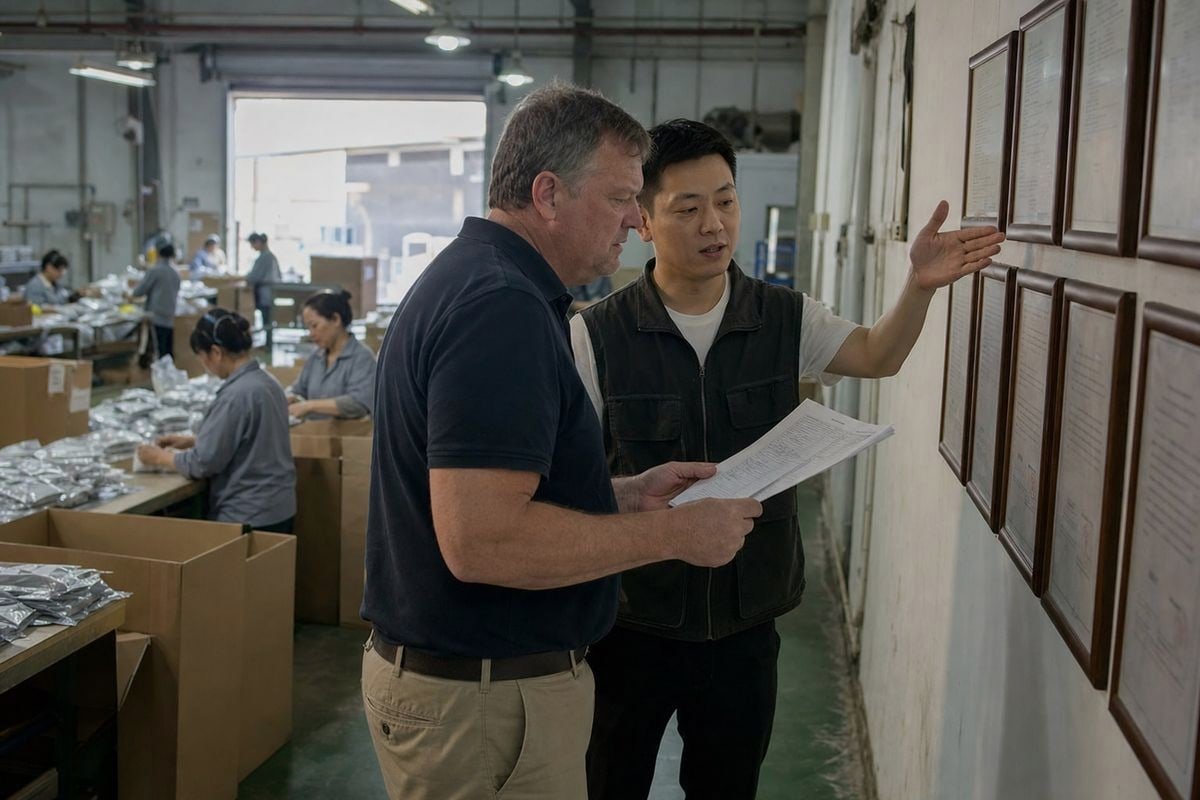
At wholesale level, you inspect cartons, not single retail units. That actually gives you an advantage. Inconsistencies across dozens of units reveal fakes faster than one packet ever could.
Side-by-side packaging comparison
| Feature | Genuine product | Likely counterfeit |
|---|---|---|
| Foil sachet seal | Even, tight crimps on both ends | Loose, wrinkled, or re-sealed edges |
| Print quality | Crisp gradients, aligned text, accurate brand colors | Blurry lettering, color shifts, spelling errors |
| Batch/lot code | Printed on sachet and outer carton, traceable | Missing, smudged, or identical across all cartons |
| Warning labels | Clear "Do Not Cook Over" and safety text, correct language for market | Absent, tiny, or poorly translated warnings |
| Manufacturer info | Full name and address | No address, or only a marketplace store name |
| Authentication features | Holographic authentication seal or batch-specific QR code on some brands | Copied static QR codes or no seal at all |
Details that counterfeiters usually skip
Counterfeiters copy the front of the packet because that is what sells. They skimp on what regulators require. Look at the back: intended-use category, storage instructions, age guidance, and poison control 7 or emergency contact information. Established brands like Magical Flames include these consistently; fakes rarely bother.
Also check moisture protection. Genuine sachets use moisture-resistant foil because the crystalline granules clump when damp. If sachets inside a display box feel hard and caked, the contents may be filler — or the packaging may be a cheap imitation that failed to protect real product. Either way, do not put it on your shelves.
One more tip from our OEM work: ask your supplier for the original artwork files and dieline. A genuine factory owns them. A counterfeiter only has scans.
Which red flags should I watch for when sourcing color-flame products from a new manufacturer?
A buyer from the Netherlands once forwarded me a quotation forty percent below our price and asked how it was possible. I told him honestly: at that number, someone is cutting chemistry, compliance, or both.
Key red flags include prices far below market rate, refusal to share test reports or an SDS, no verifiable factory address, stock photos instead of real production images, missing batch traceability, pressure to pay before sampling, and evasive answers about metal salt composition or certifications.

New supplier relationships fail for predictable reasons. After exporting to the US, Germany, the UK, and beyond for over a decade and a half, I can group the warning signs into three categories: commercial, documentary, and physical.
Red flags ranked by severity
| Red flag | Category | What it usually means |
|---|---|---|
| Price 30%+ below market | Commercial | Diluted formula or non-compliant chemicals |
| No SDS or test reports on request | Documentary | Product has never been independently tested |
| Only marketplace contact, no factory address | Commercial | Trading company or fly-by-night reseller |
| Certificates in a different company's name | Documentary | Borrowed or stolen compliance documents |
| Sample differs from bulk shipment | Physical | No batch-to-batch quality control |
| Vague answers about ingredients | Documentary | Hiding cheap or hazardous chemistry |
| Refuses video factory tour | Commercial | Nothing real to show |
How to pressure-test a new supplier
Ask three simple questions and watch how they respond. First, "Can you send your SGS or Intertek report number so I can verify it?" Second, "What is your batch coding system, and can you trace a sachet back to a production date?" Third, "Can we do a live video walkthrough of your production line this week?" A real factory answers all three quickly. When buyers ask us, we can point a camera at the line the same day.
Also insist on buying only through authorized retailers or direct factory channels when testing competitor benchmarks. Unverified marketplace sellers are the main distribution channel for counterfeits, and a wholesale buyer who sources reference samples there risks benchmarking against fakes.
Finally, trust the pattern, not any single signal. One odd detail may be innocent. Three together almost never are.
Conclusion
Counterfeit Magic Fire Powder risks safety, refunds, and your brand's reputation. Layer your checks: verified certifications, SDS review, sample burn tests, packaging inspection, and supplier vetting. When in doubt, do not buy — partner with a proven, compliant factory instead.
Footnotes
1. Official ISO source explaining the quality management standard mentioned as a certification requirement. ↩︎
2. Official EU source describing CE marking requirements referenced for product compliance. ↩︎
3. Background information on the BSCI social compliance audit standard referenced for factories. ↩︎
4. Background reference explaining what a Safety Data Sheet contains and its regulatory purpose. ↩︎
5. Official EPA resource defining the four characteristics used to classify hazardous waste. ↩︎
6. Background chemistry reference for the metal salt compound mentioned in flame color formulations. ↩︎
7. Primary authoritative resource for poison emergency assistance and chemical exposure information. ↩︎


 English
  Spanish
  German
  French
  Arabic
  Portuguese
Join the Conversation