






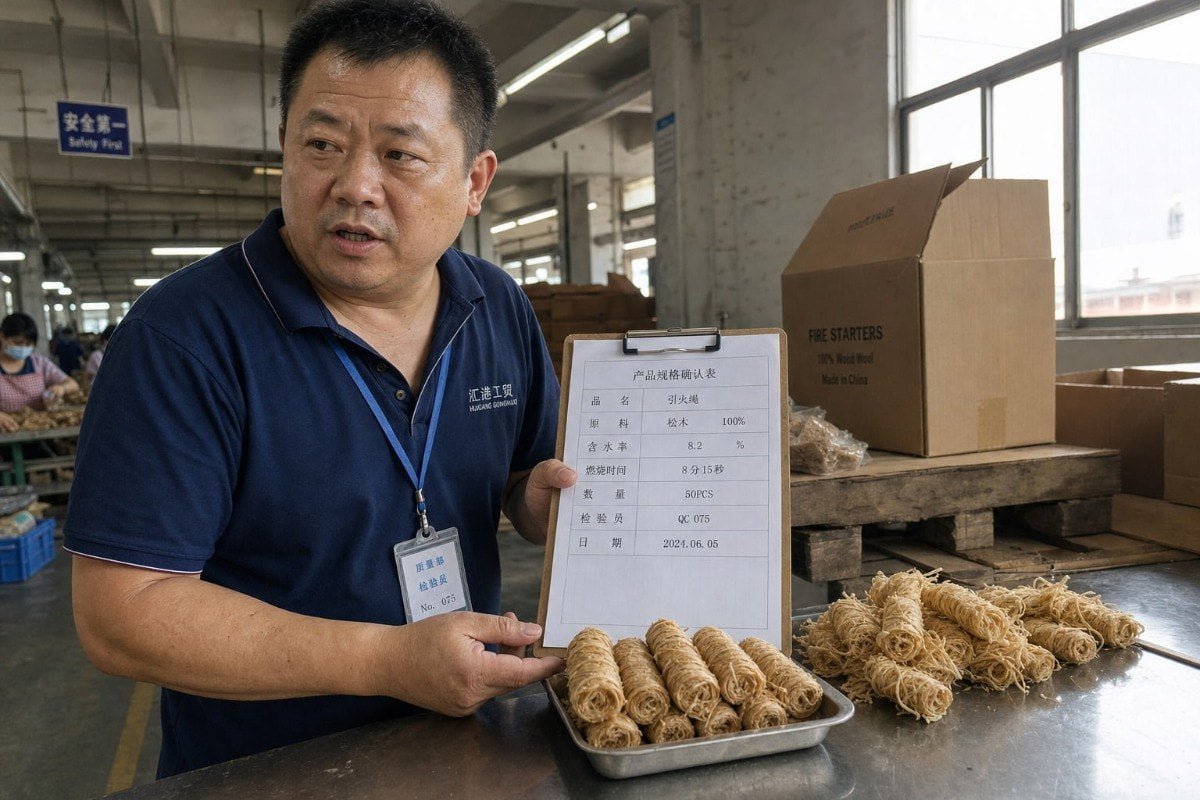
Vague wood fire starter requirements cause most sample failures I see on our production line. Buyers lose months to mismatched samples, re-quotes, and delayed launches — all avoidable with a precise brief.
To clearly describe wood fire starter requirements to suppliers, translate your end-use into measurable specs: wood type, moisture content, dimensions, burn time duration, ignition performance, packaging specifications, order quantities, and required certifications. Specific, testable language prevents mismatched samples and pricing surprises.
Let me walk you through each layer of a strong supplier brief. I will cover materials, performance, packaging, and compliance — in that order.
How Can I Specify the Exact Wood Type and Moisture Content When Requesting Samples from Suppliers?
A German distributor once sent us a one-line request: "need wood fire starters, best quality." Our team had to ask eleven follow-up questions before we could even quote.
Specify the wood species or fiber type, the wax-to-wood ratio, and a maximum moisture content percentage — typically below 8% — in writing. State whether you require softwood wool, hardwood sawdust, or wax-dipped wood rolls, and request FSC certification if sourcing matters.
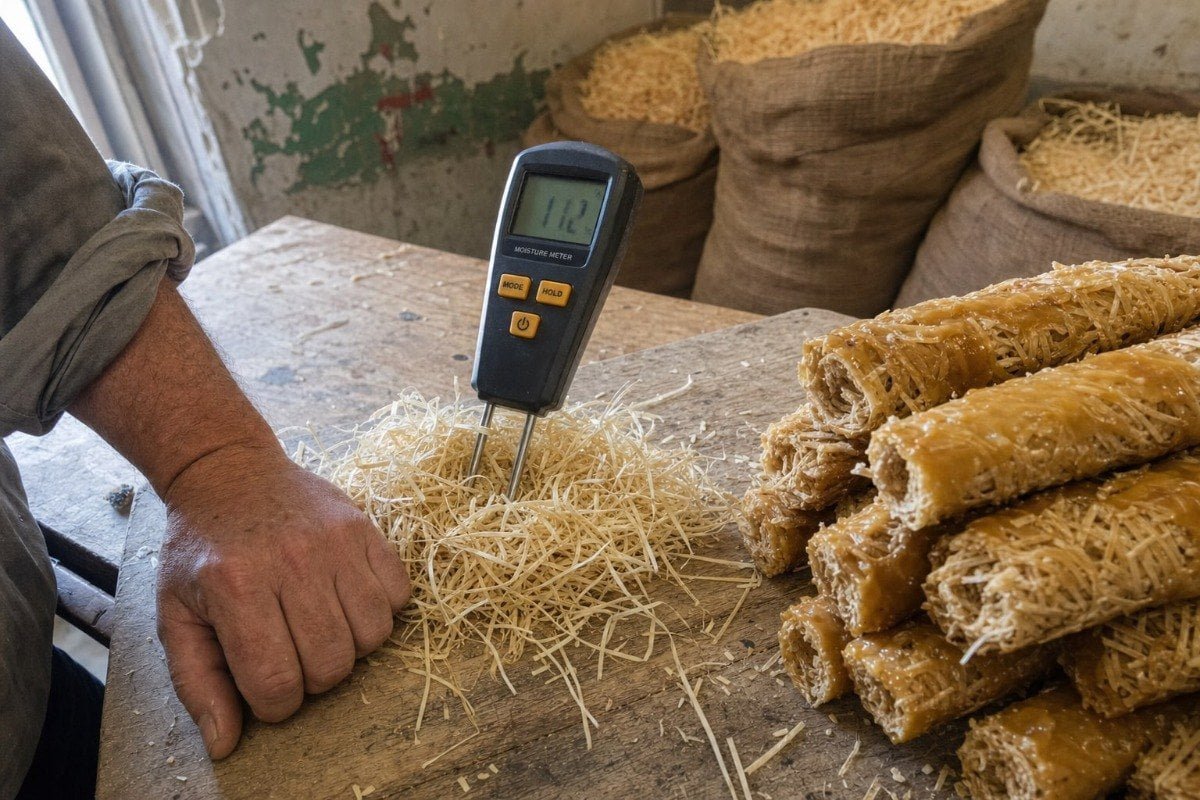
The wood component drives almost everything about how a fire starter performs. In our Ningbo facility, we hold raw wood moisture under a strict threshold before any wax dipping happens wood moisture content 1. Why? Because trapped moisture turns to steam during ignition. That steam builds pressure inside the starter. The result is popping, cracking, and sparks — a serious safety complaint waiting to happen in a customer's fireplace.
So your brief should never say "dry wood." It should say a number. A moisture content percentage below 8% is the common benchmark for wax-dipped starters. Ask the supplier how they measure it and how often they test each batch.
What to State About Wood Type
Different fibers behave differently. Here is how I explain it to new buyers:
| Wood Component | Ignition Speed | Burn Character | Best For |
|---|---|---|---|
| Softwood wool (excelsior) | Very fast | Bright, quick flame | Campfires, BBQ lighting |
| Hardwood sawdust + wax | Moderate | Dense, steady heat | Wood stoves, fireplaces |
| Wax-dipped wood rolls | Fast | Long, controlled flame | Fire pits, retail multi-use |
| Pinecone-based starters | Moderate | Decorative, aromatic | Gift and fireplace markets |
Also mention natural resin content if your market is sensitive to odor or smoke. Pine-heavy fibers carry more resin, which helps ignition but adds scent. Some indoor stove buyers want that. Food-adjacent BBQ buyers usually do not.
Finally, define the wax-to-wood ratio you expect — for example, roughly equal parts wood fiber 2 and paraffin or vegetable wax. That ratio controls energy output, burn time duration, and cost. If you leave it open, two suppliers will quote two different products and you will compare apples to oranges.
What Technical Details Should I Include to Ensure My Fire Starter Dimensions and Burn Time Meet Requirements?
Every trade-off in fire starter design shows up in two numbers: size and burn time. When our engineers adjust one, the other moves — and buyers rarely realize this until samples arrive.
Include exact dimensions with tolerances, unit weight, a minimum burn time duration such as 10 minutes, a one-match ignition requirement, the target fuel it must ignite, and the use conditions — indoor, wet, windy, or cold. Testable numbers beat adjectives every time.

A wood fire starter is not one universal product. It can mean sawdust-and-wax cubes, wood wool blocks, wax-dipped rolls, or waterproof camping starters. Each format solves a different ignition problem. So the first technical detail is always the application. A starter that must build an ember bed under split hardwood logs needs a longer, hotter burn than one that flash-lights charcoal on a grill.
After the application, put every performance expectation into a testable sentence performance requirements 3. In our sample testing room, we can verify a claim like "must light a standard kindling bundle within 60 seconds" or "must sustain flame for a minimum of 10 minutes." We cannot verify "must be high quality." Neither can you when the samples arrive.
Core Technical Specs to Put in Writing
- Dimensions and tolerance — for example, length, diameter or block size, plus an acceptable variance.
- Unit weight — this confirms the wax-to-wood ratio was actually followed in production.
- Burn time duration — set a minimum, and state the test condition (still air, standard indoor humidity).
- Ignition method — one-match or one-strike ignition should be an explicit guarantee, not an assumption.
- Fuel compatibility — dry hardwood, split logs, charcoal, kindling, or pellet stove fuel.
- Environmental tolerance — must it work after brief water exposure, in light wind, or in cold weather?
Two specs buyers almost always forget: crush strength and thermal stability. A starter that disintegrates into dust during a high-vibration ocean shipment fails before it reaches the shelf. And a wax binder that blooms or leaks through packaging in a hot warehouse ruins retail presentation. We test both before containers leave our factory, but you should still ask for the data. If your market includes high-efficiency pellet stoves or ceramic grills, add a maximum ash residue percentage too — excess ash clogs airflow in those appliances.
How Do I Communicate Packaging and Quantity Requirements Clearly to Avoid Order Discrepancies?
Years of running private label manufacturing projects have taught me one thing: most order disputes are packaging disputes. The product was fine. The carton count, labels, or artwork were not.
State units per retail pack, packs per carton, carton dimensions and weight limits, box material weight in GSM, artwork and barcode placement, warning label language, and total order quantity in one written specification. Confirm everything with a pre-production sample sign-off.
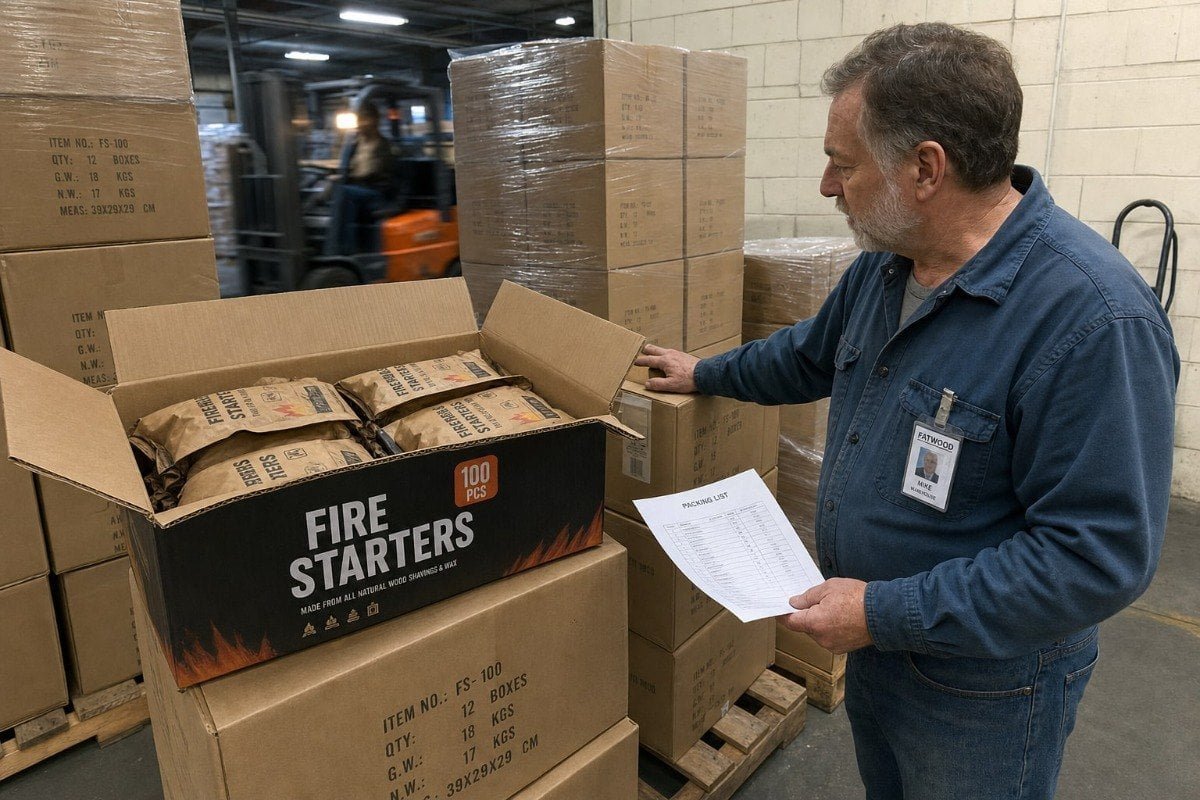
Packaging affects quoting more than most buyers expect. A kraft bag, a plastic jar, and a printed retail display box carry very different costs, lead times, and factory setup work. So put the full packaging hierarchy in your brief, from inner unit to master carton. When we prepare quotes for bulk procurement orders, the packaging specifications are often half the conversation.
The Packaging Hierarchy to Define
| Level | What to Specify | Common Mistake |
|---|---|---|
| Inner unit | Bag, jar, shrink wrap, or loose; label content | Assuming supplier default |
| Retail pack | Units per pack, box dimensions, GSM, artwork files | Sending low-resolution artwork late |
| Display packaging | Counter display or floor display, shelf-ready design | Forgetting retailer shelf dimensions |
| Master carton | Packs per carton, max weight, markings | Ignoring destination pallet standards |
| Container plan | Cartons per pallet, 20ft vs 40ft loading | Not optimizing cube, paying for air |
For private-label programs, add barcode placement 4, required warning labels for your market, and any multilingual text. US and EU labeling expectations differ, and a reprint after mass production is expensive and slow. Our quality control standards include a packaging checkpoint at pre-production, mid-production, and pre-shipment stages precisely because labels drift when nobody signs off in writing.
On quantities, give three numbers: your trial order size, your expected repeat volume, and your annual forecast. Suppliers price differently against each. If you need a flexible MOQ for a first test, say so up front — a serious factory would rather run a small trial batch correctly than lose a long-term account. Also state your delivery destination and deadline. Lead time promises mean nothing until the supplier knows the port and the ship-by date.
What Certifications or Safety Standards Should I Mention When Describing My Wood Fire Starter Needs?
Compliance questions used to arrive at the end of buyer conversations. Now, in our export work across the US and Europe, they arrive first — and buyers who skip them regret it at customs.
Request a Material Safety Data Sheet, EN1860-3 compliance for firelighters in Europe, third-party test reports from labs like SGS or Intertek, FSC certification for sustainable wood sourcing, and the correct HS code with hazardous classification such as UN 2623 flammable solids.
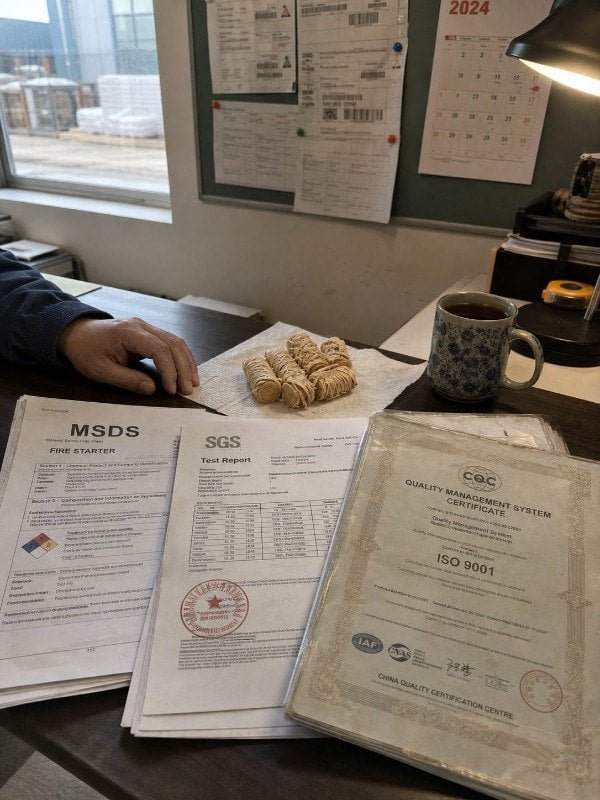
Safe should be defined in writing, never assumed. Some products marketed as natural still rely on aggressive chemical accelerants that are unacceptable for indoor, food-adjacent, or family use. Your brief should ask for the full material composition 5: wax type, wood fibers, any paraffin, natural resins, and a clear exclusion of gasoline, kerosene, methanol, or similar accelerants. A Material Safety Data Sheet backs this up with documentation you can show retailers and regulators.
Documents to Request by Market
| Requirement | Why It Matters | Who Asks For It |
|---|---|---|
| MSDS / SDS | Composition and handling disclosure | Retailers, insurers, customs |
| EN1860-3 | European standard for BBQ firelighters | EU distributors and chains |
| SGS / Intertek test reports | Independent performance and safety proof | Large retail sourcing channels |
| FSC or PEFC | Legally harvested, sustainable wood fiber | Eco-positioned brands, EU buyers |
| Biobased content documentation | US institutional and public procurement | Government-adjacent resellers |
| ISO 9001 6 / BSCI | Factory quality and social compliance | Brand owners auditing suppliers |
| HS code + UN 2623 classification | Correct flammable solids transit handling | Freight forwarders, customs brokers |
Do not overlook the shipping side. Fire starters typically move under Class 4.1 flammable solids classification 7, and the wrong HS code or missing declaration can strand a container. Ask your supplier to confirm the classification and provide transport documentation before booking freight.
One more point from experience: certifications also signal factory maturity. A supplier holding ISO 9001 and BSCI audits, with current test reports on file, is far more likely to have real quality control standards behind their samples. When compliance paperwork appears within a day of your request, that responsiveness usually mirrors how the factory handles everything else.
Conclusion
Vague briefs produce wrong samples, wasted months, and compliance surprises. Define wood type, moisture content, burn time, packaging, and certifications in writing — then test samples before committing to bulk.
The pattern across every section is the same: replace adjectives with numbers, and replace assumptions with documents. State your use case first, because an indoor stove starter and a waterproof camping starter are different products. Then layer in measurable performance, complete packaging specifications, honest quantities, and the certifications your market demands. Keep must-haves firm, but leave nice-to-haves flexible so suppliers can offer better value. In our 17+ years shipping fire products to 30+ countries, the buyers who send precise, testable briefs get accurate quotes faster, receive samples that reflect mass production, and build supply relationships that survive their first busy season. Write your requirements that way, and your next supplier conversation will start miles ahead.
Footnotes
1. Authoritative Wikipedia entry explaining moisture reduction and its impact on wood burning performance. ↩︎
2. Describes the structural and chemical properties of wood fibers used in industrial applications. ↩︎
3. Explains how to define and communicate technical and performance expectations to suppliers effectively. ↩︎
4. Official standards for barcodes, ensuring global compatibility in retail and supply chain systems. ↩︎
5. Detailed scientific overview of the chemical and material makeup of wood components. ↩︎
6. Reliable, accessible overview of the international standard for quality management systems. ↩︎
7. Details the international shipping classification for flammable solids like wax-treated wood. ↩︎



 English
  Spanish
  German
  French
  Arabic
  Portuguese
Join the Conversation