







Buyers often assess product training and sales support needs too late — after our wax-dipped wood fire starters have already shipped ISO 9001 quality certification 1. Weak staff knowledge then kills sell-through, returns pile up, and a good product gets blamed. The fix is a structured needs assessment before you sign the purchase order.
To assess product training and sales support needs when buying wood fire starters, verify supplier certifications first, then audit their training materials, after-sales technical support, and communication speed. Match each support offering to your real gaps — staff knowledge, safety compliance, or merchandising — before committing to any order.
Below, I walk through the four checks that matter most CE marking 2. Each one comes from real conversations we have with importers and distributors every week. Use them in your next supplier evaluation.
What certifications and compliance documents should my wood fire starter supplier provide before I place an order?
A German distributor once told me his previous wood fire starter shipment sat in customs for six weeks because the supplier had no valid test reports flammability warning labels 3. That single delay cost him his entire pre-winter selling window, and it shaped how we prepare documentation at our factory today.
Before ordering, your supplier should provide ISO 9001 quality certification, BSCI social compliance audits, CE marking where applicable, third-party test reports from labs like SGS or Intertek, product safety data sheets, and correct flammability warning labels for your target market.

Compliance is not paperwork for its own sake. It directly affects whether your goods clear customs, whether large retail sourcing channels will list your product, and whether your liability insurance holds up if a consumer misuses the product. In our 17+ years exporting fire-starting goods to 30+ countries, we have never seen a serious buyer treat certification as optional. It is the first filter in any vendor reliability assessment 4.
The core document set
Here is the baseline document package I recommend you request from any wholesale fire starter supplier before a trial order:
| Document | What It Proves | Why It Matters to You |
|---|---|---|
| ISO 9001 certificate | Consistent quality management system | Batch-to-batch consistency, fewer surprises |
| BSCI audit report 5 | Ethical factory working conditions | Required by most EU and US retail chains |
| CE / regional marking | Conformity with market safety rules | Legal market access in the EU |
| SGS or Intertek test reports 6 | Independent verification of composition and burn behavior | Protects you from false claims and customs holds |
| Product safety data sheets 7 | Storage, handling, and flammability data | Warehouse safety and retailer onboarding |
| Warning label artwork | Compliant consumer-facing warnings | Reduces liability and return disputes |
Red flags to watch for
Be cautious if a supplier sends certificates that are expired, issued to a different company name, or scanned at suspiciously low resolution. Trading companies sometimes borrow documents from factories they do not control. Ask for the certificate number and verify it directly with the issuing body. A real factory will not hesitate. We hand over our full compliance pack at the sampling stage, because we know our buyers need it to sell internally before they can buy externally.
Also confirm that composition claims on packaging match the test reports. If a box says 50% wood fiber and 50% paraffin, the lab report should confirm it. Mismatches between packaging claims and lab data are a common cause of retail delisting.
How can I confirm a supplier's product training resources will help my sales team sell wood fire starters effectively?
There is a trade-off we weigh every time we build training content for a new private-label client: sales teams want three simple selling points, while compliance teams want full technical depth. Good supplier training resources serve both without overwhelming frontline staff.
Confirm training value by requesting actual materials — spec sheets, demo scripts, FAQ documents, and videos — then testing them against your channel. Effective resources explain burn time, ignition behavior, and safety in plain language, address real customer objections, and can be customized to your brand and market.
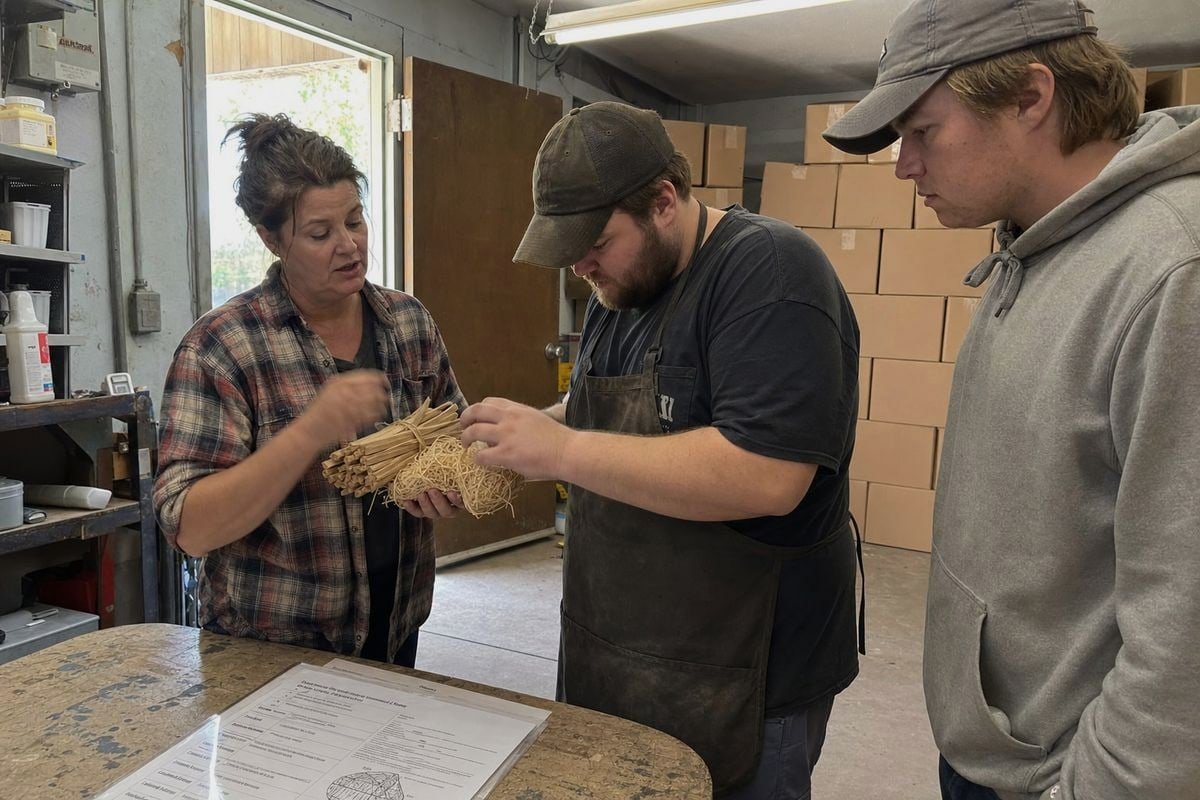
Product training is only useful if it closes a real gap. So start with a quick internal needs analysis before you evaluate any vendor's content. Ask three questions. What do shoppers actually ask at the shelf? What do your staff currently say? Where do those two things fail to meet? If customers keep asking whether the starters work with damp firewood, and your staff cannot answer, that is a training gap. If customers cannot find the product at all, that is a merchandising gap — and no training course fixes shelf placement.
Match the training format to the gap
Not every gap needs the same fix. In the hearth and patio industry, seasonal staff turnover is high, so short-form content usually beats long courses.
| Gap You Identify | Best Training Format | What to Ask the Supplier For |
|---|---|---|
| Staff cannot explain burn time or ignition | One-page product cheat sheet | Spec sheet with burn time, ignition method, moisture resistance |
| Staff freeze on safety questions | Counter-side FAQ card | Safety and usage guidance in plain consumer language |
| Weak cross-selling | Bundling script | Guidance linking starters to kiln-dried wood and hearth accessories |
| Online support tickets pile up | How-to video content | White-label videos for your e-commerce site and social channels |
| Seasonal new hires each autumn | Refresher module | Short onboarding deck updated before each season |
Test before you trust
Ask for the actual files, not a promise. Then run a simple pilot: give the cheat sheet to two staff members and see if they can answer your five most common customer questions after ten minutes of reading. When we develop staff product knowledge training for our OEM clients, we build it from their return reasons and customer questions, not from a generic template. Generic training that ignores your channel — hardware store versus specialty outdoor retailer — rarely improves conversion. Also ask how often content is updated and whether the supplier supports co-op advertising programs or shared point-of-purchase marketing assets for seasonal launches.
What kind of after-sales and technical support should I expect from a reliable wood fire starter manufacturer?
A lesson we learned early in our export history: the sale is not finished when the container leaves Ningbo. One winter, a Canadian buyer reported that a batch felt harder to light than his sample. Our QC team traced it to storage humidity at his warehouse within 48 hours — and that quick answer saved the account.
Expect a reliable manufacturer to offer technical troubleshooting within one to two business days, batch traceability for quality claims, replacement or credit policies for verified defects, updated safety documentation, seasonal restocking coordination, and ongoing guidance on storage, handling, and shelf life.

After-sales support separates a long-term manufacturing partner from a one-shipment vendor. Wood fire starters are a seasonal, consumable product. Your inventory turnover rates 8 spike between first frost and late winter, and any support failure during that window costs you the whole season. So evaluate after-sales capability as carefully as unit price.
The support functions that actually matter
Think of after-sales support in four layers, from most urgent to most strategic:
- Technical troubleshooting. When a customer complains about ignition, smoke, or odor, the manufacturer should diagnose the cause quickly. Is it a production issue, a storage issue, or a user-error issue? Batch records make this possible. Our production lines log every batch, so we can trace a complaint back to a specific run and give you a factual answer, not a guess.
- Quality claims handling. Ask for the claims process in writing before you order. How is a defect verified? Photos, samples, or third-party inspection? What is the remedy — replacement, credit, or discount on the next order? Vague answers here predict painful disputes later.
- Documentation upkeep. Regulations shift. A dependable supplier updates product safety data sheets, warning labels, and test reports without being chased, especially for eco-friendly fire lighting solutions sold into markets with tightening environmental rules.
- Seasonal planning support. The best manufacturers help you forecast. That means sharing lead-time calendars, flagging peak-season booking deadlines, and advising on regional demand shifts so your warehouse is stocked before demand hits, not after.
A supplier who offers only the first layer is a vendor. A supplier who offers all four is a partner. For a seasonal category like fire starters, you want the partner.
How do I evaluate a supplier's responsiveness and communication before committing to a long-term wood fire starter partnership?
Every October, our inbox fills with urgent messages from buyers whose regular supplier went quiet during peak season. Communication quality is easy to test early and impossible to fix late — so test it during sampling, when the stakes are still low.
Evaluate responsiveness by timing replies during the inquiry and sampling stage, asking technical questions that require factory knowledge, checking English fluency of the actual account contact, and confirming escalation paths. Consistent 24–48 hour substantive replies signal a partner worth long-term commitment.

The sampling stage is your free stress test. A supplier is on their best behavior before you pay. If replies are slow, vague, or copied from a script now, they will be worse when a container is delayed in December. In our experience exporting to the US, Germany, and the UK, buyers who run a deliberate communication test before ordering almost never end up in emergency supplier switches later.
A practical communication scorecard
Score each candidate supplier during your first four weeks of contact:
| Test | What to Do | Good Sign | Warning Sign |
|---|---|---|---|
| Speed test | Send a question at your local morning time | Substantive reply within 24–48 hours | Replies take 4+ days or only chase the order |
| Depth test | Ask a technical question, such as wax-to-wood-fiber ratio or burn time tolerance | Specific, factory-level answer | Generic marketing language |
| Honesty test | Ask about a known limitation, such as MOQ flexibility or peak-season lead times | Clear constraints stated upfront | Everything is "no problem" |
| Escalation test | Ask who handles issues if your contact is unavailable | Named backup and process | Single point of contact, no plan |
| Customization test | Request a private-label packaging quote | Detailed options for boxes, labels, barcodes | Reluctance or endless delays |
Why the depth test matters most
Fast replies are easy to fake with a sales team. Deep replies are not. When a buyer asks us why our wax-dipped wood rolls light reliably in damp conditions, our answer comes from production experience, not a brochure. If your contact cannot explain how the product is made, you are probably talking to a trading company, and every future technical question will pass through an extra layer of delay and translation loss. For a long-term partnership, insist on direct access to people who know the production line.
Conclusion
Buying wood fire starters without assessing training and support needs invites weak sell-through, compliance risk, and seasonal chaos. Verify certifications, test training materials, demand real after-sales support, and stress-test communication early.
Footnotes
1. Official ISO page explains the



 English
  Spanish
  German
  French
  Arabic
  Portuguese
Join the Conversation