







Buyers of our Magic Fire packets often ask about stock consignment to reduce FBA inventory days Amazon storage fees 1. Cash gets trapped in slow stock, storage fees climb, and rankings suffer when you stock out.
To ask suppliers for stock consignment, position it as a low-risk pilot: share your sales velocity data, propose a limited SKU quantity, define a clear payment trigger tied to Amazon sales, offer weekly reconciliation reports, and put ownership, damage liability, and return rights in a written agreement.
I sit on the other side of this negotiation every month BSCI 2. So let me show you exactly what works, what fails, and how to structure the ask so a factory says yes.
What Consignment Terms Should I Request to Keep My FBA Inventory Days Low?
A German distributor once asked us to hold three months of color-flame pouches in bulk while he pulled small weekly FBA shipments. That deal taught me which terms actually matter.
Request terms that tie payment to sell-through: title transfer at the FBA Shipped event, weekly reconciliation, a drip-feed replenishment schedule with defined safety stock levels, seller liability for damage inside Amazon's network, and return rights for units unsold after an agreed aging period.
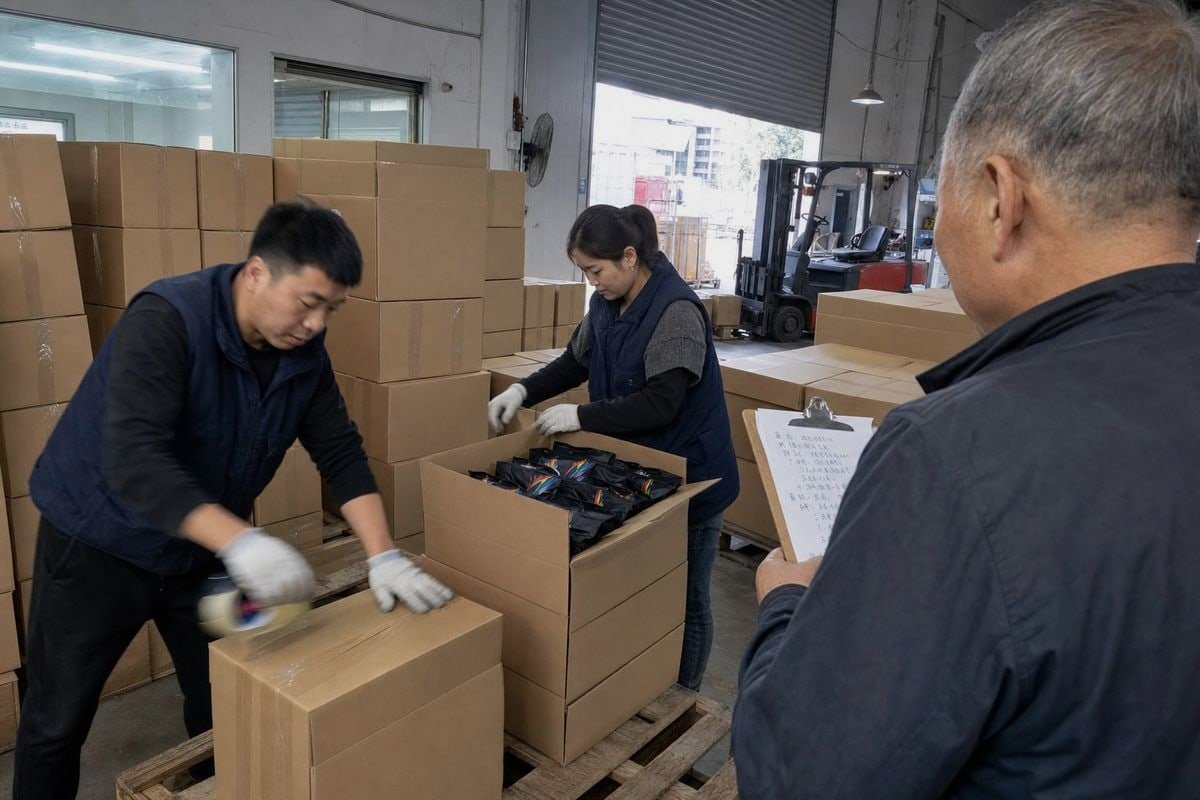
The goal of stock consignment is not free inventory. The goal is matching supply to real demand so your inventory turnover ratio 3 improves and your Amazon storage fees drop. Every term you request should serve that goal. When we evaluate consignment proposals at our Ningbo production site, we look at five levers, and you should negotiate all five explicitly.
The Five Core Terms
| Term | What to Request | Why It Reduces Inventory Days |
|---|---|---|
| Ownership point | Title transfers at "FBA Shipped" | You only pay for units that generated revenue |
| Replenishment | Drip-feed shipments every 1–2 weeks | Keeps FBA stock inside the optimal 28–90 day window |
| Reconciliation | Weekly or biweekly sales reports | Supplier trusts the model; disputes get caught early |
| Damage liability | Seller covers loss once Amazon receives stock | Removes the supplier's biggest fear of warehouse loss |
| Aging clause | Return or discount units unsold after 90–120 days | Prevents dead stock from freezing the arrangement |
Where the Bulk Stock Should Sit
You have three realistic hub options. The supplier can hold finished goods at their factory. A bonded 3PL can hold title-neutral stock that you pull via restock orders. Or you can use Amazon Warehousing and Distribution 4 as the consignment hub, since auto-replenishment from AWD to FBA exempts SKUs from the Low Inventory Level Fee. In my experience, suppliers accept the 3PL route most readily. It keeps their goods visible and secure while still letting you run high-frequency, small FBA shipments.
Also ask for a defined supply chain lead time 5 in writing. If replenishment takes fourteen days from your restock trigger, your safety stock levels must cover that gap. Otherwise the whole model collapses into stockouts, which defeats the purpose.
How Do I Convince a Manufacturer Like Sunrich to Agree to Consignment Stock Arrangements?
Every month I read consignment requests from FBA sellers, and I approve very few. The difference between a yes and a no is almost never price. It is proof.
Convince a manufacturer by proving sell-through first: complete two or three paid orders, share Seller Central velocity reports, frame consignment as a small pilot with a defined billing trigger, offer view-only inventory transparency, and show how the arrangement protects the supplier's brand from stockout-driven ranking loss.

Understand what a factory fears before you write the email. When our team in Liuyang reviews a consignment proposal, we worry about four things: unpaid stock, tracking complexity, unclear ownership, and disputes over when payment is triggered. Your pitch must neutralize each fear, one by one.
Build Credibility Before You Ask
Nobody gets consignment on a first order. In seventeen-plus years of exporting fire-starting goods to more than thirty countries, we have never granted consignment to a buyer without transaction history. Run two or three standard purchase orders first. Pay on time. Communicate cleanly. That track record is worth more than any pitch deck. Suppliers commonly move buyers up a ladder: prepayment, then net payment terms, then consignment. Skipping rungs signals inexperience.
Frame It as Ranking Protection, Not Free Stock
Here is the angle that actually moves me. If your listing stocks out because your capital is tied up, the listing loses rank, reviews slow down, and any Best Seller badge disappears. That damages the product's visibility permanently, and if the product carries our private-label work 6, it damages the brand we helped build. Consignment framed as a stockout-prevention system is a shared-interest proposal. Consignment framed as "hold my inventory for free" is a cost transfer, and we decline those.
Offer Transparency and Data
Grant the supplier view-only access to your inventory software or Seller Central reports. Share Amazon's Minimum Inventory Level data and your historical sales velocity so the consignment volume is justified by numbers, not optimism. One US camping brand we work with sends us an automated weekly stock report. That single habit is why their arrangement has run smoothly for years. You can even propose a reverse-penalty clause: the supplier earns a small bonus for maintaining a 100% in-stock rate, which turns replenishment into their incentive too.
What Documentation Should I Prepare Before Proposing a Consignment Deal to My Supplier?
A buyer from the Netherlands once sent us a consignment proposal as a single-page PDF with velocity charts, a pilot SKU list, and a draft agreement. We said yes within a week. Preparation did that.
Prepare a sales velocity report from Seller Central, a demand forecast with reorder triggers, a draft consignment agreement covering title transfer and damage liability, a reconciliation template, proof of business registration and insurance, and a pilot plan naming SKUs, quantities, and timelines.

Consignment is a formal inventory arrangement, not a handshake. Enterprise ERP systems document consignment workflows precisely because ownership and accounting treatment must be unambiguous. When our export team receives a vague verbal request, we assume the buyer has not thought through reconciliation, and we pass. A documented proposal signals operational discipline, which is the exact quality a supplier is betting on.
The Document Pack, Item by Item
| Document | What It Contains | The Fear It Removes |
|---|---|---|
| Sales velocity report | 6–12 months of units sold per week | "Will this stock actually sell?" |
| Demand forecast | Projected sell-through, seasonality, reorder triggers | "How much stock is really needed?" |
| Draft consignment agreement | Title transfer point, billing trigger, aging clause, return rights | "When exactly do we get paid?" |
| Reconciliation template | Weekly report format for sales, stock, and payments due | "How will we track our goods?" |
| Business credentials | Registration, insurance certificate, trade references | "Is this buyer legitimate?" |
| Pilot plan | Named SKUs, quantities, FBA prep responsibilities, timeline | "How big is our downside?" |
Match the Supplier's Compliance Mindset
One more point from our side of the table. Our buyers demand ISO 9001 7, BSCI, and SGS or Intertek test reports from us, because compliance is a hard requirement in the US and EU. Apply the same standard to yourself. A buyer who shows insurance, clean books, and a written process earns the same trust we earn by handing over certifications. Documentation is not bureaucracy here. It is the currency of the deal, and it directly lowers your inventory carrying costs by unlocking terms that a verbal request never would.
How Can I Balance Consignment Stock with MOQ and Payment Terms to Protect Cash Flow?
The trade-off I weigh with buyers most often is this: a lower MOQ raises unit cost, while a bigger order strains their cash. Consignment is one tool for that puzzle, not the whole answer.
Treat consignment as one rung on a negotiation ladder: start with smaller case-pack orders or net payment terms, then layer consignment onto proven SKUs, keep MOQ commitments on bestsellers, and use hybrid models where you prepay materials but defer finished-goods payment until sale.

Working capital optimization is the real objective, and consignment is only the most aggressive tool in the box. Some buyers get better total outcomes from a blend. Here is how I advise our own distributors to think about the ladder, from easiest ask to hardest.
The Negotiation Ladder
- Smaller case-pack orders. Ask for a reduced trial MOQ. We offer flexible MOQs on Magic Fire packets precisely because trial orders build the track record that unlocks everything else.
- Net payment terms. Net 30 or Net 60 frees cash without asking the supplier to track your Amazon sales. Many factories grant this after two or three clean orders.
- Vendor Managed Inventory. The supplier monitors your stock levels and ships replenishment automatically against agreed safety stock levels. You still buy the goods, but timing improves dramatically.
- Hybrid consignment. You pay for raw materials upfront, and the supplier defers manufacturing and labor costs until the finished goods sell at FBA. This splits risk fairly and works well for customized private-label runs.
- Full consignment. Title stays with the supplier until sale. Reserve this ask for proven SKUs with predictable sell-through.
A Practical Blend
| Cash Flow Tool | Your Cash Exposure | Supplier Risk | Best For |
|---|---|---|---|
| Smaller MOQ | Moderate, upfront | Low | New SKU validation |
| Net payment terms | Deferred 30–60 days | Moderate | Steady repeat orders |
| Vendor Managed Inventory | Paid on shipment | Low–moderate | Stable, forecastable demand |
| Hybrid consignment | Materials only | Moderate | Custom OEM products |
| Full consignment | Near zero until sale | High | Proven bestsellers |
Watch two constraints while you blend. First, FBA restock limits can cap how much you push into Amazon, so bulk stock must sit upstream at the supplier, a 3PL, or AWD. Second, never let deferred payment tempt you into overstocking; your inventory turnover ratio, not your stock depth, is what protects both your cash and your ranking.
Conclusion
High FBA inventory days quietly drain cash and rankings. The fix is not begging for free stock — it is a documented, data-backed consignment pilot



 English
 Spanish
 German
 French
 Arabic
 Portuguese
Join the Conversation