






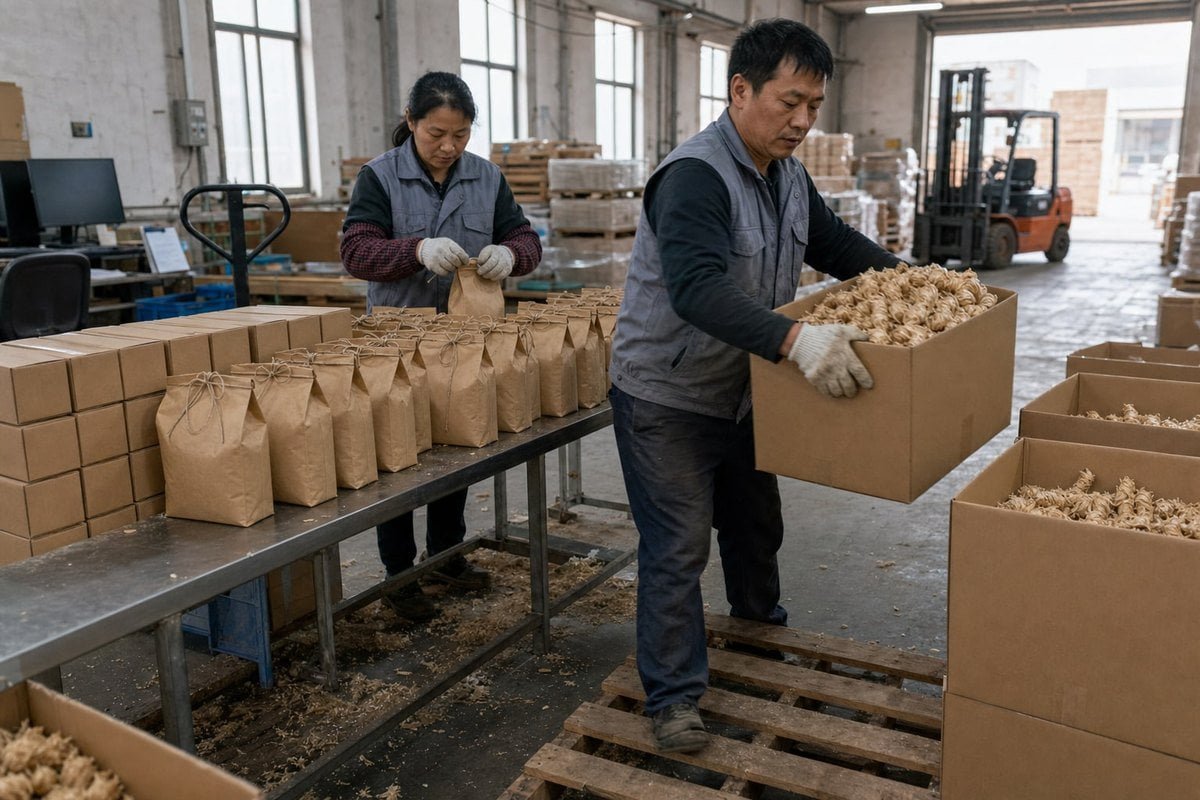
[Choosing packaging for wood fire starters](https://sunrichfire.com/which-packaging-format-choose-wood-fire-starters-should/) seems simple until a retail buyer rejects your shipment. On our production line, I have seen great products fail purely because the packaging did not match the sales channel.
Boxed wood fire starters suit retail shelves and e-commerce, where presentation, barcodes, and unit counts matter. Bagged packaging fits value channels, firewood add-on sales, and self-serve stores. Bulk packaging works best for wholesale distribution, campgrounds, hospitality buyers, and B2B replenishment orders prioritizing freight efficiency.
The real question is not which packaging looks best. It is who buys through each channel, and what they expect. Let me break this down channel by channel.
What packaging format works best for retail shelf sales like Home Depot or DIY stores?
During a factory audit last year, a European DIY chain buyer spent more time inspecting our box artwork and barcode placement than the fire starters themselves. That told me everything about brick-and-mortar retail priorities.
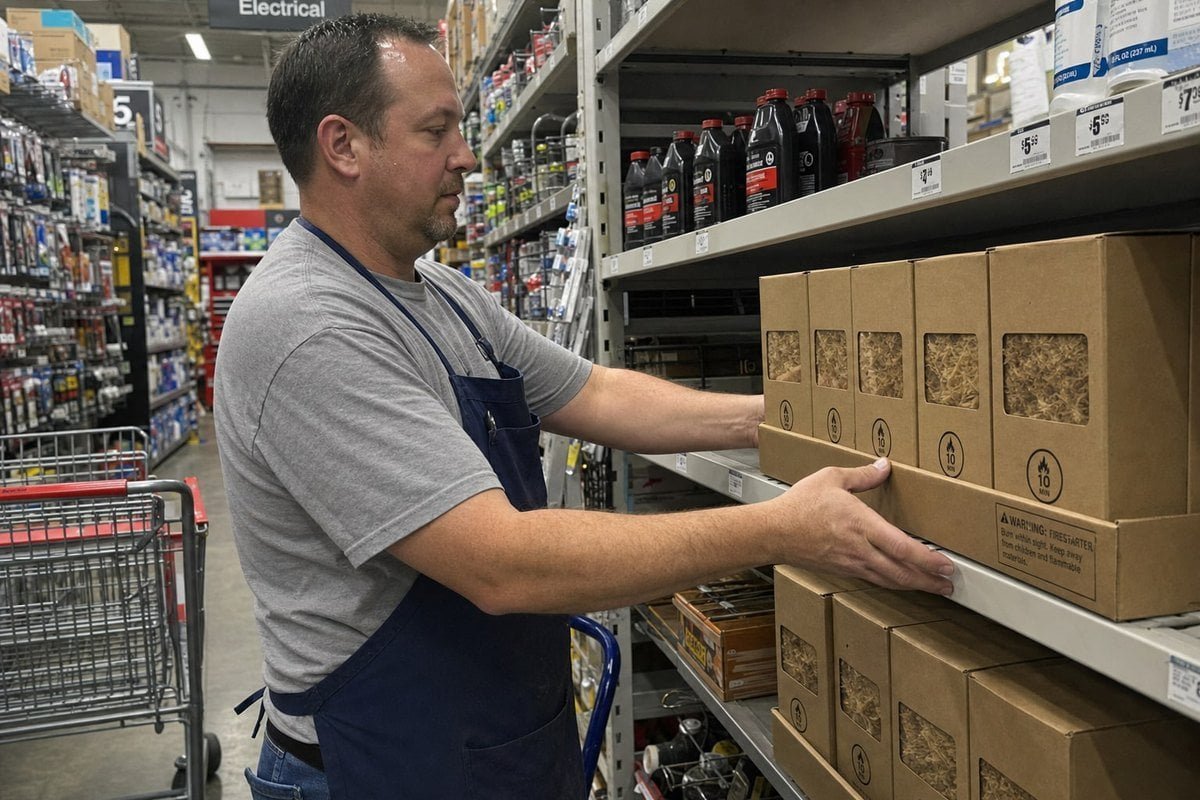
Boxed, retail-ready packaging works best for shelf sales at big-box stores and DIY chains. Buyers expect stackable cartons, clear unit counts such as 24, 48, or 100 pieces, UPC/GTIN barcodes, warning labels, and shelf-ready trays that go from pallet to display without repacking.

Big-box stores and hardware chains run on shelf efficiency. Their staff will not repack loose product. So your packaging must arrive display-ready. In our 17+ years exporting to markets like the US, Germany, and the UK, we have learned that retail buyers evaluate packaging on four things: shelf presentation, compliance labeling, case pack logic, and pallet fit.
What retail buyers check first
Boxed formats win here for clear reasons. A printed box carries branding, burn-time claims, piece counts, and safety warnings in one clean surface. It stacks without crushing. It scans at checkout. It also supports point-of-purchase displays during barbecue season or winter fireplace promotions, when impulse purchases spike.
Market data supports this. Offline channels still captured roughly 68% of fire starter volume in 2023, and much of that volume moves through seasonal in-store displays. Wood wool firelighters alone held about a 25% category share with around 200 million units shipped. Those units overwhelmingly move in counted, boxed formats.
| Canal de vente au détail | Expected Format | Exigence clé |
|---|---|---|
| Big-box / DIY chains | Shelf-ready boxes or trays | UPC/GTIN, compliance labels, pallet spec |
| Clubs d'entrepôt | Larger multi-packs | Pallet delivery, value per unit |
| Specialty hearth shops | Premium smaller boxes | Gift-ready design, eco positioning |
| Grocery retail | Compact shelf packs | Seasonal display compatibility |
One more point from our OEM work: retail chains in the EU and US often demand certified test reports before listing. Because we hold ISO 9001 1, BSCI, CE, and SGS/Intertek certification, our boxed programs clear vendor onboarding faster. If your target is shelf retail, compliance-ready boxed packaging is not optional. It is the entry ticket.
Should I choose bagged or boxed wood fire starters for online and e-commerce orders?
A US camping brand once asked us to redesign their box three times before their Amazon FBA launch 2. Not for looks — for crush resistance and le poids dimensionnel 3. E-commerce packaging is a logistics problem first.
Choose boxed packaging for consumer e-commerce and Amazon FBA, because boxes survive parcel shipping, photograph well, and support SIOC standards. Bagged formats suit B2B digital reorders and bundle sales, but flexible bags risk crushing wax-coated wood fire starters in transit.
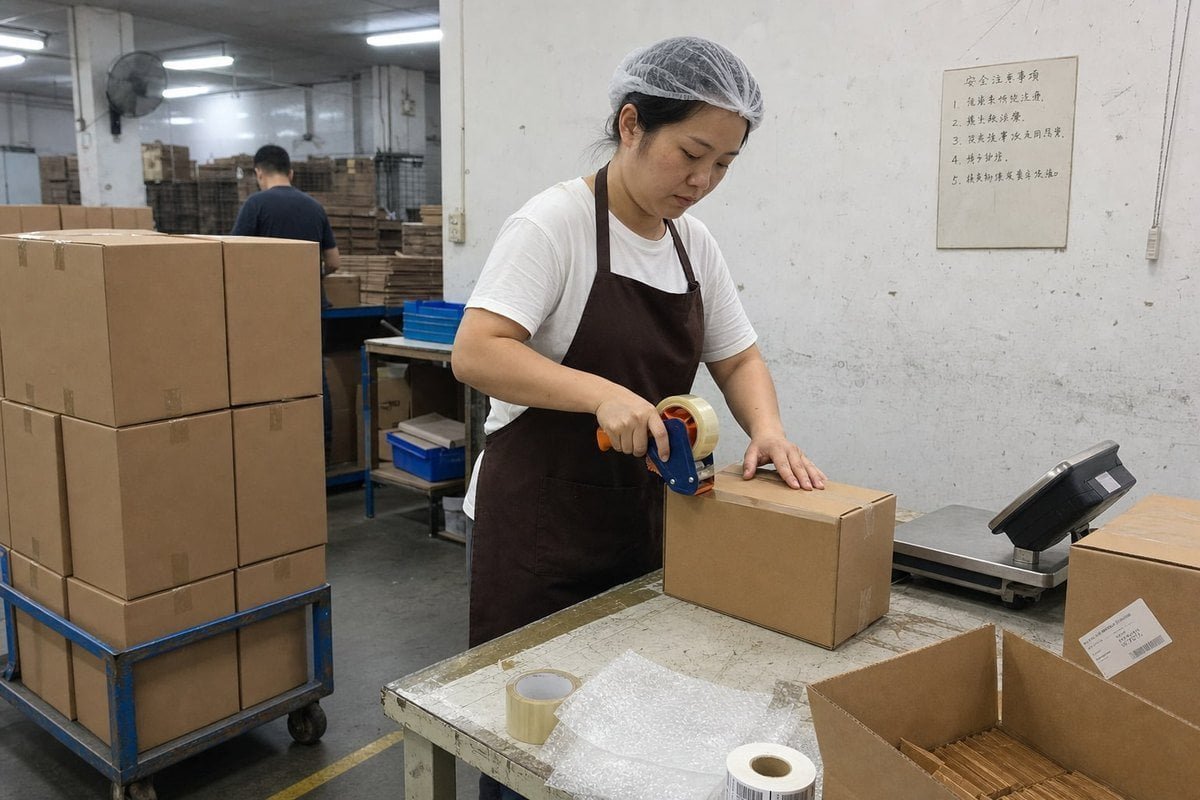
E-commerce grew from about 24% of fire starter sales in 2020 to 32% in 2023. That growth changes packaging priorities. On a shelf, packaging sells the product. In a parcel network, packaging must protect the product through multiple handling points, then still look good on the customer's doorstep.
Why boxed usually wins online
Wax-dipped wood rolls and excelsior pucks are compressible. A soft bag inside a courier sack invites crushed, deformed units and negative reviews. A rigid box protects the fibrous structure. It also gives you sharp product photography, a clear piece count in the listing title, and a scannable barcode for FBA intake.
Shipping weight optimization matters just as much. Wood fire starters are light but bulky, so dimensional weight often sets your shipping cost. We help direct-to-consumer brands right-size boxes to the smallest protective footprint, which cuts fulfillment fees on every order.
When bagged still makes sense online
Bagged formats are not useless online. They work for:
- B2B marketplace listings 4 where buyers already know the product.
- Subscription refills shipped inside an outer mailer.
- Bundle add-ons packed with firewood or camping gear kits.
| E-commerce Scenario | Better Format | Reason |
|---|---|---|
| Amazon FBA consumer listing | Boxed | SIOC readiness, crush protection, barcodes |
| DTC brand website | Boxed | Unboxing experience, branding surface |
| B2B reorder portal | Bagged or case pack | Buyer knows product; cost matters more |
| Subscription refill | Bagged in mailer | Lower material cost per shipment |
From our OEM programs, the practical rule is simple: if a stranger opens the parcel, use a box. If a repeat buyer opens it, a bag can save money.
Is bulk packaging better suited for wholesale and distributor bulk orders?
One of our long-term distributors in Canada supplies campgrounds and lodges across three provinces. He has never once asked for printed retail boxes. He orders palletized case packs, every quarter, like clockwork.
Yes, bulk packaging is the strongest fit for wholesale distribution and B2B orders. Distributors, campgrounds, lodges, firewood suppliers, and hospitality operators buy cases and pallets, not shelf units. Bulk formats cut per-unit packaging cost, maximize container loading, and simplify recurring replenishment.
Wholesale buyers 5 think in different units than retail shoppers. They calculate cost per piece landed, pallets per container, and reorder frequency. Fancy printed boxes add cost that a campground operator or wood-fired pizzeria will never pay for, because no consumer ever sees the packaging.
Who buys bulk, and why
In our export experience across 30+ countries, bulk buyers cluster into a few groups. Campgrounds, RV parks, and resorts burn through fire starters daily and want simple resupply. Firewood delivery services bundle starters with wood shares as an add-on. Hospitality operators — think pizzerias and lodges with wood-fired equipment — treat starters as a consumable supply item. And regional distributors break bulk down for their own dealer networks or private-label programs.
Bulk packaging serves all of them because it optimizes what they actually value:
- Lower per-unit distribution cost.
- Higher pallet density and container utilization.
- Predictable case counts for inventory planning.
- Flexibility for repacking or private labeling downstream.
| Bulk Buyer Type | Typical Order Format | Primary Motivation |
|---|---|---|
| Distributeur régional | Palletized master cartons | Resale margin, container efficiency |
| Campground / RV park | Bulk cases | Recurring operational supply |
| Firewood supplier | Bulk bags or cases | Add-on bundling with wood |
| Hospitality / pizzeria | Bulk cases | Consumable cost control |
| Private-label brand | Unbranded bulk | Repack under own brand |
One caution from our side: bulk does not mean careless. Wax-coated wood wool 6 still needs moisture barriers and crush-resistant master cartons for ocean freight. We spec inner liners and carton strength based on the destination climate and transit time, because a container arriving with damp or deformed goods destroys the economics that bulk was supposed to deliver.
How do I decide which packaging type fits my target market and sales channel?
Buyers often send me one question first: "What is your best packaging?" My honest answer is always another question: "Who is your buyer, and where will they see the product?" That answer decides everything.
Match packaging to channel behavior. Choose boxed for retail shelves, gift channels, and consumer e-commerce. Choose bagged for value buyers, firewood add-on sales, and self-serve outlets. Choose bulk for distributors, institutions, and hospitality accounts. Many successful brands run two or three formats simultaneously.
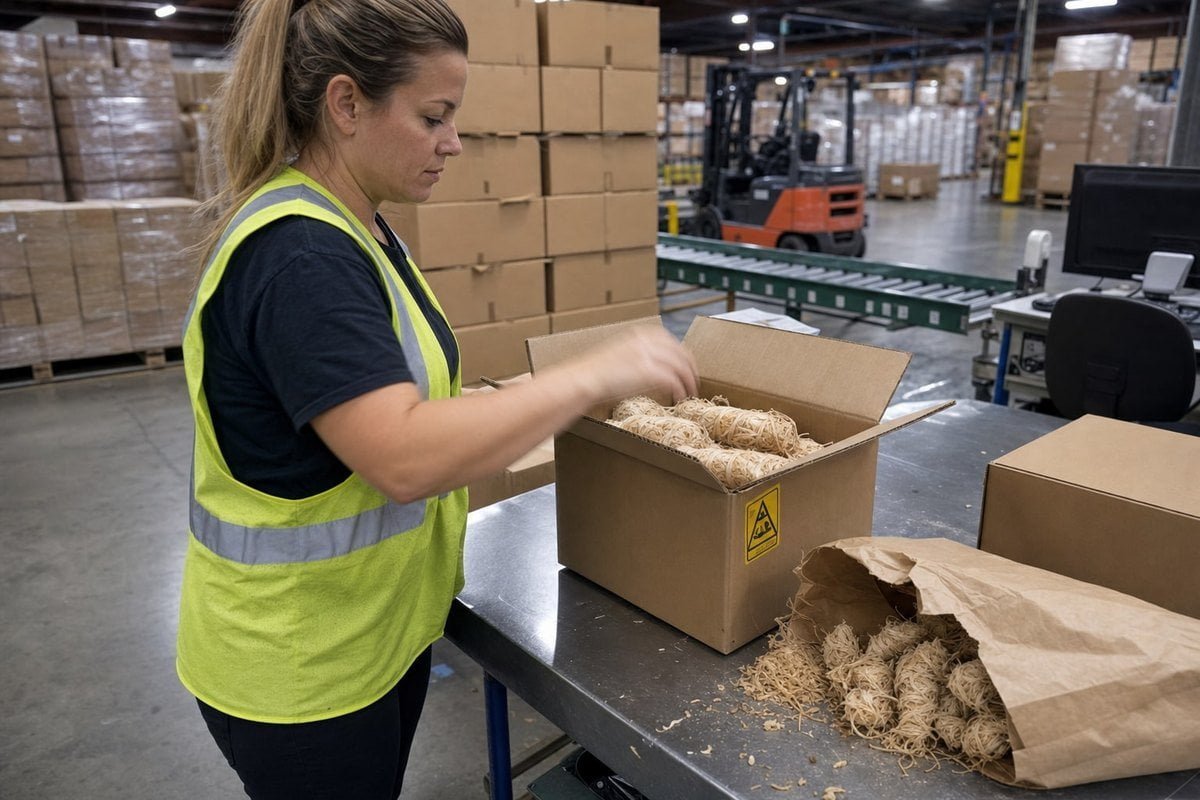
The mistake I see most often is picking packaging based on cost alone, or on personal taste. The smarter approach works backward from the channel. Each channel rewards a different trade-off between presentation and efficiency. Premium boxes improve merchandising but raise cost per unit. Bulk improves economics but has zero shelf appeal. Neither is universally better.
A simple decision sequence
- Identify the end buyer: consumer shopper, operational buyer, or reseller.
- Identify the display context: shelf, website listing, checkout counter, or storeroom.
- Identify the purchase driver: impulse appeal, price, or replenishment reliability.
- Match the format: boxed for display, bagged for value, bulk for supply.
- Confirm compliance: barcodes, warning labels, and certifications for the destination market.
Channel-by-channel quick reference
Camping gear retailers and specialty hearth shops want boxed units with strong eco positioning — some even merchandise premium fire starters as cozy lifestyle accessories. Roadside stands and farmers' markets favor rustic bags for impulse sales. Zero-waste co-ops may want unboxed refill formats. Real estate closing gift platforms want branded boxed sets. Firewood cooperatives want bulk-bagged product bundled with wood shares.
Because we run full OEM/ODM production 7 — custom sizes, burn times, private-label boxes, display packaging, warning labels, and barcodes — we usually recommend trial orders in two formats. Test a boxed SKU for retail or DTC, and a bulk case format for wholesale accounts. Real sell-through data then guides where you scale. Our flexible MOQs exist precisely so importers can run that test without overcommitting.
Conclusion
Wrong packaging blocks good products from good channels. Match boxed to retail, bagged to value buyers, bulk to wholesale — and partner with a certified factory that customizes all three.
Notes de bas de page
1. References the international quality management standard underpinning certified manufacturing compliance. ↩︎
2. Official Amazon program page detailing fulfillment requirements that affect packaging design choices. ↩︎
3. Explains how carriers calculate shipping cost based on package volume rather than weight. ↩︎
4. Alibaba is the leading B2B marketplace platform relevant to wholesale packaging strategy. ↩︎
5. Comprehensive Wikipedia overview of the wholesale trade industry and the role of wholesale buyers. ↩︎
6. Background on the wood wool material used in fire starters that requires moisture protection. ↩︎
7. Defines the contract manufacturing model referenced for custom packaging and private-label services. ↩︎



 English
  Spanish
  German
  French
  Arabic
  Portuguese
Rejoignez la conversation