






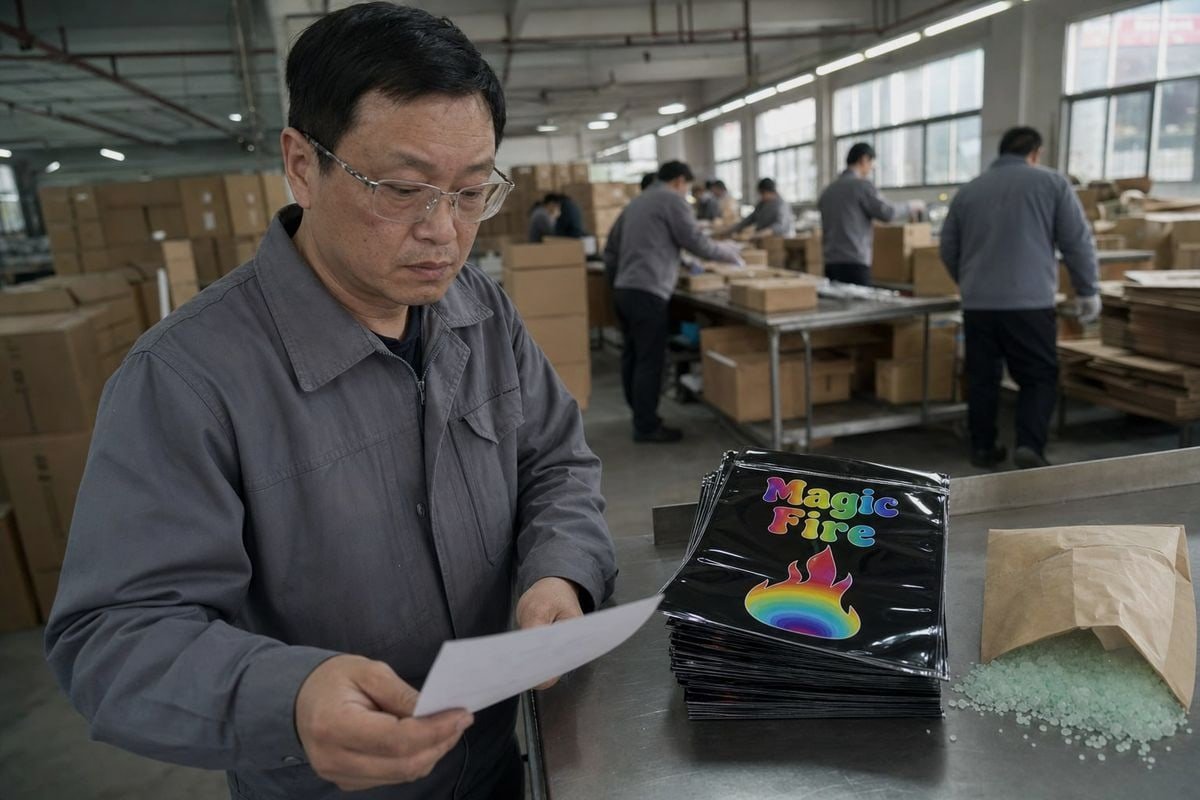
Les acheteurs me posent des questions sur les instructions de sécurité incendie pour la poudre Magic Fire presque chaque semaine, et sur notre chaîne de production à Ningbo, nous traitons cette question comme la plus importante.
Avant d'acheter la poudre Magic Fire, demandez une fiche de données de sécurité spécifique au produit, les instructions d'utilisation exactes, la copie de l'étiquette d'avertissement, les directives d'extinction, les règles de ventilation et de distance, les exigences de stockage et les rapports de tests par des tiers. Si un fournisseur ne peut pas fournir ces documents pour la formulation exacte, ne passez pas la commande.
Cette réponse semble simple. En pratique, la plupart des problèmes d'importation commencent lorsqu'un acheteur omet l'un de ces documents. Ci-dessous, je détaille chaque demande, pourquoi elle est importante et comment la vérifier.
Quelles certifications devrais-je demander aux fournisseurs de fournir avant d'importer de la poudre Magic Fire ?
L'un de nos distributeurs allemands a perdu six semaines en douane parce qu'un fournisseur précédent lui avait fourni un certificat générique qui ne correspondait pas au lot de produits. Nous avons reconstruit sa documentation à partir de zéro.
Demandez aux fournisseurs une Fiche de Données de Sécurité spécifique au produit, des rapports de test SGS ou Intertek, une documentation de marquage CE, une certification qualité ISO 9001 et des audits de conformité sociale BSCI. Chaque certificat doit mentionner la formulation exacte du produit et le lot, et non un article similaire ou générique.

Le document le plus important est la Fiche de Données de Sécurité 1, parfois encore appelé Fiche de Données de Sécurité des Matières. Voici le point clé : la poudre Magic Fire n'est pas un produit standardisé. Différentes marques utilisent différents produits chimiques colorants de flamme 2. Certaines formulations reposent sur des composés de cuivre. D'autres utilisent différents composition des sels métalliques 3 entièrement. Les dangers, et même la méthode d'extinction correcte, changent avec la chimie. Une FDS générique ne vous dit rien sur la pochette que vous importez réellement.
Voici ce que nous remettons aux acheteurs le premier jour, et ce que vous devriez exiger de tout fournisseur :
| Document | Ce qu'il doit couvrir | Signal d'alarme en cas d'absence |
|---|---|---|
| FDS / Fiche de Données de Sécurité des Matières | Formulation exacte, dangers, premiers secours, agents extincteurs | Le fournisseur envoie une FDS de "produit similaire" |
| Rapport de test SGS ou Intertek | Métaux lourds, substances réglementées 4, comportement à la combustion | Rapport plus ancien que 2-3 ans |
| documentation CE | Conformité pour le marché européen | Pas de dossier technique derrière la marque |
| Certificat ISO 9001 | Contrôle qualité constant d'un lot à l'autre | Le certificat appartient à une société commerciale, pas à l'usine |
| Audit BSCI | Normes de production éthiques | Le canal de vente au détail de l'acheteur l'exige et il est absent |
D'après notre expérience d'exportation vers plus de 30 pays, les grands canaux d'approvisionnement de détail considèrent cette pile comme une exigence stricte. Un acheteur de type Home Depot n'examinera même pas les échantillons sans cela. Nous détenons des rapports ISO 9001, BSCI, CE et SGS/Intertek précisément parce que nos clients américains et européens ne peuvent pas vendre sans eux.
Une autre perspective que les acheteurs manquent : demandez si les certificats appartiennent à l'usine réelle ou à un intermédiaire. Les sociétés commerciales empruntent souvent des documents. Si le nom de l'usine sur la FDS ne correspond pas au nom sur la facture, demandez pourquoi avant de payer un acompte.
Quelles étiquettes d'avertissement et instructions de sécurité sont requises sur l'emballage ?
La conception de l'étiquette est là où je m'oppose le plus souvent aux clients. Un commerçant de cadeaux de festival nous a un jour demandé de supprimer le texte d'avertissement pour que la pochette reste "amusante". Nous avons refusé, puis nous lui avons montré pourquoi les régulateurs le feraient aussi.
L'emballage doit porter des avertissements pour garder le paquet scellé intact, utiliser uniquement des feux de bois, éviter de cuire des aliments sur des flammes colorées, utiliser à l'extérieur ou dans des cheminées ventilées, tenir à l'écart des enfants et des animaux domestiques, et conserver dans un endroit sec, ainsi que des instructions d'urgence et d'extinction.

L'emballage ludique aux flammes arc-en-ciel qui vend le produit crée également son plus grand risque : les enfants peuvent confondre la pochette avec des bonbons ou un mélange pour boisson. C'est pourquoi les avertissements de sécurité pour enfants sont non négociables, et pourquoi nous conseillons aux acheteurs d'exiger des instructions de stockage verrouillé et sec sur chaque unité de vente au détail que nous étiquetons en marque privée.
Les avertissements qui comptent le plus
Les conseils aux consommateurs sur les marchés se regroupent autour d'un ensemble cohérent d'instructions. Le texte de votre étiquette doit inclure tous ces éléments :
- Jetez le paquet entier non ouvert dans un feu de bois établi. Ne déchirez jamais le papier d'aluminium. Cela évite le contact avec la peau et l'inhalation de poussières chimiques fines.
- Ne jamais cuire d'aliments ou rôtir des guimauves pendant que des flammes colorées sont visibles. Les résidus de combustion rendent les précautions de sécurité alimentaire essentielles — les sels métalliques ne sont pas sans danger pour la consommation.
- Uniquement les feux de bois. N'utilisez jamais le produit dans des foyers au propane, au gaz naturel ou à l'éthanol. Ce sont des restrictions d'utilisation en extérieur strictes pour la plupart des formulations.
- Conseils de ventilation. Utilisation en extérieur, ou dans une cheminée efficace répondant aux normes normales de ventilation des cheminées 5. Évitez de vous tenir sous le vent ; la fumée peut irriter les voies respiratoires, et l'inhalation de fumées toxiques est un risque réel dans les espaces clos.
- Surveillance par un adulte. Tenez les enfants et les animaux domestiques éloignés du feu et des pochettes.
- Stockage. Conserver au sec, au frais et à l'écart des sources d'ignition.
Sur notre ligne OEM, nous imprimons des étiquettes d'avertissement personnalisées, des codes-barres et du texte d'avertissement multilingue dans le cadre du service d'emballage, car un produit prêt à être mis en rayon n'est prêt à être mis en rayon que si l'étiquette survit à un examen de conformité. Si votre fournisseur considère le texte d'avertissement comme une décoration optionnelle, cela vous en dit long sur sa culture de qualité.
Comment puis-je vérifier que les rapports de test d'un fournisseur sont exacts et à jour ?
Un distributeur de cheminées britannique m'a un jour transmis le "rapport de test" d'un concurrent pour examen. Le numéro de rapport n'existait pas dans la base de données du laboratoire. Cette vérification de cinq minutes lui a évité une erreur de chargement de conteneur.
Vérifiez les rapports de test en consultant le numéro de rapport directement sur les portails de vérification en ligne de SGS ou d'Intertek, en confirmant que le nom du produit testé correspond exactement à votre SKU, en vérifiant que la date d'émission est comprise entre deux et trois ans, et en demandant des tests de nouveaux lots avant les commandes importantes.

Les rapports de test falsifiés ou empruntés sont courants dans cette catégorie. La bonne nouvelle est que la vérification est simple si vous suivez un processus. Les deux SGS et Intertek 6 permettent de confirmer l'authenticité d'un rapport à l'aide du numéro de rapport. Nous encourageons chaque nouvel acheteur à le faire avec nos documents — une usine légitime accueille la vérification.
Un processus de vérification en cinq étapes
| Étape | Action | Ce qu'elle prouve |
|---|---|---|
| 1 | Entrez le numéro de rapport sur la page de vérification officielle du laboratoire | Le rapport existe réellement |
| 2 | Faites correspondre le nom et la description du produit à votre SKU cité | Le rapport couvre votre produit, pas un cousin |
| 3 | Vérifiez le nom du demandeur par rapport au nom de l'usine | Le fournisseur n'emprunte pas les documents d'une autre entreprise |
| 4 | Confirmez la date du test et toute expiration | Les données reflètent la formulation actuelle |
| 5 | Commandez un test de lot avant expédition pour les grosses commandes | Le lot de production de masse correspond à l'échantillon |
La cinquième étape mérite d'être soulignée. En plus de 17 ans de production, le schéma que nous observons dans l'industrie est le suivant : l'échantillon réussit, mais un fournisseur bon marché change secrètement les matières premières pour la production en vrac. C'est pourquoi nous effectuons un contrôle qualité strict lot par lot, afin que le premier échantillon reflète de manière fiable la qualité de la production de masse. Vous devriez également demander ce que le rapport a réellement testé. Un dépistage des métaux lourds ne couvre pas le comportement à la combustion. Si le rapport est silencieux sur les dangers du sulfate de cuivre ou les substances réglementées pertinentes pour votre marché, demandez les protocoles de test spécifiques que vos régulateurs attendent. Enfin, renseignez-vous sur les données de stabilité chimique pour le stockage à long terme dans des environnements à forte humidité — l'agglutination ou le lessivage dans un entrepôt peut invalider les anciens résultats de test.
Quelles directives d'utilisation et de stockage dois-je inclure pour la sécurité de mes clients ?
Lorsque nous avons développé nos options d'emballage en sac kraft et en pot, le compromis que nous avons pesé était l'attrait visuel par rapport à la protection contre l'humidité. La poudre cristalline fine absorbe rapidement l'humidité, et un produit aggloméré brûle de manière imprévisible.
Inclure des directives couvrant l'utilisation exclusive au feu de bois, l'application en sachet non ouvert, les environnements extérieurs ou ventilés, aucune cuisson au-dessus de flammes colorées, la surveillance d'un adulte, le stockage au sec sous clé à l'écart des enfants, le nettoyage sûr des déversements, l'élimination des cendres froides et la méthode d'extinction applicable à la formulation spécifique.

Vos clients finaux ne liront jamais la FDS. Ils liront la pochette et, peut-être, une petite carte d'insertion. Les directives que vous incluez doivent donc compresser l'histoire essentielle de la sécurité dans un langage clair. Je recommande de structurer les conseils aux clients en trois phases : avant le feu, pendant le feu et après le feu.
Avant, pendant et après
| Phase | Conseils clés |
|---|---|
| Avant | Conservez les sachets scellés dans une armoire sèche et verrouillée, à l'abri de la chaleur et des enfants ; ne pas reconditionner ; vérifiez que la pochette est intacte |
| Pendant | Jetez le sachet non ouvert dans des flammes de bois établies ; gardez une distance de sécurité ; pas de préparation de nourriture ; surveillez les enfants et les animaux domestiques ; restez sous le vent |
| Après | Laissez les cendres refroidir complètement ; suivez les directives d'élimination des cendres chimiques plutôt que de jeter les résidus sur le sol du jardin ; balayez les déversements secs — ne pas rincer à l'eau les pierres poreuses ou les terrasses |
Quelques points méritent une analyse plus approfondie. Premièrement, les déversements. La poudre fine sur la pierre naturelle, la maçonnerie ou les terrasses en bois doit être balayée à sec. Demandez à votre fournisseur un protocole de déversement ; certaines formulations tachent les surfaces poreuses ou réagissent avec l'humidité. Deuxièmement, l'entretien de l'équipement. Certains acheteurs devraient demander des données sur la question de savoir si une utilisation répétée provoque des piqûres ou de la corrosion sur les foyers en acier inoxydable 7 — une question juste pour les marques haut de gamme de dispositifs de feu. Troisièmement, la manipulation. Les consommateurs n'ont pas besoin d'équipement de protection individuelle lorsque le sachet reste scellé, c'est précisément pourquoi la règle " ne jamais ouvrir la feuille " ancre tout le reste. Quatrièmement, l'extinction. Les directives varient selon la chimie : certaines poudres ne doivent jamais entrer en contact avec l'eau, tandis que les sachets typiques de flammes colorées pour consommateurs tolèrent l'eau normale ou l'extinction par mousse. Votre insertion doit indiquer quelle règle s'applique à votre produit spécifique, tirée directement de la FDS. Nos formulations écologiques évitent les produits chimiques nocifs, mais nous imprimons néanmoins des directives complètes, car de bonnes instructions protègent votre marque autant que votre client.
Conclusion
Une documentation faible fait échouer les transactions d'importation plus rapidement qu'une tarification faible. Exigez la FDS, des rapports de test vérifiés, des étiquettes conformes et des règles d'utilisation claires — et écartez-vous de tout fournisseur de poudre Magic Fire qui ne peut pas les fournir.
Notes de bas de page
Page d'accueil officielle de l'OSHA pour les normes de communication des dangers et de fiche de données de sécurité. ↩︎
Explique comment les colorants à base de métaux produisent des couleurs de flamme, pertinentes pour les dangers de formulation. ↩︎
Les informations sur les sels métalliques expliquent pourquoi différentes formulations présentent différents dangers. ↩︎
L'ECHA définit les substances réglementées pertinentes pour les tests de conformité chimique pour les marchés de l'UE. ↩︎
Les directives de l'EPA sur la qualité de l'air intérieur soutiennent les avertissements de ventilation pour les produits de combustion de feu. ↩︎
Site officiel du laboratoire d'essai où les acheteurs peuvent vérifier directement l'authenticité des rapports. ↩︎
Les informations sur l'acier inoxydable aident les acheteurs à comprendre les préoccupations de corrosion soulevées dans l'article. ↩︎


 English
  Spanish
  German
  French
  Arabic
  Portuguese
Rejoignez la conversation