







Les acheteurs me demandent chaque semaine des documents de composition et des données de sécurité pour la poudre magique à feu Fiche de données de sécurité en 16 sections du SGH 1. Trop de fournisseurs éludent la question, et ce silence a fait couler plus d'une transaction d'importation que j'ai vue.
Demandez une Fiche de Données de Sécurité SGH en 16 sections, une divulgation complète de la composition avec les numéros CAS et les plages de concentration, des rapports de test de tiers provenant de laboratoires tels que SGS ou Intertek, un Certificat d'Analyse spécifique au lot, les résultats de dépistage des métaux lourds et les documents de classification pour le transport avant d'acheter de la poudre magique à feu.
C'est la réponse courte. Ci-dessous, je détaille chaque type de document, ce qu'il doit contenir et comment repérer un fournisseur qui ne peut pas réellement étayer ses affirmations.
Quelles certifications et rapports de test devrais-je demander à mon fournisseur de fournir ?
Un distributeur allemand a un jour envoyé un e-mail à notre bureau de Liuyang avec une question en une seule ligne : "Envoyez les certificats ou nous ne parlons pas." Je l'ai respecté. C'est exactement le bon premier pas.
Demandez un certificat de management de la qualité ISO 9001, un audit de conformité sociale BSCI, la documentation de marquage CE le cas échéant, et des rapports de tests tiers de SGS ou Intertek couvrant la composition, les métaux lourds, le comportement au feu et la sécurité de l'emballage pour le SKU exact de poudre magique pour le feu que vous avez l'intention d'acheter.
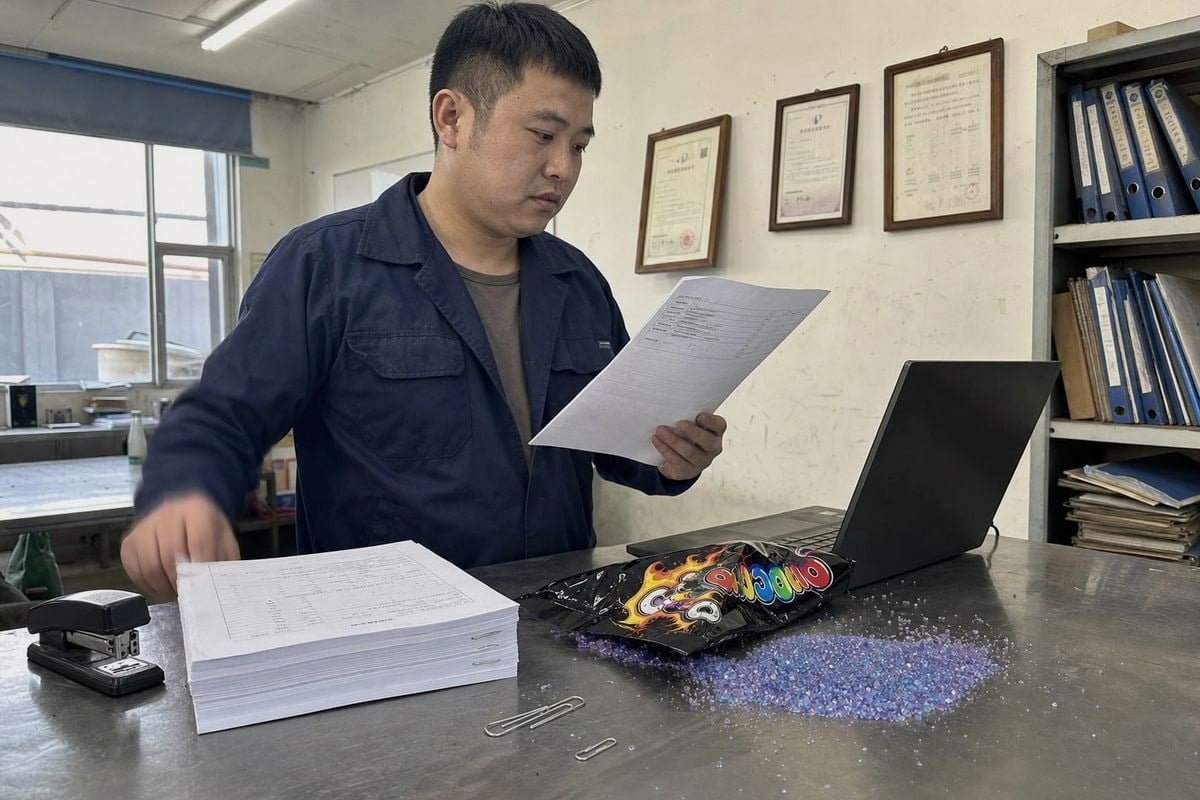
La question de la certification sépare rapidement les vraies usines des sociétés commerciales REACH UE 2. Au cours de nos dix-sept années d'exportation de paquets de flammes colorées vers plus de trente pays, j'ai vu des acheteurs se brûler les doigts avec des fournisseurs qui transmettaient des certificats empruntés ou expirés. Alors vérifiez tout. Ne vous contentez pas de collecter des PDF.
L'ensemble de documents de base
Chaque document répond à une question différente. Un certificat de qualité vous indique que l'usine gère des processus contrôlés. Un rapport de test vous indique ce qu'il y a réellement dans la pochette. Vous avez besoin des deux.
| Document | Ce qu'il prouve | Signal d'alarme s'il manque |
|---|---|---|
| ISO 9001 3 certificat | L'usine dispose d'un système de gestion de la qualité fonctionnel | Lots incohérents, pas de traçabilité |
| rapport d'audit BSCI | Conditions de travail éthiques et conditions d'usine | Rejet par le détaillant, risque pour la marque |
| Rapport de test SGS/Intertek | Vérification indépendante de la composition et de la sécurité | Données auto-déclarées uniquement |
| documentation CE | Conformité pour le marché européen | Blocages douaniers en Europe |
| Test de comportement de combustion | Données d'allumage, de couleur de flamme et de durée de combustion | Performances imprévisibles du produit |
Comment vérifier, pas seulement collecter
Premièrement, vérifiez le numéro de certificat sur le site Web de l'organisme émetteur. SGS et Intertek proposent tous deux une vérification en ligne. Deuxièmement, confirmez que le certificat nomme le site de production réel, et non un bureau de commerce. Nos acheteurs appellent souvent nos lignes de production de Ningbo par vidéoconférence pour cette raison exacte. Troisièmement, vérifiez les dates. Les rapports de test de plus de deux ans doivent être actualisés, car les formules et les sources de matières premières changent. Enfin, faites correspondre le nom du produit et le code sur le rapport au SKU que vous achetez. Un rapport de test pour un produit en pot ne couvre pas automatiquement une version sachet avec des matériaux d'emballage différents. Comprendre quelles normes de sécurité la poudre magique à feu doit respecter pour la certification rend beaucoup plus facile de juger si l'ensemble de documents d'un fournisseur est complet.
Comment vérifier que la composition chimique respecte les réglementations d'importation de mon pays ?
Il y a un compromis que j'évalue sur chaque nouvelle formulation : des couleurs de flamme plus riches par rapport à des profils réglementaires plus propres. Certains sels produisent des effets étonnants mais échouent au contrôle d'importation sur les marchés clés, nous concevons donc autour d'eux.
Vérifiez la liste des ingrédients de la section 3 du FDS et les numéros CAS par rapport aux règles de votre pays concernant les substances réglementées, telles que le règlement REACH de l'UE, les directives de la CPSC des États-Unis et les lois nationales sur les feux d'artifice. Confirmez ensuite avec un test de laboratoire tiers que la composition déclarée correspond à la poudre réelle.

Voici la vérité inconfortable sur cette catégorie de produits. Le nom "poudre magique à feu" n'est pas un terme standardisé. Il peut décrire un paquet de couleur de feu de camp écologique, une poudre de flamme décorative ou un véritable mélange pyrotechnique avec des oxydants et des combustibles métalliques. Ces trois produits font face à des règles complètement différentes à votre frontière. Votre premier travail est d'établir lequel vous importez réellement.
Faire correspondre les ingrédients aux règles de votre marché
Commencez par la section 3 de la FDS. Extrayez tous les numéros CAS listés. Ensuite, comparez chacun d'eux aux bases de données de substances restreintes de votre marché. Les sels de cuivre, les sels de strontium et les composés de bore sont des agents colorants courants et sont généralement acceptables dans les produits de couleur de flamme pour les consommateurs sur la plupart des marchés. Les composés de baryum et les composés de plomb méritent un examen beaucoup plus approfondi en raison de préoccupations de toxicité. Tout ce qui contient des poudres métalliques plus des oxydants peut être classé comme un matériau énergétique et réglementé comme des feux d'artifice.
| Marché | Cadre clé | Ce que les responsables des douanes recherchent |
|---|---|---|
| États-Unis | CPSC 4, règles DOT sur les matières dangereuses | Classification des dangers, étiquetage, disponibilité de la FDS |
| Union européenne | REACH, Règlement CLP 5 | Dépistage des SVHC, étiquettes SGH, FDS au format UE |
| Royaume-Uni | REACH Royaume-Uni | Enregistrement et étiquetage post-Brexit |
| Canada | SIMDUT, CCPSA | Étiquettes bilingues, communication des dangers |
| Australie | AICIS | Notification d'introduction de produits chimiques |
Combler le fossé entre le papier et la poudre
La composition déclarée et la composition réelle ne sont pas toujours la même chose. Lorsque nous expédions en Allemagne ou aux Pays-Bas, les acheteurs commandent souvent leurs propres tests ponctuels à l'arrivée. J'encourage cela. Demandez à votre fournisseur s'il acceptera la vérification indépendante comme condition contractuelle. Une usine confiante dans sa formulation acceptera immédiatement. Un fournisseur qui hésite vous dit quelque chose d'important.
Quelles Fiches de Données de Sécurité Ai-je Besoin Avant de Pouvoir Dédouaner et Lister ce Produit ?
Un de nos acheteurs polonais a appris cette leçon à ses dépens avant de travailler avec nous. Son précédent fournisseur a envoyé une "note de sécurité" générique d'une page. Les douanes ont retenu le conteneur pendant six semaines. Les frais de surestaries ont effacé toute sa marge.
Vous avez besoin d'une FDS complète au format SGH avec les seize sections pour le nom exact du produit et le code, rédigée dans la langue et le format requis par votre marché, ainsi que des documents de transport couvrant le statut du numéro UN, le groupe d'emballage et une déclaration confirmant si le produit est classé comme marchandise dangereuse.

Une FDS n'est pas une brochure marketing. C'est un document légal de communication des dangers, et les courtiers en douane, les transitaires et les plateformes de vente au détail s'y fient tous. Une FDS modèle générique est presque sans valeur. Elle doit nommer votre produit exact, votre formulation exacte et votre emballage exact.
Les seize sections les plus importantes
Chaque section a un but, mais quatre sections décident si votre expédition bouge ou reste bloquée. La section 2 donne la classification des dangers et les pictogrammes SGH. La section 3 divulgue la composition avec les numéros CAS et les plages de concentration. La section 9 couvre les propriétés physiques telles que la température d'inflammation et le comportement des particules. La section 14 couvre les informations de transport, y compris si un numéro UN 6 s'applique.
Pour un produit de consommation à flamme colorée bien conçu comme les sachets que nous produisons, la section 14 devrait indiquer que le produit n'est pas classé comme marchandise dangereuse pour le transport. Cette seule ligne modifie vos coûts de fret, vos options de transporteur et vos exigences de stockage. Si un fournisseur ne peut pas indiquer clairement la classification de transport, supposez le pire jusqu'à preuve du contraire.
Au-delà des douanes : exigences de référencement au détail
Le dédouanement n'est que la moitié du travail. Les grands détaillants et les places de marché exigent la FDS avant de référencer tout produit lié au feu. L'examen des matières dangereuses d'Amazon, par exemple, le demandera. Les équipes d'approvisionnement des grandes surfaces, les canaux de type Home Depot que nous fournissons, l'exigent lors de l'intégration des fournisseurs. D'après notre expérience, les acheteurs qui arrivent à ces conversations avec une FDS complète, à jour et spécifique au produit concluent des transactions des mois plus rapidement que ceux qui s'y prennent à la dernière minute. Préparez le dossier documentaire avant de négocier l'accord de vente au détail, pas après.
Quels documents dois-je exiger pour confirmer la cohérence lot par lot ?
Notre équipe de contrôle qualité a un jour rejeté un lot entier de matières premières parce que la couleur de la flamme lors du test de combustion dérivait légèrement vers le vert-jaune au lieu du vert pur. Cette décision nous a coûté du temps de production. Cela m'a aussi appris pourquoi les acheteurs devraient exiger une preuve au niveau du lot, pas des promesses d'usine.
Exiger un certificat d'analyse spécifique au lot indiquant le numéro de lot, le dosage, la teneur en humidité, la granulométrie et les limites d'impuretés, ainsi que les enregistrements d'échantillons conservés, les journaux d'inspection des matières premières entrantes et les résultats des tests de combustion par série de production, afin que chaque expédition puisse être tracée et comparée à votre échantillon de référence approuvé.
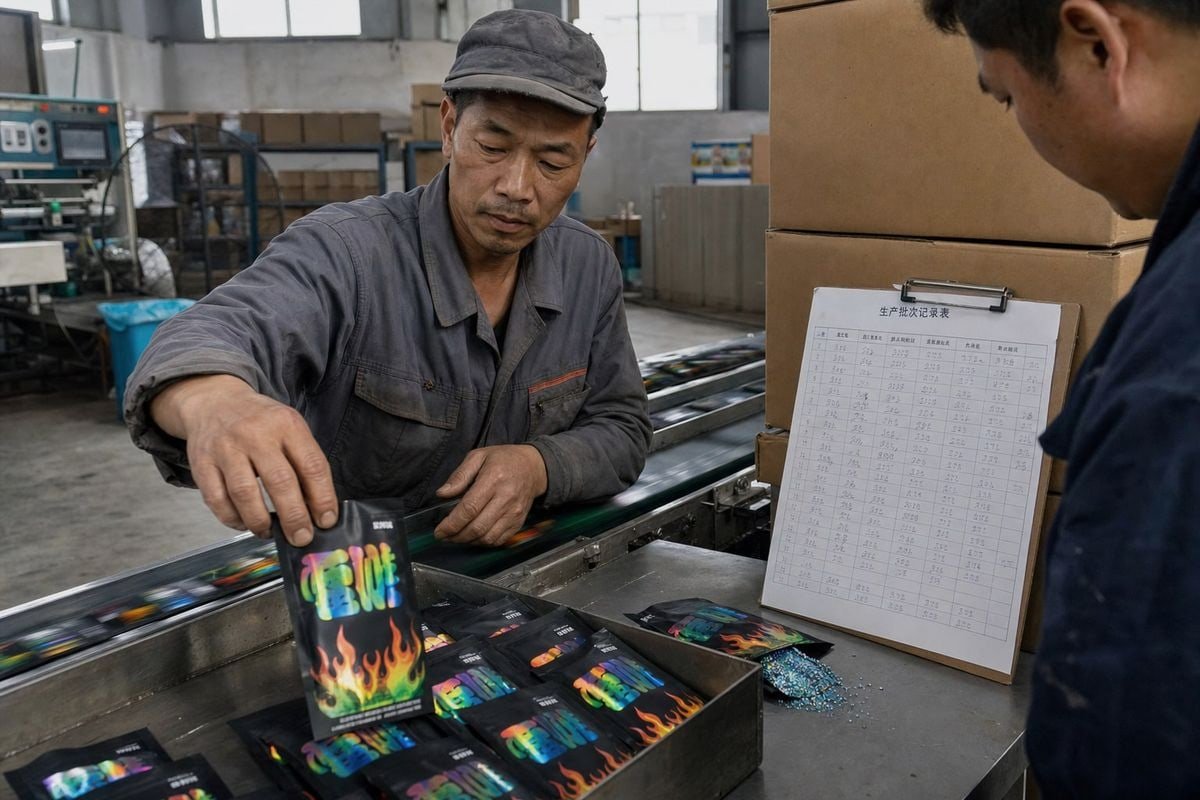
La cohérence est ce qui sépare les vraies usines des revendeurs. Une société commerciale peut vous envoyer un bel échantillon. Seule une usine dotée de lignes de production complètes et d'un contrôle de processus discipliné peut vous envoyer le même produit lors du dixième conteneur. Après dix-sept ans à gérer nos propres lignes, je peux vous dire que la cohérence se construit par la documentation, vérifiée à chaque étape.
La chaîne de documentation des lots
Pensez-y comme à une chaîne à quatre maillons. Si un maillon manque, la traçabilité est rompue.
| Étape | Document | Ce qu'il faut vérifier |
|---|---|---|
| Réception des matières premières | Enregistrement de l'inspection entrante | ID de lot du fournisseur, vérification de la pureté, mesure de l'humidité |
| Mélange et production | Dossier de production de lot | Version de la formule, équipement, signature de l'opérateur |
| Produit fini | Certificat d'Analyse (CoA) | Dosage, humidité, taille des particules 7, impuretés par rapport aux limites |
| Pré-expédition | Rapport de test de combustion et journal des échantillons conservés | Couleur de la flamme, durée de combustion, comportement d'allumage |
Comment utiliser ces documents en tant qu'acheteur
Premièrement, approuvez un échantillon doré et faites-le signer par les deux parties. Chaque futur CoA sera comparé à cette référence. Deuxièmement, inscrivez la livraison du CoA dans votre contrat d'achat comme condition d'expédition. Pas de CoA, pas de libération de paiement. Troisièmement, demandez si l'usine conserve des échantillons de chaque lot. Nous conservons les nôtres afin que si un client signale une dérive de couleur ou de temps de combustion, nous puissions tester le lot exact côte à côte avec l'échantillon de plainte. Quatrièmement, demandez spécifiquement des données sur la taille des particules. Une poudre trop finement broyée crée des problèmes de poussière et d'inhalation ; trop grossière, et l'effet de couleur s'affaiblit. Un fournisseur qui suit cela par lot est un fournisseur qui contrôle réellement le processus.
Conclusion
Les flammes colorées se vendent d'elles-mêmes ; la poudre non documentée fait couler les entreprises. Exigez la FDS complète, les certifications vérifiées, les vérifications réglementaires et les CoA de lot, et ne vous associez qu'aux usines qui les fournissent sans hésitation.
Notes de bas de page
Explique la structure mondiale harmonisée de la FDS référencée tout au long de l'article ↩︎
Règlement chimique officiel de l'UE référencé pour le dépistage de la conformité à l'importation ↩︎
Source ISO officielle définissant la certification de gestion de la qualité discutée ↩︎
La Consumer Product Safety Commission des États-Unis supervise la classification des dangers citée dans l'article ↩︎
Cadre officiel de classification et d'étiquetage de l'UE mentionné dans le tableau de conformité ↩︎
Contexte sur les codes de classification des transports référencés pour la documentation des marchandises dangereuses ↩︎
Contexte technique sur la mesure de la taille des particules pertinente pour les tests de cohérence des lots ↩︎

 English
  Spanish
  German
  French
  Arabic
  Portuguese
Rejoignez la conversation