






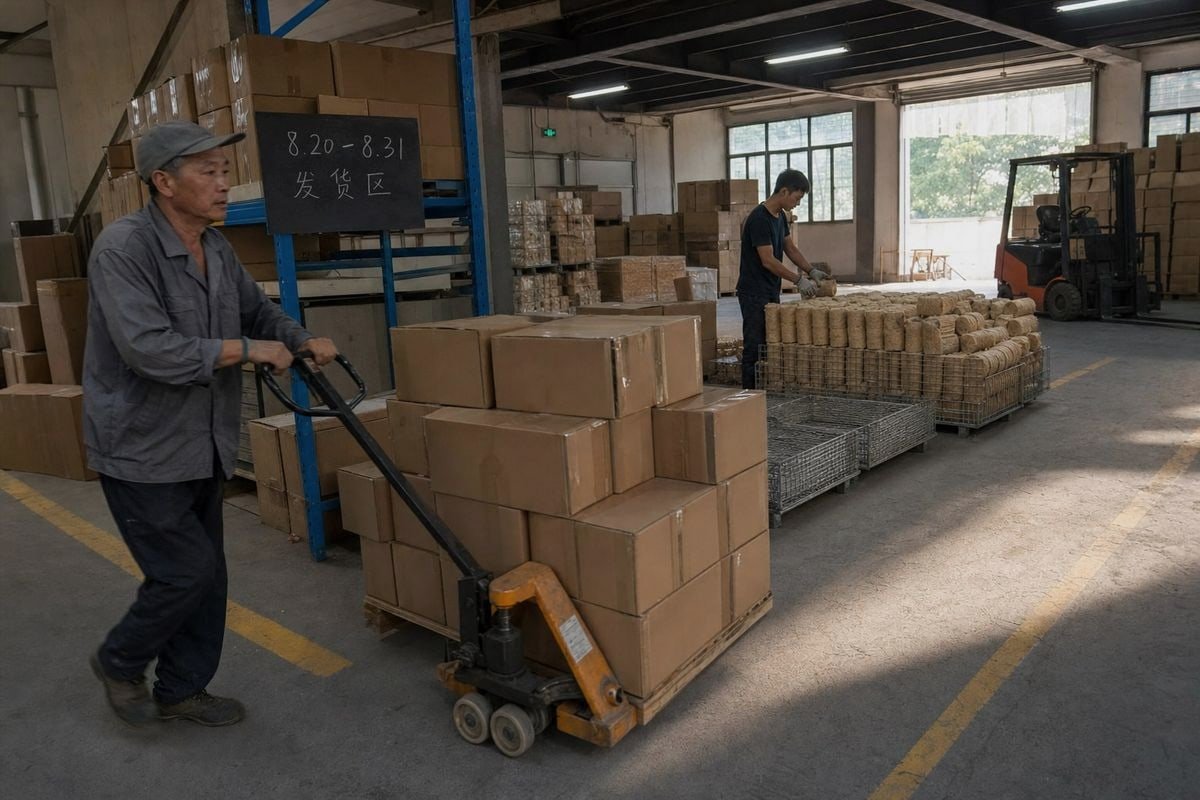
Every August, our wood fire starter production line in Ningbo runs at full tilt because buyers who waited too long are suddenly scrambling SGS or Intertek product testing 1. Miss the window, and you miss the season's best margins.
The best strategy for peak season wood fire starters is a hybrid: pre-order roughly 60–80% of forecast demand as a futures commitment 3–6 months ahead, then keep 20–40% open for in-stock replenishment. This locks pricing and capacity while preserving flexibility for demand swings.
That answer sounds simple. But the right split depends on your lead times, forecast confidence, storage space, and cash position. Let me walk you through how to decide.
How do I decide between buying from ready inventory or placing a pre-order for peak season wood fire starters?
A German distributor once told me he lost his best three selling weeks in November because he treated fire starters like a just-in-time SKU 2. Our factory has heard versions of that story for 17 years.
Decide based on lead time versus your selling window. If total lead time consumes more than half your peak season, commit most volume via pre-order. If you can replenish quickly from supplier stock, hold back more open-to-buy for in-season purchases.

Wood fire starters are a classic seasonal anticipation product. Demand starts climbing in early fall, peaks through winter, and drops sharply after the heating season. That pattern is predictable, which means you should plan backward from your selling window rather than react to orders as they arrive.
The core trade-off is inventory risk versus stockout risk. Buy too early and too much, and you tie up cash and warehouse space, then face markdowns in spring. Wait too long, and peak demand outruns extended supplier lead times, forcing expensive air freight or leaving shelves empty during your highest-margin weeks.
A quick comparison of the two approaches
| Facteur | Buy from ready inventory | Pre-order futures |
|---|---|---|
| Availability risk | High during peak months | Low — capacity is reserved |
| Prix unitaire | Higher in season | Lower, locked pre-season |
| Flux de trésorerie | Pay closer to sales | Early deposit required |
| Flexibilité | High — buy what sells | Lower once committed |
| Personnalisation | Limited to what exists | Full OEM/ODM possible |
Three questions that settle the decision
- How long is your total lead time? Production plus ocean transit 3 from China to the US or Europe typically runs 60–100 days. If that eats most of your season, pre-order.
- How stable is your demand history? Stable, repeating SKUs justify heavier pre-season commitment. New SKUs or packaging variants deserve a smaller test buy first.
- Do you need private labeling? Custom boxes, barcodes, and warning labels cannot come from stock. They require a production slot, which means a futures-style order.
In our experience exporting to 30+ countries, the buyers who do best treat this as a timing decision, not just a quantity decision. They ask when to commit, how much to hold back, and how much flexibility to preserve for late-season replenishment.
What lead times should I expect if I place a futures order versus an in-stock purchase?
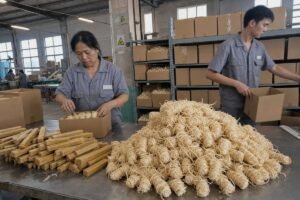
When we schedule our wax-dipping and wood-wool lines in Ningbo each summer, the production calendar for October delivery is usually locked by July. That single fact drives everything about lead times.
Expect 30–60 days of production for a futures order, plus 25–40 days ocean transit, for a total of 60–100 days. In-stock purchases ship in 1–2 weeks but face limited quantities, no customization, and rapid depletion during peak season.
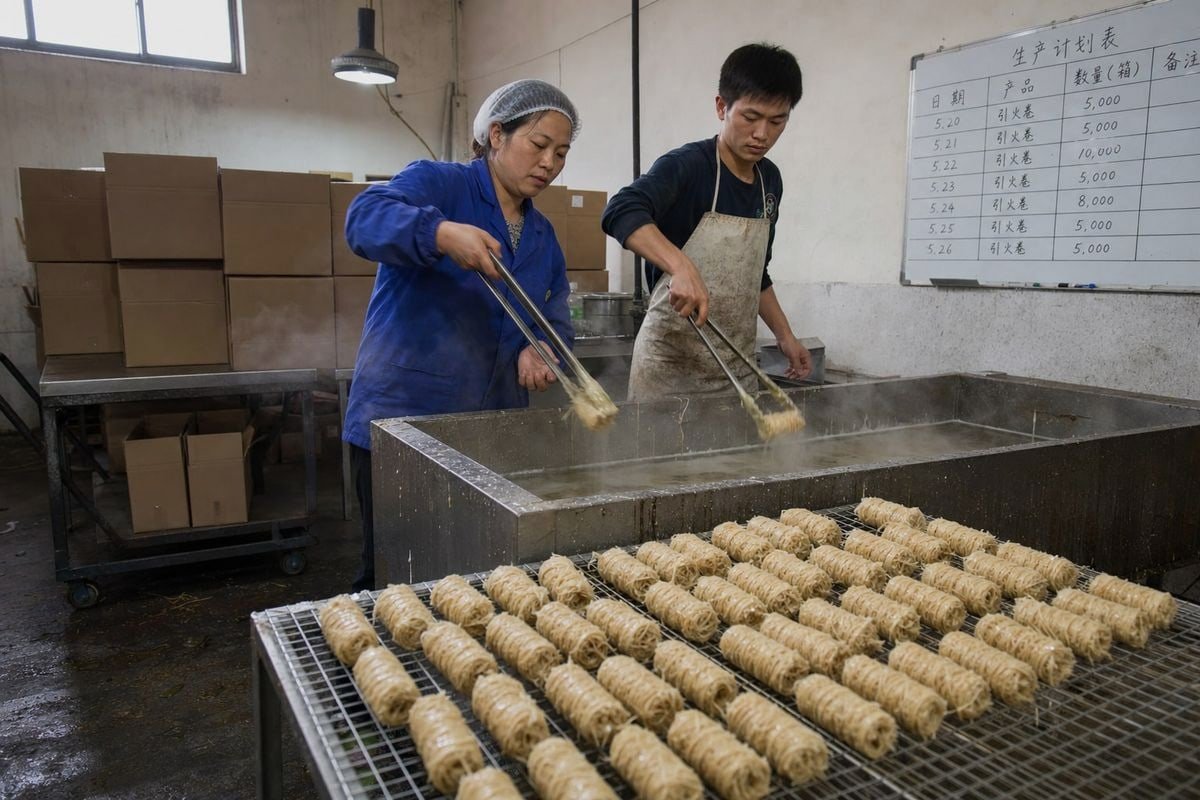
Lead time is the decisive variable in this whole decision. So let's break it down into its real components, because buyers often underestimate the total pipeline.
The full lead-time pipeline for a futures order
| Étape | Durée typique | Notes |
|---|---|---|
| Approbation de l'échantillon | 1–2 semaines | Faster for repeat SKUs |
| Production slot wait | 1–4 weeks | Longest in July–September |
| Lancement de la production | 3–6 weeks | Depends on volume and customization |
| Ocean freight to US/EU | 4–6 semaines | Plus port congestion buffer |
| Douanes et livraison intérieure | 1–2 semaines | Varies by destination |
Add it up, and a Thanksgiving-window SKU realistically needs a confirmed order by mid-August at the latest. For European buyers targeting a strong November, we advise confirming by late July.
An in-stock purchase collapses most of that timeline. If a supplier or your own warehouse holds finished goods, you can move product in days. But there are three catches. First, stock is generic — standard sizes, standard packaging, no private label. Second, everyone else wants the same stock at the same time. Third, in-season pricing is almost always higher because demand pressure works against you.
There is one more wrinkle worth planning for. Certified materials — FSC-sourced wood fiber 4 or recycled wax — are seeing longer procurement times upstream. If your market requires sustainability certification, add another two to four weeks to the futures pipeline and commit even earlier. We flag this to eco-focused buyers every spring, because certified inputs cannot be conjured up in October.
The half-window rule
Here is the simple test I share with purchasing managers: if your total lead time is longer than half your selling window, a mid-season reorder will arrive too late to matter. In that case, shift your split toward heavier pre-season commitment — closer to 80/20 than 60/40.
Can I lock in better pricing and MOQ flexibility by pre-ordering ahead of peak season?
One trade-off we weigh every year at our factory is how to reward early commitments without penalizing loyal buyers who need late top-ups. The honest answer: early orders get the better deal, and there are structural reasons why.
Yes. Pre-ordering before peak season typically secures lower per-unit pricing, priority production slots, and more flexible MOQs, because suppliers can plan raw materials and line time efficiently. In-season purchases face higher prices, stricter minimums, and whatever capacity remains.
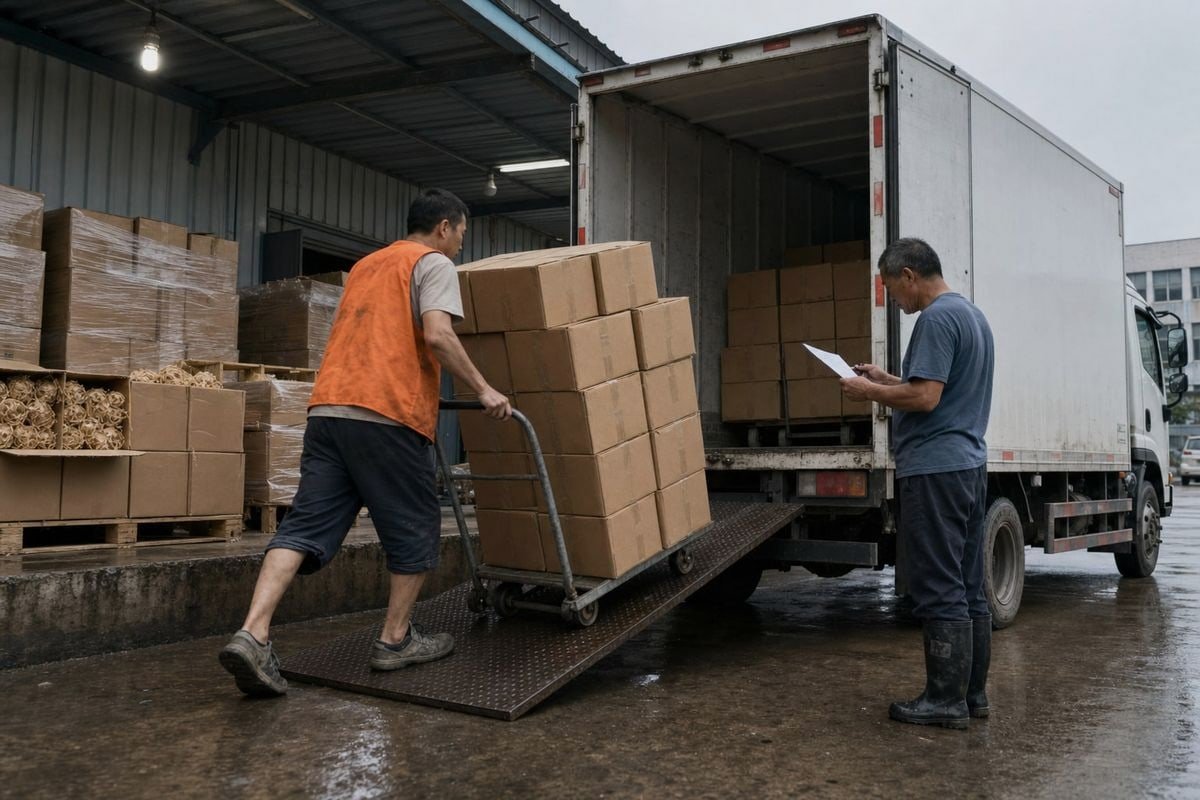
Why does early commitment unlock better terms? It comes down to how a factory actually operates. When we know volumes in advance, we buy wood fiber, wax, and packaging materials in larger consolidated lots, schedule continuous production runs, and avoid costly line changeovers. Those savings flow back to the buyer. When orders arrive mid-season, we are buying raw materials at spot prices and squeezing runs between existing commitments. That costs more, and pricing reflects it.
Raw material volatility matters here too. Paraffin-based starters track wax and petroleum-linked pricing, while sawdust-compressed and recycled-material starters follow different cost curves. Locking a futures price in spring insulates you from autumn spikes in whichever input your product uses. Our wax-dipped wood rolls, for example, are quoted with firm pricing for confirmed pre-season orders — something we simply cannot promise for October inquiries.
What early commitment typically unlocks
| Benefit | Pre-season futures order | In-season stock purchase |
|---|---|---|
| Per-unit price | Lower, locked at quote | Higher, subject to spot costs |
| MOQ | Negotiable, trial tiers possible | Fixed by remaining stock lots |
| Private label / OEM | Full customization window | Rarely available |
| Payment terms | Deposit + balance, often staged | Usually full payment upfront |
| Production priority | Reserved slot | Queue behind committed orders |
There is a real cost on your side, of course. Pre-ordering requires deposit capital months before seasonal revenue arrives. That cash flow strain is legitimate, and it is exactly why we encourage staged shipments for larger buyers: commit the full seasonal volume early to lock pricing, but split delivery into two or three tranches so payment and warehousing spread across the season. You get futures pricing with inventory-like cash flow. It is the most requested arrangement among our established US and European distributors, and it works because the commitment — not the shipment date — is what lets the factory plan.
How do I make sure quality stays consistent whether I buy from stock or from a new production batch?
Early in my career here, a Canadian buyer returned with a complaint that stung: his second shipment burned two minutes shorter than his first. We traced it to wax saturation drift between batches. That lesson reshaped our batch QC process permanently.
Demand batch-level quality control: consistent burn-time testing, wax-to-fiber ratio checks, and moisture control on every production run, backed by third-party certification such as SGS or Intertek reports. Then verify that stock inventory and new batches are tested to the identical specification.
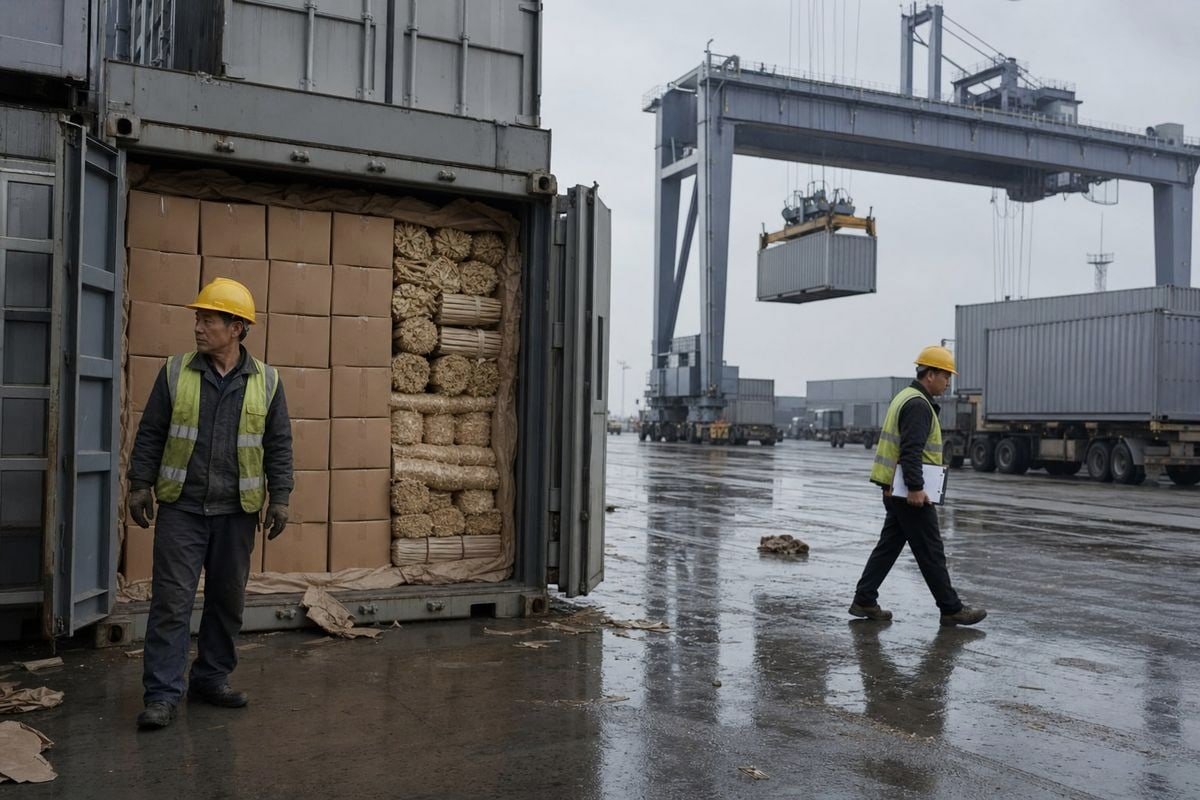
Quality consistency is where the inventory-versus-futures question gets subtle. Buyers often assume stock is the "known quantity" and a new production run is the risk. In reality, both can drift — stock can degrade in storage, and new batches can vary if the factory lacks discipline. Your job is to control both paths.
What actually varies in fire starter production
For a wax-and-wood-fiber starter, the composition ratio drives everything. A product built to 50% wood fiber and 50% paraffin will change its ignition speed and total burn time if that ratio slips even modestly. Wood-wool density, wax penetration depth 5, and residual moisture are the other variables. On our lines, we sample-test burn time on every batch and hold the wax-to-fiber ratio within a tight tolerance, because a distributor's repeat customer notices a five-minute burn difference even if a lab report calls it minor.
A verification checklist for buyers
- Ask for the batch test record, not just a generic spec sheet. A real factory logs burn-time samples per run.
- Request third-party reports. ISO 9001 process certification 6 plus SGS or Intertek product testing tells you the system exists year-round, not just when you visit.
- Retain a golden sample. Keep an approved reference unit and compare each incoming shipment against it — weight, dimensions, wax coverage, burn behavior.
- Check storage conditions for stock. Wax-based starters stored through a hot summer can soften or bloom. Ask how and where stock was held.
- Confirm the first sample reflects mass production. This is the single biggest gap between factories and trading companies 7. A trader shows you one factory's sample and may ship another factory's goods.
Because we run our own production lines rather than brokering, the sample you approve in March comes off the same equipment, with the same materials and the same QC gates, as the container you receive in September. That continuity is precisely what makes a futures order safe: you are not gambling on an unknown future batch, you are buying a repeat of a controlled process.
Conclusion
Waiting for peak season to buy wood fire starters means paying more for less certainty. Pre-book 60–80% early, keep a flexible reserve, verify batch QC, and commit by mid-summer.
Notes de bas de page
1. Intertek is a leading third-party testing and certification firm cited for verifying product quality. ↩︎
2. Explains the just-in-time inventory concept the distributor mistakenly applied to seasonal goods. ↩︎
3. Provides background on containerized ocean shipping that drives the lead-time calculations discussed. ↩︎
4. FSC is the authoritative certification body for sustainably sourced wood fiber referenced in the article. ↩︎
5. Background on paraffin wax properties clarifies why wax penetration affects burn performance consistency. ↩︎
6. ISO 9001 is the recognized international standard for quality management systems referenced for supplier verification. ↩︎
7. Alibaba.com is a major global sourcing platform relevant to distinguishing factories from trading companies. ↩︎


 English
  Spanish
  German
  French
  Arabic
  Portuguese
Rejoignez la conversation