






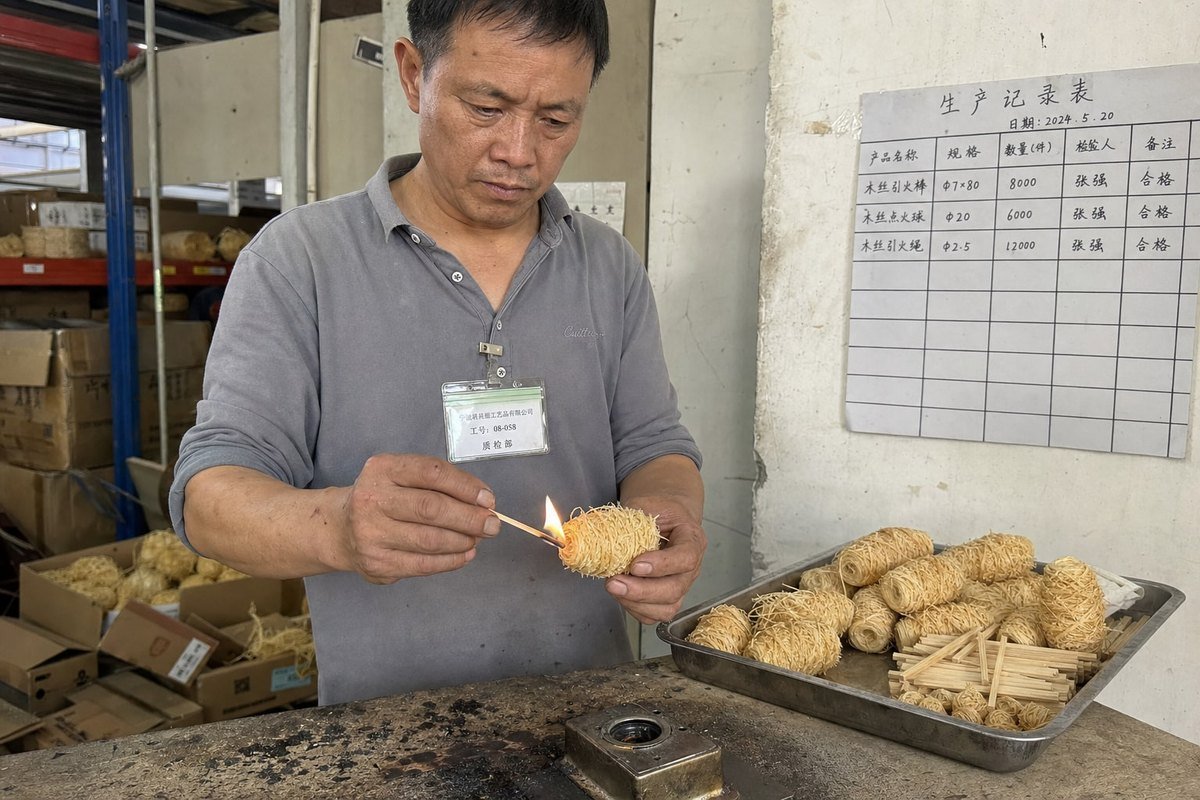
Wood fire starters for pizza ovens face a hidden problem on our production line: buyers assume "it lights" is enough. It is not. One chemical-smelling batch can taint a customer's pizza, trigger returns, and damage a brand you spent years building. When we developed our wax-dipped wood wool rolls, we learned that ignition standards for ovens combine food safety, burn performance, and fire-code rules — and a starter must satisfy all three before it belongs on a retail shelf.
Wood fire starters meet ignition standards for pizza ovens by using natural, accelerant-free materials such as wood wool and refined wax, lighting cleanly with one match, producing an odorless, low-smoke burn, sustaining flame for 8–10 minutes, and carrying certifications like EN 1860-3 that verify food-safe combustion.
That is the short answer. Below, I break down the certifications to demand, how to verify performance before a bulk order, which materials are safe at high oven temperatures, and how private labeling works.
What Certifications Should I Look for in Wood Fire Starters for Pizza Ovens?
A German distributor once emailed our team with one question before anything else: "Send the test reports first, then we talk price." After 17+ years exporting fire products to 30+ countries, we know that sequence is the norm, not the exception.
Look for EN 1860-3 certification, the European standard for solid firelighters, plus third-party lab verification from SGS or Intertek. Also confirm the supplier holds ISO 9001 for quality management and BSCI for social compliance, and that packaging carries correct warning labels for your market.
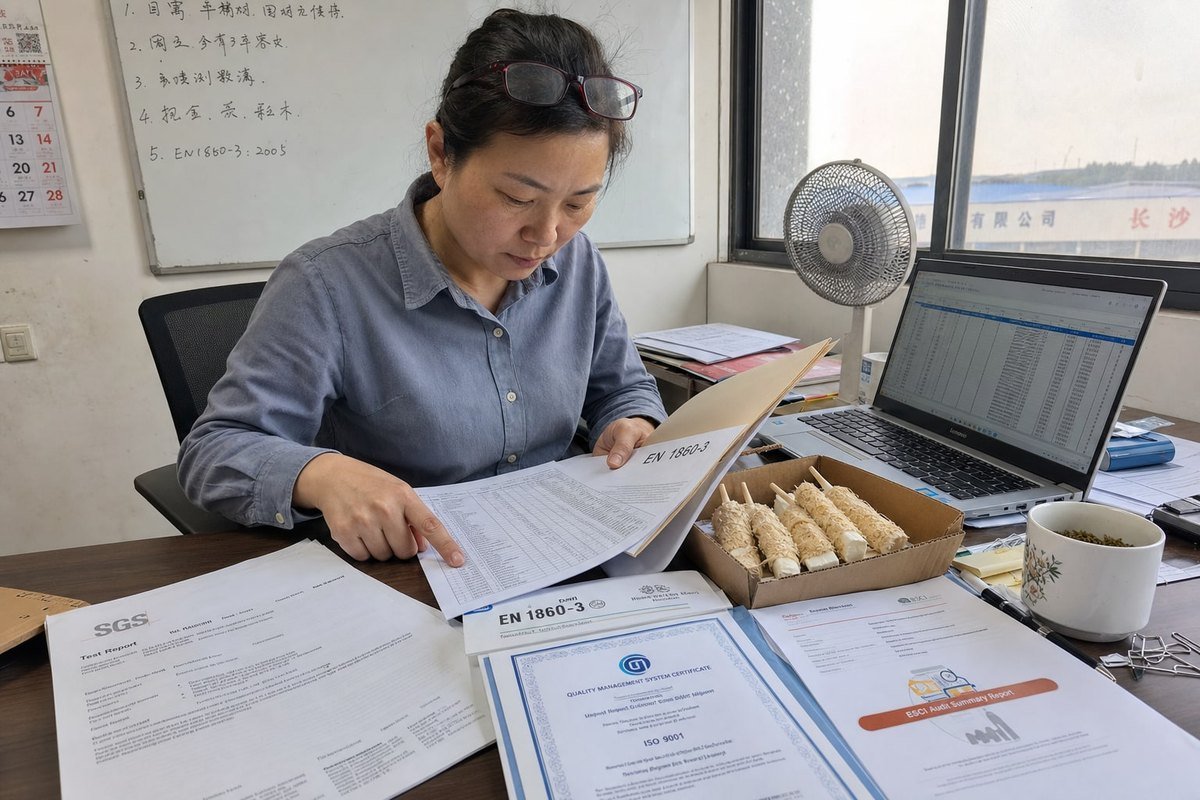
Certifications are the fastest way to filter suppliers. But you need to know what each one actually covers, because they answer different questions.
The Core Standards Explained
EN 1860-3 is the benchmark most European buyers ask about. It governs solid firelighters 1 used for cooking appliances. It tests ignition reliability, burn time, and safety of composition. A starter that passes has proven it lights consistently and burns predictably — exactly what a pizza oven needs during startup. Marks like DIN-Geprüft or DINplus indicate independent testing against this kind of standard, including minimum sustained burn time.
Food-grade safety is the second layer. Pizza ovens are cooking appliances, so the starter's smoke passes over surfaces that later contact food. Natural wood wool bound with refined wax 2 leaves no chemical residue. Petroleum accelerants and lighter fluids fail this test outright.
| Certification / Mark | Ce qu'elle vérifie | Why Pizza Oven Buyers Need It |
|---|---|---|
| FR 1860-3 | Solid firelighter safety and ignition performance | Proves reliable, food-safe ignition |
| Rapports SGS / Intertek | Independent lab testing of composition and burn | Preuve par des tiers, pas des affirmations du fournisseur |
| ISO 9001 | Système de management de la qualité | Cohérence lot par lot |
| BSCI | Audit d'usine éthique | Required by many EU/US retailers |
| CE (le cas échéant) | Product safety conformity | Retail shelf access in Europe |
| FSC / PEFC fibers | Sustainable firelighting materials | Green procurement programs |
Sustainability Marks Are Rising Fast
FSC or PEFC-certified fibres de bois 3 used to be optional. Now large retail sourcing channels increasingly write them into procurement specs, especially for commercial kitchen supply chains. We recommend buyers confirm fiber sourcing early, because it affects both marketing claims and customs documentation.
One warning from experience: a certificate PDF is easy to fake. Always verify report numbers directly with the laboratoire d'essais 4. We provide SGS and Intertek report numbers precisely so buyers can do that check in minutes.
How Can I Verify Ignition Performance and Burn Time Before Placing a Bulk Order?
Before every container leaves our Ningbo facility, our QC team pulls random pieces from the batch and burns them on a test bench. We time ignition, measure flame duration, and check for smoke and odor — because a buyer 8,000 kilometers away cannot afford surprises.
Verify performance by requesting pre-production samples and running a simple burn test: light one starter with a single match, confirm ignition within 10 seconds, time the flame for a target of 8–10 minutes, and check for smoke, odor, and complete combustion without residue.
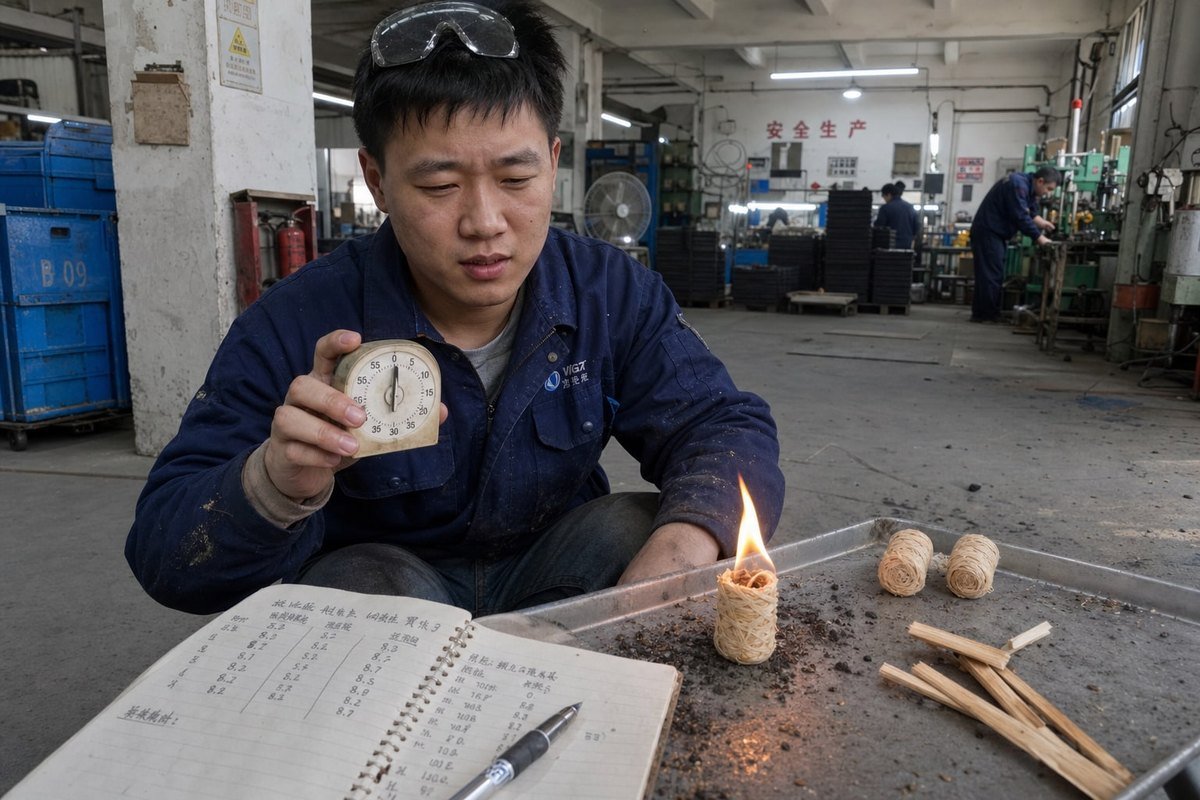
Sampling is your cheapest insurance policy. A five-dollar courier sample can save you a five-figure mistake. Here is the process we recommend to every new buyer.
A Practical Five-Step Verification Process
- Request samples from a real production batch, not a hand-made showpiece. Ask the supplier to state the batch number so you can reference it later.
- Run the single-match test. A quality wood wool starter should catch within seconds from one match, even outdoors in a light breeze. Struggling ignition signals excess moisture or poor wax distribution.
- Time the burn. Set a stopwatch. Our standard wax-dipped rolls sustain flame for roughly 8–10 minutes, long enough to light le bois d'allumage séché au four 5 in a cold oven dome. Under 6 minutes is a red flag for pizza oven use.
- Test under airflow. Pizza ovens create strong chimney draw. Place the sample near a fan on low. A compliant starter stays lit under convective draft; a weak one flickers out.
- Check smoke and smell. An odorless burn with light smoke indicates chemical-free ignition. Black smoke or a chemical odor means the product will taint food and fail buyer expectations.
What the Numbers Should Look Like
| Test Metric | Plage acceptable | Failure Signal |
|---|---|---|
| Ignition time (one match) | Moins de 10 secondes | Multiple matches needed |
| Sustained burn time | 8–10 minutes | Under 6 minutes |
| Teneur en humidité | Inférieur à 10 % | Heavy smoke, slow catch |
| Odeur pendant la combustion | None detectable | Chemical or petroleum smell |
| Residue after burn | Cendres fines uniquement | Dépôts collants ou huileux |
Also ask how the supplier controls batch-to-batch variation. Wax temperature, dipping time, and wood wool density all affect combustion efficiency. Our lines log these parameters per batch, which is why our first sample reliably reflects mass-production quality. If a supplier cannot explain their process controls in plain terms, that silence tells you something.
Which Materials Ensure My Wood Fire Starters Burn Safely at High Pizza Oven Temperatures?
Material choice is where I see the biggest trade-off in sourcing conversations. Cheaper starters cut corners with recycled paraffin or treated wood scrap. On our lines, we stick to natural wood wool and refined wax, because pizza ovens punish shortcuts more than any other application.
Natural wood wool bound with refined food-grade wax is the safest combination for pizza ovens. These materials contain no accelerants, meet flash point regulations, produce no toxic fumes at dome temperatures near 700°F, and leave only fine ash on refractory surfaces.
Pizza ovens are harsher than fire pits. The dome traps heat, the flue accelerates airflow, and the cooking floor sits centimeters from the flame. Material behavior matters at every stage.
Why Wood Wool and Refined Wax Win
Natural wood wool — thin shaved wood fibers coiled into rolls — offers enormous surface area. That is why it catches from one match. The wax coating serves two jobs: it regulates burn speed and it seals out moisture during shipping and storage. Refined waxes with stable flash points comply with flash point regulations for transport, which matters when your container crosses the ocean in summer heat.
Some buyers ask us about paraffin-free firelighters using plant-based waxes. We can produce them, and they suit brands with strict natural-only positioning. The trade-off is cost and slightly different burn behavior, so we always recommend sample testing before committing.
Bio-binders that meet food-contact expectations add another layer of assurance. Even though a starter is consumed before pizza goes in, its smoke and residue touch the oven floor. Chemical-free ignition protects both flavor and the porous refractory stone, which absorbs odors permanently.
Materials to Reject Outright
| Matériau | Risk in a Pizza Oven | Standard It Fails |
|---|---|---|
| Lighter fluid / kerosene blocks | Toxic fumes, food contamination | Food-grade safety expectations |
| Treated or painted wood scrap | Chemical smoke, creosote buildup | VOC emission limits |
| Damp or unseasoned fiber | Heavy smoke, slow dome heating | Moisture and performance specs |
| Recycled industrial wax | Unpredictable odor and residue | Odor-free product claims |
There is one more benefit worth noting. Clean-burning starters support a controlled thermal ramp-up. A gradual heat rise protects ceramic and stone linings 6 from thermal shock. Guides commonly note the dome "whitens" as carbon burns off around 700°F — a clean starter helps the oven reach that visual cue faster and with less soot along the way.
Can I Get Custom Packaging and Private-Label Options for My Pizza Oven Fire Starter Line?
Last year a UK fireplace distributor sent us their brand guidelines on a Monday; by Friday our design team had returned three box mockups with their logo, barcode placement, and market-specific warning text. That turnaround is possible because packaging is built into our factory workflow, not outsourced.
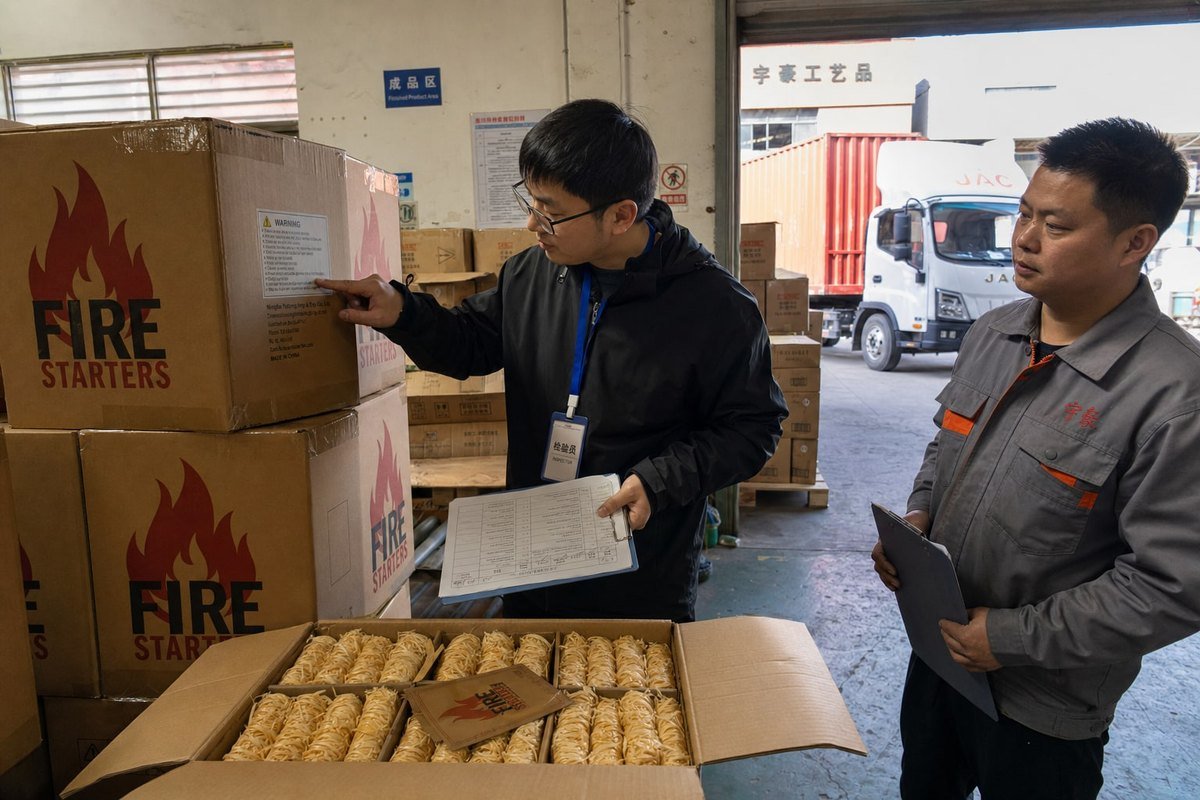
Yes. Established factories offer full private-label programs covering custom box design, brand printing, piece counts per pack, warning labels, barcodes, display-ready cartons, and even custom starter sizes and burn times — typically with flexible MOQs for trial orders before scaling to full containers.
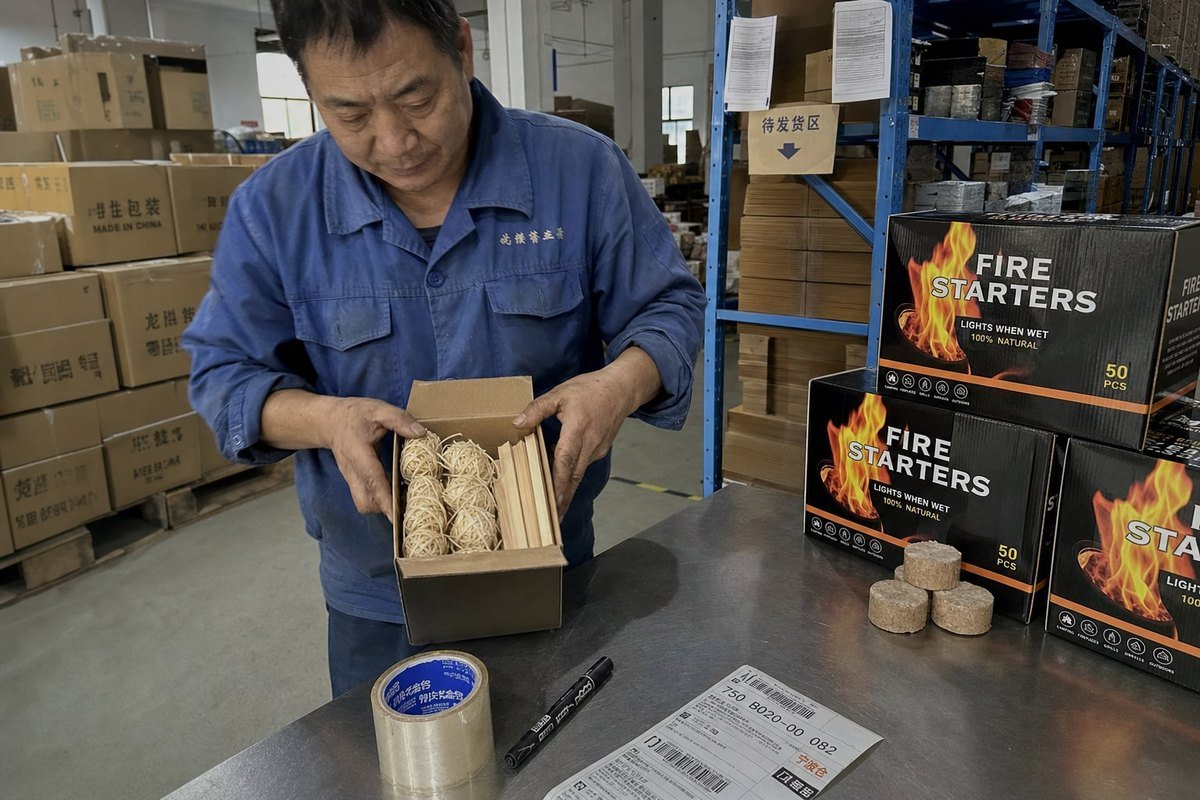
Private labeling is where a commodity becomes a brand asset. But not every supplier handles it well, so it helps to know what a complete OEM/ODM program should include.
What Full Customization Actually Covers
Personnalisation au niveau du produit comes first. We adjust roll diameter, length, wax load 7, and fiber density to hit a target burn time. A pizza oven line might need a longer 10-minute burn, while a camping line prioritizes compact size. We also produce companion items — color-flame pinecones, wax torches, and Magic Fire packets — which lets distributors build a coordinated hearth range from one factory.
Packaging-level customization comes second. Options include printed retail boxes 8 with flame graphics and piece counts, kraft bags for eco-positioned brands, jars, counter display units, and shelf-ready master cartons. We handle warning labels and barcodes to match US and EU retail requirements, because a missing hazard statement can hold a shipment at customs.
Questions to Ask Before Committing
- What is the MOQ for a trial private-label run, and does it differ from stock packaging?
- Who owns the printing plates and artwork files?
- Can warning labels be localized for multiple markets in one order?
- How is packaging protected against wax bleed during summer shipping?
- Are sustainable firelighting materials claims supported by fiber certification for on-pack use?
Logistics matter too. Our team optimizes carton dimensions for container loading, which trims freight cost per unit — a small detail that compounds across repeat orders. For buyers in the US, Germany, or Australia, we align documentation with local import rules so shipments clear without delays. The goal is simple: your branded pizza oven fire starter arrives shelf-ready, compliant, and consistent with the sample you approved.
 English
  Spanish
  German
  French
  Arabic
  Portuguese
Rejoignez la conversation