






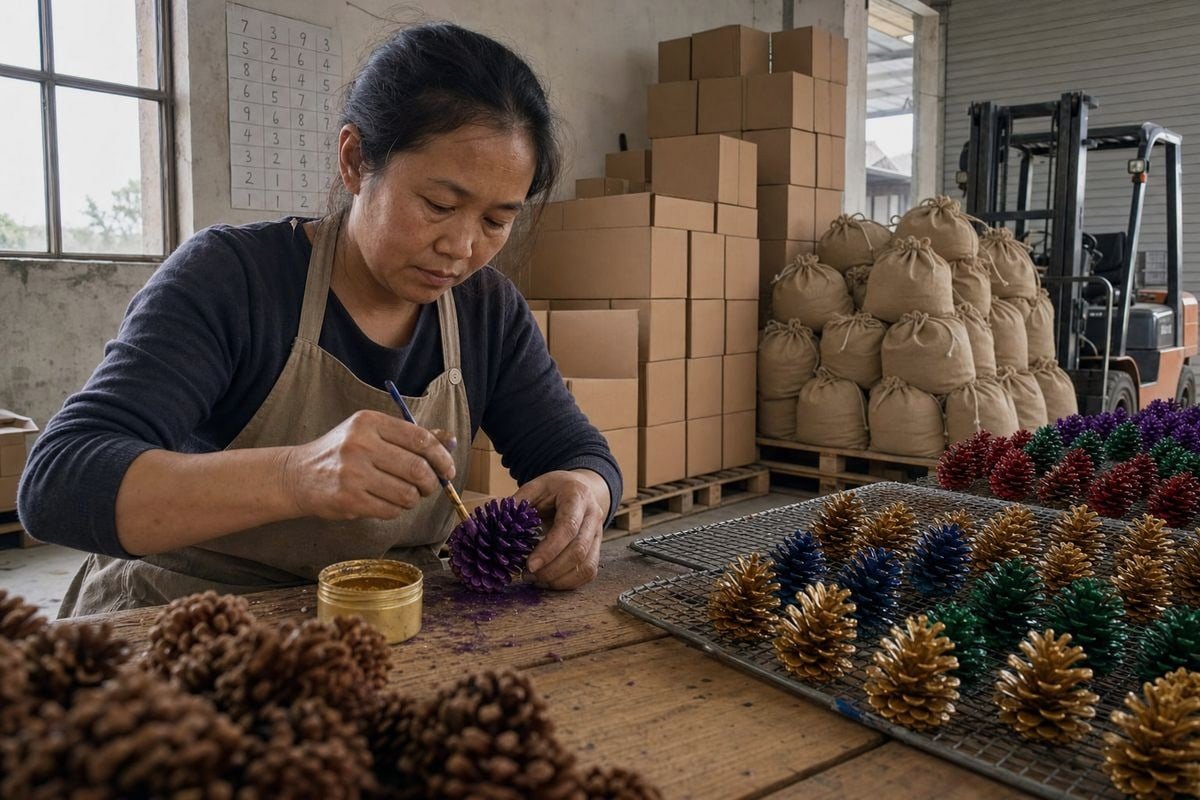
Sourcing colored pine cones from China looks cheap on paper — until hidden freight, compliance gaps, and inconsistent batches erase the savings poids volumétrique 1. I have watched buyers learn this the hard way before finding our production line.
Sourcing colored pine cones from China delivers unit costs of roughly $0.04–$1.50 per piece or bag versus $9.75+ at Western retail, with capacity for 30,000+ bag orders. The savings are real, but only for buyers who plan around MOQs, 30–60 day lead times, and total landed cost.
The sticker price is only the start of the story OEM factories 2. Let me walk you through what the numbers actually look like, from factory gate to your warehouse door.
What Will My Total Landed Cost Look Like When I Source Colored Pine Cones from China?
A German distributor once sent me a competitor's quote that was 20% below ours. Then we mapped his full landed cost together — and our number won. That exercise changed how he buys.
Total landed cost for colored pine cones from China includes factory price ($0.04–$1.50 per unit), freight (often exceeding product value due to bulk), import duties, phytosanitary or fumigation compliance, inspection, and defect allowance. Expect landed cost to run 1.5–3x the quoted factory price.
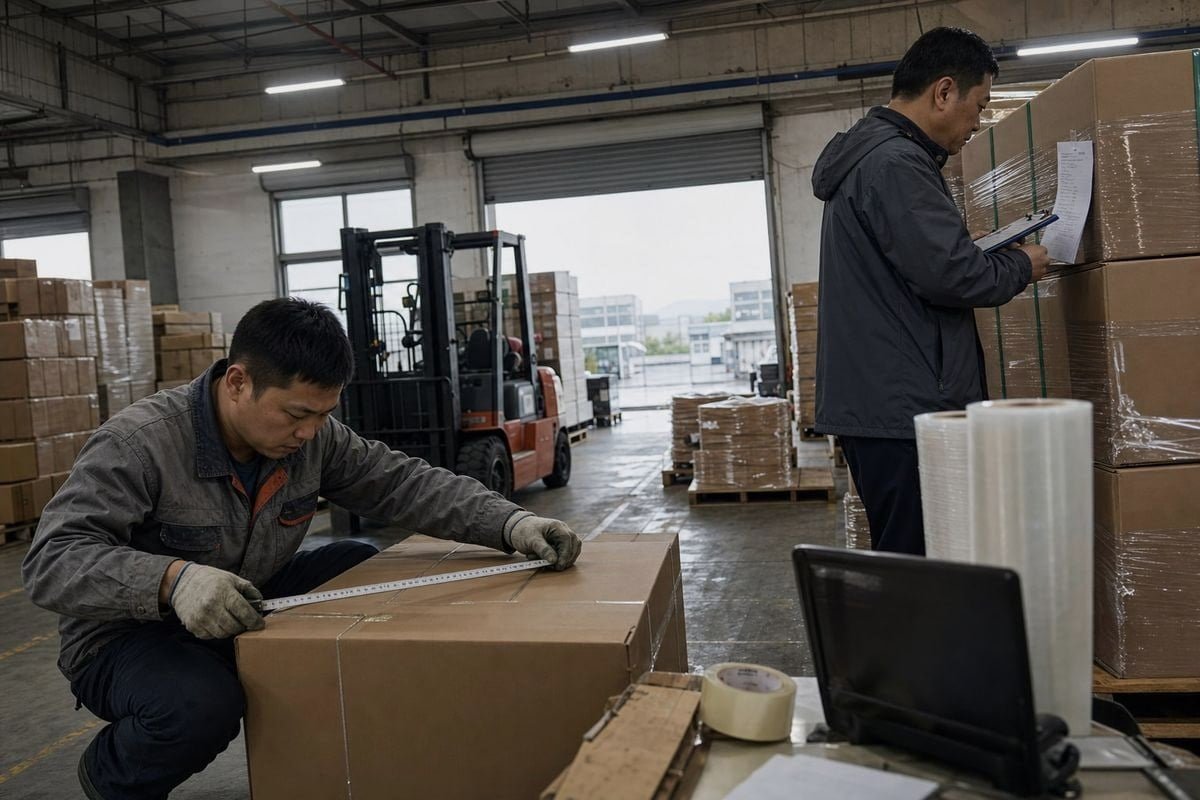
Factory price is the number everyone quotes. Landed cost is the number that hits your P&L. Pine cones are a tricky product here for one simple reason: they are light, bulky, and low in value. That means freight can cost more than the goods themselves. In our experience shipping color-flame pinecones to the US and Europe, buyers who ignore poids volumétrique 3 get the biggest surprises.
The Cost Layers You Must Add Up
Here is how the layers typically stack for a natural botanical product like colored or color-flame pine cones:
| Couche de coût | Impact typique | Notes |
|---|---|---|
| Factory unit price | $0.04–$1.50 per piece/bag | Depends heavily on product spec and volume tier |
| Fret maritime | Often 50–150% of goods value | Low density means you pay for volume, not weight |
| Import duties | Varies by code SH 4 and market | Confirm classification before ordering |
| Phytosanitary / fumigation | Extra fee per shipment | Required for natural plant materials in many markets |
| Inspection and samples | Small fixed cost | Cheap insurance against defect risk |
| Defect / shrinkage allowance | 1–5% of order | Natural cones vary in size and moisture |
Two practical levers reduce these numbers. First, packaging density matters. When we developed our color-flame pinecone packaging — kraft pouches, jars, and drawstring bags — we optimized carton dimensions specifically to cut per-unit freight. Second, container consolidation works. Buyers who combine pine cones with complementary goods, such as our wax-dipped firestarters or color-flame packets, spread freight across more sellable units and can cut per-unit shipping dramatically.
One more hidden layer: compliance documentation. Natural plant materials trigger des certificats phytosanitaires 5 and fumigation in most Western markets. Some suppliers never mention this until the container is stuck at port. We hand buyers SGS and Intertek test reports upfront because our customers treat compliance as a hard requirement, not a nice-to-have. Ask for these documents before you pay a deposit, not after.
How Much Production Capacity Can I Expect for Large or Recurring Orders?
Every August, our Ningbo lines shift into peak mode for the Christmas season. Buyers who booked in spring get their containers on time. Buyers who call in October often cannot.
Chinese suppliers routinely handle tiered volumes from 1,000 to 30,000+ bags per order, with standard lead times of 30–60 days plus 1–2 weeks for customization. Established factories with complete production lines can support recurring seasonal programs, but peak-season capacity must be reserved months in advance.
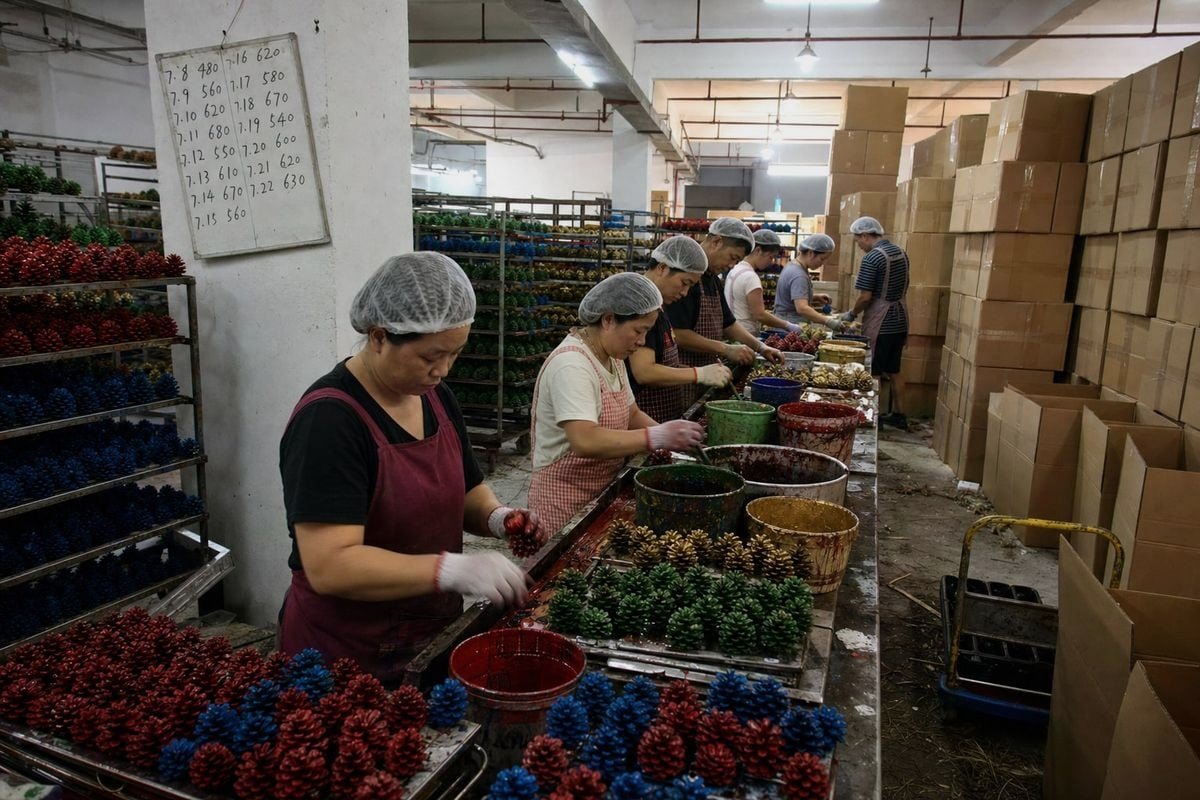
Capacity is where China genuinely separates itself from other sourcing options. The supply base here is built for scale. Raw material access from pine forest regions like Shandong, Yunnan, and Hebei keeps input costs low, and labor-intensive steps — hand-sorting, cleaning, dyeing, tip-painting — cost far less than they would in a US or European facility. That combination is why tiered pricing from 1,000 bags up to 30,000+ bags is normal in factory catalogs.
But raw capacity is not the same as reliable capacity. I break it into three layers when I talk to buyers:
Factory Capacity vs. Real Availability
- Physical line capacity. How many units the factory can process per day when fully staffed. With 17+ years running fire-product lines, we plan this a full season ahead.
- Seasonal allocation. Christmas décor demand spikes hard from September through November. A factory may have huge capacity on paper but zero open slots in October. Recurring buyers who commit early get protected allocation.
- Consistency capacity. Can the factory make batch 10 look like batch 1? Natural cones vary in size, shape, and moisture. Without strict batch-to-batch QC and size grading, a large order arrives as a lottery. This is exactly why we invested in graded sorting and standardized color processes — so the first sample honestly reflects mass production.
There is also a concentration risk worth naming. If you rely on a single small workshop in one region, a demand spike or local disruption can strand your program mid-season. Some buyers hedge with Eastern European suppliers chaîne d'approvisionnement 6; others simply choose a certified factory with genuine depth. Ask any supplier three questions: What is your daily output for this SKU? When does your peak-season book close? And can you show ISO 9001 7 or BSCI audits proving the operation actually exists at the scale claimed?
Can I Get Flexible MOQs to Test the Market Before Scaling Up My Order Volume?
A Canadian camping brand approached us wanting just enough color-flame pinecones to test three retail doors. Two years later, they order by the container. That trial order was the smartest money they spent.
Yes. While headline MOQs from Chinese factories often start at 500–1,000 units or 500kg–1 ton, many suppliers offer trial quantities of 300–500 pieces at higher unit prices. Experienced OEM factories structure small first orders deliberately to convert testing buyers into recurring programs.
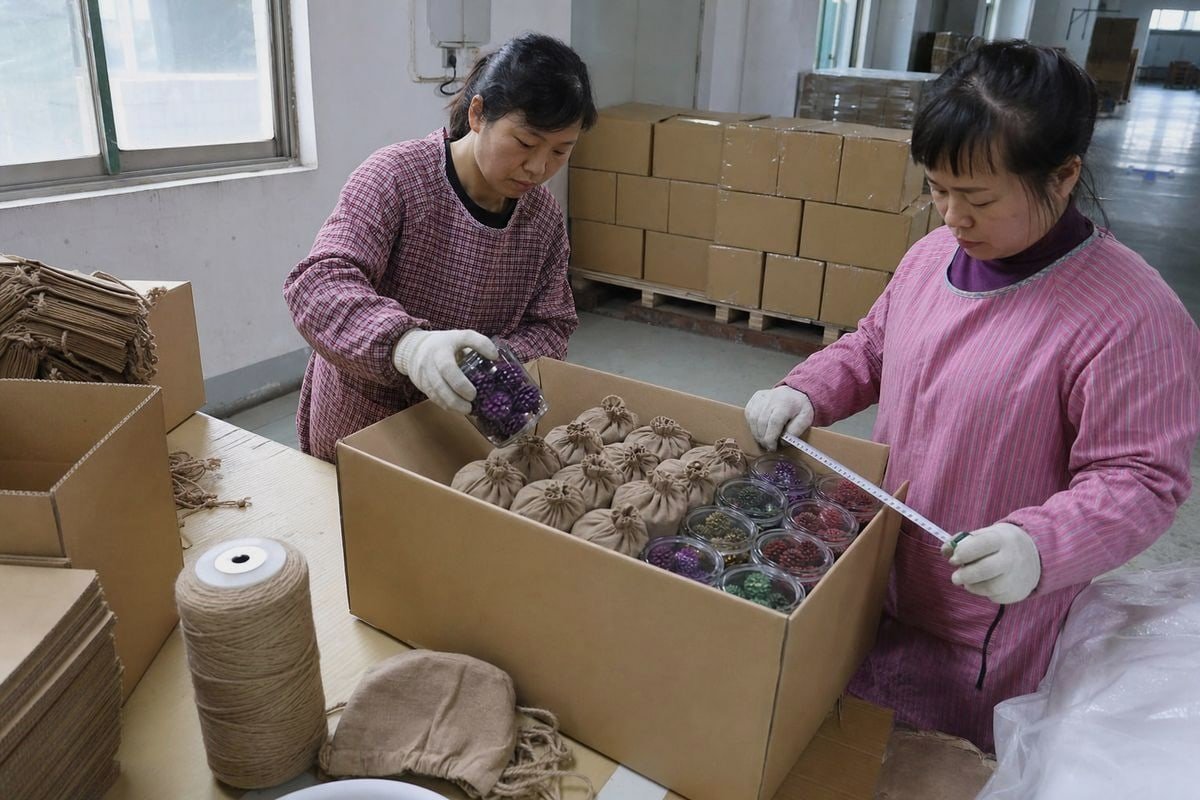
The MOQ conversation is where many negotiations stall — and where many buyers misunderstand the factory's position. A minimum order quantity is not arbitrary. It reflects setup costs: color mixing, line changeover, packaging plates for private-label printing, and compliance testing. When we run a custom kraft pouch with a buyer's branding, barcode, and warning labels, those fixed costs exist whether the run is 500 units or 50,000.
How MOQ Tiers Typically Work
| Taille de la commande | Typical Unit Price Effect | What You Get |
|---|---|---|
| 300–500 pieces (trial) | Highest per-unit price | Market test, quality validation, stock packaging |
| 1,000–4,999 units | Standard wholesale tier | Entry to real factory pricing, light customization |
| 5,000–29,999 units | Meaningful price breaks | Full private-label packaging, custom specs |
| 30,000+ units | Lowest per-unit cost | Dedicated line time, protected seasonal allocation |
The smart play is a staged approach. Start with a paid sample set. Then place a trial order at the small tier — yes, at a higher unit price — and treat the premium as market-research cost, not margin loss. Validate sell-through, packaging performance, and customer feedback. Then scale into the tiers where China's cost advantage actually kicks in.
One caution from our side of the table: be skeptical of suppliers who accept tiny orders at rock-bottom prices with no questions asked. That usually signals a trader reselling mixed-source stock, not a factory. The trial batch may look fine while the scaled order comes from a different workshop entirely. We accept flexible first orders precisely because we control our own lines — the small batch and the container load run through the same process, the same QC, and the same test standards.
How Do Chinese Manufacturers Compare to Local Suppliers on Price and Lead Time?
The hardest question I answer at trade shows is not "how cheap are you?" It is "when should I not buy from China?" An honest answer wins more long-term business than a sales pitch.
Chinese manufacturers beat local suppliers on price by 3–10x at wholesale volumes ($0.04–$1.50 per unit vs. $0.36–$0.42 wholesale and $9.75+ retail domestically), but require 30–60 day lead times versus days locally. China wins on planned bulk programs; local wins on speed and small lots.
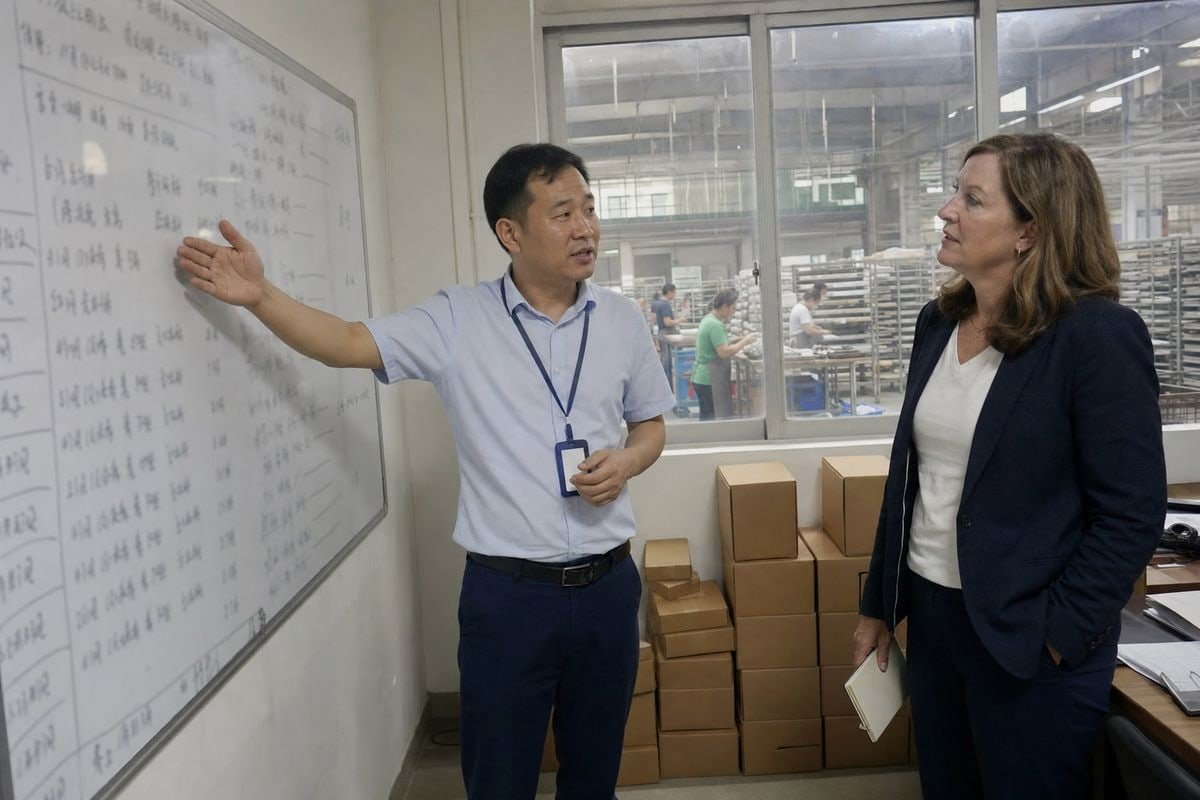
Let me put the numbers side by side, because this comparison only makes sense when you match product types fairly:
| Sourcing Channel | Typical Per-Unit Price | Délai de livraison | Idéal pour |
|---|---|---|---|
| China factory-direct | $0.04–$0.55 per piece; $1.30–$1.50 per bag | 30–60 days + 1–2 weeks customization | Bulk programs, private label, recurring seasonal orders |
| US/EU wholesale specialty | ~$0.36–$0.63 per cone ($36/100; $63.20/144 sparkle-tipped) | Days to 2 weeks | Mid-size lots, fast replenishment |
| Retail marketplaces | $9.75+ per listing; $11.99 per 40-pack | ~10 000+ unités | Hobby sellers, tiny quantities, testing |
The price gap is dramatic, but three qualifiers matter. First, compare like with like. A dyed craft cone, a glitter-tipped décor cone, and a color-flame fire cone are different products with different processes. Comparing a $0.05 raw dyed cone against a finished branded fire product is apples to oranges. Second, working factory-direct rather than through a trading company saves another 15–30%, but demands larger MOQs and hands-on quality management — or a factory partner with certified QC you can actually trust remotely. Third, currency movement between RMB and USD or EUR adds variance on long-term contracts; build a small buffer into your costing.
Lead time is the honest trade-off. Local suppliers replenish in days. Our containers take weeks on the water after production. That is why our best-performing buyers in the US, Germany, and the UK run China for their planned seasonal volume and keep a small local safety stock for surprises. Speed and cost are not enemies — they are two tools used together.
Conclusion
China wins on colored pine cones — but only for buyers who think in landed cost, book capacity early, and scale past trial MOQs with a certified factory partner.
Notes de bas de page
1. Explains the freight billing concept causing bulky, light pine cone shipments to cost more. ↩︎
2. Wikipedia defines OEM manufacturing model referenced when discussing factory order structures. ↩︎
3. Wikipedia explains dimensional/volumetric weight pricing used in freight calculations. ↩︎
4. WTO explains harmonized system tariff classification used to determine import duties. ↩︎
5. EPA regulates plant material imports requiring phytosanitary compliance for pest prevention. ↩︎
6. Background concept on supply chain structure relevant to sourcing and manufacturing. ↩︎
7. ISO is the authoritative source defining the ISO 9001 quality management standard. ↩︎

 English
  Spanish
  German
  French
  Arabic
  Portuguese
Rejoignez la conversation