






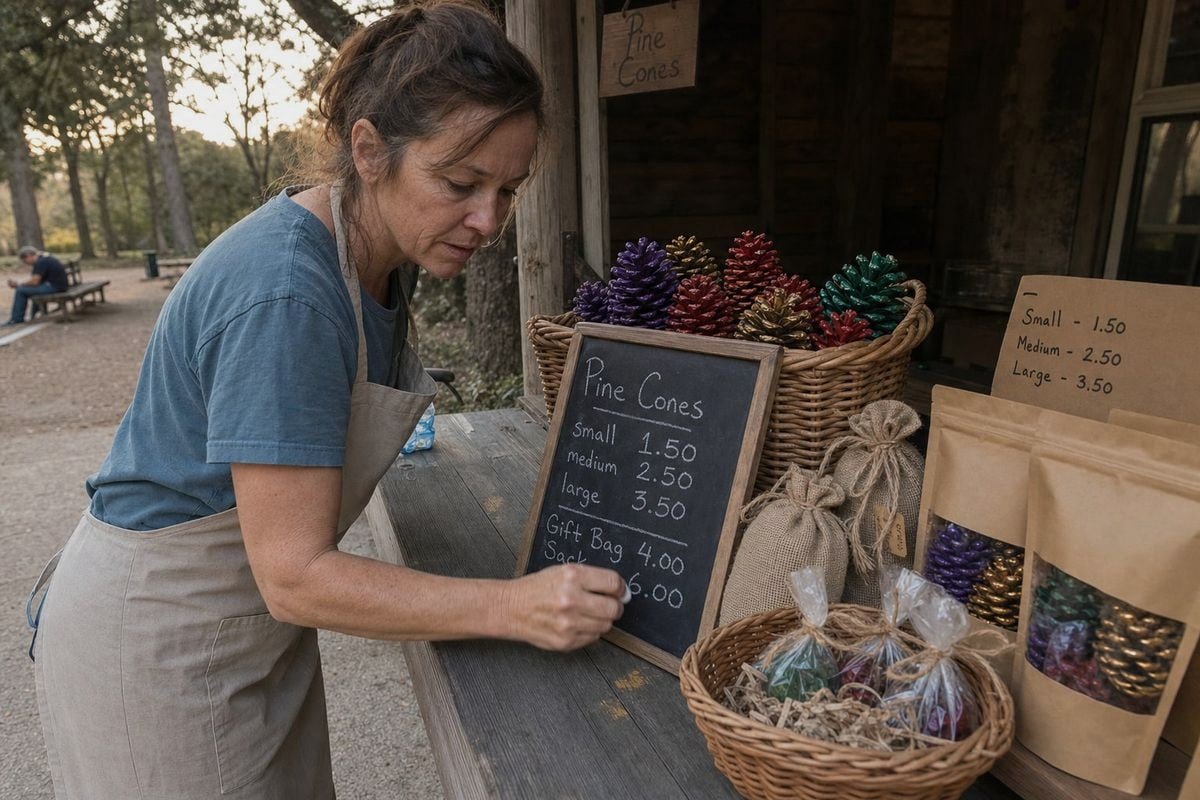
Définir le prix de détail des pommes de pin colorées pour cheminée à concessions de parc 1 déconcerte de nombreux acheteurs. Notre usine entend constamment cette question de la part des distributeurs qui s'approvisionnent en pommes de pin colorées pour flammes.
Définissez votre prix de détail pour les pommes de pin colorées pour cheminée en calculant le coût unitaire total, en appliquant une majoration de la pierre angulaire de 100 % ou plus, puis en vérifiant les articles de concession comparables. La plupart des concessions de parcs réussissent à $5 pour une seule pomme de pin, $12–$18 pour des sacs cadeaux et $30–$35 pour des sacs en vrac.
Prix trop bas et vous perdez de la marge. Prix trop élevé et les acheteurs impulsifs passent leur chemin. Ci-dessous, je détaille chaque décision de prix étape par étape, en utilisant des chiffres réels de notre expérience d'exportation.
Quels facteurs de coût de gros devrais-je calculer avant de fixer ma marge de détail ?
Au printemps dernier, un distributeur canadien de terrains de camping m'a demandé pourquoi ses marges avaient disparu malgré une marge brute saine. Nous avons audité ses chiffres ensemble et avons constaté qu'il avait ignoré la moitié de ses coûts réels.
Avant de fixer un pourcentage de marge, totalisez tous les coûts : coût de gros par unité, fret entrant, droits d'importation, frais d'emballage, frais de franchise de parc de 10 à 20 % des recettes brutes, traitement des cartes, main-d'œuvre, détérioration et stockage. Votre coût réel par sac est souvent de 30 à 50 % supérieur au prix de la facture.

Le coût de gros sur la facture de votre fournisseur n'est que le point de départ. Au cours de nos plus de dix-sept années d'expédition de produits colorés pour flammes dans plus de 30 pays, nous avons vu des acheteurs sous-évaluer les prix parce qu'ils se sont basés uniquement sur le prix FOB. Cette erreur est facile à éviter si vous établissez une feuille de coûts complète avant de toucher l'étiquette de prix de détail.
Construire la pile de coûts complète
Voici une pile de coûts réaliste pour un ensemble de pommes de pin colorées emballées vendu dans une concession de parc :
| Composant du coût | Fourchette typique par unité | Souvent oublié ? |
|---|---|---|
| Coût de gros (FOB) | 1,50 €–3,50 € | Non |
| Fret maritime 2 et droits de douane | 0,30 €–0,80 € | Parfois |
| Transport intérieur jusqu'au parc | 0,10 €–0,30 € | Oui |
| Coûts d'emballage (sac de jute, pochette, étiquettes) | 0,20 €–0,60 € | Oui |
| Commission de franchise du parc (10–20% du prix de détail) | 1,00 €–3,00 € | Fréquemment |
| Traitement des cartes (2.5–3%) | 0,25 €–0,50 € | Oui |
| Main-d'œuvre, démarque, stockage | 0,30 €–0,70 € | Fréquemment |
Notez que le pourcentage des recettes brutes du parc évolue avec votre prix de détail, et non avec votre coût. Il doit donc être modélisé comme un pourcentage du prix final, et non comme un ajout forfaitaire. Si votre contrat de concession prend 15% et que votre processeur de carte prend 3%, alors 18% de chaque vente est perdu avant même de compter le coût du produit.
La conformité est aussi un coût
Un autre facteur que les acheteurs négligent : la certification. Nos pommes de pin colorées pour flammes sont expédiées avec des rapports de test SGS/Intertek et documentation CE 3 car les concessions sur les terres publiques font souvent l'objet d'inspections. Les produits colorés avec des produits chimiques colorés pour flammes non vérifiés tels que poudres de sulfate de cuivre brutes 4 peuvent échouer à l'examen de sécurité. S'approvisionner en un produit conforme coûte un peu plus cher au départ, mais cela protège votre permis — et votre permis est toute votre entreprise.
Combien puis-je facturer pour des pommes de pin colorées dans une boutique de cadeaux de parc par rapport à un magasin de camping?
Il y a un compromis que nous discutons avec chaque client en marque privée : la même pochette de cônes supporte des plafonds de prix différents selon l'endroit où elle se trouve sur l'étagère.
Une boutique de cadeaux de parc soutient $12–$20 pour un sac cadeau décoratif car les visiteurs achètent des souvenirs et des cadeaux. Un magasin de camping soutient $6–$12 pour le même produit car les campeurs l'achètent comme un ajout fonctionnel pour le feu de camp à côté du bois de chauffage et des kits d'allumage de feu.
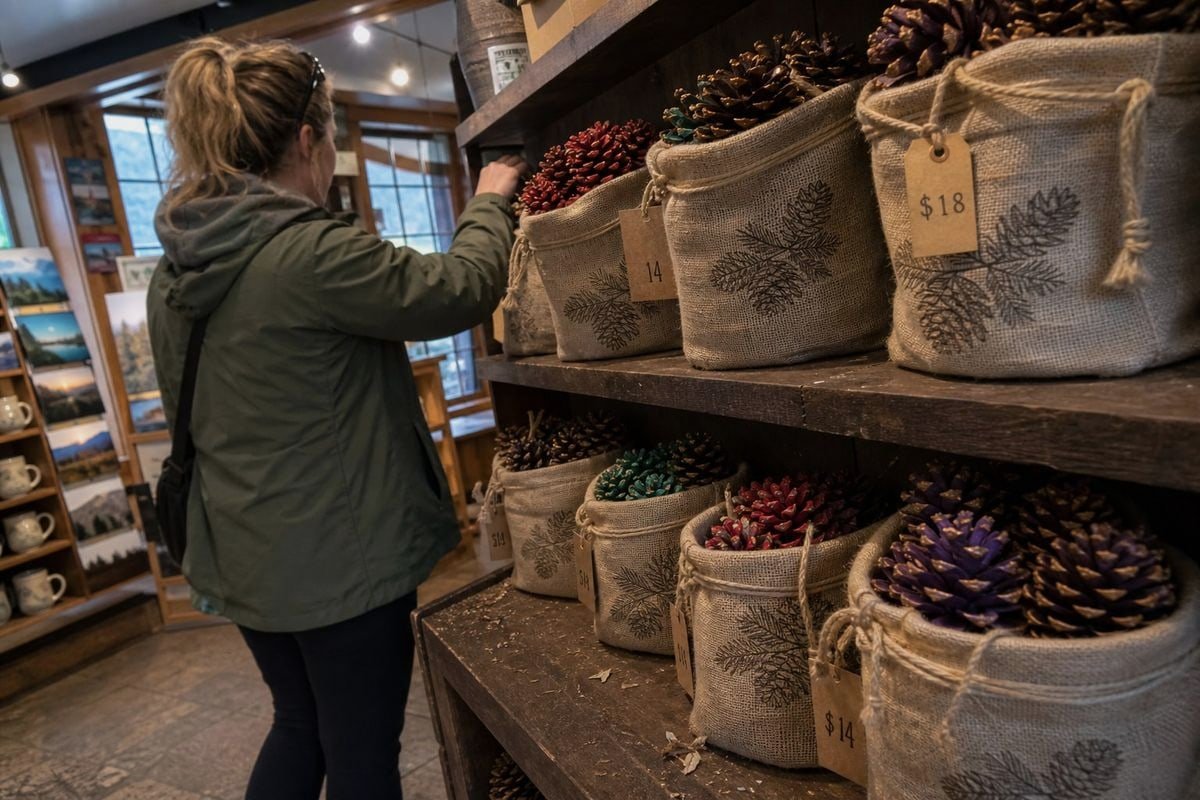
Le canal change l'état d'esprit du client, et l'état d'esprit fixe le plafond. Je l'ai appris clairement lorsque deux acheteurs américains ont commandé le produit identique de notre gamme Ningbo — mêmes cônes, même temps de combustion — mais ont demandé des emballages complètement différents. L'acheteur du centre d'accueil voulait un sac de jute imprimé avec des cônes d'aspect peint à la main dans les tons violet, rouge, émeraude et or. L'acheteur du camping voulait une pochette robuste en kraft refermable avec une fenêtre transparente. Les deux étaient adaptés à leur canal.
Deux canaux, deux psychologies
Un acheteur de boutique de souvenirs achète un souvenir. Il compare vos cônes à des ornements, des bougies et $20 tasses. La présentation justifie le prix. Un acheteur de camping achète le divertissement de ce soir. Il compare vos cônes à un paquet de bois de chauffage à $8. La fonction justifie le prix.
| Facteur | Boutique de souvenirs du parc | Magasin de camping |
|---|---|---|
| État d'esprit de l'acheteur | Souvenir / cadeau | Amusements du feu de camp de ce soir |
| Articles de comparaison | Décoration, bougies, ornements | Bois de chauffage, kits d'allumage de feu |
| Best packaging | Burlap sack, gift-ready | Pochette en kraft refermable |
| Realistic price band | $12–$20 per bag | $6–$12 per bag |
| Impulse single-cone price | $4–$6 | $3–$5 |
Some buyers push back here: shouldn't the price match the competition regardless of channel? Not quite. Competition-based pricing gives you a ceiling, but if a nearby craft vendor sells loose cones at $2, matching that price would ignore your packaging costs, franchise fees, and the convenience premium 6 a captive park audience willingly pays. Match the channel, not the cheapest substitute.
Quelle fourchette de prix permet à mes pommes de pin colorées de rester compétitives par rapport à des articles de concession similaires ?
A German distributor once showed me his concession shelf photo and asked where our pinecones should sit. We priced them by walking the shelf item by item.
Gardez les pommes de pin colorées entre 4,99 $ pour un achat impulsif d'une seule pomme de pin et 34,99 $ pour un sac de recharge en vrac. Ce support se place confortablement à côté des lots de bois de chauffage à 8 $, des kits d'allumage de feu à 10 $ et des articles souvenirs à 15 $ – 25 $, tandis qu'une structure à trois niveaux capture le budget de chaque visiteur.
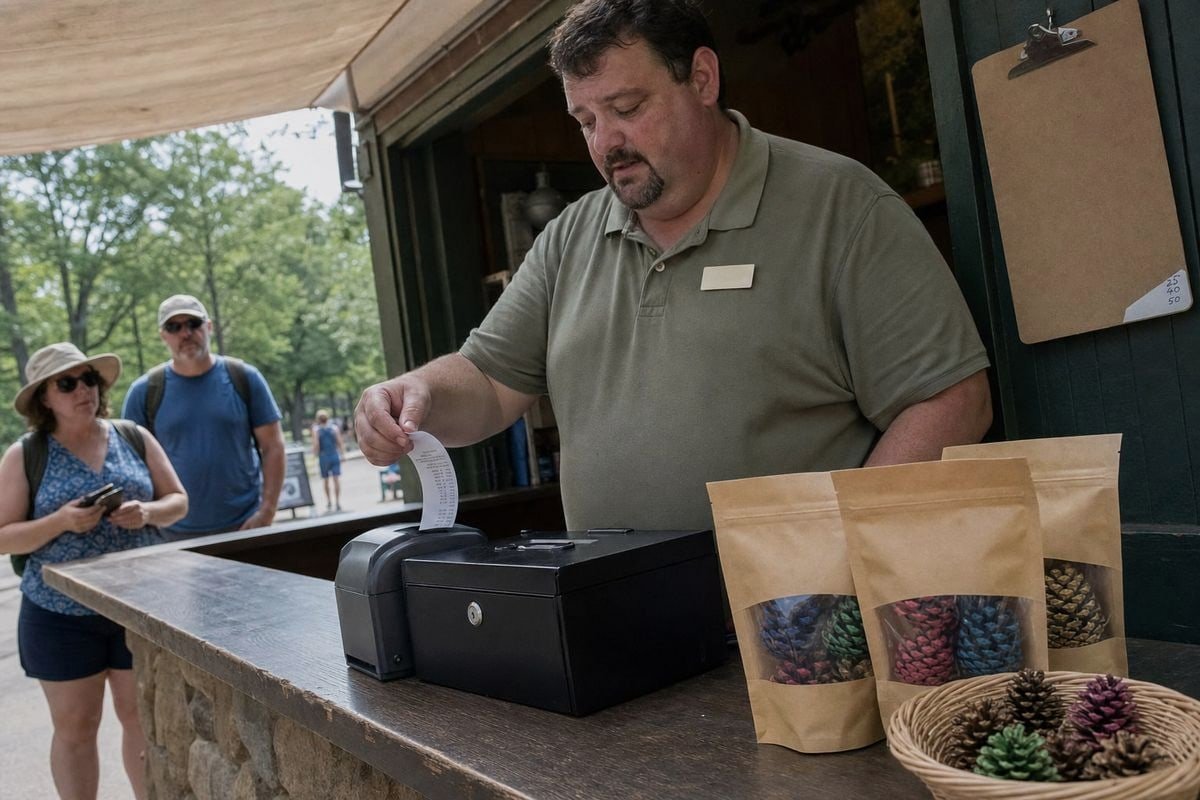
Competitive pricing at a concession is really about neighborhood pricing. Your cones sit next to specific items, and visitors judge them against those items in seconds. Impulse buy items live or die on that split-second comparison. So map the shelf before you print price tags.
Benchmark against the real shelf
- Firewood bundle: $6–$10 — your functional anchor
- Fire starter kits: $8–$14 — your closest substitute
- Marshmallow roasting sticks: $5–$10 — the family add-on rival
- Souvenir mugs and ornaments: $12–$25 — your gift-tier ceiling
- National décor retailers' decorative cones online: $15–$30 per set — your MSRP reference
Use a three-tier price architecture
| Niveau | Product Format | Suggested Retail | Rôle |
|---|---|---|---|
| Entrée de gamme | Single cone, tagged | $4.99 | Trial and kids' impulse buy |
| Cœur de gamme | Gift bag of 5–6 cones | $14.99 | The volume seller |
| Premium | Bulk refill sack | $34.99 | Repeat campers and gift buyers |
The tiers do more than cover budgets. The premium sack works as a soft decoy: once a visitor sees $34.99, the $14.99 gift bag feels like the sensible middle choice, and most sales land there. When we develop programmes de marque privée 7, we design the packaging around this exact architecture — a hangtag single, a printed pouch, and a bulk sack — because the price ladder only works if the shelf shows all three at once. Also set a suggested MSRP for any sub-vendors so your brand's price stays consistent across the park.
Comment ajuster ma tarification de détail pour la demande saisonnière et le trafic de visiteurs en masse ?
Our production calendar taught me this lesson: concession orders spike in two waves, pre-summer and pre-holiday, and pricing should ride those same waves rather than sit flat all year.
Augmentez les prix de 10 à 15 % pendant la haute saison et les week-ends fériés lorsque la demande saisonnière et le trafic des visiteurs atteignent leur paroxysme. Utilisez des forfaits plutôt que des remises pendant les saisons intermédiaires, comme associer des cônes à du bois de chauffage lors des nuits froides, et liquidez le stock restant avec des offres multi-achats de fin de saison.
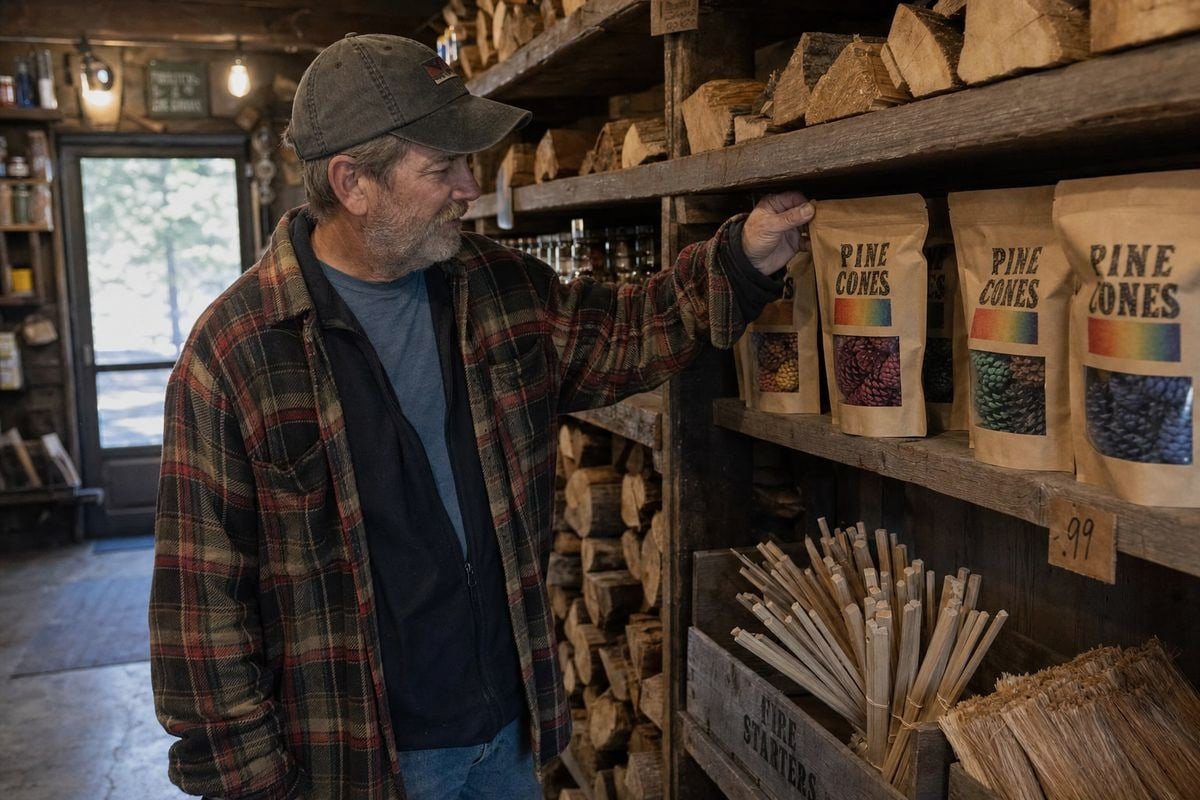
Static pricing leaves money on the table in July and leaves inventory on the shelf in October. A simple seasonal playbook fixes both problems without confusing your customers or violating any comparable-pricing clause in your concession contract. Always check that clause first — some park agreements cap your markup percentage at 10–15% above local street prices, so your peak pricing must stay inside that fence.
A simple seasonal playbook
- Peak season and holiday weekends: hold your core gift bag at the top of your approved band. Traffic is high, and impulse buyers rarely price-check. Watch sell-through weekly.
- Cold-weather evenings: run weather-triggered bundling. Offer a discounted cone with every two firewood bundles when nights drop below 40°F. This lifts firewood sales and seeds trial of your cones.
- Shoulder season: protect your price. Use a bounce-back offer — for example, a small credit for returning the fabric packaging — instead of cutting the tag price. Discounts are hard to reverse; bundles are not.
- End of season: clear stock with multi-buy offers like two gift bags for $25. Colored pine cones store well, but tying up cash over winter costs you next spring's order.
One caution from our export side: order lead times matter more than price agility. If you plan a holiday push, your purchase order needs to reach the factory months ahead, because ocean freight plus production time eats the calendar. We keep batch-to-batch quality consistent precisely so reorders match your first shipment — a pricing strategy fails fast if the peak-season restock burns a different color than the sample your customers loved.
Conclusion
The right retail price for fireplace colored pine cones is not one number. It is a system: full cost recovery, channel-matched tiers, and seasonal flexibility.
Underpricing quietly drains concessions every season, and it usually starts with an incomplete cost sheet. Start with your true landed cost, apply keystone or better, respect your contract's markup percentage cap, and let a $5–$35 tier structure do the selling. When you pair that framework with a certified, consistent, shelf-ready product — which is exactly what our factory has built its 17+ years around — your profit margin takes care of itself.
Notes de bas de page
1. Official information from the National Park Service regarding commercial visitor services and concession contracts. ↩︎
2. Authoritative Wikipedia entry for maritime transport, the industry term for ocean freight. ↩︎
3. Official European Commission guidance on product safety and compliance marking. ↩︎
4. Chemical safety data for substances used in flame coloring products. ↩︎
5. Authoritative IRS definition of gross receipts, the basis for calculating franchise fee percentages. ↩︎
6. Economic term for the premium value of physical availability, explaining higher concession pricing. ↩︎
7. Authoritative Wikipedia definition of private labeling and third-party manufacturing for retail brands. ↩︎



 English
  Spanish
  German
  French
  Arabic
  Portuguese
Rejoignez la conversation