







Judging a fair supplier price for fireplace colored pine cones is harder than it looks droits d'importation 1. I see buyers overpay or under-buy every week, and our factory quotes reveal exactly why quotes diverge so widely.
A supplier's price for fireplace colored pine cones is fair when the per-pound or per-cone cost matches comparable quotes for the same cone species, colorant formula, certification level, and packaging format. Compare at least three suppliers, normalize for MOQ and compliance costs, and audit hidden charges before deciding.
Two quotes for "colored pine cones" can differ by 40% and both be honest. The gap comes from what sits behind the number. Let me break down each cost layer so you can judge any quote with confidence.
What Certifications and Compliance Costs Should I Factor Into a Fair Price?
During a recent audit season, our compliance team spent three full weeks preparing updated SGS test reports and BSCI documentation. That work is invisible in a quote, but it is real money.
Factor in third-party lab testing (SGS or Intertek), CE marking for European markets, heavy-metal and chemical residue safety reports, factory audits like BSCI and ISO 9001, plus compliant warning labels. Together these typically add 5–15% to the unit price of certified fireplace colored pine cones.

Certification is where the cheapest quotes usually cut corners. Colored pine cones work through flame colorant chemicals — typically copper-based salts that produce blue and green flames. A proper traitement au sulfate de cuivre 2 must be applied in controlled concentrations, then verified by lab testing. An untested coating can release harmful residue or fail import inspection. In our 17+ years exporting to the US, Germany, the UK, and 30+ other markets, we have seen uncertified shipments seized at customs. The importer lost the goods, the freight, and the season.
The Compliance Checklist That Should Appear in a Fair Quote
Ask every supplier which of these items are included in their price. A quote that skips them is not cheaper — it just moves the cost and the risk onto you.
| Article de conformité | Pourquoi c'est important | Typical Cost Impact |
|---|---|---|
| Rapport de test SGS / Intertek | Proves chemical residue safety and heavy-metal 3 limits | Adds 3–6% per unit at scale |
| Marquage CE 4 (EU) | Legal requirement for EU consumer sale | Documentation + labeling cost |
| BSCI / ISO 9001 5 audit | Confirms factory conditions and batch QC systems | Built into factory overhead |
| Accès légal aux étagères européennes | Retail shelf requirement; wrong labels = rejected POs | Small per-unit printing cost |
| FDS (Fiche de Données de Sécurité) 6 / safety data sheet | Required by many freight carriers and retailers | One-time documentation fee |
Here is my practical rule. If Supplier A quotes 15% below Supplier B but cannot produce a current test report for their flame colorant chemicals, Supplier A is not actually cheaper. You should mentally add the cost of independent testing, potential rework, and shipment risk to their number. For hearth and fireplace accessories sold at major retailers, compliance is a hard gate, not a preference. Any quote that ignores it is comparing a finished product to an unfinished one.
How Do MOQ and Custom Packaging Requirements Affect My Per-Unit Cost?
One European distributor asked us to quote the same cones three ways: bulk polybags, kraft stand-up pouches, and burlap gift bags. The per-unit spread was nearly 35%. Packaging drives price more than most buyers expect.
MOQ and packaging can swing your per-unit cost by 20–40%. Larger orders spread setup, printing, and testing costs across more units, while premium formats like burlap gift bags or windowed kraft pouches cost several times more than bulk polybags. Always request tiered quotes.

MOQ exists because every production run carries fixed costs: line setup, colorant batch preparation, printing plates for private-label packaging, and QC sampling. Spread those costs over 500 units and the per-unit burden is heavy. Spread them over 10,000 units and it nearly disappears. That is why wholesale bulk pricing shows clear break points, and why a fair quote should show them too.
How Packaging Format Changes the Same Product's Price
The cone inside is identical. The presentation is not. Consumer retail examples prove the point: the same specialty retailer sells a 1-lb bag around $21.59 and a 2-lb burlap bag around $55.29. Packaging roughly doubled the per-pound price at retail, and the same logic applies at the factory level.
| Format d'emballage | Relative Factory Cost | Meilleur cas d'utilisation |
|---|---|---|
| Bulk polybag / loose-fill carton | De base (le plus bas) | Repacking, refill programs, private repack |
| Kraft stand-up pouch with window | +30–60% over baseline | Rayons de vente au détail de camping et d'extérieur |
| Burlap drawstring bag with logo | +80–150% over baseline | Fire starter gift sets, holiday programs |
| Branded box with display packaging | +100–200% over baseline | Premium retail and seasonal gifting |
Getting the Most From Your MOQ Negotiation
In our OEM/ODM work, we offer flexible MOQs for trial orders precisely because buyers need to test the market before committing. A fair supplier will do three things. First, they will quote at least two or three volume tiers so you can see the discount curve. Second, they will separate packaging tooling costs (one-time) from per-unit costs (recurring). Third, they will honor first-sample quality at mass production — our production lines run strict batch-to-batch QC so the sample you approve is what ships. If a supplier's price barely moves between 1,000 and 10,000 units, their cost structure is opaque, and that itself is a warning sign.
Why Do Prices Vary So Much Between Factories and Trading Companies for Colored Pine Cones?
A US buyer once forwarded me a competitor's quote that undercut ours by 12% — then asked why the same "supplier" could not answer basic questions about colorant concentration. The answer was simple: it was a trading company reselling factory goods it did not fully understand.
Prices vary because trading companies add 10–30% retail markup margins on top of factory prices, while factories control raw material sourcing, colorant treatment, and QC directly. Cone species, mast year supply cycles, and seasonal market demand add further natural variation between quotes.

Here is a quick way to frame the gap before you dig into any single quote:
- Factories price from raw cost: cones, colorant chemicals, labor, packaging, and overhead.
- Trading companies price from a factory quote plus their margin, often without technical control.
- Nature itself adds volatility: pine cone yields swing with mast year cycles every 3–7 years, moving raw cone costs independently of manufacturing.
Cone Species and Treatment Quality Drive Real Cost Differences
Not all cones are equal inputs. Large, high-surface-area varieties like the ponderosa pine 7 cone species hold more colorant and burn longer, so they cost more than small common cones. High-resin species also act as natural fuel boosters that sustain the color reaction, justifying a premium over "dry" species. A proper process also includes kiln-drying and de-bugging to prevent sap leakage, plus moisture control below roughly 12% so cones ignite cleanly instead of smoldering and masking the flame color. Each of these steps costs money and each one shows up in burn performance — the industry expectation is 5–10 minutes of vibrant flame per cone.
| Quote Source | Typical Price Behavior | What You Get | Niveau de risque |
|---|---|---|---|
| Real factory (like ours in Ningbo) | Transparent tiered pricing | Direct QC, technical answers, stable reorders | Faible |
| Société commerciale | Factory price +10–30% | Convenience, but limited process control | Moyen |
| Marketplace reseller | Highly variable | Small lots, inconsistent batches | Élevé |
Why the Cheapest Quote Often Comes From the Weakest Source
Our headquarters sits in Liuyang, Hunan — China's fireworks and pyrotechnic cluster — with production in Ningbo. We know which local workshops cut costs by skipping kiln-drying or diluting the copper sulfate treatment. Their cones look identical in photos. They burn dim, short, and smoky in a customer's fireplace. A trading company reselling those cones may not even know the difference. So when a quote sits far below the cluster's cost floor, the savings almost always came out of the colorant concentration or the drying process. Ask suppliers to state colorant weight per cone, not just cone count — fair pricing should correlate with the actual chemical applied.
What Hidden Costs Should I Watch For Beyond the Quoted Unit Price?
The trade-off I weigh most often when structuring quotes is transparency versus simplicity. A single clean number looks attractive, but buyers get burned when charges surface later. I would rather itemize everything upfront.
Watch for shipping and handling costs, sample and tooling fees, testing charges, label and barcode setup, palletizing, port fees, and import duties. Hidden costs can add 15–35% to the quoted unit price, so always compare suppliers on total landed cost, not FOB price alone.
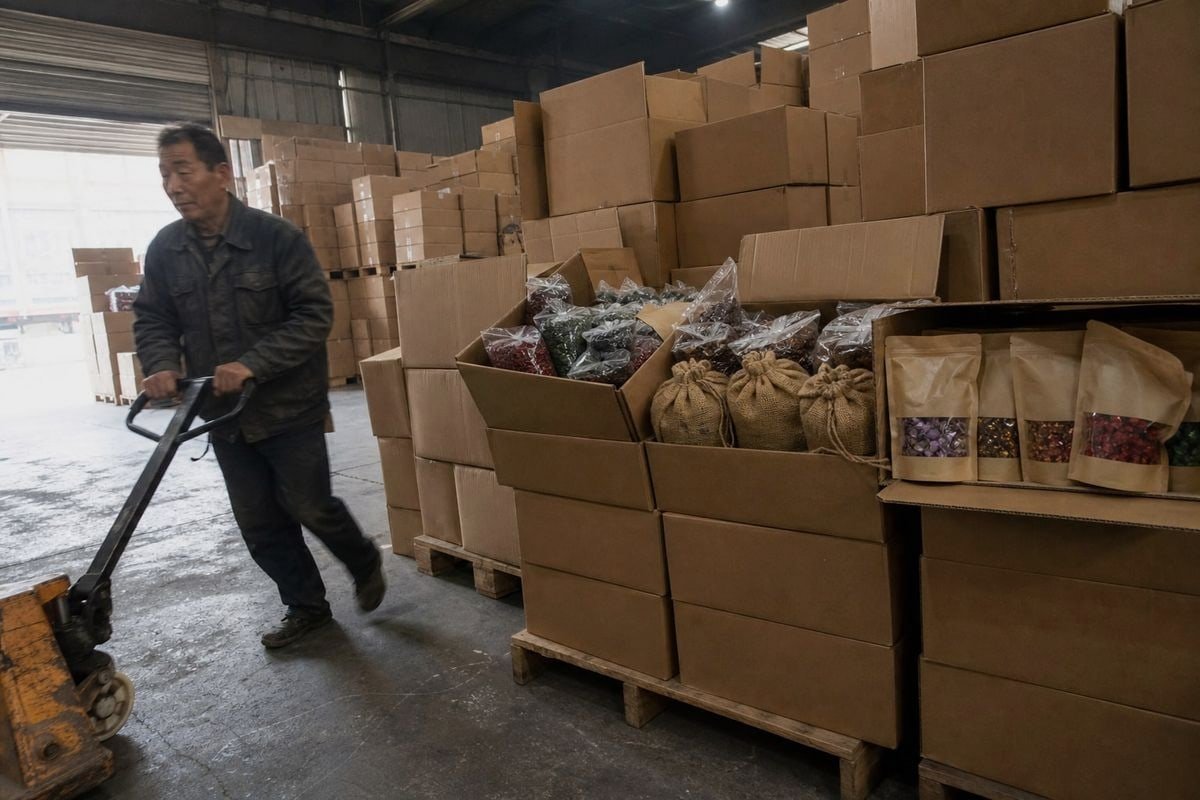
The quoted unit price is the beginning of the math, not the end. Colored pine cones are bulky relative to their value, so shipping and handling costs matter more than they would for compact goods. A supplier who packs cartons inefficiently can quietly inflate your freight bill by 20% even with a "fair" unit price. We optimize carton dimensions and pallet loading for our export buyers for exactly this reason — logistics efficiency is part of the real price.
The Hidden Costs That Change Your Landed Number
Walk through this list with every supplier before signing:
- Freight and volumetric weight. Cones are light but voluminous. Ask for carton dimensions and units per carton poids volumétrique 8, then calculate freight per unit yourself.
- Sample and tooling fees. Custom pouch printing plates, box dies, and burlap logo screens are one-time costs. Confirm whether they are amortized or invoiced separately.
- Testing charges. If the supplier lacks current SGS or Intertek reports, you will pay for independent testing — or gamble on customs.
- Labeling and barcode setup. Retail programs need compliant warning labels and scannable barcodes. Late-stage relabeling is expensive.
- Duties and port fees. These vary by market and product classification. A supplier experienced in your destination country can pre-empt classification errors.
- Seasonal surcharges. Seasonal market demand peaks before Q4. Freight rates and factory capacity both tighten from August onward, so late orders cost more per unit even at the same factory price.
A Simple Fairness Test
Take three quotes. Convert each to landed cost per pound at your realistic order volume, including every line item above. If a quote still sits far below the others after normalization, ask what was removed — usually it is testing, drying, colorant concentration, or packaging quality. If a quote sits above the band, ask what was added. Sometimes the answer justifies it: better burn time, certified chemistry, retail-ready presentation. Sometimes it does not. Either way, you are now judging price on evidence instead of instinct.
Conclusion
A fair price for fireplace colored pine cones is a normalized price. Compare certified, landed, per-pound costs across suppliers — then partner with the factory whose numbers stay honest at scale.
Notes de bas de page
1. Official International Trade Administration guide on import tariffs, fees, and customs resources. ↩︎
2. Explains the chemical compound used for flame-coloring effects in pine cone treatment. ↩︎
3. Official EPA resource explaining the Toxics Release Inventory for chemical management and reporting. ↩︎
4. Background on the EU regulatory compliance mark referenced in the compliance checklist. ↩︎
5. Official standard reference for the factory audit and QC certification mentioned. ↩︎
6. Background on safety data sheets required by freight carriers and retailers. ↩︎
7. Background on the specific pine species mentioned as a premium cone source. ↩︎
8. Explains the freight calculation concept used to estimate shipping costs for bulky cones. ↩︎



 English
  Spanish
  German
  French
  Arabic
  Portuguese
Rejoignez la conversation