






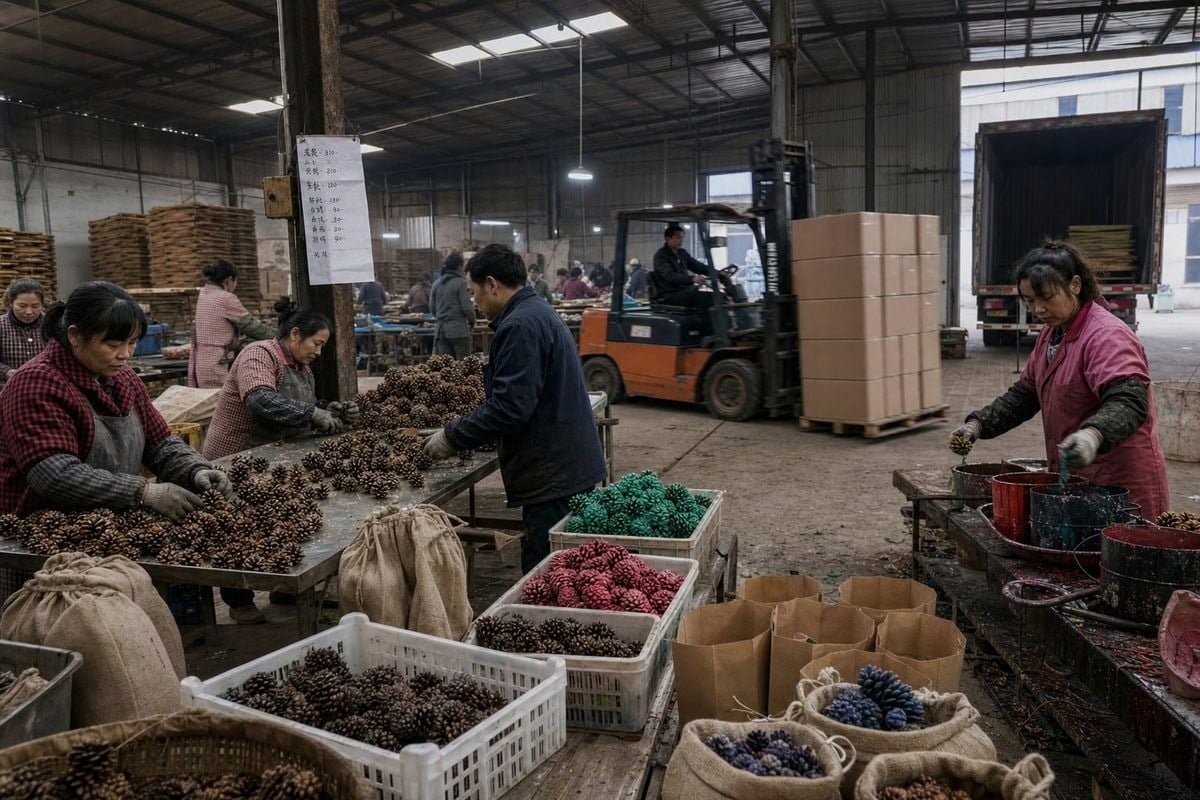
L'approvisionnement en pommes de pin auprès d'une source unique en Chine est une question que notre chaîne de production de pommes de pin à flamme colorée entend constamment de la part des acheteurs. Tarifs de la section 301 1. Une usine, un pays, une récolte — est-ce un plan ou un pari ? Une seule perturbation peut anéantir toute une saison de fêtes. Mais la diversification aveugle a aussi un coût.
L'approvisionnement auprès d'une source unique en Chine est moins résilient que l'ajout d'un deuxième site qualifié, car il concentre les risques liés aux usines, à la logistique, aux tarifs et aux récoltes en un seul point de défaillance. Cependant, un fournisseur unique profondément intégré, doté d'une solide conformité, de stocks tampons et d'une flexibilité contractuelle, peut surpasser une configuration à double source mal gérée.
La vraie question n'est donc pas la Chine contre un autre endroit. Il s'agit de savoir quel risque de point de défaillance unique votre entreprise peut réellement absorber. Laissez-moi vous expliquer du point de vue de l'usine.
Quel risque est-ce que je prends vraiment en comptant sur une seule usine chinoise pour mes pommes de pin colorées à la flamme ?
Il y a quelques années, la fermeture d'un port à Ningbo a retardé plusieurs de nos conteneurs sortants de plusieurs semaines. Nos acheteurs disposant de stocks de sécurité l'ont à peine remarqué. Les acheteurs fonctionnant avec des stocks minces sur une seule commande ont ressenti chaque jour de ce retard.
S'appuyer sur une seule usine en Chine vous expose à quatre risques cumulés : défaillance opérationnelle comme les arrêts ou les défauts, chocs logistiques tels que la congestion portuaire, chocs réglementaires incluant les tarifs de la section 301, et la santé financière des fournisseurs. L'un quelconque de ces risques peut interrompre l'approvisionnement instantanément, sans solution de repli et avec un pouvoir de négociation réduit.

La réponse honnête est que le risque dépend du type de risque que vous comptez. Au cours de nos dix-sept années d'exportation de produits d'allumage vers les États-Unis, l'Allemagne, le Royaume-Uni et au-delà, nous avons vu toutes les catégories de perturbations frapper quelqu'un. Le schéma est toujours le même : les acheteurs qui souffrent le plus sont ceux qui ont traité un fournisseur unique comme une garantie permanente plutôt que comme une relation gérée.
Les quatre catégories de risques, regroupées en un seul endroit
Lorsque tout se trouve dans une seule usine chinoise, ces risques n'existent pas simplement côte à côte. Ils se multiplient. Un changement de tarif pendant la haute saison, combiné à congestion portuaire 2, est bien pire que l'un ou l'autre seul.
| Catégorie de risque | Ce à quoi cela ressemble | Impact sur votre approvisionnement en pommes de pin |
|---|---|---|
| Opérationnel | Arrêt de l'usine, interruption de la main-d'œuvre, lot de défauts de qualité | Arrêt immédiat de la production, pas de solution de secours |
| Logistique | Congestion portuaire, flambée des tarifs des conteneurs, blocages douaniers | Fenêtres de vente au détail du T4 manquées |
| Réglementaire / géopolitique | Tarifs de la section 301 3 (jusqu'à 25%), contrôles à l'exportation, examen de la conformité | Volatilité du coût débarqué, expéditions bloquées |
| Santé financière / du fournisseur | Faillite du fournisseur, renégociation des prix, perte de priorité | Réapprovisionnement soudain sous pression temporelle |
Pourquoi les pommes de pin rendent cela plus aigu
Les pommes de pin à flamme colorée ne sont pas un produit standard. La pomme de pin brute est un produit agricole. La récolte est saisonnière et dépendante du climat. Ensuite, elle nécessite un séchage, un calibrage, un traitement contre les parasites et les moisissures, la fumigation 4, le revêtement à flamme colorée et le stockage à humidité contrôlée. Cela signifie que votre source unique supporte à la fois le risque d'usine et le risque de récolte. Une mauvaise saison de pommes de pin dans une région touche tous les acheteurs s'approvisionnant dans cette région en même temps — exactement au moment où vous ne pouvez pas changer rapidement.
Il y a aussi un point structurel. Si vos outils, vos matrices d'emballage, vos plaques d'impression de marque privée et vos protocoles de traitement se trouvent tous dans une seule installation, votre dépendance est plus profonde qu'un retard de fret. Reconstruire cela ailleurs sous pression prend des mois, pas des semaines. Nous disons cela ouvertement à nos propres acheteurs, car nous préférons être choisis en toute connaissance de cause plutôt que par défaut.
Que dois-je rechercher si je veux qualifier un deuxième site de fabrication sans sacrifier la cohérence de la qualité ?
La cohérence de la qualité est le compromis que nous pesons le plus soigneusement chaque fois qu'un acheteur nous interroge sur la capacité de secours. Un deuxième emplacement qui expédie des pommes de pin différentes n'est pas un secours. C'est un nouveau problème.
Qualifier un deuxième emplacement en faisant correspondre cinq éléments : espèce et calibre des cônes, protocoles de traitement des parasites et des moisissures, contrôle de l'humidité, chimie de la flamme de couleur et performance de combustion, et spécifications d'emballage. Exécutez des commandes pilotes et des tests de combustion côte à côte avant de vous y fier, et prévoyez six à douze mois pour l'intégration.

Voici la vérité inconfortable du côté du traitement : l'infrastructure des pommes de pin en Chine — nettoyage, calibrage, traitement, emballage d'exportation — a été construite au fil des décennies. La réplication de cette cohérence en Europe de l'Est, en Turquie ou dans le nord-ouest du Pacifique américain est possible, mais elle se produit rarement dès la première commande. Les acheteurs sous-estiment systématiquement à quel point la "qualité" réside dans des étapes de processus peu glamour.
Une séquence de qualification pratique
- Définissez d'abord le cahier des charges sur papier. Espèce de pomme de pin, plage de taille en centimètres, tolérance de teneur en résine, pourcentage d'humidité, taux de défauts admissible, formulation du revêtement, durée de combustion et intensité de la couleur de la flamme. Si ce n'est pas écrit, cela ne peut pas être égalé.
- Auditez le processus de traitement. Méthodes de traitement thermique ou de fumigation, durée de séchage et conditions de stockage. C'est là que se produisent les défaillances de moisissures et de parasites, et où les sources secondaires échouent le plus souvent par rapport aux installations chinoises à grande échelle.
- Exécutez une commande pilote, pas un échantillon. Les échantillons sont cueillis à la main. Une commande pilote de volume de production réel vous montre la cohérence d'un lot à l'autre. Sur nos propres lignes, nous insistons pour que le premier échantillon reflète la qualité de la production de masse — tenez chaque fournisseur candidat au même niveau.
- Testez la combustion côte à côte. Les pommes de pin à flamme colorée vivent ou meurent par leur effet de flamme. Testez le produit des deux sources dans le même foyer ou la même brasero, dans les mêmes conditions, et documentez la couleur de la flamme, la durée et la fumée.
- Vérifiez le calendrier de récolte. Idéalement, votre deuxième emplacement a une fenêtre de récolte décalée par rapport à la Chine. Cela lisse l'approvisionnement toute l'année au lieu de dupliquer le même risque saisonnier.
Gardez le secours au chaud
Un secours qualifié qui ne reçoit jamais de commandes se refroidit. Les spécifications dérivent, le personnel change, et la priorité disparaît. Passez de petites commandes récurrentes — même cinq à dix pour cent du volume — afin que la deuxième source reste prête à produire lorsque vous en avez réellement besoin.
Un fournisseur de secours peut-il correspondre aux mêmes certifications et normes de conformité que mon fournisseur actuel ?
Un distributeur européen est venu nous voir après que l'expédition de leur fournisseur de secours ait été retenue à la douane — le certificat de fumigation n'était pas conforme au protocole du pays de destination. La source principale l'avait correctement. Le secours non.
Un fournisseur de secours peut correspondre à des certifications telles que ISO 9001, BSCI, CE et SGS ou à des rapports de test Intertek, mais le fait rarement par défaut. La conformité doit être vérifiée indépendamment par fournisseur et par pays, car les traitements phytosanitaires, les certificats de fumigation et les tests de sécurité ne sont pas transférables entre les sources.
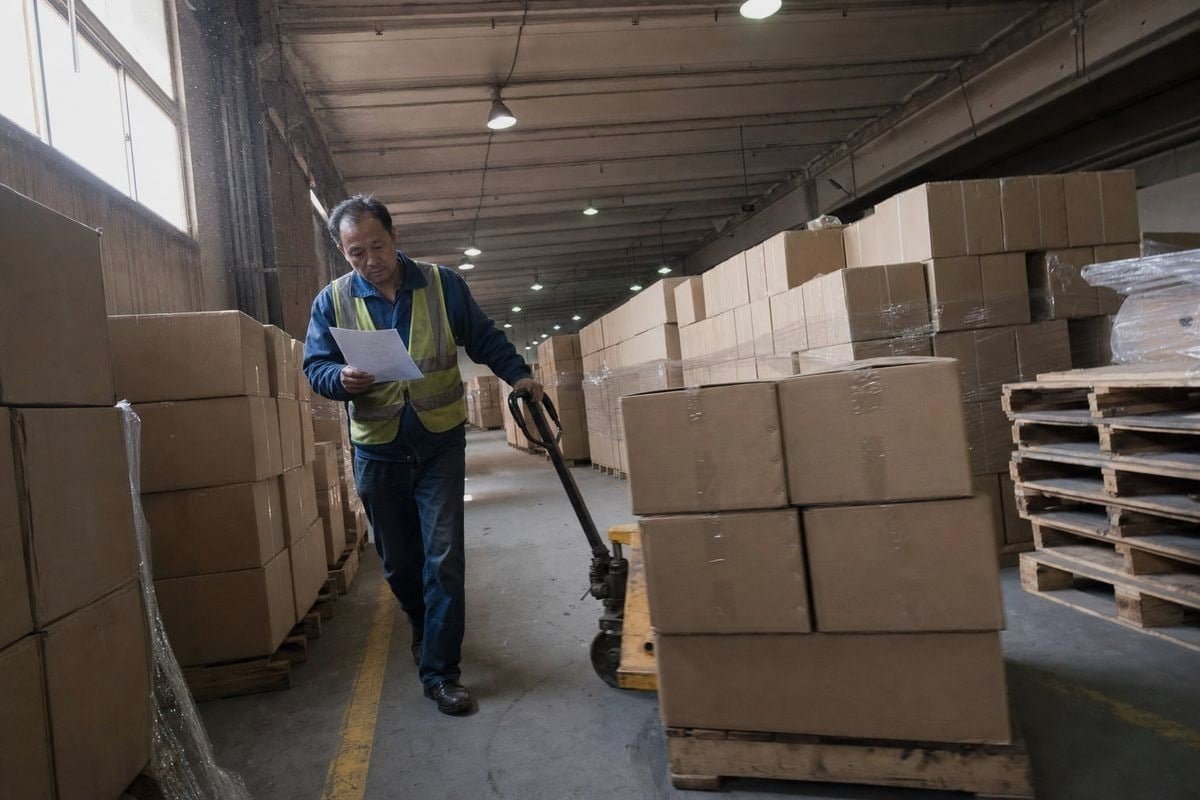
La conformité est l'endroit où les plans de seconde source échouent le plus souvent en silence. Dans notre expérience d'exportation dans plus de trente pays, les acheteurs supposent que si le produit a la même apparence, la situation administrative est la même. Ce n'est pas le cas. Les certifications appartiennent à une installation et à un processus, pas à une catégorie de produits.
Ce qui doit réellement correspondre
For fire-related pinecone products, the compliance stack has three layers, and your backup needs all three.
| Compliance layer | Exemples | Why it does not transfer |
|---|---|---|
| Factory management systems | ISO 9001, audit social BSCI | Certified per facility; a new site starts from zero |
| Tests de sécurité des produits | SGS/Intertek test reports, CE, chemical safety data Marquage CE 5 | Reports cover a specific formulation from a specific line |
| Botanical / customs treatment | Heat treatment, fumigation certificates, phytosanitary 6 protocols | Rules differ by origin country and destination country |
The third layer is the trap for pine cones specifically. A US-origin cone and a China-origin cone face different phytosanitary requirements entering the EU. Your backup supplier in Turkey or Eastern Europe needs its own treatment documentation, and building that takes longer than most buyers plan for. SERP data and our own onboarding experience agree: compliance onboarding for a second source is usually the slowest step, not production.
Questions to ask any candidate backup
Ask for current certificates with dates, not logos on a website. Ask which lab issued the test reports and whether they cover the exact coated-pinecone formulation you will buy. Ask who handles the fumigation certificate for your destination market. If the answers are vague, the compliance is vague. For our buyers in the US and Germany, this documentation is a hard requirement, not a nice-to-have — and any second source you qualify should be held to the identical bar.
Comment évaluer les compromis entre le coût et le délai de livraison de la double source par rapport au maintien d'un seul partenaire de confiance ?
Cost conversations with buyers usually start in the wrong place — the unit price. The number that actually matters is the total cost of a disruption coût total de possession 7 you cannot recover from during Q4.
Le double approvisionnement augmente généralement le coût d'atterrissage de 8 à 15 % et ajoute des frais généraux de qualification et de gestion, mais il réduit le risque de rupture de stock pendant la demande de pointe des fêtes. Restez en source unique uniquement si vos pommes de pin sont de faible criticité et substituables ; choisissez le double approvisionnement lorsque les références sont saisonnières, de marque ou liées à des fenêtres de vente au détail fixes.

Let me put the trade-off in a form you can take to your own margin model. Every dollar you save through single-source volume concentration is a dollar you are effectively betting against a disruption during your selling window. For color-flame pinecones, that window is brutally concentrated: Q3 shipping for Q4 selling. Miss it, and there is no second chance until next year.
Three sourcing models compared
| Modèle | Coût rendu | Lead-time resilience | Meilleur ajustement |
|---|---|---|---|
| Single-source China | Lowest; maximum volume leverage | Weakest; one point of failure | Low-criticality, easily substituted SKUs |
| China + second country (e.g., Turkey, Eastern Europe) | +8–15% blended | Strong; country-level hedge, offset harvests | Seasonal, branded, retail-critical programs |
| China primary + warm backup (small pilot volume) | +2–5% blended | Good; failover ready but not fully scaled | Most mid-size importers; balanced approach |
The case for staying with one partner — and its limits
I should argue the other side fairly, because it is partly our side. A single deep supplier relationship brings real advantages: better coordination, consolidated volume pricing, one set of specs, one QC dialogue, one compliance file. Research on sourcing resilience backs this up — a single supplier with strong contractual flexibility, MOQ adjustments, and split-shipment options can outperform a badly integrated dual-source setup during a disruption. Relationship depth is itself a form of resilience.
But that argument holds only if the partner genuinely provides the flexibility. Ask your current supplier directly: Will you hold buffer stock? Will you split shipments? Can you flex MOQs for a mid-season top-up? Can you route through an alternate port? If the answers are yes and documented, single-source risk drops meaningfully. We build these options into our own buyer agreements precisely because we know we are often someone's only source — and we would rather earn that position than assume it.
A practical middle path
For most importers we work with, the answer is not a 50/50 split. It is a primary source carrying 85–95% of volume, plus a qualified, compliance-verified backup kept warm with small recurring orders. You pay a modest premium for insurance instead of a large premium for full redundancy.
Conclusion
Single-source China sourcing wins on cost and processing depth, but a single point of failure can erase a whole season. If your color-flame pinecones are seasonal, branded, or retail-critical, qualify a second location — or at minimum, a warm, compliance-verified backup. From our side of the production line, the strongest buyers are the ones who choose their primary supplier deliberately, test the relationship's flexibility, and keep a fallback ready. Resilience is not about leaving China. résilience de la chaîne d'approvisionnement 8 It is about never being one disruption away from an empty shelf.
Notes de bas de page
1. Official USTR source clarifies scope and rates of Section 301 tariffs affecting China imports. ↩︎
2. Background concept explaining the logistics disruption risk category discussed in the article. ↩︎
3. Official source explaining the tariff mechanism cited as a regulatory risk factor. ↩︎
4. Regulatory source on fumigation treatment relevant to pest control compliance for pinecone exports. ↩︎
5. Official EU source defining the CE compliance mark referenced in the certification stack. ↩︎
6. International body governing phytosanitary treatment standards mentioned for pinecone import compliance. ↩︎
7. Background business concept relevant to the article's cost-versus-resilience trade-off analysis. ↩︎
8. Background concept underlying the article's core discussion of single vs dual sourcing risk. ↩︎
 English
  Spanish
  German
  French
  Arabic
  Portuguese
Rejoignez la conversation