







Channel conflict around fireplace colored pine cones nearly killed a distributor deal on our production line last season Documentation SGS/Intertek 1. One overlapping reseller, one price war, and trust evaporated overnight.
To prevent channel conflict when sourcing fireplace colored pine cones, combine private-label packaging, exclusive territory rights or MOQ tiers, written resale restrictions with your manufacturer, and compliance-backed branding. Together, these steps stop unauthorized resellers, price undercutting, and market cannibalization before they start.
Each of those four levers deserves its own plan amfori BSCI 2. Below, I break down how we structure them with real B2B buyers, and what you should ask for before you sign a purchase order.
What Private-Label and Packaging Options Help Me Differentiate My Colored Pine Cones from Competitors?
A German fireplace distributor once told me his biggest fear was not our price. It was seeing his exact product, in the same bag, on a rival's shelf. Our packaging team built his answer.
Private-label options that differentiate colored pine cones include custom-printed burlap sacks, kraft stand-up pouches with window panels, branded jars, exclusive color assortments, gift bundles, and retailer-specific SKUs. Unique packaging plus a distinct barcode makes your product impossible to cross-list against a competitor's listing.
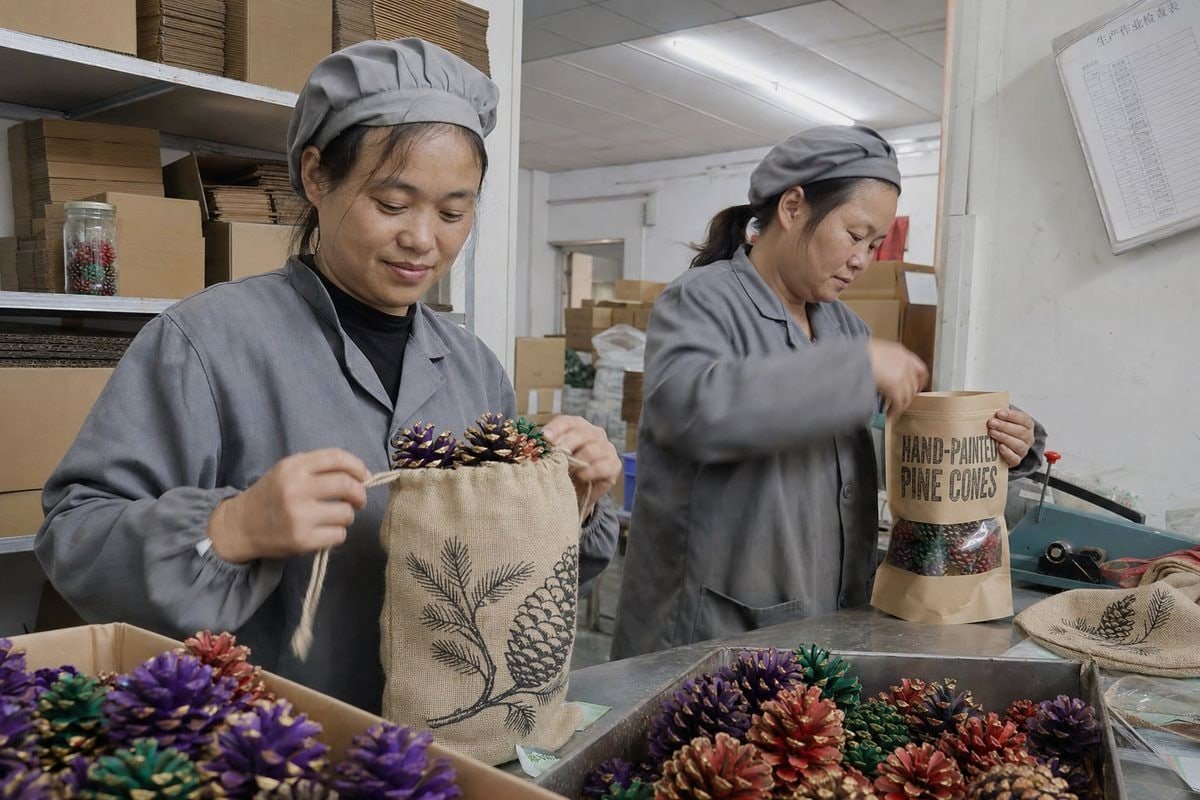
Differentiation matters more for this product than for most hearth and home accessories. Colored pine cones are small, seasonal, and impulse-friendly. Without packaging segmentation, two buyers sourcing the same generic product end up in a direct price fight on Amazon or Walmart. That is textbook market cannibalization, and it starts at the packaging stage — not the marketing stage.
Packaging Formats You Can Own
Dans notre OEM/ODM 3 work, we customize far more than a logo. We adjust the cone size, the flame color mix, the burn time, and the entire retail presentation. A buyer targeting cozy fireplace gifting gets a burlap drawstring sack with jute rope and printed pinecone illustrations. A camping brand gets a rugged kraft resealable pouch with a clear window and distressed lettering. Same core product family, but visually and commercially separate SKUs.
| Format d'emballage | Best channel fit | Differentiation strength |
|---|---|---|
| Sac à cordon en toile de jute | Boutique retail, gift shops, holiday displays | High — rustic, giftable, hard to price-compare |
| Pochette à fenêtre refermable en kraft | Outdoor and camping retail, e-commerce | High — brandable, resealable, adventure styling |
| Plastic or glass jar | Fireplace specialty stores, home décor chains | Medium-high — premium shelf presence |
| Bulk poly bag | Wholesale, private repacking | Low — use only as a component, never on shelf |
Segment by SKU, Not Just by Logo
Change more than the artwork. Change the pack weight, the cone count, the color assortment, and the barcode. When your SKU differs in substance, marketplace algorithms cannot merge your listing with a competitor's. That single step removes the most common trigger of e-commerce price parity disputes. We also add retailer-specific bundles — for example, a pine cone sack paired with our wax-dipped wood firestarters — so your offer literally does not exist anywhere else.
How Do I Set Up Exclusive Territories or MOQ Tiers with My Manufacturer to Protect My Market?
The trade-off we weigh most often at our Ningbo facility is exclusivity versus coverage. Lock down too much territory for one buyer, and growth stalls. Lock down too little, and partners collide.
Set up protection by negotiating a written agreement that ties exclusive territory rights to a committed annual volume, or by using MOQ tiers where higher order quantities unlock regional exclusivity, early seasonal inventory allocation, and exclusive colorways. Put renewal conditions and performance thresholds in the contract.

Exclusivity should never be free. In seventeen-plus years of exporting to the US, Germany, the UK, and beyond, the exclusivity deals that survive are the ones tied to real commitments. A distributor who asks for all of France but orders one trial container creates a dead zone we cannot serve. So we structure it as an earned right, not a giveaway.
A Practical MOQ Tier Structure
Voici la tier logic we typically propose to importers of decorative fire starters and colored pine cones. Your exact numbers will differ, but the principle holds: protection scales with commitment.
| Niveau | Annual commitment level | Protection granted |
|---|---|---|
| Essai | One trial order, flexible MOQ | No exclusivity; custom packaging available |
| Régional | Committed seasonal volume | Exclusive SKU or colorway for your region |
| Territoire | Committed annual volume with forecast | Exclusive territory rights in named countries |
| Stratégique | Multi-year contract with rolling forecast | Territory exclusivity plus priority inventory allocation before peak season |
Timing Matters as Much as Volume
Colored pine cones are brutally seasonal. Demand concentrates in Q4 for fireplaces and in summer for campfires. Priority inventory allocation is often worth more than exclusivity itself. A partner with guaranteed October stock beats a partner with paper exclusivity and empty shelves. We build production slots into wholesale distribution agreements so top-tier buyers get first claim on capacity, and we agree on forecast deadlines so we can plan raw material buys.
Put Performance Clauses in Writing
Every exclusivity clause needs three things: a volume threshold, a review date, and a fallback. If the buyer hits volume, exclusivity renews automatically. If not, it converts to a first-refusal right. This keeps the deal fair for both sides and removes the awkward renegotiation that kills long-term partnerships.
Should I Require My Supplier to Avoid Selling the Same Product Line to Other Buyers in My Region?
A Dutch buyer once asked us to stop selling colored pine cones to anyone in the Benelux. We said yes — but only to his exact SKU, and only with a volume floor. Here is why.
Yes, but scope it carefully. Require your supplier to withhold your exact private-label SKU, packaging, and colorway from other buyers in your region, rather than banning the entire product category. Full category bans are hard to enforce and usually demand volumes most importers cannot commit to.

The instinct to demand a total ban is understandable. But think through the trade-off. A blanket restriction means the factory turns away all regional revenue, so the factory will price that risk into your unit cost or require a very large commitment. A SKU-level restriction costs the factory little, protects what actually matters — your differentiated product — and is far easier to enforce. In practice, your competitor buying a different cone size, a different flame color mix, and different packaging is not stealing your customer. Your competitor selling your identical bag is.
What a Reasonable Restriction Covers
- Your exact SKU, artwork, pack format, and barcode — never resold to anyone, anywhere.
- Your exclusive colorway or bundle — withheld from named competitors or your defined region.
- Gray-market safeguards — the supplier agrees not to sell excess or rejected stock of your branded goods to traders.
- Notification rights — the supplier informs you before onboarding a new buyer in your core market, where legally appropriate.
Watch the Leakage Points
Unauthorized sellers rarely get inventory from the factory's front door. They get it through distribution leaks, returns, retail arbitrage, and gray-market diversion 4. So your agreement should also cover overruns and defective batches. At our factory, branded overstock is either destroyed or offered back to the brand owner first — a policy we adopted after seeing how one leaked pallet can undo a season of pricing discipline. Ask your supplier directly how they handle surplus private-label stock. The answer tells you a lot about whether your market is actually protected.
Compliance paperwork saved one of our UK buyers from a gray-market invasion. His authorized dealer listing carried SGS test reports and CE-aligned labeling 5. The unauthorized seller's listing carried nothing — and got removed.
Use registered branding, unique barcodes, batch-coded labels, and certification documents such as SGS or Intertek test reports as proof of authorization. Combine these with an authorized dealer program, a Minimum Advertised Price policy, and marketplace monitoring to identify and remove unauthorized resellers quickly.
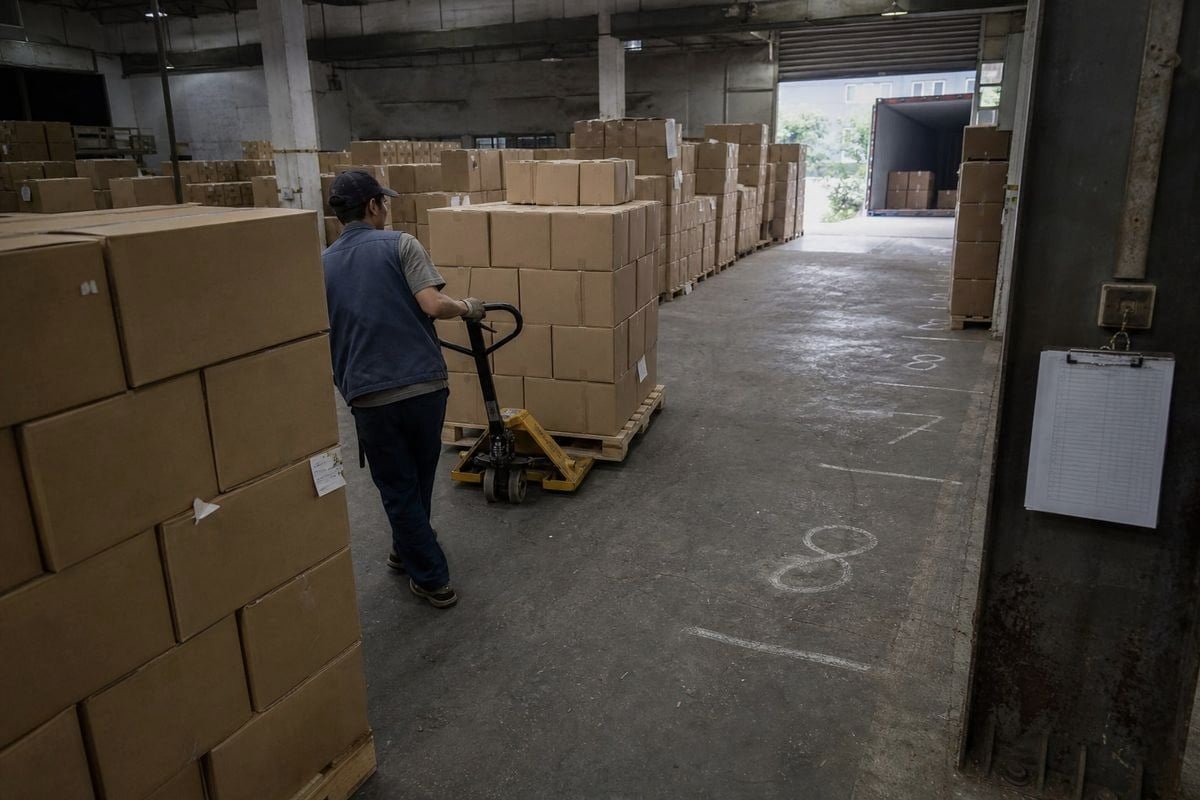
Enforcement is now part of channel strategy, not just brand protection. For a combustion product like colored pine cones, compliance is also your sharpest weapon. Retailers and marketplaces take safety documentation seriously. Sellers who cannot produce test reports, safety data, or correct warning labels are vulnerable to takedown — and legitimately so, because mislabeled fire products are a real liability risk.
Build a Documentation Moat
Our buyers receive ISO 9001 6, BSCI, CE, and SGS/Intertek documentation with every program, plus custom warning labels and barcodes matched to their market. That paper trail becomes a moat. Here is how each layer works against unauthorized resellers:
| Couche | Ce que c'est | How it blocks unauthorized sellers |
|---|---|---|
| Registered brand and trademark | Your brand enrolled with marketplace brand registries | Enables takedown of listings misusing your brand |
| Unique barcodes and batch codes | Codes tied to your SKUs and production runs | Traces diverted stock back to its source |
| Rapports de tests de sécurité | SGS/Intertek reports for your specific product | Unauthorized sellers cannot produce matching documents |
| Compliant warning labels | Market-specific labels and usage warnings | Non-compliant listings can be reported and removed |
| Authorized dealer list | Published roster of approved sellers | Retailers and consumers can verify legitimacy instantly |
Pair Documentation with Pricing Discipline
Documentation identifies bad actors; a politique de prix minimum annoncé 7 removes their oxygen. Where legally appropriate in your market, publish MAP terms in your wholesale distribution agreements so authorized partners know pricing floors are real. Then run e-commerce marketplace management on a schedule — a monthly sweep of Amazon, Walmart, and eBay for duplicate listings, off-brand imagery, or below-MAP pricing. Act fast: resolve disputes and issue enforcement notices within days, not weeks, and share enforcement outcomes with your authorized partners. When partners see the system defended, they invest in your brand instead of hedging against it.
Conclusion
Channel conflict is preventable, not inevitable. Define who sells your fireplace colored pine cones, where, at what price, and with what proof — and enforce it with your manufacturer.
Notes de bas de page
1. SGS is a leading testing and certification body referenced for compliance documentation. ↩︎
2. Updated official landing page for the amfori social compliance initiative. ↩︎
3. Background on OEM/ODM manufacturing arrangements referenced for private-label customization. ↩︎
4. Explains the gray market concept underlying unauthorized product diversion described in the article. ↩︎
5. Official EU source explaining CE marking requirements referenced for product labeling compliance. ↩︎
6. Stable Wikipedia overview of quality management standards to avoid 403 access issues on the official site. ↩︎
7. Background on the MAP pricing policy concept used to prevent reseller undercutting. ↩︎



 English
  Spanish
  German
  French
  Arabic
  Portuguese
Rejoignez la conversation