






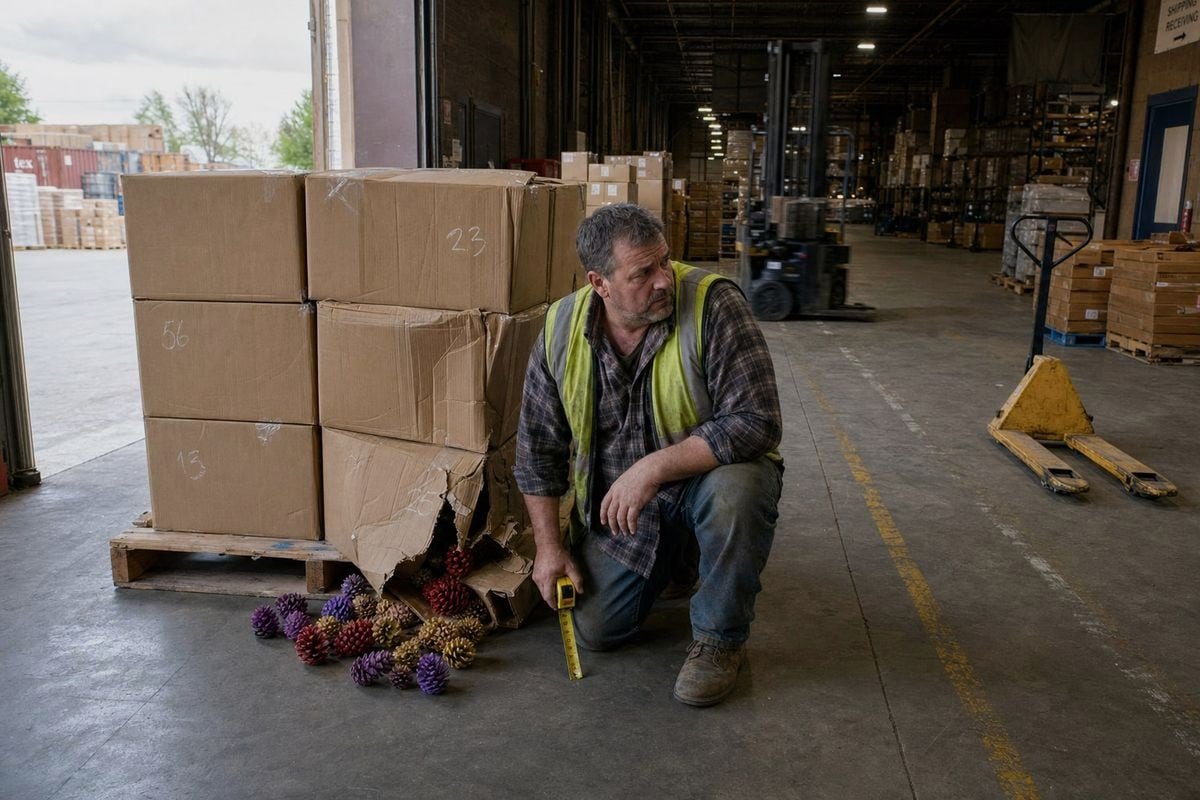
Planning warehouse space and stacking for bulk fireplace colored pine cones is trickier than buyers expect. I learned this after our first big US shipment arrived crushed.
Plan warehouse space for bulk fireplace colored pine cones by cubic footage, not floor area: allocate roughly 60–70 cubic meters per 40ft container, stack pallets no more than two high, keep humidity below 50%, and use FIFO rotation with clearly labeled, breathable cartons.
That short answer covers the basics. Below, I break down each part: space math, stacking patterns, fire and moisture safety, and the packaging you should demand from your supplier.
How much warehouse space should I allocate per container of bulk colored pine cones?
Years of loading containers in Ningbo taught our team one thing: color-flame pinecones are light but greedy. They eat cube fast. Buyers who plan by weight always run out of room.
Allocate about 68 cubic meters of storage volume per 40ft high-cube container of bulk colored pine cones, plus 25–30% extra floor area for aisles and staging. That typically means 55–75 square meters of floor space when pallets are stacked two high.
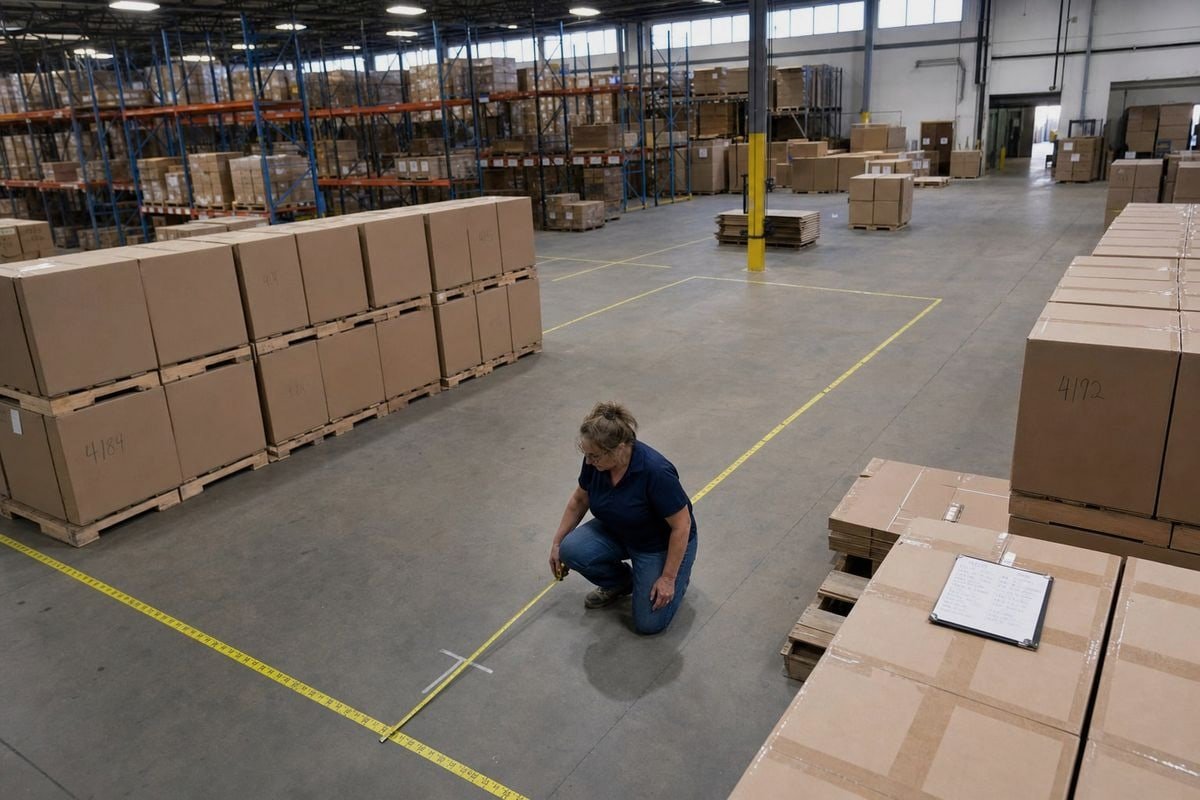
The core mistake I see importers make is thinking in square feet. Pine cones have a very high volume-to-weight ratio. A full 40ft container of our color-flame pinecones often weighs under nine tons, yet it fills the box completely. So your planning tool is cubic footage calculation, not floor area.
Start with three numbers. First, measure your total warehouse footprint. Second, subtract every non-storage function: offices, restrooms, dock doors, staging lanes, and pick faces. Third, multiply the usable floor area by your safe stack height. That gives your true storage capacity in cube.
Un exemple simple et concret
Say a 40ft HC container carries 22 pallets of cartons. Each pallet is roughly 1.2m x 1.0m x 1.6m loaded. Here is how the space demand breaks down:
| Article | Valeur | Notes |
|---|---|---|
| Pallets per 40ft HC | 20–24 | Depends on carton size |
| Volume per pallet | ~1.9 m³ | Loaded height ~1.6m |
| Total product cube | ~40–46 m³ | Actual product volume |
| Floor area, single-stacked | ~26–29 m² | Pallet footprints only |
| Floor area with aisles + staging | 55–75 m² | Add 25–30% for access |
Remember that seasonal timing matters. Fireplace products surge in Q4. In our experience shipping to distributors in Germany and the US, most buyers land two or three containers between August and October. So plan overflow space for peak season, not just one container. A flexible overflow zone beats a permanent dedicated bay for a SKU that sells hard for four months and sleeps for eight. Your inventory turnover rate during peak season should drive how much of that space sits near the dock.
What stacking height and pallet pattern keep my color-flame pinecones from crushing or leaking?
One trade-off we weigh on every OEM order is carton strength versus shipping cost. Thicker cartons stack higher but cost more freight weight. The stacking plan starts at our packing line, not your warehouse.
Stack palletized colored pine cones a maximum of two pallets high, or about 3.2 meters total, using a column-stack pattern with corner boards. Never triple-stack shrink-wrapped pallets; the wax coating and cone scales on bottom cartons will crush and leak colorant dust.
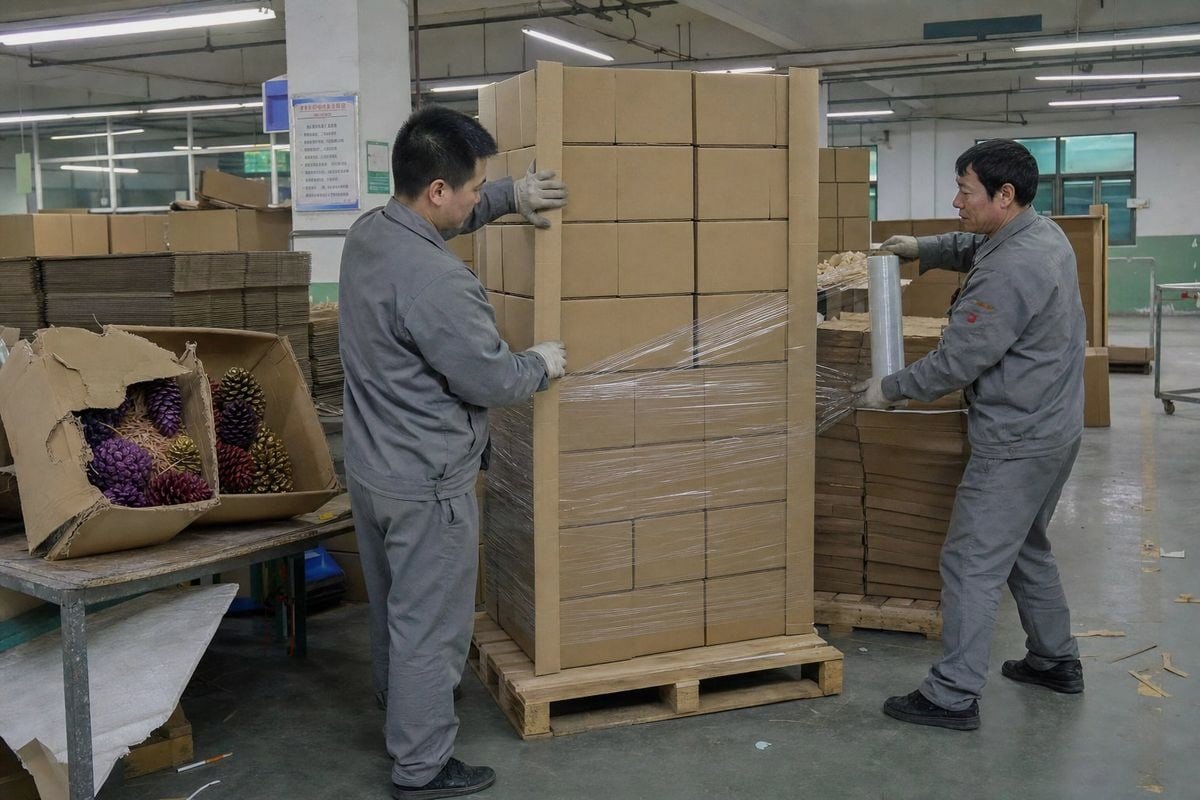
Pine cones are fragile, display-sensitive goods. The scales snap. The wax coating scuffs. And the colorant compounds inside can shed if cartons deform. So your stacking method has to protect the product first and chase density second.
Column stacking beats interlocked stacking here
For heavy goods, interlocked brick patterns add stability. For light, crushable cartons, column stacking is better. It aligns carton corners vertically, where the box has its strength. Corners carry roughly two-thirds of a carton's load-bearing capacity, so keep them lined up and add corner boards before wrapping.
Floor stacking vs pallet racking
Some buyers push back and ask why they should invest in racking for a cheap seasonal SKU. Fair question. Floor stacking looks denser and costs nothing. But it blocks access, hides lot numbers, and puts real crush pressure on bottom layers. Here is the honest comparison:
| Méthode | Densité | Crush risk | Accès | Idéal pour |
|---|---|---|---|---|
| Loose floor stacking | High short-term | Très élevé | Faible | Avoid for pine cones |
| Double-stacked pallets | Moyen-élevé | Low with corner boards | Bonne | Most importers |
| Pallet racking systems | Medium per bay, high per cube | Très faible | Excellente | Multi-SKU distributors |
| Wire mesh bulk containers | Moyen | Très faible | Bonne | Loose or unboxed cones |
Pallet racking systems win when you carry multiple colors and pack formats, because vertical storage optimization lets you use full building height without stacking product on product. Rigid-sided wire mesh containers or Gaylord boxes are the right call if you repack loose cones, since rigid walls carry the load instead of the cones themselves.
Whatever you choose, respect fire safety regulations on height. High-piled combustible storage 1 rules typically require 18 inches of clearance below sprinkler heads, and stacks over 12 feet may need a permit. Check your local code before you rack to the ceiling.
How do I store wax-coated pinecones safely without fire or moisture risks in my warehouse?
A Dutch distributor once asked me if our color-flame pinecones could self-ignite in storage. They cannot. But that conversation showed me how much confusion exists around storing fire products.
Store wax-coated pinecones in a dry, ventilated area below 30°C with relative humidity under 50%, away from direct sunlight, heaters, and ignition sources. They are combustible but stable; treat them like candles, not like fireworks or flammable liquids.
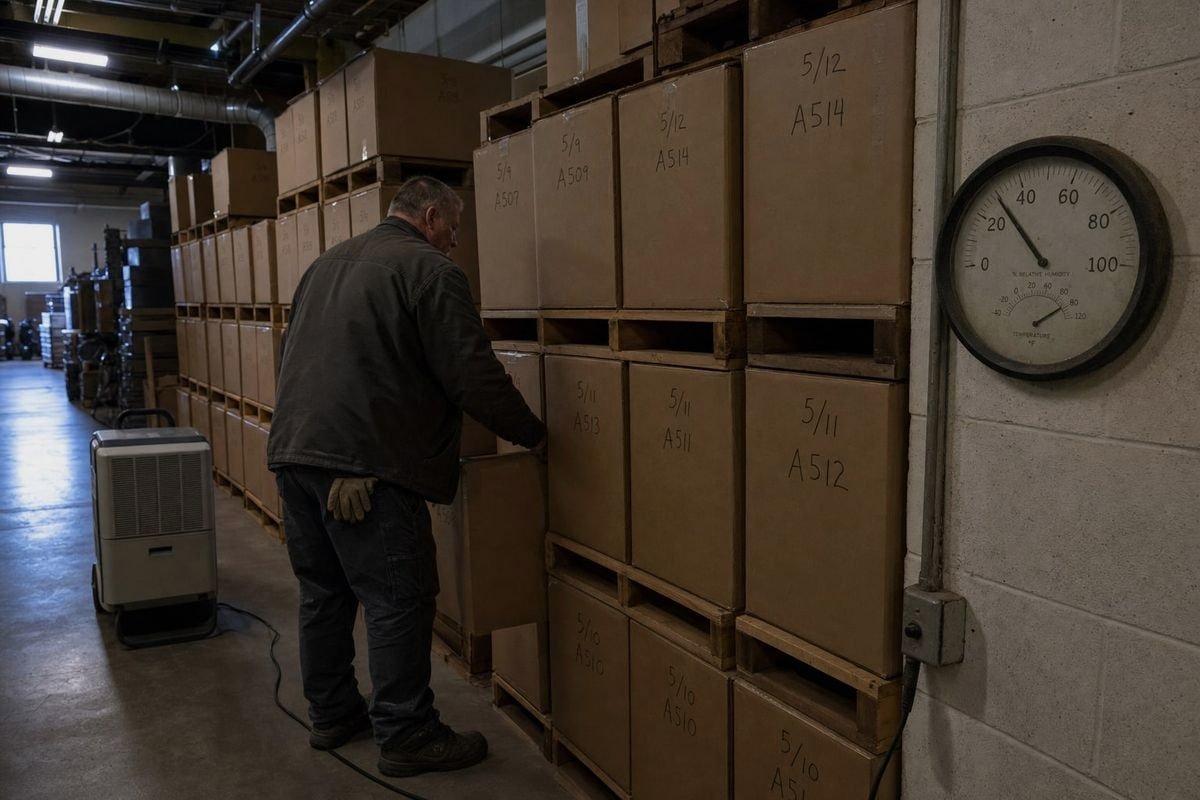
Let me separate the real risks from the imagined ones. Wax-coated pinecones do not self-combust. Our products pass Tests SGS et Intertek 2, and the wax and colorant formulas are stable at normal warehouse temperatures. The genuine risks are heat softening, moisture, pests, and general combustible-storage housekeeping.
Heat and sunlight
Wax softens above roughly 40°C. Pallets parked against a sun-heated metal wall or under a skylight can develop sticky, deformed coatings and faded colors. Keep product out of direct sun and away from radiant heaters and dock doors that face afternoon sun.
Variation acceptable
This one matters most. Humidity above 50% invites mold on natural cones and can reactivate residual resins. The metal salts used in flame-coloring are hygroscopiques 3, meaning they pull moisture from the air. Damp storage can cause colorant bleeding between cones and weaken corrugated cartons. Constant airflow and dehumidification in humid climates are cheap insurance. It also helps to segment storage by colorant type so any bleeding never cross-contaminates a different color batch.
Pest management protocols
Natural forest products can carry d'insectes xylophages 4 if the supplier skips treatment. At our factory, cones go through heat sterilization before coating, which is why we hold les contrôles de processus ISO 9001 5 on that step. Still, run routine pest inspections in your warehouse, keep pallets off exterior walls, and quarantine any damaged inbound cartons in your receiving zone before they reach main storage.
Combustible storage housekeeping
Follow standard fire safety regulations: keep aisles clear for material handling equipment, ban smoking and hot work near the product, maintain sprinkler clearance, and store the cones away from oxidizers and flammable liquids. That is all these products need. No hazmat storage class, no special permits for the product itself in most jurisdictions.
What packaging and labeling should I request from my supplier to simplify warehouse handling and stock rotation?
Private-label packaging is where most of our OEM conversations start. Over 17 years, we have learned that the right carton spec saves buyers more money in the warehouse than any factory price discount.
Request double-wall cartons with printed batch numbers, production dates, color codes, and scannable barcodes on two faces, plus breathable perforated stretch wrap and corner boards on pallets. Ask for lot-dated labeling so your team can run strict FIFO rotation.

Good packaging turns a chaotic seasonal SKU into an easy one. Here is the exact checklist I recommend to purchasing managers before they confirm an order with any supplier, including us.
The packaging spec to put in your PO
- Double-wall corrugated export cartons, sized to cube out a standard pallet with no overhang.
- Inner poly liners or resealable pouches to buffer humidity swings during ocean transit.
- Corner boards on every pallet, plus perforated stretch film. Breathable palletization lets residual moisture and treatment off-gassing escape instead of condensing inside the wrap.
- Heat-treated (NIMP 15 6) pallets, which customs in the US and EU require anyway.
The labeling spec that makes rotation automatic
| Élément d'étiquette | Où | Pourquoi c'est important |
|---|---|---|
| Numéro de lot/de lot | Two carton faces | Permet la traçabilité et les rappels |
| Date de production | Two carton faces | Drives FIFO rotation |
| Color/SKU code | Carton and pallet placard | Prevents mixed-color picking errors |
| Barcode (GS1/EAN) | Carton and retail unit | WMS scanning, retail compliance |
| Texte d'avertissement et d'utilisation | Unité de vente au détail | Market compliance in US/EU |
FIFO matters more here than buyers assume. Color-changing chemical coatings can slowly oxidize, and efficacy fades over a long shelf life. La rotation premier entré, premier sorti 7, driven by printed production dates, keeps the oldest stock moving to retail first. Group pallets by color and lot in your racking, label every location, and let your WMS enforce the rotation.
One more point from our side of the supply chain. We produce custom boxes, display packaging, warning labels, and barcodes in-house, because CE-marked and SGS-tested product still fails at retail if the labeling is wrong. Ask your supplier for test reports and label proofs before production, not after the container ships.
Conclusion
Poor planning crushes cones, breeds mold, and slows Q4 picking. Plan by cube, stack two high, control humidity, and demand lot-labeled packaging. Do that, and bulk colored pine cones become an easy SKU.
Notes de bas de page
1. OSHA guidance on warehouse storage safety supports the fire clearance requirements discussed. ↩︎
2. Links to a globally recognized testing and certification body validating product safety claims. ↩︎
3. Background explanation of the moisture-absorbing property affecting colorant stability in storage. ↩︎
4. Correct Wikipedia URL for the primary category of wood-boring pests. ↩︎
5. References the international quality management standard governing manufacturing process controls mentioned. ↩︎
6. Official international phytosanitary body defining the ISPM 15 pallet treatment standard referenced. ↩︎
7. Explains the inventory rotation principle underlying the recommended stock management method. ↩︎



 English
  Spanish
  German
  French
  Arabic
  Portuguese
Rejoignez la conversation