






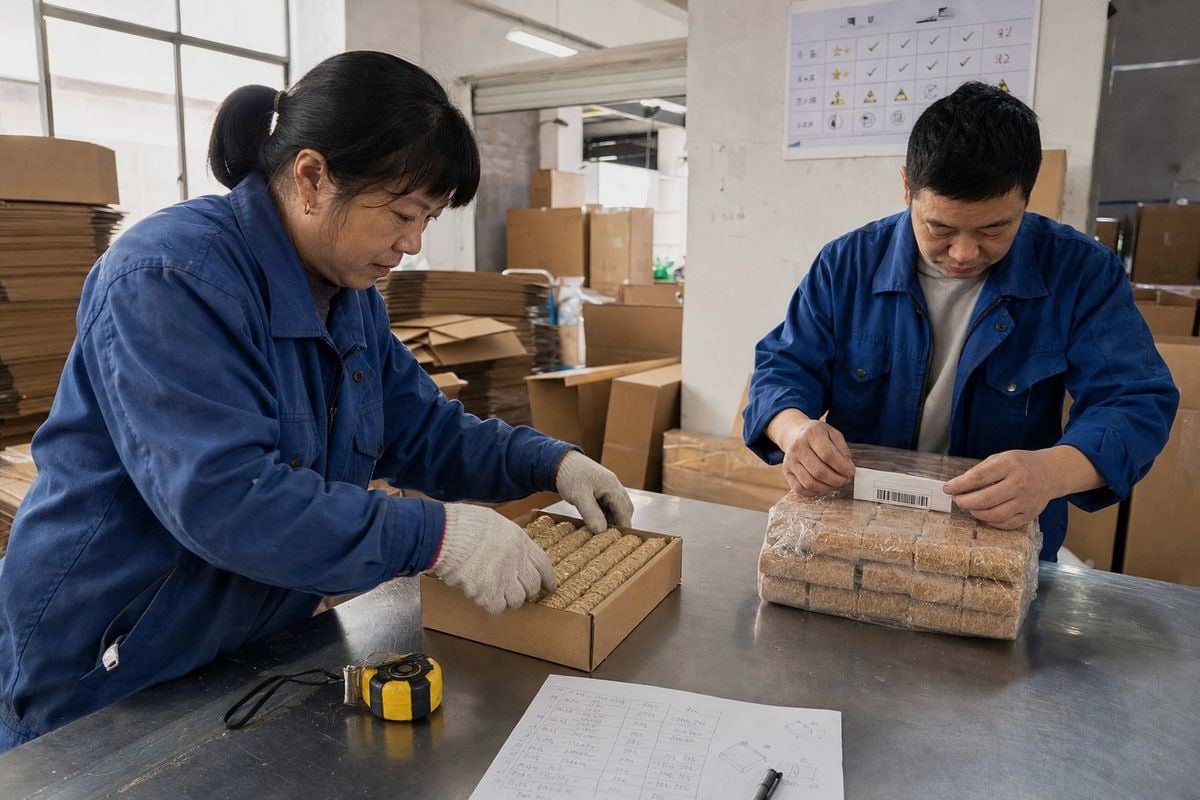
L'optimisation des emballages d'allume-feu en bois avec les fournisseurs est un véritable levier de marge. Sur notre chaîne de production, j'ai vu des boîtes surdimensionnées grignoter silencieusement les profits des vendeurs, commande après commande.
Pour optimiser l'emballage des allume-feux en bois et réduire les frais Amazon FBA, demandez à votre fournisseur de dimensionner correctement les boîtes en dessous des seuils de taille, de réduire le poids des matériaux, d'obtenir les certifications de conformité et de livrer un emballage prêt pour la vente au détail avec les étiquettes FNSKU et l'emballage de protection appliqués en usine.
Ci-dessous, je décompose cela en quatre questions pratiques. Chacune correspond à une conversation que vous devriez avoir avec votre fournisseur avant votre prochaine série de production.
Quelles dimensions d'emballage devrais-je demander pour éviter les frais Amazon hors format ?
Un acheteur du Texas m'a un jour envoyé son rapport sur les frais FBA. Sa boîte d'allume-feu de 100 pièces était un demi-pouce trop haute. Ce demi-pouce l'a fait passer dans une catégorie plus coûteuse sur chaque unité.
Demandez des dimensions d'emballage qui maintiennent votre côté le plus long à moins de 15 pouces, le côté médian à moins de 12 pouces, le côté le plus court à moins de 0,75 à 6 pouces selon le poids, et le poids total de l'emballage à moins de 1 livre si possible, afin que l'unité reste dans la catégorie de taille standard petite ou grande d'Amazon.
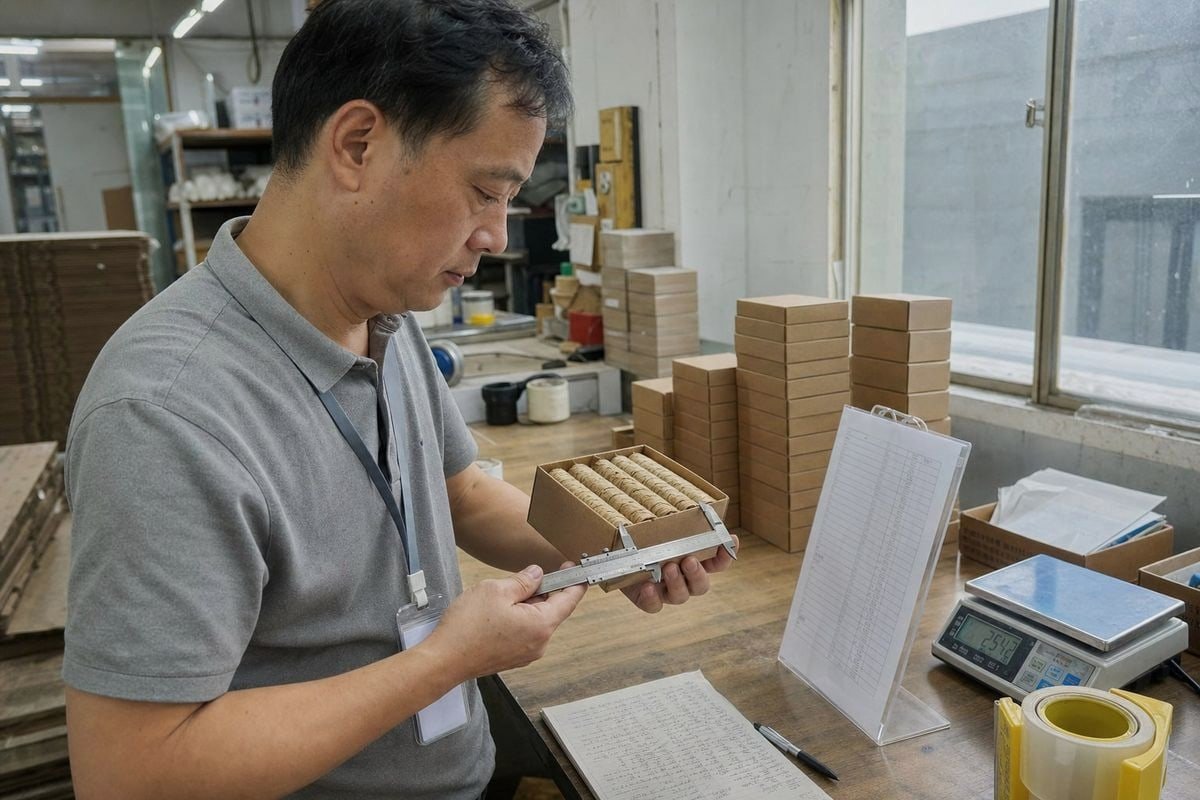
Amazon calcule les frais d'expédition en utilisant le produit emballé, pas le produit nu. Cela signifie que la conception de votre boîte détermine votre catégorie de frais. Les catégories de taille FBA sont impitoyables. Franchir un seuil d'une fraction de pouce peut ajouter un dollar ou plus par unité. Multipliez cela sur dix mille unités, et le chiffre devient rapidement douloureux.
Connaître les seuils avant de concevoir
Avant de citer une boîte personnalisée dans notre usine, nous demandons aux acheteurs leur catégorie de taille cible. Ensuite, nous concevons en partant de là. Voici une vue simplifiée de la logique standard vs surdimensionnée qui compte le plus pour les allume-feu en bois :
| Catégorie de taille | Dimensions maximales (environ) | Poids emballé maximal | Impact typique des frais |
|---|---|---|---|
| Standard petit | 15" x 12" x 0,75" | 16 oz | Frais les plus bas |
| Standard grand | 45,7 cm x 35,6 cm x 20,3 cm" | 20 lb | Frais modérés |
| Volumineux grand (surdimensionné) | Plus de 18" sur le côté le plus long | Plus de 20 lb | Frais considérablement plus élevés |
La plupart des lots d'allume-feu en bois devraient se situer confortablement dans la catégorie standard grand. Si ce n'est pas le cas, c'est généralement l'emballage qui pose problème, pas le produit.
Surveiller le poids volumétrique, pas seulement le poids réel
Amazon peut facturer en fonction du le poids dimensionnel 1 lorsqu'il dépasse le poids réel. Le poids volumétrique pénalise l'air. Une boîte avec un espace vide au-dessus des allume-feu vous facture littéralement pour rien. Demandez à votre fournisseur de mesurer la hauteur naturelle d'empilage des rouleaux enduits de cire, puis de concevoir la boîte à quelques millimètres près. Sur nos lignes, nous testons également les arrangements imbriqués. Les allume-feu cylindriques se tassent plus étroitement en rangées décalées qu'en colonnes droites, ce qui peut réduire la hauteur de la boîte d'un pouce complet.
Demander des garanties de dimensions par écrit
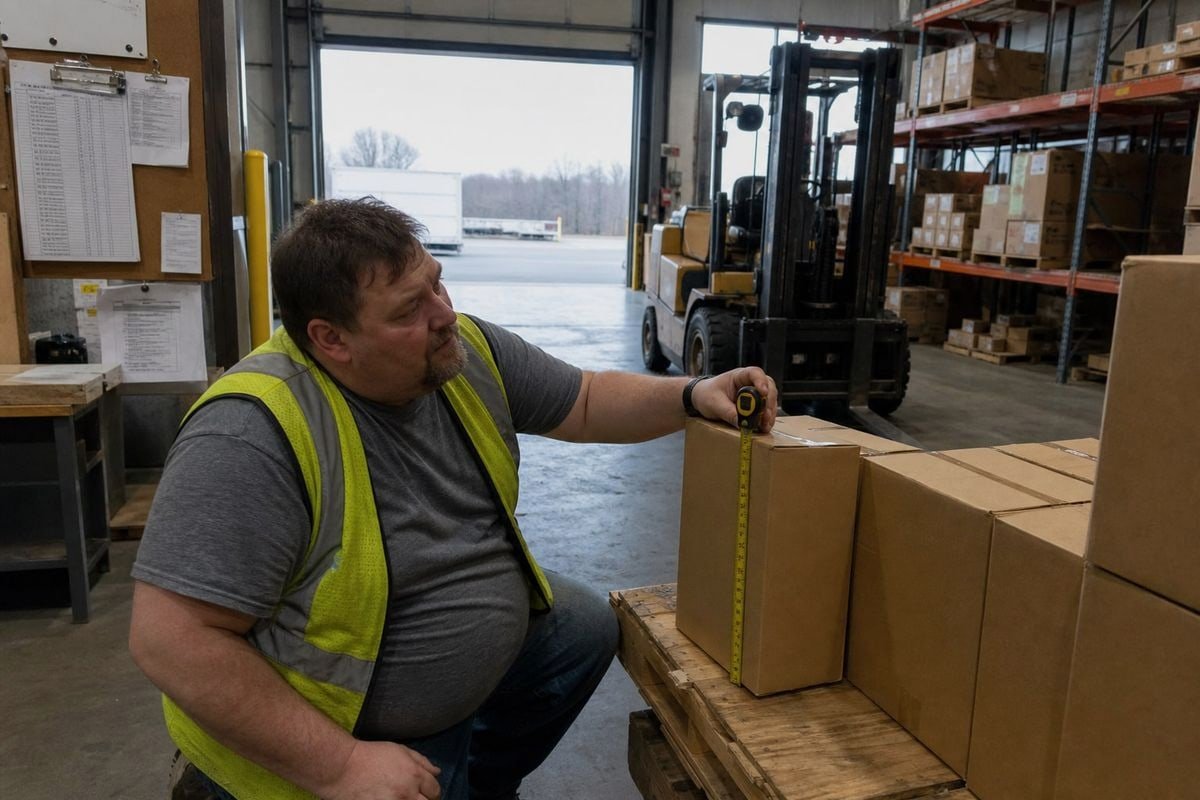
Les cartons gonflent. Le carton ondulé 2 gonfle pendant le transport humide. Nous spécifions nos cartons d'exportation avec une marge de tolérance, de sorte que les dimensions mesurées au centre de distribution Amazon tombent toujours en dessous de la ligne de catégorie. Demandez la même chose à n'importe quel fournisseur et confirmez-le avec un rapport de mesure avant expédition.
Comment mon fournisseur peut-il m'aider à réduire le poids des boîtes sans compromettre la sécurité des produits ?
Il y a un compromis que nous évaluons sur presque tous les projets OEM : chaque gramme d'emballage que nous retirons permet d'économiser sur le fret et les coûts FBA, mais les rouleaux de bois enduits de cire ont toujours besoin d'une protection réelle contre l'écrasement et la chaleur.
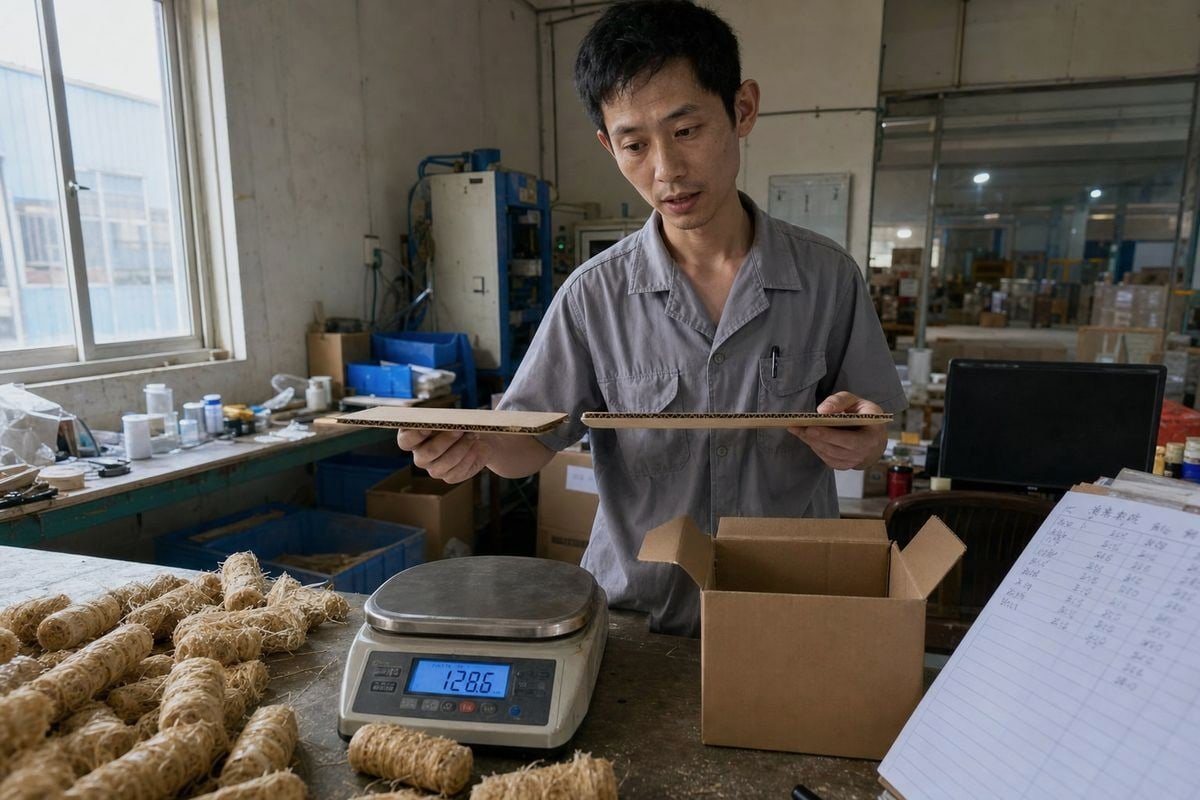
Un fournisseur compétent réduit le poids des boîtes en passant à un carton ondulé plus fin et plus résistant, en supprimant les calages inutiles, en remplaçant les séparateurs rigides par de la pâte moulée ou un emballage serré, et en scellant les unités sous vide ou par rétraction, tout en effectuant des tests de chute et de compression pour confirmer la sécurité du produit.
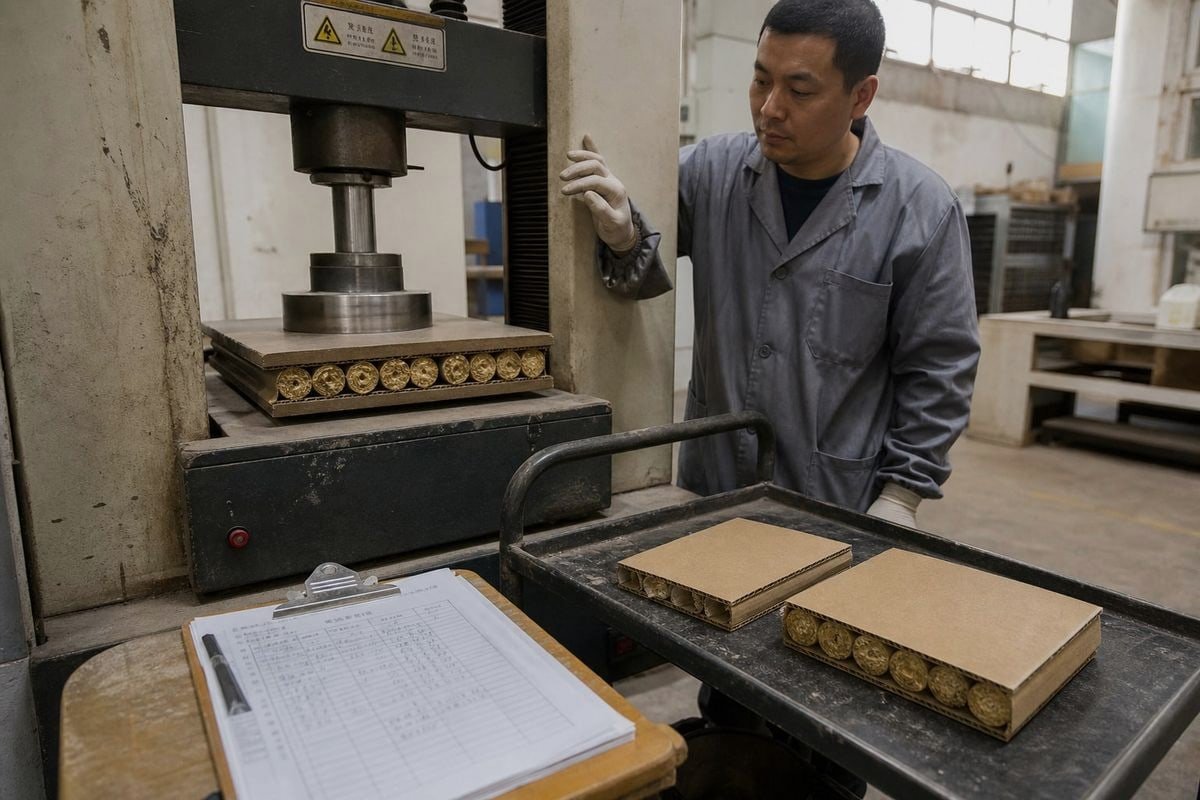
La réduction de poids est là où la profondeur de fabrication authentique compte. Une société commerciale ne peut que transmettre votre demande. Une vraie usine peut tester des alternatives sur la ligne la même semaine. Au cours de plus de 17 ans d'exportation de produits d'allumage vers les États-Unis et l'Europe, nous avons appris que les économies de poids les plus sûres proviennent d'une structure plus intelligente, pas d'un amincissement généralisé.
Échanges de matériaux qui fonctionnent réellement
Voici les leviers que nous testons le plus souvent, classés par impact typique :
| Changement | Poids économisé | Niveau de risque | Notes |
|---|---|---|---|
| E-flûte au lieu de carton ondulé B-flûte | Élevé | Faible | Maintient la résistance à l'empilage pour les produits légers |
| Retirer le plateau d'insertion intérieur | Moyen | Moyen | Uniquement si les unités s'emboîtent bien sans lui |
| Film rétractable sur les lots individuels | Moyen | Faible | Satisfait également la préparation au niveau de l'unité Amazon |
| Manchon en kraft au lieu d'une boîte complète | Élevé | Moyen | Idéal pour les petits nombres d'unités |
| Chemises en kraft recyclé | Faible | Faible | Soutient le positionnement des matériaux d'emballage écologiques |
Les allume-feu en bois sont légers et rigides. Ils n'ont pas besoin du carton épais que nécessitent les produits fragiles. Ce dont ils ont besoin, c'est de confinement. La laine de bois lâche perd des fibres, et les exigences des centres de distribution Amazon ne tolèrent pas les produits lâches ou qui fuient. L'objectif est donc un boîtier ajusté, scellé et léger.
Protect Against Moisture, Not Just Impact
One issue buyers rarely anticipate: wood fiber absorbs humidity. A carton that ships at 19.5 pounds can arrive heavier after weeks in a damp container. We seal our wood rolls in film partly for this reason. A moisture barrier keeps the wax coating stable and keeps packaged weight predictable, which protects your fee tier and your landed cost calculations.
Validate Before You Scale
Ask your supplier for drop-test videos and compression results on the new spec. Then run one trial shipment. Compare damage rates and actual measured weight at check-in before committing a full production run. We always encourage buyers to start with a flexible trial MOQ for exactly this reason.
Quelles certifications l'emballage conforme des allume-feu en bois doit-il inclure pour Amazon FBA ?
Compliance questions come up in nearly every first call with a new European or American buyer. It is usually their opening topic, before price, before lead time. That tells you how much rejection risk worries experienced importers.
Les emballages conformes d'allume-feu en bois doivent porter les étiquettes d'avertissement de sécurité requises, la divulgation de la composition, un code-barres FNSKU ou GS1 numérisable, et être étayés par des documents fournisseurs tels que des rapports de test SGS ou Intertek, une FDS, ainsi que des certifications d'usine comme ISO 9001, BSCI et CE le cas échéant.
Amazon can require documentation for anything flammable. Wax-and-wood fire starters usually avoid full hazmat classification, but you must be able to prove it. That proof comes from your supplier, and it comes before your first shipment, not after Amazon flags the listing.
The Documentation Stack You Should Request
Treat this as a checklist during private label sourcing negotiations:
- Fiche de Données de Sécurité 3 (SDS) for the finished product, current and in English.
- Third-party test reports from a recognized lab such as SGS or Intertek.
- Composition statement printed on the packaging, for example 50% wood fiber, 50% paraffin.
- Warning labels covering flammability, keep-away-from-children language, and usage instructions.
- Barcode compliance, meaning a clean FNSKU or GS1 barcode 4 on each sellable unit.
- Factory-level certifications such as ISO 9001 5 for quality systems and BSCI for social compliance.
Our factory maintains ISO 9001, BSCI 6, et Certification CE 7 with SGS and Intertek test reports on file, because our buyers in the US, Germany, and the UK treat these as a hard requirement. If a supplier hesitates when you ask for reports, that hesitation is your answer.
Why Compliance and Fee Optimization Are Linked
Here is the connection sellers miss. If Amazon reviews your product under dangerous goods rules and you lack documentation, the SKU can be blocked or routed into a restricted handling path. That path carries higher costs and slower processing. Clean paperwork keeps your fire starters in the standard, cheaper fulfillment flow. In other words, certification is not just legal protection. It is fee protection. It also protects your redesigned lightweight packaging, because a compliant label set means Amazon has no reason to reject the new box at check-in.
Mon fournisseur peut-il fournir un emballage personnalisé prêt pour la vente au détail qui répond aux exigences de préparation d'Amazon ?
A German distributor once asked us to redesign his fire starter packaging three times in one project: once for shelf appeal, once for FBA prep rules, and once for freight efficiency. The lesson stuck with me. Good retail-ready packaging must satisfy all three at once.
Oui, un fournisseur OEM expérimenté peut livrer des emballages prêts pour la vente au détail qui sont conformes à la FBA dès la sortie de l'usine, y compris l'emballage unitaire scellé, les étiquettes FNSKU et les codes-barres pré-appliqués, le texte d'avertissement, les étiquettes d'étouffement si nécessaire, et les caisses standardisées qui respectent les limites de cartons d'Amazon.
Factory-side prep is one of the biggest hidden savings in this whole process. Amazon charges meaningful surcharges for labeling and prep done in its warehouses. A prep center in the US charges per touch, too. When your supplier applies labels and wrapping during production, the marginal cost is close to zero.
What Factory Prep Should Cover
Our one-stop OEM/ODM service handles all of the following, and you should expect the same from any serious partner:
| Tâche de préparation | Done at Factory | Why It Matters for FBA |
|---|---|---|
| Unit shrink-wrap or sealed box | Oui | Meets Amazon's protection rules for loose products |
| FNSKU label application | Oui | Avoids Amazon's per-unit labeling fee |
| Warning and suffocation labels | Oui | Prevents check-in rejections |
| Custom retail box or display packaging | Oui | Sells on shelf and on Amazon with one design |
| Standardized case packs | Oui | Enables unit per carton optimization and cleaner inbound placement |
Case Packs and Bundles: The Overlooked Levers
Retail-ready does not stop at the unit. Case-pack configuration affects your inbound placement fees and shipment splits. Uniform cartons with consistent counts move through Amazon's inbound system with fewer surcharges. We help buyers calibrate carton quantities so each master carton stays under Amazon's weight limits while maximizing units per cube.
Product bundling strategies deserve a look here too. Bundling fire starters into a larger single SKU, such as a 100-piece box instead of four 25-piece boxes, spreads one fulfillment fee across more units. The bold retail box in our own product line follows this logic: one compact, branded, 100-piece carton that works as both a shelf unit and an FBA-efficient package. Ask your supplier to prototype two or three bundle sizes, then compare the fee-per-unit math before choosing.
Conclusion
Oversized, overweight, or non-compliant packaging silently drains FBA margins. The fix is supplier collaboration: right-sized dimensions, lighter materials, certified compliance, and factory-ready prep, validated through trial shipments.
Notes de bas de page
1. Explains volumetric/dimensional weight concept referenced for FBA fee calculation. ↩︎
2. Background reference on corrugated fiberboard material used for packaging weight reduction. ↩︎
3. Government reference explaining SDS documentation requirements mentioned for compliance. ↩︎
4. Background on the GS1 barcode standard referenced for compliant packaging labeling. ↩︎
5. Official ISO page defining the quality management standard cited as a factory credential. ↩︎
6. Official amfori page describing BSCI social compliance auditing referenced in the checklist. ↩︎
7. Official EU source explaining CE marking mentioned as a required factory credential. ↩︎

 English
  Spanish
  German
  French
  Arabic
  Portuguese
Rejoignez la conversation