






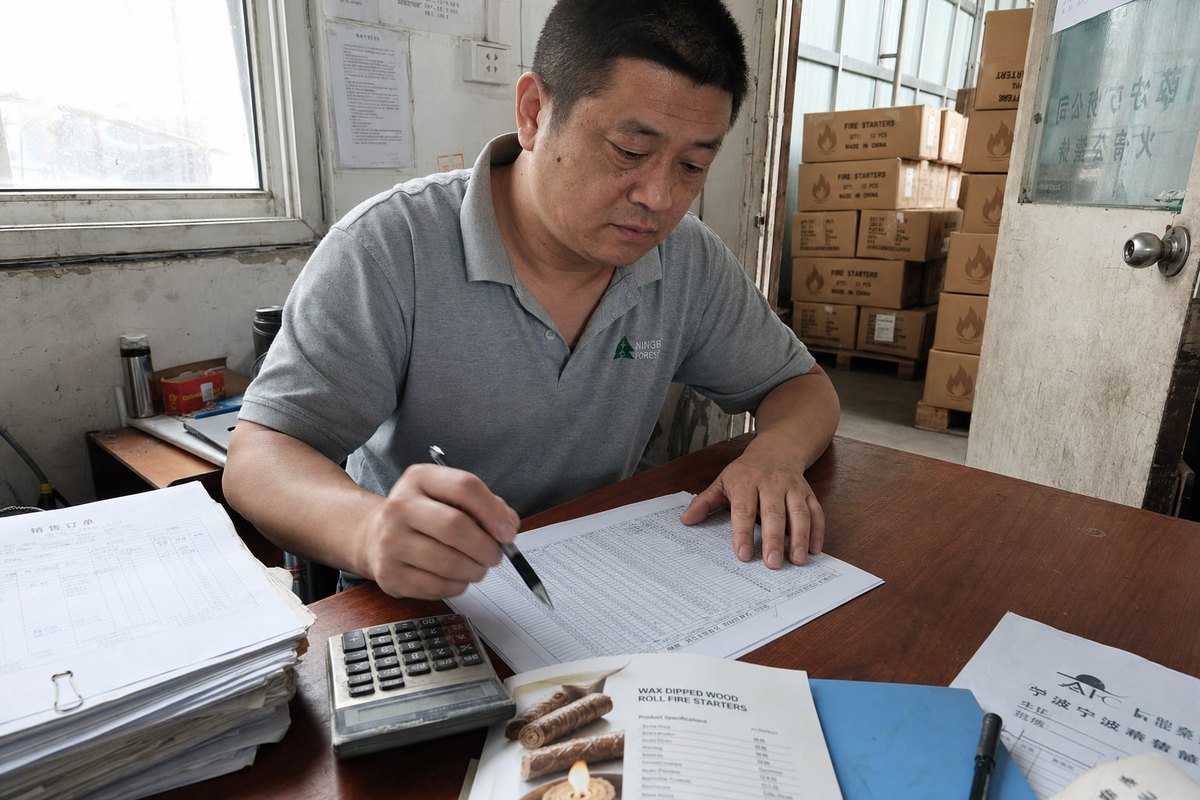
L'exigence du MOQ d'un fournisseur pour les allume-feu en bois peut rapidement faire échouer une affaire prometteuse. Sur notre chaîne de production à Ningbo, je vois des acheteurs se heurter à ce mur chaque mois.
Pour gérer l'exigence de MOQ d'un fournisseur pour les allume-feux en bois, demandez d'abord ce qui motive le minimum, puis négociez des leviers tels qu'un prix unitaire plus élevé, des références mixtes, des livraisons échelonnées ou un emballage standard. Comparez le MOQ à vos prévisions de demande avant d'accepter, de renégocier ou de changer de fournisseur.
Cette réponse courte cache beaucoup de détails. Ci-dessous, j'explique à quoi ressemblent réellement les MOQ, comment les négocier et comment protéger vos marges en cours de route.
Quel MOQ puis-je attendre lors de l'approvisionnement en allume-feu en bois auprès d'un fabricant certifié ?
Le printemps dernier, un distributeur allemand de foyers a envoyé un e-mail à notre équipe pour demander pourquoi nos allume-feu en laine de bois avaient un minimum par carton. La réponse lui a appris plus sur la logique des MOQ que n'importe quelle liste de prix.
Les fabricants certifiés d'allume-feu en bois fixent généralement les MOQ par carton ou par palette, allant souvent de quelques centaines de boîtes à un conteneur complet pour les séries sous marque de distributeur. Les articles en stock standard ont des minimums plus bas, tandis que les emballages, parfums ou marques personnalisés augmentent le MOQ en raison des coûts d'installation.
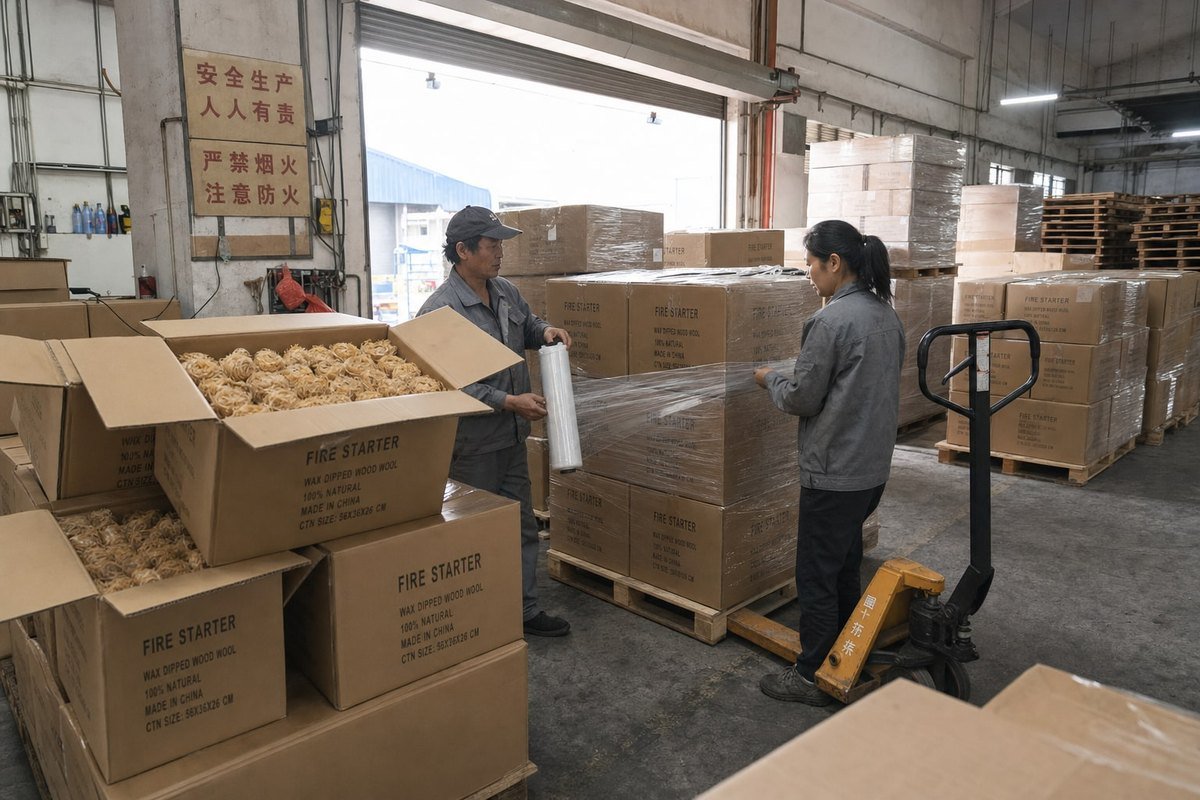
Le MOQ est simplement le nombre minimum d'unités qu'un fournisseur acceptera dans une seule commande. Ce n'est pas une punition. Il existe parce que la production, les matières premières et l'emballage ont tous des seuils de coûts. Dans notre usine, rouleaux de bois trempés dans la cire 1 nous fonctionnons par lots. Le bain de cire, l'alimentation en laine de bois et la ligne de trempage nécessitent tous une longueur de course minimale pour rester efficaces. En dessous, chaque unité nous coûte plus cher à fabriquer que ce que nous pouvons vendre.
Pour un acheteur axé sur la conformité, le MOQ est également lié à la certification. Nos ISO 9001 2 et nos processus BSCI exigent des enregistrements de qualité au niveau du lot. Les petites séries fragmentées rendent la traçabilité des lots plus difficile et plus coûteuse. Ainsi, une usine certifiée propose souvent un minimum légèrement plus élevé qu'un atelier non certifié. Ce n'est pas de l'avidité. Ce sont les coûts des rapports de test, des intrants cohérents et de la documentation prête pour l'audit.
Moteurs typiques du MOQ pour les allume-feu en bois
| Moteur du MOQ | Pourquoi il crée un minimum | Impact typique |
|---|---|---|
| Approvisionnement en laine de bois et en cire | Les matières premières sont achetées en gros lots | Modéré |
| Boîtes d'emballage imprimées | Les imprimeurs imposent leurs propres minimums d'impression | Élevé |
| Taille du lot de production | Les lignes de trempage nécessitent une course minimale pour rester efficaces | Modéré |
| Configuration des palettes et des cartons | La logistique du fret favorise les palettes complètes | Faible à modérée |
| Étiquettes et codes-barres personnalisés | Coûts de configuration et de clichés par conception | Élevé |
Notez que l'emballage apparaît deux fois. D'après mon expérience, la boîte imprimée est le moteur caché le plus courant derrière un MOQ élevé pour les produits de biomasse durables 3 comme les allume-feu et le bois d'allumage. Le rouleau de bois lui-même force rarement le minimum. L'imprimeur de boîtes le fait.
Comment puis-je négocier un MOQ inférieur pour ma première commande d'essai ?
Le compromis que j'évalue le plus souvent est simple : protégeons-nous l'efficacité de la ligne ou investissons-nous dans la croissance d'un nouvel acheteur ? Pour les nouveaux acheteurs sérieux, nous choisissons généralement la seconde option.
Pour négocier un MOQ inférieur sur une commande d'essai, proposez un prix unitaire légèrement plus élevé, acceptez l'emballage en stock du fournisseur, consolidez plusieurs SKUS en une seule expédition et présentez un plan de réapprovisionnement crédible. Les fournisseurs réduisent leurs minimums pour les acheteurs qui montrent une voie de croissance claire.
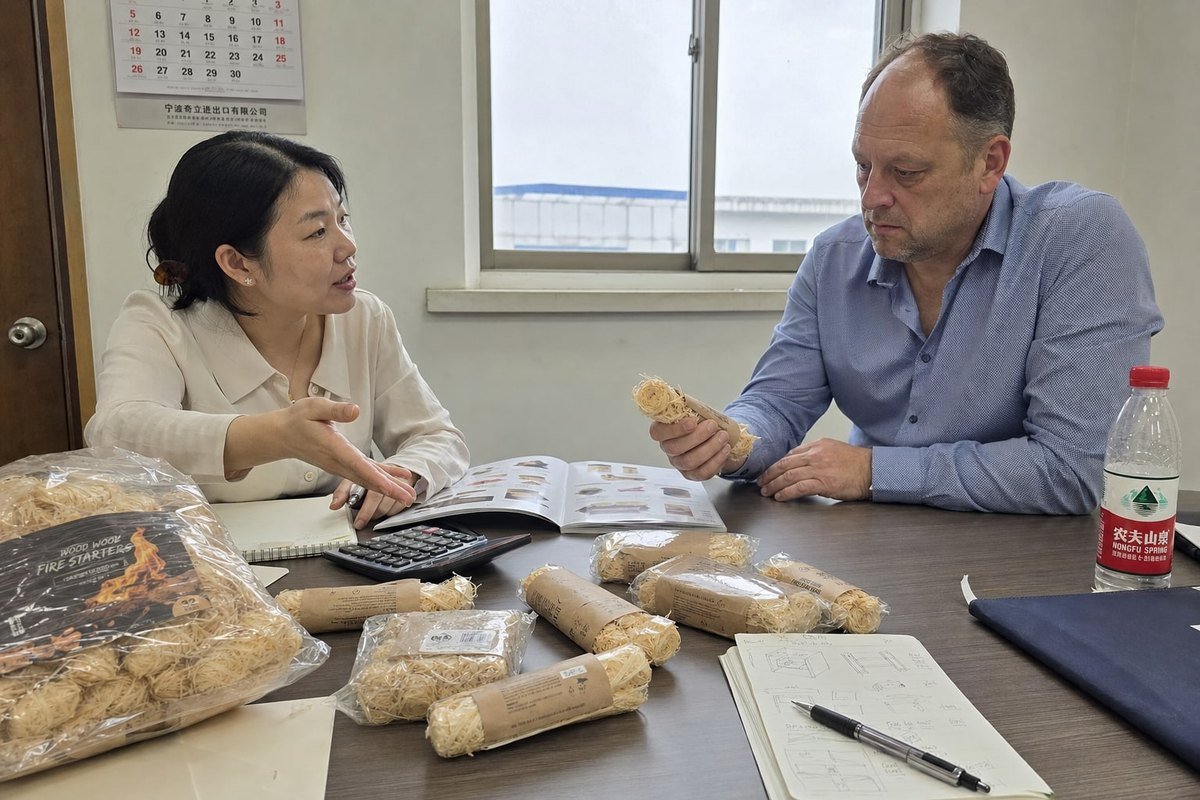
La négociation fonctionne mieux lorsque vous comprenez ce que le fournisseur protège. Il protège les coûts fixes. Ainsi, chaque tactique ci-dessous couvre ces coûts différemment ou les élimine complètement.
Sept leviers pratiques qui fonctionnent réellement
- Payez plus par unité sur la première commande. Une petite prime sur un tirage d'essai compense l'usine pour un lot court et inefficace. La plupart des usines acceptent ce compromis.
- Utilisez les spécifications standard. Nos rouleaux de bois standard trempés dans la cire dans des cartons en vrac simples ont un minimum beaucoup plus bas qu'une version sous marque de distributeur. Évitez les tailles et les parfums personnalisés au stade de l'essai.
- Combinez les SKUs. Mélangez les allume-feu en bois avec des sachets de flammes colorées ou des pommes de pin pour atteindre une valeur de commande totale au lieu d'une quantité par produit.
- Proposez un bon de commande général. Engagez-vous sur un volume annuel, puis retirez-le en plus petites expéditions. Vous obtenez des quantités par expédition plus faibles ; l'usine obtient une certitude de planification.
- Demandez une livraison échelonnée. Payez le MOQ complet mais recevez-le par lots. Cela réduit la pression sur votre entrepôt sans nuire à l'économie de lots du fournisseur.
- Planifiez votre commande pour la basse saison. Le pic des allume-feu se situe en automne. Commandez à la fin de l'hiver ou au printemps, lorsque les lignes ont une capacité inactive et que les minimums s'assouplissent.
- Commencez par une évaluation de commande d'échantillons. Une étape d'échantillonnage structurée renforce la confiance. Les acheteurs qui testent correctement nos échantillons et donnent leur avis obtiennent presque toujours des conditions plus flexibles sur la première série de production.
Encore un point. Présentez-vous bien. Un responsable des achats qui partage une prévision de la demande 4, les canaux de vente au détail cibles et un calendrier de réapprovisionnement est traité comme un partenaire, pas comme une demande ponctuelle. En plus de dix-sept ans d'exportation, j'ai rarement vu une usine refuser un tirage pilote raisonnable lorsque l'histoire de croissance était crédible.
Que dois-je rechercher chez un fournisseur offrant des conditions de MOQ flexibles ?
Une marque britannique de camping m'a dit un jour qu'elle avait choisi un fournisseur uniquement en raison d'un minimum très bas. Six mois plus tard, les lots ne correspondaient plus à l'échantillon. Ils sont revenus vers nous.
Recherchez un fournisseur qui explique ce qui motive son MOQ, détient des certifications telles que l'ISO 9001 et le BSCI, offre des remises dégressives sur volume, prend en charge des livraisons échelonnées et maintient une qualité de lot constante. La flexibilité sans contrôle qualité documenté est un signal d'alarme, pas un avantage.
La flexibilité n'est précieuse que lorsqu'elle provient d'une vraie usine avec une capacité réelle. Une société commerciale peut promettre n'importe quel MOQ car elle revend le stock de quelqu'un d'autre. Cette flexibilité disparaît au moment où l'usine sous-jacente modifie ses conditions. Dans l'approvisionnement de la chaîne d'approvisionnement, vous voulez une flexibilité structurelle, pas empruntée.
Indicateurs verts vs. Indicateurs rouges
| Signal | Feuille verte | Signal d'alarme |
|---|---|---|
| Explication du MOQ | Nomme le moteur spécifique (tirage d'impression, lot de cire, taille de lot) | Dit "politique de l'entreprise" sans détails |
| Certifications | ISO 9001, BSCI, CE, rapports de tests par des tiers disponibles | Pas de documents, ou des documents qui ne peuvent pas être vérifiés |
| Structure des prix | Remises claires sur le volume par paliers publiées à l'avance | Prix vagues qui changent après l'engagement |
| Options de livraison | Expéditions échelonnées et commandes globales proposées | Quantité complète uniquement, une seule expédition, sans exception |
| Cohérence des échantillons | Le premier échantillon reflète la qualité de la production de masse | Qualité de l'échantillon que les lots ultérieurs n'égaleront jamais |
Posez trois questions de diagnostic avant de signer quoi que ce soit. Premièrement : qu'est-ce qui motive spécifiquement ce MOQ ? Un bon fournisseur répond en une phrase. Deuxièmement : qu'advient-il du prix unitaire à deux, cinq et dix fois le minimum ? La réponse révèle si le prix de gros en vrac est authentique ou cosmétique. Troisièmement : pouvez-vous expédier le MOQ en deux ou trois lots ? Une usine avec une capacité d'entrepôt réelle dira généralement oui.
Vérifiez également comment le fournisseur gère la logistique de fret. Un partenaire qui optimise les dimensions des cartons et le chargement des palettes peut réduire vos coût débarqué 6 plus qu'une petite réduction de MOQ ne le ferait jamais. Nous avons repensé les cartons extérieurs d'un client et avons fait tenir quatorze pour cent de produits en plus dans le même conteneur. Cette économie a duré plus longtemps que tous les débats sur le MOQ.
Comment équilibrer les exigences de MOQ avec les besoins d'étiquetage privé et d'emballage personnalisé ?
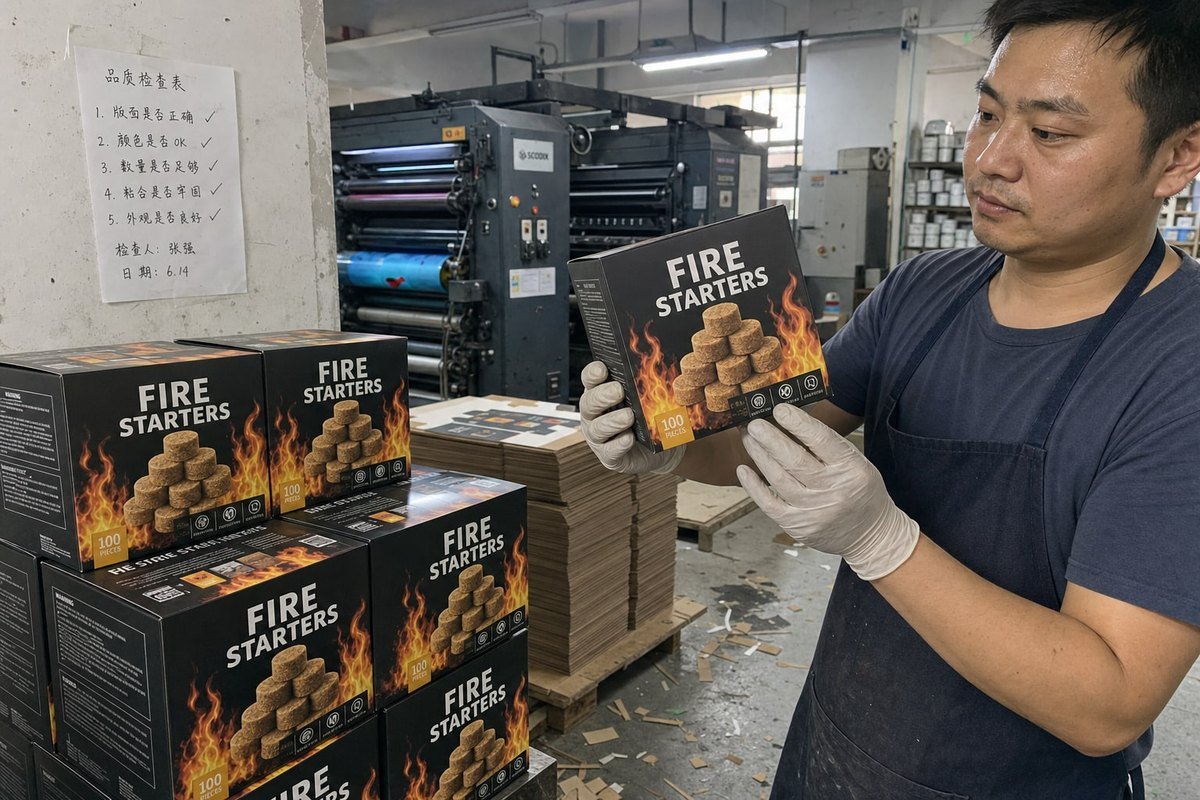
Lorsque nous avons développé notre boîte de vente au détail avec des graphiques de flammes pour les rouleaux trempés dans la cire, le minimum d'impression était triple du minimum du produit. Cet écart est exactement ce que la plupart des acheteurs en marque privée sous-estiment.
Équilibrer les besoins en MOQ et en marque privée en lançant avec des emballages standards plus une étiquette personnalisée, en achetant des composants d'emballage en gros tout en commandant des produits en plus petites quantités, et en introduisant progressivement la personnalisation à mesure que les ventes augmentent. Les boîtes entièrement personnalisées devraient venir après que la demande soit prouvée, pas avant.
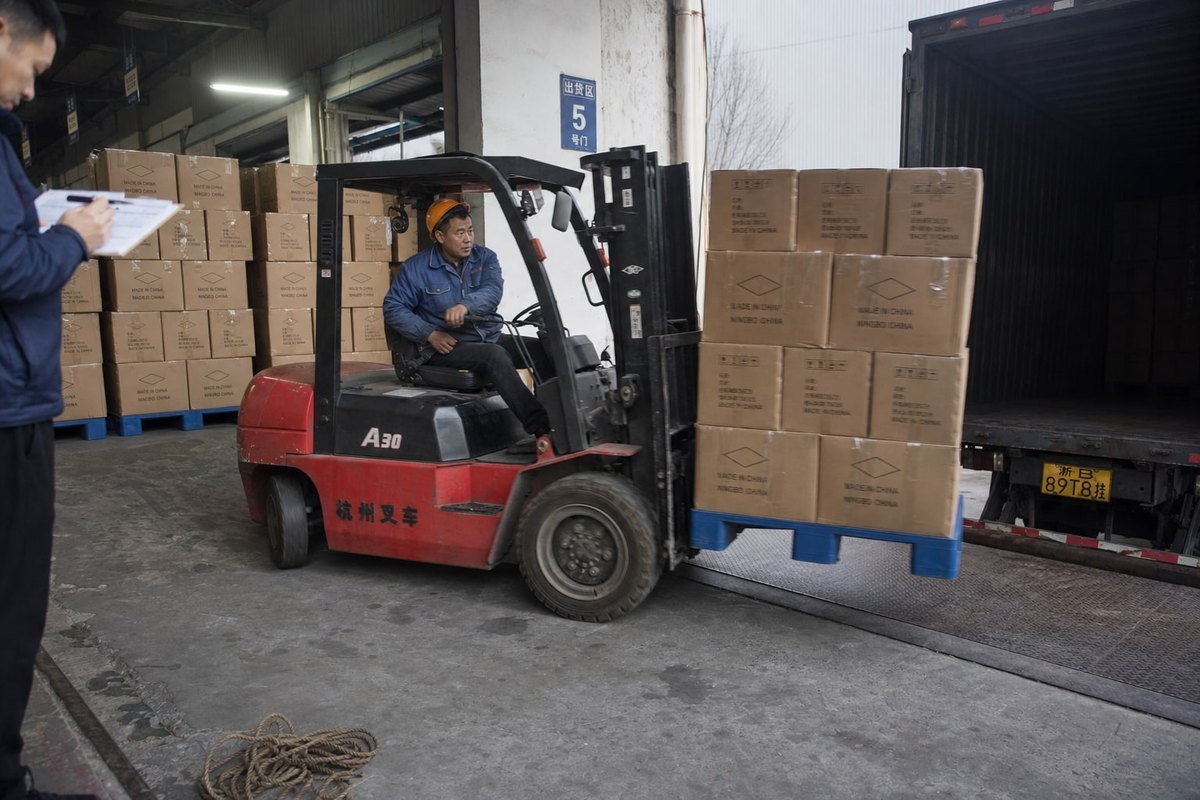
La fabrication en marque privée multiplie la pression du MOQ car chaque élément personnalisé a son propre minimum. La boîte imprimée en a un. L'étiquette du code-barres en a un autre. L'étiquette d'avertissement, la carte d'insertion et le carton d'exposition ajoutent chacun le leur. Empilez-les ensemble et le MOQ du produit fini augmente rapidement.
La solution est de planifier votre personnalisation. Traitez la marque comme une échelle, pas comme un seul bond.
Un chemin progressif de l'essai à la marque privée complète
| Phase | Approche d'emballage | MOQ relatif | Idéal pour |
|---|---|---|---|
| Essai | Cartons en vrac, pas d'emballage de détail | Le plus bas | Évaluation de la commande d'échantillon et tests de marché |
| Lancement discret | Boîte en stock avec votre étiquette imprimée | Faible | Premiers placements en magasin |
| Croissance | Boîte semi-personnalisée utilisant des modèles d'impression partagés | Moyen | Commandes répétées avec ventes prouvées |
| Marque complète | Boîte entièrement personnalisée, insert, carton d'exposition, codes-barres | Le plus haut | SKUs établis avec des réapprovisionnements stables |
Il existe une autre solution de contournement qui vaut la peine d'être connue. Si un seul composant impose le minimum, achetez ce composant en vrac et laissez le produit couler par plus petits lots. Un acheteur canadien a commandé chez nous une année de boîtes imprimées en une seule impression, puis a retiré des allume-feux finis contre ce stock chaque trimestre. Son les coûts de possession des stocks 7 est resté bas car les boîtes sont peu coûteuses à stocker ; les rouleaux de bois trempés dans la cire ne le sont pas.
Enfin, surveillez le coût total de possession, pas seulement le minimum cité. Un MOQ plus bas à un prix unitaire plus élevé est souvent gagnant pour les produits saisonniers. Les allume-feux se vendent bien d'octobre à février et ralentissent ensuite. L'argent immobilisé dans des stocks à rotation lente coûte plus cher que quelques centimes économisés par unité. Faites les calculs sur une saison complète avant de décider.
Conclusion
Le MOQ ressemble à une barrière, mais c'est en réalité un signal. Diagnostiquez ce qui le motive, négociez avec les bons leviers, planifiez votre image de marque, et choisissez un partenaire certifié construit pour le long terme.
Notes de bas de page
Wikipédia fournit un aperçu technique des allume-feu fabriqués à partir de composants en bois et en cire. ↩︎
L'ISO 9001 est la norme internationale officielle pour les systèmes de gestion de la qualité dans la fabrication. ↩︎
Le ministère de l'Énergie définit la biomasse et son rôle dans la fabrication de produits durables. ↩︎
La prévision de la demande est un processus standard de la chaîne d'approvisionnement utilisé pour estimer les besoins futurs des clients. ↩︎
Investopedia définit le prix unitaire comme une métrique fondamentale dans le commerce de gros et de détail. ↩︎
Aperçu complet de Wikipédia sur les composants du coût total livré. ↩︎
Définition faisant autorité des coûts de possession des stocks et de leurs implications financières. ↩︎
 English
  Spanish
  German
  French
  Arabic
  Portuguese
Rejoignez la conversation