






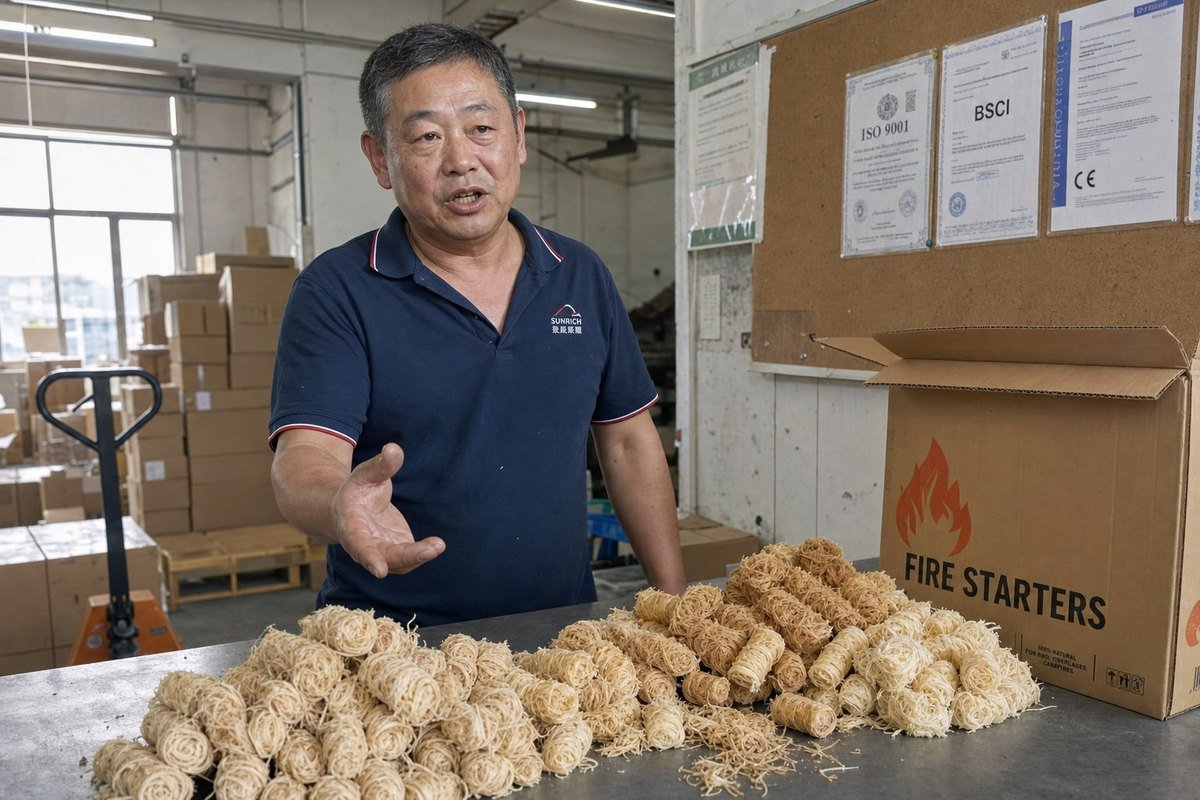
Trouver un fournisseur fiable d'allume-feu en bois est plus difficile qu'il n'y paraît. J'ai vu des acheteurs perdre des saisons de vente entières à cause d'une mauvaise décision d'approvisionnement de notre côté de l'industrie.
Un fournisseur fiable d'allume-feu en bois détient des certifications vérifiables (ISO 9001, BSCI, SGS/Intertek), possède de véritables lignes de production, offre un MOQ flexible avec prise en charge OEM/ODM, et prouve sa cohérence grâce à un contrôle qualité documenté, des délais de livraison stables et une communication réactive avant même que vous ne passiez une commande en gros.
Cette réponse semble simple. La mettre en pratique ne l'est pas. Ci-dessous, je décompose le processus en quatre vérifications que tout responsable des achats peut effectuer en une semaine.
Quelles certifications devrais-je vérifier avant de choisir un fournisseur d'allume-feu en bois ?
A Distributeur allemand 1 m'a dit une fois que son envoi précédent avait été retenu à la douane pour des rapports de test manquants. Ce seul retard lui a coûté sa fenêtre d'octobre la plus vendue, et cela m'a appris l'importance de la paperasse.
Avant de choisir un fournisseur d'allume-feu en bois, vérifiez la norme ISO 9001 pour la gestion de la qualité, la BSCI pour l'éthique du travail, le marquage CE pour l'accès au marché européen et les rapports de test de tiers tels que SGS ou Intertek. Demandez également les fiches de données de sécurité (FDS) pour la sécurité du transport et les déclarations de matériaux prouvant une composition naturelle et non toxique.
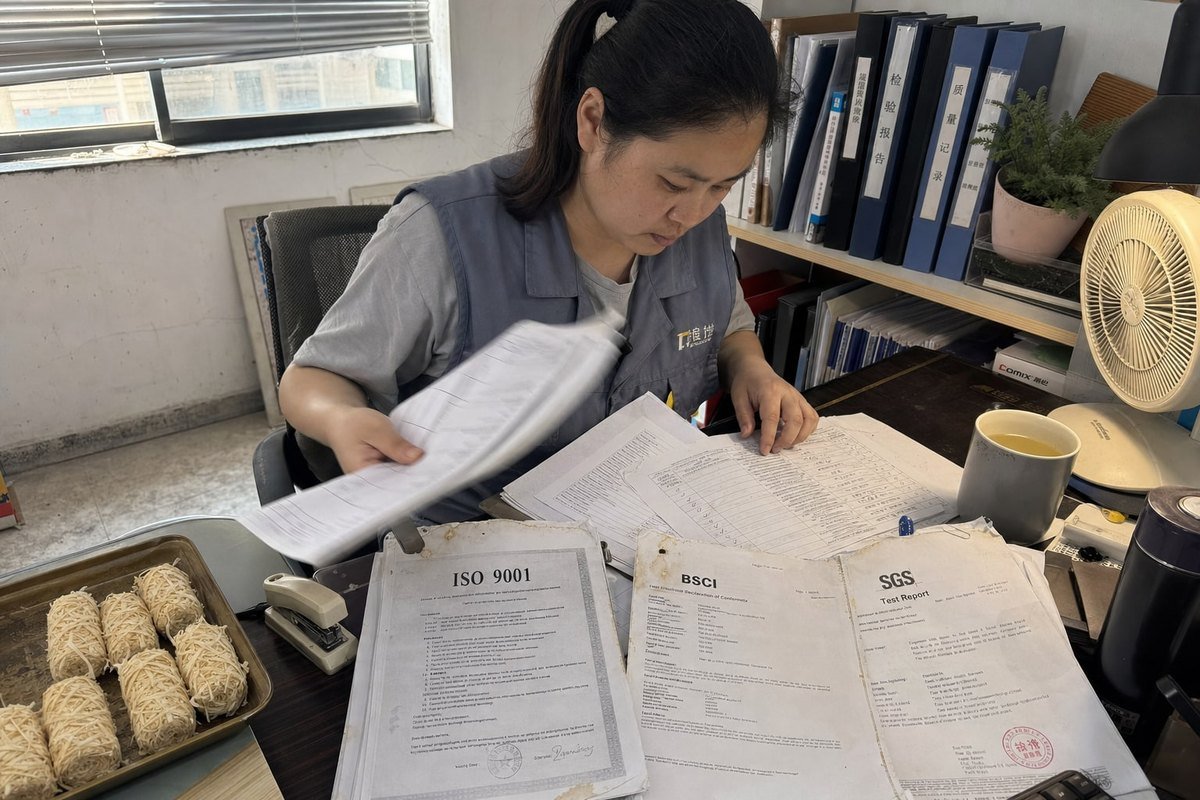
Les certifications ne sont pas de la décoration. C'est le seul moyen rapide de distinguer une usine authentique d'un intermédiaire avec un joli site web. Dans notre usine de Ningbo, les acheteurs des États-Unis et d'Europe considèrent les documents de conformité comme une condition sine qua non, pas comme un bonus. Si un fournisseur hésite lorsque vous demandez un numéro de certificat, partez.
Les documents clés et ce que chacun prouve
| Document | Ce qu'elle prouve | Pourquoi c'est important pour vous |
|---|---|---|
| ISO 9001 | Un système de gestion de la qualité fonctionnel | Cohérence d'un lot à l'autre, pas de la chance |
| Audit BSCI | Conformité éthique et sociale | Requis par de nombreux grands canaux d'approvisionnement au détail |
| Marquage CE 2 | Conformité à la sécurité des produits de l'UE | Au-delà des certificats formels, vérifiez ce qu'il y a réellement dans le produit. Les consommateurs modernes veulent des allume-feu naturels fabriqués à partir de laine de bois, de cire et de fibres de bois – pas des blocs imbibés de kérosène avec des odeurs chimiques. Dans notre propre gamme, nous fabriquons tout à partir de matériaux écologiques sans produits chimiques nocifs, car les acheteurs européens rejettent tout le reste. Vérifiez également l'étiquetage. Les étiquettes d'avertissement, les codes-barres et les déclarations d'ingrédients doivent correspondre aux règles de votre marché de destination. Nous préparons ceux-ci dans le cadre de notre service OEM, et je recommande toujours aux détaillants de confirmer que leur fournisseur peut faire de même. |
| Rapports SGS / Intertek | Tests indépendants par des tiers | Preuve neutre de sécurité de combustion et des matériaux |
| FDS (Fiche de Données de Sécurité) | Sécurité de transport et de manipulation | Dédouanement maritime et aérien sans problème |
Au-delà des certificats eux-mêmes, vérifiez trois choses. Premièrement, vérifiez que le certificat est à jour. Les audits expirent, et certains fournisseurs continuent de présenter des documents datant d'années. Deuxièmement, confirmez que le nom sur le certificat correspond à l'usine avec laquelle vous traitez. Les sociétés commerciales empruntent souvent des documents à des usines partenaires. Troisièmement, demandez des preuves au niveau des matériaux. Pour les allume-feu en gros, cela signifie des déclarations sur la cire utilisée, données d'émission de COV 3 pour une utilisation en intérieur, et preuve d'approvisionnement pour le bois, idéalement Bois certifié FSC 4 ou une revendication équivalente d'approvisionnement responsable. Les produits d'allumage inodores doivent avoir des tests derrière l'étiquette "inodore", pas seulement du texte marketing. Un fournisseur capable de produire tout cela dans un jour ou deux après votre demande l'a déjà fait de nombreuses fois. Cette réactivité est en soi un signal de fiabilité.
Comment puis-je vérifier les capacités de fabrication et le processus de contrôle qualité d'un fournisseur ?
Notre équipe de contrôle qualité a une fois rejeté un lot entier de rouleaux de bois trempés dans la cire parce que la lecture d'humidité de la laine de bois dépassait légèrement notre limite interne. Des décisions comme celle-ci sont invisibles pour les acheteurs, sauf si vous savez quoi demander.
Vérifiez la capacité de fabrication en demandant une visite d'usine en vidéo en direct, des enregistrements de contrôle qualité par lot et la documentation sur les normes de teneur en humidité. Une vraie usine peut montrer des lignes de production de laine de bois, des postes de trempage à la cire, des points d'inspection en cours de processus et des données sur le taux de défauts. Une société commerciale ne peut rien montrer de tout cela sur demande.
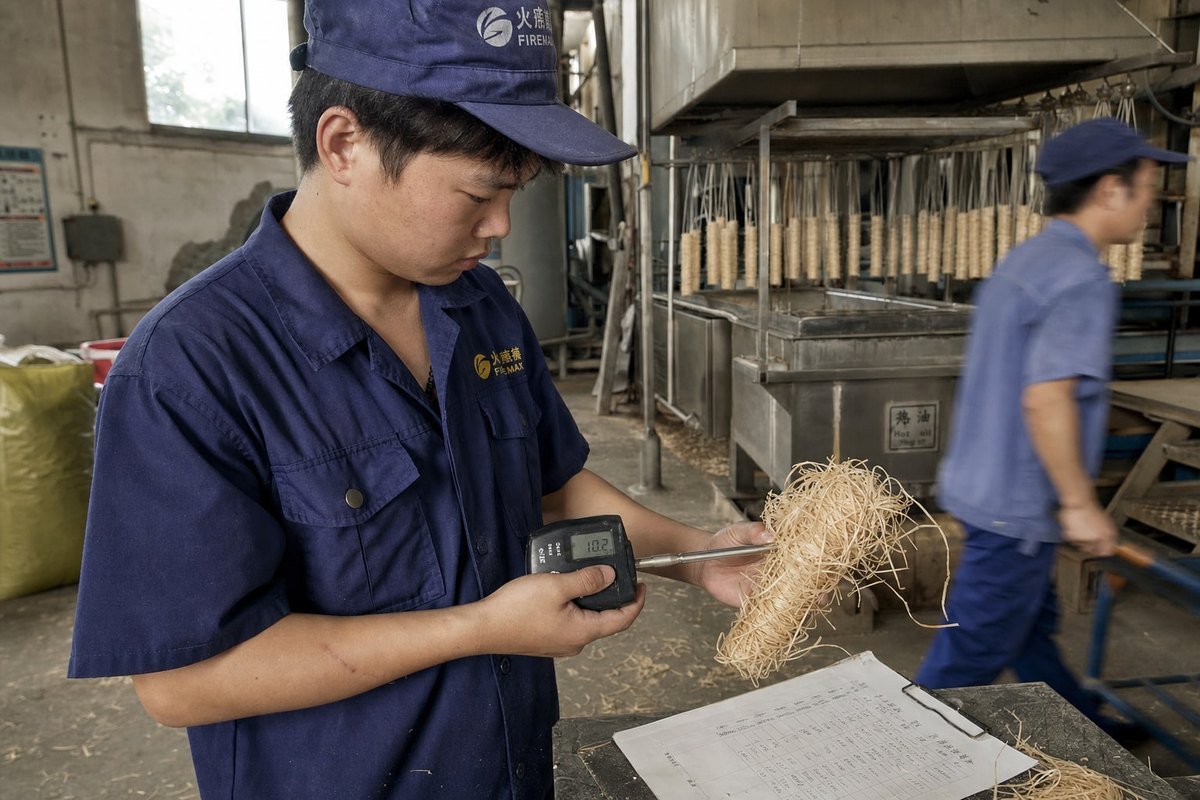
L'écart entre un échantillon et un conteneur est là où la plupart des relations d'approvisionnement meurent. Un fournisseur peut sélectionner à la main dix pièces parfaites pour une boîte d'échantillons. Seul un système de production 5 discipliné livre la même qualité sur 100 000 pièces. Après plus de 17 ans à gérer des lignes de produits d'allumage, je peux vous dire que la différence se voit toujours dans le processus, pas dans le discours.
Un processus de vérification en cinq étapes
- Demandez une visite vidéo en direct. Pas une promotion pré-enregistrée. Parcourez la chaîne en temps réel et demandez-leur de zoomer sur les stations de trempage dans la cire et de séchage.
- Demandez les données d'humidité. Les composants en bois doivent rester en dessous d'environ 10 % d'humidité. Demandez comment ils la mesurent et à quelle fréquence par lot. Des normes de teneur en humidité cohérentes sont l'épine dorsale d'un allumage garanti.
- Examinez les points de contrôle qualité en cours de production. Les bonnes usines inspectent à la réception des matières premières, en milieu de production et avant l'emballage. Demandez à voir les listes de contrôle réelles.
- Testez vous-même la performance de combustion. Mesurez la vitesse d'allumage et la durée totale de combustion. Un allume-feu en laine de bois de qualité devrait brûler 10 à 15 minutes ou plus, suffisamment pour allumer des bûches entières sans allume-feu supplémentaire. Testez dans des conditions venteuses et humides également.
- Vérifiez la protection de l'emballage. Un emballage scellé ou bien protégé empêche la dégradation de la cire 6 et la perte de résine pendant le stockage prolongé. Cela est important si vous stockez des accessoires de cheminée et de barbecue toute l'année mais vendez saisonnièrement.
Encore un conseil pratique. Demandez au fournisseur ce qu'il fait lorsqu'un lot échoue. Une réponse vague signifie qu'il n'a pas de système réel. Une réponse spécifique, avec des procédures de retravail ou de mise au rebut, signifie que le contrôle qualité a réellement lieu dans son usine.
Quelles options de MOQ et d'OEM/ODM dois-je rechercher lors de la passation d'une commande d'essai ?
Le compromis que nous pesons le plus souvent à notre siège de Liuyang est la taille de la commande d'essai par rapport au coût d'installation. Poussez le MOQ trop haut et les bons acheteurs s'en vont. Poussez-le trop bas et l'emballage personnalisé devient non rentable. Le bon partenaire explique cette logique ouvertement.
Recherchez un fournisseur offrant une quantité minimale de commande flexible pour les commandes d'essai, généralement une palette à un conteneur partiel, ainsi qu'un véritable support OEM/ODM : taille personnalisée, temps de combustion, emballage sous marque privée, étiquettes d'avertissement, codes-barres et boîtes d'exposition. Des MOQ élevés et rigides sur les premières commandes signalent une rigidité à venir.
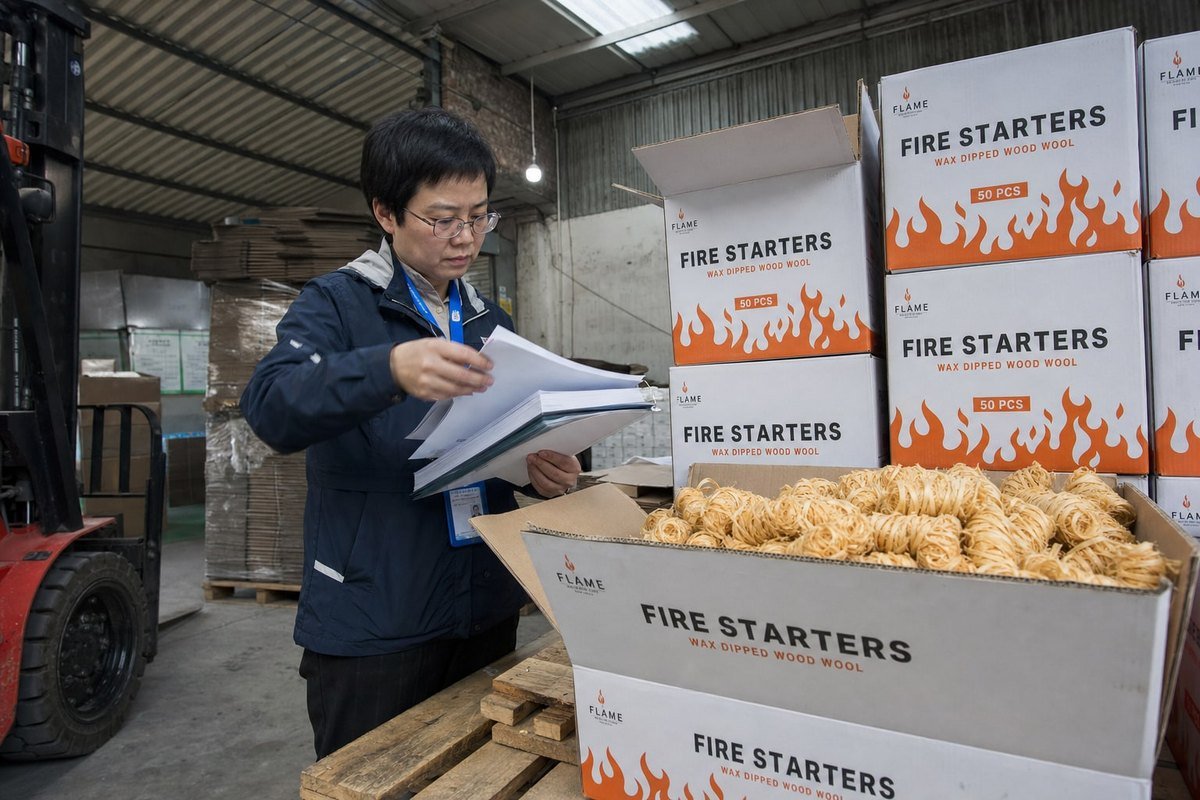
Une commande d'essai est en réalité un test de la relation, pas seulement du produit. D'après notre expérience d'exportation dans plus de 30 pays, les acheteurs qui se développent le plus rapidement sont ceux qui ont utilisé une petite première commande pour vérifier trois choses à la fois : la qualité du produit, la capacité de personnalisation et le comportement du fournisseur sous des délais réels.
Ce que le véritable support OEM/ODM inclut
La fabrication en marque privée devrait aller au-delà de l'apposition de votre logo sur une boîte standard. Demandez spécifiquement chaque niveau ci-dessous.
| Couche de personnalisation | Fournisseur de stock | Véritable partenaire OEM/ODM |
|---|---|---|
| Taille du produit et durée de combustion | Spécifications fixes uniquement | Adaptable aux besoins de votre marché |
| Format d'emballage | Boîtes standard | Boîtes de vente au détail personnalisées, bocaux, sacs en papier kraft, présentoirs |
| Image de marque | Autocollant de logo au mieux | Habillage artistique privé complet, emballage imprimé |
| Étiquetage de conformité | Générique ou manquant | Étiquettes d'avertissement et codes-barres spécifiques au marché |
| Logistique | Départ usine uniquement | Support d'expédition mondial optimisé |
Structuration d'une commande d'essai intelligente
Gardez la première commande petite mais complète. Incluez votre emballage de vente final, pas de simples cartons d'exportation, afin de tester le produit complet prêt à être mis en rayon. Demandez des prix échelonnés en même temps, afin de connaître votre coût total de possession à 1x, 5x et 10x le volume avant de vous engager. Tenez compte de l'expédition et des droits de douane, pas seulement du prix unitaire. Et confirmez par écrit que la qualité de la commande d'essai est produite sur la même ligne, avec le même contrôle qualité, que les séries de production complètes. Lorsque nous proposons une commande d'essai, nous la traitons comme le premier lot d'une longue relation, car c'est exactement ce qu'un bon acheteur teste.
Comment évaluer la fiabilité d'un fournisseur pour les délais de livraison à long terme et la communication ?
Chaque automne, notre calendrier de production se remplit de commandes de réapprovisionnement de distributeurs de foyers aux États-Unis, en Allemagne et au Royaume-Uni. Observer cette vague saisonnière pendant des années m'a appris que la fiabilité est surtout un problème de calendrier, pas un problème de qualité.
Évaluez la fiabilité à long terme en comparant les délais annoncés aux délais réels de votre commande d'essai, les plans de capacité en période de pointe, la rapidité de réponse en anglais dans les 24 heures, les mises à jour proactives sur les retards et une chaîne d'approvisionnement durable pour les matières premières. Un comportement cohérent sur deux ou trois commandes en révèle plus que toute promesse.
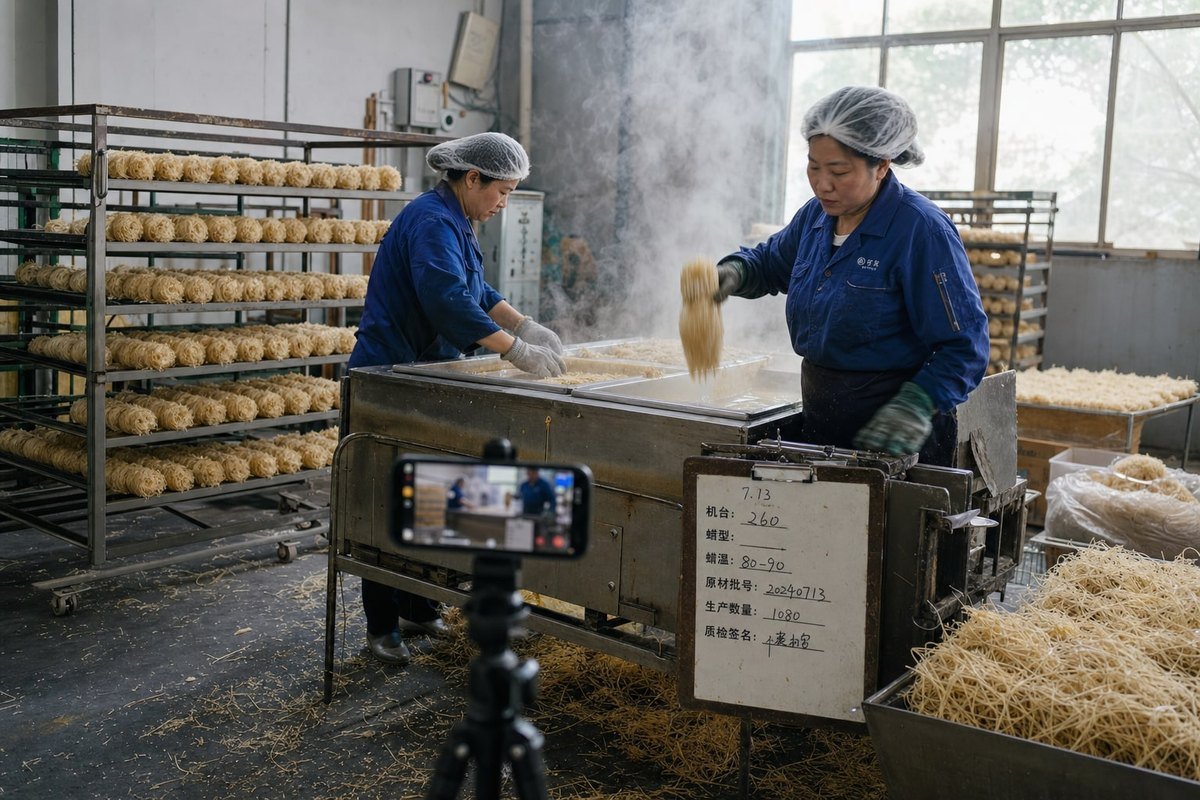
Les allume-feux sont brutalement saisonniers. La demande augmente de la fin de l'été à l'hiver, et un fournisseur qui fonctionne bien en avril peut s'effondrer en septembre. La vraie question n'est donc pas " quel est votre délai de livraison ? " mais " quel est votre délai de livraison pendant votre mois le plus chargé, et comment le protégez-vous ? "
Signaux de fiabilité à suivre
| Signal | Indicateur vert | Signal d'alarme |
|---|---|---|
| Précision des délais de livraison | Livré à ou avant les dates indiquées | Devis courts, livraisons tardives |
| Planification de la haute saison | Offre de réservation anticipée et stock tampon | "Réponses " nous verrons » concernant le 4e trimestre |
| Communication | Réponses sous 24 heures en anglais clair | Jours de silence, réponses vagues |
| Gestion des problèmes | Signale les problèmes avant que vous ne demandiez | Vous découvrez des retards au port |
| Sécurité des matières premières | Sources stables pour la laine de bois, la cire, la résine de fatwood naturelle | Substitutions fréquentes de matériaux |
Testez la communication avant que cela n'ait de l'importance
Envoyez une question technique avant de commander quoi que ce soit. Demandez la gestion des COV pour les poêles d'intérieur, ou comment ils sécurisent Bois certifié FSC 7 l'approvisionnement pendant les mois de pointe. La rapidité et la précision de la réponse prédisent leur comportement lorsqu'un conteneur est retardé. Demandez également comment ils s'approvisionnent en matériaux secondaires comme la cire et les liants. Un fournisseur qui gère une chaîne d'approvisionnement durable au niveau des matières premières se retrouve rarement à court en milieu de saison. Enfin, tenez un simple tableau de bord sur vos trois premières commandes : date promise, date réelle, taux de défauts, temps de réponse. Les chiffres battent les impressions. Lorsque nous intégrons un nouveau distributeur, nous encourageons en fait ce suivi, car un fournisseur confiant dans ses propres opérations n'a rien à cacher d'un tableau de bord.
Conclusion
Choisir mal vous coûte une saison. Choisir bien se compose pendant des années. Vérifiez les certifications, auditez la production réelle, effectuez une commande d'essai intelligente, puis suivez le comportement des délais de livraison — la fiabilité est prouvée, jamais promise.
Notes de bas de page
Guide commercial faisant autorité concernant la réglementation et les exigences douanières pour les distributeurs sur le marché allemand. ↩︎
Source officielle de l'UE expliquant les exigences de marquage CE pour l'accès légal au marché. ↩︎
Aperçu technique de l'EPA sur les composés organiques volatils et leur pertinence pour les normes de sécurité de l'air intérieur. ↩︎
Source officielle définissant les normes mondiales pour la gestion responsable des forêts et la certification de la gestion forestière. ↩︎
Définition technique des exigences structurelles d'un système de fabrication pour garantir une production constante. ↩︎
Aperçu scientifique des propriétés de la cire de paraffine, y compris la stabilité thermique et les facteurs de dégradation. ↩︎
Le FSC vérifie le bois d'origine responsable, soutenant les affirmations de la chaîne d'approvisionnement durable. ↩︎

 English
  Spanish
  German
  French
  Arabic
  Portuguese
Rejoignez la conversation