






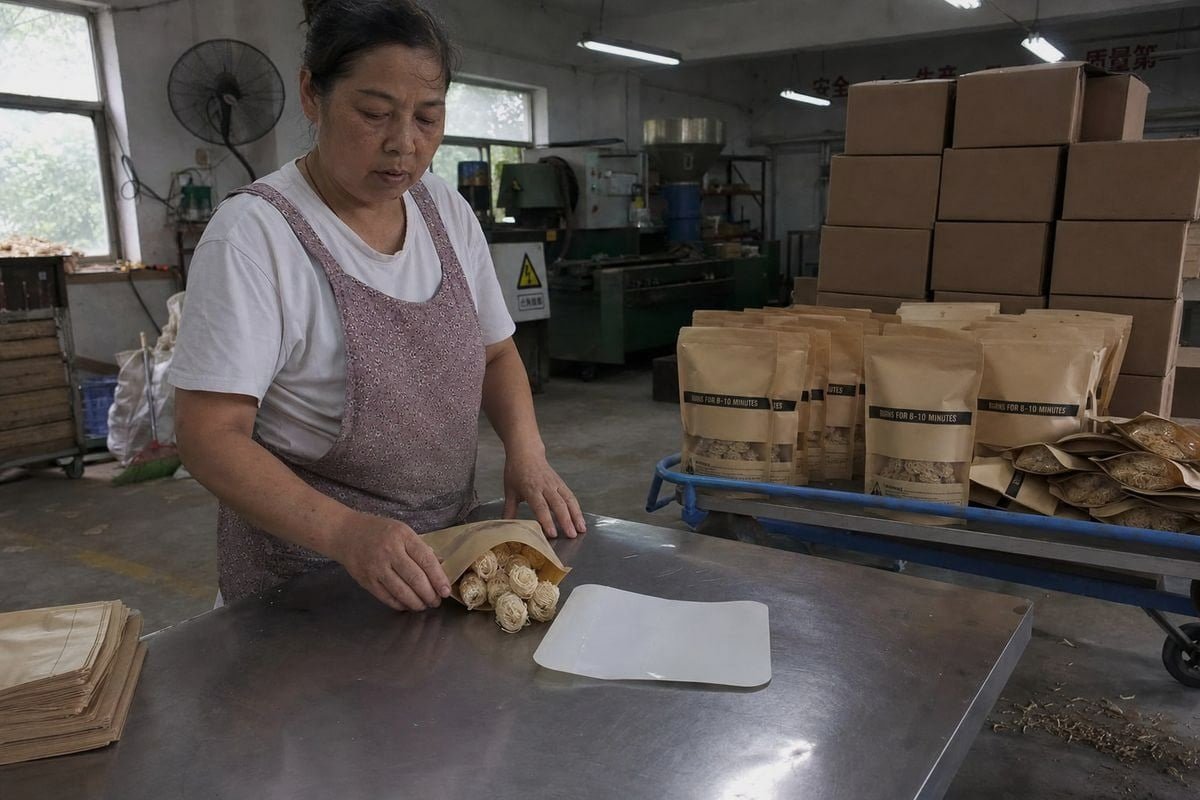
Concevoir des échantillons de petite taille d'allume-feu en bois pour le canal des techniciens est plus difficile qu'il n'y paraît la classification du transport 1. Sur notre chaîne de production, nous avons vu des produits bien faits échouer simplement parce que le pack d'échantillons était défectueux.
Concevoir des échantillons en petits paquets d'allume-feu en bois pour le canal des techniciens, emballer 3 à 6 allume-feu préformés trempés dans la cire dans une pochette ou un carton résistant aux chocs et à l'humidité, imprimer les affirmations de temps de combustion et les avertissements de sécurité sur le paquet, ajouter un panneau de co-marquage et confirmer les certifications avant l'expédition.
C'est la réponse courte. Maintenant, laissez-moi vous guider à travers chaque décision en détail, des certifications au nombre d'unités et à la personnalisation, afin que votre première commande d'essai se déroule bien.
Quelles certifications devrais-je inclure lors de la préparation d'échantillons d'allume-feu en bois pour les acheteurs de la chaîne des techniciens ?
Un distributeur en Allemagne m'a dit un jour qu'il n'allumerait même pas notre échantillon avant de voir les rapports de test. Cette conversation a façonné la façon dont nous préparons chaque envoi d'échantillons aujourd'hui.
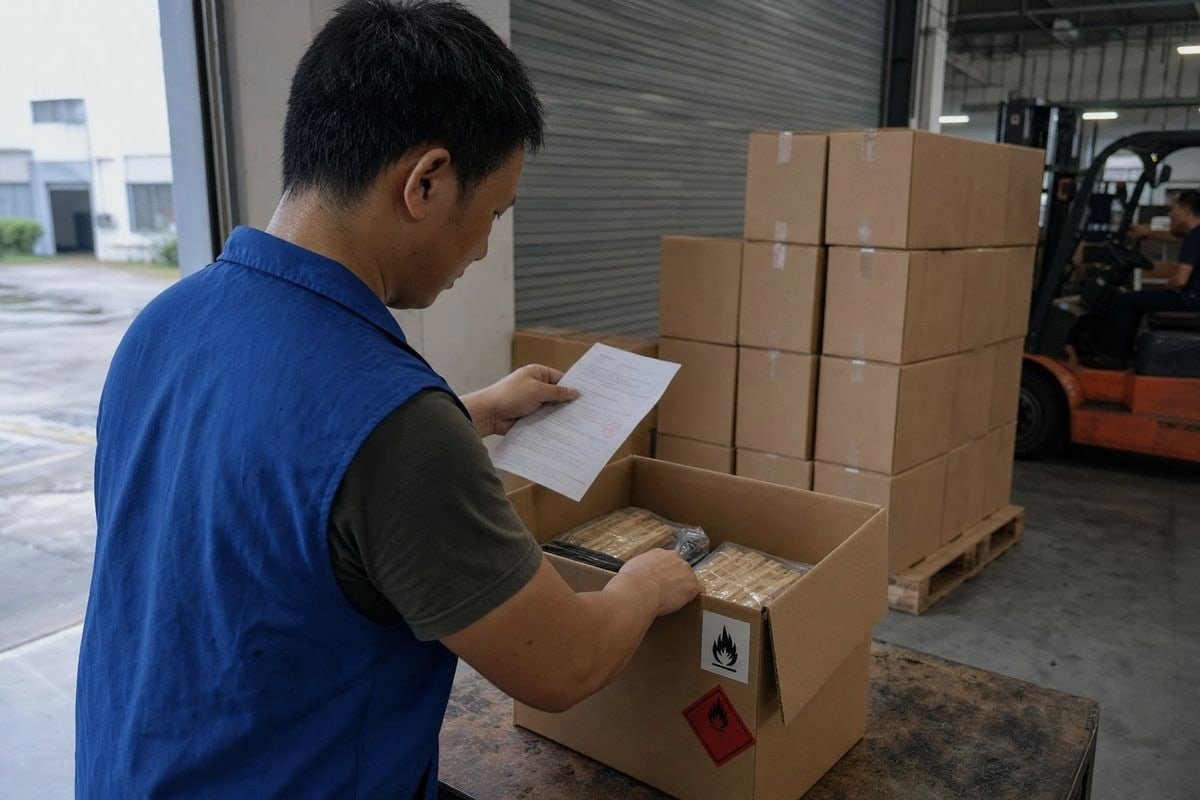
Les échantillons d'allume-feu au bois destinés aux acheteurs du canal technique doivent être expédiés avec une documentation de qualité ISO 9001, des audits de conformité sociale BSCI, le marquage CE le cas échéant, et des rapports de test de tiers provenant de laboratoires tels que SGS ou Intertek. Inclure des avertissements d'inflammabilité et des documents de classification de transport afin que les distributeurs puissent dédouaner et commercialiser légalement le produit.
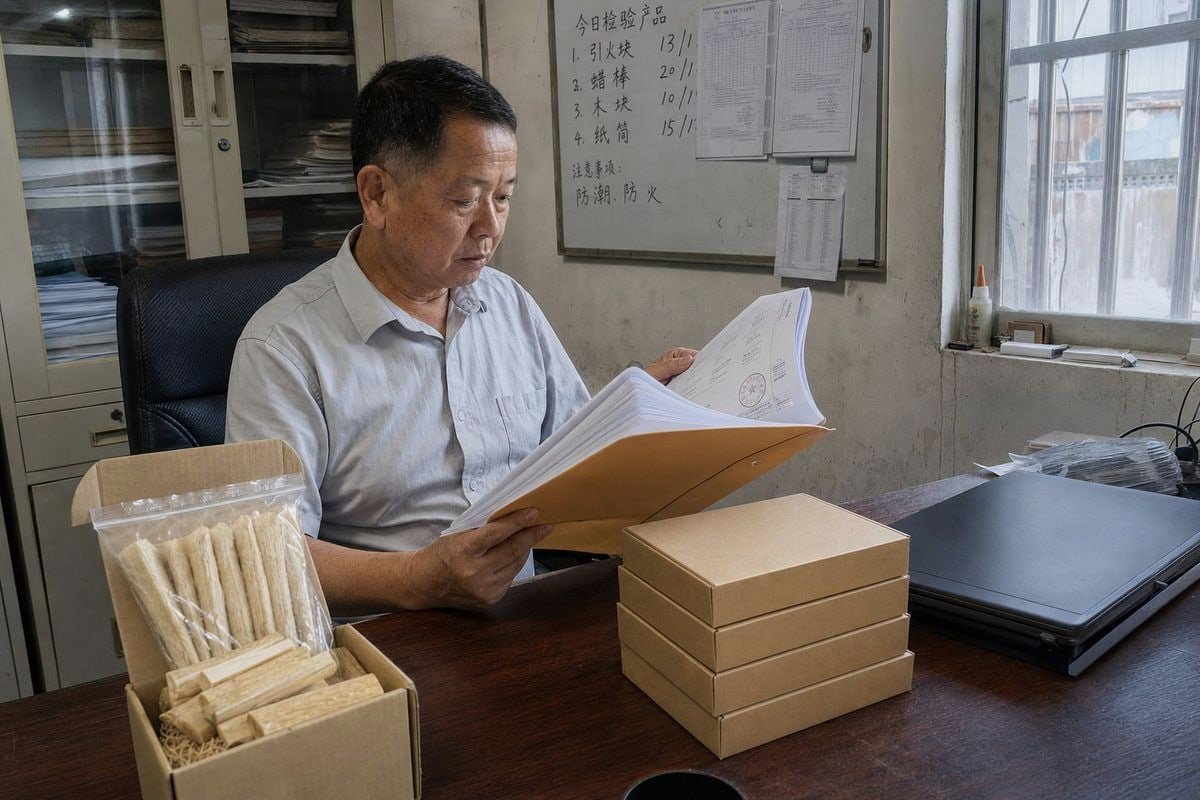
Les acheteurs du canal des techniciens sont des gens pratiques. Mais les distributeurs qui les approvisionnent sont axés sur la conformité. Au cours de nos 17 années d'exportation de produits d'allumage de feu dans plus de 30 pays, nous avons appris que la paperasse voyage avec l'échantillon, ou l'échantillon ne va nulle part. Un beau paquet de rouleaux de bois trempés dans la cire ne signifie pas grand-chose si l'équipe juridique de l'acheteur ne peut pas vérifier ce qu'il contient.
Les documents de base à préparer
Commencez par les bases. Votre système qualité d'usine doit être ISO 9001 2 certifié. La conformité sociale est également importante, en particulier pour les acheteurs européens, donc un rapport d'audit BSCI valide est utile. Pour le produit lui-même, Marquage CE 3 s'applique dans de nombreux contextes de l'UE, et des rapports de test indépendants de SGS ou Intertek prouvent la composition et le comportement de combustion.
| Document | Pourquoi le canal des techniciens s'en soucie | Quand l'envoyer |
|---|---|---|
| Certificat ISO 9001 | Prouve la qualité constante des lots | Avec le premier devis |
| rapport d'audit BSCI | Requis par de nombreux importateurs de l'UE | Avant l'approbation de l'échantillon |
| Marques CE / régionales | Accès légal au marché | Avec le pack d'échantillons |
| Rapport de test SGS / Intertek | Vérifie les matériaux et la sécurité | Dans l'envoi de l'échantillon |
| Classe de transport / inflammabilité | Manutention douanière et d'entrepôt | Avec les documents d'expédition |
Transparence de la composition
Indiquez clairement la composition sur l'étiquette. Une simple ligne comme "50% fibre de bois 4, 50% paraffine" répond à la plupart des questions des acheteurs avant qu'elles ne soient posées. Nous gardons nos allume-feux exempts de produits chimiques nocifs, et nous le disons par écrit, car les techniciens remettent ces produits aux propriétaires. Tout doute sur ce qui brûle dans ce salon tue l'affaire.
Enfin, faites correspondre la paperasse au marché de destination. Les acheteurs américains posent des questions différentes de celles des acheteurs néerlandais ou polonais. Préparez un dossier par région, et vos échantillons passeront plus rapidement par tous les points de contrôle.
Comment choisir la bonne taille et la bonne quantité de petits colis pour les commandes d'essai des techniciens ?
Nous avons une fois expédié une boîte de vente au détail de 100 pièces comme "échantillon" à un acheteur américain. Il a aimé le produit mais a dit que ses techniciens ne transporteraient jamais cette boîte. Leçon apprise.
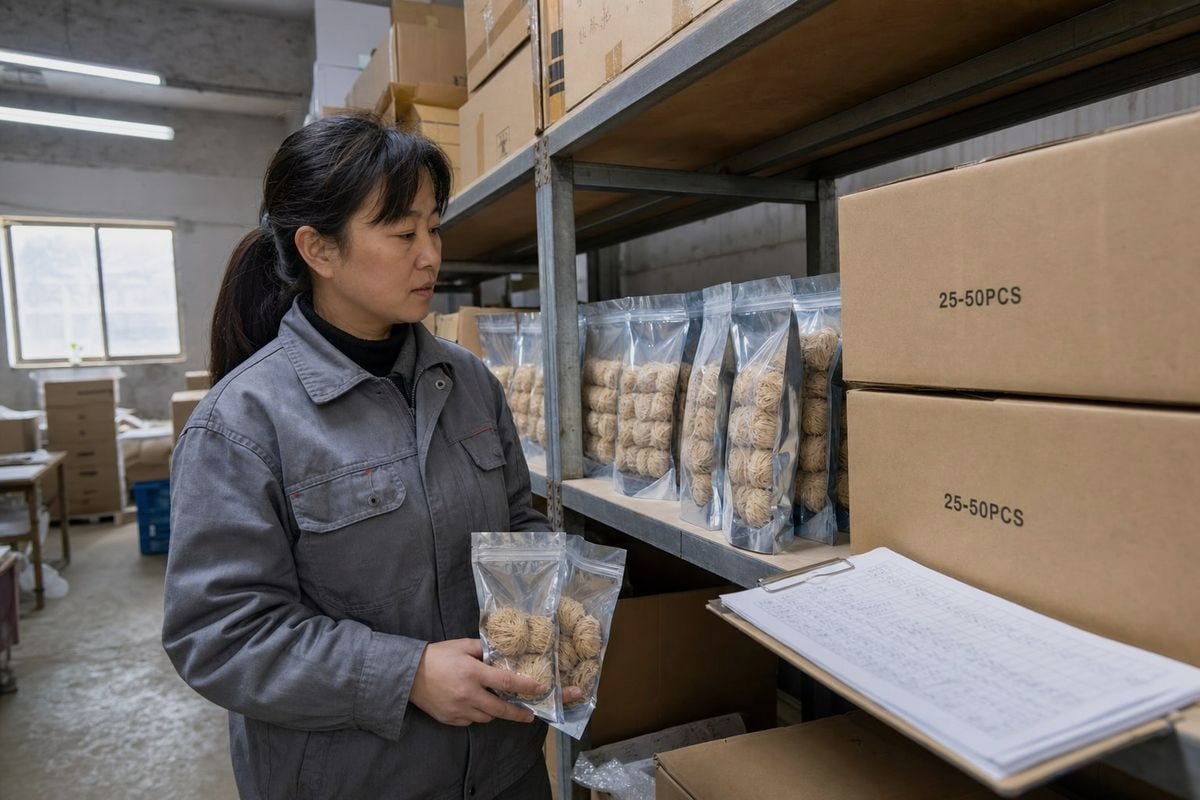
Choisissez 3 à 6 allume-feux en bois préformés par paquet d'échantillons pour les commandes d'essai des techniciens. Ce nombre permet un test d'allumage réaliste plus des pièces de rechange, maintient le coût d'échantillonnage par unité bas et rentre dans une sacoche à outils ou un organisateur de camion. Proposez un format de recharge de 25 à 50 pièces pour les achats répétés.
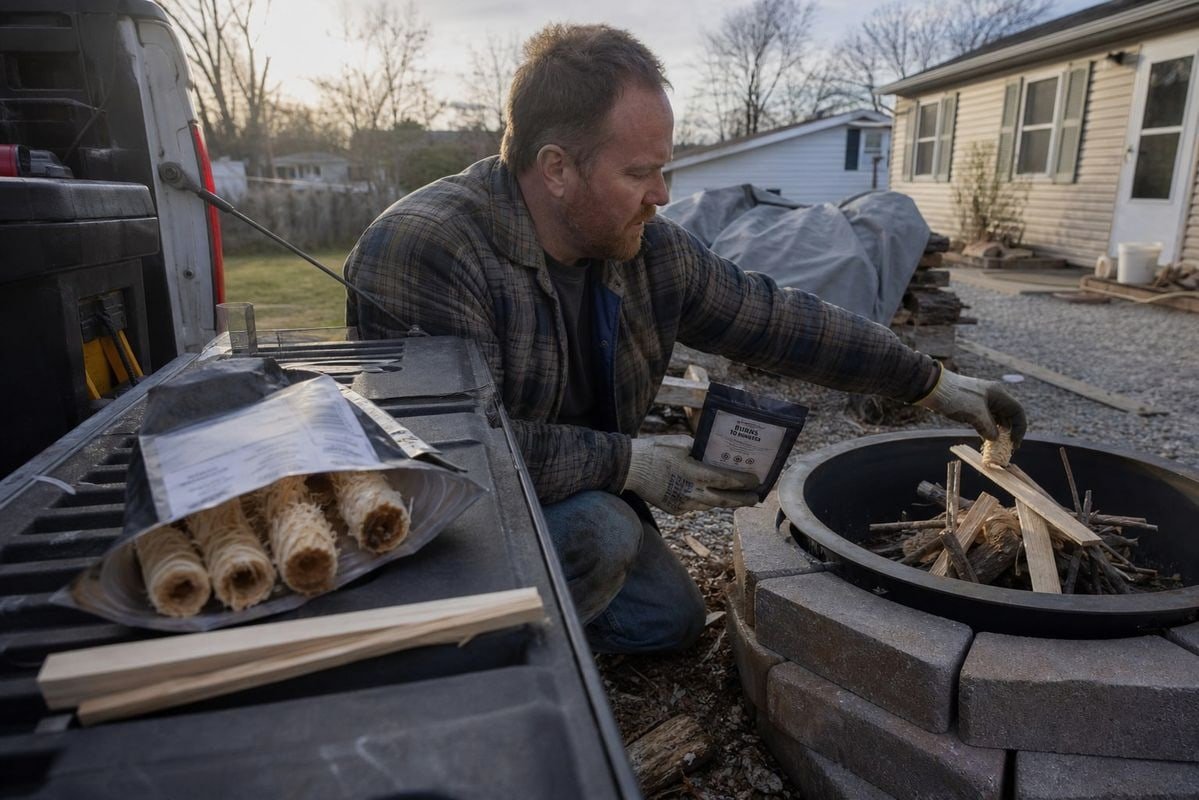
Le bon nombre dépend de ce que l'échantillon doit prouver. Un échantillon de technicien a un seul objectif: permettre un premier allumage réussi dans des conditions réelles. Il peut s'agir d'un poêle à bois lors d'une inspection de cheminée ou d'une démonstration de brasero après un appel de service. Le paquet doit soutenir ce moment sans gaspillage.
Trois architectures d'échantillons comparées
| Formater | Quantité | Idéal pour | Compromis |
|---|---|---|---|
| Pack d'essai à usage unique | 1–2 pièces | Cadeaux de masse sur les routes de service | Pas de rechange si la première tentative est ratée |
| Pack multi-tests | 3–6 pièces | Évaluation sérieuse par les acheteurs et les techniciens | Coût par échantillon légèrement plus élevé |
| Kit de terrain | 4–6 pièces + instructions | Positionnement premium, cadeaux co-marqués | Coût le plus élevé, nécessite un meilleur emballage |
D'après notre expérience, le pack de 3 à 6 pièces gagne le plus souvent. Un allume-feu est testé immédiatement. Un ou deux vont à un collègue. Le reste reste dans le camion, ce qui est exactement là où vous voulez que votre produit vive.
Planifiez le chemin de réapprovisionnement
Le kit d'échantillons doit pointer directement vers la taille de commande suivante. Les formats de vente au détail se vendent déjà par lots de 25, 32, 48 et 50 pièces, alors alignez votre offre de recharge sur ce que les étagères et les fourgonnettes peuvent contenir. Sur nos lignes à Ningbo, nous appliquons des MOQ flexibles pour les commandes d'essai précisément parce que les acheteurs veulent tester un petit kit avant de s'engager dans une l'emballage 5 production complète. Faire le saut de 5 pièces à 50 pièces.
semble naturel, et l'essai se convertit de lui-même.
Quels détails d'emballage et d'étiquetage sont les plus importants lors de l'échantillonnage auprès de distributeurs desservant des techniciens ?
Les échantillons surdimensionnés signalent une mauvaise compréhension du canal ; les techniciens ne peuvent pas les transporter, de sorte que le produit n'atteint jamais le terrain où les décisions sont prises.
Les détails les plus importants sont une barrière d'étanchéité thermosoudée, une structure résistante à l'écrasement, une encoche de déchirure ou une ouverture refermable utilisable avec des gants, des instructions claires sur le temps de combustion et l'allumage sur l'emballage, des avertissements de inflammabilité proéminents avec des icônes de conformité au transport, et une déclaration de composition claire telle que les pourcentages de fibres de bois et de paraffine.
L'humidité est le tueur silencieux ici. Lors d'un examen de contrôle qualité, nous avons constaté que des échantillons non scellés stockés dans un entrepôt humide s'allumaient sensiblement plus lentement que ceux scellés du même lot. L'emballage est une performance. barrière contre l'humidité 6. Les rouleaux de bois trempés dans la cire sont naturellement résistants à l'humidité, mais les extrémités en laine de bois fibreuse absorbent toujours l'humidité avec le temps. Les techniciens stockent les échantillons dans des camions, des garages et des sous-sols humides. La couche barrière n'est donc pas facultative.
Nous scellons à chaud nos pochettes d'échantillons et, pour les cartons haut de gamme, ajoutons une doublure intérieure afin que la boîte d'aspect commercial protège toujours le produit.
Un étiquetage qui fait la vente pour vous.
Un technicien n'expliquera pas votre produit à un propriétaire. Le kit doit le faire seul. Cela signifie trois choses imprimées en gros caractères : où placer l'allume-feu (sous le petit bois, à la base de la pile de bois), comment l'allumer et combien de temps il brûle. Ajoutez les avertissements de sécurité et les icônes d'inflammabilité requises dans une zone fixe et visible. Évitez le langage fantaisiste. Des mots comme kit de terrain, kit d'essai et prêt pour camion parlent le dialecte de ce canal.
- La liste de contrôle d'emballage que nous exécutons avant chaque expédition d'échantillons.
- Intégrité du scellage à chaud testée sur chaque lot de pochettes.
- Test de compression simulant un sac à outils chargé.
- L'encoche de déchirement s'ouvre proprement avec des gants de travail.
- Instructions lisibles à bout de bras.
- Icônes d'avertissement et ligne de composition vérifiées par rapport aux règles du marché de destination.
Code-barres et code de lot imprimés et scannables. Paraffine 7 Un détail de plus que les acheteurs négligent : le contrôle des dégâts.
Comment puis-je personnaliser le temps de gravure et la marque sur les packs d'échantillons avant de m'engager dans la production de masse ?
peuvent migrer dans un véhicule chaud. Les allume-feux emballés individuellement à l'intérieur du kit extérieur gardent les mains et les sacs à outils propres, et ils permettent des distributions d'une seule pièce. Cette petite étape transforme un kit d'échantillons en cinq moments de vente distincts.
Vous pouvez personnaliser le temps de combustion en ajustant le rapport cire-bois, la densité du rouleau et la taille de l'allumeur, et personnaliser la marque grâce à des pochettes en marque blanche, des panneaux de co-marquage, des boîtes personnalisées, des étiquettes d'avertissement et des codes-barres. Une usine OEM compétente produit des échantillons révisés en petites séries afin que les spécifications soient verrouillées avant le début de la production de masse.
Un distributeur canadien de foyers nous a demandé un allume-feu qui brûlait deux minutes de plus que notre rouleau standard. Nous avons ajusté le rapport de cire et la densité du rouleau, et l'échantillon révisé a été expédié en quelques semaines.
La personnalisation est ce qui distingue une vraie usine d'une société commerciale. Parce que nous contrôlons toute la chaîne de production, du trempage dans la cire à la mise en carton finale, nous pouvons ajuster le produit et le kit lors de la même campagne d'échantillonnage. C'est important pour le canal des techniciens, où le temps de combustion est une revendication imprimée, pas une promesse vague.
| Variable | Variables que vous pouvez ajuster avant de fabriquer quoi que ce soit de coûteux. | Comment cela change. |
|---|---|---|
| Effet sur l'échantillon. | Rapport cire/bois. | Ajuster le temps de trempage et le mélange de cire. |
| Combustion plus longue, plus chaude ou plus propre. | Taille et densité du rouleau. | Enroulement de laine de bois plus serré ou plus large. |
| Durée de combustion et hauteur de la flamme. | Nombre de pièces par kit. | Configuration de la pochette ou du carton. |
| Emballage extérieur | Coût d'essai et utilisabilité sur le terrain. | Pochette, carton, blister ou bande de présentation. |
| Aspect en rayon vs durabilité sur le terrain. | Panneau de marque. | Zone de co-marquage imprimée ou vierge. |
| code QR | Logos du distributeur et de la société de services. | Liens pour la réorganisation ou le localisateur de revendeurs. |
Convertit les distributions en demande.
Verrouillez les spécifications avec une boucle d'échantillonnage.
Exécutez une boucle simple : définissez l'objectif de temps de combustion, recevez l'échantillon, testez-le dans un vrai poêle ou foyer, enregistrez les résultats et demandez une révision. Deux cycles suffisent généralement. Parce que notre contrôle qualité lot par lot est strict, l'échantillon approuvé reflète fidèlement ce que la production de masse livrera. Cette cohérence est le but même de l'échantillonnage. Un échantillon qui surpasse la production éventuelle détruit la confiance des distributeurs plus rapidement que tout différend sur les prix. Le panneau de co-marquage mérite une attention particulière. Laissez une zone vierge propre où une entreprise de services CVC ou de cheminée peut imprimer son logo. L'échantillon cesse d'être un test de produit et devient un cadeau de fidélisation de la clientèle.
Conclusion
Les échantillons en petits paquets d'allume-feu en bois gagnent le canal des techniciens lorsqu'ils combinent une conformité vérifiée, un nombre de pièces de 3 à 6, un étiquetage résistant à l'humidité et une personnalisation avant production. Réussissez l'échantillon, et les récommandes suivront.
Notes de bas de page
Contexte Wikipedia sur la classification du transport de marchandises dangereuses pour les expéditions d'échantillons combustibles. ↩︎
Source ISO faisant autorité expliquant la norme de gestion de la qualité référencée à plusieurs reprises dans l'article. ↩︎
Référence de contexte clarifiant la marque de conformité UE mentionnée pour l'accès au marché. ↩︎
Autorité environnementale pertinente pour la divulgation de la composition des matériaux de fibres de bois combustibles. ↩︎
Concept de fond expliquant le branding en marque privée référencé pour les options de personnalisation. ↩︎
Référence de fond expliquant la fonction de l'emballage barrière à l'humidité pour la protection contre l'humidité. ↩︎
Référence d'agence environnementale pertinente pour le matériau de cire de paraffine utilisé dans les allume-feu. ↩︎



 English
  Spanish
  German
  French
  Arabic
  Portuguese
Rejoignez la conversation