






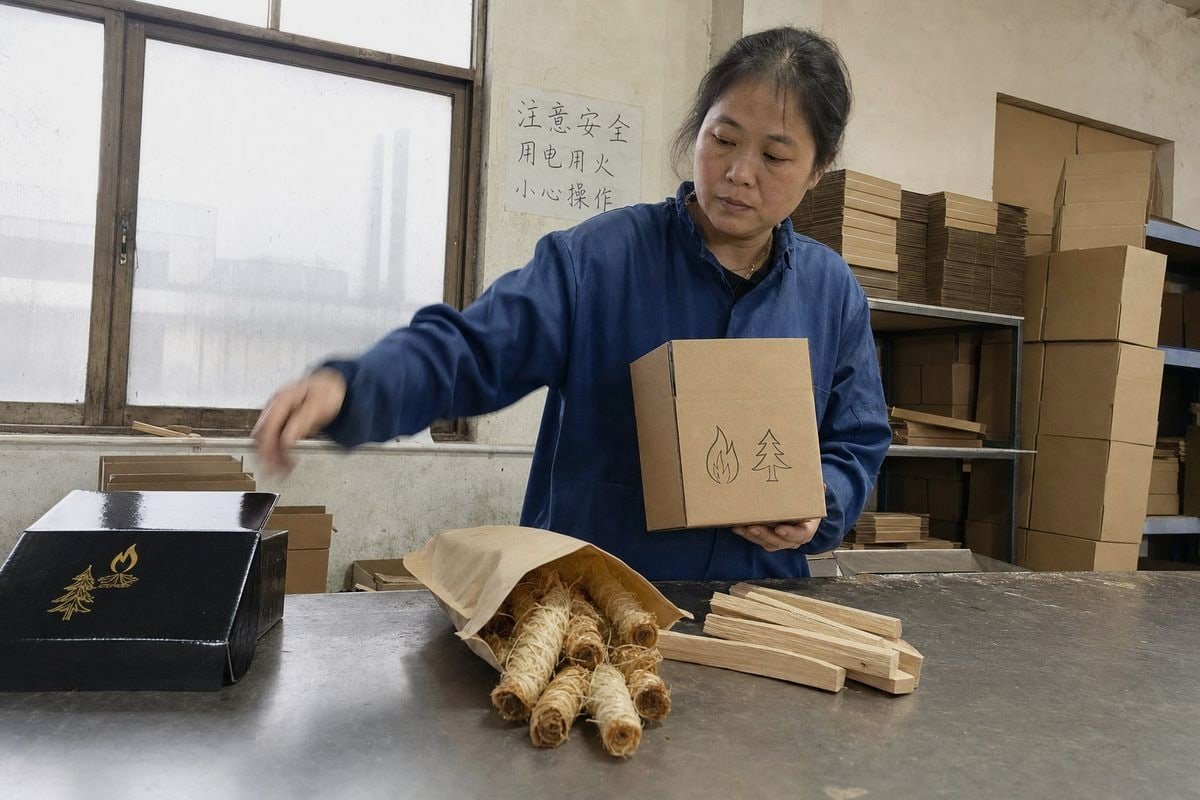
L'emballage rustique en marque privée pour les allume-feux en bois peut faire ou défaire un lancement. Sur notre chaîne de production, nous avons vu d'excellents produits échouer simplement parce que la boîte avait l'air mal.
L'emballage rustique de marque privée pour les allume-feux en bois devrait combiner du papier kraft, du carton recyclé ou des plateaux en pulpe avec des couleurs terreuses, des finitions mates et une typographie simple — tout en portant des instructions d'allumage claires, des avertissements d'inflammabilité, des listes d'ingrédients et des codes-barres prêts pour la vente au détail pour une conformité complète en rayon.
C'est la réponse courte. Ci-dessous, je vais vous présenter les matériaux, la conformité, les MOQ et la manière dont nous gérons les projets d'emballage personnalisés dans notre usine.
Quels matériaux et finitions d'emballage correspondent le mieux à une marque rustique et écologique d'allume-feu en bois ?
L'année dernière, un distributeur allemand nous a envoyé un design de boîte brillante laminée pour des rouleaux de bois trempés dans la cire. Nous avons conseillé de passer à du kraft non couché 1. Leur taux de réapprovisionnement a raconté le reste de l'histoire.
Papier kraft, carton ondulé recyclé, barquettes en pulpe moulée et papier non couché avec des finitions mates correspondent le mieux à une marque rustique d'allume-feu en bois. Associez-les à des encres aux tons terreux, des accents de jute ou de ficelle, et des logos en gaufrage ou estampés pour signaler une qualité naturelle, écologique et artisanale.
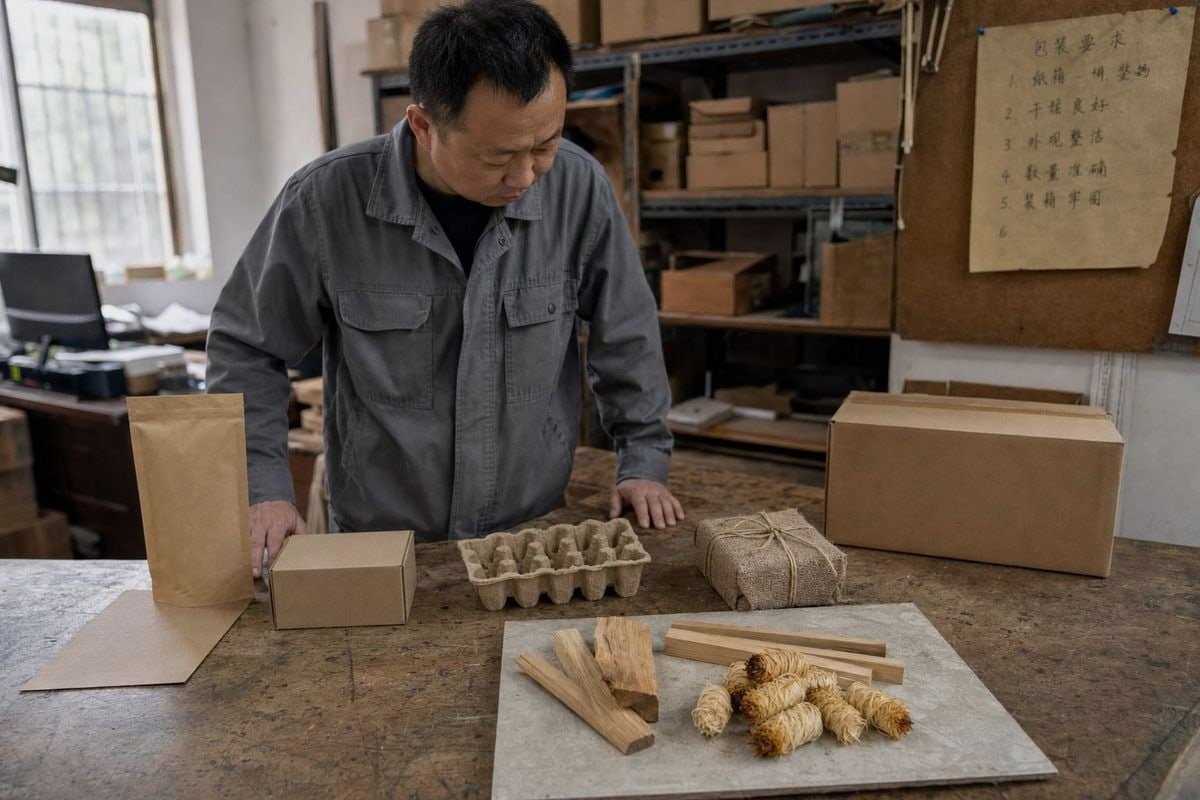
Le matériau que vous choisissez est le premier message que votre client lit. Avant de voir votre logo, il touche la boîte. La texture doit donc correspondre au produit. Un allume-feu en laine de bois a déjà un aspect naturel et artisanal. Une pochette en plastique brillante va à l'encontre de cette histoire. Le kraft et la pulpe la soutiennent.
Comparaison des options de matériaux de base
| Matériau | Idéal pour | Score Rustique | Niveau de coût | Notes |
|---|---|---|---|---|
| Sac ou pochette en papier kraft | Petites quantités, échantillons, lots promotionnels | Élevé | Faible | Facile à personnaliser avec des étiquettes ou une impression directe |
| Boîte en carton imprimée sur mesure | Lignes prêtes pour la vente au détail de 12/24/50 unités | Élevé | Moyen | La plus forte présence en rayon |
| Plateau en pulpe moulée / alvéole d'œuf | Coffrets cadeaux, positionnement écologique haut de gamme | Très élevé | Moyen | L'insert peut servir de combustible supplémentaire |
| Faisceau noué avec de la ficelle et une bande | Cadeaux d'hôtesse, coffrets de fêtes | Très élevé | Faible–Moyen | Laborieux à grande échelle |
| Carton d'expédition simple avec étiquette | Recharges, en vrac, e-commerce | Moyen | Faible | Fonctionne si le système d'étiquetage est solide |
Finitions et accents qui gardent l'aspect honnête
Les finitions mates et non couchées battent presque toujours le brillant pour cette catégorie. Le brillant fait industriel. Le non couché fait artisanal. Si vous avez besoin d'une touche premium, nous recommandons une impression sélective, un gaufrage ou un logo estampé à chaud au lieu d'une plastification complète. Dans notre travail d'OEM, nous ajoutons également des accents de fibres naturelles – ficelle de jute, fil de coton ou un simple ruban – pour les SKUs orientés cadeaux. Ces petites touches augmentent la valeur perçue sans augmenter beaucoup le coût unitaire.
Une mise en garde d'après notre expérience : rustique ne signifie pas fragile. Le papier kraft doit toujours avoir un grammage suffisant pour résister au transport. Nous testons nos boîtes personnalisées pour leur résistance à l'empilage et leur résistance au flambage 2 avant d'approuver la production de masse, car un coin écrasé détruit instantanément l'impression artisanale.
Un système de couleurs et de typographie simple
Tenez-vous-en au brun kraft, au charbon de bois, au vert forêt, à la crème et à un accent orange flamme chaud. Utilisez une police avec empattement ou slab-serif pour le nom de la marque. Utilisez une police sans empattement épurée pour les instructions et les avertissements. Ajoutez des icônes en ligne – flammes, pins, bûches, cabanes – plutôt que des photos ou des dessins animés. Lisibilité d'abord, personnalité ensuite.
Sunrich peut-il m'aider à créer des boîtes personnalisées sous marque de distributeur et des étiquettes d'avertissement pour ma gamme d'allume-feu en bois ?
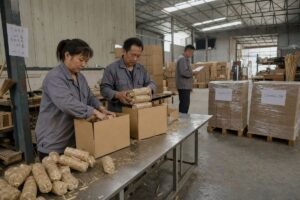
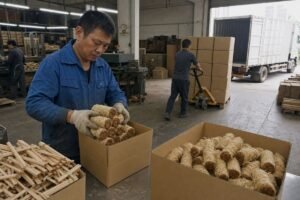
Une marque de camping américaine est venue nous voir avec seulement un fichier de logo et un compte de colis approximatif. Douze semaines plus tard, leurs boîtes prêtes pour la vente au détail étaient sur un conteneur au départ de Ningbo.
Oui. Sunrich fournit un véritable service complet d'étiquetage privé OEM/ODM pour les allume-feux à bois, y compris la conception et l'impression personnalisées de boîtes, les étiquettes d'avertissement, les codes-barres, l'emballage d'affichage, la configuration de la taille des paquets et le support artistique — le tout soutenu par les certifications ISO 9001, BSCI, CE et SGS/Intertek.
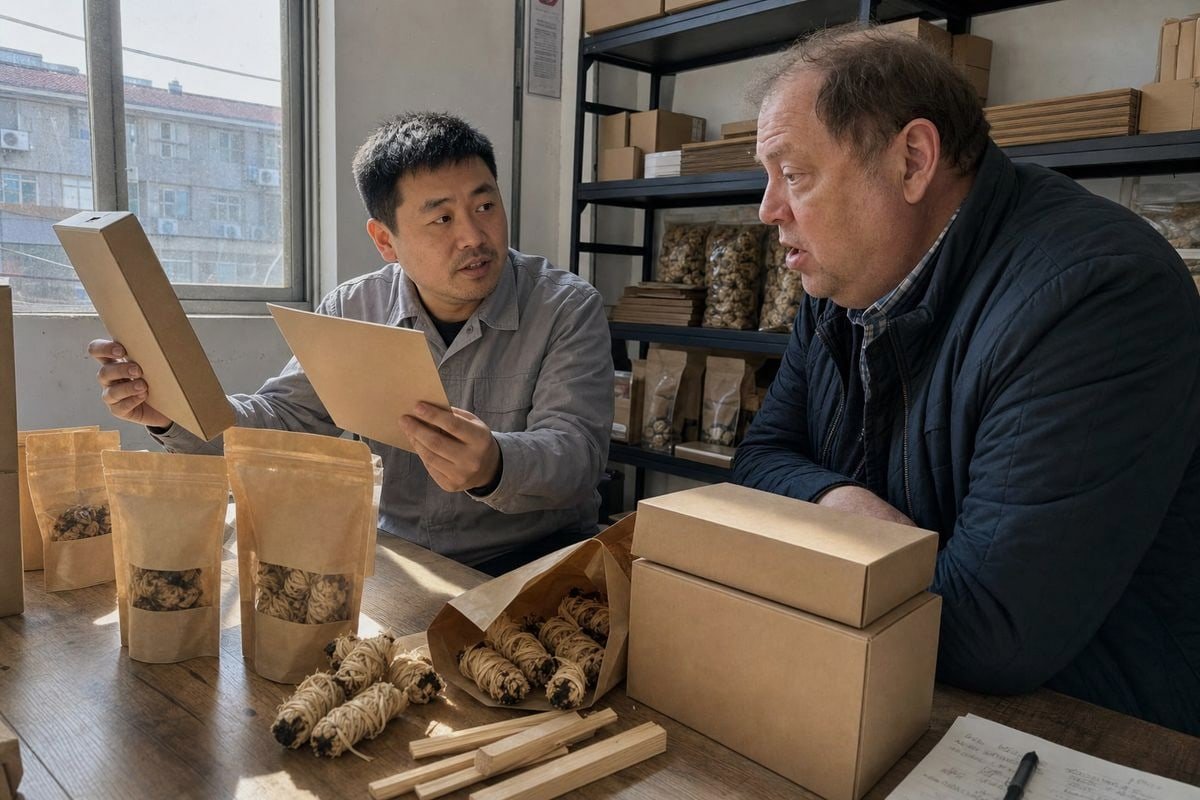
Marque privée 3 est différent du marque blanche, et la différence est importante pour le branding rustique. La marque blanche signifie que vous apposez un logo sur un produit générique et une boîte générique. La marque privée signifie que vous contrôlez le matériau d'emballage, les couleurs, la taille du paquet et le système de marque complet. Nous ne recommandons la voie de la marque privée que pour les acheteurs qui souhaitent une différenciation en rayon, car une boîte générique ne pourra jamais véhiculer une histoire rustique de manière convaincante.
Comment fonctionne notre processus d'emballage personnalisé
- Vous nous envoyez votre brief : format du produit, canal cible, nombre d'unités par paquet et tous les éléments de marque.
- Notre équipe propose des structures d'emballage — boîte en kraft, pochette, plateau en pulpe, ou carton d'exposition — avec des lignes de découpe.
- Nous préparons des ébauches de maquettes, y compris le texte d'avertissement requis, la composition des ingrédients, les instructions et le placement du code-barres.
- Nous produisons des échantillons physiques. Vous examinez la qualité d'impression, le poids du papier et l'assemblage.
- Après approbation, nous verrouillons les spécifications. Parce que notre contrôle qualité lot par lot est strict, la boîte de production de masse correspond à l'échantillon approuvé.
Ce que nous pouvons personnaliser
Au-delà de la boîte elle-même, nous personnalisons le produit qu'elle contient. Le temps de combustion, la taille du rouleau, le nombre par paquet, et même les variantes de couleur de flamme peuvent tous être ajustés. Cela est important pour l'emballage car la structure de la boîte doit s'adapter aux dimensions exactes du produit. Lorsqu'un de nos clients distributeurs de foyers aux Pays-Bas est passé d'un format de 12 unités à un format de 24 unités, nous avons réaménagé l'insert et le carton dans le même projet – aucun fournisseur supplémentaire nécessaire.
Pour l'étiquetage de conformité, nous préparons les avertissements d'inflammabilité, les notices à tenir hors de portée des enfants, les déclarations de composition (par exemple, pourcentages de fibres de bois et de cire), et le texte spécifique au pays. Nous avons exporté dans plus de 30 pays depuis plus de 17 ans, nous savons donc ce que les acheteurs américains, européens et britanniques ont généralement besoin d'imprimer avant que les marchandises ne passent l'inspection.
Comment équilibrer l'esthétique rustique avec les exigences de conformité du commerce de détail telles que les avertissements de sécurité et les codes-barres ?
Les revues de conception les plus difficiles que nous effectuons dans notre usine sont toujours le même combat : la marque veut un minimalisme épuré, et le détaillant veut six lignes de texte obligatoires. Les deux peuvent gagner.
Équilibrez le design rustique et la conformité en segmentant l'emballage : réservez le panneau avant pour la marque et l'imagerie, placez les avertissements, les instructions et les listes d'ingrédients sur les panneaux latéraux ou arrière dans une police sans-serif épurée, et positionnez le code-barres UPC sur la base ou l'arrière avec des zones de silence adéquates.
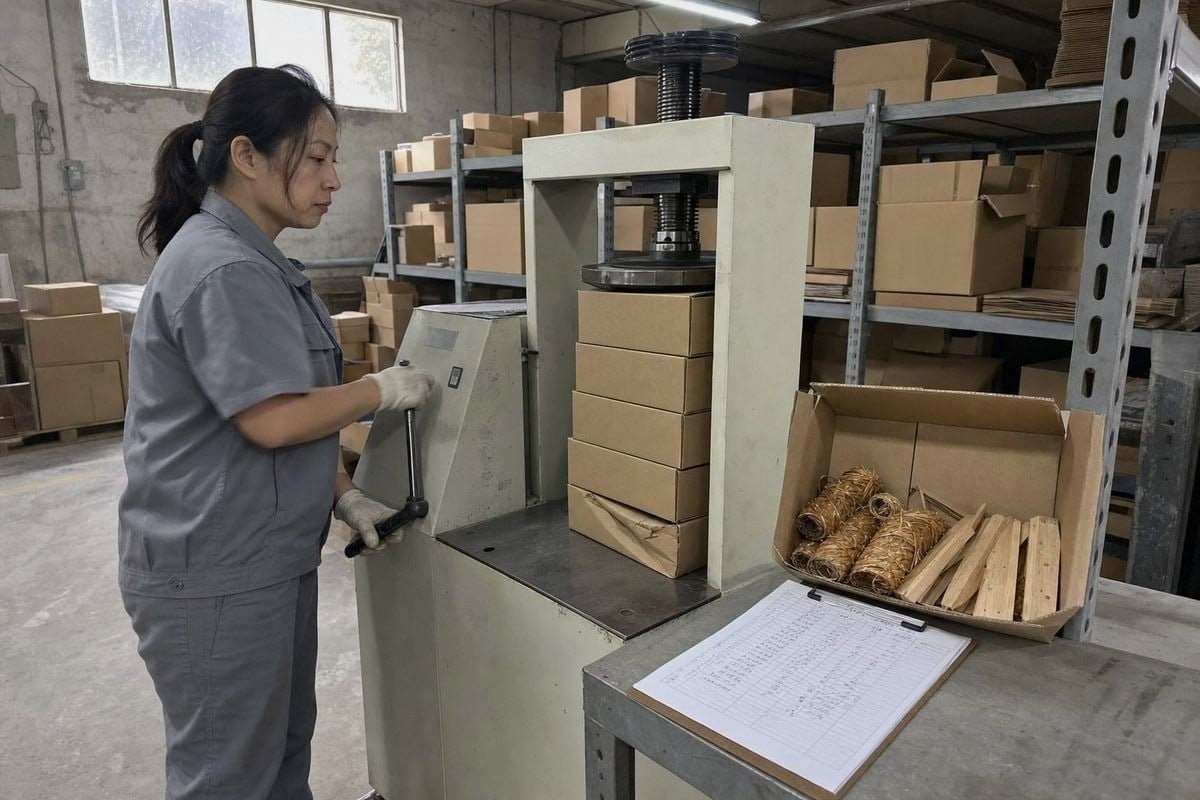
Le texte de conformité n'est pas l'ennemi du design rustique. La mise en page encombrée l'est. L'astuce consiste à traiter les informations obligatoires comme faisant partie du système de conception, et non comme une réflexion après coup ajoutée à la fin. Nous intégrons des zones de conformité dans la ligne de découpe dès le premier jour.
L'approche de zonage des panneaux
| Panneau | Contenu | Traitement de la conception |
|---|---|---|
| Avant | Nom de la marque, nom du produit, quantité, icône principale | Police serif, dessin au trait, espace blanc généreux (kraft) |
| Côté A | Instructions d'éclairage, utilisation en 3 étapes | Petite police sans-serif, étapes numérotées, icônes simples |
| Côté B | Avertissement d'inflammabilité, avis de tenir hors de portée des enfants, composition | Police sans-serif à contraste élevé, symbole d'avertissement |
| Arrière / Base | Code-barres UPC 4, code de lot, détails de l'importateur, contact | Code-barres sur fond blanc pour le contraste de numérisation |
Les instructions sont une question de conformité et de satisfaction
Les instructions manquantes entraînent de mauvaises critiques. Nous l'avons vu à plusieurs reprises sur nos marchés d'exportation. Les clients qui placent mal un allume-feu blâment le produit, pas leur technique. Nous imprimons donc toujours des étapes simples : placez l'allume-feu sous le petit bois, allumez un bord et ajoutez du bois plus gros après deux à trois minutes. Trois lignes. Petite empreinte. Grand impact sur les critiques et les retours.
Code-barres et détails d'impression qui posent problème
Le papier kraft brun réduit le contraste de numérisation du code-barres 5. Nous imprimons donc l'UPC sur une bande blanche ou utilisons une étiquette blanche sur la base. Pour les chaînes de vente au détail, les cartons principaux ont également besoin de leurs propres codes-barres — nous préparons des unités codées individuellement et des cartons principaux codés pour les programmes de magasins physiques. Tenez également compte du transport : les allume-feux contiennent de la cire et sont des marchandises combustibles 6, donc la documentation d'expédition et l'étiquetage des cartons doivent correspondre à la classification réelle pour votre voie. Notre équipe logistique s'en charge régulièrement, et nos rapports SGS/Intertek 7 rapports de test confirment ce que l'étiquette prétend. Une autre option moderne : un petit code QR reliant à la transparence de l'approvisionnement ou à des vidéos d'utilisation permet de garder les panneaux épurés tout en ajoutant de la profondeur pour les acheteurs curieux.
Quel est le MOQ et le délai de livraison typiques pour les emballages personnalisés de démarreurs de feu en bois sous marque privée ?
Les commandes d'essai sont le lieu où la confiance se construit. La plupart de nos comptes à long terme aux États-Unis et en Allemagne ont commencé par un seul essai prudent, pas un conteneur complet.
Emballage personnalisé sous marque de distributeur pour allume-feu en bois commence généralement à des quantités minimales de commande (MOQ) d'environ 1 000 à 5 000 unités, l'échantillonnage prenant 1 à 2 semaines et la production de masse plus l'emballage nécessitant généralement 4 à 8 semaines, en fonction de la complexité de la boîte, du nombre d'unités par paquet et de la charge saisonnière de l'usine.

Le MOQ est principalement déterminé par la configuration de l'impression, et non par le produit lui-même. Une boîte imprimée sur mesure nécessite la fabrication de plaques et une série d'impression minimale pour être économique. C'est pourquoi les boîtes entièrement personnalisées ont des minimums plus élevés que les pochettes kraft étiquetées. Si vous testez un marché, nous suggérons souvent une approche progressive : commencez par des étiquettes imprimées sur des emballages kraft standards, prouvez la vente, puis passez à des boîtes entièrement imprimées sur mesure lors de la réorganisation.
Calendrier typique pour une première commande en marque privée
| Étape | Durée | Ce qui se passe |
|---|---|---|
| Brief et devis | 2–5 jours | Spécifications, quantités par emballage, prix cible confirmés |
| Graphiques et ligne de découpe | 3–7 jours | Brouillons de conception avec texte de conformité placé |
| Échantillonnage physique | 7–14 jours | Produit plus échantillon d'emballage imprimé expédié |
| Production de masse | 3–5 semaines | Fabrication du produit et impression de la boîte en parallèle |
| Contrôle qualité et chargement | 3–7 jours | Inspection des lots, marquage des cartons, chargement des conteneurs |
| Fret maritime | 3–6 semaines | Dépend du port de destination |
Facteurs qui étirent ou raccourcissent le calendrier
La haute saison est la plus grande variable. Les allume-feux sont des produits axés sur le 4ème trimestre sur la plupart de nos marchés. Les commandes confirmées en mai sont expédiées sans problème ; les commandes confirmées en septembre se battent pour la capacité partout dans la chaîne d'approvisionnement. La complexité compte aussi. Une boîte kraft à SKU unique se déplace rapidement. Un coffret cadeau de vacances avec un plateau en pulpe, une reliure en ficelle et un manchon imprimé ajoute des cycles d'échantillonnage. Enfin, les révisions coûtent du temps. Les acheteurs qui approuvent les graphiques de manière décisive économisent une à deux semaines par rapport à ceux qui itèrent à travers cinq cycles. Mon conseil pratique : verrouillez votre texte de conformité tôt, car les formulations juridiques modifiées tardivement dans le processus obligent à réimprimer les plaques.
Conclusion
L'emballage rustique sous marque de distributeur raconte l'histoire que vos allume-feux en bois racontent déjà. Choisissez des matériaux honnêtes, délimitez votre texte de conformité, échantillonnez correctement et commencez avec un MOQ d'essai gérable.
Notes de bas de page
1.

 English
  Spanish
  German
  French
  Arabic
  Portuguese
Rejoignez la conversation