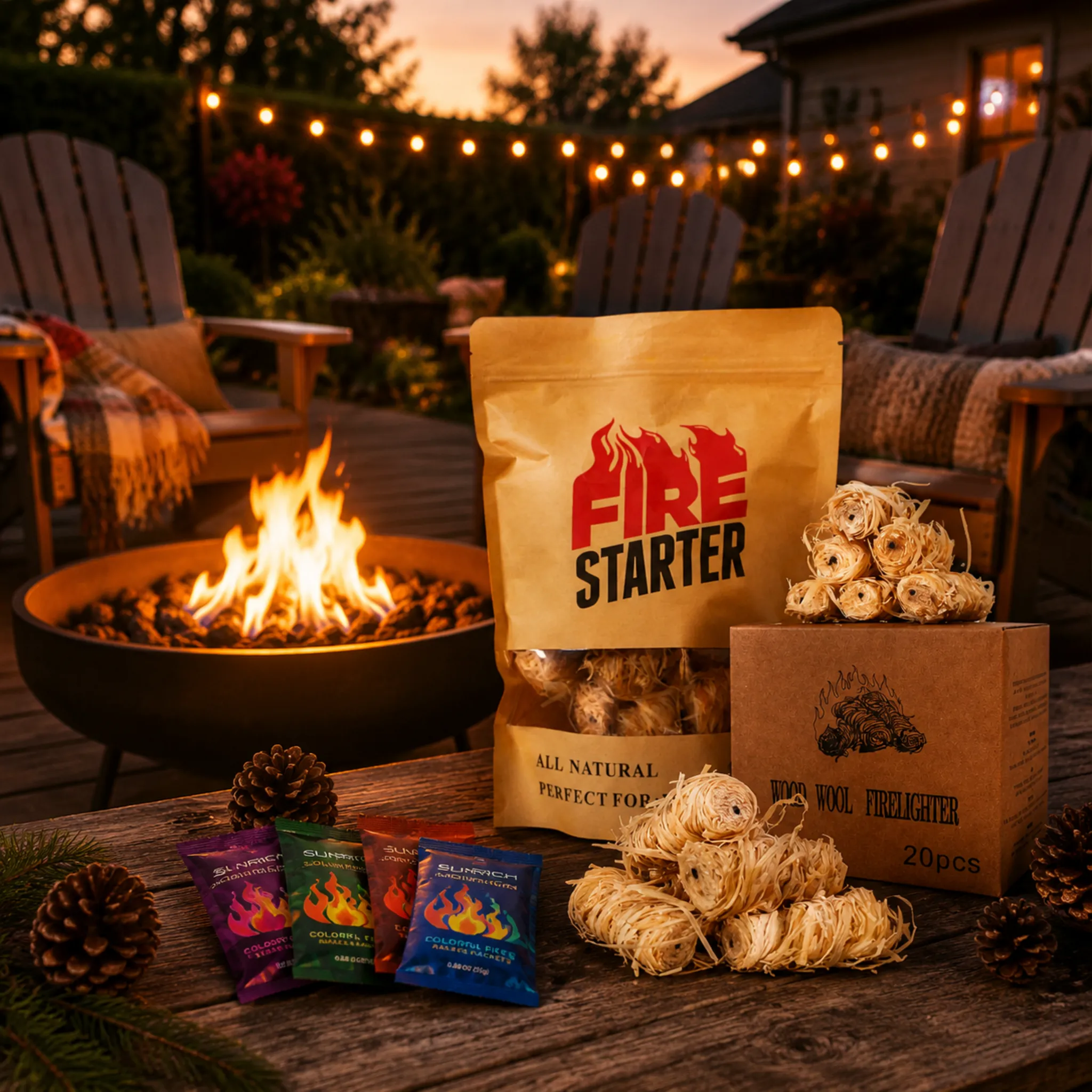
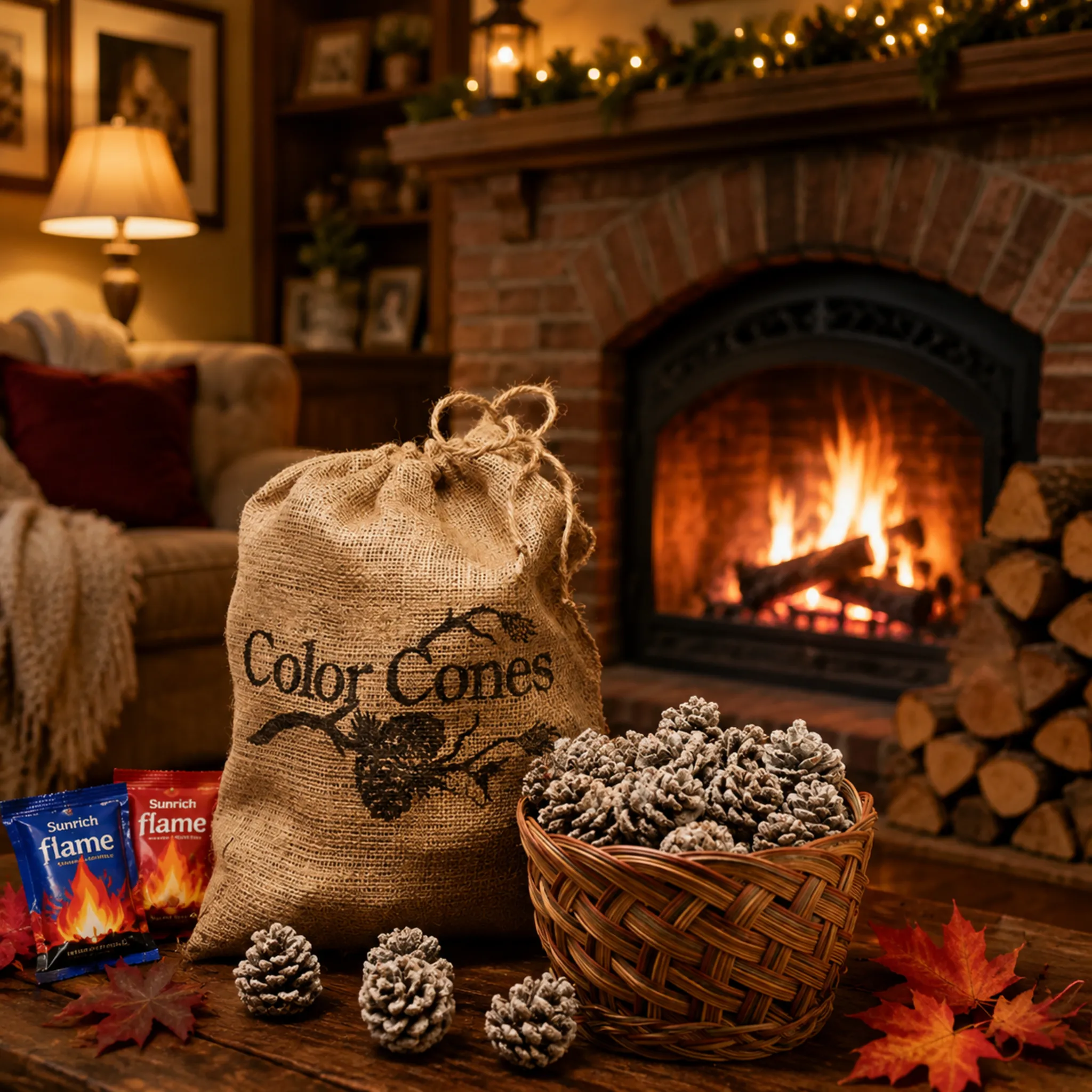
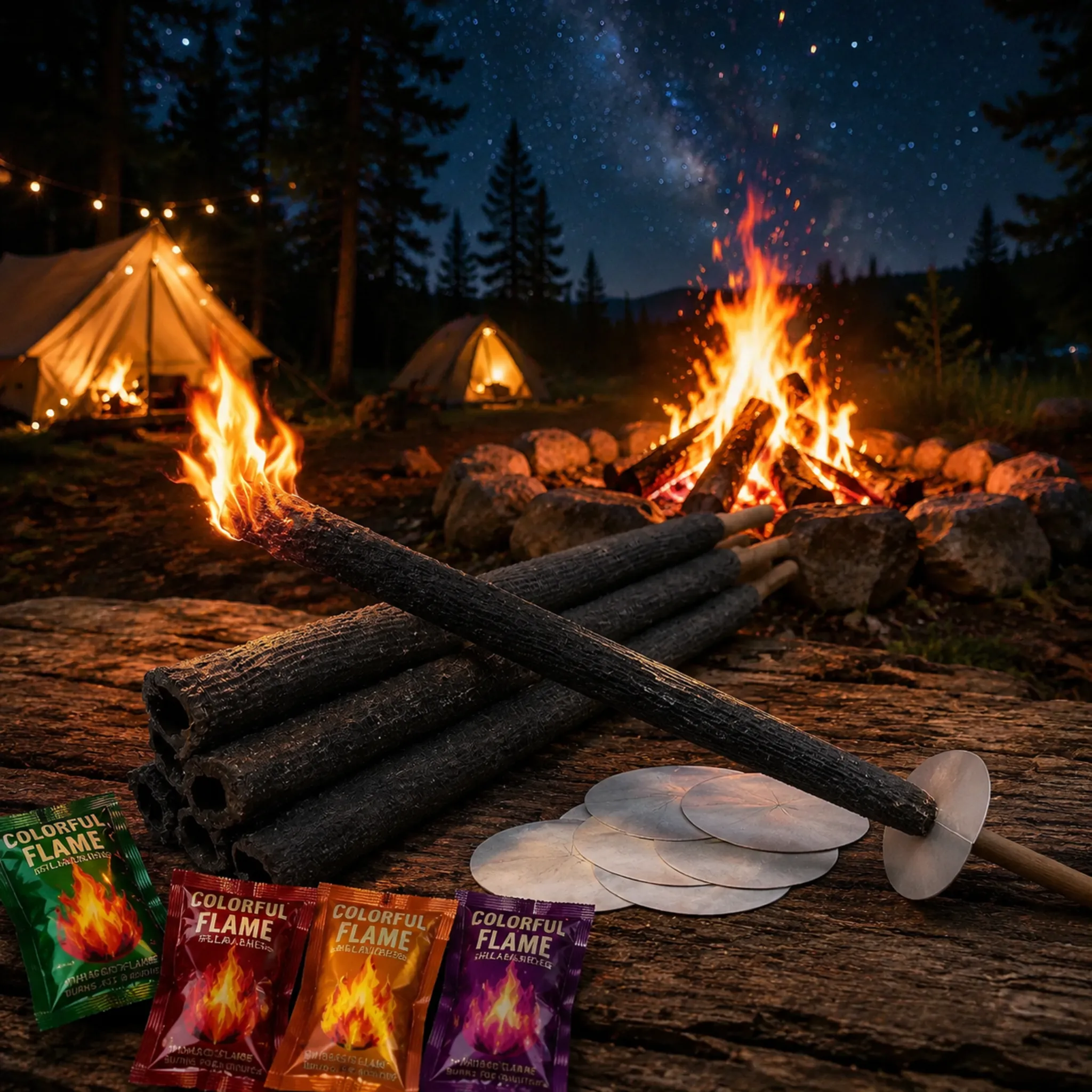
Great POS displays for Magic Fire Powder can double sell-through Marquage CE 1. Yet on our production line, I still see buyers order flat packets with zero display strategy — and watch them vanish on shelves.
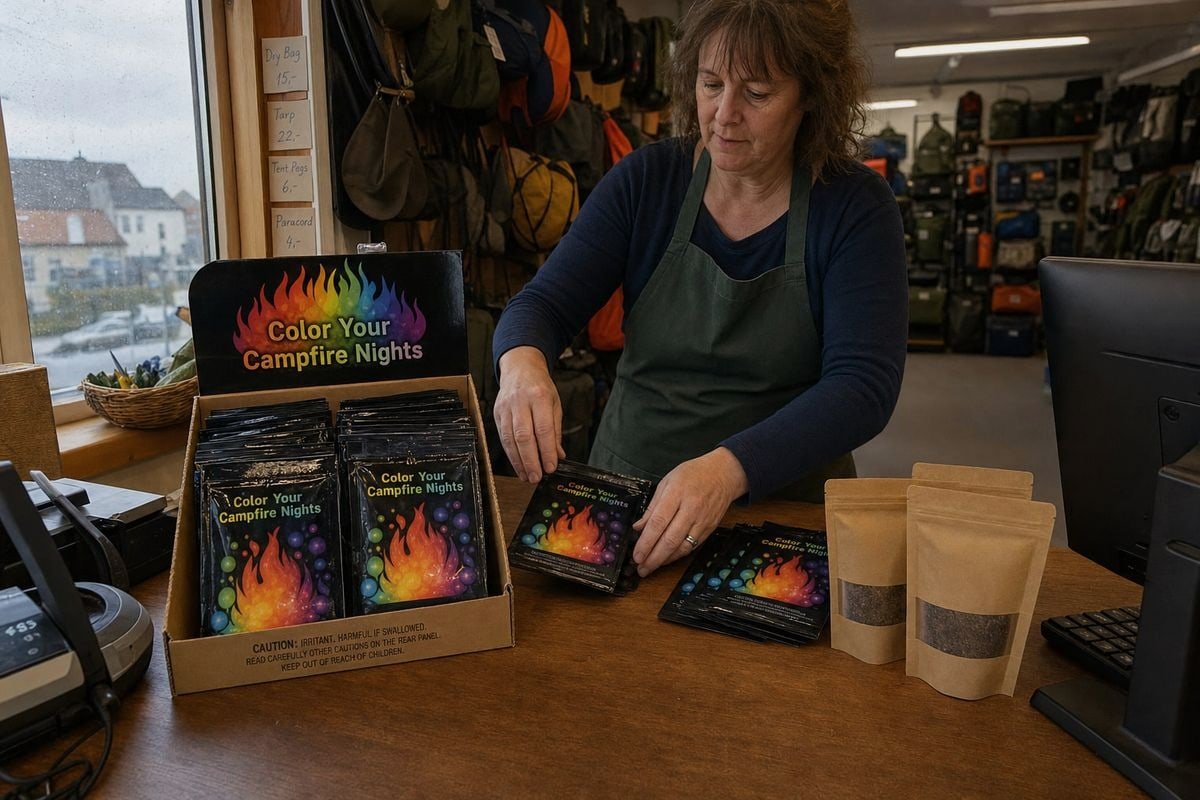
To design POS displays for Magic Fire Powder that boost sales, use a compact countertop display unit with bold rainbow contrast, a six-to-eight-word headline, a demo image of colored flames, visible safety text, and checkout placement — then verify certifications and customization capability with your supplier.
That answer packs a lot in. Let me unpack each piece — compliance, branding, display formats, and supplier reliability — so you can order shelf-ready units with confidence.
What certifications should I check before ordering Magic Fire Powder POS displays?
Last spring, a German distributor sent back a competitor's shipment because the color-changing flame packets lacked valid SGS reports point of sale 2. We shipped his replacement order with full documentation in three weeks.
Before ordering, verify the supplier holds ISO 9001 for quality management, BSCI for ethical production, CE marking for EU markets, and current SGS or Intertek test reports for the powder itself. Also confirm compliant warning labels, ingredient disclosure, and market-specific labeling on both packets and display packaging.
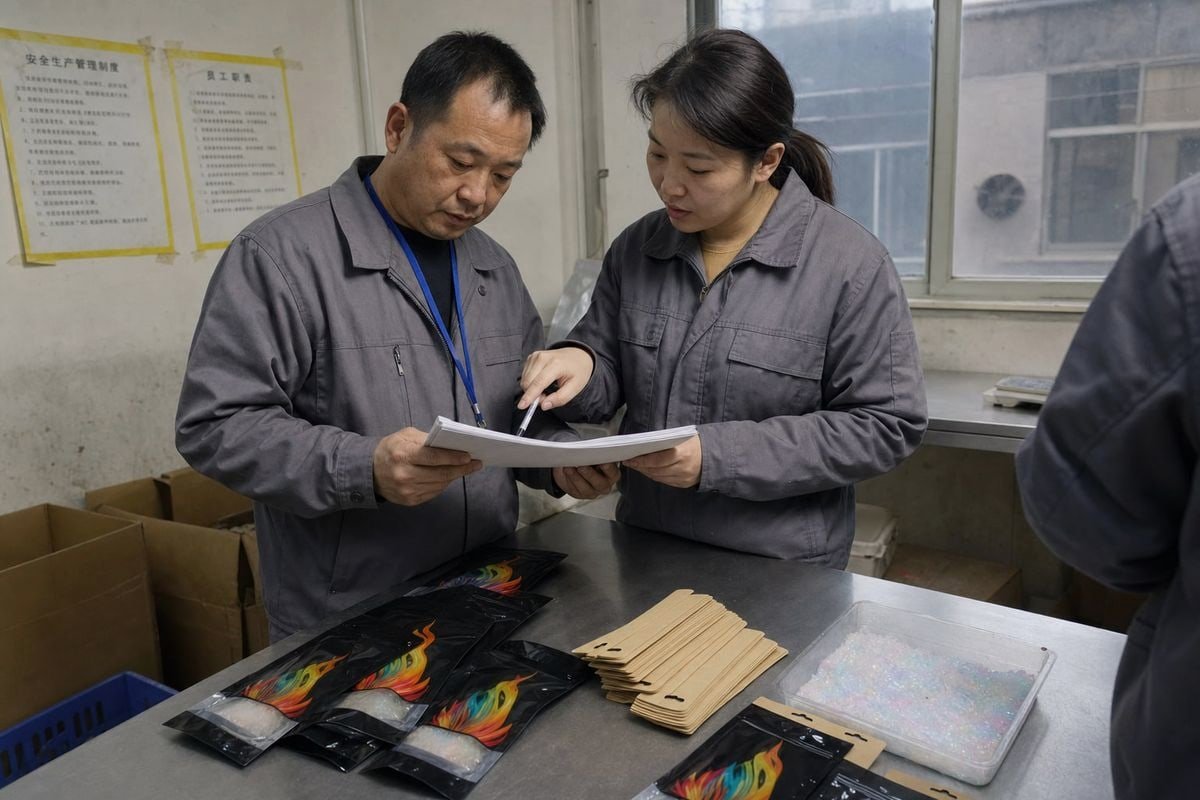
Compliance is not paperwork theater. It decides whether your goods clear customs, pass retailer audits gestion de la chaîne d'approvisionnement 3, and survive a liability claim. In our 17+ years exporting fire-themed products to 30+ countries, I have never seen a serious US or European retail buyer accept color-flame products without third-party test reports. The display itself also carries compliance weight, because it is where warning text meets the shopper's eyes.
La liste de contrôle de certification
| Certification | Ce qu'il couvre | Why it matters for your order |
|---|---|---|
| ISO 9001 4 | Système de management de la qualité | Cohérence lot par lot entre l'échantillon et la production de masse |
| BSCI | Audit social et éthique | Requis par de nombreux grands canaux d'approvisionnement au détail |
| CE | EU product conformity | Accès légal au marché dans toute l'UE |
| Rapports SGS / Intertek | Composition chimique et tests de sécurité | Proof the powder contains no harmful substances |
Labeling on the display itself
Your countertop display units should repeat key safety cues: "for wood-burning fires only," "do not open the packet," and age-related guidance where your market requires it. We print these directly on the header card and each sachet during OEM production, so retailers never need to add stickers later. Ask your supplier for the actual test report numbers, then verify them with the testing body. A real factory will hand them over the same day. A trading company will often stall — and that delay tells you everything.
How can I customize display packaging to match my store's branding?
A UK camping brand once asked us whether their forest-green identity would clash with our rainbow flame graphics. We solved it with a kraft-paper display base and a full-color header — both worlds, one unit.
Customize display packaging through private-label printing on the header card, brand-matched colors on the display body, your logo and barcode on every packet, and format choices like kraft bags, foil pouches, or jars. A capable OEM/ODM factory handles artwork, dielines, and compliant labels in one workflow.

Branding on a display does two jobs at once. It builds recognition for your label, and it signals trust to a shopper meeting the product for the first time. In our OEM/ODM 5 work, we treat the display as an extension of the packet — same fonts, same flame gradient, same voice. That consistency matters because generic-looking corrugated POP displays get ignored as clutter, while brand-aligned units read as a curated product.
Ce que vous pouvez personnaliser
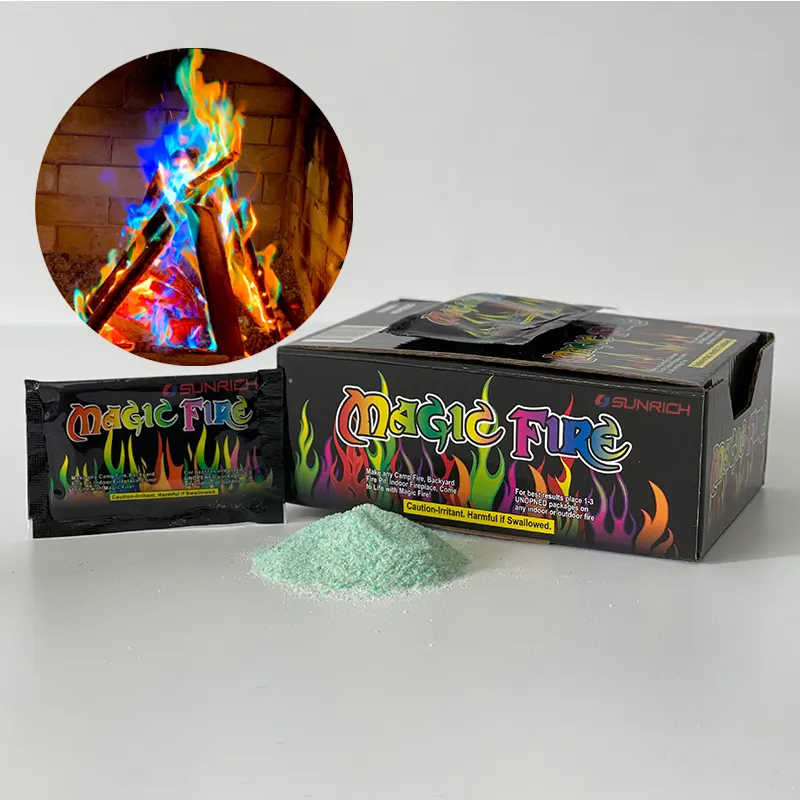
- Header card artwork — your logo, a benefit-led headline, and a demo photo of the multicolored flames.
- Display structure color — black gloss for a bold novelty look, or kraft brown for outdoor living products positioning.
- Packet format — foil pouch, resealable kraft bag, or plastic jar, depending on your price point and channel.
- Barcodes and warning labels — printed in your market's language, positioned for scanner and shopper visibility.
- Burn time and pack count — tuned to match your bundle strategy or seasonal retail promotions.
Balancing brand look and conversion
Here is a tension worth naming. Some buyers want the display to be a pure brand billboard. That instinct backfires. Shoppers give a display about three seconds, so the product and its payoff must dominate — your brand rides along, not on top. We recommend the rainbow flame imagery as the hero, your logo secondary, and copy limited to one short headline plus one action line. Visual merchandising 6 works when comprehension comes first and brand storytelling second. Keep font families to two, keep the palette high-contrast, and let the pastel crystalline powder or flame photo do the talking.
What display formats work best to maximize impulse purchases at checkout?
Choosing between a countertop unit and a floor stand is a trade-off I walk buyers through weekly: counter units win on placement, floor stands win on capacity — and the wrong pick costs sell-through.
Compact countertop display units work best for Magic Fire Powder at checkout, holding 24 to 48 packets with a bold header card. Narrow sidekick floor stands suit high-traffic aisles, while endcap merchandising fits seasonal promotions and multi-pack bundles. Keep SKUs to five or fewer per display.
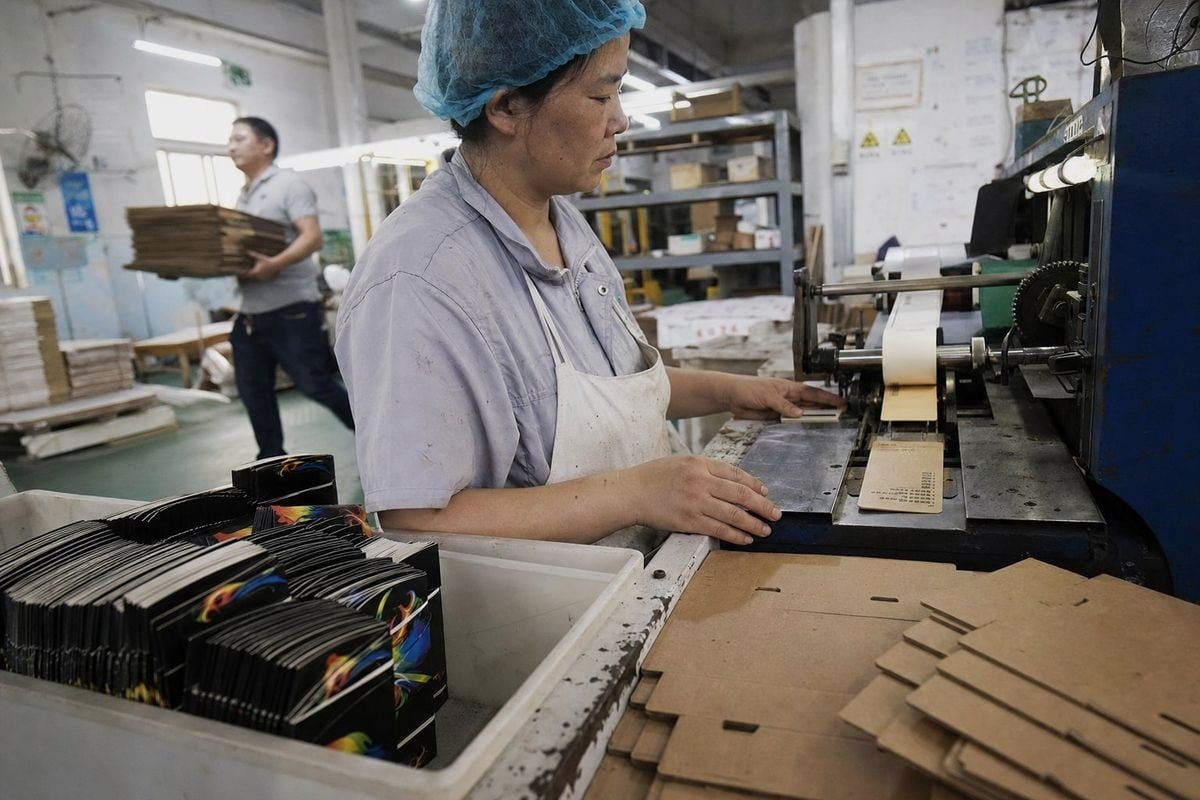
Magic Fire Powder is a textbook impulse item impulse purchase 7. It is cheap, visual, and needs no explanation once a shopper sees colored flames. So the format decision comes down to where your retailer will place it and how much volume you expect to move. Below is how I frame it for buyers comparing options.
| Formater | Best placement | Capacité | Idéal pour |
|---|---|---|---|
| Countertop display unit (CDU) | Checkout counter, service desk | 24–48 packets | Single-SKU impulse buys, trial programs |
| Sidekick floor stand | Aisle ends, next to firewood or charcoal | 60–120 packets | High-traffic stores, camping sections |
| Endcap display | Seasonal aisle endcaps | 100+ units, multi-SKU | Seasonal retail promotions, bundle kits |
| Clip strip | Adjacent to campfire accessories | 12–24 packets | Cross-merchandising with s'mores or fire pits |
Placement drives the format
Retail floor stands only earn their footprint if the store grants a high-traffic spot. If placement is uncertain, a CDU near the register is the safer bet, because checkout is the strongest of all impulse buy triggers. Position the header at natural eye level — roughly 120 to 160 cm from the floor for standing adults on a floor unit.
Design details that trigger the purchase
Keep the headline to six to eight words: "Just Toss In The Fire" outperforms paragraph copy every time. Show an action photo of blue, green, and purple flames on the header, because the product's value is purely visual. A QR code linking to a short demo video — or an AR flame filter — extends engagement without cluttering the card. And design for easy restocking: our corrugated POP displays ship flat-packed and assemble in under a minute, because a half-empty, messy display kills trust faster than no display at all.
How do I ensure my display supplier can meet my order volume and timeline?
A Canadian importer once told me his previous supplier's "factory tour" turned out to be a rented showroom. He flew to our Ningbo production site the next month and audited the lines himself.
Verify the supplier is a real factory, not a trading company: request a live video audit, check production capacity against your volume, confirm batch QC procedures, review documented lead times, and place a trial order first. Consistent sample-to-mass-production quality is the strongest reliability signal.
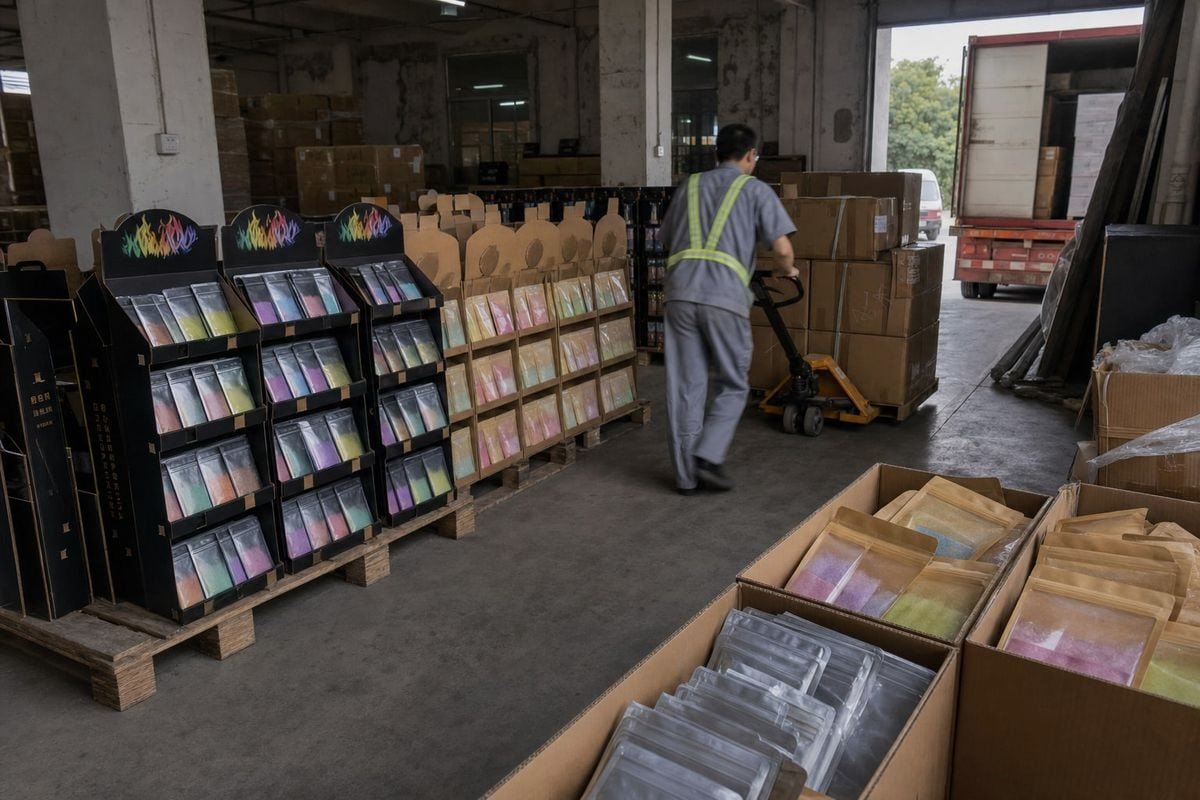
Volume and timeline failures rarely come from bad intentions. They come from suppliers who subcontract without controls, or who quote lead times they have never actually hit. Over 17+ years supplying outdoor and camping brands, BBQ distributors, and large retail sourcing channels, I have learned that the vetting process below filters out most risk before a purchase order is signed.
A five-step vetting process
- Confirm factory ownership. Ask for the business license and match the production address. Our lines run in Ningbo, with headquarters in Liuyang — and we show both on video calls without hesitation.
- Match capacity to your forecast. Share your annual volume and peak-season spikes. A serious factory will tell you honestly whether Q3 pre-holiday production can absorb your order.
- Testez avec une commande d'essai. Flexible MOQs exist precisely so you can validate quality and lead time before committing to a container.
- Audit the QC process. Ask how each batch of powder is tested and how display print colors are checked against approved proofs.
- Lock the timeline in writing. Get sampling, artwork approval, production, and shipping stages with dates, not vague promises.
Typical timeline benchmarks
| Étape | Durée typique | What can delay it |
|---|---|---|
| Artwork and dieline approval | 3–7 jours | Slow feedback loops on your side |
| Échantillon de pré-production | 7–10 jours | Custom packet formats or new molds |
| Production de masse | 20–30 jours | Peak season congestion, late deposits |
| Shipping (sea freight) | Mêmes QMC | Port congestion, customs documentation gaps |
Communication is the final filter. If English replies take three days during the quoting stage, they will take longer once your money is committed. Responsive, direct answers — even hard ones like "we cannot hit that date" — are the mark of a partner worth keeping for the long term.
Conclusion
Weak displays bury a brilliant product. Strong ones — compliant, branded, compact, and reliably supplied — turn Magic Fire Powder into a checkout bestseller. Start with a certified trial order.
Notes de bas de page
1. Background explanation of CE conformity marking for EU market access mentioned in the checklist. ↩︎
2. Wikipedia background on point-of-sale retail concept underpinning the checkout display strategy. ↩︎
3. Trade authority relevant to cross-border sourcing, customs clearance, and export compliance discussed in the article. ↩︎
4. Official ISO standard page explaining quality management system requirements referenced in the article. ↩︎
5. Wikipedia background on OEM/ODM manufacturing arrangements referenced repeatedly for supplier customization workflow. ↩︎
6. Business authority source relevant to retail merchandising and store display best practices discussed. ↩︎
7. Wikipedia concept page explaining the impulse buying behavior the article's display strategy relies on. ↩︎



 English
 Spanish
 German
 French
 Arabic
 Portuguese
Rejoignez la conversation