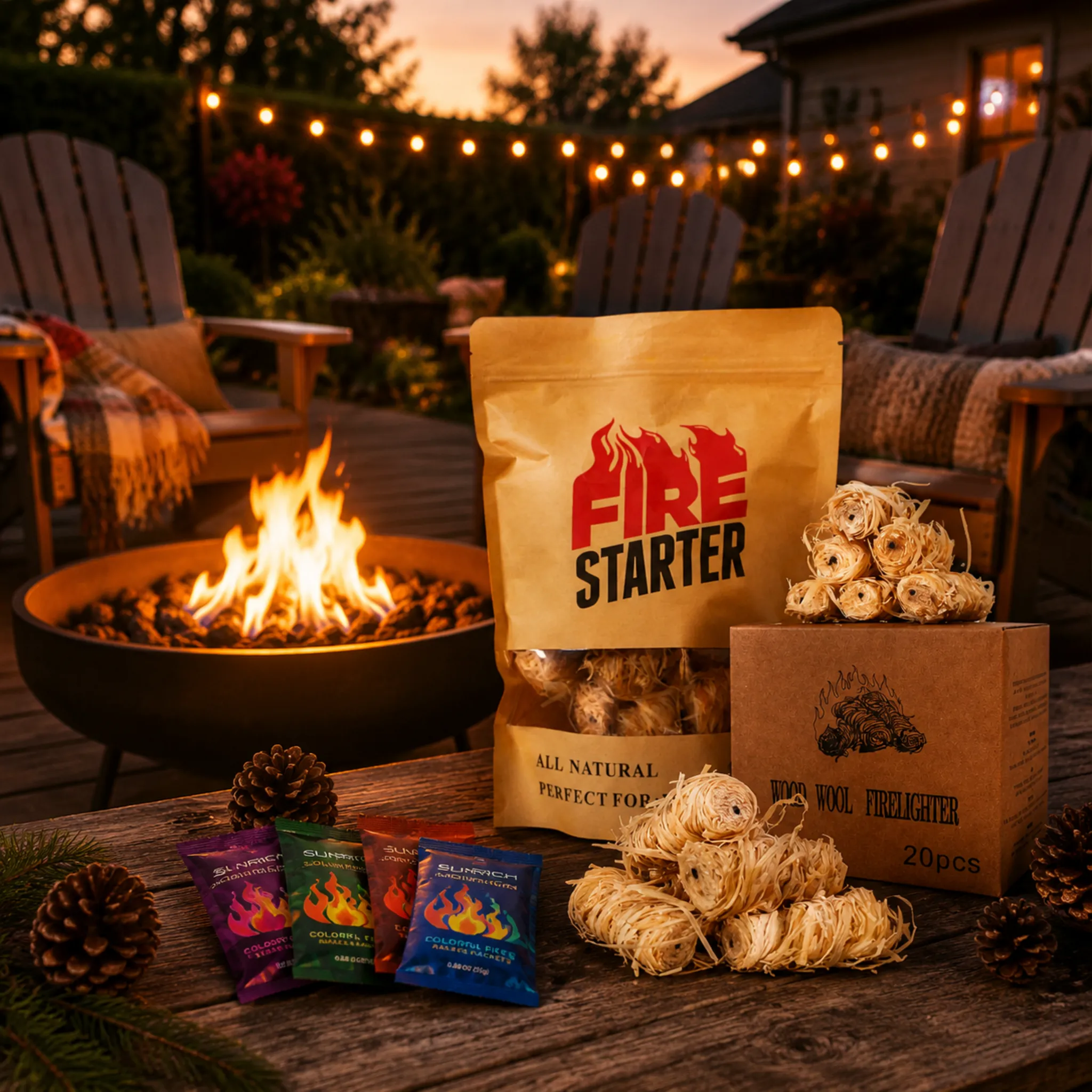
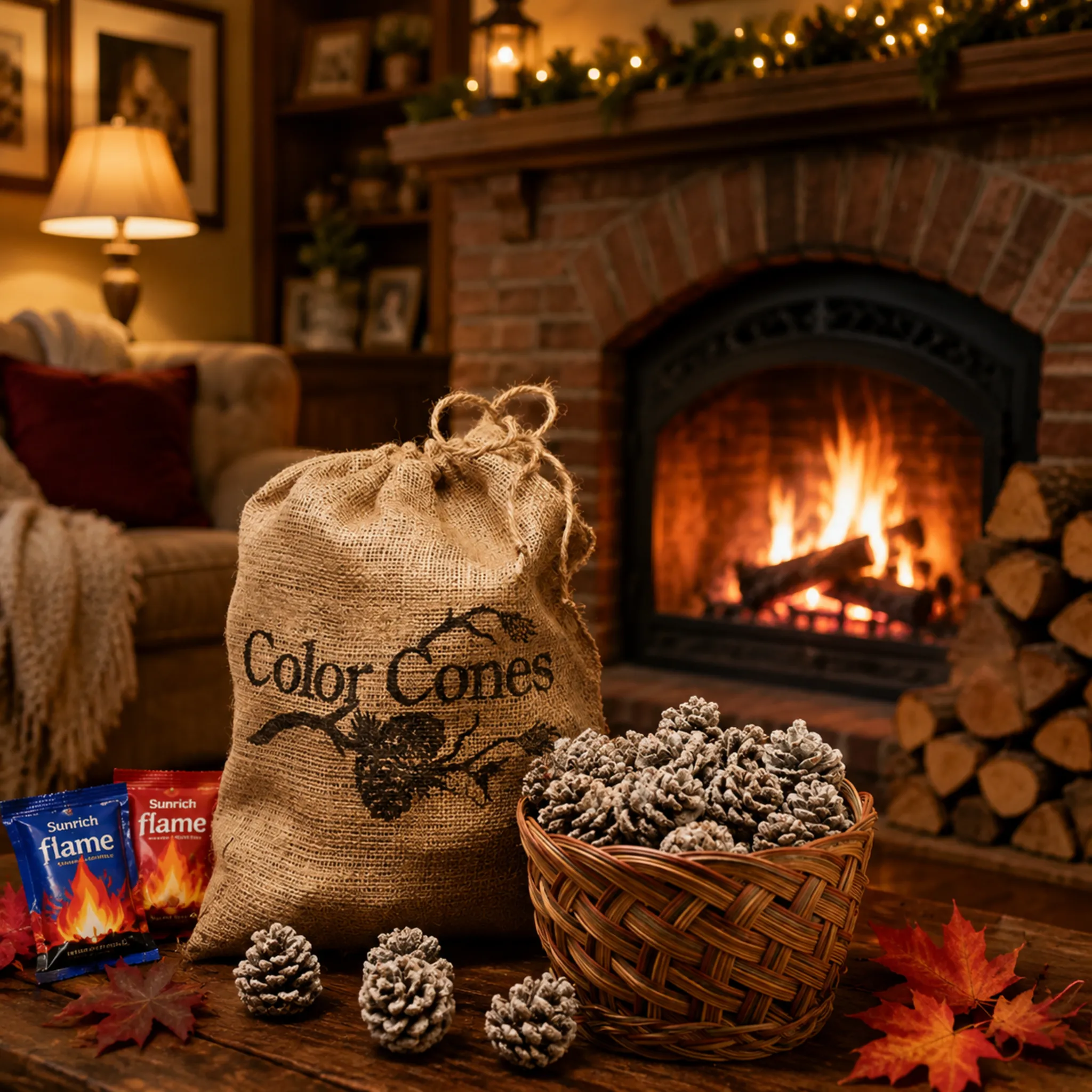
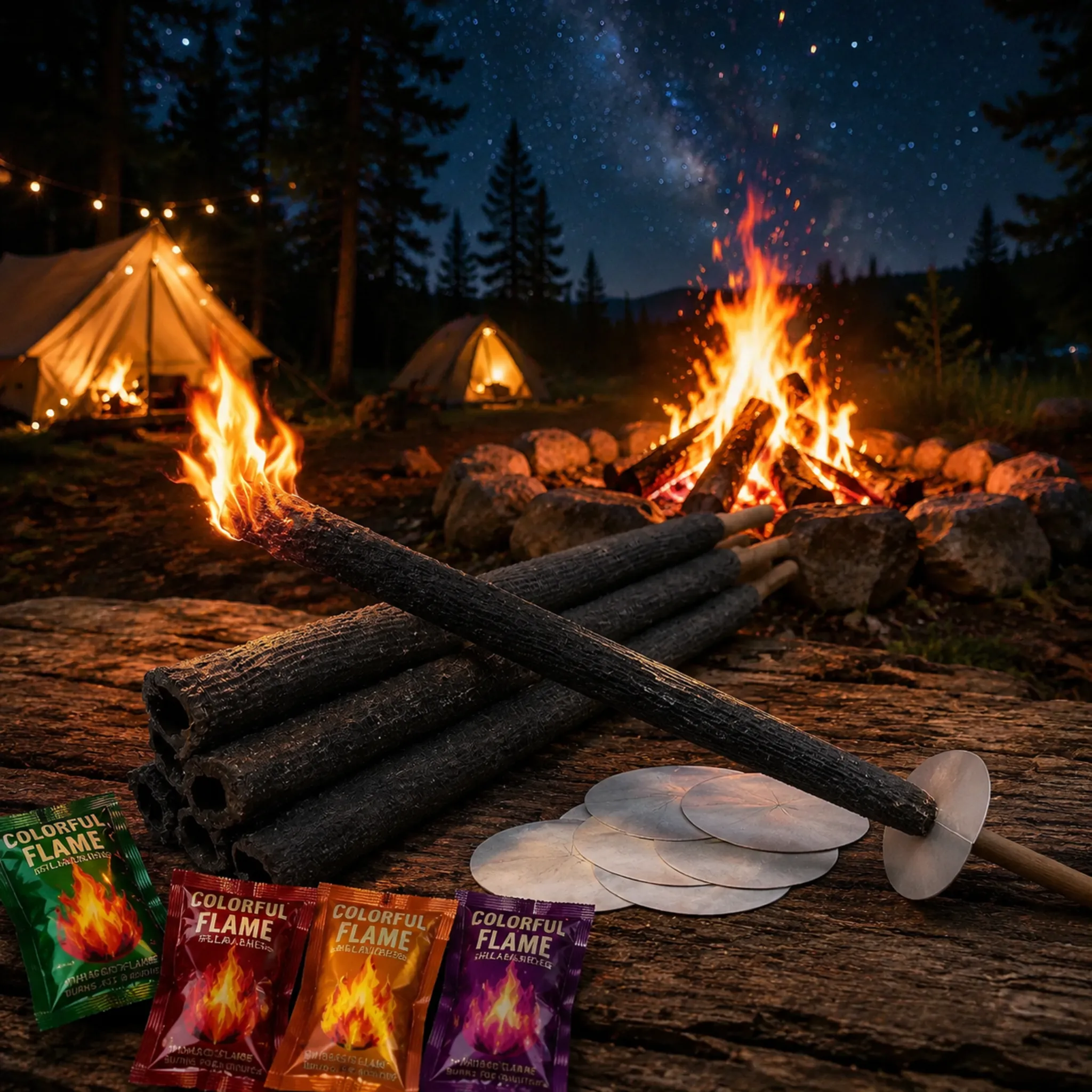
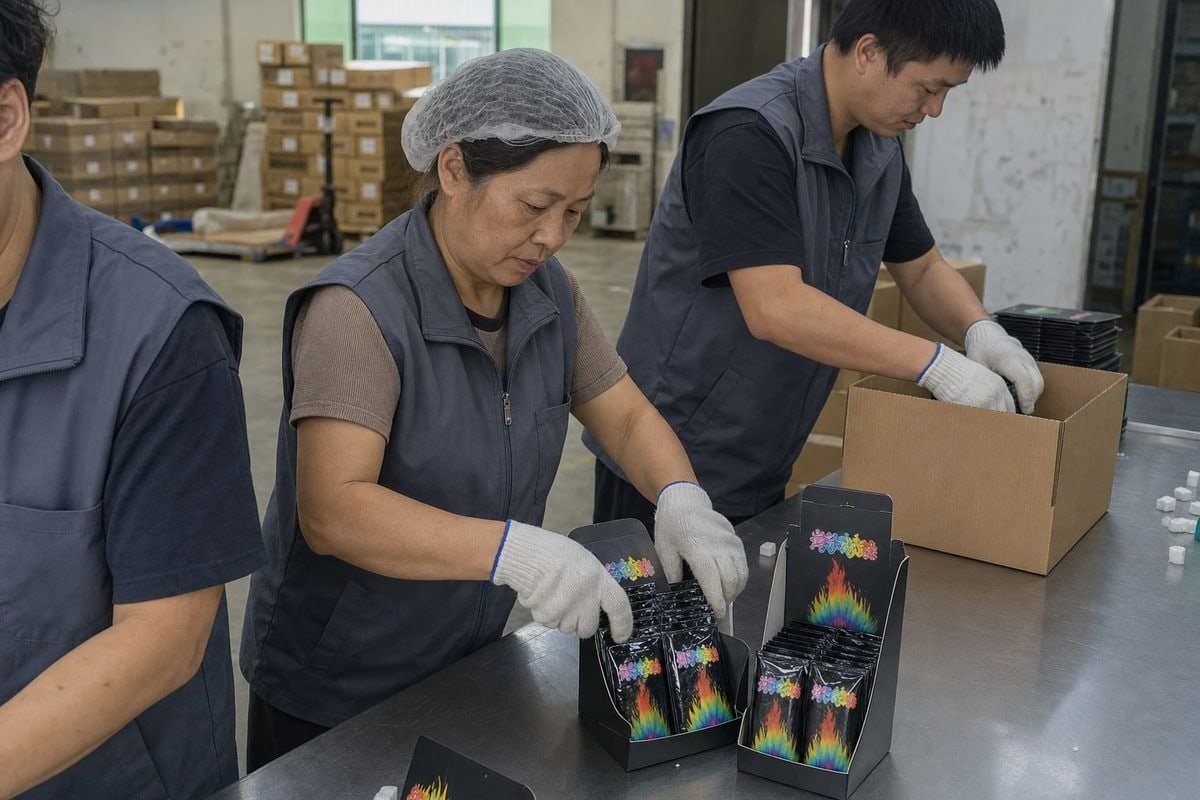
Matching PDQ or countertop displays for Magic Fire Powder come up in almost every retail-focused inquiry we receive at our Ningbo production facility. And for good reason.
Yes, factories should provide matching PDQ or countertop displays for Magic Fire Powder sold in retail channels. A pre-packed display boosts impulse purchases, simplifies store setup, and keeps safety labeling visible. Displays are unnecessary only for pure e-commerce or bulk distributor orders shipped in master cartons.
A small foil sachet of flame colorant is easy to lose on a crowded shelf. Without a display, your product disappears. With one, it sells itself. Let me walk you through what to ask for, how to verify compliance, and what timelines to expect.
What Types of PDQ or Countertop Displays Can I Request for My Magic Fire Powder Order?
A German fireplace distributor once asked us for "just a box that sits on the counter." Three revisions later, we had built him a full seasonal PDQ program. The options run deeper than most buyers expect.
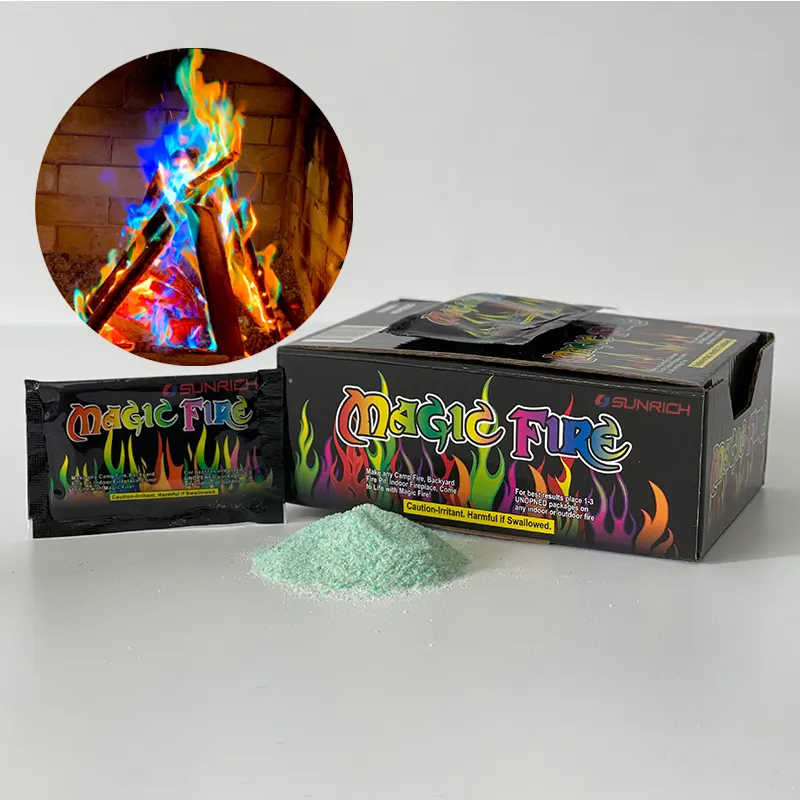
You can request countertop display boxes, PDQ shelf trays, floor-standing units, clip strips, and micro-PDQ formats. Most factories, including ours, build these from corrugated cardboard sized to your sachet dimensions, pre-packed with 12 to 48 units, and printed with your artwork.
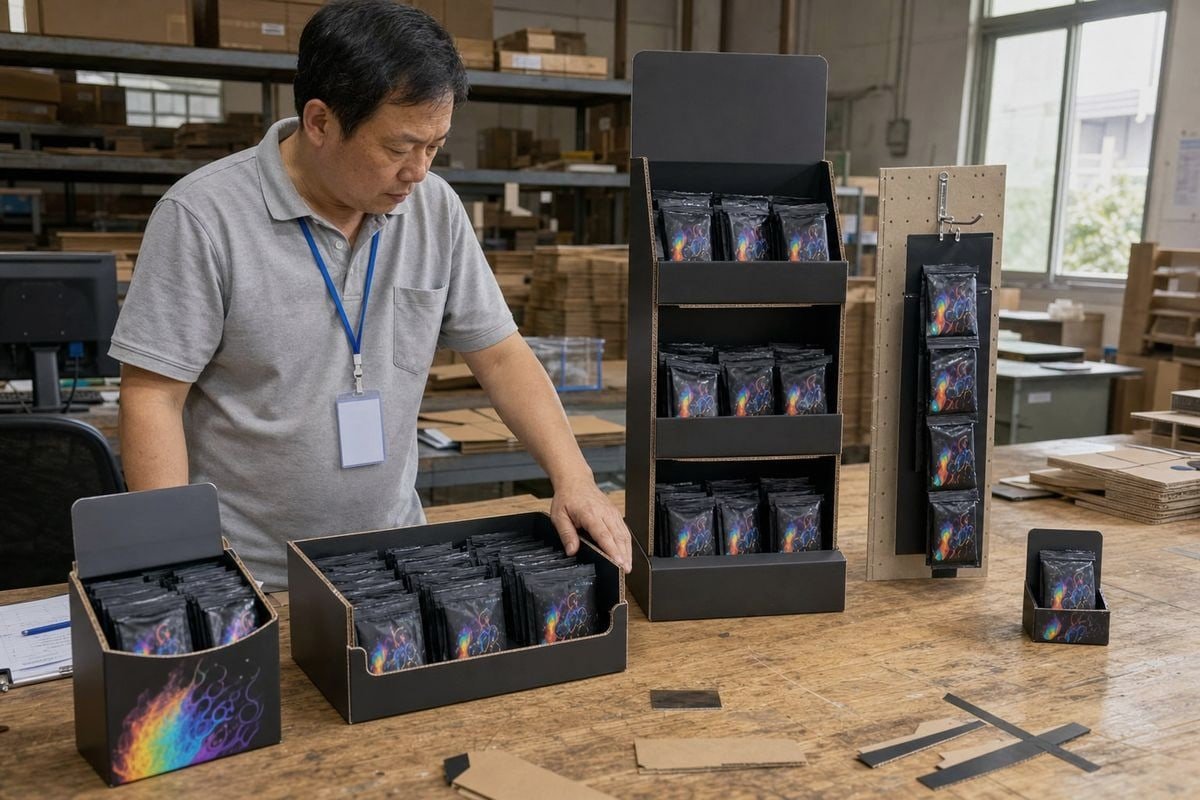
The right format depends on where the product will actually sit in the store. Here is a quick comparison of the display types we produce most often for flame colorant packets:
| Display Type | Capacité typique | Meilleur placement | Notes |
|---|---|---|---|
| Countertop display box | 12–24 sachets | Checkout counters, gift shops | Flip-top lid, strongest impulse buy merchandising format |
| PDQ shelf tray | 24–48 sachets | Standard shelves, endcaps | Retail-ready packaging; tear-away front panel |
| Floor-standing unit | 100+ sachets | Seasonal aisle placement, big-box stores | Corrugated tower with header card |
| Clip strip | 6–12 sachets | Cross-merchandising near firewood or s'mores kits | Hangs off existing fixtures, near-zero footprint |
| Micro-PDQ | 5–10 sachets | Gas station counters, boutique gift registers | Ultra-compact; wins placement in tight spaces |
Match the Format to the Channel
Camping and outdoor retailers usually take the PDQ shelf tray. It slots straight into a planogram 1. Gift and novelty channels prefer the countertop display box because the flip-top lid shows off the rainbow flame graphics. For grocery and hardware stores, clip strips let the packets hang beside charcoal or fire starters, which is where the purchase decision actually happens.
Consider a Thematic Refill Strategy
One design trick we recommend often: keep the base tray permanent and make the header card swappable. You can then rotate Halloween, Christmas, and 4th of July headers over the same corrugated countertop units. This cuts tooling cost and lets one display serve three selling seasons. In our experience, buyers who plan the refill strategy up front save on both design fees and freight, because replacement headers ship flat.
How Do I Know if a Factory's Display Packaging Meets Retail Safety and Labeling Standards?
Compliance is where I see the most deals fall apart. A US buyer once showed me a competitor's display that buried the caution text behind the front lip of the tray. His retailer rejected the entire shipment.
Verify that the factory holds ISO 9001, BSCI, and relevant CE or SGS/Intertek test reports, and confirm the display reserves clear panel space for warnings, age guidance, and usage instructions. Ask for documentation and a physical pre-production sample before approving mass production.

A display for a fire-related consumer product carries more responsibility than a display for candy. The graphics can be playful, but the structure must protect the required information. After 17+ years exporting flame colorant packets to 30+ countries, we treat this as a hard requirement, not a nice-to-have, because our buyers in the US, Germany, and the UK cannot legally shelve the product otherwise.
The Documentation You Should Request
Do not accept verbal assurances. Ask for the paper trail:
- Factory quality certification, such as ISO 9001 2, proving a controlled production system.
- Social compliance audit results, such as BSCI 3, which many European retail chains demand.
- Third-party product test reports from SGS 4 or Intertek covering the powder itself.
- CE documentation where applicable for your destination market.
- A labeling proof showing warning text, barcodes, and country-of-origin marks in final position on the display.
Where Displays Fail Compliance Checks
| Échec courant | Why It Happens | Comment le prévenir |
|---|---|---|
| Warning text hidden by tray lip | Artwork approved as flat file only | Review a physical mock-up, not just a PDF |
| Missing barcode on display outer | Display treated as decoration, not a shipping unit | Assign a separate SKU and barcode to the loaded display |
| Marketing claims overpower hazard info | Designers prioritize the "magic" theme | Lock a fixed safety panel zone before creative work begins |
| Display collapses under load | No real-product testing | Test with filled sachets, not empty samples |
The last point matters more than buyers expect. Shelf-ready packaging must survive wholesale distribution logistics 5: stacking in a container, humidity at sea, and rough handling in a distribution center. We always load-test displays with real product before sign-off, because a collapsed tray at a checkout counter damages your brand more than having no display at all.
Can I Get Custom Branding and Artwork on My Countertop Displays for a Private-Label Program?
Trade-offs shape every private-label conversation I have. Full custom artwork looks best, but it raises the plate cost. Semi-custom templates ship faster. The right answer depends on your volume and your brand ambitions.
Yes. A capable OEM/ODM factory can print your logo, brand colors, custom flame artwork, barcodes, and multilingual warning labels directly on the countertop display, matching your sachet design. Full private label manufacturing typically covers the pouch, display box, and master carton together.
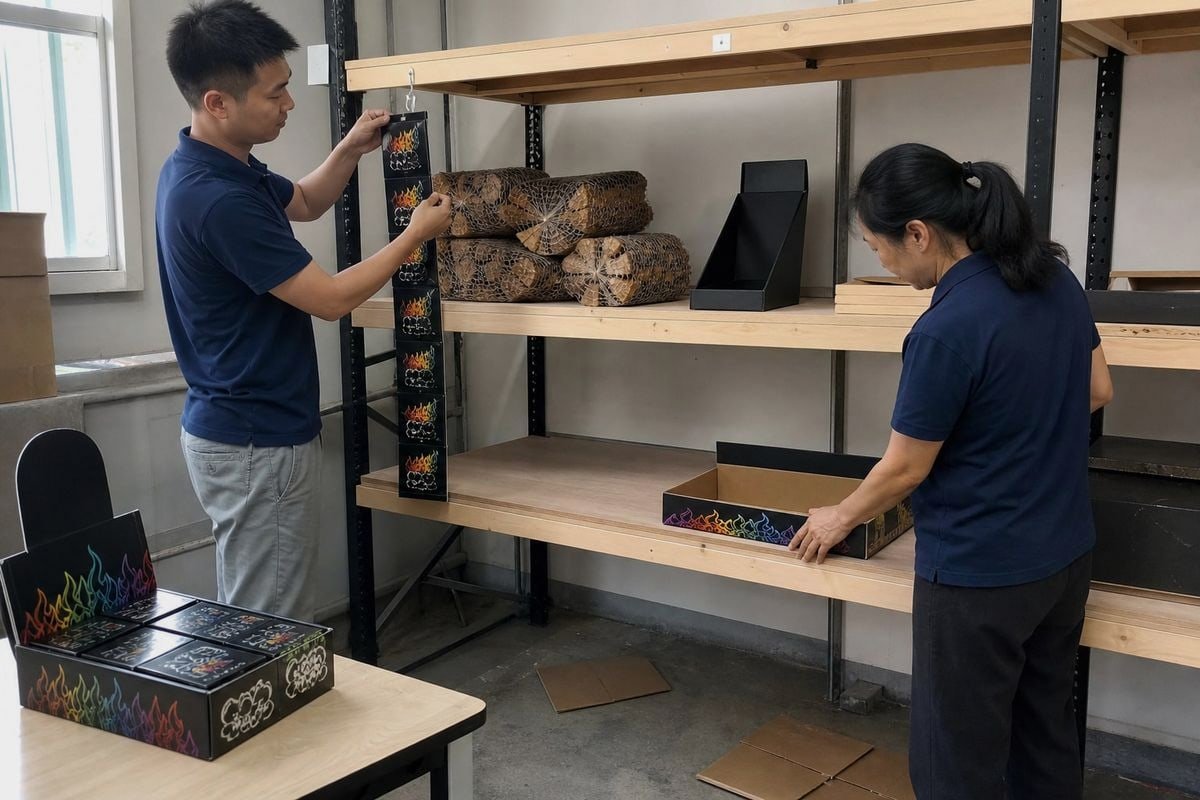
At our factory, private-label branding is the default rather than the exception. Most of the outdoor brands and BBQ distributors we serve do not want our name on the shelf. They want theirs. So we build the display as an extension of their identity: same fonts, same gradient flame graphics, same tone as the foil pouch inside.
What a Complete Private-Label Display Package Includes
A serious présentoirs de point de vente 6 program should cover more than a printed box. Ours typically bundles:
- Custom pouch or sachet artwork, in plastic bag, kraft bag, or jar formats.
- Matching display tray or countertop box with your header graphics.
- Warning labels and usage instructions translated for your market.
- Retailer-specific barcodes on both the sachet and the loaded display.
- A demonstration photo inset showing the colored flames, since the effect is invisible inside the sachet.
That last point deserves emphasis. The powder looks like coarse mint-colored salt. Shoppers cannot guess what it does. The display header works as a silent salesperson, showing blue, green, and purple flames before the customer walks away. Some of our buyers go further and add a QR code linking to a flame-color video or an AR preview, which turns the display into a digital bridge for direct-to-consumer follow-up offers.
Artwork Process and Timing
We usually run three artwork rounds: your brand files in, our structural dieline overlay, then a printed pre-production sample for physical approval. Buyers who supply print-ready vector files at the start shave a week or more off the schedule. Buyers who send a low-resolution logo screenshot add two. Plan your design assets before you request the quote, and the whole program moves faster.
What MOQ and Lead Time Should I Expect When Ordering Matching Displays With My Magic Fire Powder?
Early in my export career, I learned a hard lesson: quoting a display MOQ separately from the product MOQ confuses buyers and delays orders. Now we always quote them as one combined program.
Expect a minimum order quantity of roughly 500 to 1,000 loaded displays for full custom artwork, or lower for semi-custom templates. Total lead time typically runs 30 to 45 days, covering artwork approval, sampling, powder production, display printing, and pre-packing.

The numbers vary by structure and print method, so treat the figures below as planning benchmarks rather than fixed quotes. Corrugated countertop units with standard l'impression flexographique 7 sit at the low end. Litho-laminated floor displays with custom die-cuts sit at the high end.
| Program Type | MOQ typique | Délai de livraison typique | Impact sur le coût |
|---|---|---|---|
| Semi-custom tray, stock dieline, your logo | 300–500 présentoirs | 25–35 jours | Lowest; no new tooling |
| Full custom countertop box | 500–1,000 displays | 30–45 jours | Moderate; new dieline and plates |
| Floor-standing seasonal unit | 500+ displays | 40–55 days | Higher; structural engineering needed |
| Trial order for testing placement | 100–300 displays | 30–40 jours | Negotiable for long-term partners |
What Drives the Timeline
The display itself is rarely the bottleneck. Artwork approval is. In our production schedule, powder blending and sachet filling run in parallel with display printing, so a decisive buyer loses no time. The pre-packing step, where sachets are loaded into trays and trays into master cartons, adds only two to three days. Sea freight then follows normal wholesale distribution logistics: roughly four weeks to the US East Coast, five to Northern Europe.
Flexibility for Trial Orders
If you are testing seasonal aisle placement or a new retail channel, ask about trial quantities. We regularly run smaller first orders for established importers, because a successful test converts into repeat container volume. A factory that refuses any flexibility on minimum order quantity for a first display program is telling you something about how it views the partnership.
Conclusion
Matching PDQ or countertop displays for Magic Fire Powder turn a hidden sachet into a visible, compliant, impulse-friendly retail product; choose the format for your channel, verify certifications, and partner with a factory that bundles display, branding, and product into one program.
Notes de bas de page
1. Authoritative definition of retail space management tools used for product placement. ↩︎
Entrée Wikipedia faisant autorité pour la norme de gestion de la qualité ISO 9001. ↩︎
3. Official site for the leading social compliance audit system for global supply chains. ↩︎
4. Official SGS service page for consumer goods and retail testing and certification. ↩︎
5. Authoritative definition of logistics management within the global supply chain. ↩︎
6. Industry standard terminology for marketing materials placed near transaction areas. ↩︎
7. Technical explanation of the high-speed printing process used for corrugated packaging. ↩︎



 English
 Spanish
 German
 French
 Arabic
 Portuguese
Rejoignez la conversation