






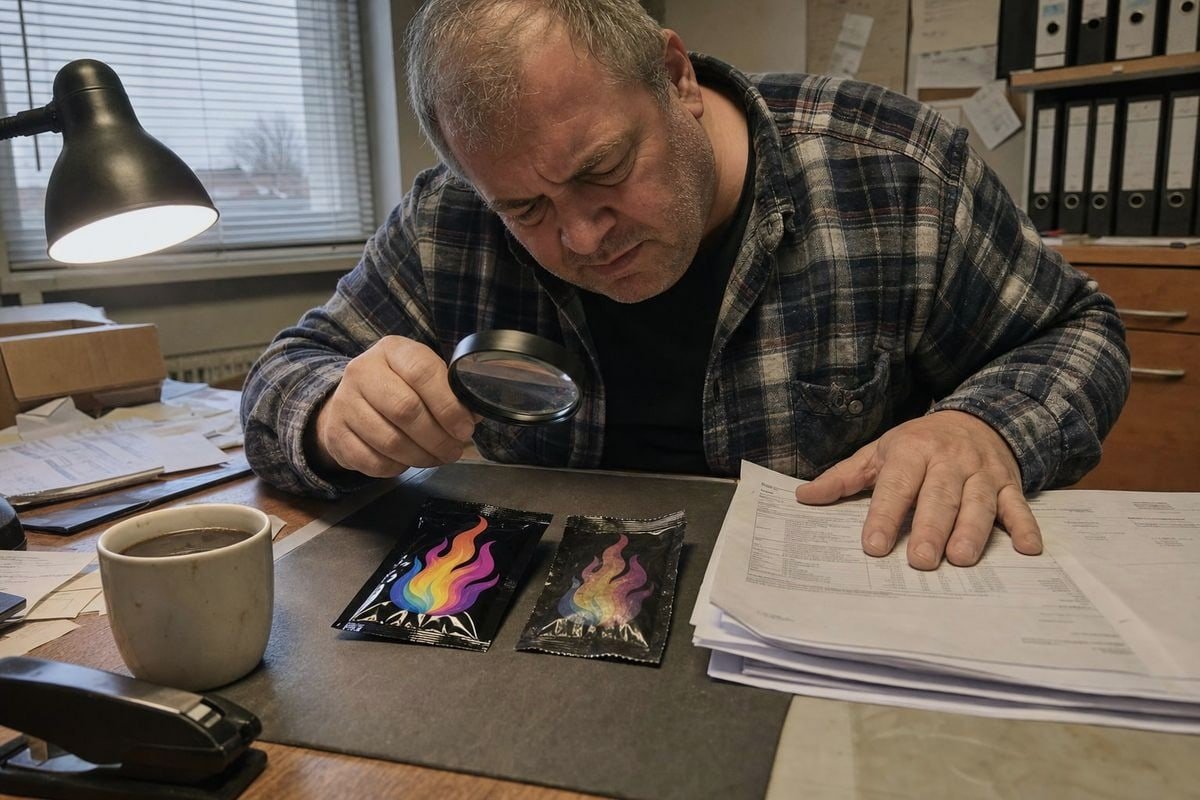
La poudre magique contrefaite inonde les marchés en ligne à chaque saison de camping Gestion de la qualité ISO 9001 1. Sur notre chaîne de production à Ningbo, nous avons vu les contrefaçons que les acheteurs nous apportent — et elles m'inquiètent à chaque fois.
Pour identifier la véritable Poudre Magique Feu par rapport aux contrefaçons, vérifiez les certifications du fournisseur (CE, SGS, ISO 9001), demandez une fiche de données de sécurité, inspectez la qualité d'impression de l'emballage et les sachets scellés à chaud, confirmez les codes de lot et les étiquettes d'avertissement, et évitez les offres inhabituellement bon marché de détaillants non autorisés.
L'apparence seule ne vous protégera pas. Les contrefacteurs copient étroitement les étiquettes. L'approche la plus sûre est la vérification multicouche. Ci-dessous, je décris chaque couche, en m'appuyant sur plus de 17 ans d'expérience dans la fabrication de produits à flamme colorée pour des acheteurs dans plus de 30 pays.
Quelles certifications devrais-je vérifier pour confirmer qu'un fournisseur de poudre magique de feu est légitime ?
Un distributeur allemand m'a dit un jour qu'il avait rejeté trois fournisseurs d'affilée avant de nous trouver — aucun ne pouvait produire un seul rapport de test valide. Marquage CE 2. Cette histoire est plus courante que vous ne le pensez.
Un fournisseur légitime de poudre magique de feu devrait détenir la certification de gestion de la qualité ISO 9001, un audit social d'usine tel que le BSCI, le marquage CE pour le marché européen et des rapports de test de tiers de laboratoires tels que SGS ou Intertek. Demandez toujours les documents originaux, puis vérifiez les numéros de certificat directement auprès de l'organisme émetteur.

Les certifications sont le filtre le plus puissant dont vous disposez. Les opérations de contrefaçon investissent rarement dans de véritables audits ou des tests en laboratoire. Cela coûte cher, prend des mois et expose la composition de leurs sels métalliques à un examen minutieux. Une usine authentique considère la conformité comme une exigence stricte, car les principaux acheteurs de détail l'exigent avant la signature de toute commande.
Les documents essentiels à demander
Voici ce que je recommande à chaque acheteur de demander avant une première commande, en me basant sur ce que contient notre propre dossier de conformité :
| Document | Ce qu'elle prouve | Comment le vérifier |
|---|---|---|
| Certificat ISO 9001 | L'usine gère un véritable système de gestion de la qualité | Vérifiez le numéro de certificat auprès de l'organisme de certification |
| Audit BSCI 3 rapport | L'usine respecte les normes sociales et du travail | Demandez l'identifiant de l'audit et l'enregistrement de la plateforme |
| documentation CE | Le produit répond aux exigences de l'UE | Demandez le dossier technique, pas seulement un logo |
| Rapport de test SGS ou Intertek | La composition du produit a été testée indépendamment | Contactez le laboratoire avec le numéro de rapport |
| Fiche de Données de Sécurité 4 (FDS) | Les avertissements de sécurité chimique et la composition sont documentés | Comparez la FDS aux ingrédients de l'étiquette |
Méfiez-vous des astuces de certificats
Certains commerçants présentent un certificat qui appartient à une autre usine. D'autres présentent un document expiré ou un rapport pour un produit entièrement différent. Faites toujours correspondre le nom de l'entreprise, l'adresse et la description exacte du produit sur chaque document. Lorsque nous organisons des visites d'usine à Liuyang et Ningbo, les acheteurs peuvent voir les certificats affichés au mur correspondre aux documents dans leur boîte de réception. Une société commerciale se faisant passer pour une usine ne peut généralement pas offrir cela.
Si un fournisseur hésite, retarde ou envoie des scans flous avec des détails coupés, considérez cela comme un refus catégorique. La documentation authentique devrait arriver dans la journée suivant votre demande.
Comment puis-je vérifier la sécurité du produit et l'authenticité des ingrédients avant de passer une commande en gros ?
Avant d'approuver un lot pour l'exportation, notre équipe de contrôle qualité brûle des échantillons du début, du milieu et de la fin de la production. Cette discipline est exactement ce que vous devriez exiger de votre fournisseur.
Vérifiez la sécurité et l'authenticité en demandant une fiche de données de sécurité complète, en confirmant que la composition du sel métallique correspond à l'étiquette, en commandant des échantillons payants pour des tests de combustion, en vérifiant la durée de la couleur de la flamme par rapport aux affirmations et en observant le comportement de la fumée. Les véritables produits à flamme colorée brûlent de manière constante avec une odeur minimale et sans fumées épaisses et âcres.
Ne passez jamais une commande en gros sur la base de photos et de promesses. Un test de combustion d'échantillon vous en dit plus que n'importe quelle brochure. Voici le processus que je recommande, et c'est le même que nos ingénieurs utilisent lors du contrôle qualité lot par lot.
Un processus de vérification en cinq étapes
- Demandez d'abord la FDS. La fiche de données de sécurité doit indiquer les ingrédients actifs, les classifications de danger, les instructions de stockage et les premiers secours. caractéristiques des déchets dangereux 5. Comparez-la à l'étiquette imprimée. Les divergences sont un signe d'alerte sérieux.
- Renseignez-vous sur la composition des sels métalliques. Les effets authentiques de flamme colorée proviennent de sels métalliques spécifiques — les composés de cuivre produisent des bleus et des verts, par exemple. Certains produits utilisent sulfate de cuivre 6; les nôtres sont formulés avec des matériaux écologiques et sans produits chimiques nocifs. Quoi qu'il en soit, le fournisseur doit indiquer ouvertement la chimie, pas se cacher derrière un "mélange propriétaire"."
- Commandez des échantillons et brûlez-les. Utilisez un vrai feu de camp ou l'un des foyers à bois que vos clients possèdent réellement. Chronométrez la durée de la couleur de la flamme. Un sachet authentique doit maintenir une couleur constante pendant la durée indiquée, souvent de 30 à 60 minutes.
- Méfiez-vous des interruptions de flamme. Si la flamme revient constamment à un orange simple, les granulés peuvent être dilués avec des charges bon marché comme le gypse. Faites un test tactile de grumeaux à travers le sachet — le produit authentique ressemble à des cristaux fluides, pas à des grumeaux agglomérés.
- Vérifiez la fumée. Les sels authentiques produisent une fumée légère, largement inodore. Des fumées épaisses, sombres ou âcres indiquent des produits chimiques industriels de faible pureté qui ne devraient jamais se trouver près d'un feu de camp familial.
Pourquoi la cohérence des échantillons est plus importante qu'un seul bon échantillon
Un échantillon parfait signifie peu si la production de masse dérive. Demandez comment l'usine contrôle la cohérence entre les lots. Dans notre usine, la taille des granulés, le rapport de mélange et le poids de remplissage sont vérifiés à chaque production afin que le premier échantillon reflète de manière fiable la qualité du chargement du conteneur. Un fournisseur qui ne peut pas décrire son processus de contrôle qualité en termes simples n'en a probablement pas.
Quels détails d'emballage et d'étiquetage m'aident à distinguer les produits authentiques des contrefaçons au niveau de gros?
L'emballage est un domaine où nous consacrons une quantité surprenante de temps d'ingénierie. Lorsque nous développons des sachets de marque privée pour des clients européens, la disposition de l'étiquette d'avertissement passe à elle seule par plusieurs examens de conformité avant l'impression.
Les emballages de gros authentiques présentent une qualité d'impression d'emballage nette, des sachets en aluminium thermoscellés proprement sertis, des codes de lot ou de fabrication imprimés, les détails complets du fabricant, des avertissements clairs sur la sécurité chimique et des instructions d'utilisation correctes. Les contrefaçons présentent une impression floue, des codes de lot manquants, des scellages faibles et un étiquetage des dangers vague ou absent.
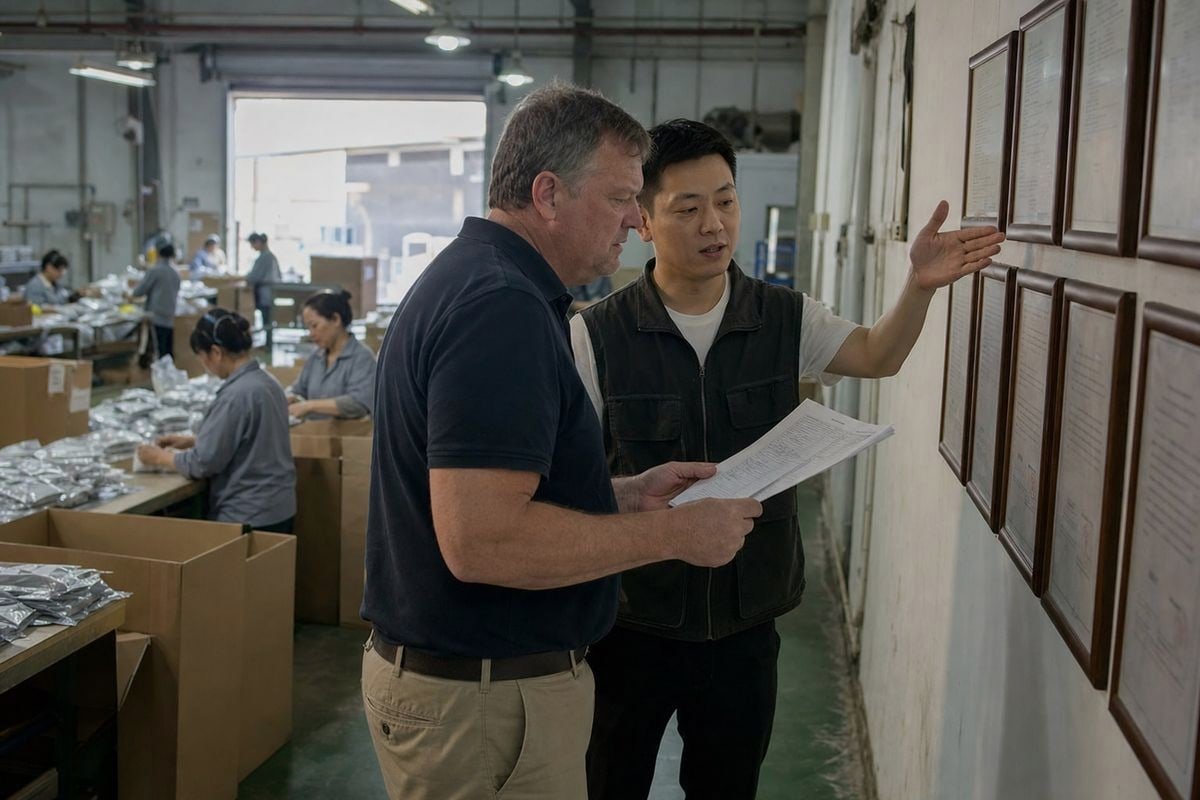
Au niveau de gros, vous inspectez les cartons, pas les unités individuelles. Cela vous donne en fait un avantage. Les incohérences sur des dizaines d'unités révèlent les contrefaçons plus rapidement qu'un seul sachet ne le pourrait jamais.
Comparaison côte à côte des emballages
| Fonctionnalité | Produit authentique | Produit probablement contrefait |
|---|---|---|
| Sachet scellé en aluminium | Soudure nette et uniforme des deux côtés | Bords lâches, froissés ou scellés à nouveau |
| Qualité d'impression | Dégradés nets, texte aligné, couleurs de marque précises | Lettres floues, décalages de couleur, erreurs d'orthographe |
| Code de lot/lot | Imprimé sur le sachet et le carton extérieur, traçable | Manquant, taché ou identique sur tous les cartons |
| Étiquettes d'avertissement | Texte de sécurité "Ne pas cuire au-dessus" clair, langue correcte pour le marché | Avertissements absents, minuscules ou mal traduits |
| Informations sur le fabricant | Nom et adresse complets | Pas d'adresse, ou seulement le nom d'un magasin sur une marketplace |
| Caractéristiques d'authentification | Sceau d'authentification holographique ou code QR spécifique au lot sur certaines marques | Codes QR statiques copiés ou pas de sceau du tout |
Détails que les contrefacteurs omettent généralement
Les contrefacteurs copient le devant de l'emballage car c'est ce qui se vend. Ils négligent ce que les régulateurs exigent. Regardez le dos : catégorie d'utilisation prévue, instructions de stockage, recommandations d'âge et les informations de contact du centre antipoison 7 ou informations de contact d'urgence. Les marques établies comme Magical Flames les incluent systématiquement ; les faux ne s'en soucient que rarement.
Vérifiez également la protection contre l'humidité. Les sachets authentiques utilisent une feuille d'aluminium résistante à l'humidité car les granulés cristallins s'agglutinent lorsqu'ils sont humides. Si les sachets à l'intérieur d'une boîte d'exposition semblent durs et agglomérés, le contenu peut être un substitut — ou l'emballage peut être une imitation bon marché qui n'a pas protégé le vrai produit. Dans tous les cas, ne le mettez pas sur vos étagères.
Un autre conseil de notre travail d'OEM : demandez à votre fournisseur les fichiers d'illustration originaux et le tracé. Une usine authentique les possède. Un contrefacteur n'a que des scans.
Quels sont les signaux d'alarme à surveiller lors de l'approvisionnement en produits à flamme colorée auprès d'un nouveau fabricant ?
Un acheteur des Pays-Bas m'a une fois transmis un devis quarante pour cent inférieur à notre prix et m'a demandé comment c'était possible. Je lui ai dit honnêtement : à ce prix, quelqu'un rogne sur la chimie, la conformité, ou les deux.
Les principaux signaux d'alarme comprennent des prix bien inférieurs au taux du marché, le refus de partager des rapports de test ou une FDS, une adresse d'usine non vérifiable, des photos de stock au lieu d'images de production réelles, une traçabilité des lots manquante, une pression pour payer avant l'échantillonnage et des réponses évasives concernant la composition des sels métalliques ou les certifications.

Les nouvelles relations avec les fournisseurs échouent pour des raisons prévisibles. Après avoir exporté vers les États-Unis, l'Allemagne, le Royaume-Uni et au-delà pendant plus d'une décennie et demie, je peux regrouper les signes avant-coureurs en trois catégories : commerciales, documentaires et physiques.
Signaux d'alarme classés par gravité
| Signal d'alarme | Catégorie | Ce que cela signifie généralement |
|---|---|---|
| Prix 30% inférieur au marché | Commercial | Formule diluée ou produits chimiques non conformes |
| Pas de FDS ou de rapports de test sur demande | Documentaire | Le produit n'a jamais été testé de manière indépendante |
| Contact uniquement via marketplace, pas d'adresse d'usine | Commercial | Société commerciale ou revendeur éphémère |
| Certificats au nom d'une autre entreprise | Documentaire | Documents de conformité empruntés ou volés |
| Échantillon différent de l'expédition en vrac | Physique | Pas de contrôle qualité lot par lot |
| Réponses vagues sur les ingrédients | Documentaire | Dissimulation de chimie bon marché ou dangereuse |
| Refus de visite vidéo de l'usine | Commercial | Rien de réel à montrer |
Comment tester un nouveau fournisseur sous pression
Posez trois questions simples et observez leur réaction. Premièrement, "Pouvez-vous envoyer votre numéro de rapport SGS ou Intertek afin que je puisse le vérifier ?" Deuxièmement, "Quel est votre système de codage par lots, et pouvez-vous retracer un sachet jusqu'à sa date de production ?" Troisièmement, "Pouvons-nous faire une visite vidéo en direct de votre ligne de production cette semaine ?" Une vraie usine répond rapidement aux trois. Lorsque les acheteurs nous interrogent, nous pouvons pointer une caméra sur la ligne le jour même.
Insistez également pour n'acheter que par l'intermédiaire de détaillants autorisés ou de canaux directs d'usine lors de la comparaison de références concurrentes. Les vendeurs non vérifiés sur les marketplaces sont le principal canal de distribution des contrefaçons, et un acheteur en gros qui s'y procure des échantillons de référence risque de comparer avec des faux.
Enfin, faites confiance au schéma, pas à un seul signal. Un détail inhabituel peut être innocent. Trois ensemble ne le sont presque jamais.
Conclusion
La poudre magique de feu contrefaite met en danger la sécurité, les remboursements et la réputation de votre marque. Superposez vos vérifications : certifications vérifiées, examen de la FDS, tests de combustion d'échantillons, inspection des emballages et évaluation des fournisseurs. En cas de doute, n'achetez pas — privilégiez un partenaire d'usine éprouvé et conforme.
Notes de bas de page
Source ISO officielle expliquant la norme de gestion de la qualité mentionnée comme exigence de certification. ↩︎
Source officielle de l'UE décrivant les exigences de marquage CE référencées pour la conformité du produit. ↩︎
Informations de base sur la norme de référence d'audit de conformité sociale BSCI pour les usines. ↩︎
Référence de base expliquant le contenu d'une Fiche de Données de Sécurité et son objectif réglementaire. ↩︎
Ressource officielle de l'EPA définissant les quatre caractéristiques utilisées pour classer les déchets dangereux. ↩︎
Référence de chimie de base pour le composé de sel métallique mentionné dans les formulations de couleur de flamme. ↩︎
Ressource faisant autorité principale pour l'assistance d'urgence en cas d'empoisonnement et les informations sur l'exposition chimique. ↩︎


 English
  Spanish
  German
  French
  Arabic
  Portuguese
Rejoignez la conversation