






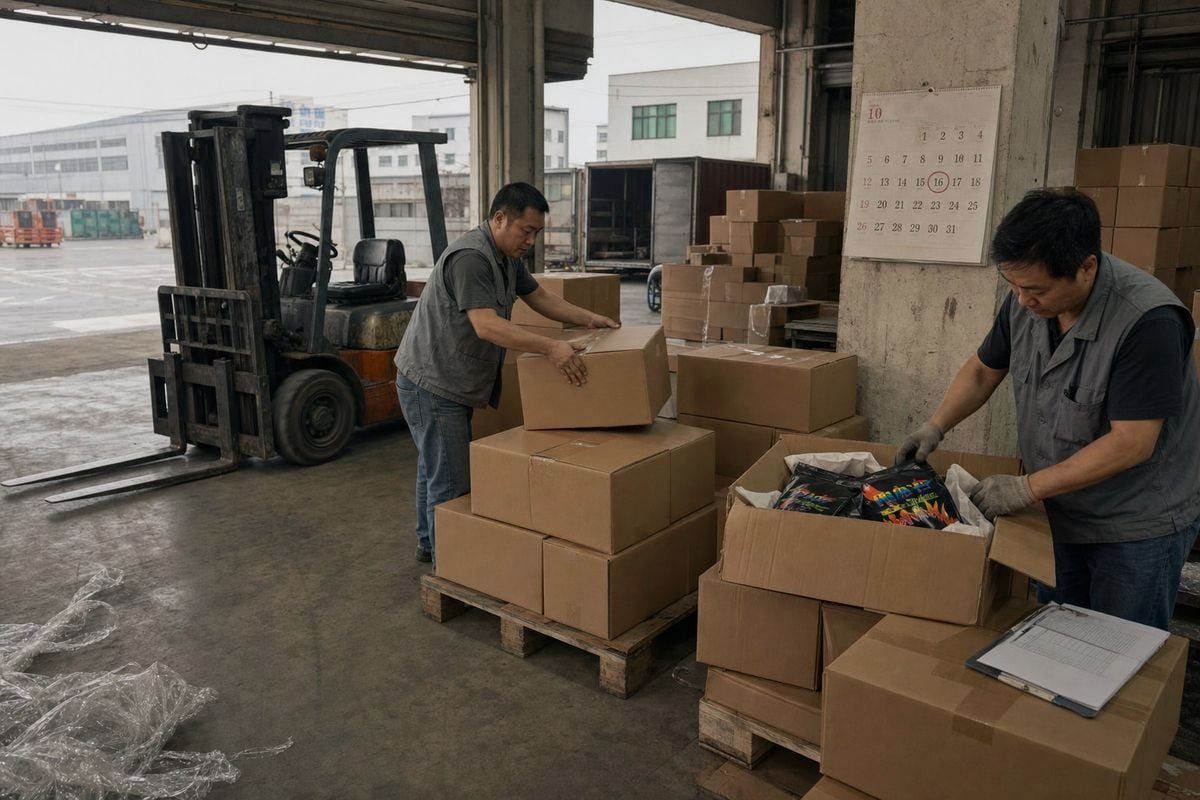
Amazon warehouse appointment delays can quietly destroy a Q4 launch GHS revisions 1. On our production line in Ningbo, we have watched perfectly made Magic Fire Powder sit outside a fulfillment center for weeks. The product was flawless. The paperwork was not. One missing Amazon Reference ID 2, one wrongly booked dock slot, and the whole peak-season plan unraveled. The good news? Every one of those delays was preventable with earlier planning.
To avoid Amazon warehouse appointment delays on Magic Fire Powder, prepare SDS documentation four weeks early, ship inventory to arrive before mid-October, book Carrier Central appointments with complete shipment IDs and PRO numbers, use compliant SSCC labeling, and build two to three weeks of buffer with your manufacturer.
That answer sounds simple. In practice, each step has traps that catch even experienced importers. Let me walk through them one by one, based on what we see across dozens of peak seasons.
What documentation should I prepare in advance to prevent Amazon warehouse compliance holds on Magic Fire Powder shipments?
A buyer in Texas once asked us why his shipment sat in "pending review" for three weeks. His labels were perfect. His Fiche de Données de Sécurité 3 was two GHS revisions out of date. That single document froze everything.
**Prepare an updated Safety Data Sheet aligned with current GHS standards, hazmat classification paperwork or Limited Quantity documentation, SGS or Intertek test reports, commercial invoices, and packing lists at least four weeks before shipping, because Amazon manually reviews all dangerous goods documentation before approving receipt.

Amazon treats any flame-related product cautiously. Even though our Magic Fire color-flame packets are made from eco-friendly materials with no harmful chemicals, Amazon's systems will still flag the listing for hazmat classification review 4. That review is manual. It does not move faster because peak season is approaching. In fact, it slows down, because every hazmat team is buried in submissions from August onward.
L'ensemble documentaire de base
Here is the checklist we prepare for our B2B buyers before every peak season:
| Document | Why Amazon needs it | Lead time to prepare |
|---|---|---|
| Safety Data Sheet (SDS), current GHS version | Mandatory manual dangerous goods review | Submit 4+ weeks before shipping |
| Rapports de tests par des tiers (SGS/Intertek) | Proves product safety claims | Request from factory at order time |
| Hazmat exemption or Ltd Qty declaration | Determines transport and storage rules | 2–3 semaines |
| Facture commerciale et liste de colisage | Customs clearance and FC receiving match | Avec chaque envoi |
| Déclaration de composition | Supports "no harmful chemicals" classification | Request once, update per formula change |
Run a pre-peak hazmat audit in August
We recommend our distributors conduct a full documentation audit in August. Verify that the SDS version on file with Amazon matches the current formula. Verify that the composition statement matches the SDS. A mismatch between documents is one of the most common causes of a compliance hold. Because we run complete production lines with batch-to-batch quality control, we can issue updated SDS and test documentation quickly. A trading company reselling powder from a third party usually cannot. Ask your supplier who actually controls the formula. If they hesitate, your paperwork risk just went up.
How far ahead of peak season should I place my order to avoid Amazon FBA appointment scheduling delays?
Every year around June, we start getting urgent emails from buyers who "just realized" Q4 shipping deadlines are closer than they look. The math backward from Black Friday is unforgiving.
Place your Magic Fire Powder order five to six months before peak season, targeting Amazon arrival by October 14th. Working backward from Q4 shipping deadlines, this covers production, ocean freight, hazmat review, Carrier Central booking lag, and warehouse-specific appointment backlogs of ten to twenty days.
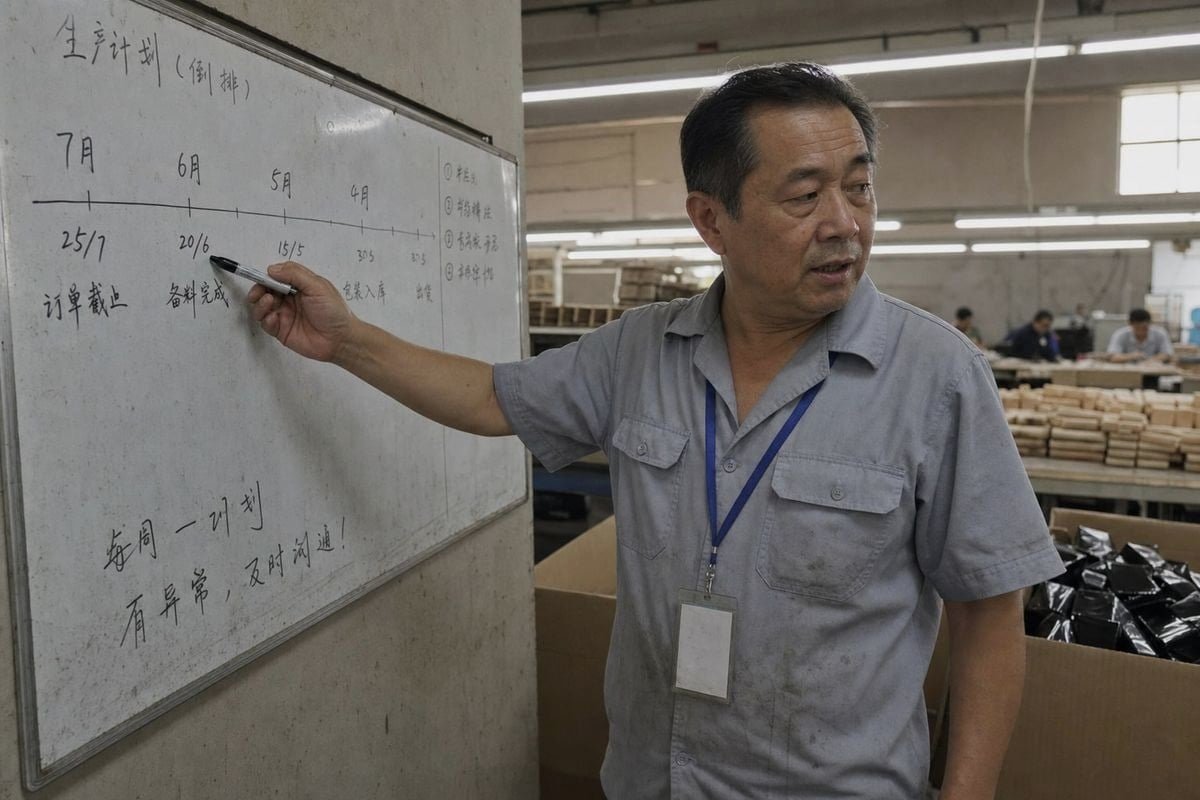
The most useful planning tool I can give you is a reverse timeline. Do not plan forward from your desired order date. Plan backward from October 14th, the practical cutoff for Black Friday and Cyber Monday availability.
The reverse timeline that actually works
| Jalon | Target date | Pourquoi la marge est importante |
|---|---|---|
| Place order and confirm custom packaging | Mai-juin | OEM pouches, private-label boxes, and warning labels add production time |
| Production complete, QC passed | Juillet | Batch testing and pre-shipment inspection |
| Ocean freight departs China | Early August | Peak-season vessel space tightens fast |
| Arrival at US port + customs | Early–mid September | Hazmat cargo can face extra customs scrutiny |
| Carrier Central appointment requested | Mid September | Responses typically come within 24 hours, but only with complete data |
| Delivery to Amazon FC/DC | By October 14th | Ensures dock-to-stock completion before Black Friday |
Here is the objection I hear most often: "Booking early is enough, right?" Not quite. Early booking is necessary but not sufficient. Some fulfillment centers experience multi-day or even multi-week Inbound Shipment Appointment backlogs while others stay fluid. These constraints are local and unpredictable — a facility may be limited by maintenance, overstock, or operating restrictions. That is exactly why you build slack into every stage rather than betting on a best-case schedule. Amazon itself acknowledges that delivery windows are estimates that shift with external factors. Your plan should assume the same.
A stockout during inbound delays also damages your Inventory Performance Index, which then restricts future storage limits. One late shipment can compound into a whole bad quarter.
Which packaging and labeling requirements help my Magic Fire Powder shipments clear Amazon warehouse receiving faster?
There is a trade-off we weigh on every OEM order: eye-catching retail packaging versus scan-friendly logistics compliance. A gorgeous foil pouch means nothing if the carton label will not scan at the dock.
Use scannable SSCC carton labels, correct FNSKU labels on each unit, Limited Quantity markings where applicable, standard-compliant pallets, and box labels matching the exact destination DC generated in Send to Amazon. Accurate, scannable labeling prevents shipments from stalling in the dock-to-stock phase.

Receiving speed at Amazon comes down to one question: can every scan happen without a human intervening? When a label is wrinkled, misplaced, or mismatched against the shipment plan, the pallet gets sidelined. Sidelined pallets during peak season can wait days before someone resolves them manually.
Labels that must be right the first time
There are three label layers, and each fails differently:
- Unit level. Every foil pouch, kraft bag, or jar needs a correct FNSKU ou scannable barcode 5. We print these directly onto private-label packaging during production, which removes a whole 3PL prep services step and its cost.
- Carton level. SSCC labels 6 must be flat, on the correct panel, and matched to your shipment plan. A skipped carton scan means manual receiving.
- Pallet level. Box labels from Send to Amazon specify the destination DC. If your freight forwarder or carrier books an appointment at the wrong facility, Amazon can reject the entire delivery — even when every label underneath is perfect.
Why Limited Quantity markings matter
Applying Ltd Qty markings 7, where your product qualifies, moves it out of the most restrictive hazmat transport rules. That gives carriers more flexibility in equipment and routing, which directly widens your appointment options. Fewer restrictions mean more available dock slots.
One more point from our factory floor: warning labels, barcodes, and compliance marks should be printed into the packaging design, not stickered on afterward. Stickers peel, shift, and fail scans. Printed compliance survives the whole journey. This is one reason we handle custom boxes, display packaging, and warning labels in-house rather than pushing that burden onto the buyer.
How can I work with my manufacturer to build in buffer time against unexpected Amazon inbound delays?
Seventeen years of exporting to the US and Europe taught us one hard lesson: the shipments that survive peak season are the ones with slack designed in from the purchase order onward.
Work with your manufacturer to confirm production dates in writing, request staggered LTL shipments instead of one bulk FTL, hold safety stock via an FBM listing, use Inbound Placement toward less congested hubs, and keep a backup carrier ready — building two to three weeks of total buffer.

Buffer time is not one big cushion. It is several small cushions distributed across the supply chain. Here is how we structure it with our long-term distribution partners.
Distribute the buffer, don't concentrate it
| Buffer point | Tactique | Typical slack gained |
|---|---|---|
| Production | Confirm completion date in writing; factory holds finished goods ready | 1 week |
| Shipment structure | Split into 2–3 LTL shipments instead of one FTL | Higher odds of securing any dock slot |
| Routing | Use Inbound Placement toward specialized, less congested regional hubs | Days to weeks at constrained FCs |
| Carrier | Pre-qualify a backup carrier registered in Carrier Central | Avoids exhausted appointment attempts |
| Canal de vente | Maintain an active FBM listing with local safety stock | Prevents "out of stock" during inbound delays |
Why smaller shipments win peak season
A single full truckload needs one large appointment window at one facility. If that facility is backlogged, everything waits. Two or three LTL shipments spread across dates — or even facilities — raise the statistical odds that at least some inventory checks in on time. Yes, per-unit freight costs rise slightly. Against the cost of missing Black Friday entirely, it is cheap insurance.
What a real factory partner should do
Because we manufacture in-house with complete production lines, we can hold buffer stock of finished Magic Fire packets, restart a batch quickly if a shipment is damaged, and reissue compliant documents within days. Ask your supplier three questions before peak season: Can you ship in split batches? Can you hold finished inventory for two weeks at no charge? Can you reissue an SDS or test report within 48 hours? If the answer to any is no, your buffer plan has a hole. And if you are already delayed with a closing delivery window, contact Amazon Seller Support immediately — late arrivals are sometimes accepted, but stocking slows and acceptance is never guaranteed.
Conclusion
Amazon warehouse appointment delays are predictable, and predictable problems are preventable. Prepare documents early, order months ahead, label flawlessly, and build buffers with a factory partner who ships compliant, shelf-ready product.
Notes de bas de page
1. Background on the global chemical classification standard referenced by outdated SDS versions. ↩︎
2. Amazon Seller Central manages reference IDs required for warehouse appointment scheduling. ↩︎
3. OSHA defines required SDS content and GHS-aligned format for hazardous material documentation. ↩︎
4. PHMSA governs hazardous materials classification rules triggering Amazon's manual review process. ↩︎
5. GS1 sets global barcode standards ensuring units scan correctly during warehouse receiving. ↩︎
6. GS1 defines the Serial Shipping Container Code standard used for carton-level tracking. ↩︎
7. Official eCFR regulatory text for Limited Quantity marking standards. ↩︎



 English
  Spanish
  German
  French
  Arabic
  Portuguese
Rejoignez la conversation