







Arranging third-party pre-shipment inspection for Magic Fire Powder worries many first-time importers UN classification for pyrotechnics 1. On our production line in Ningbo, I have watched buyers lose sleep over exactly this question.
To arrange third-party pre-shipment inspection for Magic Fire Powder, confirm the product's compliance status, choose an accredited independent inspection agency, share specs, approved samples, and AQL criteria, then book the visit when production is about 80% complete—before final payment and export.
That is the short answer. Now let me walk you through each step, because the details decide whether your shipment sails smoothly or sits in a warehouse.
What third-party inspection agencies do I choose for Magic Fire Powder shipments?
A German distributor once asked me to recommend an inspector for his first trial order of our color-flame packets. My honest answer surprised him: never let the factory pick alone.
Choose an independent, ISO 17020-accredited third-party inspection agency with offices near the factory, proven experience with powdered or chemical consumer goods, fast English reporting, and no financial ties to the supplier. Global names like SGS, Intertek, TÜV, or Bureau Veritas are safe defaults.

Independence is the whole point. In our seventeen-plus years exporting color-flame products to the US, Germany, the UK, and beyond, we have hosted dozens of third-party inspection agency 2 visits at our own request. A good factory welcomes them. A weak factory resists them. That reaction alone tells you a lot.
What separates a strong agency from a weak one?
Look past the logo. Ask each candidate these questions before you sign anything:
- Do they have inspectors based near the production site (for us, Ningbo, Zhejiang)?
- Have they inspected powdered products, flame additives, or chemical-adjacent consumer goods before?
- Can they verify packaging and labeling compliance against your destination market's rules?
- Can they review a Fiche de données de sécurité des matériaux 3 and check it against the actual product and cartons?
- How fast is the report delivered, and does it include photos and clear pass/fail results?
Comparing your main options
| Agency type | Typical cost per man-day | Points forts | Watch out for |
|---|---|---|---|
| Global firms (SGS, Intertek, BV, TÜV) | $250–350 | Brand recognition, lab access, chemical composition analysis 4 capability | Higher cost, slower booking |
| Regional independent agencies | $200–300 | Flexible, fast, good English reports | Verify accreditation and powder experience |
| Supplier self-inspection | "Free" | Zero cost | No independence; weak in disputes |
| Your own staff or sourcing agent | Travel cost | Knows your specs deeply | Rarely trained in AQL sampling standards |
We hold SGS and Intertek test reports for our own Magic Fire products, so we know from the factory side how rigorous these firms are. For a sensitive powder product, that rigor is worth the fee. Book at least 48 hours in advance; a week ahead is safer during peak season.
When should I schedule a pre-shipment inspection during production?
Timing trips up more buyers than agency choice does. I once had a client book an inspector two weeks before our filling line had even started sealing sachets. The visit was wasted.
Schedule the pre-shipment inspection when production is at least 80% complete and the goods are packed, or nearly packed, in final export cartons. This gives a statistically representative sample pool while still leaving time to fix problems before the ship date.

Why 80%? AQL sampling standards such as ANSI/ASQ Z1.4 5 assume the inspector can pull random cartons from across the whole order. If only 30% is finished, the sample only reflects early batches. If you wait until 100% is packed and loaded, any defect found becomes a crisis, because there is no time left to rework. The 80% mark balances both risks.
A practical booking timeline
Here is the schedule we recommend to our B2B buyers, counting backward from the vessel cut-off:
| Days before shipment | Action |
|---|---|
| 21–30 days | Confirm compliance requirements with your customs broker; share specs and AQL criteria with the agency |
| 10–14 days | Factory confirms production status; book the inspection date (minimum 48 hours' notice) |
| 5–7 jours | Inspection day: production at ~80%+, goods export-packed |
| 3–5 jours | Review the report; approve, rework, or re-inspect |
| 0–2 days | Release final payment; container loading supervision if booked |
Coordinate with the factory, not around it
Tell your supplier the inspection date early. On our side, we prepare the packing list, batch records, the quality control checklist, and retained golden samples before the inspector arrives. A factory caught off guard wastes the inspector's man-day. A prepared factory turns the visit into a half-day exercise. If your order includes private-label packaging—custom boxes, barcodes, warning labels—make sure the printed materials arrive before the inspection, not after. We have seen buyers forced into a second inspection simply because retail boxes were still at the printer.
What quality and safety standards should the inspection cover for color-flame powder?
Standards are where I push back hardest on generic checklists. Our Magic Fire packets are made from matériaux écologiques sans produits chimiques nocifs, yet buyers still—rightly—demand documented proof, not promises.
The inspection should cover AQL-based visual and functional checks, seal integrity, net weight, moisture content, batch consistency, a supervised burn test for flame color, plus verification of the SDS, Certificate of Analysis, warning labels, and destination-market packaging and labeling compliance.

Start with classification. Do not assume your product falls into a specific hazard category, and do not assume it falls into none. Ask the factory for the Material Safety Data Sheet and a current Certificate of Analysis, then confirm the transport status with your freight forwarder. If a dangerous goods declaration 6 or UN classification for pyrotechnics applies to your specific formulation, the inspector must verify that outer cartons carry the correct markings. If it does not apply—as with our formulations, backed by SGS and Intertek test reports—the inspector should confirm the paperwork proving that, because port authorities may still ask.
The core inspection checklist
| Vérifier | What the inspector verifies | Why it matters for powder |
|---|---|---|
| Seal integrity | Sachet crimp seals, vacuum or squeeze leak test | Prevents chemical dusting inside master cartons |
| Protection contre l'humidité | Clumping, desiccant presence, foil barrier condition | Hygroscopic powders can clump or neutralize at sea |
| Net weight | Random sachets weighed against spec | Underfilled packets trigger retail complaints |
| Test de combustion | Flame color, no unexpected flare-ups or excess smoke | Confirms the product actually performs |
| Cohérence des lots | Lot codes, color and granule uniformity across cartons | Catches mid-run formulation drift |
| Étiquetage | Cautionary text, CPSC-style warnings for the US, CE-related marks for the EU, barcodes | Wrong labels can block customs clearance |
| Artwork match | Finished goods versus approved golden sample | Protects your private-label brand |
| Carton quality | Drop resistance, sealing tape, shipping marks | Long sea transit punishes weak cartons |
Functional and lab-level checks
Insist on an on-site burn test with photos or video. Some agencies can also arrange chemical composition analysis or portable XRF screening to confirm metal salt ratios stay consistent batch to batch—useful if flame color consistency is critical to your brand. Define AQL levels in advance: we typically see buyers set 0 for critical defects, 2.5 for major, and 4.0 for minor under standard AQL sampling standards.
How do I handle non-conformities found during inspection before my goods ship?
Failed inspections taught me more than passed ones ever did. Early in our export history, a batch of kraft-bag packets failed on a printing misalignment—minor to us, unacceptable to the retail buyer. We reworked every unit in three days.
If the inspection finds non-conformities, do not release final payment. Classify the defects, request a corrective action plan with a deadline, have the factory rework or replace affected units, then order a re-inspection. Only ship and pay once the goods pass.
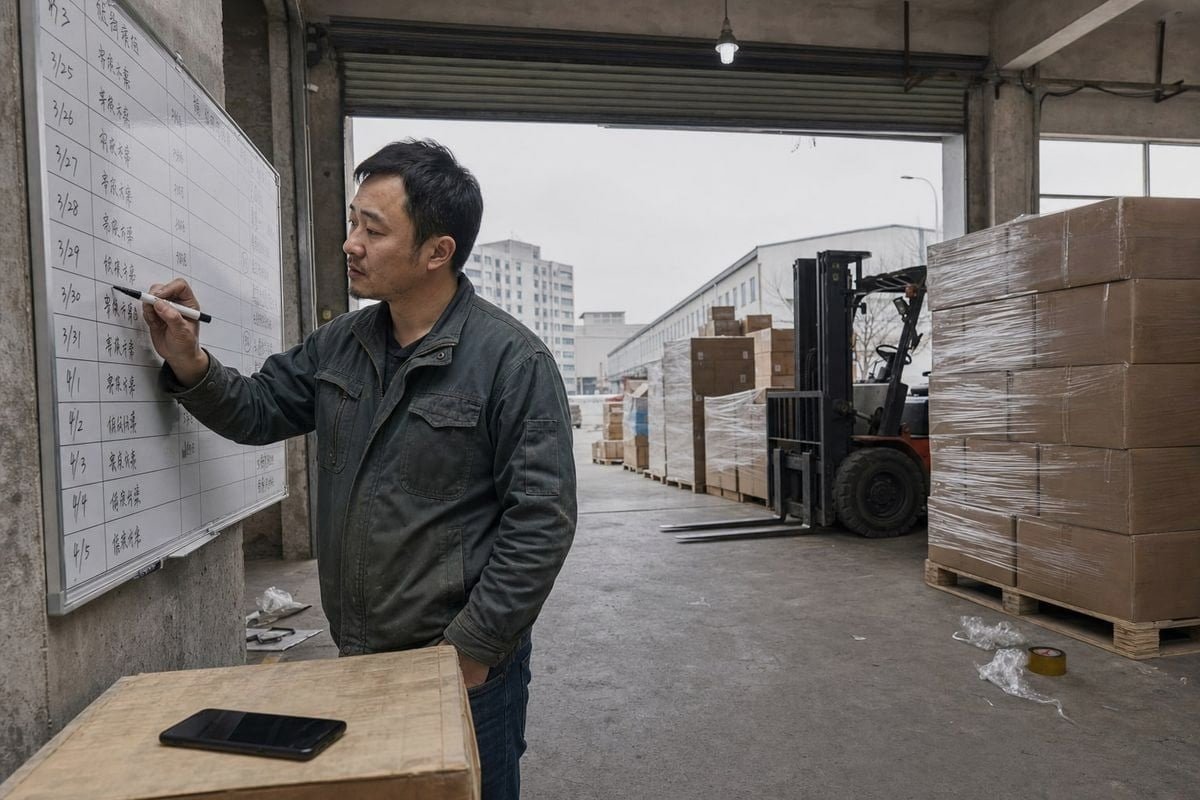
Your leverage is the balance payment. Most B2B deals for products like ours run on a deposit plus balance-before-shipment structure. A failed report is your contractual reason to pause. Use it calmly and professionally, and a serious factory will respond fast. At our facility, we treat a failed third-party report as a same-day management issue, because our reputation with long-term buyers depends on it.
A step-by-step response process
- Read the full report the day you receive it. Check photos, defect counts, and which AQL category each defect falls under.
- Separate the defects. A critical safety issue—say, leaking sachets or missing warning labels—differs completely from a minor carton scuff.
- Contact the factory in writing. Ask for root cause, a corrective action plan, and a firm rework deadline.
- Decide your path: full rework, partial replacement, sorting out defective units, a price adjustment, or outright rejection.
- Book a re-inspection. Never accept "we fixed it" over a message with no verification. Re-inspection fees are small compared to a container of unsellable goods.
- Update your quality control checklist so the same defect is screened earlier next time—ideally at a during-production check.
- For high-value orders, add container loading supervision so the reworked, approved goods are actually the goods loaded.
When rejection is the right call
If defects are critical, safety-related, and the factory cannot fix them before your season deadline, walk away from the shipment. Losing a deposit hurts less than a recall, a customs seizure 7, or an injured end customer. This is exactly why we advise buyers to qualify factories on compliance depth—ISO 9001, BSCI, rapports de tests par des tiers—before the first purchase order, not after the first failure.
Conclusion
Skipping inspection risks paying full price for defective, non-compliant powder. Arrange an independent agency, book at 80% completion, verify standards and documents, and withhold payment until goods pass.
Notes de bas de page
1. Comprehensive guide to the UN dangerous goods classification system, which includes pyrotechnic substances. ↩︎
2. The international standard for the competence of bodies performing inspection, ensuring independence and consistency. ↩︎
3. Standardized document providing comprehensive safety and hazard information for chemicals and other dangerous substances. ↩︎
4. Overview of chemical analysis techniques used to verify the elemental or molecular composition of materials. ↩︎
5. Reliable overview of acceptance sampling standards, including the ANSI/ASQ Z1.4 methodology used in inspections. ↩︎
6. Explains the documentation required for the legal transport of hazardous materials and substances. ↩︎
7. Authoritative source defining the role of customs agencies in controlling goods and performing seizures. ↩︎



 English
  Spanish
  German
  French
  Arabic
  Portuguese
Rejoignez la conversation