







Incident reporting for Canadian wood fire starter sourcing catches many importers off guard. On our production line, we have seen one missed complaint spiral into a border hold, a stalled recall, and a lost retail listing.
To set up incident reporting for Canadian wood fire starter sourcing, build a process around Health Canada's Canada Consumer Product Safety Act: capture every incident in a central log, report within 2 days of awareness, notify your supplier, preserve batch evidence, and run corrective actions with your manufacturer.
That is the short answer. Below, I walk through each piece step by step, from supplier certifications to batch traceability 1, so you can build a system that actually protects your business.
What certifications and test reports should I require from a Canadian wood fire starter supplier to prevent safety incidents?
A buyer from Toronto once asked me why our wax-dipped wood rolls ship with full rapports de test SGS 2 when "it's just wood and wax." Two months later, a competitor's uncertified batch failed at customs — and he understood.
Require ISO 9001 certification, a social compliance audit such as BSCI, third-party test reports from SGS or Intertek covering burn behavior and material safety, and documented proof that the wood fire starters contain no harmful chemicals, plus compliant warning labels and packaging documentation for the Canadian market.
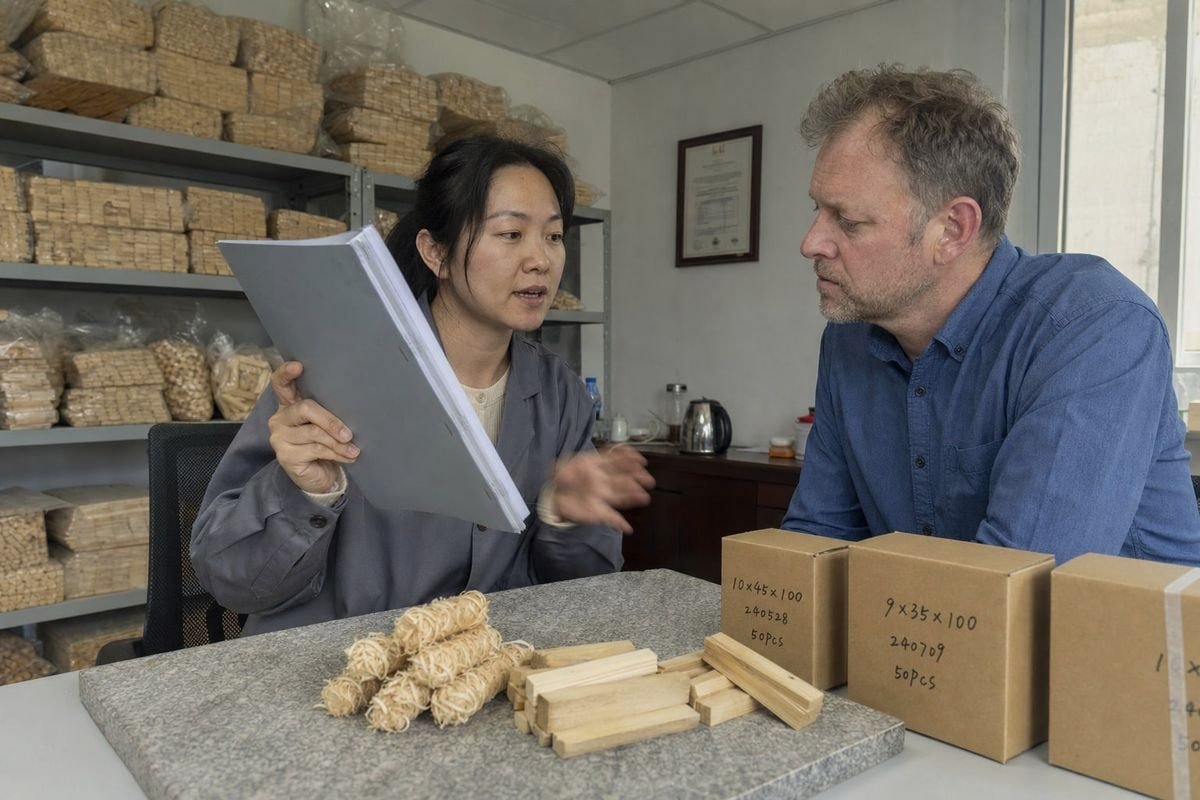
Certifications are not paperwork for its own sake. They are your first line of defense against incidents, because they prove the product was designed and produced under controlled conditions. In our 17+ years of exporting fire-starting goods to Canada, the US, and Europe, we have never seen a serious incident traced back to a batch that passed proper third-party testing 3. The problems almost always come from untested, uncontrolled production.
Here is what I recommend you request, and why each item matters for incident prevention:
| Document | Ce qu'il prouve | Incident Risk It Reduces |
|---|---|---|
| Certificat ISO 9001 | L'usine exploite un système de gestion de la qualité documenté | Batch-to-batch inconsistency, undetected defects |
| Audit BSCI 4 report | The factory operates under audited working conditions | Supply disruption, ESG and sourcing risk |
| Rapport de test SGS ou Intertek | Burn time, flame behavior, and material composition were independently verified | Unexpected flames, flare-ups, toxic smoke |
| Material composition statement | Exact ratio of wood fiber, wax, or paraffin | Chemical accelerant issues, mislabeling claims |
| Packaging and label review | Warning labels, barcodes, and composition text meet market rules | Health Canada labeling violations, consumer misuse |
Match the Test Report to the Actual Product
One trap I warn buyers about: a test report is only valid for the exact product tested. If your supplier changes the wax ratio, the wood fiber source, or the compression density, the old report no longer covers the new batch. When we adjust any formula on our lines, we retest. Ask your supplier to confirm in writing that the shipped goods match the tested specification.
Ask for Reports, Not Just Certificates
A certificate proves a system exists. A test report proves your product passed. You need both. Request the full report PDF, check the tested product description, and verify the report date is recent. If a supplier hesitates to share complete reports before a bulk order, treat that as a warning sign.
How do I set up a clear incident reporting process with my wood fire starter manufacturer before placing a bulk order?
Before we sign any bulk contract, our team walks the buyer through one uncomfortable question: what happens if a consumer reports a flare-up next winter? The buyers who plan for that day never panic when it comes.
Agree on a written incident protocol before ordering: define what counts as an incident, set a single intake channel, assign owners on both sides, commit your manufacturer to respond within 24 hours with batch records, and align the workflow with Health Canada's 2-day reporting deadline.

En vertu de la Canada Consumer Product Safety Act 5, the company that sells or imports consumer products in Canada must report incidents to Health Canada and to the supplier it received the product from. The initial report is due within 2 days of becoming aware of the incident. A more detailed written follow-up comes after, including proposed measures for the affected products. That clock does not wait for your investigation. So your process must support reporting first and investigating in parallel.
Here is the setup sequence I recommend to every Canadian buyer we work with:
- Define "incident" broadly in the contract. Include injuries, near-misses, unexpected flames, abnormal smoke, packaging failures, moisture contamination, and mislabeling. Do not limit it to confirmed harm — Health Canada's framework is wider than that.
- Create one intake channel. All complaints from retailers, consumers, and warehouse staff flow into one log. Scattered emails kill deadline compliance.
- Assign named owners. You need one compliance owner on your side and one QA contact at the factory. On our side, every export account has a dedicated English-speaking contact for exactly this reason.
- Set supplier response commitments. Your manufacturer should commit in writing to provide batch records, retained samples, and production data within 24 hours of your request.
- Build a deadline tracker. Count from the day of awareness. Two days is short. Pre-built templates for the Health Canada initial report save critical hours.
- Run a tabletop drill. Before the first container ships, simulate one incident end to end. You will find the gaps while they are still cheap to fix.
Put It in Writing, Not in Goodwill
A verbal promise to "help if something happens" is worthless at 4 p.m. on a Friday with a deadline running. Attach the incident protocol to your purchase agreement. Serious factories will sign it. In our experience, buyers who ask for this get faster cooperation later, because both sides already know their roles.
What documentation should I request to trace a defective batch back to production if an incident occurs?
Years ago, a European distributor called us about smoke complaints on a single retail shelf. Because every carton carried a batch code tied to our production log, we isolated the issue to one wax-dipping run within hours — not weeks.
Request batch and lot numbers printed on every unit or carton, production run records, raw material lot data for wood fiber and wax, in-process QC checklists, pre-shipment inspection reports, retained sample references, and distribution records linking each batch to specific shipments and retailers.
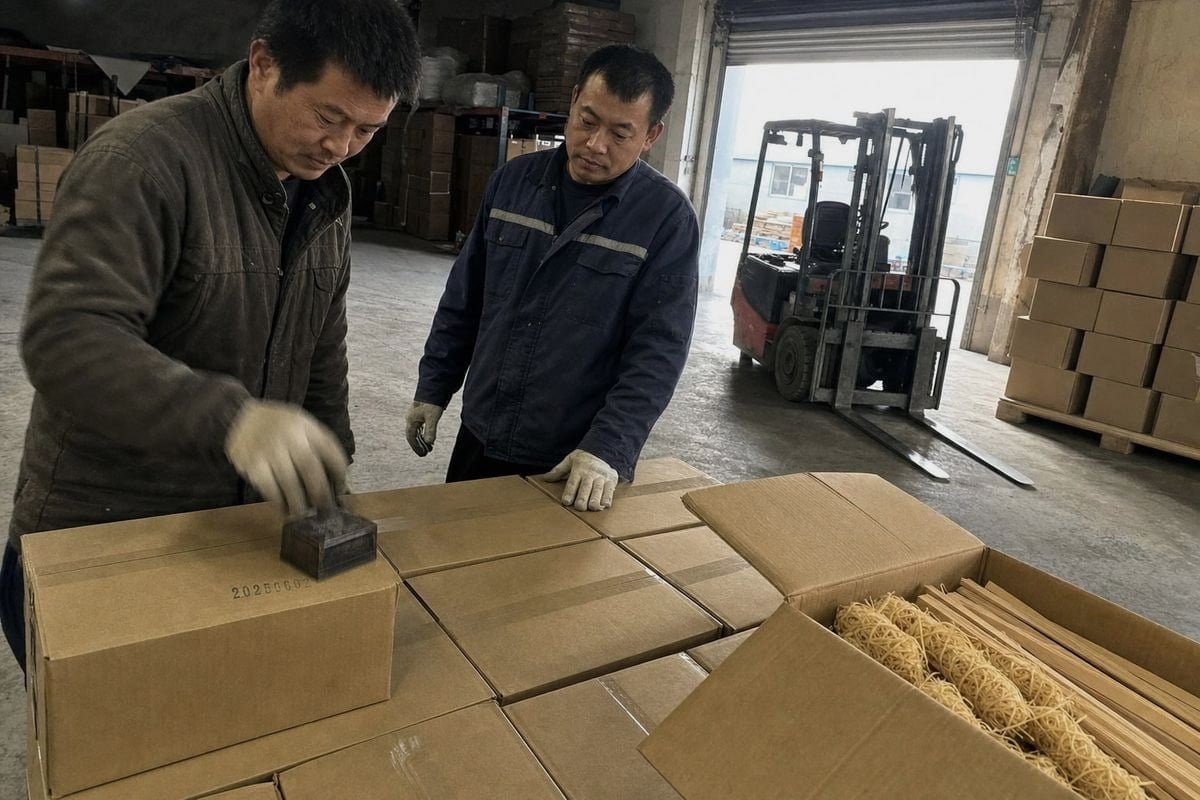
Traceability is what turns an incident from a company-wide crisis into a contained problem. If you cannot identify which batch failed, you may have to quarantine or recall everything. If you can, you isolate one production run and keep selling the rest. The difference in cost is enormous.
The documentation chain needs to cover every stage, from forest to shelf. Here is the full set I advise buyers to secure before their first bulk order:
| Étape | Documentation to Request | Who Holds It |
|---|---|---|
| Matières premières | Wood fiber and wax lot records, supplier delivery notes | Fabricant |
| Production | Batch numbers, run dates, line records, operator QC checklists | Fabricant |
| Tests | Burn tests per batch, moisture checks, retained sample logs | Fabricant |
| Pré-expédition | Inspection report, carton batch labels, packing list | Manufacturer / third party |
| Import | Bill of lading 6, customs entry, container-to-batch mapping | Importer (you) |
| Distribution | Warehouse records, retailer allocation by batch | Importer (you) |
Insist on Unit-Level or Carton-Level Batch Codes
If the batch code only appears on the master carton, traceability breaks the moment a retailer opens the box. At minimum, every retail box should carry a batch or lot code. On our lines, batch codes tie each production run to raw material lots, QC records, and retained samples, so a single consumer complaint can be traced backward in one step.
Preserve Evidence Immediately
When an incident occurs, secure the physical evidence fast. Photograph the product, packaging, and batch code. Keep the damaged sample — do not let the consumer or retailer discard it. Link everything to a case file. Health Canada's follow-up report 7 requires detail, and your supplier's root-cause analysis depends on seeing the actual failed unit alongside their retained sample from the same batch.
How can I evaluate a supplier's quality control system to reduce the risk of safety incidents in my Canadian market?
There is a trade-off we discuss openly with buyers: a factory with strict batch-to-batch QC will rarely be the cheapest quote on the table. But every incident you never have to report pays for that difference many times over.
Evaluate the supplier's incoming material inspection, in-process checks, batch burn testing, retained sample practice, CAPA discipline, and certification depth. Verify that mass-production quality matches the approved sample, and confirm the factory owns its production lines rather than trading someone else's goods.
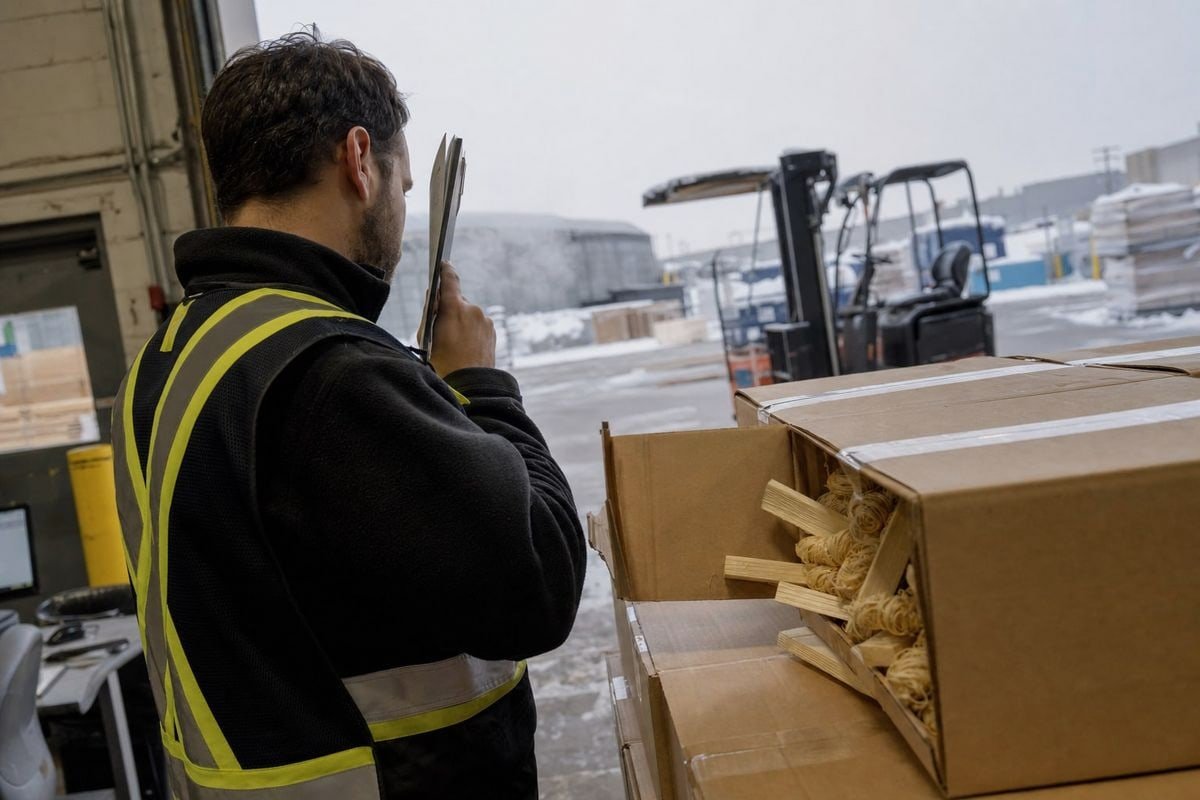
A quality control system is easy to claim and hard to fake in person. After 17+ years running fire-product lines and hosting buyer audits, I can tell you the difference shows up in small details: whether operators actually fill in checklists in real time, whether retained samples are organized and dated, and whether the factory can pull a batch record from six months ago without scrambling.
Use this scorecard when you audit — remotely or on site:
| QC Element | Ce à quoi ressemble le bon | Signal d'alarme |
|---|---|---|
| Incoming inspection | Wood fiber moisture and wax quality checked per lot | Materials go straight to production |
| In-process control | Checkpoints at dipping, compression, and packing | QC only at final packing |
| Séchée à l'air souvent acceptable | Burn time and flame behavior tested per production run | "We tested it once at launch" |
| Échantillons conservés | Dated samples kept per batch for the product's shelf life | No retained samples at all |
| CAPA process | Root-cause analysis documented, action corrective 8s verified | Defects fixed informally, nothing written |
| Sample consistency | First sample reliably matches mass production | Golden samples that outperform bulk goods |
Test the CAPA Muscle Before You Need It
Ask the supplier to show you a real corrective action from a past defect — anonymized is fine. A factory with genuine CAPA discipline can show the problem, the root cause, the fix, and the verification. A factory without it will offer vague reassurances. This single question reveals more than any certificate.
Confirm You Are Dealing With the Actual Factory
Trading companies add a layer between you and the production data you will need during an incident. When a complaint lands, you cannot afford a middleman relaying questions. We keep our buyers connected directly to production in Ningbo for exactly this reason: when a Canadian client needs batch records for a Health Canada follow-up report, the answer comes from the people who ran the line, not from a sales office guessing.
Conclusion
Incident reporting for Canadian wood fire starter sourcing is not optional paperwork. Miss Health Canada's 2-day window and one complaint becomes a crisis. Build the system now — certifications, protocols, traceability, and a QC-strong partner.
Notes de bas de page
1. Explains the traceability concept central to tracing defective batches back to production. ↩︎
2. SGS is the third-party testing body named for verifying burn behavior and material safety. ↩︎
3. Links to an independent testing body referenced as the standard for verifying fire starter safety. ↩︎
4. BSCI audits verify the social compliance conditions referenced for supplier evaluation. ↩︎
5. Cites the legal framework requiring incident reporting for consumer products sold in Canada. ↩︎
6. Defines the shipping document used to map imported batches to specific containers. ↩︎
7. Official Health Canada guidance on filing detailed incident follow-up reports for consumer products. ↩︎
8. Background on CAPA methodology used to evaluate a supplier's defect-response discipline. ↩︎

 English
  Spanish
  German
  French
  Arabic
  Portuguese
Rejoignez la conversation