






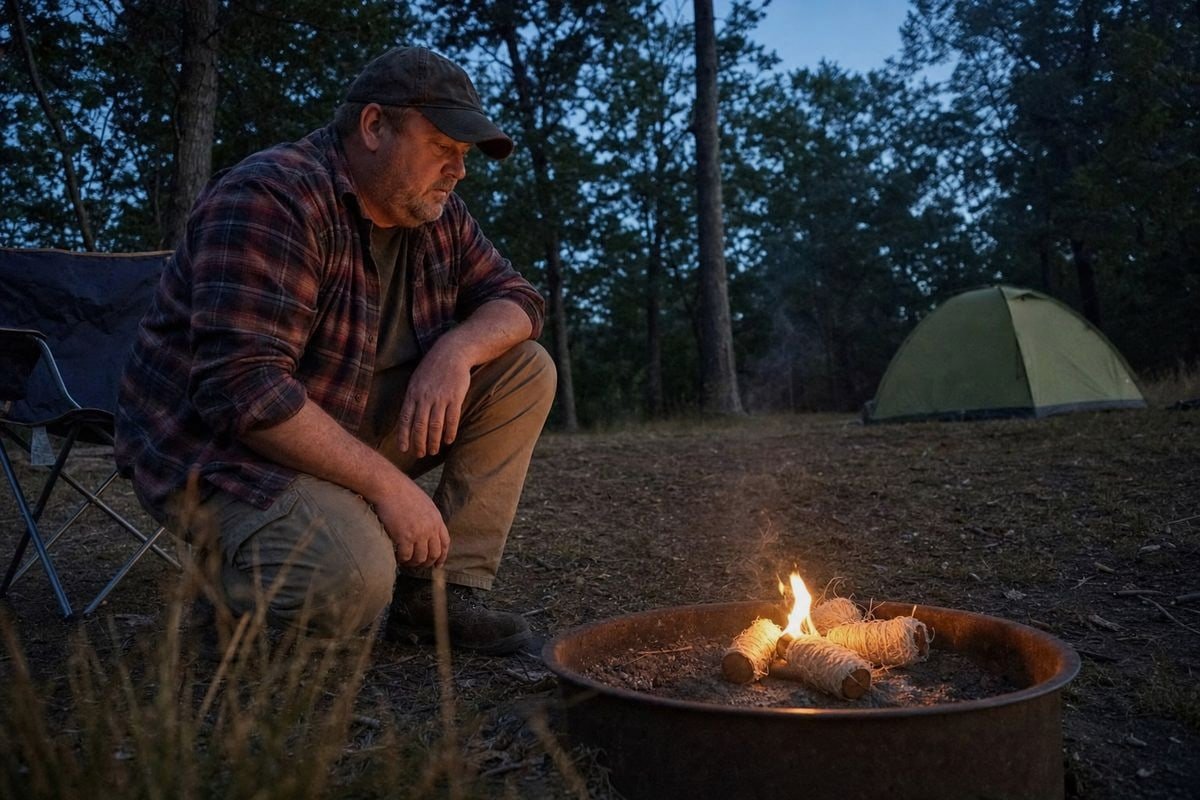
A distributor once asked me if our wood fire starters could double as tent warmers. That question worried me — because wood fire starters and tents can be a deadly combination.
No. Wood fire starters should never be burned inside a tent. Any flame or smoldering combustion produces carbon monoxide, an odorless gas that can reach lethal levels within minutes in an enclosed shelter. Use wood fire starters outdoors only, well away from tent walls.
That is the short answer. But as a buyer, you need more than a yes or no. You need to know why this matters, how to communicate it to customers, and how to source products that carry the right warnings. Let me walk you through each part.
What Carbon Monoxide Risks Should I Warn Customers About Before They Use Wood Fire Starters Inside a Tent?
During a packaging review at our Ningbo facility a few years ago, our team debated whether the enclosed-space warning deserved larger type. We made it bigger. That decision came from real incident reports we had read in our export markets.
Warn customers that burning any wood fire starter in a tent creates carbon monoxide through incomplete combustion. CO is colorless, odorless, and tasteless, accumulates in minutes, remains dangerous even from smoldering embers, and cannot be reliably vented by opening tent flaps or windows.

The core hazard is not smoke. Smoke is visible, and it smells. People react to it. Carbon monoxide is different. It gives no sensory warning at all. That is why public health agencies list tents, awnings, campers, RVs, and hunting blinds as high-risk enclosed spaces for any fuel-burning device — and a lit fire starter is a fuel-burning device.
Why Tents Are Uniquely Dangerous
A tent has a small air volume. Even a light-output flame can shift the CO concentration quickly. Official camping guidance states that dangerous CO levels can build up in minutes or less in enclosed spaces. Worse, oxygen depletion inside the tent accelerates la combustión incompleta 1, which means the flame produces even more CO as the air quality drops. It becomes a feedback loop.
The Smoldering Trap
Here is the risk most campers miss. A fire starter that has "burned out" may still be smoldering. Fire safety bodies warn that even a cooling barbecue or ember source continues to release poisonous CO inside a tent or awning. The flame dying down does not mean the danger has passed.
CO Poisoning Symptoms Your Customers Should Know
Early CO poisoning symptoms are frequently mistaken for altitude sickness, fatigue, or the flu — a genuinely dangerous misdiagnosis when the victim is lying inside the very shelter that is poisoning them.
| Exposure Stage | Typical Symptoms | What Campers Often Blame |
|---|---|---|
| Early | Headache, nausea, dizziness | Altitude, dehydration, bad food |
| Moderado | Confusion, lethargy, weakness | Exhaustion from hiking |
| Severe | Loss of consciousness, seizures | — (victim can no longer respond) |
If exposure is suspected, the guidance is simple: get to fresh air immediately and call emergency services 2. Your product inserts should say exactly that.
How Can I Verify My Wood Fire Starters Meet International Safety Standards for Enclosed-Space Warnings?
In our seventeen-plus years exporting fire-starting goods to the US, Germany, the UK, and thirty other markets, one lesson stands out: compliance documentation gets checked at the border, not at the point of sale. Missing paperwork stops containers.
Verify compliance by requesting valid third-party test reports from labs like SGS or Intertek, confirming CE marking where applicable, reviewing the supplier's ISO 9001 and BSCI certificates, and checking that packaging carries explicit "outdoor use only" and enclosed-space CO warnings in your market's language.

Verification is a process, not a single certificate. I recommend buyers follow these steps in order:
- Request the actual test reports, not just certificate numbers. A genuine factory can send you current SGS o Intertek 3 reports within a day. Check the report date, the tested product description, and the applicant name. The applicant should match the factory you are buying from.
- Match the standard to your market. The EU expects CE-relevant conformity and CLP-style hazard labeling for wax and paraffin blends. The US market leans on FTC labeling rules and general product safety expectations. The UK now requires UKCA considerations alongside legacy CE documents.
- Audit the warning language itself. The label must state that the product is for outdoor use only, must reference carbon monoxide or enclosed-space hazards, and should include a "keep away from children" line. Vague phrases like "use carefully" do not satisfy retailer compliance teams.
- Confirm quality-system certificates. ISO 9001 4 tells you the factory controls its processes batch to batch. BSCI tells you the factory passes social audits — a hard requirement for many large retail sourcing channels.
- Ask about batch traceability. If a retailer questions one carton, can the supplier trace it back to a production date and raw-material lot? At our factory, every batch carries a traceable code, and we have found this single practice resolves most retailer disputes quickly.
Documentation Checklist by Market
| Mercado | Key Documents to Request | Brecha común |
|---|---|---|
| EE. UU. | SGS/Intertek test report, FTC-compliant labeling proof | Missing English CO warning text |
| UE (Alemania, Francia, NL, Polonia) | CE conformity file, CLP hazard label review, REACH declaration | Warnings not in local language |
| Reino Unido | UKCA/CE documents, GPSR-style safety file | Outdated pre-Brexit reports |
| Canadá / Australia | Bilingual or local labeling proof, test reports | No enclosed-space warning at all |
What Ingredients and Burn Characteristics Should I Look for in Wood Fire Starters to Minimize Toxic Fume Concerns?
When we developed our wax-dipped wood rolls, we tested dozens of wax-to-fiber ratios. The trade-off we weighed constantly: a hotter, faster flame lights kindling quickly, but a cleaner, steadier burn produces less visible smoke and fewer fume complaints from end users.
Choose fire starters made from natural wood fiber or excelsior bound with food-grade paraffin or vegetable wax, with no lighter fluid, kerosene, or chemical accelerants. Look for a steady flame, low visible smoke, minimal odor, a consistent burn time, and full combustion with little residue.
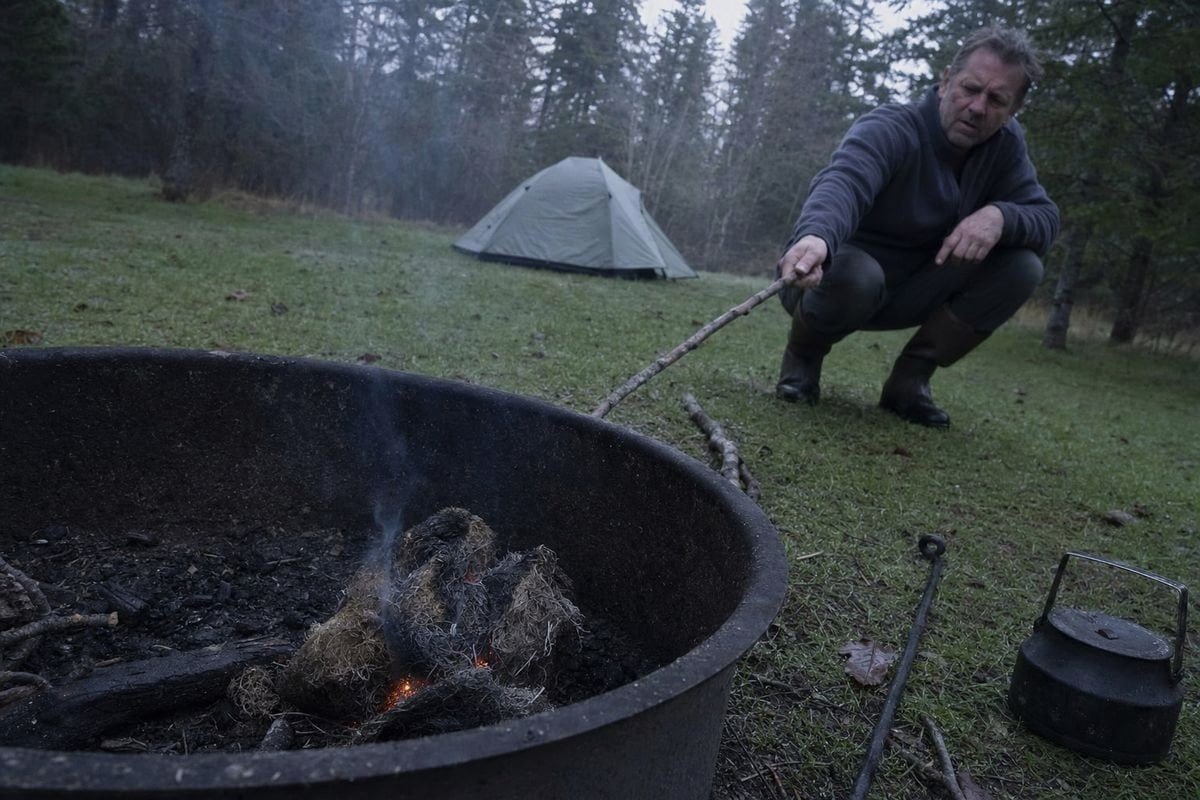
Even though no fire starter is safe inside a tent, ingredient quality still matters enormously for outdoor use. Cleaner formulations mean fewer irritating fumes at the fire pit, fewer customer complaints, and easier compliance reviews.
Ingredients: What to Accept and What to Reject
Natural tinder sticks, fatwood, lana de madera 5, and compressed excelsior bound with refined paraffin or beeswax are the industry's preferred base materials. Chemical accelerants are the red flag. Lighter fluid, kerosene-soaked blocks, and petroleum solvents release compuestos orgánicos volátiles 6 and create flare-up risks — and they are exactly the products that trigger recalls.
| Componente | Aceptable | Rechazar |
|---|---|---|
| Fiber base | Excelsior, wood wool, sawdust, fatwood | Recycled fiber with unknown coatings or glues |
| Aglutinante | Refined paraffin, beeswax, vegetable wax | Kerosene, lighter fluid, solvent blends |
| Aditivos | None, or natural fragrance-free wax | Chemical accelerants, dyes with heavy metals |
| Typical composition | ~50% wood fiber / ~50% wax | Undeclared or "proprietary" fuel mixes |
Burn Characteristics That Signal Quality
I judge a sample by five behaviors. It should light with a single match. The flame should stabilize within seconds, not spit or flare. Smoke should be light and pale, not black. Burn time should be consistent across the batch — on our lines, we spot-test burn duration from every production run because inconsistent wax saturation is the first sign of quality drift. Finally, the starter should burn down almost completely. Heavy residue points to poor wax refinement or filler materials.
One more nuance for buyers serving mountain regions: at high elevation, thinner oxygen promotes incomplete combustion, so a formulation that burns cleanly at sea level may smoke more at altitude. A well-saturated, high-airflow fibrous starter handles this better than a dense compressed block.
How Do I Source Wood Fire Starters With Proper Warning Labels and Compliance Documentation for My Market?
A German importer once returned our first sample carton with the warning text circled in red ink — the font was two points too small for his retail chain's standard. We revised the artwork within a week, and that account has reordered ever since. Labels win or lose retail shelf space.
Source from an audited factory, not a trading company. Require pre-shipment artwork approval of warning labels in your market's language, valid SGS or Intertek test reports, ISO 9001 and BSCI certificates, batch-level QC records, and private-label OEM support for compliant, shelf-ready packaging.

Sourcing compliant fire starters comes down to controlling three things: the supplier, the label, and the paper trail.
Choose the Supplier Type Deliberately
A real factory controls its own formulation, its wax sourcing, and its label printing. A trading company controls none of these, which means warning-label errors get discovered after the goods ship. When buyers visit our production lines, the first thing we show is the labeling and packing station — because that is where compliance either happens or fails. Ask any prospective supplier three questions: Who prints your labels? Who holds the test reports? Can you customize warning text per destination country? Hesitation on any of these is your answer.
Build the Warning Label Correctly
A defensible warning label for wood fire starters should include, at minimum:
- "For outdoor use only" stated prominently
- An explicit carbon monoxide / enclosed-space warning covering tents, campers, and indoor areas without proper ventilation
- "Mantener fuera del alcance de los niños" and keep-away-from-flammables language
- Composition disclosure (for example, wood fiber and paraffin percentages)
- Local-language translation for each destination market
- Batch code and importer contact details
If your customers include the hot tenting segment, your packaging can responsibly note that fuel-burning appliances belong only in purpose-built shelters — ones with fire retardant fabric, a proper stove jack installation, a full chimney meeting portable wood stove safety practice, tent ventilation requirements designed into the structure, and a battery-operated CO detector running at all times. Serious hot tenting gear users often choose low-level CO monitors 7 that alert at 10–30 ppm, because standard residential alarms trigger too late for a small tent volume. Even then, the fire starter itself should be lit in the stove — never as an open flame in the living space.
Structure the Order for Compliance
We advise buyers to run a staged process: approve a physical sample, sign off label artwork, place a trial order with flexible MOQ, then scale. Insist that mass production matches the approved sample — genuine manufacturing depth means the first sample reliably reflects what arrives in your container.
Conclusión
Wood fire starters belong outdoors — never in tents, where carbon monoxide kills silently. Source natural, clean-burning products with verified certifications and clear enclosed-space warnings, and your customers stay safe while your brand stays compliant.
Notas al pie
1. Explains the chemical process that generates carbon monoxide in oxygen-depleted enclosed spaces like tents. ↩︎
2. CDC's official carbon monoxide poisoning guidance supports the emergency response advice given to campers. ↩︎
3. SGS is a leading third-party testing lab whose reports buyers are advised to request directly. ↩︎
4. Official ISO page defines the quality management standard referenced for factory process control. ↩︎
5. Background on excelsior/wood wool, the natural fiber base material recommended for clean-burning fire starters. ↩︎
6. EPA explains health impacts of volatile organic compounds referenced regarding chemical accelerants. ↩︎
7. CPSC's carbon monoxide safety guide supports advice on low-level CO monitors for small tent volumes. ↩︎



 English
  Spanish
  German
  French
  Arabic
  Portuguese
Únete a la conversación