






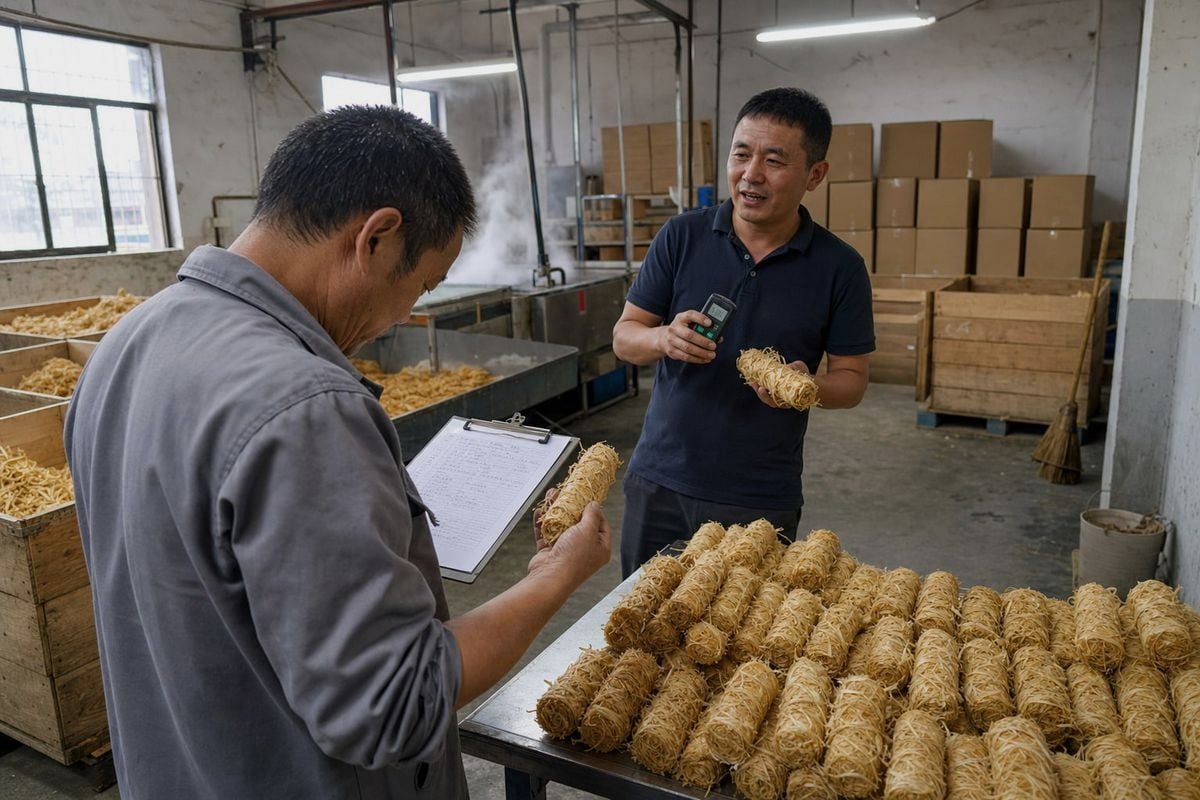
Wood fire starters look simple, but on our production line I have seen one bad batch of wax-dipped wood rolls nearly cost a buyer an entire retail listing. Compliance failures do not just delay shipments — they destroy hard-won shelf space, trigger chargebacks, and [expose importers to liability claims](https://sunrichfire.com/what-gpsr-importer-obligations-wood-fire-starters-china/). The fix is choosing the right verification model before you order, not after a problem appears.
Self factory audits work for routine internal quality control of wood fire starters, but third-party inspection agencies like SGS or Intertek provide the independent, documented proof that retailers, distributors, and export markets require. The strongest model combines both: internal audits for readiness, external inspections for buyer credibility.
Let me walk you through the real differences, how to spot unreliable documents, when third-party costs are worth it, and exactly which certifications to request before a bulk order.
What's the real difference between a self factory audit and a third-party inspection for wood fire starters?
A German distributor once asked us why our internal QC records were not enough for his retail client. That question taught me the distinction better than any textbook: it is about who the report needs to convince.
A self factory audit is an internal check the factory performs on its own production, documentation, and safety systems. A third-party inspection is an independent verification by an external agency such as SGS or Intertek, producing standardized reports that buyers, retailers, and insurers accept as objective proof.
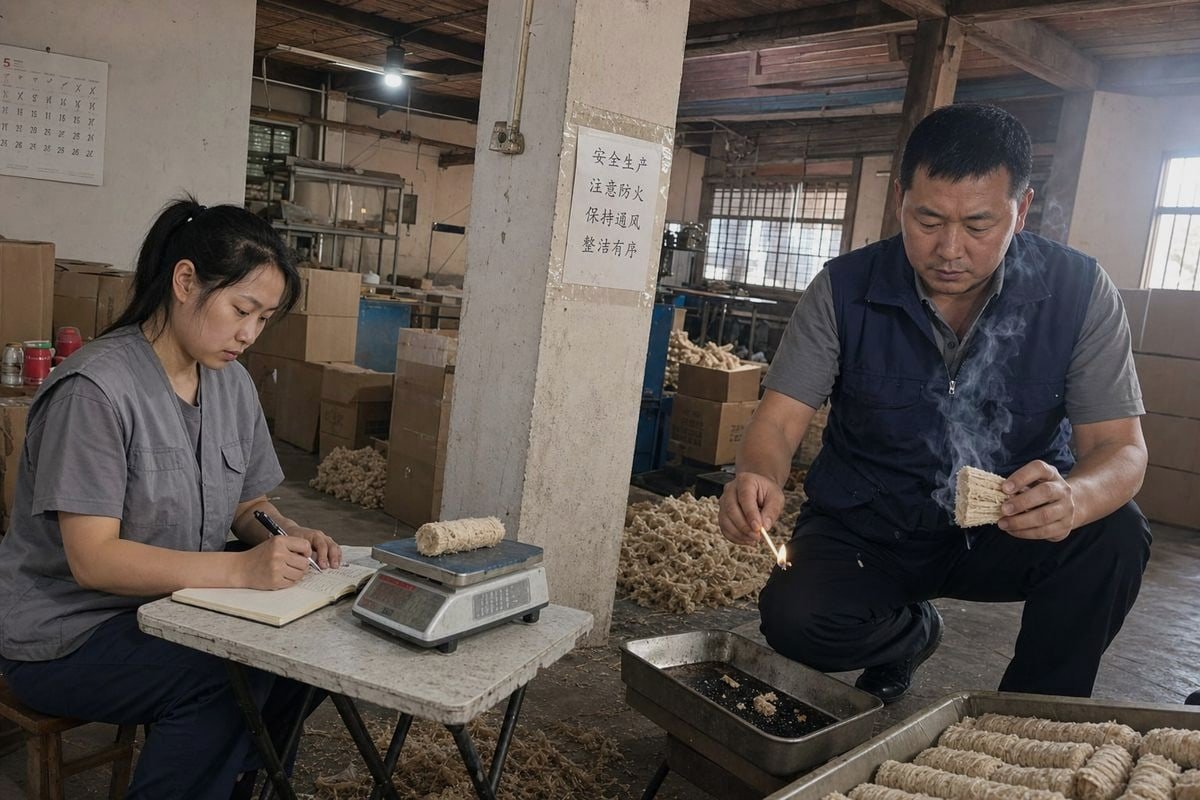
The core difference comes down to independence, credibility, and purpose. Here is a side-by-side view:
| Factor | Self Factory Audit | Third-Party Inspection |
|---|---|---|
| Who performs it | Factory's own QC team | Independent agency (SGS 1, Intertek, Bureau Veritas, TÜV) |
| Costo | Internal labor only | Roughly $200–500 per inspector day |
| Credibility with buyers | Bajo a moderado | High, internationally recognized |
| Conflict of interest | Yes — factory controls the report | No — inspector is neutral |
| Mejor uso | Daily readiness, gap identification | Pre-shipment approval, retailer onboarding |
| Legal value | Weak in liability disputes | Can serve as legal and insurance documentation |
Why the distinction matters for fire products
Wood fire starters are combustible goods. Our wax-dipped wood rolls contain fibra de madera y parafina 2, and that combination raises questions no simple hardgood faces: burn time consistency, flash-point behavior 3, moisture content, and packaging that keeps wax from melting in transit. A self audit can monitor all of these daily. But when a dispute arises — say a pallet arrives with fused pucks or inconsistent ignition — an internal report carries little weight. The factory wrote it, so the buyer discounts it.
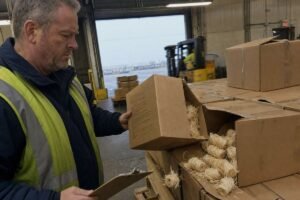
Third-party inspections remove that doubt. The inspector follows a standardized checklist, tests samples against agreed criteria, and issues a report neither side can quietly edit. In our 17+ years exporting to more than 30 countries, we have never seen a serious retail buyer accept internal records alone for a first shipment. The two audit types are not competitors. They are different tools for different audiences.
How do I know if my wood fire starter supplier's compliance documents are actually reliable?
Early in our export history, a buyer showed me a competitor's "SGS certificate" that turned out to be an expired report for an entirely different product. That experience shaped how we present our own ISO 9001 4, BSCI, and CE documentation today.
Verify documents by checking the certificate number directly with the issuing body, confirming the report covers the exact product and factory address, checking issue and expiry dates, and matching the tested composition to what you are actually buying. Genuine suppliers welcome this verification.

Document fraud in sourcing is more common than most buyers assume. The good news: verification is straightforward if you know what to check.
Un proceso de verificación de cinco pasos
- Check the certificate online. SGS, Intertek 5, Bureau Veritas, and TÜV all offer verification portals or email confirmation. Enter the report number and confirm it exists.
- Match the legal entity and address. The certified name must match the factory you are buying from — not a trading company, not a "sister facility." We are headquartered in Liuyang, Hunan with production in Ningbo, Zhejiang, and our documents reflect the actual production site.
- Coincida con la descripción del producto. A test report for candles does not cover wax-dipped wood fire starters. Composition matters: a 50% wood fiber, 50% paraffin product behaves differently from a compressed sawdust brick.
- Verifica fechas y alcance. ISO 9001 y BSCI 6 certificates expire. A report from four years ago tells you little about today's line.
- Ask for raw data, not just the summary page. Real reports include test methods, sample photos, and measured values. A one-page "pass" certificate with no detail is a red flag.
Señales de alerta que merecen atención
Watch for blurry scans, mismatched fonts, reports with no reference number, and suppliers who resist a video call from the factory floor. In our experience, legitimate factories are proud to show their lines. When a supplier stalls on basic verification, that hesitation is the answer.
Also remember that documents describe a moment in time. Raw wood and wax moisture content varies seasonally, so even a genuine report from January may not reflect August production. Recurring batch checks matter more than a single framed certificate on the office wall.
When should I invest in a third-party inspection instead of trusting factory-provided reports?
The trade-off I discuss most often with new buyers is a $300–500 inspection fee versus a $30,000 container. Framed that way, the decision usually makes itself — but not always, because timing and order profile matter.
Invest in third-party inspection for first orders with a new supplier, retailer or export-channel shipments, high-volume containers, private-label launches, and any order following a quality incident. Factory reports alone are acceptable only for repeat, low-risk orders from a proven, certified supplier.
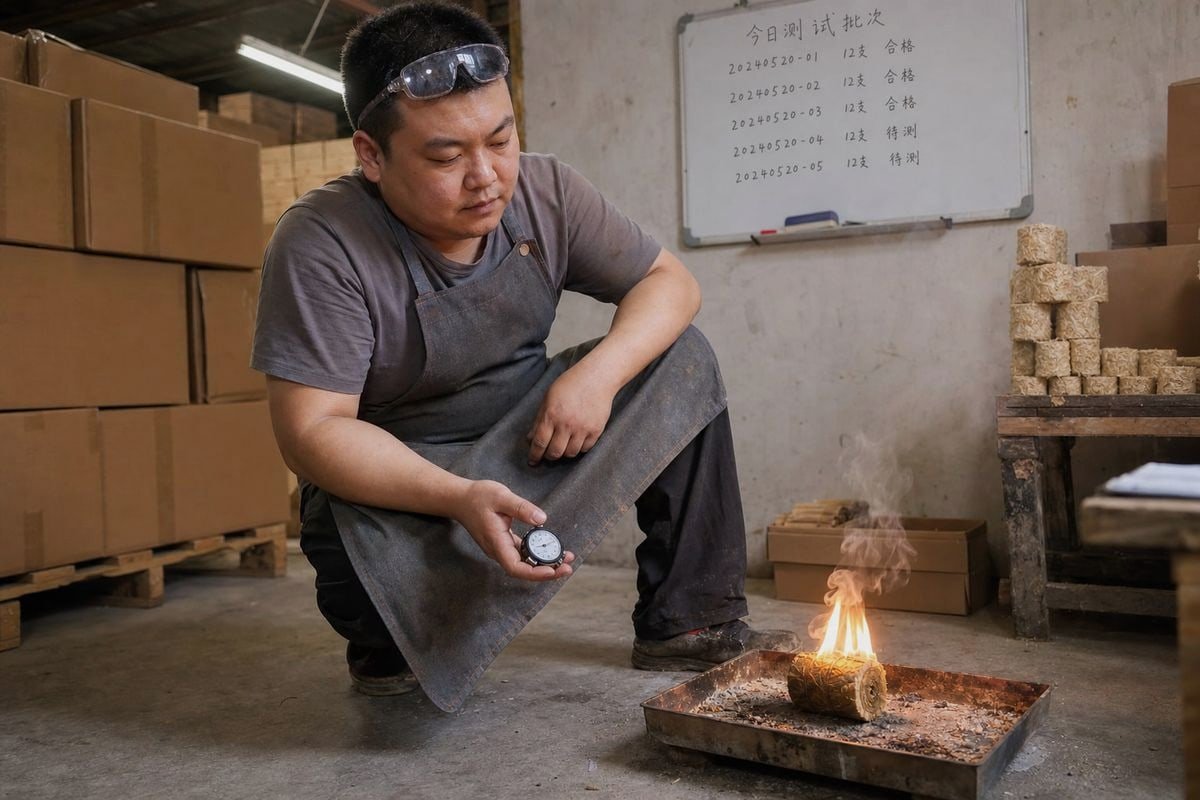
Think of this as risk-based spending. A single inspector day costs roughly $200–500 depending on location and scope. Compare that against what a failed shipment costs: freight, disposal, retailer penalties, and a damaged relationship with your own customers.
A risk-based decision table
| Escenario de pedido | Enfoque recomendado | Por qué |
|---|---|---|
| First order, new supplier | Full factory audit + pre-shipment inspection | No track record; verify capability and outsourcing |
| Repeat order, proven supplier | Factory reports + occasional spot inspection | Established history lowers risk |
| Retail channel (Home Depot–type) | Third-party audit before first shipment | Often a hard prerequisite for the channel |
| Private-label launch | Pre-shipment inspection including packaging and labels | Your brand carries the liability |
| Seasonal peak production | Batch-specific inspection | Moisture and rushed output raise defect risk |
| After a quality complaint | Third-party inspection until corrective action verified | Independent confirmation that fixes are real |
The subcontracting blind spot
Here is the risk most buyers miss. Many fire starter factories subcontract wax-dipping, bundling, or packaging to outside workshops. A self audit rarely covers those stages, because the factory is auditing only itself. An independent inspector can trace the full chain and confirm which processes actually happen in-house. At our facility, wax-dipping and rolling stay on our own lines specifically because outsourced dipping is where burn-time consistency breaks down — the wax uptake varies, and no final visual check can catch it.
Timing matters too. New suppliers are typically audited before purchase orders and again after roughly 6–12 months. Higher-risk categories — and combustibles qualify — justify quarterly or biannual checks. And insist on follow-up: audits only create value when findings lead to corrective action, usually verified 30–90 days after fixes are implemented.
What certifications and test reports should I request before placing a bulk wood fire starter order?
Buyers from the US, Germany, and the UK send us document checklists before their first trial order, and after 17 years the pattern is remarkably consistent. The strongest buyers ask for the same core package every time.
Request ISO 9001 certification, a BSCI social compliance audit, CE marking where applicable, recent SGS or Intertek product test reports, composition disclosure, burn-time and moisture test data, FSC or sustainable sourcing evidence, and market-specific warning label and packaging compliance proof.
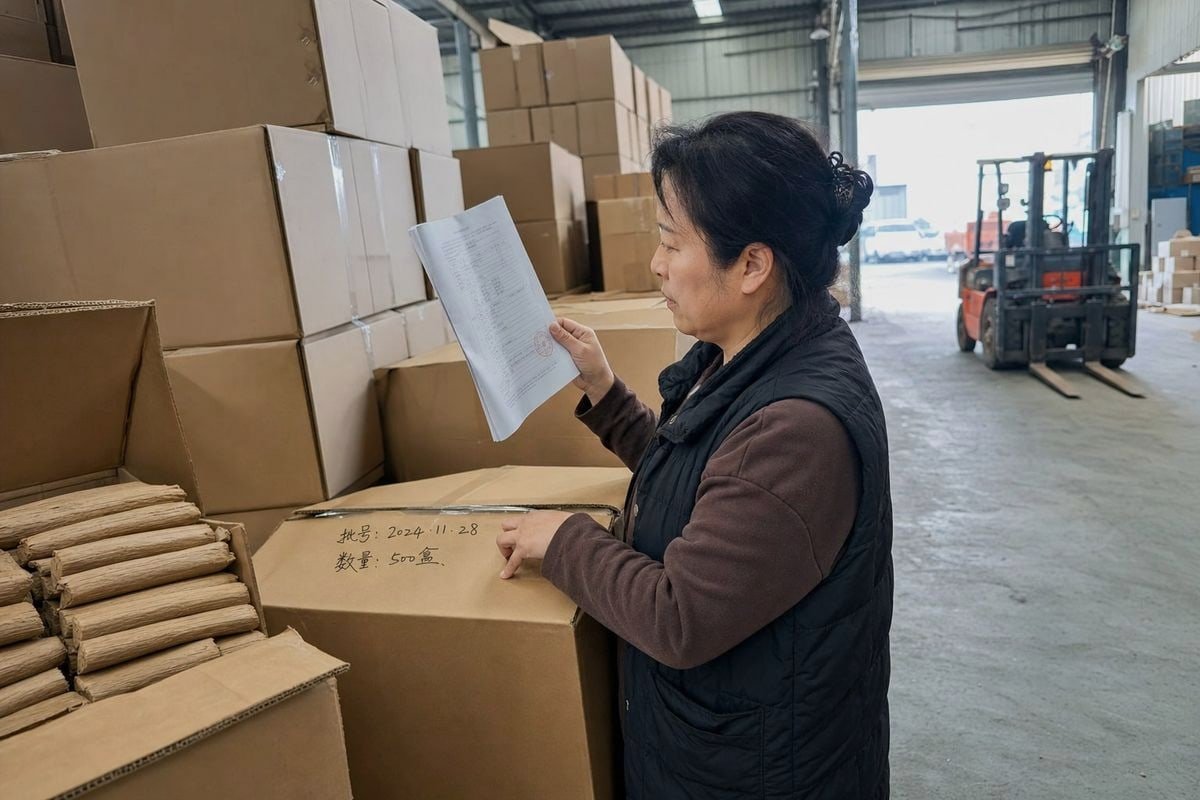
Not every document carries equal weight, and requirements shift by destination market. Here is how I would prioritize the request list:
| Documento | Lo Que Demuestra | Prioridad |
|---|---|---|
| ISO 9001 | Sistema de gestión de calidad implementado | Esencial |
| Informe de auditoría BSCI | Cumplimiento laboral ético y social | Essential for EU/US retail |
| Informe de prueba SGS o Intertek | Product-level safety and performance | Esencial |
| Cumplimiento CE | Meets applicable EU requirements | Essential for EU markets |
| Divulgación de la composición | Exact wood fiber / paraffin ratio | Esencial |
| Burn-time consistency data | Batch-to-batch performance | Alto |
| Moisture content records | Reliable ignition across seasons | Alto |
| FSC or sourcing evidence | Sustainable wood supply | High for eco-positioned brands |
| Label and packaging review | Correct warnings, barcodes, retail readiness | High for private label |
Why generic checklists fall short
One caution from our side of the table: standard hardgoods inspection templates often skip flash-point behavior and flame characteristics entirely, because they were designed for textiles or housewares. Wood fire starters need customized QC criteria. When we run internal batch checks on our wax-dipped wood rolls, we test ignition speed, sustained burn time, wax coverage, and packaging integrity under heat — points a generic checklist never mentions. Ask your inspection agency to build fire-starter-specific test criteria into the scope, and share your target market's labeling rules before the audit, not after.
Also request documents tied to your actual order, not just company-level certificates. A composition statement and burn test from your production batch is worth more than any laminated certificate. Reputable factories with complete production lines can supply both without hesitation, because the first sample should reliably reflect mass-production quality — if it cannot, no certificate will save the relationship.
Conclusión
Weak verification puts your listings, margins, and legal exposure at risk. Use self audits for daily readiness, third-party inspections for buyer-facing proof, and both together for bulk wood fire starter orders.
Notas al pie
1. SGS is a named inspection agency whose verification portal buyers use to confirm certificate authenticity. ↩︎
2. Background on paraffin wax composition helps explain material behavior in wax-dipped wood fire starters. ↩︎
3. Explains the combustion safety concept relevant to testing wax-dipped wood fire starters for ignition risk. ↩︎
4. Official ISO standard reference explaining the quality management system certification mentioned throughout the article. ↩︎
5. Intertek is cited as a major third-party inspection agency offering official certificate verification services. ↩︎
6. Amfori administers the BSCI social compliance program referenced as a key supplier verification document. ↩︎
7. Bureau Veritas is referenced as an independent inspection agency providing standardized compliance verification. ↩︎


 English
  Spanish
  German
  French
  Arabic
  Portuguese
Únete a la conversación