






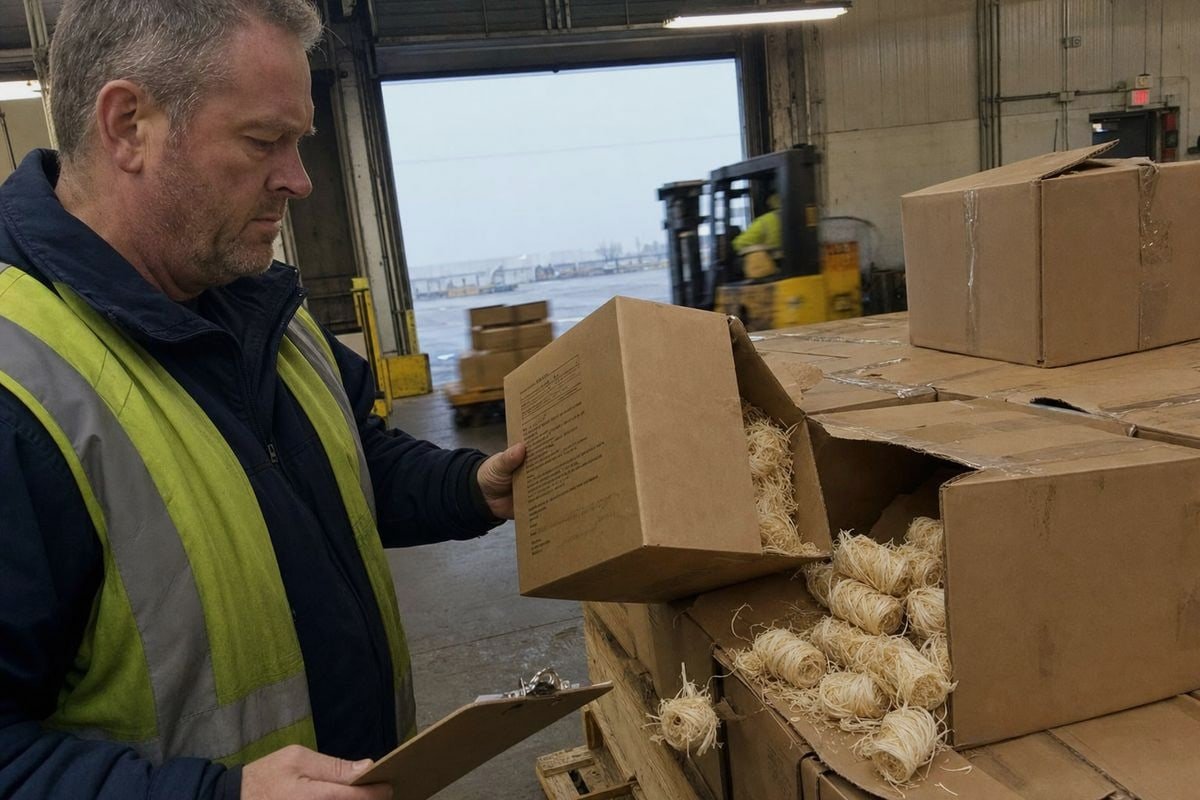
Canadian bilingual warning labels stopped one of our early fire starter shipments at customs years ago Consumer Packaging and Labelling Regulations 1. English-only packaging meant costly relabeling, delays, and one very unhappy distributor in Toronto.
Canadian bilingual warning labels on wood fire starter packaging must present all mandatory information—product identity, net quantity, and hazard warnings—in both English and French with equal prominence. Only the dealer's name and address may appear in one language. Quebec requires French to be at least as prominent.
Getting this right is not just a translation job. It is a design and compliance system. Let me walk you through how we handle it for our Canadian buyers.
How do I meet Canada's bilingual labeling requirements for wood fire starters?
When we redesigned our wax-dipped wood roll packaging for a Canadian fireplace distributor, the artwork went through three revisions before every mandatory element sat correctly in both official languages.
To meet Canada's bilingual labeling requirements, place the product's common name, net quantity in metric units, and all mandatory warnings in both English and French on the label. The dealer's name and address may remain in either language under the Consumer Packaging and Labelling Regulations.

Canada's Consumer Packaging and Labelling Act sets the baseline for any prepackaged consumer product, and wood fire starters fall squarely inside it. The Oficina de Competencia 2 enforces this framework. Its guidance on prepackaged firewood confirms the bilingual rule applies to fire products sold at retail. So your starting point is simple: identify every mandatory label element, then present each one in English and French.
Which elements must be bilingual, and which may stay unilingual?
Here is how we break it down for every Canadian order that comes through our production line in Ningbo:
| Elemento de Etiqueta | Bilingual Required? | Notas |
|---|---|---|
| Product common name (e.g., "Fire Starters / Allume-feu") | Sí | Must appear on the principal display panel |
| Cantidad neta | Sí | Metric units required (pieces, grams) |
| Mandatory warnings and cautions | Sí | Full translation, not partial |
| Directions for use (if mandatory) | Sí | Bilingual strongly recommended even when optional |
| Dealer name and address | No | May be in either English or French |
| Marketing slogans and promotional text | No | Optional content, though bilingual is encouraged |
The nuance most importers miss is the difference between mandatory and optional content. Federal packaging rules require "all" mandatory information to be bilingual. Optional promotional copy—like a tagline—may legally stay in one language. But in practice, we advise our buyers to translate everything. It costs nothing extra at the printing stage, and it removes any argument at the border or on a retailer's compliance desk.
Composition matters too. Our wood fire starters are 100% natural wood wool dipped in wax, with no chemical accelerants. That keeps them under the standard consumer packaging framework. A fire starter containing liquid fuels or chemical accelerants could trigger additional hazardous product labeling layers, with pictograms and signal words following supplier-label conventions. Confirm your exact formulation before you finalize any artwork.
What warning label content and certifications do Canadian retailers expect from me?
A purchasing manager from a Canadian BBQ chain once sent us a two-page label audit checklist before he would even discuss pricing. That checklist taught us exactly what retail compliance teams look for.
Canadian retailers expect bilingual hazard warnings such as "Flammable / Inflammable" and "Keep away from children / Garder hors de la portée des enfants," grouped safety statements, first-aid guidance, plus supplier certifications like ISO 9001, BSCI, and third-party test reports from SGS or Intertek.

Retail buyers treat labels and certificates as one package. If either is weak, the purchase order stalls. In our seventeen-plus years exporting fire-starting goods to Canada and thirty other markets, we have learned that a strong label answers safety questions before anyone asks them.
The warning content a conservative fire starter label should carry
A well-built bilingual fire starter label groups its safety communication so a consumer can find it in one glance. We recommend the following core set:
| Warning Element | Inglés | Francés |
|---|---|---|
| Flammability statement | Flammable | Inflammable |
| Seguridad infantil | Mantener alejado de los niños | Garder hors de la portée des enfants |
| Usage caution | Use only in fireplaces, fire pits, or grills | Utiliser uniquement dans les foyers, braseros ou grils |
| Supervision warning | Never leave fire unattended | Ne jamais laisser un feu sans surveillance |
| Storage instruction | Store in a cool, dry place | Conserver dans un endroit frais et sec |
Keep the signal word, any pictogram, and the hazard statement grouped together. Scattering warnings across three panels weakens both compliance and readability. High contrast matters too—white or orange warning text on our black retail boxes tests far better for legibility than gray-on-black designs some brands request.
Certifications that back the label
The label tells the consumer the product is safe. The certificates tell the retailer you can prove it. Our buyers routinely ask for ISO 9001 quality system documentation, BSCI social compliance audits, and SGS o Intertek 4 test reports for the specific product formulation. We keep these current because Canadian and European retail sourcing teams treat them as a hard requirement, not a nice-to-have. When your supplier can hand over test reports matching the exact wax-and-wood-fiber composition printed on the box—like the 50% wood fiber, 50% paraffin declaration on a typical retail carton—the compliance conversation gets very short.
Can my supplier handle custom bilingual packaging and label printing in-house?
The trade-off we weigh on every private-label project is speed versus verification. Printing bilingual artwork fast is easy; printing it correctly, with verified French and correct prominence, takes a disciplined process.
A capable supplier should manage bilingual packaging end to end: professional French translation, artwork layout with equal-prominence formatting, custom box and display printing, barcode placement, and pre-print compliance proofs. Confirm they provide physical print samples before mass production begins.
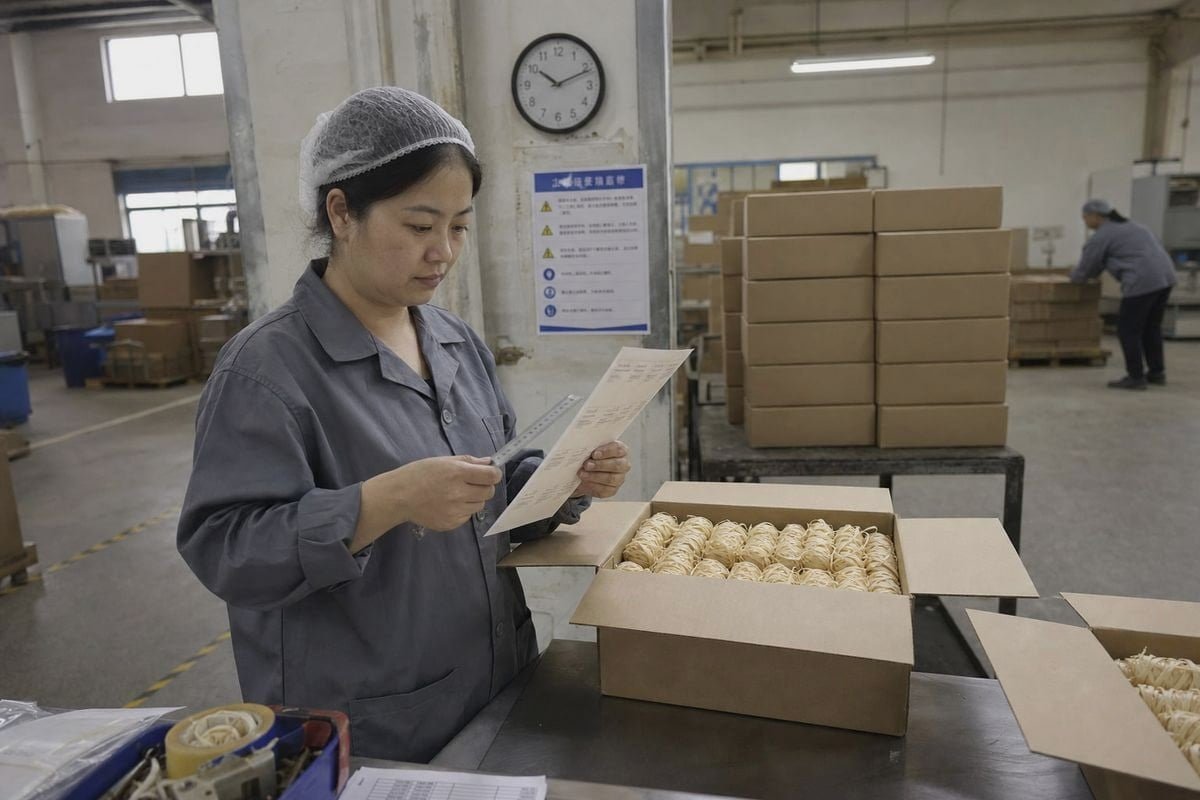
Not every factory can genuinely deliver this. Many trading companies outsource printing and never see the artwork until the boxes arrive. At our facility, packaging is part of the production line itself. That means the same batch-to-batch quality control applied to burn time and wax coating also applies to print color, text legibility, and label adhesion. The first sample you approve is the same box that ships in mass production.
What true one-stop bilingual packaging looks like
Here is the workflow we run for Canadian private-label orders:
- Content confirmation. We list every mandatory element for your product classification—identity, net quantity, warnings, dealer details.
- Professional translation. French text is translated and reviewed, never machine-translated and forgotten. Fire safety terminology has to be exact.
- Layout design. English and French are placed side by side or stacked, with equal type size and weight. Nothing is buried on a bottom flap.
- Digital proof review. You and your compliance reviewer sign off on the artwork against the legal checklist.
- Physical print sample. We ship an actual printed box, not just a PDF, so you can check contrast, durability, and finish.
- Mass production with QC checkpoints. Print quality is inspected at set intervals during the run.
Ask your supplier three direct questions: Do you print in-house or subcontract? Who verifies the French translation? Will I receive a physical pre-production sample? If any answer is vague, budget for problems. Custom sizes, burn times, barcodes, and display-ready packaging should all come from one accountable partner—because when the label and the product come from different hands, compliance gaps hide in the seams.
How do I avoid compliance delays or customs issues when importing to Canada?
A lesson we learned early: fixing labels after import costs roughly ten times more than fixing them before printing. One relabeling job in a bonded warehouse convinced our whole team to build compliance into artwork from day one.
Avoid delays by finalizing bilingual, compliant packaging at the manufacturing stage, verifying French prominence for Quebec, keeping test reports and translation records on file, and auditing final print proofs against your product's regulatory classification before the goods ship.
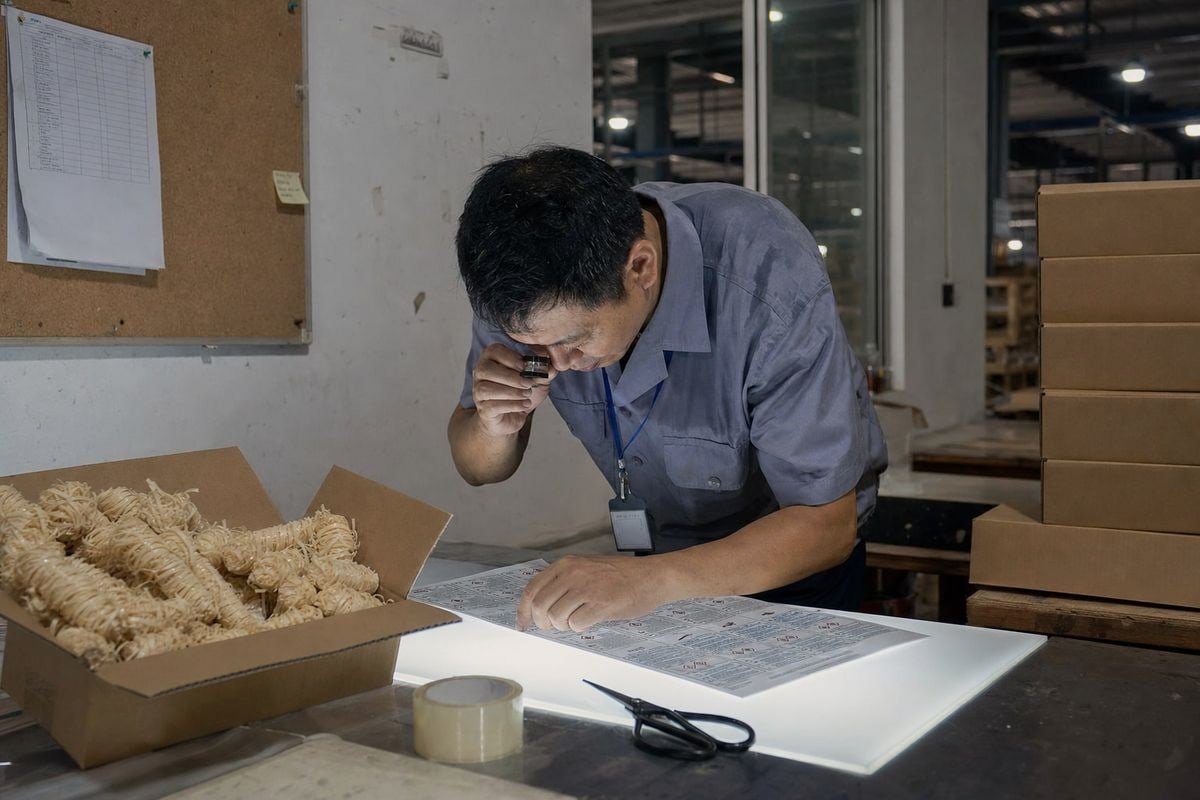
The most expensive compliance failures happen after the container leaves port. Post-import sticker fixes are slow, ugly on the shelf, and often rejected by major retailers anyway. Pre-emptive bilingual packaging at the factory is now the clear industry direction, and it is what we build into every Canadian order.
Common traps and how to close them
| Compliance Trap | Consequence | Prevention |
|---|---|---|
| Product name translated but a caution statement missed | Border hold or retailer rejection | Full mandatory-element checklist before artwork approval |
| French text present but tiny or low-contrast | Technically present, practically non-compliant | Match French type size and weight to English |
| Assuming Quebec only needs "equal" French | Provincial non-compliance under the Carta de la Lengua Francesa 5 | Design French-forward layouts where Quebec sales apply |
| English-only e-commerce listings on Amazon.ca 6 | Platform compliance flags | Prepare bilingual product descriptions separately from packaging |
| No documentation of translation review | Slow dispute resolution if challenged | Retain translation and compliance sign-off records |
Treat Quebec as its own design brief
Quebec deserves special attention. Federal rules demand equal prominence; Quebec's language regime, strengthened under Proyecto de ley 96 7, pushes further toward markedly predominant French on products marketed in the province. If your distributor sells into Quebec, do not treat French as a mirror translation. Consider French-first placement on the principal display panel. We have adjusted layouts for several European and Canadian buyers precisely for this reason, and it has never once slowed a shipment—the opposite, in fact.
Run a final label audit before the print run
Before any Canadian order goes to press, run this checklist: Is the product identity bilingual? Are all mandatory warnings fully translated? Are hazard elements grouped and legible? Is net quantity in metric units? Is the dealer name and address present? Is French at least as prominent as English—and more prominent where Quebec applies? Does the artwork match the product's exact classification and test reports? Ten minutes on this list saves weeks at the border.
Conclusión
Non-compliant labels cost you shipments, retail listings, and trust. Bilingual labeling is regulatory design, not translation. Plan it at the factory stage, with a certified partner who prints compliance in.
Notas al pie
1. Official regulation text supports the bilingual labeling requirement claim. ↩︎
2. Official enforcement authority for Canada's packaging and labelling framework mentioned in the article. ↩︎
3. Primary federal regulation governing bilingual labeling requirements referenced throughout the article. ↩︎
4. Links to a recognized third-party testing authority mentioned for certification credibility. ↩︎
5. Background on Quebec's language law that mandates predominant French labeling. ↩︎
6. Referenced e-commerce platform where bilingual product listing compliance is enforced. ↩︎
7. Explains the legislative amendment strengthening Quebec's French-language labeling requirements. ↩︎



 English
  Spanish
  German
  French
  Arabic
  Portuguese
Únete a la conversación