






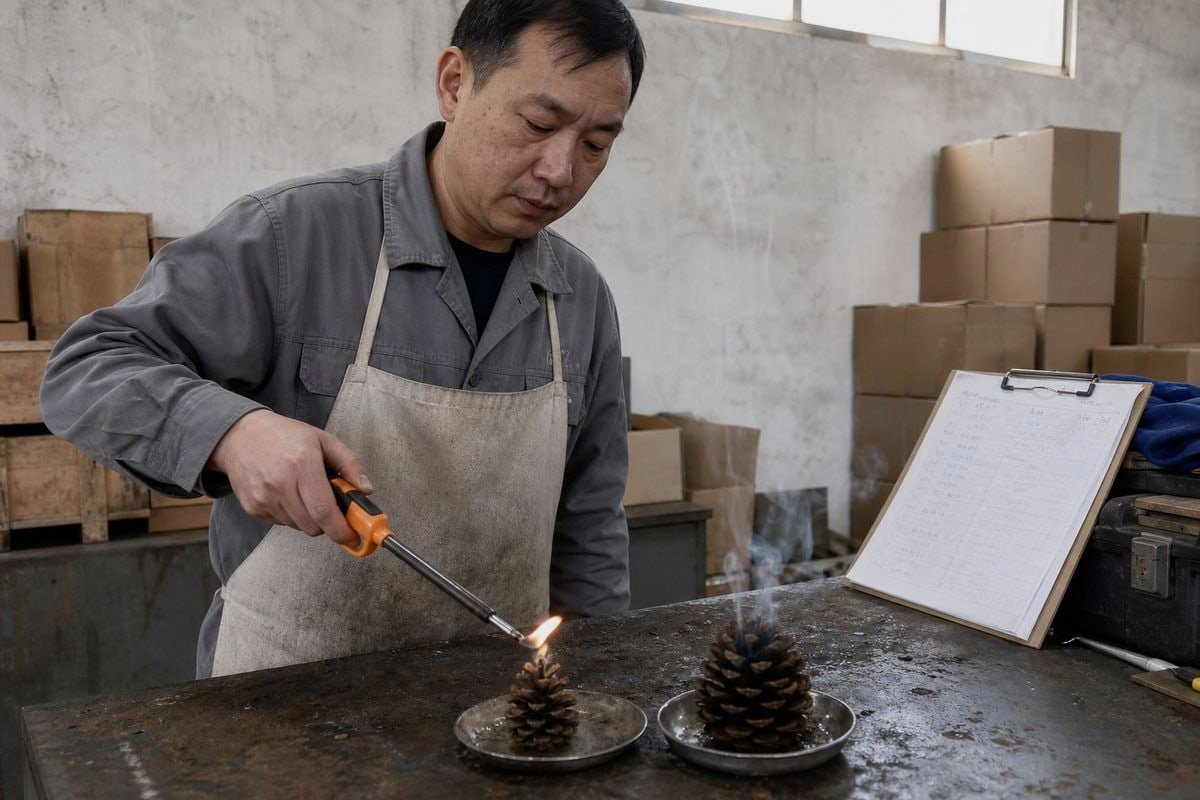
Nada frustra más a los compradores que las piñas de color para chimenea que humean en lugar de encenderse. relación superficie-volumen 1. Nuestra fábrica aprendió esa lección temprano, cuando un lote de prueba varió enormemente en el tiempo de ignición.
Las piñas de chimenea de colores se encienden más rápido cuando están secas, pequeñas, de estructura abierta y ricas en resina. El contenido de humedad, el grosor del recubrimiento de cera, la saturación de sales químicas y la especie de la piña afectan la velocidad de ignición. Los aditivos de color cambian principalmente la apariencia de la llama, mientras que la sequedad y la estructura impulsan la rapidez con la que se encienden las piñas.
Esa respuesta corta oculta muchos detalles. A continuación, desgloso cada factor uno por uno, para que sepa exactamente qué verificar antes de obtener o usar estos productos.
¿Qué ingredientes o recubrimientos hacen que mis piñas de pino de colores se enciendan más rápido?
Durante un ciclo de desarrollo de producto en nuestra planta de Ningbo, probamos tres fórmulas de cera una al lado de la otra. La diferencia de ignición entre ellas sorprendió incluso a nuestros técnicos superiores.
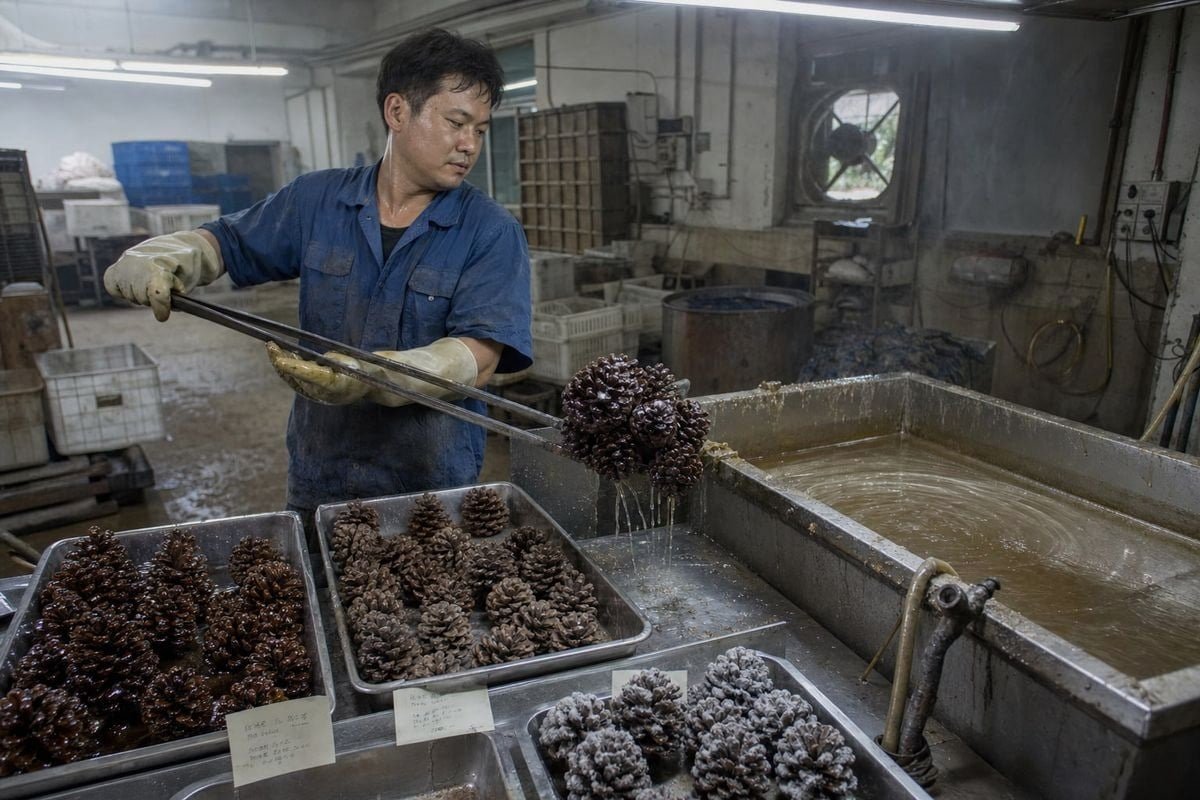
Las capas de cera de parafina son el mayor acelerador, actuando como una capa de combustible lista que se enciende en segundos. La resina de pino natural añade un rápido encendido una vez calentada. Las sales metálicas crean color de llama pero pueden ralentizar ligeramente la ignición si se aplican con demasiada carga o se dejan como residuo superficial espeso.
Permítame desglosar cómo cada ingrediente juega su papel, porque no todos tiran en la misma dirección.
La capa de combustible: recubrimientos de cera
La cera es el ingrediente de ignición más controlable. Una capa fina y uniforme inmersión de parafina 2 le da a la llama algo fácil de agarrar. La cera se derrite, se absorbe en las escamas de la piña y propaga el fuego rápidamente por la superficie. La cera de soja arde un poco más fría y lenta. En nuestras producciones, encontramos que la parafina proporciona el tiempo de encendido más predecible, mientras que las mezclas de soja se adaptan a los compradores que comercializan un posicionamiento ecológico. La interacción también importa. Una cera de soja en capas sobre un recubrimiento de sal pesado puede retrasar la ignición más de lo que sugeriría cualquiera de los factores por sí solo.
El acelerante natural: resina de pino
Las especies de piñas ricas en resina transportan sus propios compuestos volátiles 3. Cuando el calor los golpea, liberan vapores inflamables rápidamente. Es por eso que una piña seca y resinosa puede encenderse casi instantáneamente con una sola cerilla. Pero la resina no es toda la historia. Una piña rica en resina que está húmeda o densa aún se encenderá lentamente. La resina ayuda a propagar la llama; no reemplaza la sequedad.
La química del color: sales metálicas
Las sales están ahí para el color, no para la velocidad. Los compuestos de cobre dan llamas azul-verdes. Otras sales producen tonos rojos, morados o naranjas. Aquí está el matiz que muchos compradores pasan por alto: la concentración de sal afecta el umbral de ignición. Una inmersión de tinte sobresaturada deja una capa mineral crujiente que resiste la llama al primer contacto. Controlamos esto en nuestra fábrica estandarizando la concentración de la inmersión y el tiempo de curado, lote por lote.
| Ingrediente | Propósito principal | Efecto en la velocidad de ignición |
|---|---|---|
| Cera de parafina | Capa de combustible | Fuerte aceleración |
| Cera de soja | Capa de combustible ecológica | Aceleración moderada |
| Resina de pino | Combustible volátil natural | Rápida llama una vez calentada |
| Las sales metálicas | Color de llama | Retraso neutro a ligero |
| Exceso de residuo de sal | Ninguno (defecto) | Retraso notable |
¿Cómo afecta el contenido de humedad a la velocidad de ignición de mis piñas?
Un distribuidor alemán nos preguntó una vez por qué el stock de su almacén se encendía más lento en primavera que en invierno. La respuesta no fue el producto. Fue la humedad.
La humedad es el predictor más fuerte de la velocidad de ignición. Las piñas secas pueden encenderse casi instantáneamente con una cerilla, mientras que las piñas húmedas deben primero hervir el agua antes de que comience la pirólisis. Incluso las piñas de colores bien secas pueden reabsorber humedad durante el almacenamiento húmedo, retrasando notablemente la ignición.
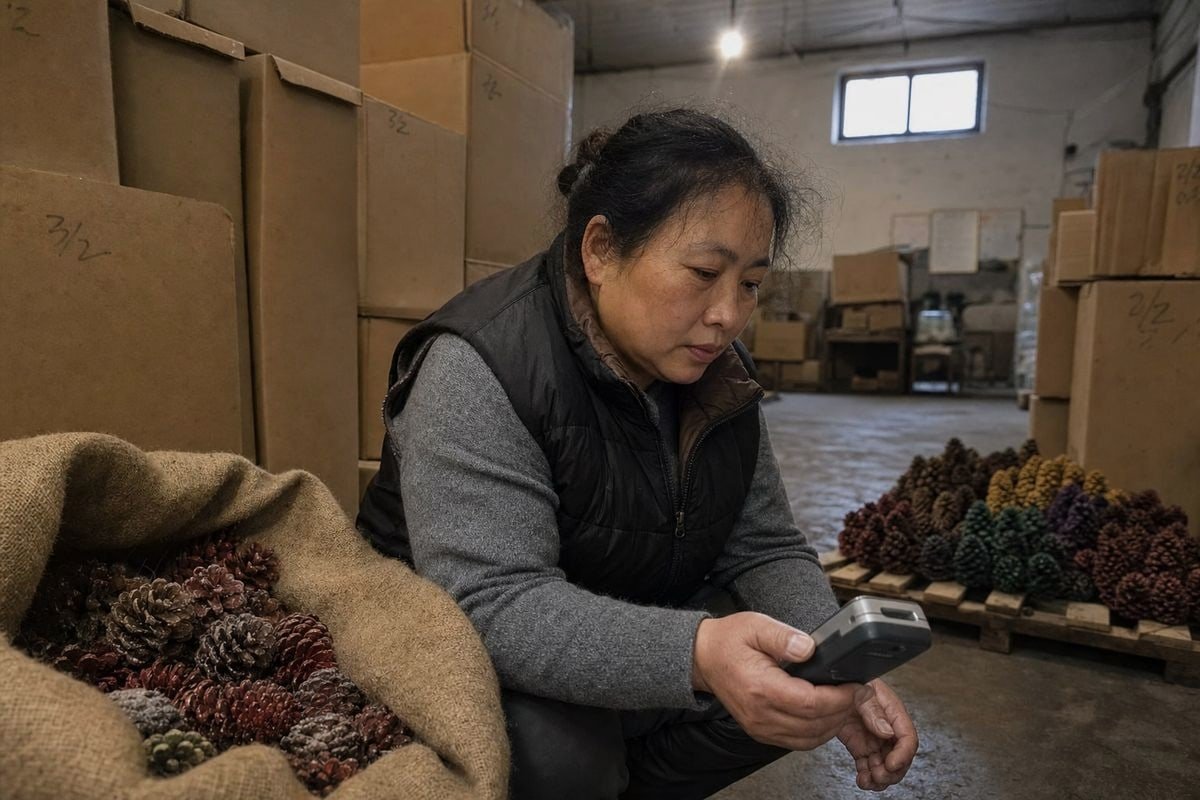
La ciencia del fuego respalda esto firmemente. En estudios de ignición de combustible, contenido de humedad 4 muestra repetidamente la relación más estrecha con el retraso de la ignición de cualquier variable única. Un estudio del USDA sobre agujas de pino vivas encontró que la humedad por sí sola explicaba aproximadamente el 46% de la variación en el tiempo de ignición. Cuando los investigadores agregaron la química del combustible al modelo, la predicción saltó a aproximadamente el 85%. La conclusión para los compradores es simple: el agua es el enemigo del encendido rápido, y la química decide el resto.
Por qué el agua ralentiza todo
Antes de que una piña pueda arder, su superficie debe alcanzar la temperatura a la que la madera libera gases inflamables. El agua absorbe una enorme cantidad de calor a medida que se evapora. Por lo tanto, una piña húmeda pasa sus primeros segundos, o minutos, humeando en lugar de encenderse. Usted ve esto como siseos, humo blanco y una llama reacia.
El problema oculto: reabsorción de humedad
Esto es lo que toma por sorpresa a los importadores. Una piña coloreada que salió de fábrica perfectamente seca puede volver a absorber humedad durante el envío o el almacenamiento. La capa de cera ralentiza esto, pero no lo detiene. Los recubrimientos de sal incluso pueden atraer la humedad, ya que algunas sales son higroscópicas. En nuestras instalaciones, curamos completamente las piñas después del baño de tinte, verificamos la sequedad antes de empacar, y usamos opciones de empaque sellado como bolsas y frascos resellables para proteger el producto durante el transporte marítimo y el almacenamiento en almacén.
Puntos de control prácticos de humedad
- Confirme el proceso de curado post-tratamiento del proveedor, no solo el secado inicial.
- Especifique empaques sellados o resellables para mercados de destino húmedos.
- Aconseje a los clientes finales que almacenen las bolsas abiertas lejos de sótanos o garajes húmedos.
- Pruebe una muestra del inventario almacenado cada temporada, no solo al llegar.
¿El tamaño de la piña o el grosor del recubrimiento de cera cambian la rapidez con la que se encienden?
Clasificar los conos crudos es uno de los pasos menos glamorosos pero más importantes en nuestra línea. La clasificación por tamaño existe por una razón: la física no negocia.
Sí, ambos importan significativamente. Los conos más pequeños con escamas abiertas se encienden más rápido porque el calor penetra rápidamente en su menor masa. Los recubrimientos de cera finos y uniformes se encienden más rápido; la cera demasiado gruesa puede retrasar brevemente la ignición pero extiende el tiempo de combustión. Los conos grandes, densos y cerrados se encienden más lentamente de todos.
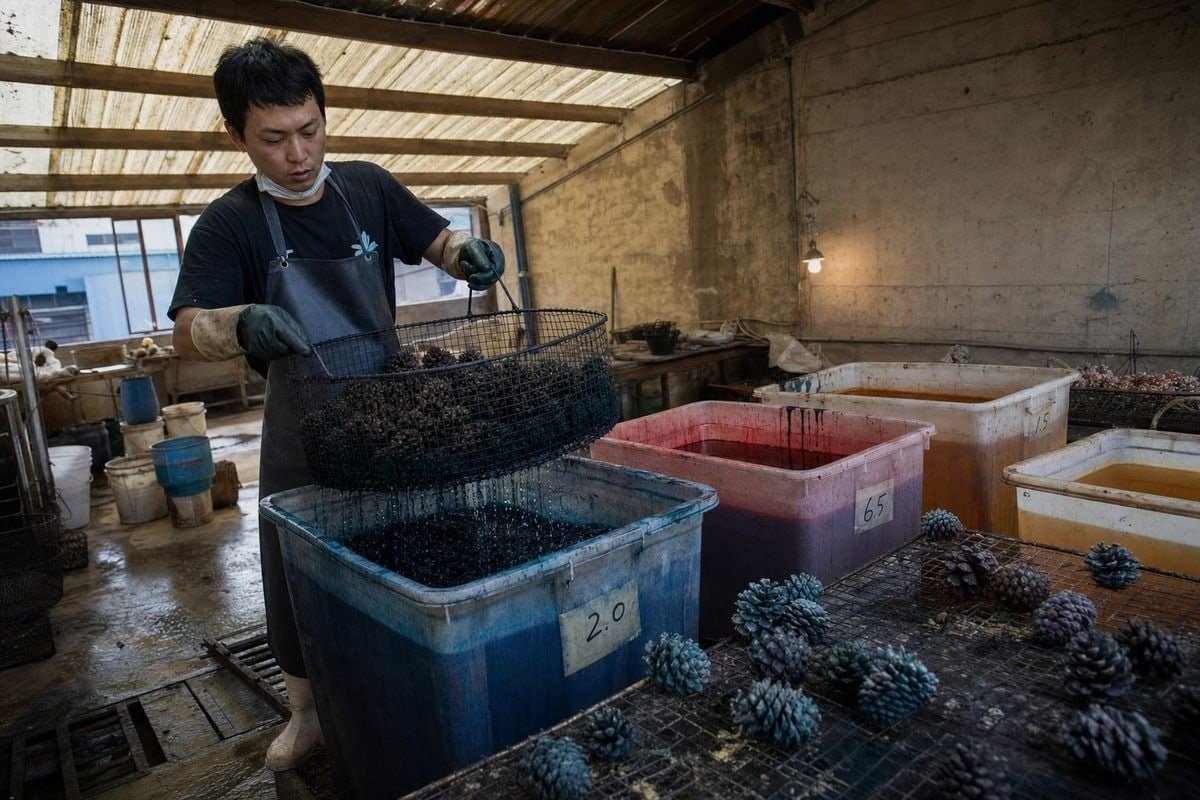
Los investigadores de incendios describen esto a través de relación superficie-volumen 5. Un cono pequeño y abierto expone muchos bordes finos de escamas al calor. Esos bordes alcanzan rápidamente la temperatura de ignición. Un cono grande y denso es esencialmente un tronco pequeño: el calor tarda mucho más en penetrar. La madurez del cono también importa. Un cono fresco y cerrado se comporta de manera muy diferente a uno seco, erosionado y completamente abierto, incluso dentro de la misma especie. Estudios sobre conos de pino de azúcar 6 encontraron que la inflamabilidad cambiaba drásticamente con la etapa de desarrollo y la descomposición. Por lo tanto, "piña" no es un combustible uniforme, y tampoco lo es un lote de materia prima a menos que alguien lo clasifique.
El efecto del tamaño en la práctica
| Perfil del cono | Comportamiento típico de ignición | Mejor caso de uso |
|---|---|---|
| Pequeño, completamente abierto, seco | Se enciende en segundos | Efecto de color instantáneo, papel de yesca |
| Mediano, abierto | Encendido rápido y constante | Uso estándar en chimeneas y fogatas |
| Grande, abierto | Arranque más lento, exhibición de color más larga | Productos decorativos de combustión prolongada |
| Grande, denso o cerrado | Lento, puede humear | No recomendado para productos de llama |
El compromiso del grosor de la cera
Existe un compromiso genuino que sopesamos en cada pedido OEM. Cera fina significa la ignición más rápida posible, pero una exhibición de llama de color más corta. La cera gruesa retrasa ligeramente la primera ignición — la llama debe derretir la capa — sin embargo, prolonga el tiempo de combustión e intensifica la producción de color. Ninguno es "correcto". Depende de lo que el cliente final valore. Los productos para fogatas a menudo prefieren una ignición rápida y dramática. Los productos decorativos para chimeneas a menudo prefieren un espectáculo de color más largo y constante. Nuestro equipo de producción puede mantener el peso del recubrimiento dentro de una tolerancia estrecha por cono, que es lo que mantiene un lote comportándose de manera consistente. La porosidad de las escamas varía entre especies, por lo que también combinamos la fórmula de cera con el tipo de cono; un cono poroso absorbe más solución de cera y sal que uno denso, e ignorar eso crea una ignición inconsistente dentro de la misma bolsa.
¿Puedo solicitar velocidades de ignición personalizadas al obtener piñas de llama de color de un fabricante?
Los compradores nos preguntan esto con más frecuencia que cualquier otra pregunta de especificación, excepto el tiempo de combustión. La respuesta honesta es sí, si la fábrica realmente controla sus variables de proceso.
Sí. Un fabricante capaz puede ajustar la velocidad de ignición ajustando el tipo de cera y el grosor del recubrimiento, la concentración de sal, la clasificación del tamaño del cono y el tiempo de curado. Las fábricas de renombre validan la ventana de ignición objetivo mediante pruebas por lotes y proporcionan muestras que reflejan de manera confiable el rendimiento de la producción en masa.
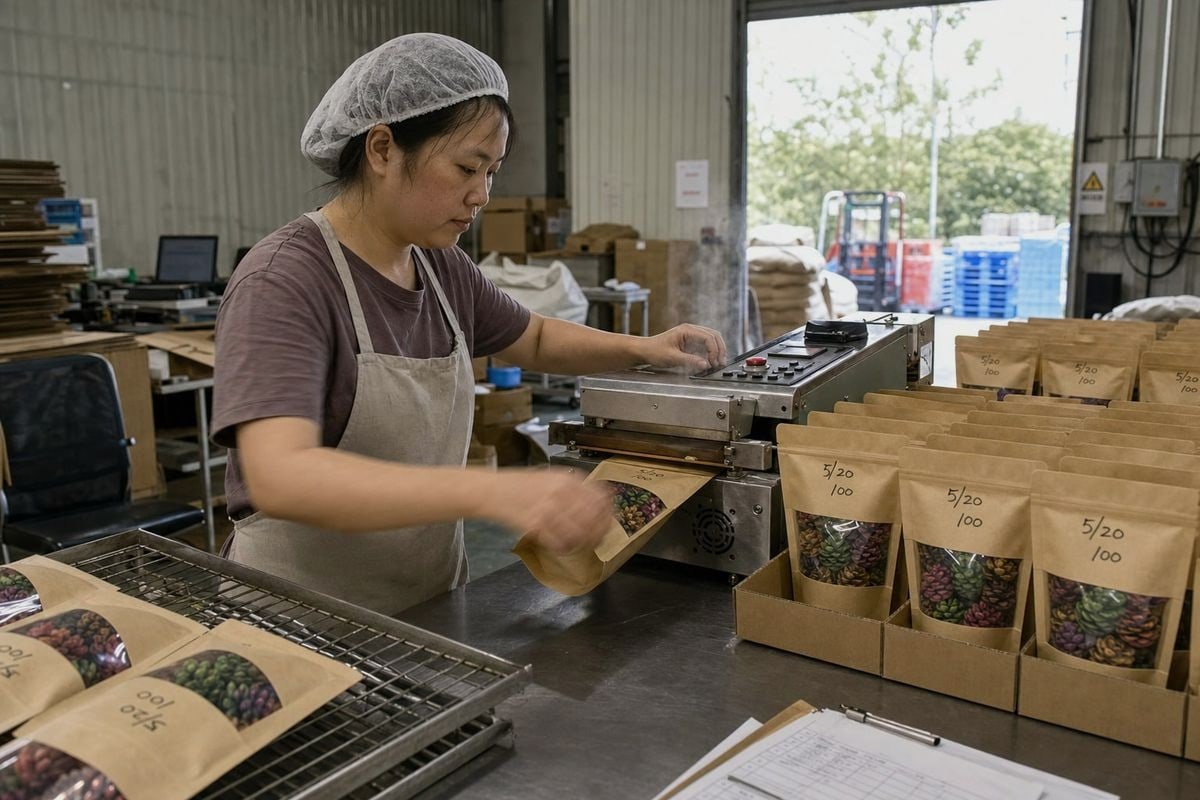
En nuestros más de 17 años fabricando productos de llama de color, hemos incorporado la velocidad de ignición en el mismo menú de personalización que el tiempo de combustión, el empaque y el etiquetado privado. Es un resultado de ingeniería, no un accidente afortunado. Aquí es cómo las palancas se mapean a los resultados.
Las palancas que una fábrica puede ajustar
| Ajuste | Ignición más rápida | Ignición más lenta / más constante |
|---|---|---|
| Tipo de cera | Parafina | Cera de soja o mezclada |
| Peso del recubrimiento | Inmersión fina y uniforme | Inmersión más pesada |
| Clasificación de conos | Conos pequeños y abiertos | Conos más grandes |
| Saturación de sal | Baja, controlada | Alta (más color, ligero retraso) |
| Tiempo de curado | Curado completo y prolongado | Curado acortado (no recomendado) |
Qué preguntar a su proveedor
Primero, pregunte cómo verifican el tiempo de ignición. Una fábrica seria prueba el tiempo hasta la llama en muestras de cada lote, bajo un método de prueba definido, y mantiene registros. Segundo, pregunte sobre la consistencia. El verdadero desafío no es alcanzar un objetivo una vez; es mantenerlo en miles de unidades cuando la porosidad del cono crudo varía naturalmente. Eso requiere clasificación de materiales entrantes, concentraciones de remojo estandarizadas y pesos de recubrimiento controlados. Tercero, pregunte sobre el cumplimiento. El comportamiento de ignición se conecta directamente con la seguridad, por lo que las certificaciones y informes de pruebas de terceros 7 importan. Nuestras líneas operan bajo ISO 9001 y BSCI, con marcado CE e informes de prueba SGS/Intertek disponibles; para la mayoría de nuestros compradores de EE. UU. y Europa, esa documentación es un requisito indispensable antes de que comience cualquier discusión de especificaciones.
Una objeción que escucho: algunos compradores asumen que el tratamiento de color fija el comportamiento de combustión, por lo que la personalización es imposible. Eso es al revés. El color y la ignición son sistemas en gran medida separados: las sales manejan el color, mientras que la cera, la sequedad y la selección del cono manejan la ignición. Debido a que controlamos ambos sistemas de forma independiente, podemos combinar una llama multicolor vívida con un perfil de fogata de encendido rápido o un perfil de chimenea lento y elegante. También admitimos MOQ amigables para pruebas, por lo que un distribuidor puede validar la especificación de ignición en su propio mercado antes de comprometerse con un contenedor.
Conclusión
Slow-lighting cones frustrate customers and damage brands. The fix is knowable: dryness, structure, resin, and coating control. Source from a factory that engineers ignition speed deliberately, and your fireplace colored pine cones will light predictably every time.
Notas al pie
1. Explains the physical principle governing why smaller objects heat and ignite faster than larger ones. ↩︎
2. Explains chemical properties of paraffin wax that make it an effective ignition accelerant. ↩︎
3. Background on volatile compounds released by resin that accelerate flammability and ignition. ↩︎
4. USDA Forest Service researches how moisture content affects wildland fuel ignition delay. ↩︎
5. Defines the physics concept explaining why smaller cones ignite faster than larger ones. ↩︎
6. USDA studies document how cone species and maturity affect flammability and burn behavior. ↩︎
7. SGS is a leading provider of independent third-party testing and certification services. ↩︎
 English
  Spanish
  German
  French
  Arabic
  Portuguese
Únete a la conversación