






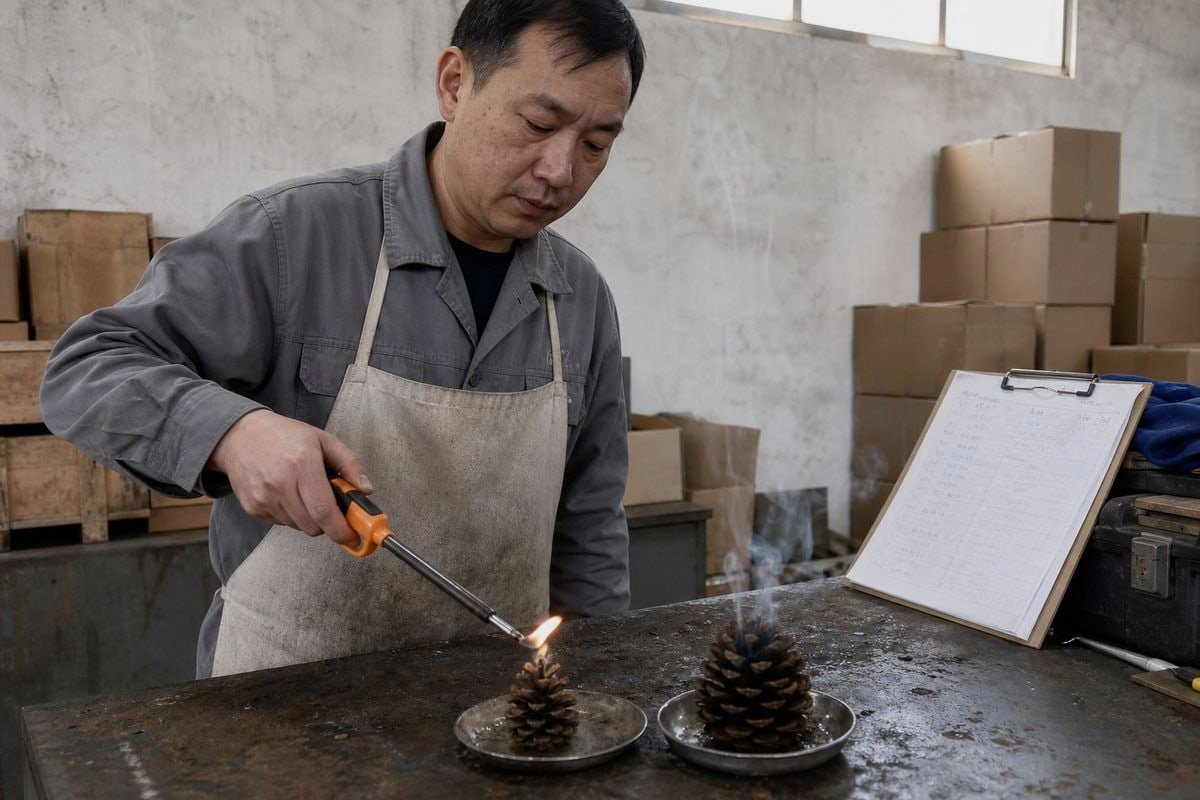
Nothing frustrates buyers faster than fireplace colored pine cones that smolder instead of light surface-to-volume ratio 1. Our factory learned that lesson early, when a trial batch varied wildly in ignition time.
Fireplace colored pine cones ignite faster when they are dry, small, open-structured, and resin-rich. Moisture content, wax coating thickness, chemical salt saturation, and cone species all affect ignition speed. Color additives mainly change flame appearance, while dryness and structure drive how quickly cones light.
That short answer hides a lot of detail. Below, I break down each factor one by one, so you know exactly what to check before you source or use these products.
What Ingredients or Coatings Make My Colored Pine Cones Ignite Faster?
During one product-development cycle at our Ningbo plant, we tested three wax formulas side by side. The ignition gap between them surprised even our senior technicians.
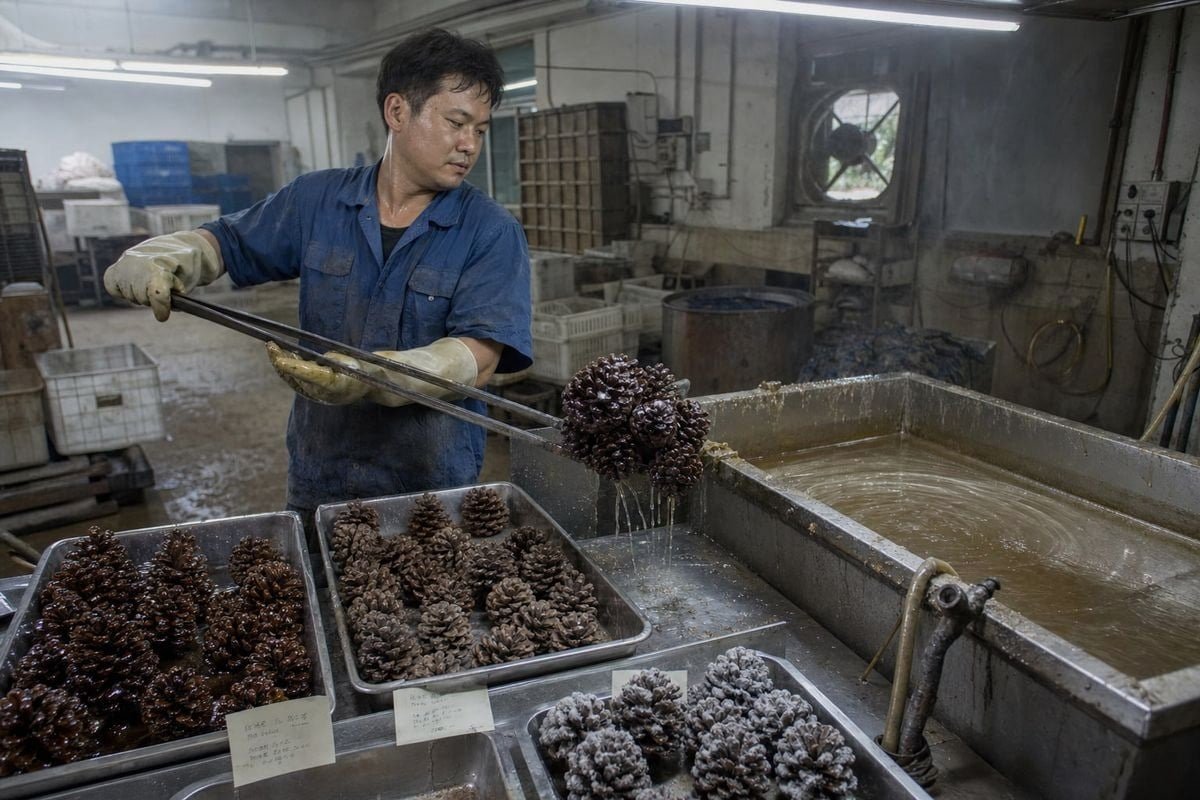
Paraffin wax coatings are the biggest accelerator, acting as a ready fuel layer that catches flame in seconds. Natural pine resin adds a fast flare-up once heated. Metal salts create flame color but can slightly slow ignition if applied too heavily or left as thick surface residue.
Let me unpack how each ingredient plays its part, because they do not all pull in the same direction.
The Fuel Layer: Wax Coatings
Wax is the most controllable ignition ingredient. A thin, even غمس البارافين 2 gives the flame something easy to grab. The wax melts, wicks into the cone scales, and spreads fire across the surface quickly. Soy-based wax burns a little cooler and slower. In our production runs, we found that paraffin gives the most predictable light-up time, while soy blends suit buyers who market eco-friendly positioning. The interaction matters too. A soy wax layered over a heavy salt coating can delay ignition more than either factor alone would suggest.
The Natural Accelerant: Pine Resin
Resin-rich cone species carry their own volatile compounds 3. When heat hits them, they release flammable vapors fast. That is why a dry, resinous cone can flare almost instantly from a single match. But resin is not the whole story. A resin-rich cone that is damp or dense will still ignite slowly. Resin helps flame spread; it does not replace dryness.
The Color Chemistry: Metal Salts
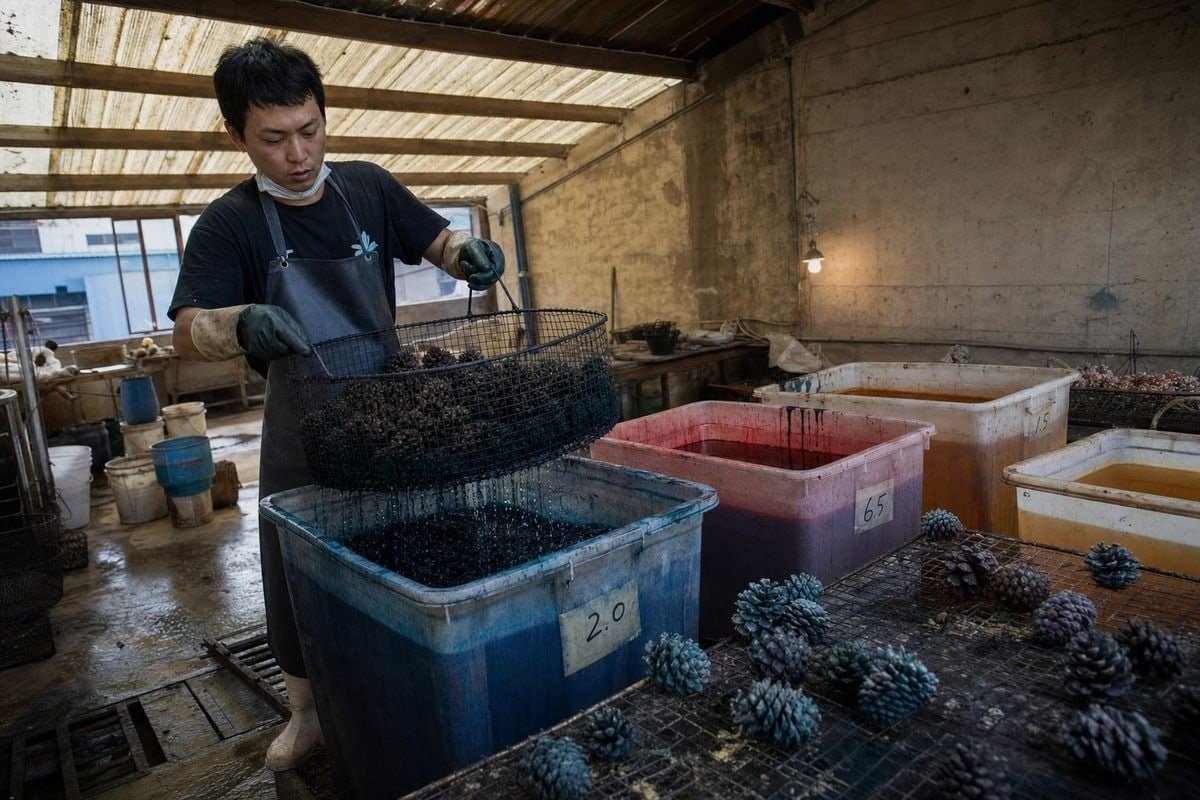
The salts are there for color, not speed. Copper compounds give blue-green flames. Other salts produce red, purple, or orange tones. Here is the nuance many buyers miss: salt concentration affects ignition threshold. An over-saturated dye soak leaves a crusty mineral layer that resists flame at first contact. We control this at our factory by standardizing soak concentration and curing time, batch by batch.
| المكون | Main Purpose | Effect on Ignition Speed |
|---|---|---|
| شمع البارافين | Fuel layer | Strong acceleration |
| شمع الصويا | Eco-friendly fuel layer | Moderate acceleration |
| Pine resin | Natural volatile fuel | Fast flare once heated |
| يعتمد لون اللهب على كل من مركب التلوين وظروف الاحتراق | لون اللهب | Neutral to slight delay |
| Excess salt residue | None (defect) | Noticeable delay |
How Does Moisture Content Affect My Pine Cones' Ignition Speed?
A German distributor once asked us why his warehouse stock lit slower in spring than in winter. The answer was not the product. It was humidity.
Moisture is the single strongest predictor of ignition speed. Dry pine cones can ignite almost instantly from a match, while damp cones must first boil off water before pyrolysis begins. Even well-dried colored cones can reabsorb moisture during humid storage, delaying ignition noticeably.
Fire science backs this up strongly. In fuel-ignition studies, محتوى الرطوبة 4 repeatedly shows the tightest relationship with ignition delay of any single variable. One USDA study on live pine needles found moisture alone explained roughly 46% of the variation in ignition time. When researchers added fuel chemistry to the model, prediction jumped to about 85%. The takeaway for buyers is simple: water is the enemy of fast lighting, and chemistry decides the rest.
Why Water Slows Everything Down
Before a cone can flame, its surface must reach the temperature where wood releases flammable gases. Water absorbs enormous heat as it evaporates. So a damp cone spends its first seconds — or minutes — steaming instead of igniting. You see this as hissing, white smoke, and a reluctant flame.
The Hidden Problem: Moisture Reabsorption
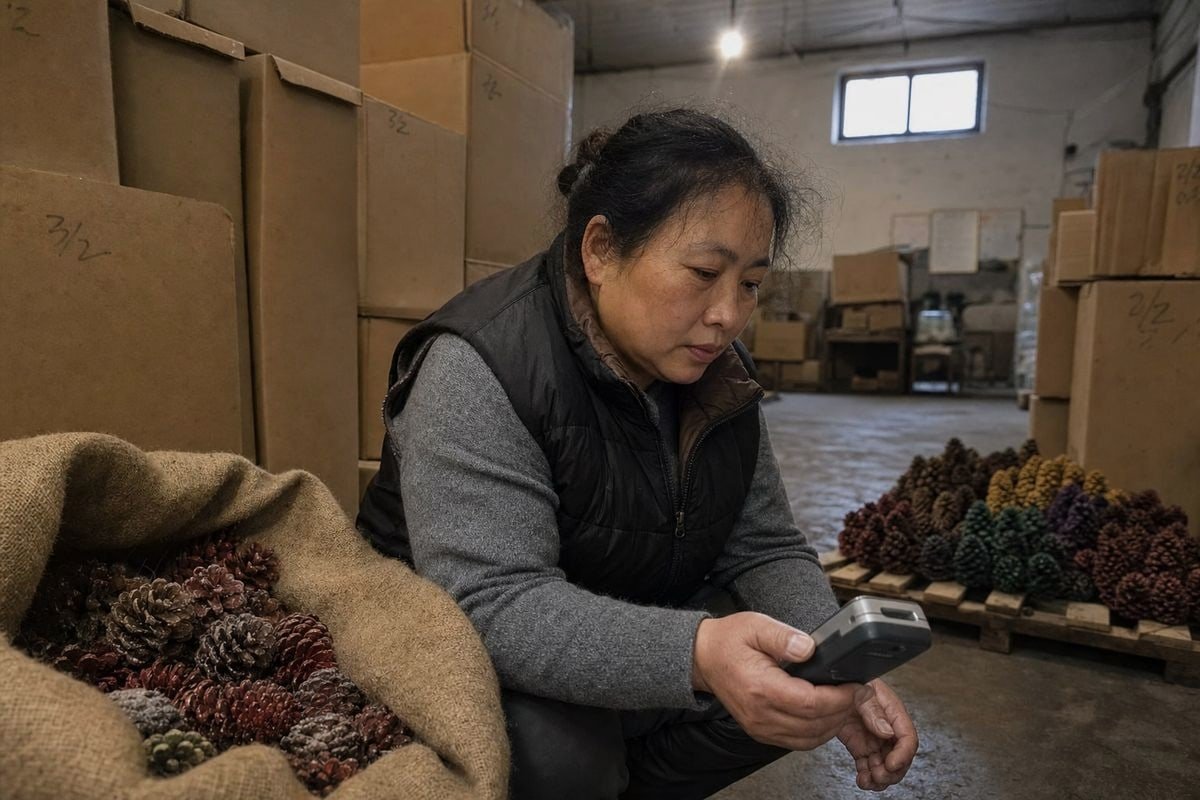
Here is what catches importers off guard. A colored cone that left the factory perfectly dry can pull moisture back in during shipping or storage. The wax layer slows this, but does not stop it. Salt coatings can even attract humidity, since some salts are hygroscopic. At our facility, we cure cones fully after the dye bath, verify dryness before packing, and use sealed packaging options like resealable pouches and jars to protect the product through ocean freight and warehouse storage.
Practical Moisture Checkpoints
- Confirm the supplier's post-treatment curing process, not just initial drying.
- Specify sealed or resealable packaging for humid destination markets.
- Advise end customers to store opened bags away from damp basements or garages.
- Test a sample from stored inventory each season, not only on arrival.
Does Pine Cone Size or Wax Coating Thickness Change How Quickly They Light?
Sorting raw cones is one of the least glamorous but most important steps on our line. Size grading exists for a reason: physics does not negotiate.
Yes, both matter significantly. Smaller cones with open scales ignite faster because heat penetrates their lower mass quickly. Thin, even wax coatings light fastest; overly thick wax can briefly delay ignition but extends burn time. Large, dense, closed cones ignite slowest of all.
Fire researchers describe this through surface-to-volume ratio 5. A small, open cone exposes lots of thin scale edges to heat. Those edges reach ignition temperature fast. A big, dense cone is essentially a small log — heat takes far longer to soak in. Cone maturity matters too. A fresh, tightly closed cone behaves very differently from a dry, weathered, fully opened one, even within the same species. Studies on sugar pine cones 6 found flammability shifted dramatically with developmental stage and decomposition. So "pine cone" is not one uniform fuel, and neither is one batch of raw material unless someone sorts it.
The Size Effect in Practice
| Cone Profile | Typical Ignition Behavior | أفضل حالة استخدام |
|---|---|---|
| Small, fully open, dry | Lights in seconds | Instant color effect, kindling role |
| Medium, open | Fast, steady light-up | Standard fireplace and campfire use |
| Large, open | Slower start, longer color display | Extended-burn décor products |
| Large, dense or closed | Slow, may smolder | Not recommended for flame products |
The Wax Thickness Trade-Off
There is a genuine trade-off we weigh on every OEM order. Thin wax means the fastest possible ignition, but a shorter colored-flame display. Thick wax delays first light slightly — the flame must melt through the layer — yet it stretches burn time and intensifies color output. Neither is "correct." It depends on what the end customer values. Campfire products often favor quick, dramatic ignition. Fireplace décor products often favor a longer, steadier color show. Our production team can hold coating weight within a tight tolerance per cone, which is what keeps a batch behaving consistently. Scale porosity varies between species, so we also match wax formula to cone type; a porous cone drinks up more wax and salt solution than a dense one, and ignoring that creates inconsistent ignition within the same bag.
Can I Request Custom Ignition Speeds When Sourcing Color-Flame Pine Cones from a Manufacturer?
Buyers ask us this more often than any spec question except burn time. The honest answer is yes — if the factory actually controls its process variables.
Yes. A capable manufacturer can tune ignition speed by adjusting wax type and coating thickness, salt concentration, cone size grading, and curing time. Reputable factories validate the target ignition window through batch testing and provide samples that reliably reflect mass-production performance.
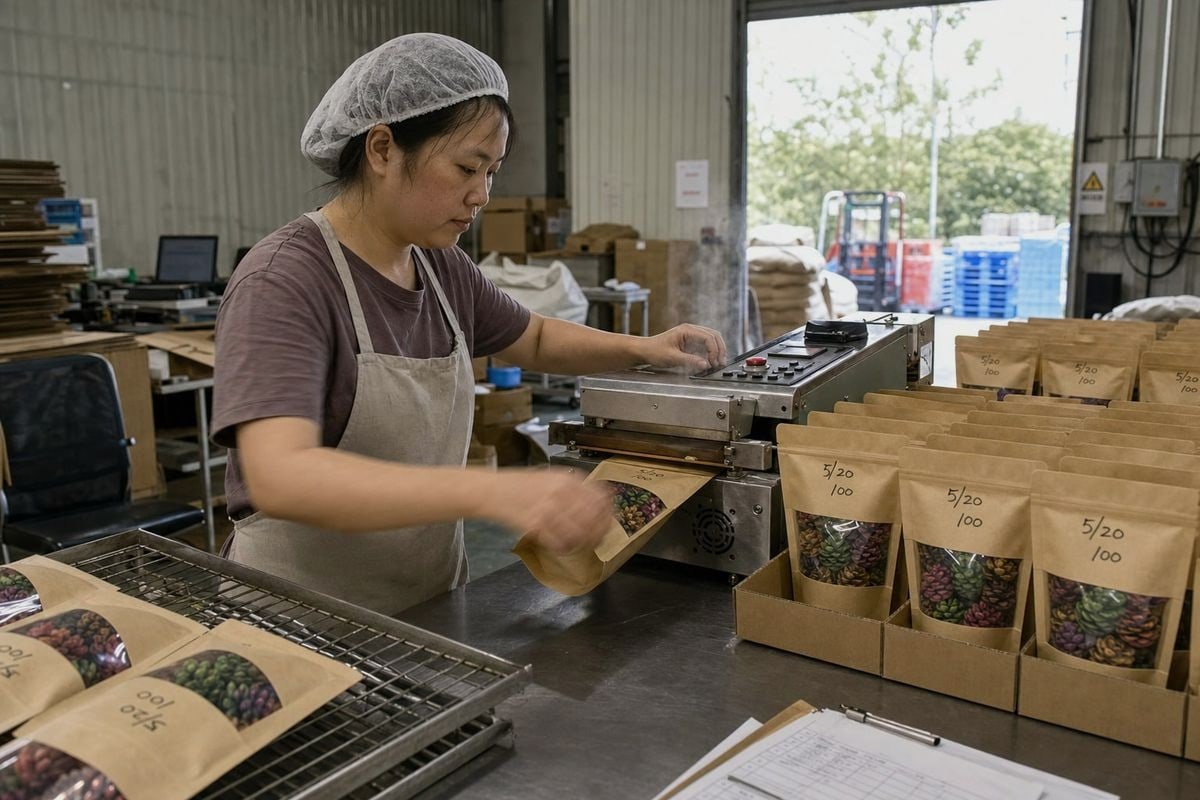
In our 17-plus years making color-flame products, we have built ignition speed into the same customization menu as burn time, packaging, and private labeling. It is an engineering output, not a lucky accident. Here is how the levers map to results.
The Levers a Factory Can Adjust
| تعديل | Faster Ignition | Slower / Steadier Ignition |
|---|---|---|
| نوع الشمع | البارافين | Soy or blended wax |
| Coating weight | Thin, even dip | Heavier dip |
| تصنيف المخاريط | Small, open cones | Larger cones |
| Salt saturation | Lower, controlled | Higher (more color, slight delay) |
| Curing time | Full extended cure | Shortened cure (not advised) |
في عملنا الشامل لـ OEM/ODM، نتعامل مع حزمة الملصقات الكاملة: ترجمة نص التحذير، ووضع الباركود، وتصميم الملصق الخاص، وتغليف العرض. لكننا نخبر المشترين دائمًا بالاحتفاظ بمسؤوليتين واضحتين. أولاً، يجب أن تستخدم ترجمة عبارات المخاطر والاحتياطات الصياغة الرسمية لعبارات CLP لكل لغة - هذه عبارات قياسية، وليست ترجمات حرة. ثانيًا، يجب على المشتري أو ممثله في الاتحاد الأوروبي تقديم الموافقة النهائية، لأن
First, ask how they verify ignition time. A serious factory tests time-to-flame on samples from every batch, under a defined test method, and keeps records. Second, ask about consistency. The real challenge is not hitting a target once; it is holding it across thousands of units when raw cone porosity varies naturally. That takes incoming-material sorting, standardized soak concentrations, and controlled coating weights. Third, ask about compliance. Ignition behavior connects directly to safety, so certifications and لا تدع موردًا يخبرك "لا بأس، الجميع يبيعه". اطلب تقارير مستوى الدفعة. تحقق أيضًا من 7 matter. Our lines run under ISO 9001 and BSCI, with CE marking and SGS/Intertek test reports available — for most of our US and European buyers, that documentation is a hard requirement before any spec discussion even starts.
One objection I hear: some buyers assume the color treatment locks in the burn behavior, so customization is impossible. That gets it backwards. Color and ignition are largely separate systems — salts handle color, while wax, dryness, and cone selection handle ignition. Because we control both systems independently, we can pair a vivid multicolor flame with either a fast-flare campfire profile or a slow, elegant fireplace profile. We also support trial-friendly MOQs, so a distributor can validate the ignition spec in their own market before committing to a container.
خاتمة
Slow-lighting cones frustrate customers and damage brands. The fix is knowable: dryness, structure, resin, and coating control. Source from a factory that engineers ignition speed deliberately, and your fireplace colored pine cones will light predictably every time.
ملاحظات ختامية
1. Explains the physical principle governing why smaller objects heat and ignite faster than larger ones. ↩︎
2. Explains chemical properties of paraffin wax that make it an effective ignition accelerant. ↩︎
3. Background on volatile compounds released by resin that accelerate flammability and ignition. ↩︎
4. USDA Forest Service researches how moisture content affects wildland fuel ignition delay. ↩︎
5. Defines the physics concept explaining why smaller cones ignite faster than larger ones. ↩︎
6. USDA studies document how cone species and maturity affect flammability and burn behavior. ↩︎
7. SGS is a leading provider of independent third-party testing and certification services. ↩︎



 English
  Spanish
  German
  French
  Arabic
  Portuguese
انضم إلى المحادثة