






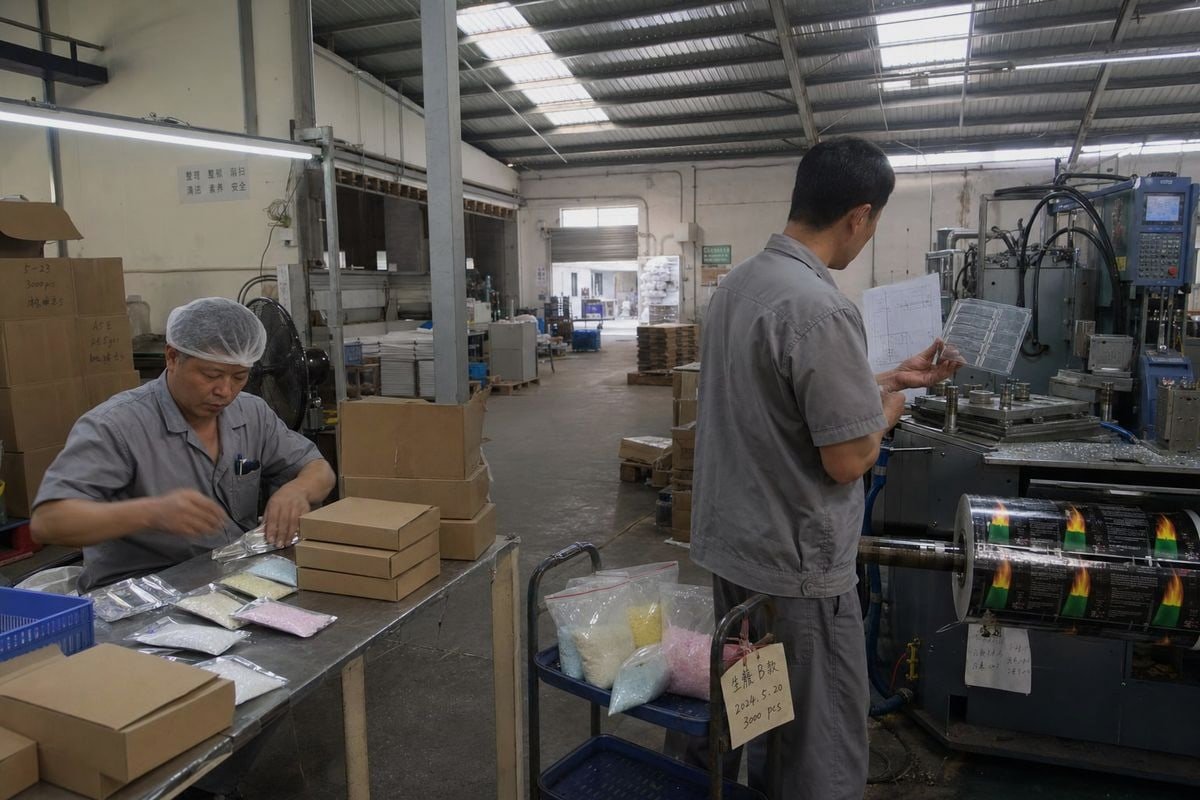
Choosing between ODM vs OEM for Magic Fire Powder confuses many brand aggregators who visit our Ningbo production floor. Pick wrong, and cash gets trapped in tooling or margins evaporate fast.
For Magic Fire Powder, ODM delivers better ROI at launch because it needs no tooling investment, offers lower MOQs, and reaches market faster. OEM wins long-term ROI once volume is proven, since proprietary formulations, exclusive packaging, and IP ownership defend margins and raise exit valuations.
The right answer depends on your portfolio stage, your cash discipline, and your exit plans. Let me walk you through each factor, starting with the one that stops most deals cold: certification.
What certifications should I verify before choosing an ODM or OEM partner for Magic Fire Powder?
Last spring, a German distributor asked us for our informes SGS 1 before he would even discuss pricing. That order taught me compliance paperwork opens doors faster than any quote sheet.
Verify ISO 9001 for quality management, BSCI for social compliance, CE marking for EU market access, and third-party test reports from SGS or Intertek. Also demand MSDS documentation, hazmat shipping classification, and batch-level test records before signing any ODM or OEM agreement for Magic Fire Powder.

Certification is not a formality in this category. Color-flame products sit close to regulated chemistry in the eyes of customs officers 2 and retail compliance teams. In our seventeen-plus years exporting to more than thirty countries, I have seen shipments held at port simply because the supplier could not produce a valid test report on request. That risk lands on you, the brand owner, not the factory.
Los Documentos Clave a Solicitar
Here is the checklist I recommend every aggregator use during due diligence:
| Certificación / Documento | Lo Que Demuestra | ODM Relevance | OEM Relevance |
|---|---|---|---|
| ISO 9001 | Sistema de gestión de calidad consistente | Alto | Alto |
| Auditoría BSCI | Ethical factory conditions for retail buyers | Alto | Alto |
| Marcado CE | Conformidad del mercado de la UE | Mandatory for EU | Mandatory for EU |
| Informes SGS / Intertek | Independent product safety testing | Covers the base formula | Must be re-tested per custom formula |
| FDS / SDS | Composición química y datos de manipulación | Supplier provides | You may need a dedicated version |
| Hazmat shipping classification | Legal ocean and air freight | Shared across brands | Dedicated to your SKU |
Note the difference in the last two rows. With ODM, the supplier's existing test reports usually cover your private-label version, because the formula is unchanged. With OEM, any custom formulation triggers fresh testing, which adds cost and four to eight weeks of time. Budget for that.
One more warning. Some trading companies borrow certificates from factories they do not control. Always confirm the certificate holder's name matches the actual production entity, and ask for a video factory tour or third-party audit if you cannot visit in person.
How do I calculate the true ROI difference between ODM and OEM for my brand portfolio?
A US aggregator once showed me his spreadsheet comparing our ODM and OEM quotes per unit only. He was missing half the picture, so we rebuilt the model together over two calls.
Calculate ROI by comparing total invested capital against cumulative margin, not unit price alone. ODM avoids tooling fees of roughly $20,000–$80,000 and pays back faster, while OEM's 8–15% lower unit costs typically overtake ODM's cumulative cost above 10,000 units.

ROI is not the same thing as gross margin 3. That single confusion causes more bad sourcing decisions than anything else I see. ODM looks worse on a per-unit quote, but it preserves cash, shortens payback, and lets you test three SKUs for the price of one OEM development project. OEM looks worse in year one, but a proven hero SKU amortizes tooling and testing costs across every reorder.
Model Three Scenarios, Not One
I encourage buyers to run the numbers across three distinct scenarios:
- Test launch. Low volume, uncertain demand. ODM almost always wins here. Zero mold fees, shared compliance testing, fast payback.
- Scaled winner. You have twelve months of sales data and reliable reorder velocity. OEM starts to win. Lower unit cost compounds, and exclusivity protects your price point.
- Portfolio consolidation. You are preparing brands for exit. OEM products with proprietary trademarks and formulations command higher acquisition multiples than ODM catalog items any buyer could replicate.
A Simplified Break-Even Comparison
| Factor de costo | ODM | OEM |
|---|---|---|
| Tooling / development | $0 | $20,000–$80,000 |
| Unit cost at scale | 8–15% higher | Base |
| Compliance testing | Shared across brands | Dedicated per formula |
| Typical break-even vs. alternative | Inmediato | ~10,000+ units |
| CAC payback speed | Faster (quicker launch) | Slower initially |
| Long-term LTV defense | Weaker (copyable) | Stronger (exclusive) |
Now, a fair objection: some aggregators argue ODM's spreadsheet advantage is an illusion, because commoditized products invite marketplace price wars that erode the margin you modeled. That risk is real. But the practical answer is sequencing, not avoidance. Use ODM to validate demand cheaply, then move winning SKUs to OEM before competitors crowd in. The hybrid path captures ODM's payback speed and OEM's terminal value.
Which model gives me more control over packaging, branding, and compliance labeling?
Our design team once turned around a private-label foil pouch 4 — rainbow flame graphics, custom warning label, retail barcode — in under three weeks for a Canadian camping brand. Packaging control is where these models genuinely differ.
OEM gives full control over formulation, packaging structure, branding, and compliance labeling because you own the specification. ODM offers strong packaging and label customization on a fixed base formula, which covers most private-label needs at far lower cost and faster turnaround.

Here is the nuance most sourcing guides miss. Control is not binary. It exists on a spectrum, and Magic Fire Powder sits in a category where packaging drives the sale more than the chemistry does. A shopper at a campground store buys the pouch that catches their eye, not the metal salt blend inside.
What Each Model Lets You Control
With a capable one-stop factory, ODM already covers a lot: pouch format (foil sachet, kraft stand-up bag, or plastic jar), full-surface artwork, brand name and logo, display boxes for retail counters, barcodes, and market-specific warning labels in local languages. In our experience shipping to the US, Germany, France, and Australia, warning-label wording and placement change by market, and a good supplier handles those variants under ODM without any tooling charge.
What ODM does no give you is the formula itself. The same base powder 5 may appear under competing brand names on the same marketplace. If your differentiation strategy depends on unique burn time, unique color sequence, or a proprietary eco-friendly claim backed by your own test data, only OEM secures that.
Compliance Labeling: The Overlooked Control Point
Compliance labeling deserves its own attention. Retail chains in the Home Depot mold audit label content strictly. Under ODM, you adapt your artwork around the supplier's approved safety text. Under OEM, you define the safety text with your own legal review, which gives cleaner alignment with your retailer's requirements — but you also carry the responsibility if the wording falls short. Some buyers see that responsibility as a burden. I see it as leverage: owning the compliance story is exactly what makes an OEM SKU defensible and hard to copy.
What MOQ and lead time should I expect when switching between ODM and OEM manufacturing?
A Dutch importer recently asked me why his OEM quote carried triple the MOQ of his previous ODM order. The answer sits in how factories schedule production runs and recover setup costs.
Expect ODM MOQs of roughly 500–1,000 units with lead times of 15–30 days, since base formulas run on existing lines. OEM MOQs typically start at 3,000–10,000 units with 45–90 day lead times, covering formulation, testing, packaging tooling, and first-batch validation.

MOQ and lead time are where cash flow reality hits sourcing theory. A brand aggregator running fifteen SKUs across four brands cannot lock six figures of working capital 6 into a single unproven product. That is why we structure flexible trial-order MOQs for ODM buyers: it lets them validate a market before committing to volume.
Typical Ranges by Production Stage
| Etapa | ODM | OEM |
|---|---|---|
| Sampling | 3–7 days (stock samples) | 2–4 weeks (custom formulation) |
| Compliance testing | Already complete | 4–8 weeks per new formula |
| First order MOQ | ~500–1,000 units | ~3,000–10,000 units |
| First order lead time | 15-30 días | 45–90 days |
| Reorder lead time | 15–20 días | 20–35 días |
| Seasonal buffer needed | 4–6 semanas | 8–12 weeks |
Planning the Switch from ODM to OEM
If you take the hybrid path, timing matters. Magic Fire Powder is seasonal — camping season in North America and Europe drives most demand. Start OEM development at least five to six months before your selling window, because custom formulation, fresh SGS testing, packaging tooling, and first-batch quality validation each add weeks. In our production planning, we tell buyers a hard truth: an OEM project started in April will not reliably hit June shelves.
One practical safeguard: insist the factory confirms that the first sample reflects la calidad de producción en masa 7. Batch-to-batch consistency is where inexperienced suppliers fail, and with a fire-effect product, an inconsistent batch means visible color failures in front of your end customer. Strict batch QC records should be a contractual requirement, not a promise.
Conclusión
Guessing wrong between ODM and OEM ties up cash or surrenders margin. Start with ODM to validate demand, then move proven winners to OEM — and partner with a certified factory that supports both paths.
Notas al pie
1. Independent third-party testing body referenced for compliance verification of fire powder products. ↩︎
2. World Customs Organization oversees the compliance checks that hold shipments at port. ↩︎
3. Background definition helps readers distinguish gross margin from true ROI in sourcing decisions. ↩︎
4. Alibaba is a primary sourcing platform where private-label packaging like this is manufactured. ↩︎
5. Explains the chemical colorants behind fire-effect powders shared across competing brands. ↩︎
6. Explains the financial concept central to comparing ODM and OEM cash commitment. ↩︎
7. ISO 9001 quality management standards underpin the batch consistency safeguard described. ↩︎



 English
  Spanish
  German
  French
  Arabic
  Portuguese
Únete a la conversación