






Wood fire starter packaging failed one of our earliest export shipments. The pallets sat in a humid port warehouse for three weeks. When the container reached our German buyer, some rollos de madera encerados 1 near the carton edges had absorbed moisture and ignited poorly. That single claim taught our factory a hard lesson: a fire starter is only as reliable as the seal around it. Since then, we have rebuilt our packaging system around barrier materials and proper sealing methods, and we have not looked back.
Wood fire starter packaging achieves moisture resistance by combining a barrier material — laminated film, coated kraft, or a rigid jar — with a dependable closure such as heat sealing, induction foil sealing, or gasketed lids, plus optional desiccants, so both humidity and liquid water are blocked during storage and transport.
The seal is where most packages fail, not the material. Below, I break down the sealing methods that work, the test reports that prove them, the container formats worth comparing, and the customization options that keep your private label intact.
What sealing methods work best for keeping wood fire starters moisture-free during long-term storage?
During a packaging trial at our Ningbo plant, we tested five closure types on identical wax-dipped wood rolls. The results changed how we specify seals for every export order.
Heat sealing and induction foil sealing deliver the strongest long-term moisture protection because they fuse materials into a continuous hermetic barrier. Ultrasonic welding suits wax-based products, while zipper closures and gasketed lids trade some barrier performance for reusability and convenience.
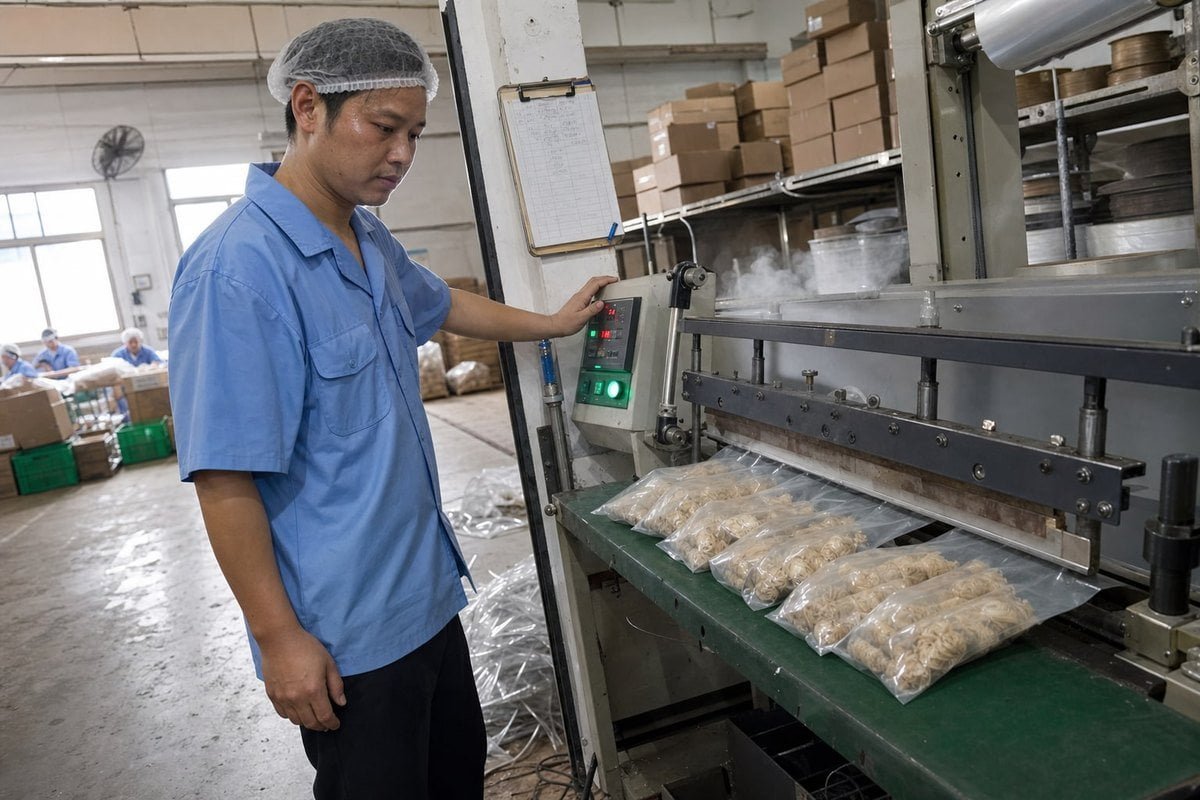
The core problem is simple. Moisture reaches a fire starter through two routes: water vapor passing slowly through the packaging material, and gaps at the closure. Sealing methods attack the second route, which is usually the weaker one. In our experience running production lines for 17+ years, a mid-grade film with an excellent seal outperforms a premium film with a sloppy seal almost every time.
How each sealing method performs
Heat sealing technology fuses two film layers under controlled temperature and pressure. The result is a continuous bond with no vapor pathway through the seam. It is the workhorse of flexible barrier packaging, and it is what we use on most moisture-proof pouches for fire starters. The key variables are dwell time 2, temperature, and pressure. If any one drifts, you get channel leaks — tiny tunnels through the seal that let humidity creep in. That is why our QC team runs seal-strength checks on every batch, not just the first sample.
Ultrasonic welding deserves special mention for wax-dipped products. It bonds film using high-frequency vibration 3 instead of heat. Because the seal zone stays cool, paraffin-coated fire starters near the seam do not soften or contaminate the seal area. We adopted this for certain wax-heavy SKUs after seeing wax residue weaken conventional heat seals.
Induction foil sealing works for jars and canisters. An aluminum foil liner is bonded to the container rim by electromagnetic induction 4, creating a hermetic seal integrity that survives shipping, plus a visible tamper-evidence layer that retail buyers appreciate.
| Sealing Method | Nivel de barrera | Resealable | Mejor para | Tenga cuidado con |
|---|---|---|---|---|
| Heat sealing | Muy alto | No | Flexible pouches, long-term storage | Temperature drift causing channel leaks |
| Induction foil seal | Muy alto | Lid only | Jars and canisters | Requires compatible liner and rim |
| Ultrasonic welding | Muy alto | No | Wax-coated starters | Higher equipment cost |
| Zipper/reclosable seal | Moderado | Sí | Field use, multi-use packs | Humidity enters at every opening |
| Gasketed rigid lid | Alto | Sí | Premium jars, survival kits | Gasket aging over years |
Para long-term storage, we usually recommend a two-layer approach: a permanent heat seal or foil seal as the primary barrier, with a zipper above it for convenience after first opening. The buyer gets shelf life stability and the end user gets reusability.
Can I get certified test reports proving my packaging meets moisture resistance standards?
A purchasing manager from the Netherlands once told me his retailer rejected an entire fire starter line — not for product quality, but because the supplier could not produce a single packaging test report. That conversation still shapes how we document everything.
Yes. Reputable manufacturers provide third-party reports from labs like SGS or Intertek covering water vapor transmission rate, seal strength, humidity conditioning, and drop testing. Ask for reports tied to your specific packaging specification, not generic certificates, before confirming any order.
Documentation is a hard requirement for most of our buyers in the US, Germany, the UK, and France. Large retail sourcing channels will not stock a fire product without a compliance file. So let me explain what a credible moisture-resistance file actually contains, because not all "test reports" are equal.
The tests that actually prove moisture resistance
Water vapor transmission rate (WVTR) is the foundation. It measures how many grams of vapor pass through a square meter of material per day. A plain kraft paper might allow hundreds of grams. A laminated film with a polyethylene coating drops that dramatically. A foil laminate approaches near-zero. When a buyer asks us for waterproof packaging, we redirect the conversation to a target WVTR, because that is a number a lab can verify.
Seal strength testing pulls the seal apart under controlled force. It confirms that heat sealing parameters 6 produce a bond strong enough to survive handling. Humidity chamber conditioning stores sealed samples at elevated temperature and humidity — often weeks at a time — then checks whether the fire starters inside still ignite properly. This is the closest simulation of a sea freight container crossing the equator.
| Tipo de prueba | Lo Que Demuestra | Typical Standard Basis |
|---|---|---|
| WVTR measurement | Material barrier performance | Gravimetric or infrared methods |
| Seal strength / peel test | Closure will not fail in transit | Tensile testing of seal seams |
| Humidity conditioning | Product ignites after humid storage | Accelerated aging chambers |
| Leak / burst testing | Hermetic seal integrity | Pressure or vacuum decay |
| Simulación de tránsito | Cartons survive real logistics | Drop, vibration, compression |
At our factory, we operate under ISO 9001 7 and BSCI, and we commission SGS or Intertek testing when a buyer's market requires documented proof. Two practical tips from years of doing this. First, ask that the report reference your exact packaging structure — film layers, seal type, closure — so it cannot be a recycled document from another product. Second, request retest scheduling for repeat orders, because films and adhesives change over supplier batches. Our batch-to-batch quality control exists precisely because a certificate from two years ago says nothing about the pallet leaving the dock today.
How do I choose between plastic bags, kraft bags, or jars for reliable moisture protection?
Every quarter, our OEM team weighs the same trade-off with new buyers: the format that protects best is rarely the format that looks best on a Home Depot shelf. Choosing well means knowing what each container actually delivers.
Choose laminated plastic bags for maximum barrier performance at low cost, coated kraft bags for sustainable shelf appeal with moderate protection, and rigid jars with foil or gasket seals for premium positioning and reusable, near-hermetic storage. Match the format to storage duration and brand image.
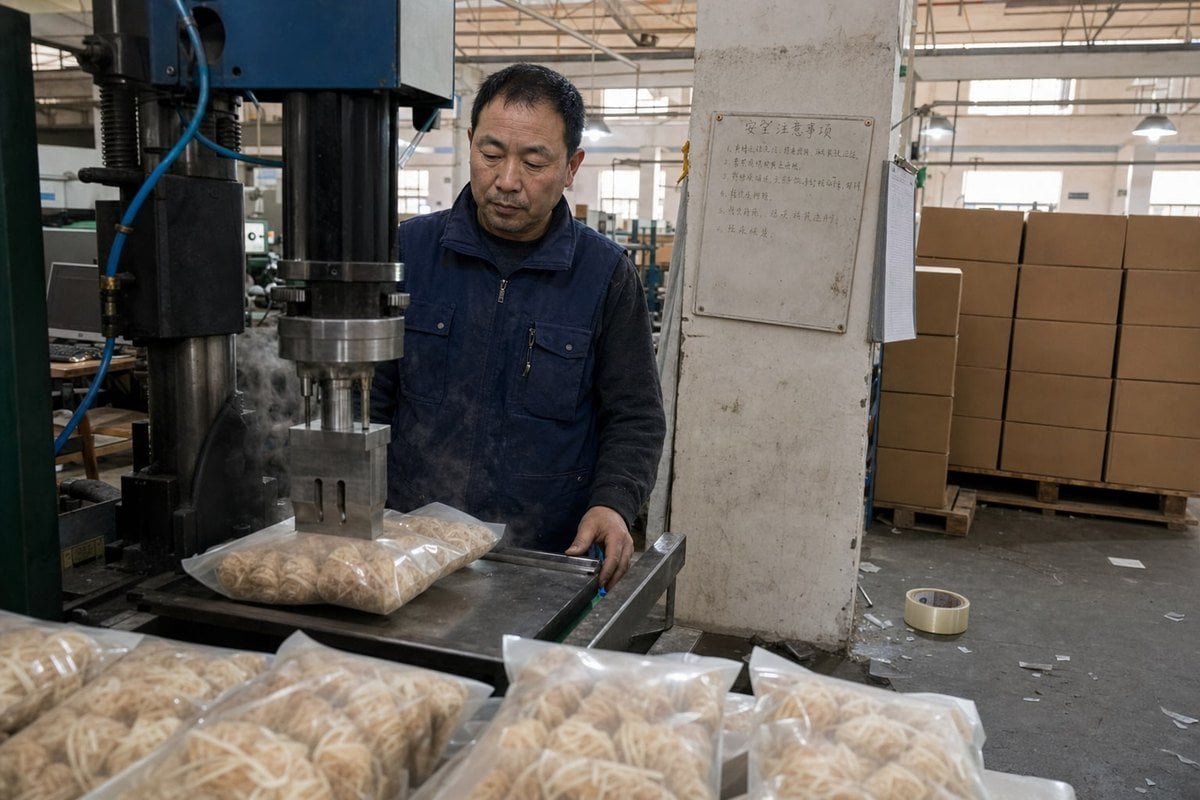
We supply our Magic Fire color-flame packets and wood fire starters in all three formats — plastic bag, kraft bag, and plastic jar — so I can speak to each without bias toward one line. Here is the honest comparison we walk buyers through.
| Factor | Laminated Plastic Bag | Coated Kraft Bag | Rigid Jar (foil-sealed) |
|---|---|---|---|
| Barrera de humedad | Excelente | Good (with coating) | Excelente |
| Oxygen barrier properties | Excellent (metallized films) | Moderado | Muy bueno |
| Sustainability perception | Más bajo | Más alto | Moderado (reutilizable) |
| Shelf presence | Moderado | Strong rustic appeal | Aspecto premium |
| Costo unitario | Más bajo | Low–moderate | Más alto |
| Resealability | With zipper | With zipper or tin-tie | Yes, screw lid |
| Crush protection | Ninguno | Bajo | Alto |
When plastic bags win
A multi-layer laminated pouch — often with a metallized layer — gives the lowest water vapor transmission rate per dollar spent. For long shelf life stability, bulk packs, or humid destination markets like Brazil and the Middle East, this format is hard to beat. The weakness is perception. Some European buyers now push back on plastic-forward packaging, and multilayer laminates complicate recycling.
When kraft bags win
Kraft speaks the visual language of firewood, camping, and eco-friendly living. But plain paper is a sponge, not a barrier. A kraft bag only works when it carries a functional inner layer — a polyethylene coating, a barrier liner, or an inner heat-sealed pouch. We have shipped kraft-format fire starters across Europe this way for years: the paper sells the product, the hidden liner protects it. The trade-off is a moderate barrier, so we pair kraft with desiccants for longer storage claims.
When jars win
A rigid jar with an induction foil seal under the lid gives near-hermetic protection plus crush resistance, and the end user gets a reusable container for the fire pit shelf. Jars cost more per unit and ship heavier, so they suit premium retail lines and gift-oriented SKUs rather than volume wholesale.
My practical rule: define your storage claim first. If the product must survive two years in an unheated garage, lead with the barrier and pick the format second.
What customization options exist for moisture-resistant packaging that still fits my private-label branding?
One lesson from 17+ years of OEM work: buyers almost never have to choose between a strong barrier and a strong brand. The two live in different layers of the package, and good design lets each do its job.
Customization options include private-label printed pouches and jars, branded kraft with hidden barrier liners, custom sizes and burn-time counts, humidity indicator windows, desiccant inserts, display-ready cartons, and market-specific warning labels and barcodes — all without compromising the underlying moisture seal.
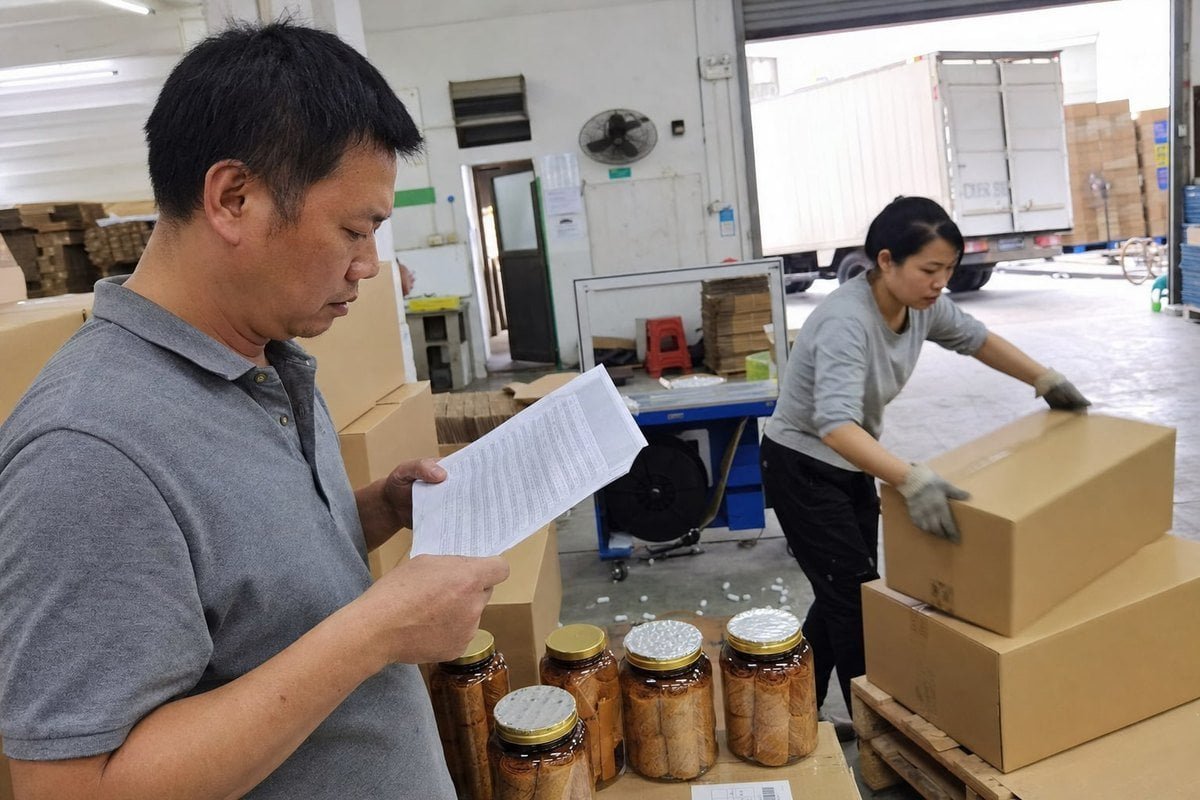
Our one-stop OEM/ODM service was built around exactly this question, because nearly every distributor we serve — from outdoor brands in Canada to fireplace wholesalers in Poland — needs a package that is both moisture-tight and unmistakably theirs. Here is how we structure the options.
Branding on the barrier itself
Modern flexible barrier packaging prints beautifully. We produce gravure- or digitally printed laminated pouches 8 carrying full-color brand artwork, matte or gloss finishes, and flame-themed gradients like the black-to-orange design on our own Sunrich fire starter boxes. The print layer sits on the outside of the laminated film structures, so ink never touches the seal zone and hermetic seal integrity is unaffected. For kraft-forward brands, we print directly on the paper and conceal the barrier liner inside — the customer sees rustic craft; the product sees a sealed pouch.
Functional customization that supports moisture claims
Several add-ons let your packaging back up a "stays dry" marketing message:
- Desiccant sachets or desiccant-embedded film, sized to the pack volume and target humidity.
- Color-changing humidity indicator cards visible through a small window, giving end users visual proof the seal held.
- Zipper-over-heat-seal construction, so the pack is factory-sealed for shipping and resealable in the field.
- Induction foil liners under branded jar lids, doubling as tamper evidence.
- Waterproof outer overwrap for display cartons headed to humid climates.
Retail-ready and compliance details
We also handle the unglamorous parts that make a product shelf-ready: custom box structures, counter display units, market-specific warning labels, multilingual text for EU markets, barcodes, and CE-aligned documentation. Because we run complete production lines rather than outsourcing, the packaging your buyers receive matches the approved sample — same film, same seal parameters, same print. We keep MOQs flexible for trial orders, since most of our long-term partnerships in the US and Germany started with a single test container.
Conclusión
Moisture quietly ruins fire starters long before customers strike a match. Pair barrier materials with proven sealing methods, demand real test reports, and customize without compromising the seal — that is how packaging protects both product and brand.
Notas al pie
1. Provides a general overview of materials and methods used to initiate fires in outdoor and survival contexts. ↩︎
2. Technical details on the thermal sealing process, including the importance of dwell time and pressure. ↩︎
3. Authoritative guide on high-frequency vibration welding for bonding materials without external heat. ↩︎
4. Wikipedia entry explaining how electromagnetic induction is applied to create hermetic seals in packaging. ↩︎
5. Wikipedia definition of WVTR, the standard measure for moisture permeability in barrier materials. ↩︎
6. Wikipedia guide to heat sealing processes, covering critical parameters like temperature, pressure, and time. ↩︎
7. Official standard for quality management systems ensuring consistent product and service quality globally. ↩︎
8. Industry leader ProAmpac details the benefits of digital printing for custom flexible packaging pouches. ↩︎


 English
  Spanish
  German
  French
  Arabic
  Portuguese
Únete a la conversación