






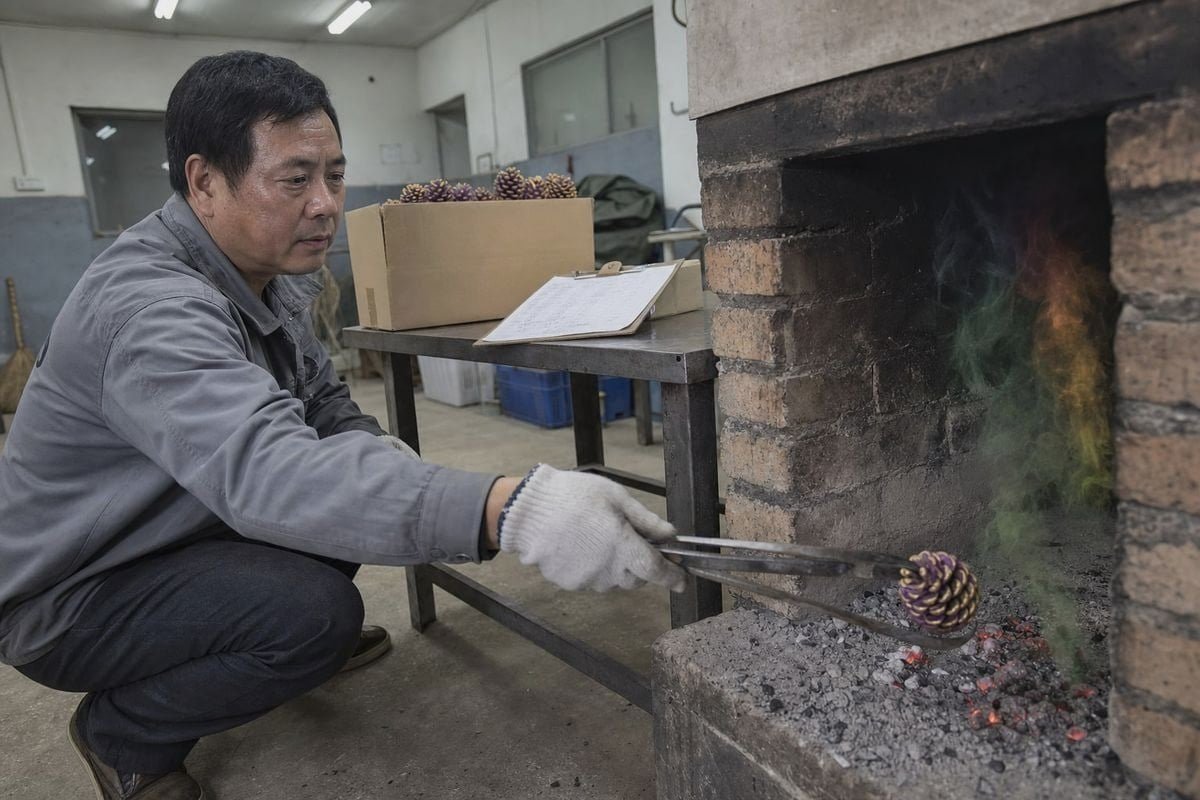
Fireplace colored pine cones look magical, but on our production line we see the ugly truth daily: many suppliers use chemistry that leaves residue no importer should accept.
To verify fireplace colored pine cones leave no harmful residue, request SGS or Intertek test reports and a Material Safety Data Sheet, run a supervised sample burn checking ash and soot, confirm batch-level quality documentation, and reject any product containing copper sulfate, oxidizers, or paraffin coatings.
That answer covers the essentials. Now let me walk you through each verification step in detail, the same way I explain it to buyers who visit our factory.
What certifications should I request to confirm these pine cones are chemical residue-free?
A German distributor once told me he had rejected three suppliers before finding us Certificación ISO 9001 1. None of them could produce a single valid lab report. That conversation shaped how we document everything cloruro de estroncio 2.
Request SGS or Intertek burn-emission test reports, a Material Safety Data Sheet listing every coloring agent, ISO 9001 certification for process control, and CE marking where applicable. Reports must be recent, batch-referenced, and issued to the actual factory — not a trading company.

Certifications are the fastest way to filter out risky suppliers. But you need to know which documents actually matter, and which ones are just paperwork theater. In our 17+ years exporting fire products to 30+ countries, we have learned that serious buyers in the US and Europe ask for a very specific stack of documents. Here is what that stack looks like.
La pila central de certificaciones
| Documento | Lo que prueba | Señal de alerta si falta |
|---|---|---|
| Informe de prueba SGS / Intertek | Combustion byproducts and emissions were lab-tested | Supplier cannot prove what the smoke contains |
| Hoja de Datos de Seguridad del Material 3 | Full disclosure of every metal salt used | Formula is secret or unknown — assume the worst |
| Certificado ISO 9001 | Existe un sistema de gestión de calidad documentado | Quality depends on luck, not process |
| Auditoría BSCI | La fábrica es real y ha sido auditada | You may be dealing with a middleman |
| CE marking (EU markets) | Product meets EU consumer safety requirements | El producto puede ser bloqueado en aduanas |
Two details matter more than the logos. First, check the name on the report. A test report issued to a trading company tells you nothing about the factory that will actually produce your bulk order. Our reports carry our factory name because we run our own production in Ningbo, and buyers verify that match. Second, check the date and scope. A five-year-old report on a different SKU proves nothing about the pine cones in front of you. Ask the supplier to tie the report to the specific formula and batch. If they hesitate, that hesitation is your answer. A residue-free claim without third-party lab data is just marketing copy.
How can I test a sample batch for residue before committing to a bulk order?
There is a trade-off I always explain to new buyers: a sample test costs you one week and a small courier fee, while skipping it can cost you a recalled container.
Burn three to five sample cones one at a time in a clean firebox with the damper open. Watch for chemical odor, excessive smoke, or popping. Afterward, inspect for sticky soot, oily film, or colored powder deposits. Run a flame test on the ash — colored flames mean active chemical residue remains.
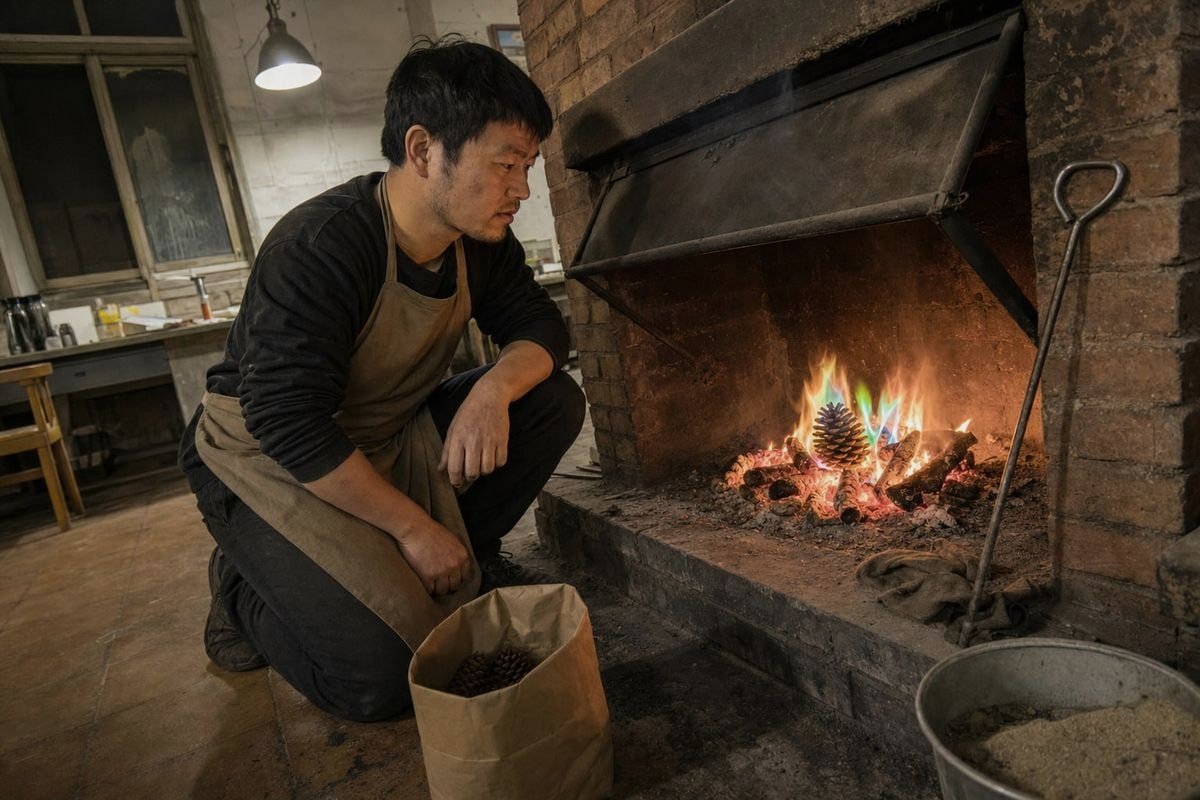
A structured sample burn tells you more than any brochure. When we send samples from our Ningbo facility, we actually encourage buyers to run this exact protocol, because our batch-to-batch consistency means the sample honestly predicts mass production. Here is the process I recommend.
The five-step sample burn protocol
- Start clean. Sweep the firebox completely so any new residue is clearly visible. Note the normal color of your wood ash for comparison.
- Burn one cone at a time. Use fully dry, open cones on an established wood fire. Keep the damper fully open and the room ventilated.
- Observe the burn. Healthy color-flame cones produce steady colored flames with smoke similar to normal wood. Chemical odors, heavy dark smoke, sparking, or aggressive popping all signal problematic additives.
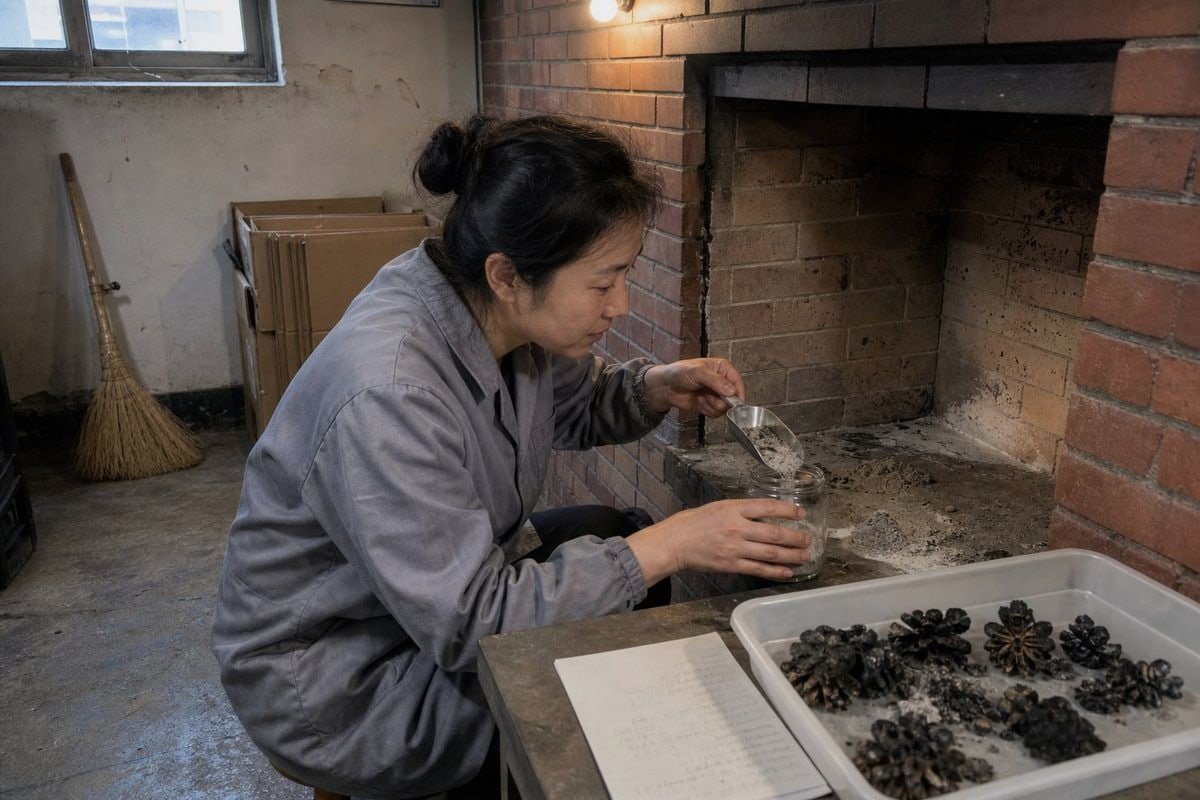
- Inspect the cold firebox. The next morning, look for oily film, sticky soot, corrosive stains on the masonry, or unusually bright powdery deposits. Normal mineral ash from safe salt-based formulas looks like slightly pale wood ash.
- Run the ash flame test. Sprinkle a pinch of the cooled ash over a small flame. If it still produces vivid color, active metal salts remain concentrated in the residue, and that ash must never go into your garden or compost.
For an extra layer of proof, place a consumer-grade PM2.5 4 and VOC monitor in the room during the burn. A particulate spike that exceeds a normal wood fire indicates combustion byproducts bypassing the chimney and degrading your la calidad del aire interior 5. That is a fail, full stop. One more warning I give every buyer: never test heavy metal formulas near food. Even residual heat in a firebox that burned copper-based cones can contaminate anything cooked over it later.
What documentation proves consistent quality across every production run?
Early in our export history, a UK buyer taught me a hard lesson: he did not fear a bad sample. He feared a good sample followed by inconsistent containers.
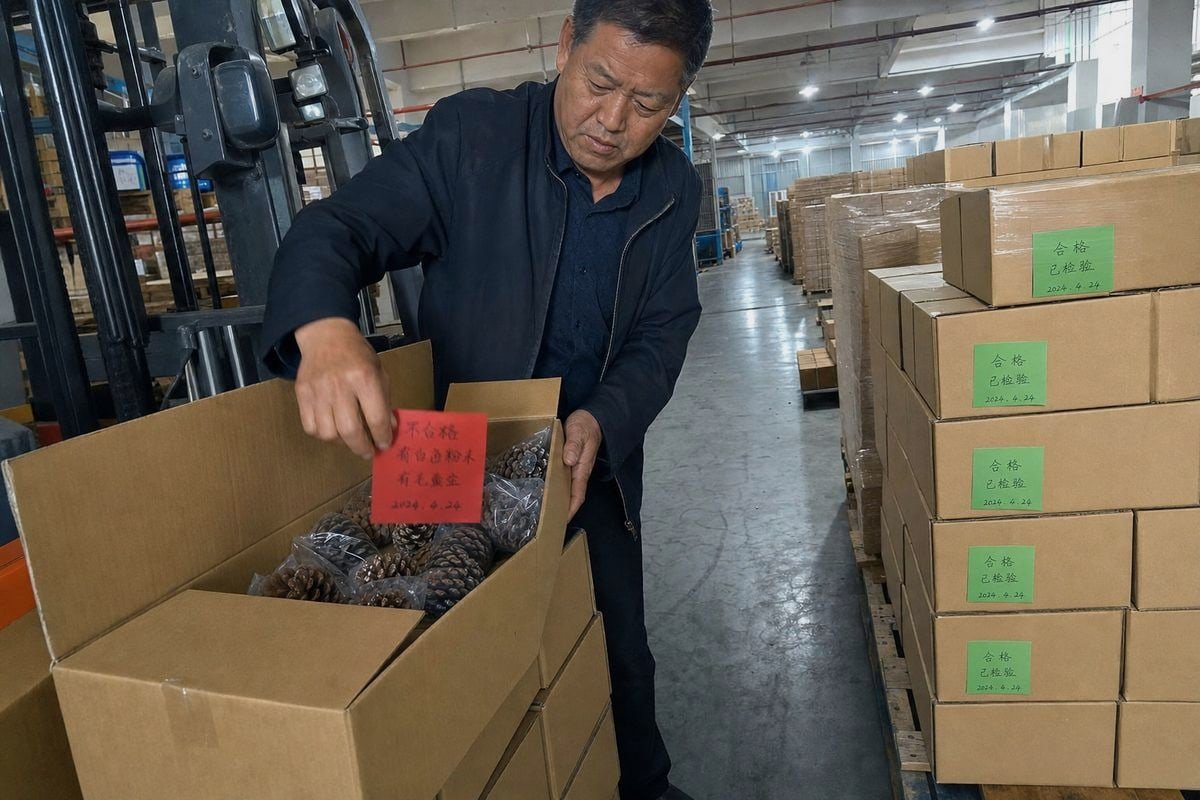
Demand batch production records, per-lot QC inspection reports, formula lock agreements, retained batch samples, and updated MSDS revisions. A factory with ISO 9001 process control can trace any shipped carton back to its production date, raw material lot, and inspection results.
Consistency is where trading companies fail and real factories prove their worth. A sample can be cherry-picked. A production system cannot. Over 17+ years, we have built our documentation around one principle: the first sample must reliably reflect mass-production quality. Here is the paper trail that makes that promise verifiable rather than rhetorical.
The batch traceability chain
| Documento | Frecuencia | Lo que te dice |
|---|---|---|
| Formula lock agreement | Once, at contract | The coloring recipe cannot change without your written approval |
| Raw material inspection log | Cada lote entrante | Metal salts and cones meet spec before production starts |
| In-process QC report | Cada ciclo de producción | Soak concentration, drying time, and moisture content stayed in tolerance |
| Pre-shipment inspection report | Cada envío | Finished goods match the approved sample |
| Retained batch samples | Every batch, archived | Physical evidence exists if a dispute ever arises |
Why drying records matter as much as chemistry
Residue is not only about ingredients. A perfectly safe salt formula still smokes heavily and accelerates creosote buildup if the cones ship damp. Damp, closed cones burn incompletely and coat the flue. That is why our QC checks moisture content before packing, not just color performance. Ask your supplier for drying-time records — a mainstream soak-and-dry process requires at least three days of proper drying, and a factory that tracks this in writing is a factory that controls it. Also request the MSDS revision history. If the formula ever changes, the Material Safety Data Sheet must change with it, and you should be notified before the next run — never after a customer complaint. Finally, an annual third-party audit like BSCI confirms the production site itself remains the one you qualified.
Which ingredients or manufacturing processes should I avoid when sourcing color-flame pine cones?
When we developed our own eco-friendly color-flame formula, we rejected several cheaper chemistry routes precisely because of what they leave behind. That rejection list is worth sharing.
Avoid copper sulfate, strontium chloride and other chloride salts, oxidizers like nitrates, chlorates, and permanganates, paraffin or petroleum coatings, and any undisclosed "color packet" powder. These leave heavy metal residue, corrode chimney liners, release toxic fumes, or poison catalytic combustors in modern stoves.
Not all colored flames are created equal. The chemistry that produces the color determines everything about the residue. Some DIY guides treat borax, boric acid, and Epsom salt recipes as acceptable, while chemistry-oriented sources warn hard against oxidizers and petroleum additives. Both views are partly right, and the synthesis is simple: the ingredient list matters more than the cone itself. Here is how I break down the risk tiers for our B2B buyers.
Ingredient risk tiers
| Risk tier | Ingredients | Residue consequence |
|---|---|---|
| Evitar por completo | El sulfato de cobre 7, strontium chloride, calcium chloride | Heavy metal residue in ash; chlorides react with moisture to form hydrochloric acid that pits stainless steel chimney liners |
| Evitar por completo | Nitratos, cloratos, permanganatos | Oxidizers create harmful combustion byproducts and unpredictable burn behavior |
| Avoid indoors | Paraffin and petroleum coatings | Toxic fumes in open fireplaces; oily soot film in the firebox |
| Acceptable in moderation | Simple salts in disclosed, tested formulas | Light mineral ash comparable to normal wood combustion |
Process red flags beyond the recipe
The manufacturing process carries its own risks. Watch for suppliers who spray-coat cones with loose powder instead of soak-treating them — loose powder becomes airborne particulate the moment the bag opens, harming indoor air quality before anything even burns. Watch for skipped drying, which drives smoke and creosote buildup. And watch for decorative paint on burnable cones: hand-painted décor cones with lacquered finishes are beautiful ornaments, but they belong on a mantel, never in a fire. We manufacture both categories and label them clearly for exactly this reason. One final buyer-side warning: metal salts can permanently poison the platinum or palladium coating in catalytic wood stove combustors, so any product destined for stove owners needs explicit usage warnings on the packaging. We print those warning labels as part of our private-label service, because a chimney sweep inspection that finds corroded flue damage traces back to your brand, not the chemistry.
Conclusión
Verifying fireplace colored pine cones comes down to four steps: demand lab-backed certifications, run a structured sample burn, require batch traceability documents, and reject dangerous chemistry outright.
The risk of skipping verification is real: contaminated ash, corroded liners, poor indoor air quality, and product liability landing on your brand. The solution is choosing a factory partner that documents everything. That is the standard we have held ourselves to for 17+ years, and it is the standard you should hold every supplier to — including us.
Notas al pie
1. ISO 9001 is a named certification standard referenced for quality management verification. ↩︎
2. Wikipedia background on strontium chloride, a chloride salt cited as a residue risk. ↩︎
3. OSHA hazard communication page authoritative source on MSDS/SDS documentation standards cited repeatedly. ↩︎
4. EPA reference explaining PM2.5 particulate matter monitored during the sample burn test. ↩︎
5. EPA authoritative source on indoor air quality relevant to combustion particulate concerns discussed. ↩︎
6. EPA burnwise guidance explains creosote and wood smoke risks referenced in drying discussion. ↩︎
7. Wikipedia background on copper sulfate, a chemical explicitly flagged as harmful residue source. ↩︎


 English
  Spanish
  German
  French
  Arabic
  Portuguese
Únete a la conversación