






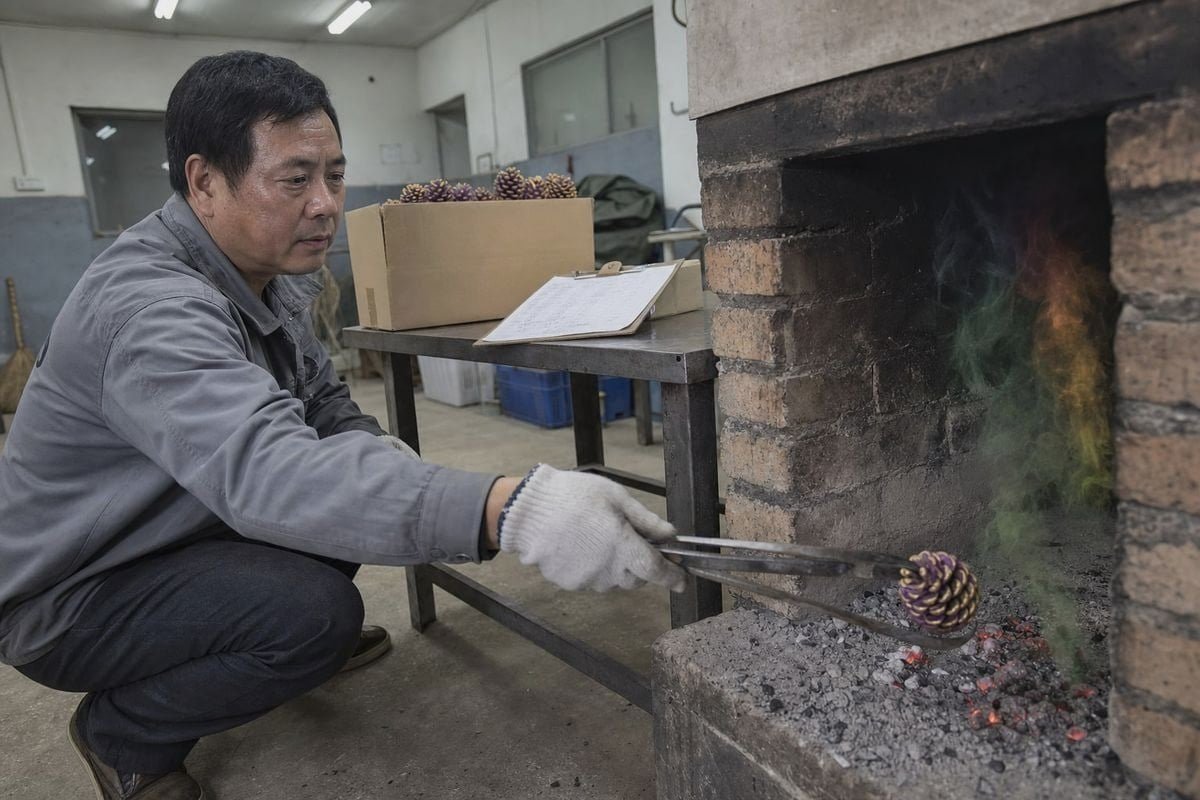
Feuerfarbene Tannenzapfen sehen magisch aus, aber an unserer Produktionslinie sehen wir täglich die hässliche Wahrheit: viele Lieferanten verwenden Chemie, die Rückstände hinterlässt, die kein Importeur akzeptieren sollte.
Um zu überprüfen, ob gefärbte Kiefernzapfen für den Kamin keine schädlichen Rückstände hinterlassen, fordern Sie SGS- oder Intertek-Prüfberichte und ein Sicherheitsdatenblatt an, führen Sie eine beaufsichtigte Musterverbrennung durch, bei der Asche und Ruß überprüft werden, bestätigen Sie die chargenbezogene Qualitätsdokumentation und lehnen Sie jedes Produkt ab, das Kupfersulfat, Oxidationsmittel oder Paraffinbeschichtungen enthält.
Diese Antwort deckt das Wesentliche ab. Nun lassen Sie mich Sie Schritt für Schritt durch jede Verifizierung führen, so wie ich es Käufern erkläre, die unsere Fabrik besuchen.
Welche Zertifizierungen sollte ich anfordern, um zu bestätigen, dass diese Kiefernzapfen frei von chemischen Rückständen sind?
Ein deutscher Händler erzählte mir einmal, dass er drei Lieferanten abgelehnt hatte, bevor er uns fand. ISO 9001-Zertifizierung 1. Keiner von ihnen konnte einen einzigen gültigen Laborbericht vorlegen. Dieses Gespräch prägte, wie wir alles dokumentieren. Strontiumchlorid 2.
Fordern Sie SGS- oder Intertek-Prüfberichte zur Brennemission an, ein Sicherheitsdatenblatt, das jeden Farbstoff auflistet, eine ISO 9001-Zertifizierung für die Prozesskontrolle und die CE-Kennzeichnung, wo zutreffend. Berichte müssen aktuell, chargenbezogen und an die tatsächliche Fabrik – nicht an ein Handelsunternehmen – ausgestellt sein.

Zertifizierungen sind der schnellste Weg, um riskante Lieferanten auszusortieren. Aber Sie müssen wissen, welche Dokumente tatsächlich wichtig sind und welche nur Papiertheater sind. In unseren über 17 Jahren Export von Feuerprodukten in über 30 Länder haben wir gelernt, dass ernsthafte Käufer in den USA und Europa nach einem sehr spezifischen Stapel von Dokumenten fragen. Hier ist, wie dieser Stapel aussieht.
Der Kernstapel der Zertifizierung
| Dokument | Was es beweist | Rotes Flagge, wenn fehlend |
|---|---|---|
| SGS / Intertek Prüfbericht | Verbrennungsprodukte und Emissionen wurden im Labor getestet. | Lieferant kann nicht beweisen, was der Rauch enthält. |
| Sicherheitsdatenblatt 3 | Vollständige Offenlegung jedes verwendeten Metallsalzes. | Formel ist geheim oder unbekannt – nehmen Sie das Schlimmste an. |
| ISO 9001 Zertifikat | Ein dokumentiertes Qualitätsmanagementsystem existiert | Qualität hängt vom Glück ab, nicht vom Prozess. |
| BSCI-Audit | Die Fabrik ist real und auditiert | Sie haben es möglicherweise mit einem Zwischenhändler zu tun. |
| CE-Kennzeichnung (EU-Märkte). | Produkt erfüllt die EU-Verbraucherschutzanforderungen. | Produkt kann am Zoll blockiert werden. |
Zwei Details sind wichtiger als die Logos. Erstens, überprüfen Sie den Namen auf dem Bericht. Ein Prüfbericht, der an ein Handelsunternehmen ausgestellt wurde, sagt nichts über die Fabrik aus, die Ihre Großbestellung tatsächlich produzieren wird. Unsere Berichte tragen den Namen unserer Fabrik, weil wir unsere eigene Produktion in Ningbo betreiben, und Käufer verifizieren diese Übereinstimmung. Zweitens, überprüfen Sie das Datum und den Umfang. Ein fünf Jahre alter Bericht über eine andere SKU beweist nichts über die Tannenzapfen vor Ihnen. Bitten Sie den Lieferanten, den Bericht mit der spezifischen Formel und Charge zu verknüpfen. Wenn sie zögern, ist dieses Zögern Ihre Antwort. Eine rückstandsfreie Behauptung ohne Daten aus externen Labortests ist nur Marketing.
Wie kann ich eine Probencharge auf Rückstände testen, bevor ich eine Großbestellung aufgeben?
Es gibt einen Kompromiss, den ich neuen Käufern immer erkläre: Ein Probetest kostet Sie eine Woche und eine kleine Kuriergebühr, während das Überspringen einen zurückgerufenen Container kosten kann.
Brennen Sie drei bis fünf Probekegel einzeln in einem sauberen Feuerraum mit geöffnetem Schieber. Achten Sie auf chemischen Geruch, übermäßigen Rauch oder Knistern. Untersuchen Sie anschließend auf klebrigen Ruß, öligen Film oder farbige Pulverablagerungen. Führen Sie einen Flammentest mit der Asche durch – farbige Flammen bedeuten, dass Rückstände von aktiven Chemikalien vorhanden sind.
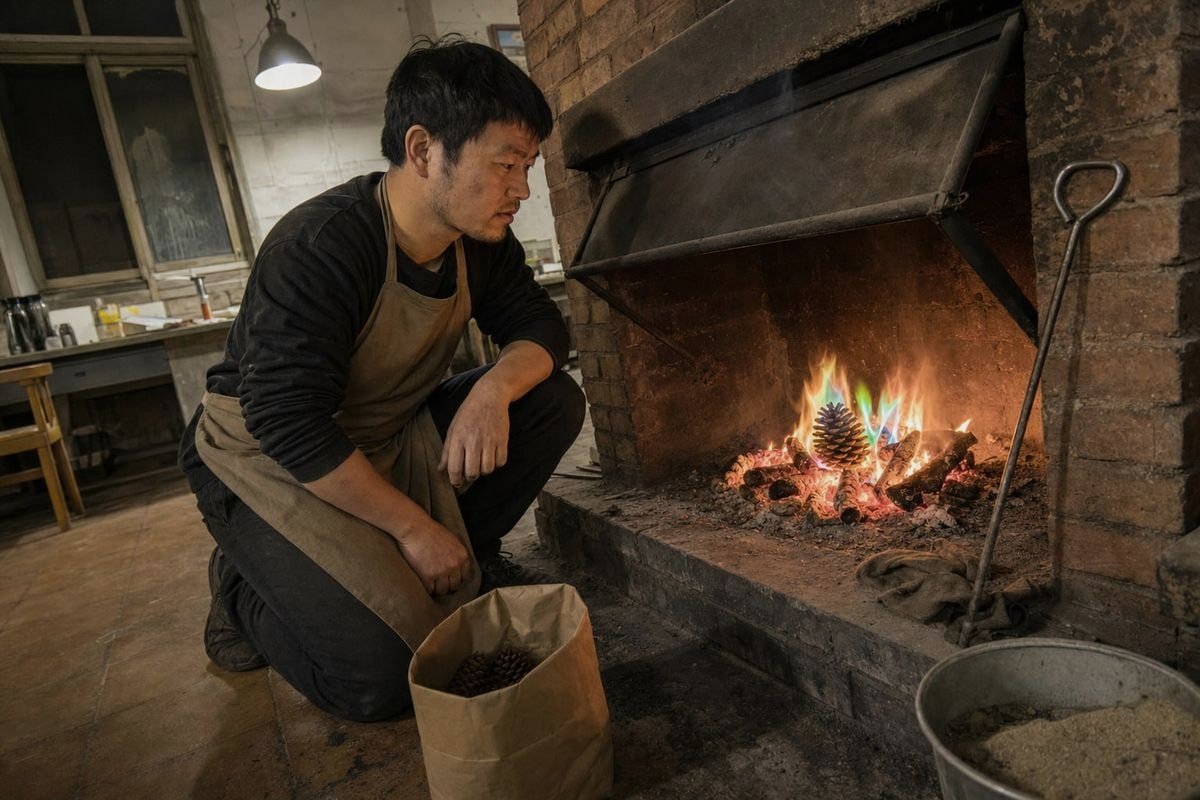
Ein strukturierter Probenbrand sagt Ihnen mehr als jede Broschüre. Wenn wir Muster aus unserer Ningbo-Anlage versenden, ermutigen wir Käufer sogar, genau dieses Protokoll durchzuführen, da unsere Chargenkonstanz bedeutet, dass das Muster ehrlich die Massenproduktion vorhersagt. Hier ist der Prozess, den ich empfehle.
Das Fünf-Schritte-Probenbrand-Protokoll.
- Sauber beginnen. Fegen Sie den Feuerraum vollständig aus, damit neue Rückstände deutlich sichtbar sind. Notieren Sie die normale Farbe Ihrer Holzasche zum Vergleich.
- Brennen Sie einen Zapfen nach dem anderen. Verwenden Sie vollständig trockene, offene Zapfen auf einem etablierten Holzfeuer. Halten Sie die Klappe vollständig offen und den Raum belüftet.
- Beobachten Sie den Brand. Gesund farbige Flammenzapfen erzeugen gleichmäßige farbige Flammen mit Rauch, der normalem Holz ähnelt. Chemische Gerüche, starker dunkler Rauch, Funkenflug oder aggressives Knallen deuten auf problematische Zusatzstoffe hin.
- Inspizieren Sie den kalten Feuerraum. Am nächsten Morgen suchen Sie nach öligem Film, klebrigem Ruß, korrosiven Flecken auf dem Mauerwerk oder ungewöhnlich hellen pudrigen Ablagerungen. Normale Mineralasche von sicheren salzbasierten Formeln sieht aus wie leicht blasse Holzasche.
- Führen Sie den Asche-Flammen-Test durch. Streuen Sie eine Prise der abgekühlten Asche über eine kleine Flamme. Wenn sie immer noch lebendige Farbe erzeugt, bleiben aktive Metallsalze in den Rückständen konzentriert, und diese Asche darf niemals in Ihren Garten oder Kompost gelangen.
Für eine zusätzliche Beweisschicht platzieren Sie einen Verbraucher- PM2,5 4 und VOC-Monitor im Raum während des Brandes. Ein Partikelanstieg, der ein normales Holzfeuer übersteigt, zeigt Verbrennungsprodukte an, die den Schornstein umgehen und Ihre Raumluftqualität 5. verschlechtern. Das ist ein Fehlschlag, Punkt. Eine weitere Warnung, die ich jedem Käufer gebe: Testen Sie niemals Schwermetallformeln in der Nähe von Lebensmitteln. Selbst Restwärme in einem Feuerraum, der kupferbasierte Zapfen verbrannt hat, kann alles kontaminieren, was später darüber gekocht wird.
Welche Dokumentation beweist gleichbleibende Qualität über jede Produktionscharge hinweg?
Früh in unserer Exportgeschichte lehrte mich ein britischer Käufer eine harte Lektion: Er fürchtete keine schlechte Probe. Er fürchtete eine gute Probe, gefolgt von inkonsistenten Containern.
Chargenchargenchargenchargenchargenchargenchargenchargenchargenchargenchargenchargenchargenchargenchargenchargenchargenchargenchargenchargenchargenchargenchargenchargenchargenchargenchargenchargenchargenchargenchargenchargenchargenchargenchargenchargenchargenchargenchargenchargenchargenchargenchargenchargenchargenchargenchargenchargenchargenchargenchargenchargenchargenchargenchargenchargenchargenchargenchargenchargenchargenchargenchargenchargenchargenchargenchargenchargenchargenchargenchargenchargenchargenchargenchargenchargenchargenchargenchargenchargenchargenchargenchargenchargenchargenchargenchargenchargenchargenchargenchargenchargenchargenchargenchargenchargenchargenchargenchargenchargenchargenchargenchargenchargenchargenchargenchargenchargenchargenchargenchargenchargenchargenchargenchargenchargenchargenchargenchargenchargenchargenchargenchargenchargenchargenchargenchargenchargenchargenchargenchargenchargenchargenchargenchargenchargenchargenchargenchargenchargenchargenchargenchargenchargenchargenchargenchargenchargenchargenchargenchargenchargenchargenchargenchargenchargenchargenchargenchargenchargenchargenchargenchargenchargenchargenchargenchargenchargenchargenchargenchargenchargenchargenchargenchargenchargenchargenchargenchargenchargenchargenchargenchargenchargenchargenchargenchargenchargenchargenchargenchargenchargenchargenchargenchargenchargenchargenchargenchargenchargenchargenchargenchargenchargenchargenchargenchargenchargenchargenchargenchargenchargenchargenchargenchargenchargenchargenchargenchargenchargenchargenchargenchargenchargenchargenchargenchargenchargenchargenchargenchargenchargenchargenchargenchargenchargenchargenchargenchargenchargenchargenchargenchargenchargenchargenchargenchargenchargenchargenchargenchargenchargenchargenchargenchargenchargenchargenchargenchargenchargenchargenchargenchargenchargenchargenchargenchargenchargenchargenchargenchargenchargenchargenchargenchargenchargenchargenchargenchargenchargenchargenchargenchargenchargenchargenchargenchargenchargenchargenchargenchargenchargenchargenchargenchargenchargenchargenchargenchargenchargenchargenchargenchargenchargenchargenchargenchargenchargenchargenchargenchargenchargenchargenchargenchargenchargenchargenchargenchargenchargenchargenchargenchargenchargenchargenchargenchargenchargenchargenchargenchargenchargenchargenchargenchargenchargenchargenchargenchargenchargenchargenchargenchargenchargenchargenchargenchargenchargenchargenchargenchargenchargenchargenchargenchargenchargenchargenchargenchargenchargenchargenchargenchargenchargenchargenchargenchargenchargenchargenchargenchargenchargenchargenchargenchargenchargenchargenchargenchargenchargenchargenchargenchargenchargenchargenchargenchargenchargenchargenchargenchargenchargenchargenchargenchargenchargenchargenchargenchargenchargenchargenchargenchargenchargenchargenchargenchargenchargenchargenchargenchargenchargenchargenchargenchargenchargenchargenchargenchargenchargenchargenchargenchargenchargenchargenchargenchargenchargenchargenchargenchargenchargenchargenchargenchargenchargenchargenchargenchargenchargenchargenchargenchargenchargenchargenchargenchargenchargenchargenchargenchargenchargenchargenchargenchargenchargenchargenchargenchargenchargenchargenchargenchargenchargenchargenchargenchargenchargenchargenchargenchargenchargenchargenchargenchargenchargenchargenchargenchargenchargenchargenchargenchargenchargenchargenchargenchargenchargenchargenchargenchargenchargenchargenchargenchargenchargenchargenchargenchargenchargenchargenchargenchargenchargenchargenchargenchargenchargenchargenchargenchargenchargenchargenchargenchargenchargenchargenchargenchargenchargenchargenchargenchargenchargenchargenchargenchargenchargenchargenchargenchargenchargenchargenchargenchargenchargenchargenchargenchargenchargenchargenchargenchargenchargenchargenchargenchargenchargenchargenchargenchargenchargenchargenchargenchargenchargenchargenchargenchargenchargenchargenchargenchargenchargenchargenchargenchargenchargenchargenchargenchargenchargenchargenchargenchargenchargenchargenchargenchargenchargenchargenchargenchargenchargenchargenchargenchargenchargenchargenchargenchargenchargenchargenchargenchargenchargenchargenchargenchargenchargenchargenchargenchargenchargenchargenchargenchargenchargenchargenchargenchargenchargenchargenchargenchargenchargenchargenchargenchargenchargenchargenchargenchargenchargenchargenchargenchargenchargenchargenchargenchargenchargenchargenchargenchargenchargenchargenchargenchargenchargenchargenchargenchargenchargenchargenchargenchargenchargenchargenchargenchargenchargenchargenchargenchargenchargenchargenchargenchargenchargenchargenchargenchargenchargenchargenchargenchargenchargenchargenchargenchargenchargenchargenchargenchargenchargenchargenchargenchargenchargenchargenchargenchargenchargenchargenchargenchargenchargenchargenchargenchargenchargenchargenchargenchargenchargenchargenchargenchargenchargenchargenchargenchargenchargenchargenchargenchargenchargenchargenchargenchargenchargenchargenchargenchargenchargenchargenchargenchargenchargenchargenchargenchargenchargenchargenchargenchargenchargenchargenchargenchargenchargenchargenchargenchargenchargenchargenchargenchargenchargenchargenchargenchargenchargenchargenchargenchargenchargenchargenchargenchargenchargenchargenchargenchargenchargenchargenchargenchargenchargenchargenchargenchargenchargenchargenchargenchargenchargenchargenchargenchargenchargenchargenchargenchargenchargenchargenchargenchargenchargenchargenchargenchargenchargenchargenchargenchargenchargenchargenchargenchargenchargenchargenchargenchargenchargenchargenchargenchargenchargenchargenchargenchargenchargenchargenchargenchargenchargenchargenchargenchargenchargenchargenchargenchargenchargenchargenchargenchargenchargenchargenchargenchargenchargenchargenchargenchargenchargenchargenchargenchargenchargenchargenchargenchargenchargenchargenchargenchargenchargenchargenchargenchargenchargenchargenchargenchargenchargenchargenchargenchargenchargenchargenchargenchargenchargenchargenchargenchargenchargenchargenchargenchargenchargenchargenchargenchargenchargenchargenchargenchargenchargenchargenchargenchargenchargenchargenchargenchargenchargenchargenchargenchargenchargenchargenchargenchargenchargenchargenchargenchargenchargenchargenchargenchargenchargenchargenchargenchargenchargenchargenchargenchargenchargenchargenchargenchargenchargenchargenchargenchargenchargenchargenchargenchargenchargenchargenchargenchargenchargenchargenchargenchargenchargenchargenchargenchargenchargenchargenchargenchargenchargenchargenchargenchargenchargenchargenchargenchargenchargenchargenchargenchargenchargenchargenchargenchargenchargenchargenchargenchargenchargenchargenchargenchargenchargenchargenchargenchargenchargenchargenchargenchargenchargenchargenchargenchargenchargenchargenchargenchargenchargenchargenchargenchargenchargenchargenchargenchargenchargenchargenchargenchargenchargenchargenchargenchargenchargenchargenchargenchargenchargenchargenchargenchargenchargenchargenchargenchargenchargenchargenchargenchargenchargenchargenchargenchargenchargenchargenchargenchargenchargenchargenchargenchargenchargenchargenchargenchargenchargenchargenchargenchargenchargenchargenchargenchargenchargenchargenchargenchargenchargenchargenchargenchargenchargenchargenchargenchargenchargenchargenchargenchargenchargenchargenchargenchargenchargenchargenchargenchargenchargenchargenchargenchargenchargenchargenchargenchargenchargenchargenchargenchargenchargenchargenchargenchargenchargenchargenchargenchargenchargenchargenchargenchargenchargenchargenchargenchargenchargenchargenchargenchargenchargenchargenchargenchargenchargenchargenchargenchargenchargenchargenchargenchargenchargenchargenchargenchargenchargenchargenchargenchargenchargenchargenchargenchargenchargenchargenchargenchargenchargenchargenchargenchargenchargenchargenchargenchargenchargenchargenchargenchargenchargenchargenchargenchargenchargenchargenchargenchargenchargenchargenchargenchargenchargenchargenchargenchargenchargenchargenchargenchargenchargenchargenchargenchargenchargenchargenchargenchargenchargenchargenchargenchargenchargenchargenchargenchargenchargenchargenchargenchargenchargenchargenchargenchargenchargenchargenchargenchargenchargenchargenchargenchargenchargenchargenchargenchargenchargenchargenchargenchargenchargenchargenchargenchargenchargenchargenchargenchargenchargenchargenchargenchargenchargenchargenchargenchargenchargenchargenchargenchargenchargenchargenchargenchargenchargenchargenchargenchargenchargenchargenchargenchargenchargenchargenchargenchargenchargenchargenchargenchargenchargenchargenchargenchargenchargenchargenchargenchargenchargenchargenchargenchargenchargenchargenchargenchargenchargenchargenchargenchargenchargenchargenchargenchargenchargenchargenchargenchargenchargenchargenchargenchargenchargenchargenchargenchargenchargenchargenchargenchargenchargenchargenchargenchargenchargenchargenchargenchargenchargenchargenchargenchargenchargenchargenchargenchargenchargenchargenchargenchargenchargenchargenchargenchargenchargenchargenchargenchargenchargenchargenchargenchargenchargenchargenchargenchargenchargenchargenchargenchargenchargenchargenchargenchargenchargenchargenchargenchargenchargenchargenchargenchargenchargenchargenchargenchargenchargenchargenchargenchargenchargenchargenchargenchargenchargenchargenchargenchargenchargenchargenchargenchargenchargenchargenchargenchargenchargenchargenchargenchargenchargenchargenchargenchargenchargenchargenchargenchargenchargenchargenchargenchargenchargenchargenchargenchargenchargenchargenchargenchargenchargenchargenchargenchargenchargenchargenchargenchargenchargenchargenchargenchargenchargenchargenchargenchargenchargenchargenchargenchargenchargenchargenchargenchargenchargenchargenchargenchargenchargenchargenchargenchargenchargenchargenchargenchargenchargenchargenchargenchargenchargenchargenchargenchargenchargenchargenchargenchargenchargenchargenchargenchargenchargenchargenchargenchargenchargenchargenchargenchargenchargenchargenchargenchargenchargenchargenchargenchargenchargenchargenchargenchargenchargenchargenchargenchargenchargenchargenchargenchargenchargenchargenchargenchargenchargenchargenchargenchargenchargenchargenchargenchargenchargenchargenchargenchargenchargenchargenchargenchargenchargenchargenchargenchargenchargenchargenchargenchargenchargenchargenchargenchargenchargenchargenchargenchargenchargenchargenchargenchargenchargenchargenchargenchargenchargenchargenchargenchargenchargenchargenchargenchargenchargenchargenchargenchargenchargenchargenchargenchargenchargenchargenchargenchargenchargenchargenchargenchargenchargenchargenchargenchargenchargenchargenchargenchargenchargenchargenchargenchargenchargenchargenchargenchargenchargenchargenchargenchargenchargenchargenchargenchargenchargenchargenchargenchargenchargenchargenchargenchargenchargenchargenchargenchargenchargenchargenchargenchargenchargenchargenchargenchargenchargenchargenchargenchargenchargenchargenchargenchargenchargenchargenchargenchargenchargenchargenchargenchargenchargenchargenchargenchargenchargenchargenchargenchargenchargenchargenchargenchargenchargenchargenchargenchargenchargenchargenchargenchargenchargenchargenchargenchargenchargenchargenchargenchargenchargenchargenchargenchargenchargenchargenchargenchargenchargenchargenchargenchargenchargenchargenchargenchargenchargenchargenchargenchargenchargenchargenchargenchargenchargenchargenchargenchargenchargenchargenchargenchargenchargenchargenchargenchargenchargenchargenchargenchargenchargenchargenchargenchargenchargenchargenchargenchargenchargenchargenchargenchargenchargenchargenchargenchargenchargenchargenchargenchargenchargenchargenchargenchargenchargenchargenchargenchargenchargenchargenchargenchargenchargenchargenchargenchargenchargenchargenchargenchargenchargenchargenchargenchargenchargenchargenchargenchargenchargenchargenchargenchargenchargenchargenchargenchargenchargenchargenchargenchargenchargenchargenchargenchargenchargenchargenchargenchargenchargenchargenchargenchargenchargenchargenchargenchargenchargenchargenchargenchargenchargenchargenchargenchargenchargenchargenchargenchargenchargenchargenchargenchargenchargenchargenchargenchargenchargenchargenchargenchargenchargenchargenchargenchargenchargenchargenchargenchargenchargenchargenchargenchargenchargenchargenchargenchargenchargenchargenchargenchargenchargenchargenchargenchargenchargenchargenchargenchargenchargenchargenchargenchargenchargenchargenchargenchargenchargenchargenchargenchargenchargenchargenchargenchargenchargenchargenchargenchargenchargenchargenchargenchargenchargenchargenchargenchargenchargenchargenchargenchargenchargenchargenchargenchargenchargenchargenchargenchargenchargenchargenchargenchargenchargenchargenchargenchargenchargenchargenchargenchargenchargenchargenchargenchargenchargenchargenchargenchargenchargenchargenchargenchargenchargenchargenchargenchargenchargenchargenchargenchargenchargenchargenchargenchargenchargenchargenchargenchargenchargenchargenchargenchargenchargenchargenchargenchargenchargenchargenchargenchargenchargenchargenchargenchargenchargenchargenchargenchargenchargenchargenchargenchargenchargenchargenchargenchargenchargenchargenchargenchargenchargenchargenchargenchargenchargenchargenchargenchargenchargenchargenchargenchargenchargenchargenchargenchargenchargenchargenchargenchargenchargenchargenchargenchargenchargenchargenchargenchargenchargenchargenchargenchargenchargenchargenchargenchargenchargenchargenchargenchargenchargenchargenchargenchargenchargenchargenchargenchargenchargenchargenchargenchargenchargenchargenchargenchargenchargenchargenchargenchargenchargenchargenchargenchargenchargenchargenchargenchargenchargenchargenchargenchargenchargenchargenchargenchargenchargenchargenchargenchargenchargenchargenchargenchargenchargenchargenchargenchargenchargenchargenchargenchargenchargenchargenchargenchargenchargenchargenchargenchargenchargenchargenchargenchargenchargenchargenchargenchargenchargenchargenchargenchargenchargenchargenchargenchargenchargenchargenchargenchargenchargenchargenchargenchargenchargenchargenchargenchargenchargenchargenchargenchargenchargenchargenchargenchargenchargenchargenchargenchargenchargenchargenchargenchargenchargenchargenchargenchargenchargenchargenchargenchargenchargenchargenchargenchargenchargenchargenchargenchargenchargenchargenchargenchargenchargenchargenchargenchargen.
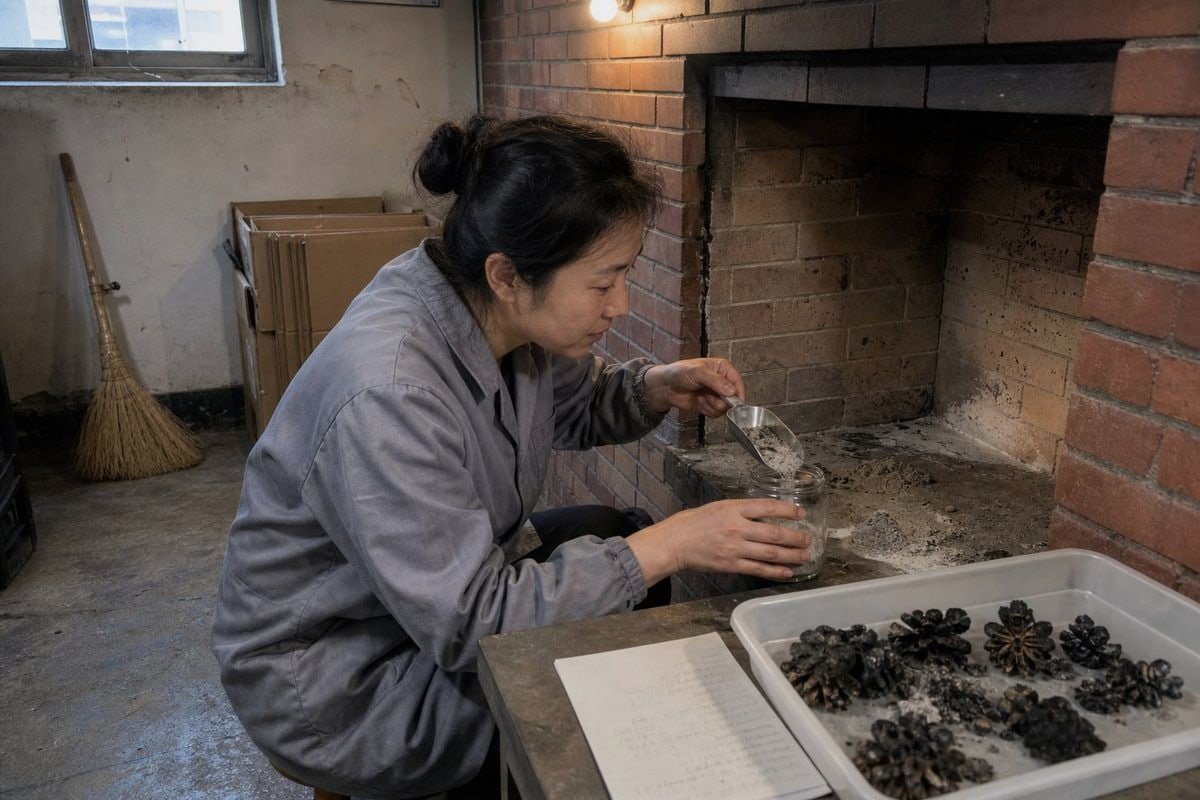
Konsistenz ist, wo Handelsunternehmen versagen und echte Fabriken ihren Wert beweisen. Eine Probe kann handverlesen sein. Ein Produktionssystem kann das nicht. In über 17 Jahren haben wir unsere Dokumentation nach einem Prinzip aufgebaut: Die erste Probe muss die Massenproduktionsqualität zuverlässig widerspiegeln. Hier ist die Papierkette, die dieses Versprechen überprüfbar und nicht nur rhetorisch macht.
Die Chargenrückverfolgbarkeitskette.
| Dokument | Häufigkeit | Was es Ihnen sagt |
|---|---|---|
| Formel-Sperrvereinbarung. | Einmal, bei Vertragsabschluss. | Das Farb-Rezept kann ohne Ihre schriftliche Zustimmung nicht geändert werden. |
| Rohmaterial-Inspektionsprotokoll. | Jede eingehende Charge | Metallsalze und Zapfen entsprechen vor Produktionsbeginn den Spezifikationen. |
| In-Prozess-Qualitätskontrollbericht. | Jeder Produktionslauf | Einweichkonzentration, Trocknungszeit und Feuchtigkeitsgehalt blieben innerhalb der Toleranzen. |
| Inspektionsbericht vor dem Versand | Jede Sendung | Fertige Produkte entsprechen der genehmigten Probe |
| Zurückbehaltene Chargenmuster | Jede Charge, archiviert | Physische Beweise liegen vor, falls jemals ein Streit entsteht |
Warum Trocknungsprotokolle genauso wichtig sind wie Chemie
Rückstände sind nicht nur eine Frage der Inhaltsstoffe. Eine vollkommen sichere Salzformel raucht immer noch stark und beschleunigt die Rußbildung, wenn die Zapfen feucht versendet werden. Feuchte, geschlossene Zapfen brennen unvollständig und überziehen den Schornstein. Deshalb prüft unsere QS vor dem Verpacken den Feuchtigkeitsgehalt und nicht nur die Farbintensität. Fragen Sie Ihren Lieferanten nach Trocknungszeitprotokollen – ein gängiger Nass-und-Trocken-Prozess erfordert mindestens drei Tage ordnungsgemäße Trocknung, und eine Fabrik, die dies schriftlich festhält, ist eine Fabrik, die es kontrolliert. Fordern Sie auch die Überarbeitungsverlaufshistorie des Sicherheitsdatenblatts an. Wenn sich die Formel jemals ändert, muss sich das Sicherheitsdatenblatt mit ihr ändern, und Sie sollten vor der nächsten Charge benachrichtigt werden – niemals nach einer Kundenbeschwerde. Schließlich bestätigt eine jährliche Prüfung durch Dritte wie BSCI, dass die Produktionsstätte selbst diejenige ist, die Sie qualifiziert haben.
Welche Inhaltsstoffe oder Herstellungsprozesse sollte ich bei der Beschaffung von farbigen Kiefernzapfen vermeiden?
Als wir unsere eigene umweltfreundliche Farbflammenformel entwickelten, lehnten wir mehrere billigere chemische Wege ab, gerade wegen dessen, was sie hinterlassen. Diese Ablehnungsliste ist es wert, geteilt zu werden.
Vermeiden Sie Kupfersulfat, Strontiumchlorid und andere Chloridsalze, Oxidationsmittel wie Nitrate, Chlorate und Permanganate, Paraffin- oder Erdölbeschichtungen und jede nicht deklarierte "Farbpackungs"-Pulver. Diese hinterlassen Schwermetallrückstände, korrodieren Schornsteinverkleidungen, setzen giftige Dämpfe frei oder vergiften katalytische Brennkammern in modernen Öfen.

Nicht alle farbigen Flammen sind gleich. Die Chemie, die die Farbe erzeugt, bestimmt alles über die Rückstände. Einige DIY-Anleitungen betrachten Borax-, Borsäure- und Bittersalzrezepte als akzeptabel, während chemisch orientierte Quellen dringend vor Oxidationsmitteln und Erdölzusätzen warnen. Beide Ansichten sind teilweise richtig, und die Synthese ist einfach: Die Zutatenliste ist wichtiger als der Zapfen selbst. Hier ist, wie ich die Risikostufen für unsere B2B-Käufer aufschlüssele.
Risikostufen der Inhaltsstoffe
| Risikostufe | Inhaltsstoffe | Konsequenz der Rückstände |
|---|---|---|
| Gänzlich vermeiden | Kupfersulfat 7, Strontiumchlorid, Calciumchlorid | Schwermetallrückstände in der Asche; Chloride reagieren mit Feuchtigkeit zu Salzsäure, die Edelstahl-Schornsteinverkleidungen angreift |
| Gänzlich vermeiden | Nitrate, Chlorate, Permanganate | Oxidationsmittel erzeugen schädliche Verbrennungsprodukte und unvorhersehbares Brandverhalten |
| Drinnen vermeiden | Paraffin- und Erdölbeschichtungen | Giftige Dämpfe in offenen Kaminen; ölige Rußschicht im Feuerraum |
| In Maßen akzeptabel | Einfache Salze in deklarierten, getesteten Formeln | Leichte Mineralasche vergleichbar mit normaler Holzverbrennung |
Prozessrote Flaggen jenseits des Rezepts
Der Herstellungsprozess birgt eigene Risiken. Achten Sie auf Lieferanten, die Zapfen mit losem Pulver besprühen, anstatt sie einzutauchen – loses Pulver wird zu luftgetragenen Partikeln, sobald die Tüte geöffnet wird, und schädigt die Raumluftqualität, bevor überhaupt etwas brennt. Achten Sie auf übersprungene Trocknung, die Rauch und Rußbildung fördert. Und achten Sie auf dekorative Farbe auf brennbaren Zapfen: handbemalte Dekorationszapfen mit lackierten Oberflächen sind schöne Ornamente, aber sie gehören auf einen Kaminsims, niemals in ein Feuer. Wir stellen beide Kategorien her und kennzeichnen sie aus genau diesem Grund klar Eine letzte Warnung für Käufer: Metallsalze können die Platin- oder Palladiumbeschichtung in katalytischen Holzofen-Brennkammern dauerhaft vergiften, daher benötigt jedes Produkt, das für Ofenbesitzer bestimmt ist, explizite Nutzungshinweise auf der Verpackung. Wir drucken diese Warnhinweise als Teil unseres Lohnfertigungsservices, denn eine Schornsteinfegerinspektion, die korrodierte Schornsteinschäden feststellt, führt zu Ihrer Marke zurück, nicht zur Chemie.
Schlussfolgerung
Die Überprüfung von farbigen Kamin-Kiefern-Zapfen umfasst vier Schritte: Verlangen Sie Labor-zertifizierte Zertifikate, führen Sie einen strukturierten Musterbrand durch, fordern Sie Chargenrückverfolgbarkeitsdokumente an und lehnen Sie gefährliche Chemie entschieden ab.
Das Risiko, die Überprüfung auszulassen, ist real: kontaminierte Asche, korrodierte Verkleidungen, schlechte Raumluftqualität und Produkthaftung, die auf Ihrer Marke lastet. Die Lösung ist die Wahl eines Fabrikpartners, der alles dokumentiert. Das ist der Standard, an den wir uns seit über 17 Jahren halten, und das ist der Standard, den Sie von jedem Lieferanten verlangen sollten – einschließlich uns.
Fußnoten
ISO 9001 ist ein benannter Zertifizierungsstandard, der zur Überprüfung des Qualitätsmanagements herangezogen wird. ↩︎
Wikipedia-Hintergrund zu Strontiumchlorid, einem Chloridsalz, das als Rückstandsrisiko angeführt wird. ↩︎
OSHA-Seite zur Gefahrenkommunikation, maßgebliche Quelle für Standards zur Dokumentation von Sicherheitsdatenblättern/SDB, wiederholt zitiert. ↩︎
EPA-Referenz, die PM2.5-Partikel erklärt, die während des Musterbrandtests überwacht werden. ↩︎
EPA-maßgebliche Quelle zur Raumluftqualität im Zusammenhang mit den diskutierten Verbrennungspartikeln. ↩︎
EPA Burnwise-Leitfaden erklärt die Risiken von Ruß und Holzrauch, auf die in der Trocknungsdiskussion Bezug genommen wird. ↩︎
Wikipedia-Hintergrund zu Kupfersulfat, einer Chemikalie, die ausdrücklich als schädliche Rückstandsquelle gekennzeichnet ist. ↩︎


 English
  Spanish
  German
  French
  Arabic
  Portuguese
Diskutieren Sie mit