






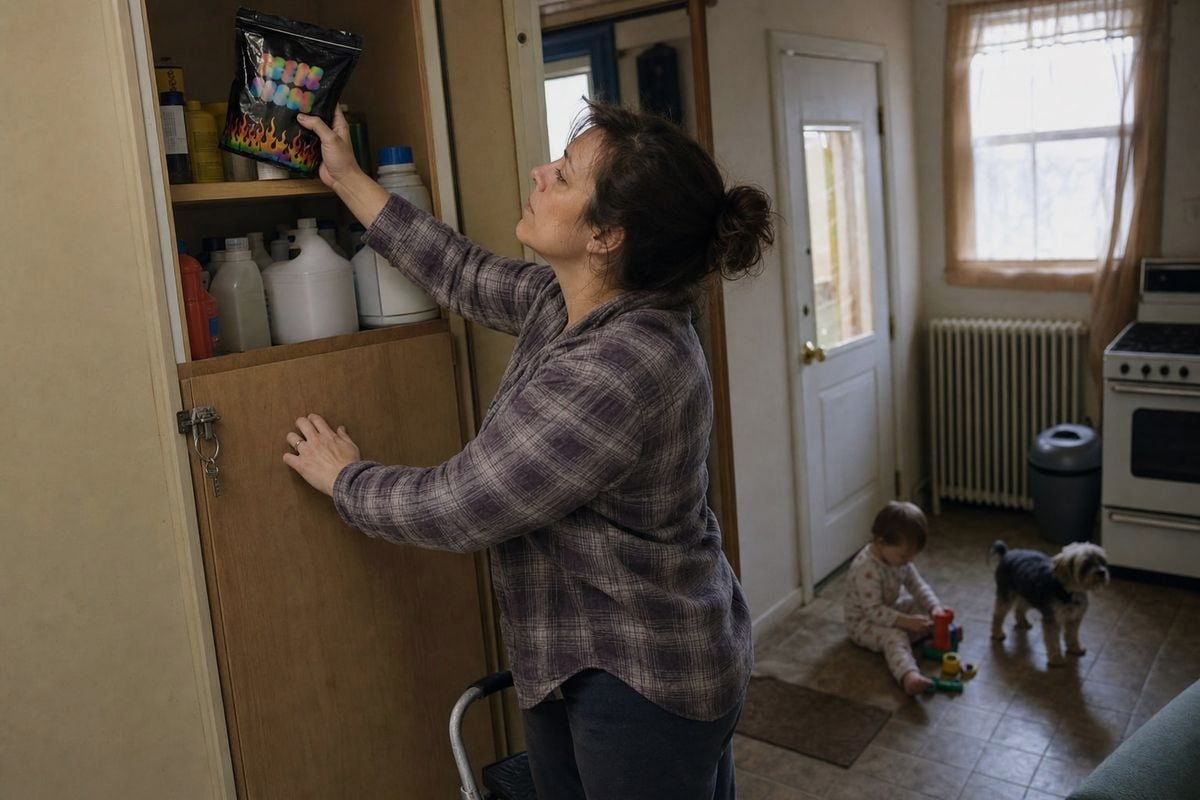
Storing Magic Fire powder safely worries many of our buyers child-resistant outer packaging 1. When we developed our sealed sachets, one distributor told me a child had opened a competitor's flimsy packet. That risk is real — and preventable.
Store Magic Fire powder in its original sealed sachets, inside a locked, dry cabinet placed high and out of reach of children and pets. Keep it cool, away from heat sources, food, and other chemicals, and follow the manufacturer's label instructions at all times.
That is the short answer. But packaging design, warning labels, and supplier compliance also decide how safe the product really is Marcado CE 2. Let me walk you through each piece below.
What packaging features should I look for to keep Magic Fire powder childproof and pet-safe?
At our Ningbo production line, we test seal strength on every sachet batch. Seventeen years of exporting color-flame packets taught us one thing: packaging is the first safety barrier, not the label.
Look for heat-sealed, tear-resistant foil sachets, thick multi-layer film, resealable or child-resistant outer packaging, and clear hazard printing. The packet should be scent-blocking to deter pets, moisture-proof, and impossible for small hands to open without scissors.
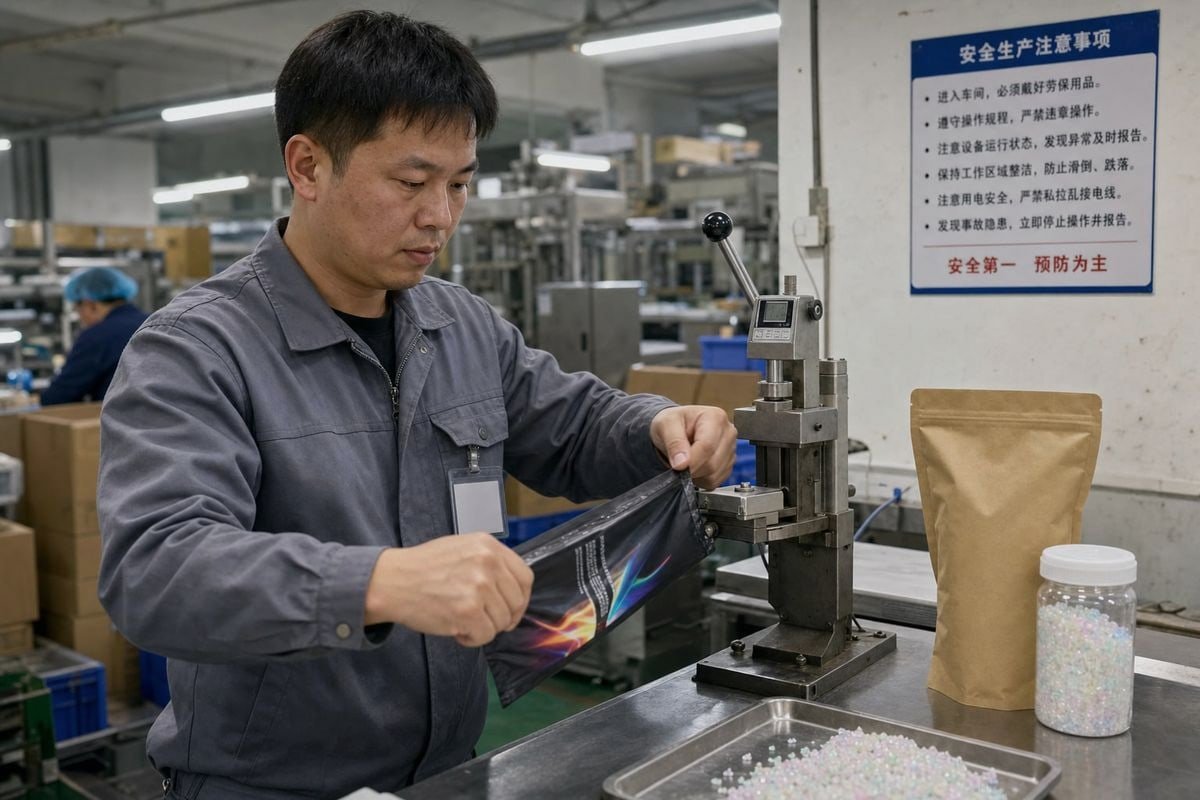
Packaging does two jobs at once. It protects the metal salts inside from moisture, and it keeps children and animals out. In our experience supplying camping brands in the US and Germany, buyers often focus on graphics first. But the material structure matters far more for household safety.
The barrier layers that matter
A quality Magic Fire sachet uses a multi-layer laminate. The outer layer resists tearing. The middle foil layer blocks moisture and odor. The inner heat-seal layer keeps the powder locked in. Pets are drawn to salty or metallic smells, so a true foil barrier also works as scent-proof storage. Thin single-layer plastic bags fail on all three counts.
Packaging formats compared
| Formato de empaque | Child resistance | Pet deterrence | Mejor caso de uso |
|---|---|---|---|
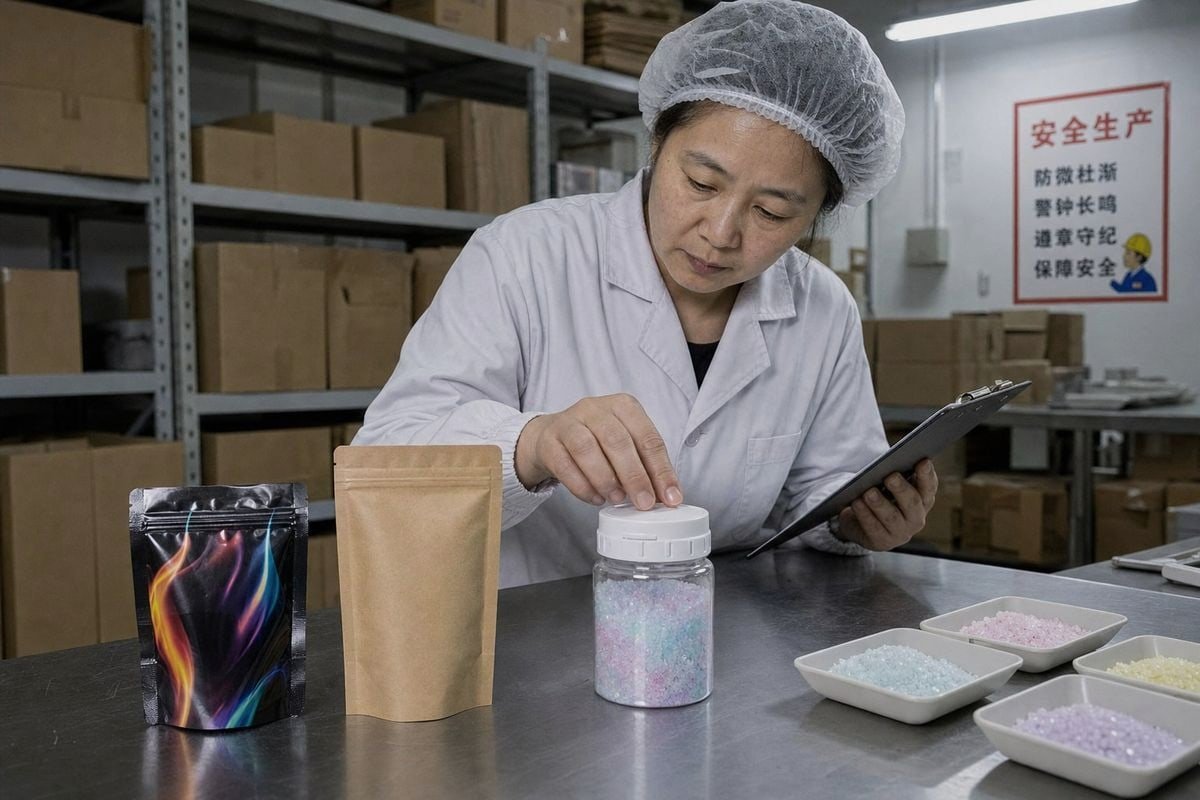
| Sobre sellado con calor de aluminio | High — needs scissors to open | High — blocks odor | Single-use retail packs |
| Bolsa de pie de papel kraft con cremallera | Medium — depends on zipper type | Medio | Multi-use family products |
| Plastic jar with child-resistant cap | High — push-and-turn lid | Alto | Bulk fireplace use |
| Loose powder in unlabeled bag | Ninguno | Ninguno | Never acceptable |
We produce all three safe formats, and we always advise buyers to add a secondary layer for retail: a flip-top display box or a gasket-sealed outer bin. Airtight storage containers as a second barrier contain any fine dust if a sachet is ever damaged. One more point: the packet should never look like candy or a seasoning pouch. Playful branding sells, but the design must still include a visible warning band so parents recognize it as a fireplace safety accessory, not a snack.
How do I choose a supplier whose warning labels meet US and EU child-safety requirements?
A UK buyer once returned a competitor's shipment to us for relabeling — the warning text was too small and missing pictogramas de peligro 3. Fixing labels after customs is far more expensive than getting them right at the factory.
Choose a supplier with CE marking, SGS or Intertek test reports, and labels that carry required hazard pictograms, "keep out of reach of children" statements, first-aid instructions, and correct language versions. Ask for a Material Safety Data Sheet before ordering.

Warning labels are not decoration. In the US, consumer chemical products fall under labeling rules that demand clear signal words, hazard statements, and precautionary text. In the EU, CLP-style requirements add standardized pictograms and multi-language obligations. A supplier who exports to only one region often misses the details of the other. We ship to 30+ countries, so our label templates already carry both frameworks, and we adjust language sets for each destination — German and French for the EU, English for North America.
Documents a serious supplier should hand over
- Un actual Hoja de Datos de Seguridad del Material 4 for the exact powder formula, not a generic template.
- Third-party test reports from SGS or Intertek confirming the composition contains no toxic metales pesados 5.
- CE documentation where applicable, plus ISO 9001 6 and BSCI certificates showing the factory itself is audited.
- Label artwork proofs for your review before mass printing.
Señales de alerta durante la evaluación de proveedores
Watch for suppliers who cannot name the metal salts in their formula. Watch for labels without a batch number, because traceability is impossible without one. And watch for trading companies that outsource production — they rarely control what actually gets printed on the sachet. When we onboard a new private-label client, our compliance team reviews the destination market first, then locks the warning text before any film is printed. That order of operations protects the buyer from recalls and protects end users at home.
What storage instructions should I include on private-label packaging to protect end users?
Trade-offs come up constantly in private-label design. Buyers want maximum shelf appeal, but every square centimeter given to graphics is space taken from storage guidance. We have learned to protect a fixed instruction zone on every layout.
Include instructions to store the powder in original manufacturer packaging, in a locked, cool, dry cabinet away from heat, flames, food, and other chemicals. Add "keep out of reach of children and pets," first-aid steps, and the Poison Control number for the target market.
End users do not read manuals. They read packets, usually once, usually quickly. So the storage instructions on your private-label pouch must be short, specific, and impossible to misread. In our OEM work for fireplace distributors in Canada and Poland, we condensed storage guidance into a fixed checklist block that survives every design revision.
The core instruction set we recommend
| Instruction | Why it protects end users |
|---|---|
| Keep in original manufacturer packaging | Preserves warnings, batch number, and ingredient list |
| Store in a locked cabinet, high and dry | Childproof cabinet locks stop curious kids and climbing pets |
| Keep away from heat, sparks, and open flames | Prevents accidental ignition near furnaces or stoves |
| Never store near food or in food containers | Eliminates look-alike ingestion accidents |
| Do not open sachets — toss the whole packet into the fire | Avoids inhalation and skin contact with loose dust |
| Call Poison Control 7 immediately if swallowed | Enables fast, correct emergency response |
For the US market, we print the national Poison Control Center number (1-800-222-1222) directly on the caution band. For EU versions, we localize the emergency contact line. We also encourage brands to add a QR code linking to the full Material Safety Data Sheet, so a parent can pull up ingredient details on a phone during an emergency. One practical tip we pass to every client: advise users to photograph the ingredient panel and keep it in a digital safety folder. Small print gets thrown away with the box; a photo does not. Finally, remind users to inspect stored packets seasonally for damage, clumping, or moisture, and to dispose of compromised packets according to local rules.
Can I request compliance certificates that confirm my Magic Fire powder is safe for household use?
Early in a recent negotiation, a Dutch importer asked us for four separate documents before discussing price. We sent all four the same day. That exchange, not the quote, is what won the order.
Yes. A reputable manufacturer should provide ISO 9001 and BSCI factory certificates, CE marking documentation, SGS or Intertek test reports, and a Material Safety Data Sheet on request. These documents confirm the formula, packaging, and production process meet household-use safety standards.

Certificates are the only objective proof that the pretty sachet on the shelf is genuinely safe next to kids and pets. Marketing claims like "non-toxic" or "eco-friendly" mean nothing without third-party verification. Our factory in Liuyang and our production site in Ningbo maintain full documentation because our US and European buyers treat compliance as a hard requirement, not a bonus.
What each certificate actually proves
| Certificate or report | What it confirms for household safety |
|---|---|
| Informe de prueba SGS / Intertek | Powder is free of toxic heavy metals; metal salts used are the safer color-producing types |
| Hoja de Datos de Seguridad del Material | Full composition, first-aid measures, and safe storage conditions |
| Documentación CE | Product meets applicable EU safety requirements for its category |
| ISO 9001 | Batch-to-batch quality control, so every sachet matches the tested sample |
| Auditoría BSCI | The factory itself operates responsibly and traceably |
How to request and verify them
Ask for documents tied to your specific formula and batch, not a generic company brochure. Check that the report date is recent and that the testing lab is named and verifiable. Then confirm the supplier retests periodically — formulas and raw material sources change, and yesterday's report does not cover today's batch. We keep retained samples from every production run for exactly this reason. When a buyer questions a shipment, we can pull the matching batch sample, retest it, and settle the issue with data. That traceability is what turns a compliance certificate from a piece of paper into real protection for the families lighting an outdoor fire pit safely with your branded product.
Conclusión
Unsafe storage turns a fun product into a household hazard. The fix is simple: sealed original packaging, locked dry storage, compliant labels, and verified certificates. We build all four into every Magic Fire order — so your customers can enjoy colorful flames worry-free.
Notas al pie
1. Explains child-resistant packaging standards referenced when describing sachet safety features. ↩︎
2. EU official page describing CE marking requirements mentioned for supplier compliance. ↩︎
3. Background on standardized hazard pictograms required on chemical product labels. ↩︎
4. Authoritative source on MSDS content and purpose for chemical products. ↩︎
5. WHO reference on health risks of toxic heavy metals relevant to powder composition testing. ↩︎
<span id="footnote-6


 English
  Spanish
  German
  French
  Arabic
  Portuguese
Únete a la conversación