






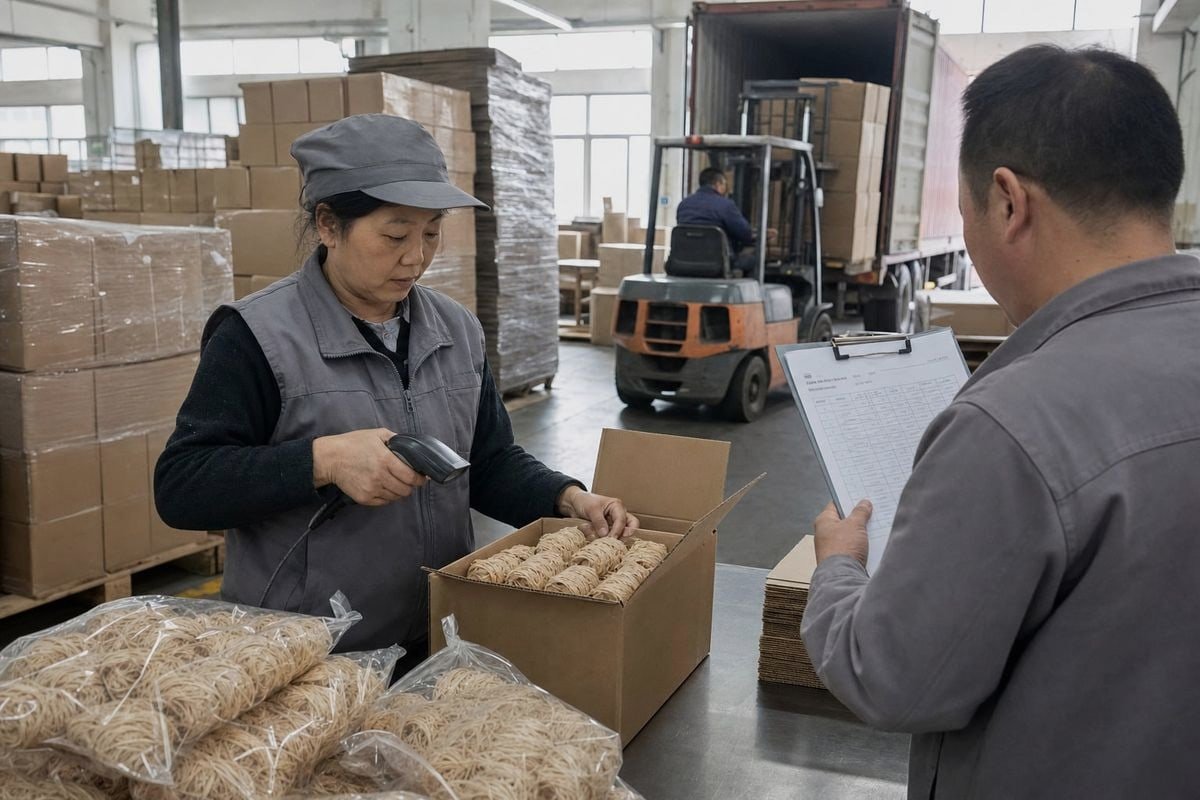
Requesting separate packaging and barcodes for wood fire starter variants sounds simple until a shipment gets rejected BSCI certified 1. On our packing line, I have seen one wrong barcode freeze an entire container.
To request separate packaging and barcodes for wood fire starter variants, send your supplier a variant specification sheet listing each SKU, its GTIN or UPC, pack count, artwork file, and barcode placement. Confirm MOQs per variant, then approve pre-production packaging samples in writing before mass production.
That is the short answer. The details matter more. Below, I walk through the documents, the SKU logic, the private-label workflow, and the realistic minimums.
What documents do I need to provide for custom barcode and packaging approval?
A few years back, a German distributor sent us artwork with one barcode for three different scented fire starter boxes. Our QC team caught it before printing. That save taught both sides a lesson.
You need to provide print-ready artwork files, a unique GTIN or UPC for each variant, a SKU list with pack counts, barcode placement instructions, required warning labels, and any retailer-specific compliance text. A signed packaging approval form finalizes the setup before production.
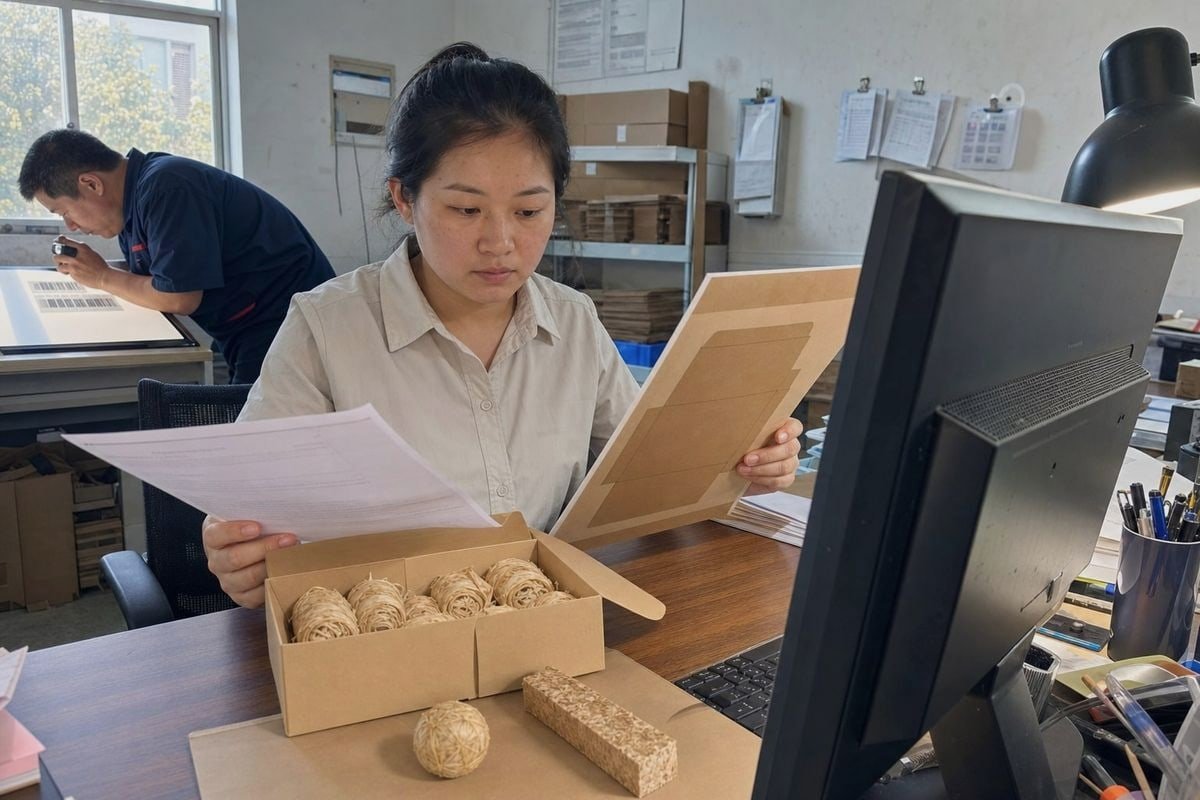
In our 17+ years of export production, the smoothest orders always start with a complete document pack. Incomplete files cause the most delays, not the printing itself. Our factory can turn around a packaging proof in days, but only when we have everything we need in one place.
La lista de verificación de documentos principales
Here is what we ask every buyer to send before we open a packaging job:
| Documento | Propósito | Quién lo proporciona |
|---|---|---|
| Print-ready artwork (AI/PDF, vector) | Box, sleeve, or label printing | Buyer or our design team |
| GTIN/UPC list per variant | Barcode generation under GS1 barcode standards | Buyer (from their GS1 account) |
| SKU and pack-count matrix | Links each code to a physical configuration | Comprador |
| Barcode placement guide | Ensures scannable, flat, high-contrast position | Both, jointly |
| Warning label and compliance text | Meets US/EU market rules for fire products | Buyer confirms, we advise |
| Master carton marking spec | Supports supply chain logistics and receiving | Buyer's warehouse or 3PL |
| Signed packaging approval | Locks the spec before series production | Comprador |
Why the GTIN must come from you
We generate the barcode image, but the number itself belongs to your brand. GTIN assignment through GS1 2 keeps your codes globally unique. If a supplier "borrows" numbers, retailers can reject the goods, and marketplace listings can be suspended. We have seen it happen to buyers who came to us after a bad experience elsewhere.
Placement rules we enforce on the line
Barcodes must sit on a flat panel, away from box edges and fold lines. We avoid printing codes over dark gradients, like the black-to-orange design on our standard fire starter retail boxes, unless a white knockout zone is reserved. Low contrast is the top cause of scan failures at distribution centers. We also verify every printed code with a scanner check during batch QC, so the first carton and the last carton scan the same.
Can I get separate SKUs and barcodes for different wood fire starter sizes or scents?
One trade-off I discuss with almost every new buyer is simplicity versus traceability. Fewer codes feel easier upfront. But once inventory hits a warehouse, precision wins every time.
Yes. Every wood fire starter variant that differs in size, scent, count, or formula should carry its own SKU and its own barcode. Any difference that affects ordering, pricing, inventory, or fulfillment requires a unique GTIN so systems never confuse the variants.
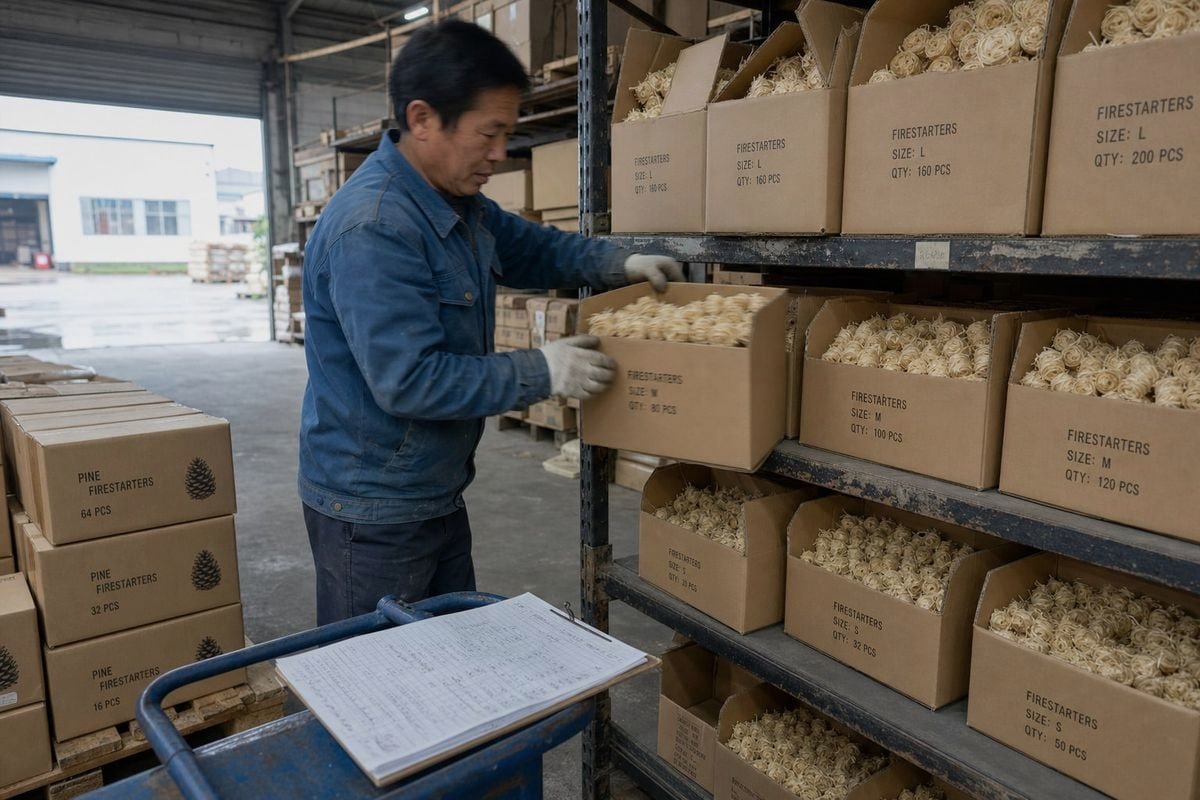
Our wax-dipped wood rolls come in multiple sizes, burn times, and pack counts. When we set up private-label programs, we treat each sellable configuration as its own identity. This is basic SKU management, and it protects the buyer far more than it protects us.
What counts as a separate variant?
Think of it as a simple test: if a customer, a warehouse, or a cash register could treat two items differently, they need different codes.
| Difference | New SKU needed? | New barcode needed? |
|---|---|---|
| 50-pc box vs. 100-pc box | Sí | Sí |
| Scented vs. unscented rolls | Sí | Sí |
| Different burn time formula | Sí | Sí |
| New box artwork, same contents | Generalmente no | Generalmente no |
| Single unit vs. 3-pack bundle | Sí | Sí |
| Display carton vs. plain shipper | Yes, per level | Yes, per sellable level |
Barcodes follow the packaging hierarchy
A single product often needs several identifiers. The consumer unit gets one GTIN. An inner pack that retailers order separately gets another. The master carton can carry a case-level code, typically an ITF-14 3. Your inventory tracking systems then see each layer clearly, from container to shelf. We mark master cartons with the variant SKU, quantity, and gross weight so receiving teams sort pallets without opening boxes.
Where product variation strategy pays off
Separate codes give you clean sales data per scent and per size. That data tells you which variant to reorder and which to drop. Buyers who lump variants under one code lose that visibility. They also risk mis-picks, where a customer orders pine-scented starters and receives plain ones. A good product variation strategy costs a few GTINs upfront and saves thousands in returns and chargebacks later.
How does Sunrich handle private-label packaging for multiple product variants in one order?
A UK camping brand once asked us to run four fire starter variants in a single trial container. Our answer was yes, and the workflow we built for them is now our standard process.
Sunrich runs multiple variants in one order by assigning each variant its own artwork, barcode, and packing spec, then producing and sealing each variant in clearly marked, segregated master cartons. Pre-production samples of every variant are approved in writing before printing and filling begin.
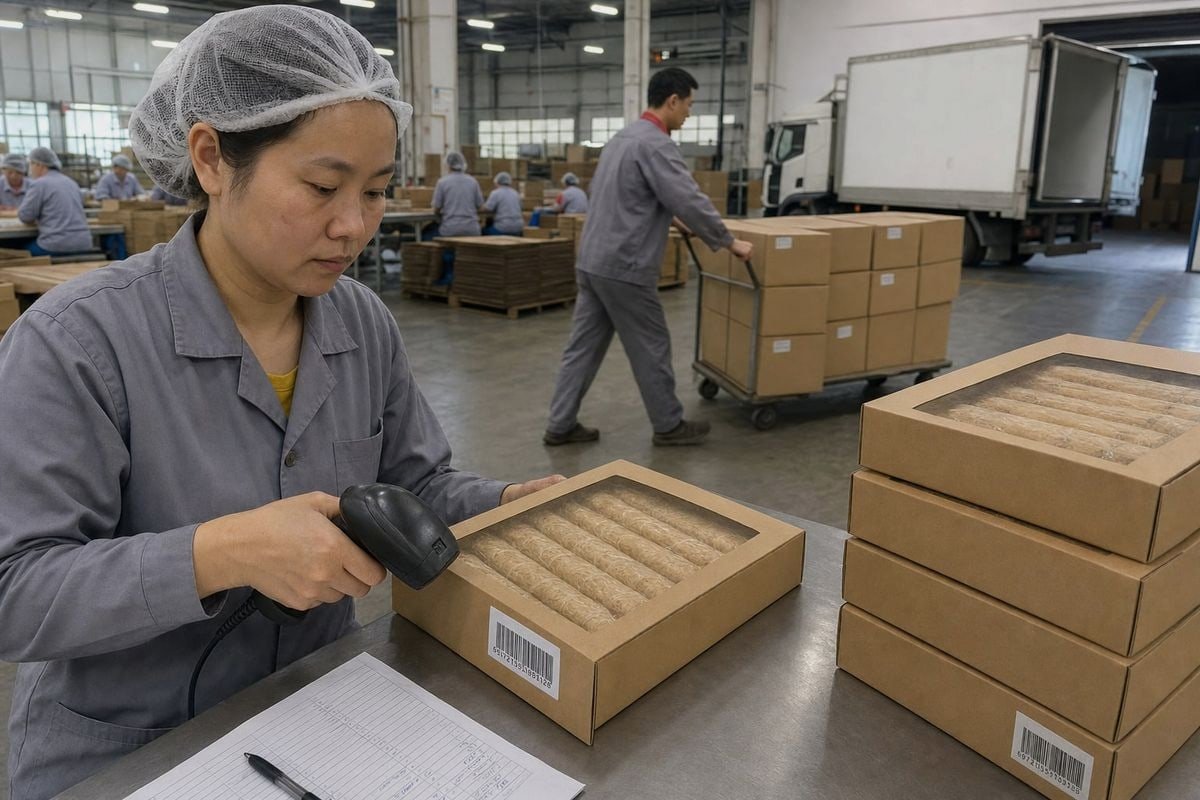
Fabricación de marca privada 4 only works when the factory treats packaging as seriously as the product itself. Our production base in Ningbo runs complete lines for wax-dipped wood rolls, so we control dipping, drying, packing, and printing coordination under one roof. That depth is what makes multi-variant orders safe rather than risky.
Our step-by-step multi-variant workflow
- We receive your variant matrix: SKUs, GTINs, pack counts, and channel notes.
- Our team reviews artwork for barcode contrast, placement, and required warning labels 5.
- We produce a digital proof for each variant, then physical pre-production samples.
- You approve each variant in writing. Nothing prints without sign-off.
- Production runs variant by variant, with line clearance between changeovers so no scented rolls slip into unscented boxes.
- Batch QC scans barcodes from each print run and checks retail packaging design details against the approved sample.
- Master cartons are labeled per variant and loaded in a documented pallet or container plan.
Channel-specific handling
Different sales channels demand different prep. We adapt the same base product to each one:
| Canal | What we adjust |
|---|---|
| Retail shelf (big-box) | Shelf-ready display cartons, easy-open features, case-level codes |
| Amazon FBA prep | FNSKU labels per unit, obscured carton codes, "Sold as Set" marks on bundles |
| Distributor/wholesale | Plain shippers with SKU, quantity, and weight markings |
| Export mixed containers | Segregated variant zones with a clear loading map |
Para bundling and kitting requests 6, such as a fire starter puck plus a color-flame pouch in one gift set, we seal the set so it cannot be separated and print a single set-level barcode. Because we are ISO 9001 7 and BSCI certified, with SGS/Intertek test reports available, the compliance paperwork travels with every variant, not just the lead SKU.
What is the minimum order quantity for requesting separate packaging and barcodes per variant?
The hardest conversation in my week is usually about MOQs. Buyers want low trial quantities. Printers want long runs. My job is to find the honest middle ground.
Separate packaging and barcodes typically require a per-variant MOQ because each variant needs its own printed packaging run. Custom printed boxes usually start around 500 to 1,000 units per variant, while label-based or thermal-printed barcodes allow smaller trial quantities on shared packaging.
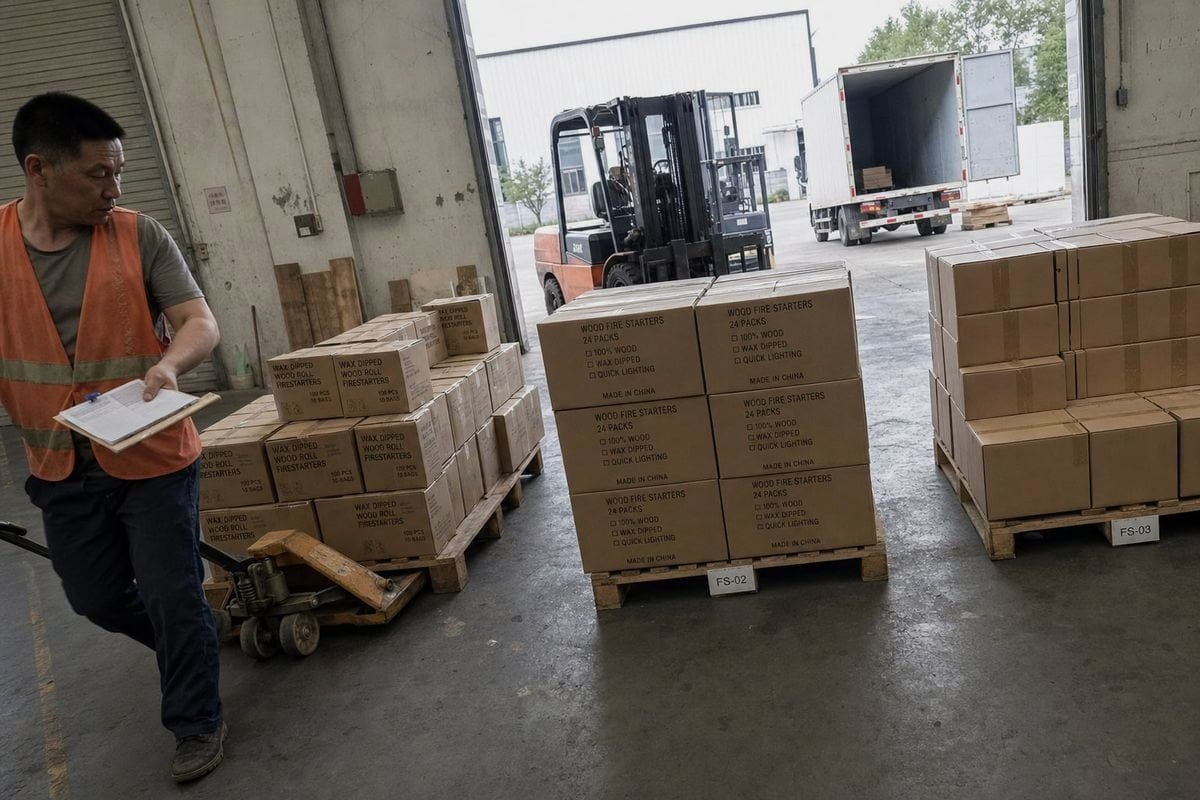
The MOQ is not arbitrary. It comes from the economics of printing. A custom box run has fixed setup costs: plates, color calibration, and die-cutting. Spread over 300 boxes, those costs make each unit expensive. Spread over 1,000, they nearly disappear. In our experience exporting to the US and across Europe, most buyers land on trial quantities that balance risk and unit cost.
Ways we lower the per-variant barrier
We built several options for buyers testing new scents or sizes before committing to full retail packaging design:
- Shared base box with variant labels. One printed box design covers all variants. A variant-specific label carries the scent name and unique barcode. This drops the effective MOQ per variant sharply.
- Knockout zones with thermal printing. We reserve a white panel on the box artwork. Variant barcodes and text are thermal-printed on demand during packing. One set of printing plates serves the whole range.
- Digital printing for small runs. For very small trial orders, digital box printing avoids plate costs entirely, at a higher per-unit price.
- Combined production, split packaging. We run one large batch of the base product, then package it into two or three variant configurations. The product MOQ is shared; only the packaging differs.
A realistic planning example
A buyer wants three scent variants for a trial. Instead of three full custom box runs, we suggest one printed box at full volume plus three label versions. The buyer gets clean SKU separation, valid GTINs, and shelf-ready presentation, while keeping the trial order affordable. When sales data confirms the winners, the reorder graduates to fully printed variant boxes. This staged approach keeps supply chain logistics simple during the test phase and protects your margin during scale-up.
Conclusión
Separate packaging and barcodes for wood fire starter variants protect your inventory, your listings, and your retail relationships. Send us your variant matrix, and we will build the rest together.
Notas al pie
1. Amfori runs the BSCI social compliance program cited as a factory certification standard. ↩︎
2. GS1 is the global authority that issues and governs GTIN barcode standards for products. ↩︎
3. Explains the case-level barcode standard used for master carton identification. ↩︎
4. Alibaba is a leading B2B platform representing private-label manufacturing and sourcing practices. ↩︎
5. CPSC sets US warning label and safety requirements relevant to fire-related consumer products. ↩︎
6. Provides background on product bundling strategy referenced for multi-item retail sets. ↩︎
7. Authoritative Wikipedia entry for the ISO 9001 quality management standard. ↩︎


 English
  Spanish
  German
  French
  Arabic
  Portuguese
Únete a la conversación