






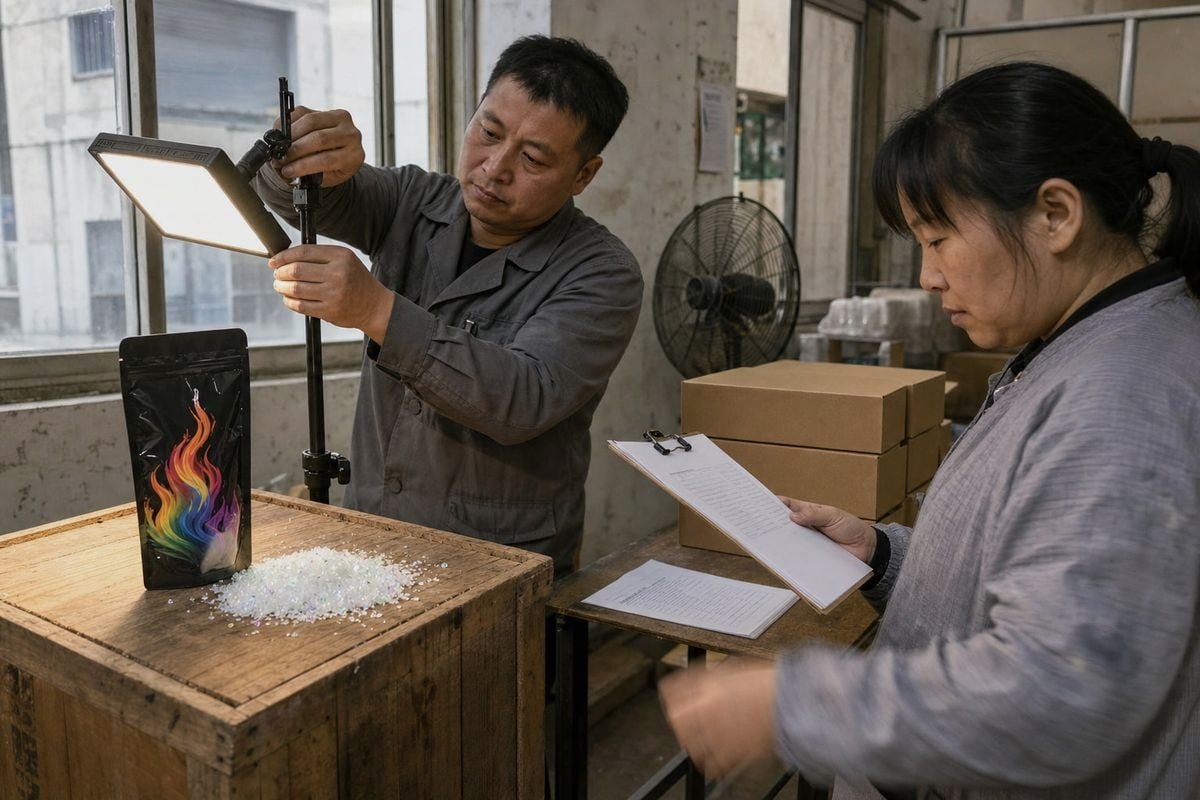
Getting high-res images and videos for Magic Fire Powder from suppliers is a constant pain point I hear about — and on our production line, we see exactly why buyers struggle.
To get high-res images and videos for Magic Fire Powder, send suppliers a one-page media brief with exact deliverables, file specs, and deadlines, tie asset delivery to your purchase order, verify footage matches your production batch, and confirm usage rights in writing before publishing anything.
That is the short answer. The longer answer covers what to ask, how to verify, what to collect, and which suppliers to walk away from Informes de SGS/Intertek 1. Permíteme desglosar cada parte.
What Should I Ask My Supplier Before Requesting Product Photography and Video Samples?
A German distributor once emailed us asking for "some nice photos" of our flame colorant packets. We sent forty files. He used two. That taught me both sides need a better process.
Before requesting media, ask whether the supplier has an in-house content team, which file formats and resolutions they can deliver, whether footage shows your actual SKU and packaging, who owns the usage rights, and whether demonstration videos follow the product's own safety instructions.
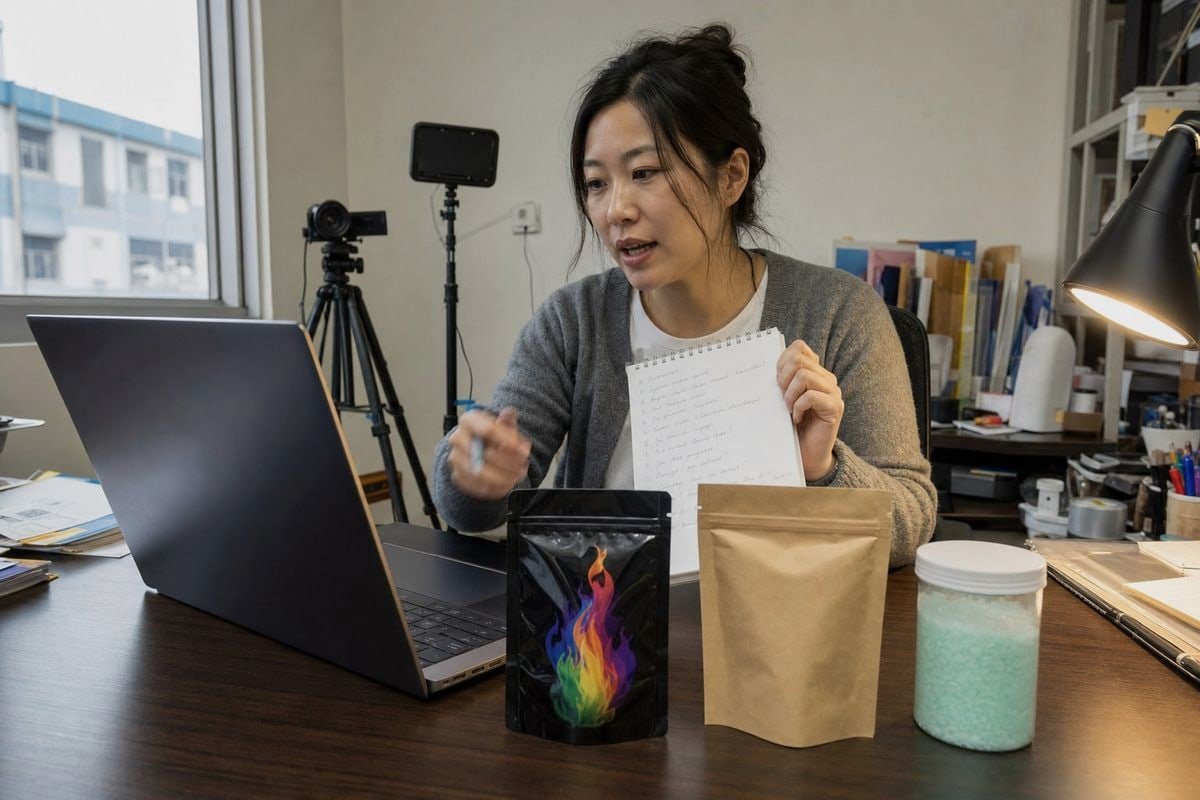
Most buyers skip the qualifying questions and jump straight to "send me your best pictures." That is why they receive blurry marketplace thumbnails instead of publication-ready assets. In our experience exporting color-flame products to 30+ countries, the buyers who get great media are the ones who ask smart questions first.
The Five Questions That Save You Weeks
First, ask about capability. Does the factory have a camera, lighting, and someone who can shoot? Many factories in our industry do not. If they only have smartphone photos, you need to know that before you write your brief. Smartphone footage can still work — well-lit, raw factory-floor clips often outperform polished studio shots in social ads — but you must plan for it.
Second, ask about specs. Confirm they understand pixel dimensions, RAW vs. JPEG 2, and video frame rates. If you need a 4K product demonstration video, say so explicitly. Do not assume "high quality" means the same thing to both parties.
Third, ask about the SKU. Fire-coloring products often share generic photos across variants. A plastic bag, a kraft bag, and a jar are different retail items. Make sure the media shows your exact packaging.
Fourth, ask about rights. Some supplier photos are borrowed from other listings. Publishing those can get your marketplace account flagged.
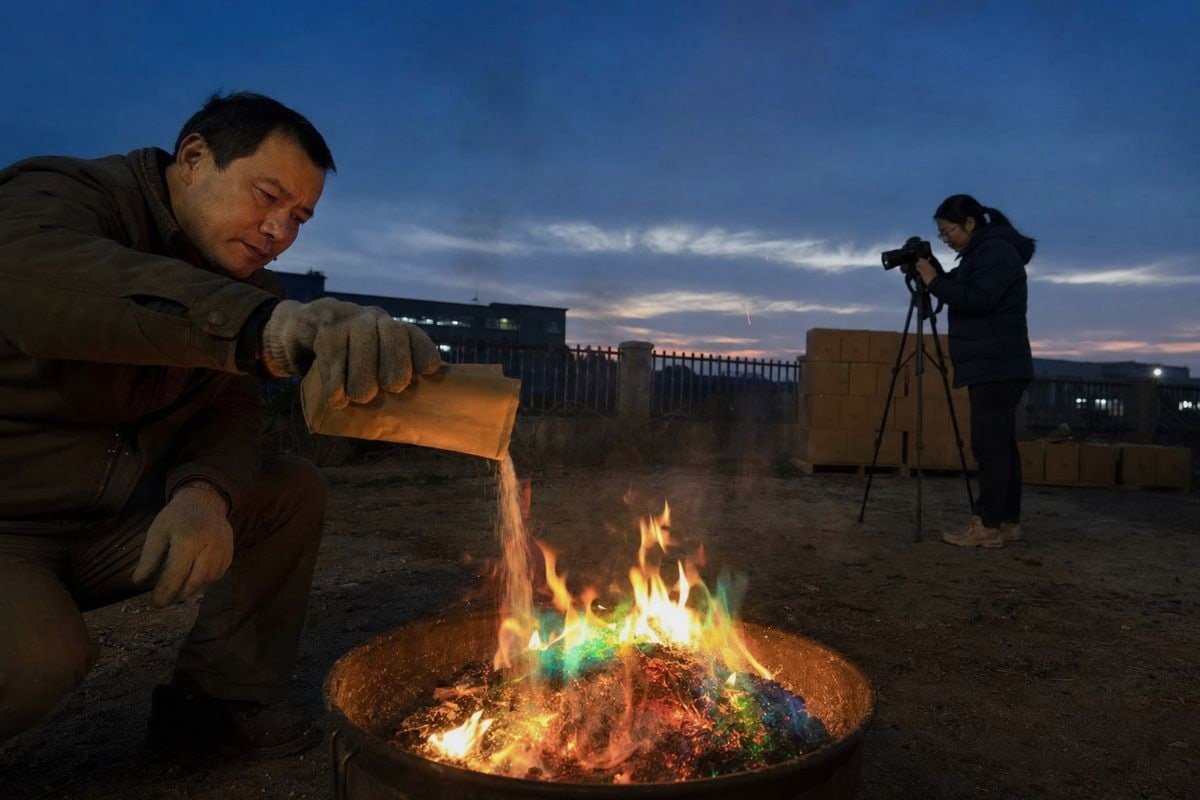
Fifth, ask about safety context. Any demo video must follow the packaging guidance — unopened packet, established fire, adult handling. We refuse to shoot footage that shows misuse, and a serious supplier should too.
| Pregunta a realizar | Por qué importa | Red Flag Answer |
|---|---|---|
| Do you have an in-house content team? | Sets expectations for quality and turnaround | "We use photos from the internet" |
| Can you deliver 4K video and 300 DPI stills? | Confirms technical capability | "What is DPI?" |
| Does the media show my exact SKU? | Prevents packaging mismatches | "It's basically the same product" |
| Who owns the image rights? | Protects your listings legally | "Don't worry about that" |
| Does demo footage follow safety instructions? | Compliance and liability | "We just make it look exciting" |
How Can I Verify That the Images My Supplier Sends Reflect Actual Mass-Production Quality?
Here is a trade-off we weigh every week at our factory in Ningbo: perfect studio shots impress buyers faster, but batch-accurate photos build trust that lasts. We choose batch-accurate, and buyers should demand it.
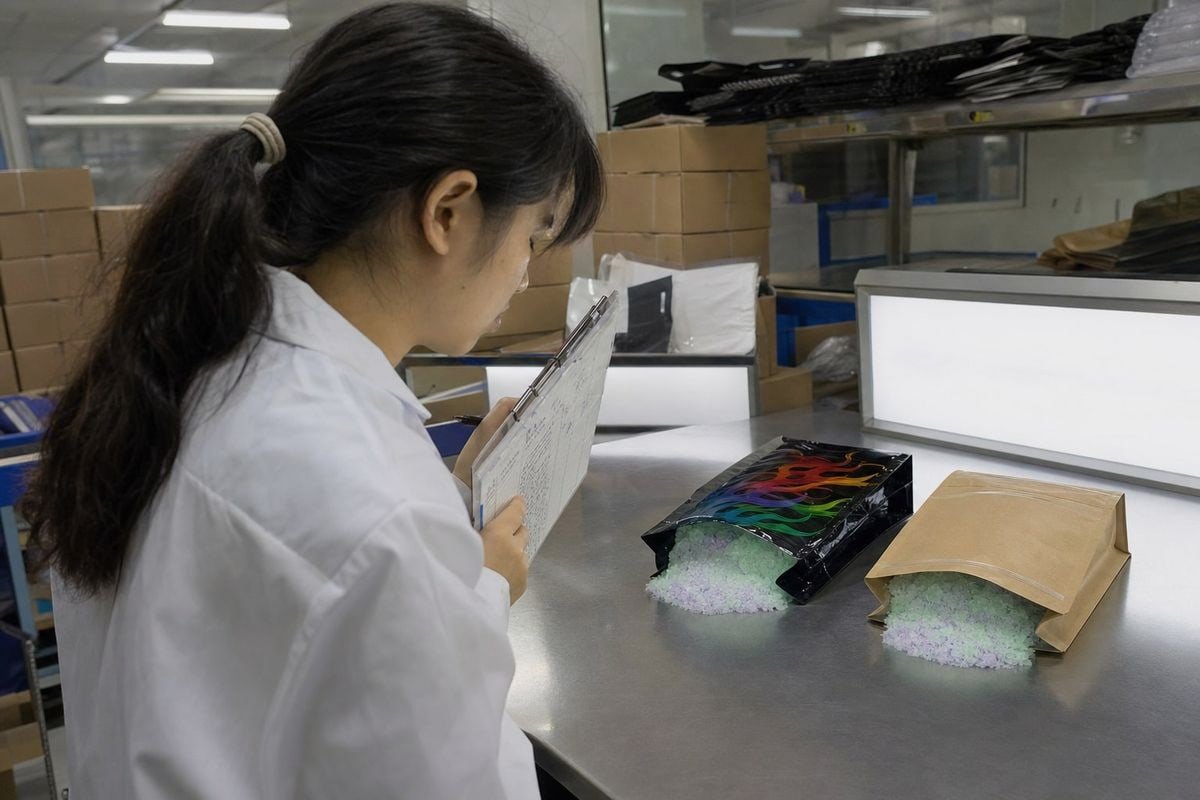
Verify supplier images against reality by requesting batch-specific photos and videos of your actual production run, comparing packaging text and crystal color against a physical sample, asking for timestamped or dated footage, and cross-checking flame color and burn duration in an unedited demo clip.

Polished photos can hide a lot. Color grading can make a weak green flame look vivid. A tight crop can hide sloppy heat-sealing on the foil pouch. So verification is not paranoia — it is basic procurement discipline.
Ask for Batch-Specific Proof
The single strongest tactic is demanding batch-specific testing videos. Ask the supplier to film the color vibrancy of your actual production run against a neutral backdrop, ideally in one continuous, unedited take. This gives you an honest baseline for your own post-production grading. At Sunrich, we shoot these clips as part of our batch quality control, because our position is simple: the first sample must reliably reflect mass production, and the media must reflect both.
Match Media to a Physical Sample
Order a physical sample and compare it side by side with the files. Check the pouch printing, the warning label, the barcode area, and the powder's crystal color. Our Magic Fire packets contain pale mint-green crystalline granules; if the photos show a different color or texture, ask why before you order.
Practical Verification Checklist
- Request a dated, unedited demo clip showing ignition, peak color, and duration.
- Compare packaging text in close-up stills against your approved artwork.
- Ask for a raw smartphone clip from the factory floor showing the batch being packed.
- Confirm the supplier's certifications — ISO 9001 3, BSCI, CE, SGS/Intertek reports — because a certified factory has documented consistency behind its images.
- Keep every version in a digital asset management 4 folder so you can audit media against future batches.
One more point on the "in-house photography is always better" argument. Some brands insist supplier content is too inconsistent to use. That is half true. The practical middle ground is to take the supplier's raw, batch-accurate assets and standardize them in-house with editing and compliance review. You get authenticity and consistency.
Which Visual Assets Do I Need From My Manufacturer for Retail Listings and Private-Label Packaging?
When we onboard a new private-label client for our color-flame packets, the first deliverable is not a quote. It is an asset list, because a launch-ready SKU needs far more files than most buyers expect.
For retail listings and private-label packaging, you need white-background pack shots, lifestyle campfire images, close-ups of warnings and barcodes, a 4K demonstration video, vertical clips for social media, packaging dielines with your OEM branding, and print-ready label files at 300 DPI.
Think of your asset library in three layers: listing assets, marketing assets, and packaging assets. Each serves a different channel, and one good supplier shoot can feed all three if you plan the shot list up front.
The Complete Asset Table
| Asset Type | Specs to Request | Where You Use It |
|---|---|---|
| White-background pack shot | 2000×2000 px minimum, JPEG + PNG | Marketplace main image |
| Lifestyle marketing assets | High-res campfire or fire-pit scenes | Detail page, ads, distributor decks |
| Warning label close-up | Sharp, legible, 300 DPI | Compliance review, A+ content |
| 4K product demonstration video | 4K at 30–60fps, unedited master | Product page, YouTube, retail pitches |
| Slow-motion macro clip | 120fps of powder meeting flame | Social hooks, Reels, TikTok, Shorts |
| Vertical short-form clips | 9:16, 15–30 seconds | Paid social, organic short video |
| Packaging dieline + artwork | Vector files per OEM branding guidelines 5 | Private-label retail packaging design |
| 360-degree product scan | High-res spin set | Interactive storefront or AR modules |
Why Packaging Assets Matter as Much as Photos
Private-label buyers often forget the packaging layer. If you are putting your brand on our flame colorant packets — plastic bag, kraft stand-up pouch, or jar — you need editable dielines, your logo placement per your OEM branding guidelines, localized warning text, and barcode placement approved before print. We supply custom boxes, display packaging, warning labels, and barcodes as part of our one-stop OEM/ODM service, because a retail buyer like a Home Depot–type chain will reject shelf-unready packaging no matter how good your photos are.
Do Not Forget Documentation Visuals
Also request a scanned Hoja de Datos de Seguridad (SDS) 6 and test-report certificates as PDFs. Retailers and importers increasingly ask for these alongside imagery, and having them in the same asset folder speeds up onboarding dramatically.
Early in our export business, I learned a hard lesson: the suppliers most protective of their photos were usually hiding something — a trading company reselling someone else's product, or a factory whose batches never matched the pictures.
Suppliers refuse high-res media because they lack a content team, fear competitors copying their assets, resell products they do not make, or cannot back up the visuals with real quality. Avoid them by testing responsiveness early, requiring media in your sourcing agreement, and prioritizing certified factories.
Not every refusal means bad faith. Some small factories genuinely have no camera skills and worry about looking unprofessional. The key is separating "cannot yet" from "will not ever". The first is workable. The second is a walk-away signal.
Legitimate Reasons vs. Red Flags
| Supplier Behavior | Causa probable | Your Move |
|---|---|---|
| "We only have phone photos" | No content team | Offer a brief; accept raw footage you edit |
| "Photos after you pay full order" | Fear of copying | Negotiate media as a PO condition |
| Sends watermarked images from other listings | Trading company, not a factory | Vete |
| Refuses batch-specific video | Quality inconsistency | Vete |
| Slow, vague Alibaba supplier communication | Poor English support or low priority | Test with a small clear request first |
Build Media Into the Deal
The most effective fix is contractual. Write "marketing support" into your wholesale sourcing agreements 7: the supplier must deliver an agreed asset pack — pack shots, demo video, packaging close-ups — as a condition of the purchase order. Tie repeat orders to complete asset delivery. You can also offer incentives: a content-for-credit arrangement where you return professionally edited versions of their raw footage, co-branded exposure, or expedited payment for a complete set. In our experience, factories with real production depth say yes quickly, because the media costs them little and the relationship is worth a lot.
Some buyers argue no supplier will create custom media without guaranteed volume. That objection is fair for one-off orders. But if you position yourself as a repeat buyer with a clear brief and reasonable MOQs de prueba 8, serious factories will invest. We do it routinely for trial-order clients, because we know shelf-ready visuals shorten their path to reordering.
Test Before You Commit
Send one small, specific request early: "Please send a 20-second phone video of this SKU's green flame, shot today." The response tells you almost everything — speed, honesty, English communication quality, and willingness to cooperate. A supplier who handles that well will handle a full media brief well too.
Conclusión
Weak supplier media stalls launches, hurts conversion, and hides quality risks. The fix is systematic: qualify suppliers, brief precisely, verify against batches, secure rights, and partner with certified factories like ours.
Notas al pie
1. SGS is a globally recognized inspection and certification authority mentioned in the article. ↩︎
2. Explains the technical image format distinction buyers must specify when requesting supplier photography. ↩︎
3. ISO 9001 certification is referenced as proof of documented factory quality consistency. ↩︎
4. Background concept for organizing and auditing supplier media files across product batches. ↩︎
5. Explains the OEM concept referenced when discussing private-label packaging and branding requirements. ↩︎
6. OSHA is the authoritative source defining Safety Data Sheet requirements for hazardous products. ↩︎
7. WTO trade resources contextualize sourcing agreement practices between international buyers and suppliers. ↩︎
8. Alibaba is a leading B2B sourcing platform where minimum order quantity neg



 English
  Spanish
  German
  French
  Arabic
  Portuguese
Únete a la conversación