






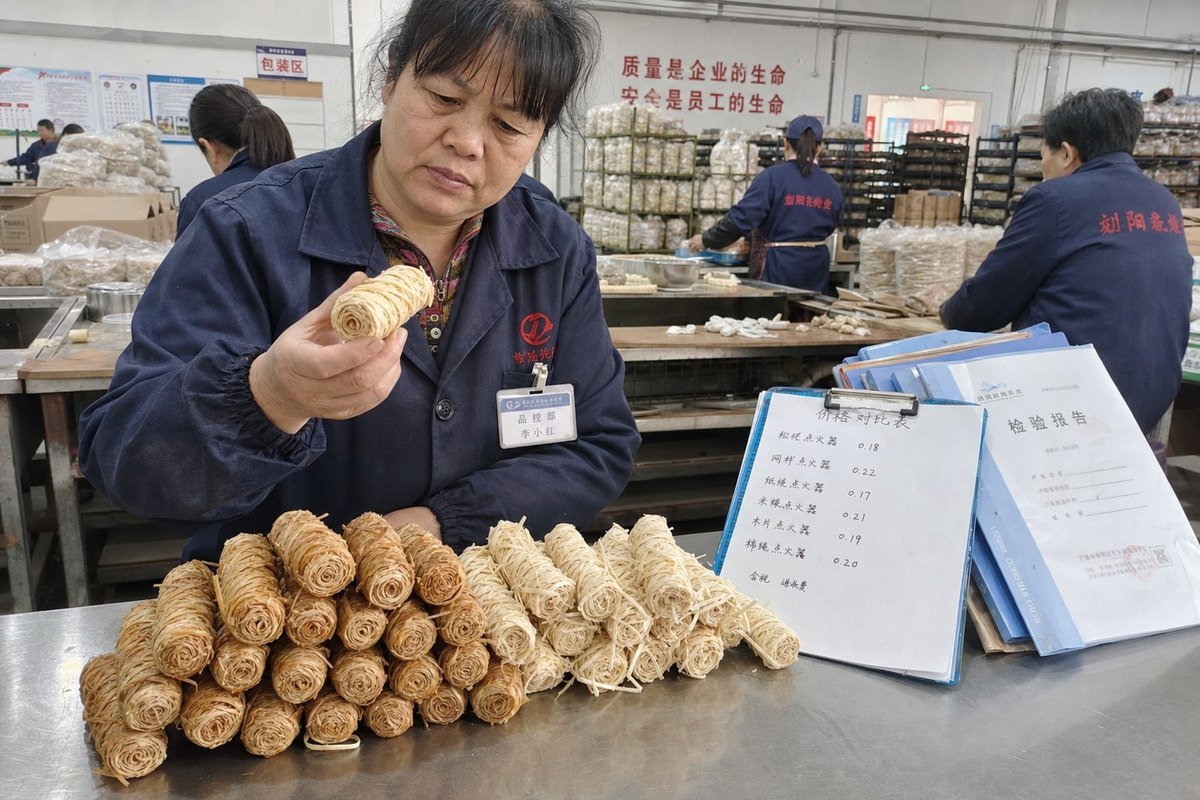
Las cotizaciones de proveedores de iniciadores de fuego de madera pueden parecer idénticas en el papel. Sin embargo, en nuestra línea de producción, he visto dos rollos de "misma especificación" arder de manera completamente diferente. El precio por sí solo no le dice casi nada.
Para comparar las diferencias de calidad en las cotizaciones de los proveedores para encendedores de leña, mire más allá del precio unitario: verifique certificaciones como EN 1860-3 e ISO 9001, pruebe muestras de tiempo de combustión y resistencia a la humedad, calcule el costo total por fuego y exija pruebas de consistencia lote a lote antes de realizar el pedido.
A continuación, desgloso esto en cuatro verificaciones prácticas. Cada una es algo que un comprador puede hacer antes de firmar una orden de compra a granel.
¿Qué certificaciones debería verificar antes de confiar en un presupuesto bajo?
Un distribuidor alemán me envió una vez la cotización de un competidor que era un 30% inferior a la nuestra. Nuestro equipo de exportación detectó el problema en minutos: sin informes de pruebas, sin documentos de cumplimiento, nada verificable.
Antes de confiar en un presupuesto bajo, verifique EN 1860-3 para encendedores, ISO 9001 para gestión de calidad, informes de prueba SGS o Intertek, auditorías de cumplimiento social BSCI y certificación FSC para el abastecimiento de madera. Un proveedor que no pueda mostrar documentos actuales le está transfiriendo un riesgo oculto.
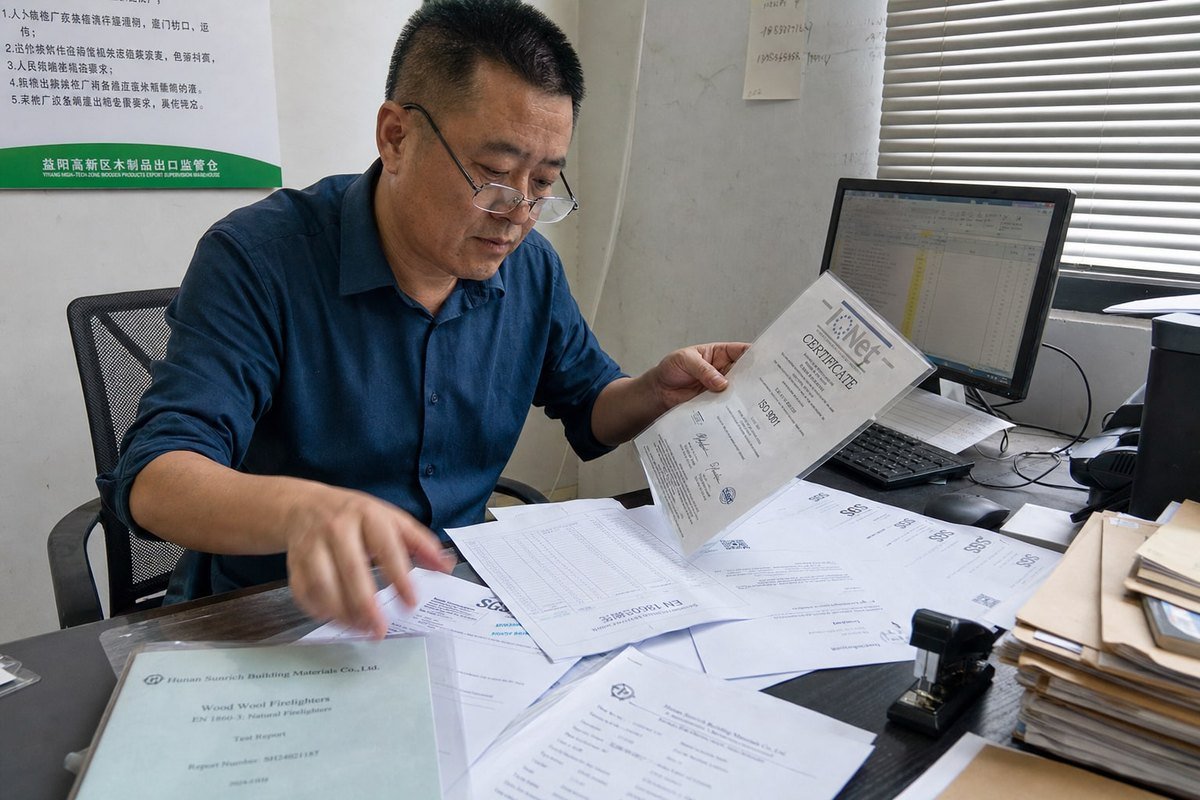
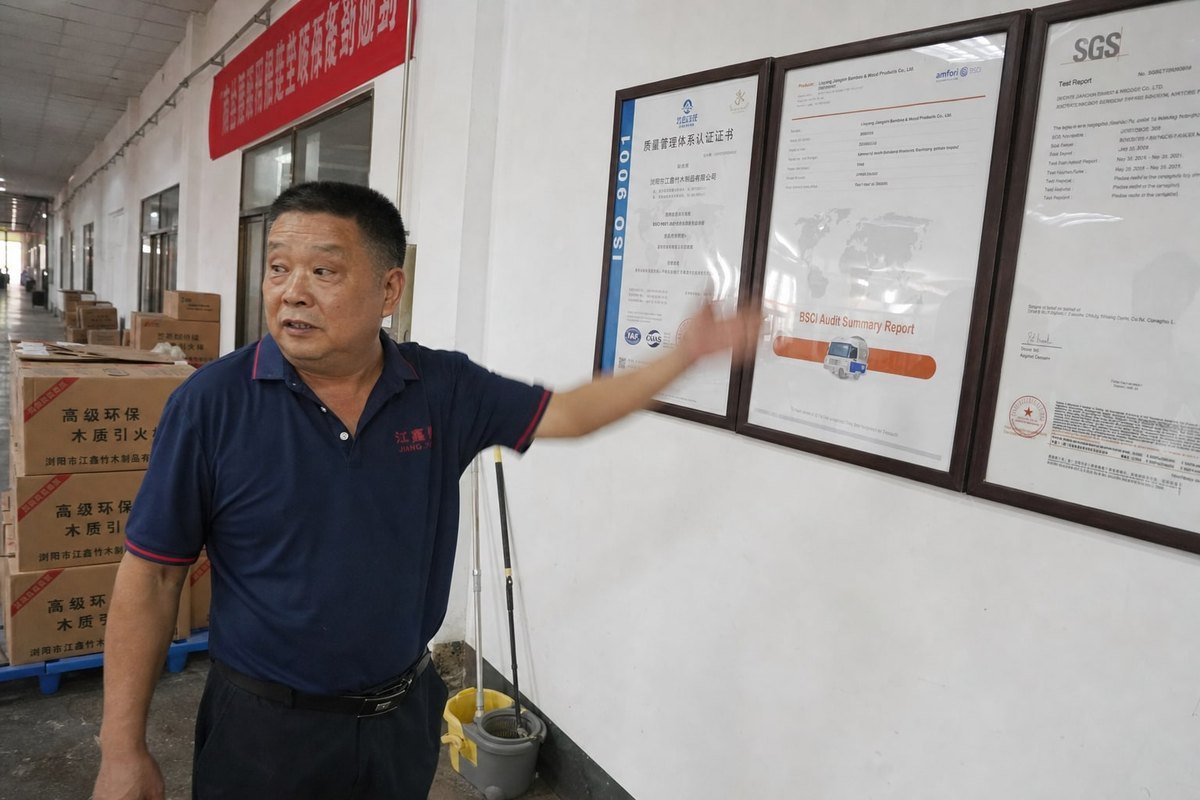
Las certificaciones no son papeleo por sí mismas. Son la única forma de confirmar que la fábrica de un extraño sigue procesos reales. En más de 17 años exportando productos para iniciar fuego a EE. UU., Alemania, Reino Unido y otros 27 mercados, nunca he visto a un comprador minorista serio renunciar al cumplimiento. Los canales de abastecimiento de grandes almacenes simplemente rechazarán los productos no certificados en la puerta.
Los documentos principales a solicitar
| Por qué es importante para las piñas perfumadas | Lo que prueba | Por qué importa para los iniciadores de fuego |
|---|---|---|
| EN 1860-3 | Estándar de seguridad y rendimiento de los iniciadores de fuego | Requerido para ventas adyacentes a barbacoas en gran parte de Europa |
| ISO 9001 | Sistema de gestión de calidad documentado | Predice la consistencia lote a lote |
| Informes SGS / Intertek | Pruebas de laboratorio de terceros del producto real | Confirma que los materiales coinciden con la hoja de especificaciones |
| BSCI | Auditoría de cumplimiento social | Protege su marca de escándalos en la cadena de suministro |
| abastecimiento | Abastecimiento forestal responsable | Admite las afirmaciones de iniciadores de fuego ecológicos en el comercio minorista |
| Marcado CE (cuando corresponda) | Conformidad de la UE | Agiliza el despacho de aduanas y la inclusión en el comercio minorista |
Cómo verificar, no solo recopilar
Solicite los números de certificado y verifíquelos con el organismo emisor. Mire la fecha de emisión; un Certificado ISO 9001 1 de hace seis años sin renovación es una señal de alerta. Además, confirme que el certificado nombra a la fábrica real, no a una empresa comercial. Mantenemos nuestro informes SGS e Intertek 2 actual por esta misma razón: los compradores nos auditan, y deberían auditar a todos. Si un proveedor duda u ofrece excusas, la cotización baja se subsidia con pruebas omitidas. Ese ahorro se convierte en su responsabilidad en el momento en que un oficial de aduanas, minorista o ajustador de seguros solicita pruebas.
¿Cómo puedo saber si un precio más bajo significa una calidad de combustión inferior?
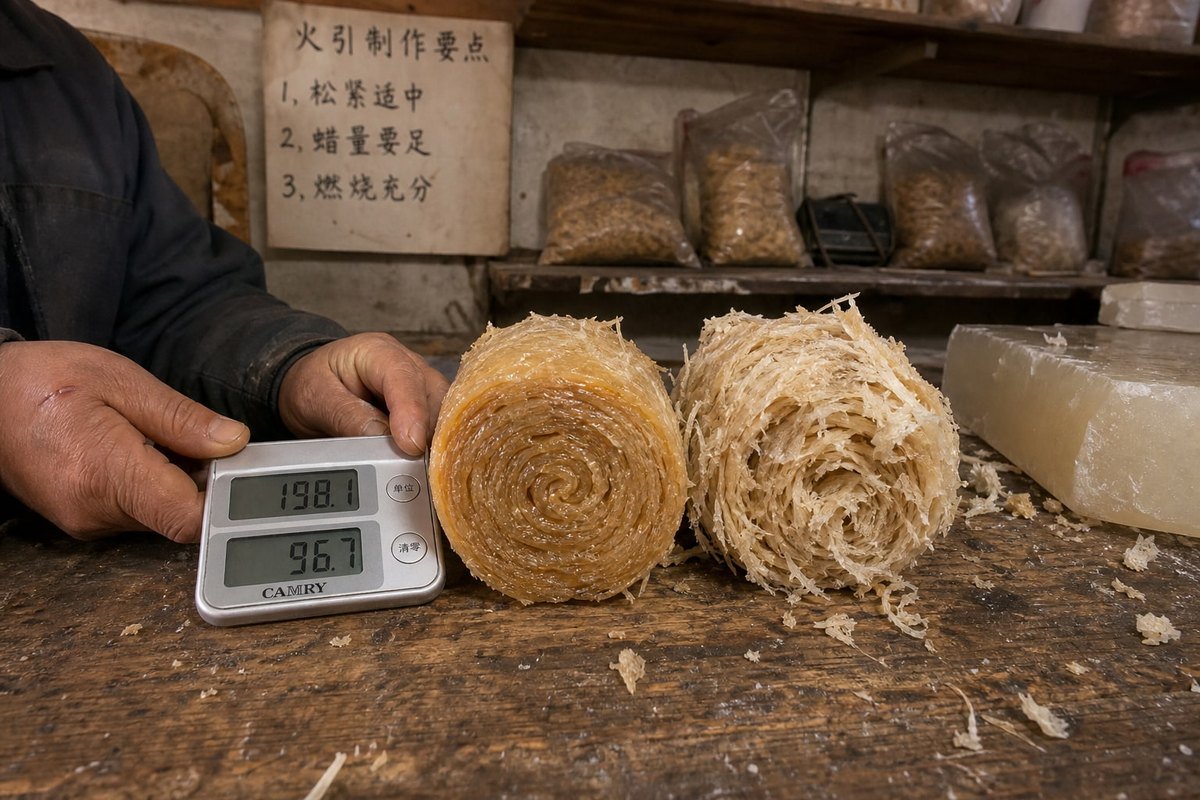
Existe una compensación que sopesamos en cada cotización que emitimos: carga de cera versus costo. Reducir el recubrimiento de cera de parafina en un gramo por rollo ahorra dinero real a escala y acorta silenciosamente el tiempo de combustión.
Una cotización más barata a menudo indica un contenido de cera reducido, una menor densidad de lana de madera, un mayor porcentaje de contenido de humedad o materiales de relleno. Compare las cotizaciones por costo por minuto de combustión, no por costo por pieza: un iniciador que arde ocho minutos a $0.15 supera a un iniciador de cuatro minutos a $0.10.
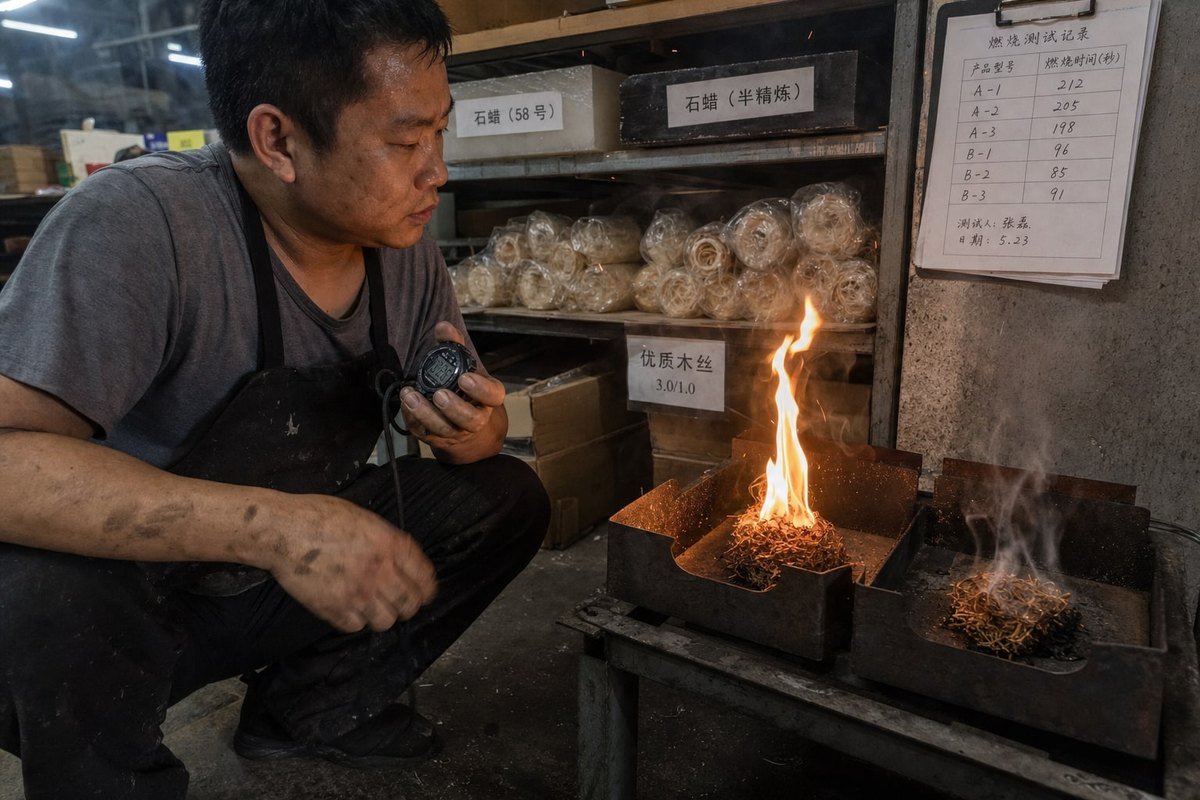
Las diferencias de precio en esta categoría casi siempre se remontan a los materiales. Los iniciadores de fuego de madera parecen simples, pero cuatro variables impulsan tanto el costo como el rendimiento: calidad de la fibra, tipo y carga de cera, densidad y humedad. Una cotización que socava el mercado generalmente compromete al menos una.
Dónde las cotizaciones baratas ocultan sus ahorros
- Menos cera. Un recubrimiento más fino de cera de parafina reduce la duración de la combustión y debilita la protección contra la humedad.
- Bobinado de fibra suelta. La lana de madera de baja densidad se enciende rápido pero colapsa antes de que su yesca prenda.
- Alta humedad. El contenido de humedad superior al 10% desperdicia calor evaporando agua en lugar de encender madera dura.
- Contenido de relleno. El relleno de serrín o la fibra reciclada reducen el contenido de resina natural y la estabilidad de la llama.
- Sustitución de producto. Comprender la lana de madera vs madera resinosa 3 importa aquí; la madera de tocino depende de la resina natural, y la saturación inconsistente de savia crea puntos muertos que no mantienen la llama.
Convierta el precio en una métrica de valor
| Cotización | Precio unitario | Tiempo promedio de combustión | Costo por minuto de combustión |
|---|---|---|---|
| Proveedor A (económico) | $0.08 | 4 minutos | $0.020 |
| Proveedor B (medio) | $0.14 | 8 minutos | $0.0175 |
| Proveedor C (premium) | $0.20 | 10 minutos | $0.020 |
En este ejemplo, la cotización de precio medio es en realidad el mejor valor. Recuerde también que los precios cotizados rara vez son precios de entrega. Agregue flete, aranceles y tarifas para obtener el verdadero precio mayorista a granel panorama en su almacén. aranceles y tarifas 4 Un precio de fábrica barato con un mal embalaje de embalaje de cartón también puede significar daños por humedad en tránsito: producto degradado por el que pagó el flete completo para importar. Cuando enviamos a mercados húmedos como Brasil o Medio Oriente, sellamos las cajas específicamente para evitar la entrada de humedad, porque un iniciador de fuego que absorbe agua en un contenedor es un iniciador de fuego que su cliente devuelve.
¿Qué pruebas de muestra debo solicitar para comparar proveedores de manera justa?
Las pruebas justas son una disciplina que impulsamos a nuestros propios compradores. Cuando enviamos muestras de nuestros rollos de madera recubiertos de cera, pido a los clientes que los prueben uno al lado del otro con los competidores: mismo yesquero, mismo día, mismo cronómetro. Cualquier cosa menos produce ruido, no datos.
Solicite al menos cinco muestras por proveedor, luego pruebe la velocidad de ignición con su encendedor o varilla de ferrocerio prevista, cronometre la combustión completa, realice una prueba de estrés por humedad, verifique el humo y el olor, e inspeccione los residuos de ceniza. Califique a todos los proveedores según el mismo protocolo y condiciones.
Una muestra no prueba nada. Cinco muestras de la misma corrida de producción comienzan a mostrar un patrón. Aquí está la secuencia de prueba que recomiendo a cada gerente de compras, basándome en cómo validamos nuestros propios lotes antes de la exportación.
Un protocolo de prueba de muestra de siete pasos
- Prueba de ignición. Encienda cada muestra con el método probable del cliente final: cerilla, encendedor o varilla de ferrocerio 5. Registre la velocidad de ignición y si la llama se mantiene sin un segundo intento.
- Medición del tiempo de combustión. Mida cada pieza desde la ignición hasta la extinción de la llama bajo un flujo de aire similar. Observe qué tan uniformemente se propaga la llama; una buena orientación de la fibra crea acción capilar que arrastra la llama a través del rollo.
- Prueba de transferencia de llama. Coloque cada iniciador debajo de yesca idéntica. La única pregunta que importa: ¿se encendió el fuego?
- Prueba de estrés por humedad. Deje las muestras en un espacio húmedo o rocíelas ligeramente, espere 24 horas y vuelva a probar. El rendimiento a prueba de agua separa el producto de grado de campamento del producto solo para interiores.
- Verificación de humo y olor. Para uso en barbacoas y adyacente a alimentos, el bajo humo y el olor neutro son esenciales. Los aglutinantes con alto contenido de petróleo a menudo fallan aquí.
- Inspección de cenizas. Los iniciadores de calidad dejan una mínima ceniza fina que no se aglutinará ni bloqueará el flujo de aire en estufas de leña eficientes.
- Auditoría física. Pese y mida cada muestra. Registre la cobertura de cera, la tensión del enrollado y cualquier sangrado de cera, luego regístrelo todo junto al precio cotizado.
Califique lo que observe
Pondere los resultados aproximadamente de esta manera: 30% rendimiento, 25% calidad del material, 15% resistencia a la humedad, 15% documentos de cumplimiento, 15% costo de llegada. Esto obliga a una comparación honesta. En mi experiencia, la cotización más barata rara vez gana una vez que los datos de combustión se colocan junto a la columna de precios, y los compradores que ejecutan este protocolo casi nunca lamentan el pedido que realizan después.
¿Cómo evalúo la consistencia de un proveedor en lotes de producción en masa?
La lección más difícil en este negocio llegó al principio de la historia de nuestra fábrica: una muestra hermosa no significa nada si el lote 14 no coincide con el lote 1. Es por eso que construimos un estricto control de calidad lote a lote en nuestras líneas de producción de Ningbo. estándares del sistema de gestión 6 — para que la primera muestra prediga de manera confiable la calidad de la producción en masa.
Evaluar la consistencia solicitando múltiples muestras de diferentes lotes de producción, comparando la variación del tiempo de combustión entre ellos, revisando los registros de control de calidad en línea del proveedor, verificando el historial de entregas a tiempo y realizando un pequeño pedido de prueba antes de comprometerse con los volúmenes completos de MOQ.
La consistencia es donde las empresas comerciales y las fábricas débiles quedan expuestas. Una muestra dorada puede ser seleccionada a mano. La producción en masa no puede. Por lo tanto, su evaluación debe centrarse en la evidencia del proceso, no en las promesas.
Señales de disciplina de producción real
| Qué verificar | Proveedor fuerte | Proveedor débil |
|---|---|---|
| Muestras de diferentes corridas | Las proporciona voluntariamente, tiempos de combustión dentro de un rango estrecho | Envía solo una muestra "perfecta" |
| Documentación de control de calidad | Controles en línea para peso de cera, densidad, humedad | Respuestas vagas, sin registros |
| Variación del tiempo de combustión | Pequeña dispersión en diez piezas | Algunas piezas arden la mitad de tiempo que otras |
| Estabilidad de la cera | Sin migración de cera en almacenamiento en caliente | Cartones pegajosos o con sangrado en verano |
| Comunicación | Respuestas rápidas, específicas y en inglés claro | Respuestas lentas, evasivas o guionizadas |
| Flexibilidad de pedido de prueba | Acepta un primer pedido más pequeño para demostrar su valía | Impulsa el MOQ completo de inmediato |
Utilice un pedido de prueba como su auditoría final
Un pedido de prueba pagado es el seguro más barato que puede comprar. Pida un volumen modesto, luego extraiga piezas al azar de diferentes cartones y repita sus pruebas de combustión. Compare con sus muestras originales. Verifique que las Pedir fuera de temporada, típicamente de abril a julio, le da más flexibilidad. La demanda de iniciadores de fuego alcanza su punto máximo antes del invierno del hemisferio norte, por lo que las fábricas están más dispuestas a aceptar tiradas más pequeñas en los meses más cálidos para mantener las líneas activas. Los plazos de producción también son más cortos entonces, lo que le ayuda a probar, revisar y reordenar antes de que comience la temporada. 7, las etiquetas de advertencia y los códigos de barras llegaron exactamente como se aprobaron: los errores de embalaje son una señal de advertencia temprana de un control de proceso deficiente. También ponga a prueba los propios cartones: la integridad de la barrera contra la humedad durante el almacenamiento a granel a largo plazo protege el rendimiento del producto hasta que llega al estante. Cuando ejecutamos programas OEM para marcas de exteriores y chimeneas, tratamos el envío de prueba como un punto de control compartido. Si la prueba coincide con la muestra, escale. Si no, perdió un pedido pequeño, no una temporada.
Conclusión
La cotización más barata rara vez es la mejor. Compare certificaciones, pruebas de rendimiento de combustión, costo de entrega por encendido y consistencia de lotes, luego elija al proveedor que demuestre calidad, no solo que ponga precio.
Notas al pie
Referencia oficial de la norma ISO para verificar las afirmaciones de certificación de gestión de calidad. ↩︎
Enlaces a un organismo de pruebas de terceros que confirma la legitimidad de los informes de cumplimiento del producto. ↩︎
Explica las propiedades naturales de resina de la madera de tea relevante para comparaciones de materiales iniciadores de fuego. ↩︎
La OMC explica los aranceles e impuestos de importación relevantes para calcular el costo de entrega real. ↩︎
Antecedentes sobre el material de ferrocio utilizado como herramienta común de prueba de ignición para iniciadores de fuego. ↩︎
Resumen estable de Wikipedia sobre normas internacionales de sistemas de gestión, evitando los errores 403 en el sitio oficial. ↩︎
Define el concepto de marca privada relevante para verificar la precisión del embalaje durante los pedidos de prueba. ↩︎
 English
  Spanish
  German
  French
  Arabic
  Portuguese
Únete a la conversación