







El riesgo de inventario de baja rotación para iniciadores de fuego de madera puede agotar silenciosamente tu efectivo. He visto a compradores pedir demasiados rollos de madera encerada antes de un invierno suave, y luego cargar paletas durante un año.
Evaluar el riesgo de inventario de baja rotación para iniciadores de fuego de leña extrayendo 12 meses de ventas históricas, calculando la relación de rotación de inventario y los días de inventario en mano, comparando el stock en mano con la demanda estacional durante el tiempo de entrega, y luego solo pidiendo cantidades que pueda vender dentro de 90 a 180 días.
Esa es la respuesta corta. La respuesta más larga implica certificaciones, capacidad del proveedor, flexibilidad de MOQ y confiabilidad del fabricante. Permítanme repasar cada punto, porque veo estas preguntas de los compradores cada temporada de abastecimiento.
¿Qué certificaciones debo verificar antes de comprometerme con un pedido a granel de iniciadores de fuego de leña?
Durante una auditoría de fábrica el año pasado, un comprador alemán me dijo que su envío anterior estuvo retenido en aduanas durante seis semanas por falta de informes de prueba. Ese retraso empujó su stock directamente a la temporada baja.
Antes de un pedido a granel de iniciadores de fuego de madera, verifique ISO 9001 para sistemas de calidad, BSCI para cumplimiento social, marcado CE para acceso al mercado europeo e informes de pruebas de terceros SGS o Intertek. La falta de certificaciones causa retrasos en aduanas que convierten el inventario de temporada en existencias de baja rotación de la noche a la mañana.
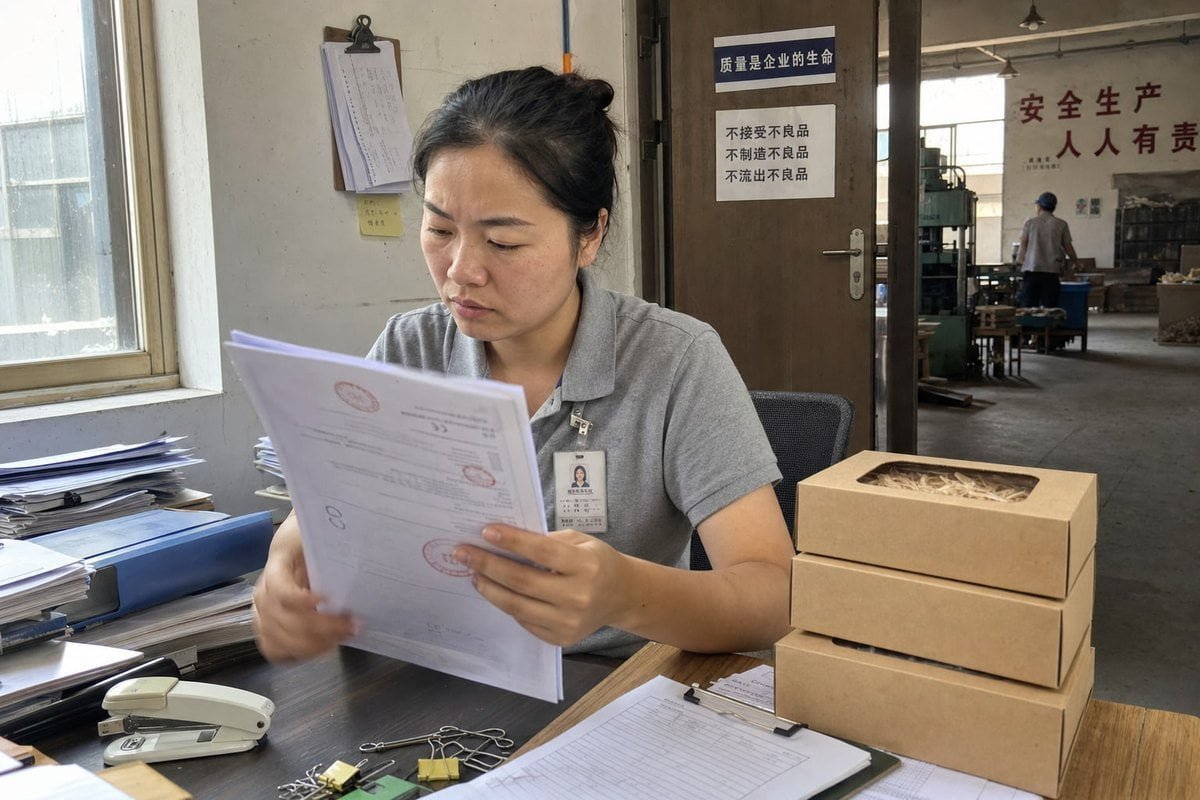
Las certificaciones pueden parecer un tema de cumplimiento, no un tema de inventario. En realidad, están conectadas. Un envío retenido en aduanas durante su ventana de venta pico llega a su almacén como stock casi muerto. La temporada pasó mientras los productos estaban en un patio de contenedores. Por lo tanto, la verificación de la certificación es su primera línea de prevención de stock muerto.
En nuestra fábrica en Ningbo, mantenemos ISO 9001 1, BSCI, CE e informes SGS/Intertek actualizados por esta misma razón. Nuestros compradores en EE. UU., Alemania y el Reino Unido los tratan como requisitos estrictos. Tú también deberías hacerlo.
Los Documentos Clave a Solicitar
Solicite copias PDF reales, no garantías verbales. Luego, verifique los números de certificado contra la base de datos del organismo emisor.
| Por qué es importante para las piñas perfumadas | Lo Que Demuestra | Riesgo de inventario si falta |
|---|---|---|
| ISO 9001 | Sistema de gestión de calidad consistente | La variación lote a lote crea devoluciones y stock no vendible |
| BSCI | Cumplimiento ético y social | Las cadenas minoristas rechazan los productos; usted retiene SKU no vendibles |
| Informes de CE / pruebas | Seguridad del producto para el mercado de la UE | La incautación aduanera o el reetiquetado forzado retrasan su temporada |
| Informes SGS / Intertek | Verificación independiente de terceros | Los compradores minoristas rechazan listados; la venta se colapsa |
La transparencia de la composición también importa
Un iniciador de fuego etiquetado como fibra de madera 50% y 50% parafina 2 debe dar positivo a esa composición. Si una inspección aleatoria encuentra sustancias nocivas los acelerantes químicos 3, los minoristas retiran el producto de los estantes. De repente, toda su cantidad en mano se convierte en un riesgo de liquidez en lugar de un activo. Publicamos los detalles de la composición en nuestro embalaje y los respaldamos con informes de prueba, porque una caja conforme es una caja vendible. Una caja no certificada es una factura de almacenamiento esperando suceder.
¿Cómo puedo juzgar si la capacidad de producción de un proveedor coincide con mi tasa de venta?
Una compensación que evalúo constantemente en nuestras líneas de producción: los compradores quieren una reposición rápida en noviembre, pero el encerado y el secado llevan tiempo real. Las afirmaciones de capacidad en papel rara vez cuentan toda la historia.
Evalúe la idoneidad de la capacidad comparando la producción mensual verificada y el tiempo de entrega del proveedor con su tasa de venta semanal durante la temporada alta. Un proveedor que pueda reponer en 30–45 días le permite pedir cantidades más pequeñas con más frecuencia, reduciendo drásticamente el riesgo de inventario de movimiento lento.

La lógica aquí es simple. Si su proveedor necesita 90 días para producir y enviar, debe comprar toda su temporada en uno o dos pedidos grandes. Eso lo obliga a pronosticar con meses de anticipación, y el error de pronóstico es la causa número uno del stock de baja rotación. Si su proveedor puede procesar pedidos en 30 a 45 días, puede comprar en lotes más pequeños que sigan la demanda real.
Una verificación de capacidad paso a paso
- Pregunte por la producción mensual de la fábrica para su SKU específico, no la capacidad general de todos los productos.
- Solicite registros de producción o un recorrido en video en vivo de la línea. Hacemos esto rutinariamente para nuevos compradores, y una fábrica real nunca duda.
- Confirme la variabilidad del tiempo de entrega, no solo el tiempo de entrega promedio. Un tiempo de entrega cotizado de 35 días que a veces se extiende a 70 destruye su cálculo de reposición.
- Calcule su tasa de venta de temporada alta. Para los iniciadores de fuego, concéntrese en la ventana de calefacción de 120 días, no en los promedios anuales.
- Pruebe la proporción: la cantidad de su pedido debe ser aproximadamente igual a la demanda esperada durante el tiempo de entrega más un ciclo de reposición, más un modesto los niveles de stock de seguridad 5.
Por qué el momento estacional amplifica las matemáticas
Los iniciadores de fuego de madera siguen días de calefacción 6. La demanda a menudo se dispara justo después de la primera helada regional, cuando los consumidores compran por pánico. Si su proveedor no puede producir durante su ventana de pretemporada porque sus líneas están reservadas, usted ordena demasiado pronto o se pierde el pico. En nuestra experiencia exportando a más de 30 países, los compradores que confirman espacios de producción en verano evitan ambos problemas. Previsión de la demanda estacional solo funciona cuando el calendario de la fábrica realmente admite sus fechas de entrega.
¿Qué MOQ y opciones de embalaje me ayudan a evitar el exceso de existencias de SKU de venta lenta?
Un distribuidor holandés nos pidió una vez que dividiéramos un gran pedido en tres formatos de embalaje en lugar de comprometer todo a una caja minorista de 100 unidades. Sus datos de venta demostraron más tarde que esa única decisión le ahorró una temporada de rebajas.
Elija proveedores que ofrezcan MOQ flexibles para pedidos de prueba, contenedores de SKU mixtos y múltiples tamaños de embalaje, como cajas pequeñas para minoristas, bolsas de recuento medio y cajas a granel. Los formatos de embalaje más pequeños le permiten probar la volatilidad de la demanda antes de comprometerse con volúmenes que superen las ventas estacionales realistas.

La falta de coincidencia del tamaño del paquete es una de las causas más subestimadas de inventario de baja rotación. Una caja de 100 unidades tiene un gran valor por unidad, pero si su cliente típico quema dos fuegos a la semana, esa caja le dura un año completo. Su ciclo de compra repetida se alarga y su velocidad en el estante parece débil, incluso cuando el producto en sí es popular.
Adapte el formato del paquete a la velocidad del canal
Diferentes canales mueven iniciadores de fuego a velocidades muy diferentes. Análisis de ventas históricas por canal debe guiar sus decisiones de embalaje.
| Canal | Velocidad Típica | Formato de paquete recomendado | Riesgo de exceso de stock |
|---|---|---|---|
| Mercado en línea | Rápido, base anual | Bolsas de recuento medio, aptas para suscripción | Bajo a moderado |
| o Venta minorista en grandes superficies | Picos estacionales agudos | Cajas expositoras de 100 piezas | Alto si se pide tarde en la temporada |
| Tiendas de camping / al aire libre | Pico primavera-verano | Packs de prueba pequeños, bolsas de kraft | Moderado |
| Distribuidores de chimeneas | Pico otoño-invierno | Cajas a granel para reempaquetar | Moderado a alto |
Utilice la flexibilidad de MOQ como herramienta de riesgo
Mantenemos deliberadamente los MOQ de pedidos de prueba accesibles porque preferimos ganar una recompra a forzar a un comprador a tener exceso de existencias. Una secuencia inteligente de pedidos anticipados es la siguiente: realice una pequeña compra de prueba en un canal, mida la rotación de existencias a 60 días, luego escale el SKU ganador mientras elimina los rezagados. Eso es racionalización de SKU en la práctica. También lo protege de los costos de mantenimiento de formatos que su mercado nunca quiso. Recuerde que los iniciadores de fuego son productos volumétricos: consumen espacio de almacén rápidamente en relación con su margen. Pregunte también sobre embalajes fáciles de almacenar: los iniciadores recubiertos de cera almacenados en almacenes calurosos de verano pueden sufrir migración de cera, y el embalaje que protege la calidad del producto preserva el valor de cualquier stock que tenga.
¿Cómo evalúo la fiabilidad de un fabricante para reducir el riesgo de inventario a largo plazo?
Diecisiete años en este negocio me enseñaron una dura lección desde el principio: un lote inconsistente daña la confianza de un comprador más que cualquier aumento de precio. La fiabilidad es medible y debe medirla antes de realizar el pedido.
Evalúe la fiabilidad del fabricante comprobando los años en operación, verificando la propiedad de la fábrica frente al estado comercial, probando la consistencia de la muestra a la producción en masa, revisando el historial de entregas a tiempo y confirmando la comunicación receptiva. Los fabricantes fiables estabilizan su ciclo de reposición, permitiéndole mantener un inventario más reducido con confianza.

La fiabilidad se conecta directamente con el riesgo de inventario a través de un mecanismo: la previsibilidad. Cuando las entregas llegan a tiempo y la calidad coincide con la muestra aprobada, puede mantener niveles de stock de seguridad más bajos de forma segura. Cuando un proveedor es errático, usted compensa pidiendo de más. Ese relleno es exactamente donde nace el inventario de movimiento lento.
Las cinco señales de fiabilidad que importan
Primero, la longevidad. Una fábrica con más de 17 años de historial de exportación ha sobrevivido a múltiples ciclos de demanda, fluctuaciones de materias primas y cambios regulatorios. Segundo, la propiedad de la fábrica. Una empresa comercial añade una capa entre usted y la línea de producción, lo que aumenta la variabilidad del tiempo de entrega y diluye la responsabilidad de la calidad. Solicite la dirección de la fábrica y audítela; la nuestra se encuentra en Ningbo, con sede en Liuyang, y damos la bienvenida a las visitas. Tercero, la consistencia del lote. Solicite el proceso de muestra de oro 7: ¿la fábrica conserva muestras de referencia selladas y realiza control de calidad lote a lote contra ellas? Cuarto, el historial de entregas. Solicite los plazos de envío recientes a su región. Quinto, la velocidad de comunicación en inglés, porque las respuestas lentas durante un problema de producción se convierten en decisiones lentas de inventario de su parte.
Puntuación de fiabilidad antes de comprar
| Factor de fiabilidad | Bandera verde | Señal de alerta |
|---|---|---|
| Historial | Más de 10 años, exportaciones a más de 30 países | Nueva entidad, historial de exportación vago |
| Propiedad | Fábrica verificable, da la bienvenida a auditorías | Se niega a realizar recorridos en vídeo |
| proceso de control de calidad | Comprobaciones de lotes documentadas contra muestras de oro | "Respuestas de "confíe en nosotros" |
| Entrega | Historial constante de entregas a tiempo | Excusas frecuentes, fechas cambiantes |
| Comunicación | Respuestas en inglés el mismo día | Silencios de varios días |
Un socio fiable también ayuda en el lado de la demanda. Asesoramos a los compradores sobre personalización del tiempo de combustión, embalaje de marca propia y etiquetado regional, para que sus SKU estén listos para el estante y se muevan más rápido. Un movimiento más rápido significa un relación de rotación de inventario, más saludable.
Conclusión
Un precio unitario bajo combinado con plazos de entrega erráticos y lotes inconsistentes obliga a mantener un stock de seguridad más alto, rebajas y cancelaciones, lo que a menudo cuesta mucho más que el ahorro de precio.
Notas al pie
El riesgo de inventario de movimiento lento es evitable. Verifique las certificaciones, iguale la capacidad con la rotación de existencias, utilice MOQ flexibles y asóciese con una fábrica probada; entonces cada pedido de iniciador de fuego funcionará para usted. ↩︎
Referencia oficial de la norma ISO para sistemas de gestión de calidad que los compradores deben verificar antes de realizar el pedido. ↩︎
Referencia de antecedentes que explica el material ceroso comúnmente utilizado en la composición de iniciadores de fuego de madera. ↩︎
Definición y explicación completa de Wikipedia de acelerantes químicos y sus propiedades en el desarrollo del fuego. ↩︎
SGS es un organismo de inspección líder independiente citado para verificar los documentos de cumplimiento de los iniciadores de fuego. ↩︎
Define el concepto de gestión de inventario en el que confían los compradores para equilibrar la fiabilidad con el stock ajustado. ↩︎
Explica la métrica de demanda estacional que impulsa los picos de compra de iniciadores de fuego después de la primera helada. ↩︎

 English
  Spanish
  German
  French
  Arabic
  Portuguese
Únete a la conversación