






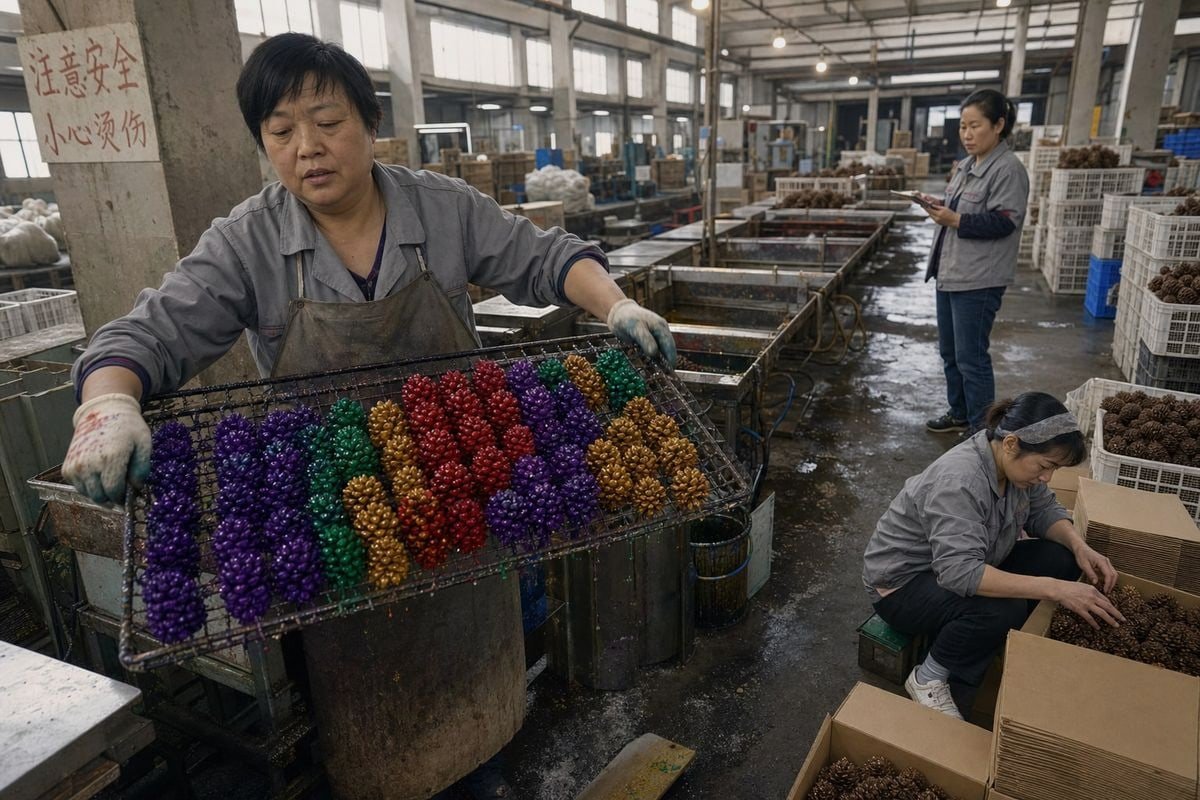
Choosing between factory vs trading suppliers for fireplace colored pine cones stalls many buyers. I have watched importers lose whole seasons to that hesitation. On our production line, we see why it happens: the wrong partner means missed customization, murky compliance, and after-sales dead ends. The fix is knowing exactly what each supplier type can and cannot deliver.
Factories are the better choice for fireplace colored pine cones when you need custom development, private labeling, batch consistency, verified compliance, and accountable after-sales support. Trading companies suit quick, small, standard-product purchases, but they cannot control formulation, quality fixes, or certification traceability the way a real producer can.
That is the short answer. Below, I break down how to verify a supplier, what flexibility a factory really gives you, what after-sales looks like, and why certification matters.
How can I tell if my colored pine cone supplier is a real factory or just a trading company?
A buyer from Germany once told me he had worked with a "factory" for two years before discovering it was a trading office renting a showroom. In our workshops in Ningbo, we host audits precisely so buyers never face that surprise.
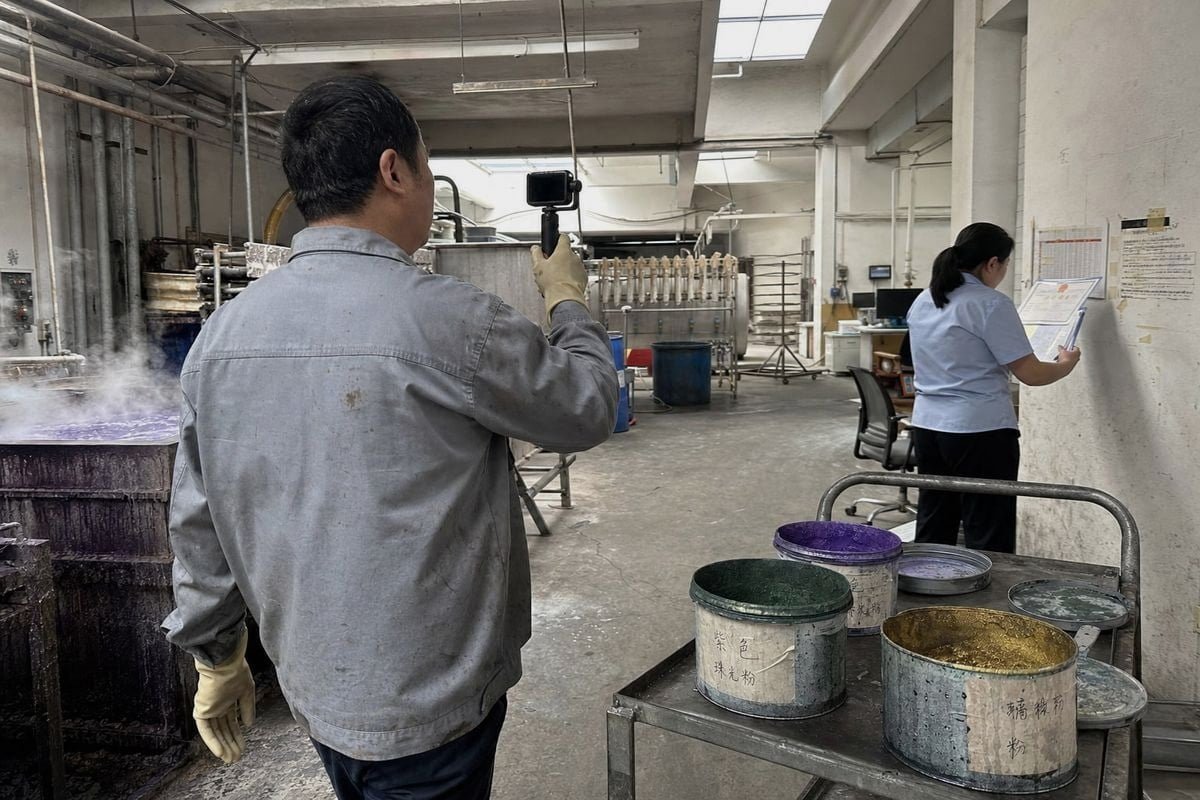
Verify a colored pine cone supplier by requesting a video factory tour, a business license listing manufacturing scope, audit reports such as BSCI or ISO 9001 issued to that exact company name, and technical answers about wax coating and pigment formulation. Trading companies typically fail two or more of these checks.
The category makes verification tricky. Trade directories list hundreds of decorative pine cone suppliers, and both manufacturers and trading companies 1 appear side by side with similar photos and similar claims. So you need tests that a middleman cannot fake easily.
Five practical verification checks
- Ask deep technical questions. Ask how the wax-to-pigment ratio affects flame color vibrancy, or how burn duration is controlled. A real producer answers in specifics. A trader relays your question and comes back vague, or days later.
- Match the paperwork. La licencia comercial 2, el Certificado ISO 9001 3, and the SGS or Intertek test reports should all carry the same legal company name and address. Reissued or relabeled certificates are a classic trading-company red flag.
- Solicite un recorrido virtual en vivo. Ask to see the coating line, the drying area, and the packing stations in one continuous walk-through. We do this routinely for new buyers, and it takes us twenty minutes, not two weeks of excuses.
- Test change-request speed. Ask for a small spec change on a sample, such as a different color mix. A factory can turn that around fast because the lab and the line are in the same building.
- Check the product range. A supplier offering pine cones plus toys, textiles, and kitchenware is almost certainly aggregating from multiple factories.
| Señal | Fábrica Real | Consistencia de color lote a lote |
|---|---|---|
| Technical Q&A on formulation | Detailed, immediate | Vague, delayed |
| Certificates match company name | Sí | Often mismatched |
| Live production-line tour | Offered readily | Deflected or staged |
| Custom sample turnaround | Days | Weeks, via third party |
| Product catalog | Focused (fire products) | Very broad, unrelated SKUs |
None of these checks alone is conclusive. Together, they are very hard to fake.
Will working directly with a factory give me more flexibility for custom development and private labeling?
Last year, an outdoor brand in the Netherlands asked us for pine cones with a longer blue-green burn phase and a kraft stand-up pouch with a clear window. Our lab adjusted the coating formula three times in two weeks. That iteration speed is the real answer to this question.
Yes. Direct factory sourcing gives significantly more flexibility for custom development, including flame color combinations, burn duration, cone size grading, scent, and full private-label packaging. Trading companies can only pass requests along, which slows iteration and limits control over formulation and branding details.

Fireplace colored pine cones are not a commodity craft item. The burning effect, the coating process, and the safety messaging are the product's value. That changes what customization means here.
What a factory can actually customize
On our lines, custom development for color-flame pinecones covers four layers. First, the effect: which colors appear, how vivid they are, and how long the effect lasts. The wax-to-pigment ratio and the paraffin formulation stability 4 control both vibrancy and burn duration. A trader has no visibility into either. Second, the cone itself: size grading, cone type, and coating finish. Third, the packaging: drawstring burlap sacks, kraft resealable pouches with windows, plastic jars, or retail-ready display cartons — each with your logo, barcode, and market-specific warning labels. Fourth, the compliance layer: burn-use instructions and the critical "wood-burning fires only" warning, since residue from color additives can clog burners and pilot orifices in gas fireplaces.
| Área de personalización | Direct Factory | Trading Supplier |
|---|---|---|
| Flame color mix & vibrancy | Full lab control | No direct control |
| Burn duration tuning | Adjustable per batch | Fixed to stock product |
| Embalaje de marca blanca | Pouches, sacks, jars, display boxes | Often limited to stickers/relabeling |
| Warning labels & instructions | Custom per market regulation | Generic |
| Sample iteration speed | Days per round | Weeks per round |
| MOQ for custom packaging | Negociable con el productor | Higher, or pooled with delays |
Now, the honest counterpoint. If you only need a small test run of a standard product, a trading company can be a reasonable launch partner. They pool orders and accept lower minimums. But here is the objection I raise back to buyers: once your listing gains traction, you will want a distinct color effect, your own pouch design, and stable repeat quality. If your trader controls none of that, switching later means re-testing everything mid-season. Many of our long-term clients started elsewhere, then moved to us exactly at that painful moment. Starting with a factory that offers flexible trial MOQs avoids the switch entirely.
What after-sales support should I expect if I buy from a manufacturer instead of a trading company?
The trade-off I weigh with every new client is simple: who owns the problem when something goes wrong? In 17-plus years of exporting fire products to 30-plus countries, I have learned that after-sales is where the factory-versus-trader difference stops being theoretical.
A manufacturer should provide batch-traceable defect resolution, replacement or credit clauses tied to production batch numbers, formulation adjustments for recurring issues, burn-test documentation, and direct technical communication. Trading companies typically relay complaints to the factory, which delays fixes and blurs liability.

Let me walk through what accountable after-sales actually looks like, step by step, because vague promises of "good service" mean nothing in a contract.
The after-sales process a factory should commit to
- Batch traceability from day one. Every carton we ship carries a batch number 5 linked to production records: coating date, formula version, QC inspection sheets. When a claim arrives, we can trace it in hours.
- A written defect and replacement clause. Negotiate this before your first PO. Tie it to batch numbers and define what counts as a defect: broken cones above an agreed percentage, inconsistent flame color, packaging damage. Traders often shift liability back to the manufacturer, and disputes stall in the relay.
- Root-cause response, not just refunds. If a batch shows weaker color, a refund does not fix your next order. A producer can adjust the formulation or the drying process so the issue never repeats. A trader cannot touch the process at all.
- Reorder consistency guarantees. Your second and tenth orders should burn like your first sample. That requires the batch-to-batch QC discipline only the actual producer controls.
- Documentation support. Product liability paperwork 6, updated test reports, and burn-test results should be available on request — issued in the producer's name, matching your shipped batches.
One fair objection: traders can be genuinely responsive on logistics issues, mixed cartons, and consolidation across suppliers. That is true, and it matters for multi-category buyers. But for a formulated fire product, logistics fixes are the easy part. Production fixes are the part that protects your brand — and only the factory can make them.
Why does choosing a certified factory matter for consistent quality and compliance across my orders?
A lesson we learned early: certification is not a marketing badge, it is the buyer's insurance policy. When we went through BSCI and ISO 9001 audits and built SGS and Intertek testing into our routine, our US and EU clients told us this was a hard requirement — retailers simply will not list an uncertified fire product.
Certified factories provide audit-verified quality systems, authentic test reports tied to real production batches, and stable processes that keep every order consistent. Trading companies may reissue or relabel certificates without accurate batch traceability, exposing buyers to recalls, customs holds, and retailer delisting.
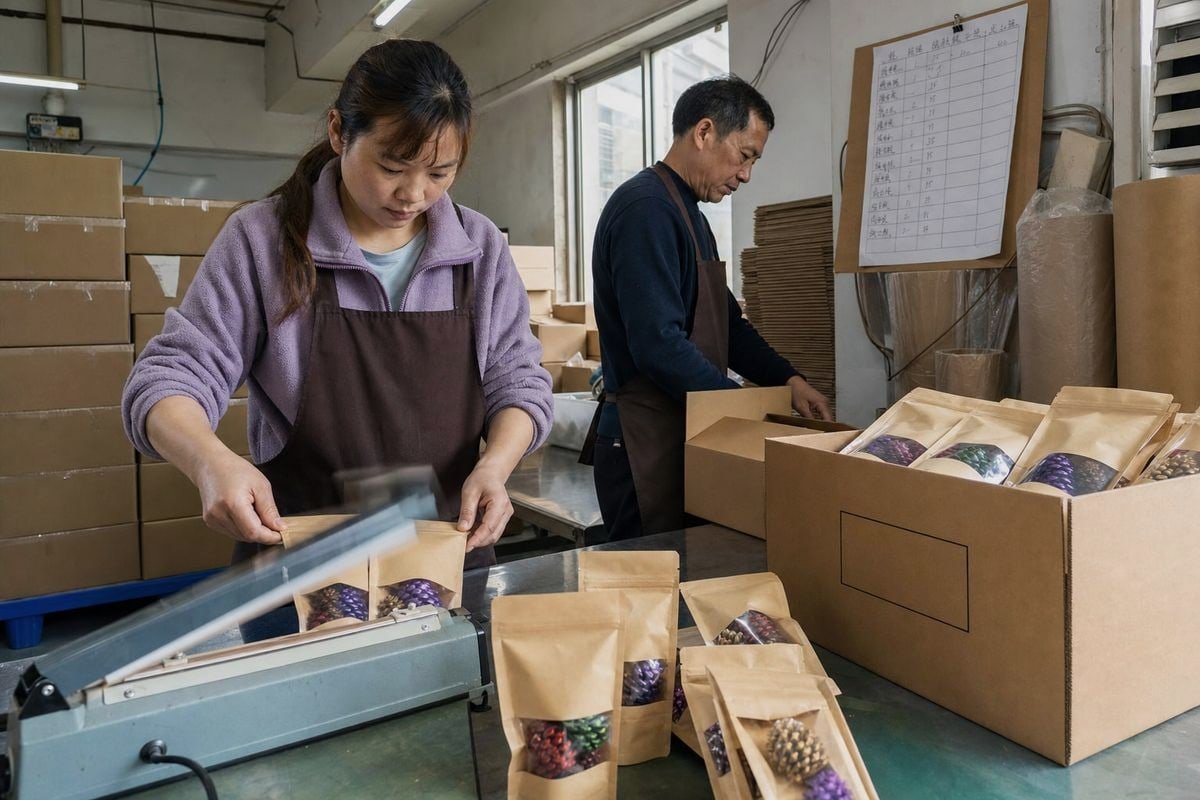
Fireplace colored pine cones sit in a sensitive category. They are burned inside homes. Regulators, retailers, and insurers all treat them differently from a decorative craft cone. That raises the stakes on two fronts: the honesty of your documents and the stability of your process.
Compliance: documents that trace to real batches
Buyers should request certification and test documents directly from the producing factory, because a certificate is only meaningful if it describes the goods in your container. When a trading company forwards a certificate, three questions often go unanswered: Was it issued to the actual producer? Does it cover this formulation version? Does it cover this production period? With a certified factory, the audit trail is direct. Our ISO 9001 and BSCI certificates carry our name; our informes SGS e Intertek 7 match the batches we ship. If a customs officer or a retail compliance team asks, the chain holds.
Consistency: the first sample must predict order fifty
Colored flame quality depends on process discipline: raw cone selection, coating uniformity, pigment dispersion 8, drying time. A certified quality system forces documented parameters for each step, so batch ten matches batch one.
| Área de Riesgo | Certified Factory | Uncertified / Trader-Sourced |
|---|---|---|
| Informes de pruebas | Issued to producer, batch-linked | Possibly relabeled, unverifiable |
| Retailer onboarding | Smooth, documents accepted | Frequent rejections and delays |
| Preguntas que vale la pena hacerle a cualquier proveedor | Controlled by documented QC | Varies with whichever factory supplies |
| Recall exposure | Traceable, containable | Broad, hard to isolate |
| Safety labeling (wood fires only) | Built into artwork approval | A menudo genérico o ausente |
The counterargument I hear is that certification adds cost, and a cheap uncertified source improves margin. My response: compare total landed cost, not unit price. One rejected shipment, one delisted SKU, or one liability claim erases years of per-unit savings. For an established importer, that math is not close.
Conclusión
Sourcing fireplace colored pine cones from the wrong supplier risks lost seasons, compliance failures, and unfixable quality drift. Verify the factory, secure batch-traceable after-sales terms, and partner with a certified producer for custom development that lasts.
Notas al pie
1. Alibaba exemplifies the trading company sourcing model buyers compare against factories. ↩︎
2. Background on business licenses helps buyers understand what legal verification entails. ↩︎
3. ISO 9001 is the certified quality management standard buyers should verify against factory documents. ↩︎
4. Paraffin wax background clarifies its role in coating and flame color performance. ↩︎
5. GS1 sets global batch and lot numbering standards used for supply chain traceability. ↩︎
6. CPSC oversees consumer product safety and liability documentation relevant to fire products. ↩︎
7. SGS is a leading global inspection firm whose reports verify factory test authenticity. ↩︎
8. Pigment background explains dispersion's role in achieving consistent colored flame effects. ↩︎



 English
  Spanish
  German
  French
  Arabic
  Portuguese
Únete a la conversación