






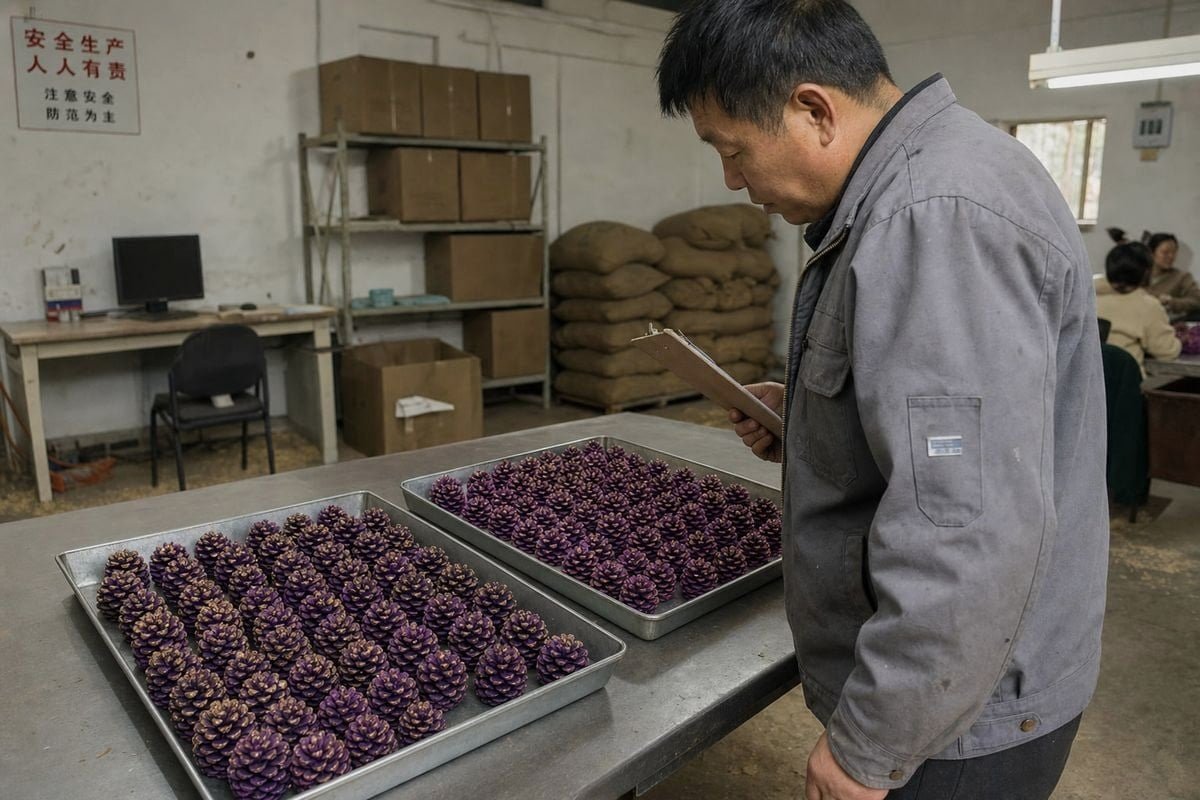
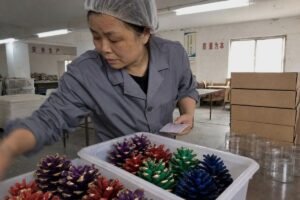
Los conos de pino de colores para chimenea parecen simples, pero nuestra línea de producción nos enseñó lo contrario. Un lote malo —proporción incorrecta de colorante, conos húmedos— puede arruinar toda la temporada navideña. Entonces, ¿debería tener dos proveedores?
Sí, desarrolle un segundo proveedor de piñas de pino coloreadas para chimeneas si vende a escala estacional, ejecuta programas de marca privada o se enfrenta a riesgo de falta de existencias, pero solo si puede estandarizar las especificaciones, verificar las certificaciones y probar ambas fuentes. Sin estrictos estándares de control de calidad, un segundo proveedor agrega variación, no protección.
La respuesta depende de su volumen, sus canales y la transparencia de su proveedor actual. Permítame guiarlo a través de los riesgos reales, el proceso de evaluación y una forma práctica de dividir los pedidos.
¿A qué riesgos estoy realmente expuesto con un solo proveedor de piñas para chimenea?
Un distribuidor alemán me dijo una vez que su proveedor anterior simplemente dejó de responder correos electrónicos en octubre. Sus estantes quedaron vacíos para Acción de Gracias. Esa conversación moldeó cómo pensamos sobre la redundancia de proveedores en nuestros propios acuerdos de suministro.
Con un único proveedor, asume cinco riesgos acumulados: fallos en la continuidad del suministro durante picos estacionales, deriva de calidad en productos químicos y secado de colorantes, lagunas de seguridad y cumplimiento, daño a la reputación por un lote defectuoso y cero poder de negociación de precios. Las piñas teñidas concentran los cinco porque dependen de la química, no son un producto básico.
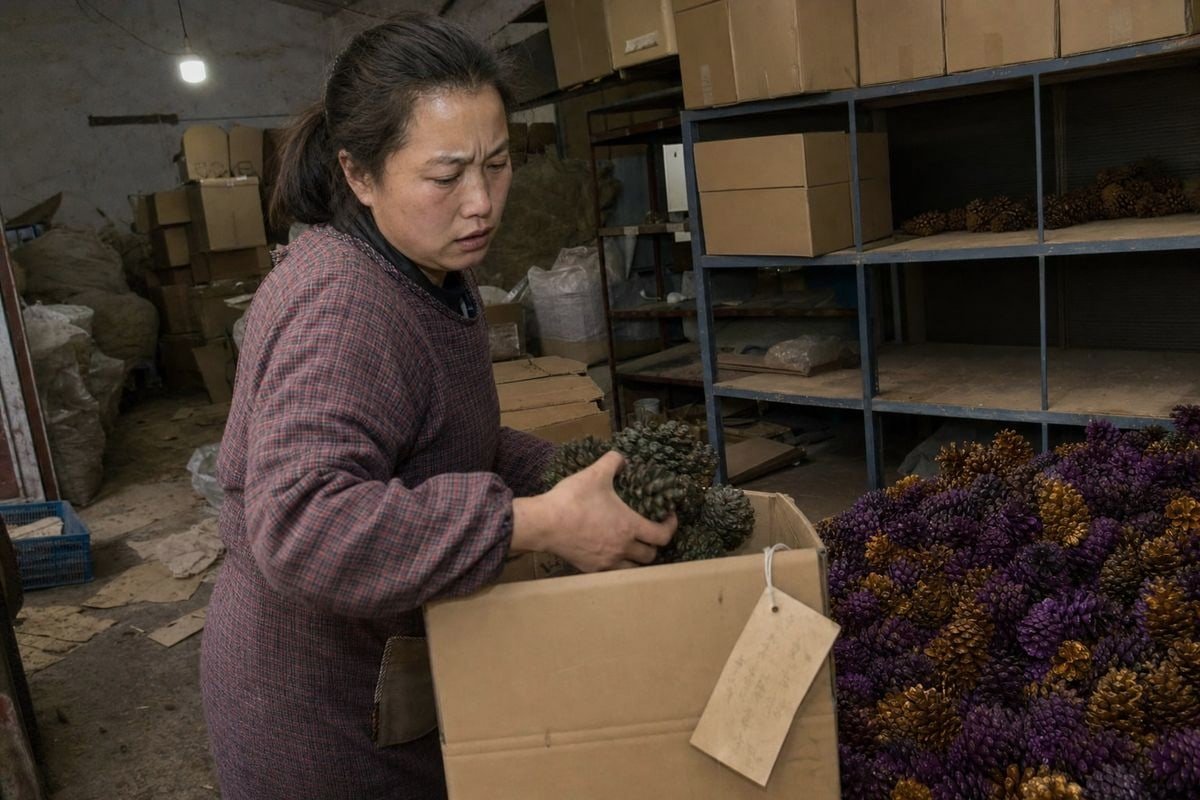
Los conos de pino de colores no son leña común. El color de la llama proviene del tratamiento con sales minerales 1 — los conos se empapan o recubren, luego se secan en condiciones controladas. Ese proceso es donde se esconde el riesgo. Si su único proveedor cambia su formulación, omite un ciclo de secado o obtiene conos húmedos durante una cosecha húmeda, es posible que no se entere hasta que las reseñas de los clientes comiencen a mencionar humo excesivo, color débil o residuos en las chimeneas.
Las cinco categorías de riesgo, clasificadas
| Categoría de riesgo | Qué lo desencadena | Impacto comercial |
|---|---|---|
| Continuidad del suministro | Retrasos en puertos, problemas laborales, interrupciones de proveedores, escasez regional de conos | Agotamiento de inventario durante el pico del cuarto trimestre |
| Muestras de corrida de producción, registros de control de calidad de lotes | Concentración química inconsistente, secado deficiente, variación del tamaño del cono | Color de llama débil, quejas por humo, devoluciones |
| Seguridad y cumplimiento | SDS faltante, etiquetas de advertencia incorrectas, colorantes no conformes hoja de datos de seguridad 2 | Deslistado del mercado, responsabilidad legal |
| Reputación | Un lote contaminado o mal secado que llega a los clientes | Daño a la reputación que perdura más allá de la temporada |
| Poder de negociación comercial | Sin cotización alternativa para negociar | Aumento de MOQs y precios sin recurso |
Por qué la estacionalidad lo multiplica todo
Los conos de pino para chimenea son una decoración estacional al por mayor. Aproximadamente el 70–80% de la demanda anual se concentra en una ventana corta del cuarto trimestre para la mayoría de nuestros compradores. Un fallo de proveedor único en septiembre no se puede solucionar en enero: la temporada simplemente habrá terminado. También hay un ángulo biológico: las cosechas de conos de pino fluctúan regionalmente, y un año de mala cosecha en el área de abastecimiento de su proveedor puede reducir la disponibilidad de materias primas exactamente cuando necesita capacidad de aumento. La separación geográfica entre proveedores cubre ese riesgo. Una evaluación seria de riesgos de adquisición 3 debe tratar a su proveedor actual como un riesgo potencial punto único de falla 4 para la calidad, la seguridad y la continuidad a la vez, no solo como una cuestión de capacidad.
¿Cómo evalúo las certificaciones y la calidad de un segundo proveedor antes de cambiar la producción?
El compromiso más difícil que sopesamos al incorporar una nueva formulación de colorante es la velocidad frente a la verificación. Nuestra fábrica en Ningbo realiza pruebas de combustión en cada lote candidato antes de enviarlo, porque el papeleo por sí solo nunca detectó un problema de humedad.
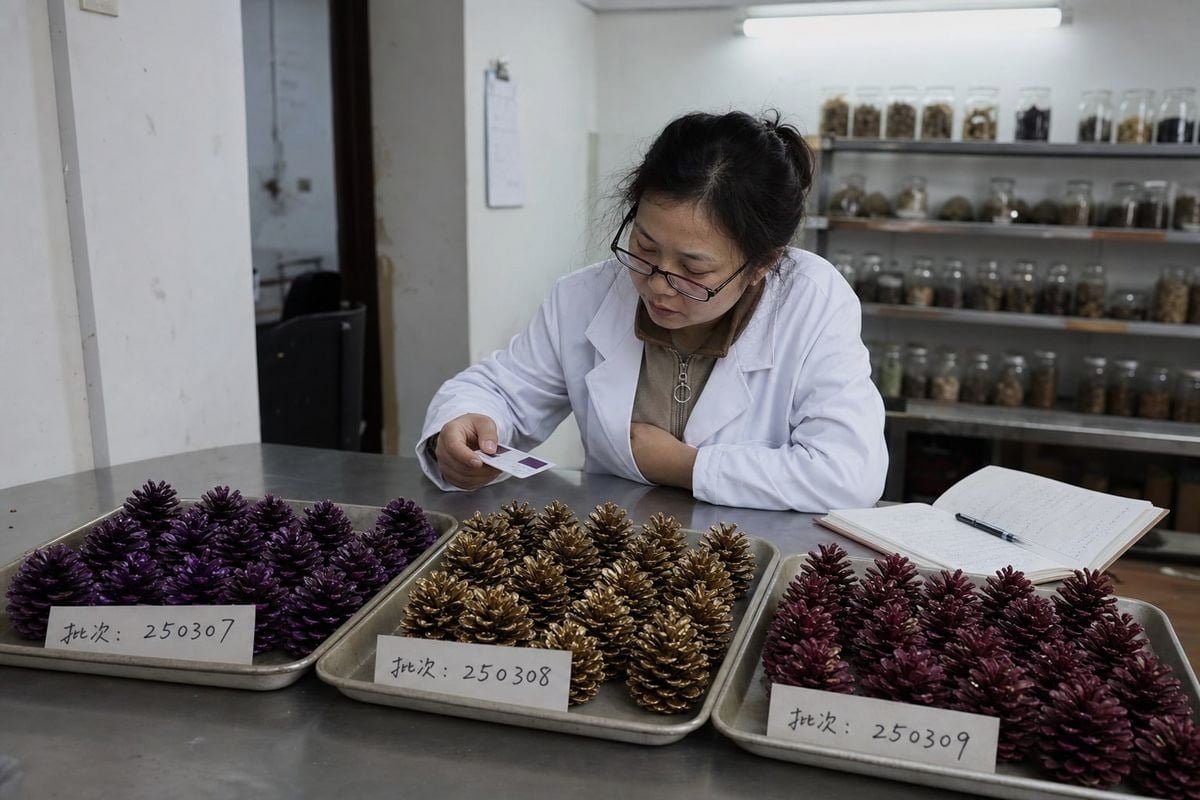
Evalúe un segundo proveedor en cuatro etapas: verifique las certificaciones (ISO 9001, BSCI, informes de prueba SGS o Intertek) con el organismo emisor, solicite especificaciones completas de materiales y documentación de seguridad, realice pruebas de combustión de muestras para determinar el color, el humo, el olor y los residuos, y luego audite la consistencia en al menos tres lotes de producción separados.

Los certificados son el boleto de entrada, no la línea de meta. En nuestra experiencia exportando a EE. UU. y Europa, los compradores que omiten la verificación se ven perjudicados por dos cosas: certificados caducados o prestados, y muestras que no coinciden con la producción en masa. Sus criterios de evaluación de proveedores deben probar tanto los documentos como el producto físico.
Etapa 1: Documentación que debe exigir
Pregunte por ISO 9001 5 para gestión de calidad, BSCI para cumplimiento social y informes de pruebas de terceros 6 de laboratorios como SGS o Intertek que cubran el producto terminado. Luego, verifique los números de certificado directamente con el emisor. Una fábrica con cumplimiento genuino los entregará en un día. Una empresa comercial que se hace pasar por una fábrica se demorará, y esa duda le dice todo. Solicite también la especificación química de los colorantes de llama utilizados. Los fabricantes de renombre utilizan sales minerales ecológicas; debe confirmar que la formulación evita compuestos como permanganatos, nitratos y cloratos, que pueden producir subproductos nocivos al quemarse.
Etapa 2: Pruebas de muestras físicas
Queme las muestras usted mismo, en el tipo de aparato real que usan sus clientes. Califique cada lote en una hoja simple:
| Punto de prueba | Estándar de aprobación | Fallo común |
|---|---|---|
| Color de llama | Color vivo y sostenido durante el tiempo de combustión indicado | El color se desvanece después de 2-3 minutos |
| Salida de humo | Olor mínimo, sin olor acre | Humo excesivo de conos mal secados |
| Contenido de humedad | Completamente secos, peso constante por cono | Damp cones that sputter or won't ignite |
| Residuo | Normal ash only | Sticky residue or staining |
| Etiquetado | Correct warnings, gas-fireplace exclusion, not-for-cooking notice | Missing or vague safety language |
Stage 3: Batch-to-batch consistency
One good sample proves nothing. When we set up production for a new private-label client, we validate three consecutive batches against the approved sample before green-lighting volume. Ask your candidate supplier to do the same, and compare lots side by side. Consistency is the whole game with this product.
¿Añadir un proveedor de respaldo retrasará mis plazos de entrega o complicará mi embalaje de marca privada?
Early in our OEM work, a UK fireplace brand asked us to match packaging their previous vendor had produced — burlap sacks, kraft pouches, the works. We learned then that packaging continuity, not production speed, is where dual sourcing usually stumbles.
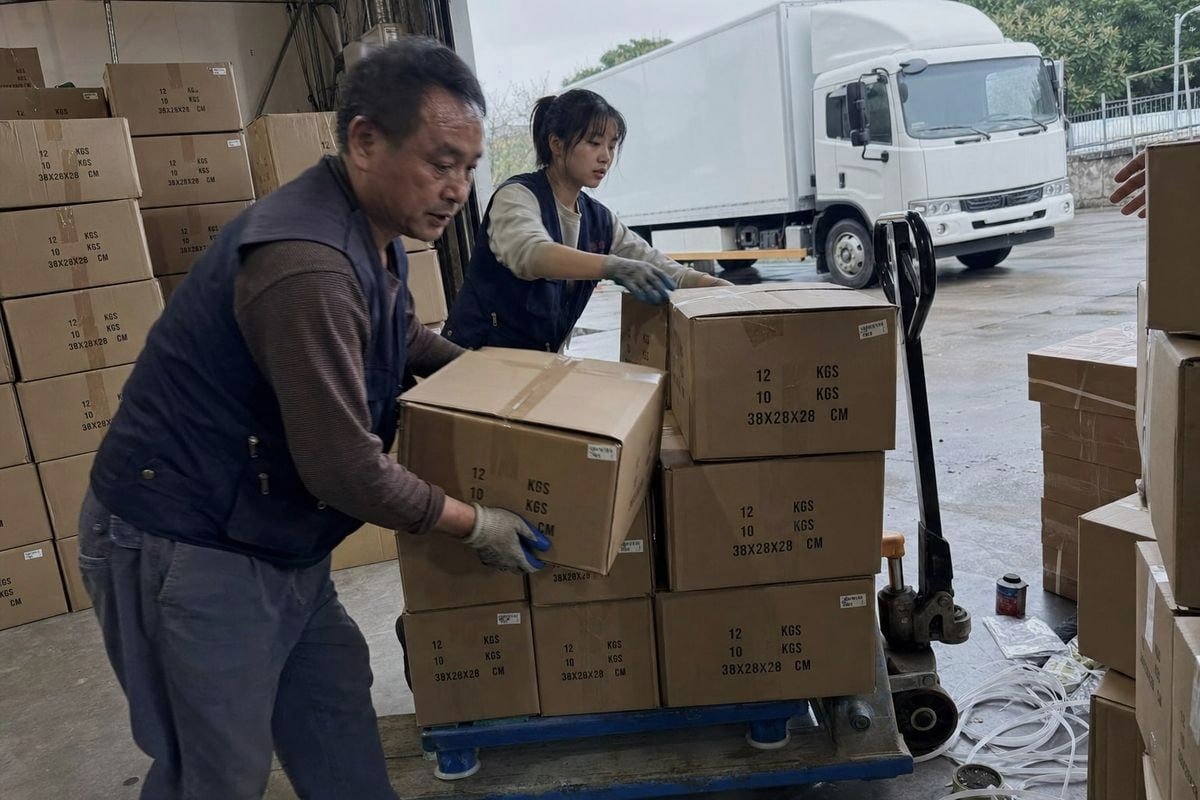
Un segundo proveedor no retrasará los plazos de entrega si los califica antes de la temporada alta y mantiene especificaciones de empaque compartidas. La verdadera complicación es la consistencia de la marca privada: las líneas de troquelado, los colores de impresión, las etiquetas de advertencia y los códigos de barras deben controlarse centralmente para que ambos proveedores produzcan unidades idénticas listas para el estante.
Let's separate the two concerns, because they behave differently.
Lead times: the timing question
Lead time variability actually drops with two qualified suppliers, not rises. If one factory hits a bottleneck — a port strike, a raw material delay, a wet cone harvest — you shift volume instead of waiting. The delays people fear come from qualifying a supplier during peak season. Onboarding, sample approval, and packaging setup take eight to twelve weeks done properly. Do it in spring, when factories have capacity, and your Q4 bulk sourcing logistics get smoother, not slower. We tell our own clients to lock second-source validation by June for a Christmas program.
Packaging: the real work
Private-label packaging across two suppliers only works if you own the specification, not the suppliers. That means:
- You control the master dieline files, Pantone references, and artwork — and issue identical files to both factories.
- Warning labels, usage instructions (including the gas-fireplace exclusion and not-for-cooking notice), and barcodes are your documents, version-controlled by you.
- Both suppliers produce a pre-production packaging sample that you approve against a physical golden sample.
- Inner packaging — drawstring burlap sacks, resealable kraft stand-up pouches, jars — must match in material weight and print method, not just appearance.
Our one-stop OEM setup handles custom boxes, display packaging, warning labels, and barcodes in-house, and that is exactly why we push buyers to keep a master spec file on their side too. If your artwork lives only in one supplier's system, you are single-sourced on branding even if you dual-source the product. One more practical note: moisture protection in transit matters as much as the packaging graphics. Both suppliers should use the same humidity-barrier standard, because a beautifully printed pouch full of damp cones is still a failed shipment.
¿Cuál es la forma más inteligente de dividir los pedidos entre dos proveedores sin aumentar mis costos?
A Canadian buyer once asked me why his backup supplier ignored his emergency order in November. The answer was blunt: he had given them one trial order in two years. That lesson defines how we advise clients on order allocation.
Divide los pedidos aproximadamente en 70/30 o 60/40, dando a tu proveedor secundario entre el 20 y el 40% del gasto anual durante todo el año. Esto mantiene a ambas fábricas invertidas, conserva el poder de negociación de precios y garantiza que el respaldo te priorizará durante la temporada alta. Un proveedor de respaldo inactivo no es un respaldo en absoluto.
Diversificación de la cadena de suministro 7 only works if both suppliers treat you as a real customer. Here is how to structure it without inflating costs.
The allocation math
| Split model | Cómo funciona | Lo mejor para |
|---|---|---|
| 70/30 anchor split | Primary gets core volume; secondary gets steady 30% | Established programs with proven primary |
| 60/40 competitive split | Near-equal volume keeps both sharp on price and lead time | High-volume, multi-channel sellers |
| Seasonal surge split | Secondary absorbs Q4 overflow only, plus small off-season orders | Buyers with extreme holiday concentration |
| SKU split | One supplier per product line (fireplace vs campfire packaging) | Brands with distinct channel packaging |
Keeping costs flat
Splitting volume can raise per-unit cost if you fall below MOQ tiers at both factories. Three ways around that. First, negotiate annual volume commitments rather than per-order pricing, so both suppliers quote economías de escala 8 against your total yearly spend. Second, consolidate shipments — combine colored pine cones with related lines like color-flame packets or wax firestarters into shared containers to keep freight efficient. Third, use the competitive quote from each supplier as leverage with the other. Buyers with two active sources consistently negotiate better than single-sourced buyers, and that saving typically offsets the modest cost of dual testing and audits.
Guarding against variation
The strongest argument against dual sourcing is real: two chemical treatment processes can mean two flame colors, two burn times, two smoke profiles. Resolve it by holding both suppliers to one written specification — colorant type, moisture threshold, cone size range, burn duration — and burn-testing every batch against your golden sample. If a supplier cannot hit the spec, they are not a second source; they are a second problem. Standardization is what converts redundancy from a liability into insurance.
Conclusión
One supplier means one point of failure for a chemistry-dependent, safety-sensitive, seasonal product. That gamble rarely pays off when a single bad batch can erase a season.
Our position after 17+ years of making color-flame products is clear: develop a second supplier for fireplace colored pine cones if you sell at scale, run private-label programs, or depend on the Q4 window — but do it right. Verify certifications and test reports, burn-test multiple batches, own your packaging specifications centrally, and give your secondary source a real 20–40% share of spend. Dual sourcing without standardization creates variation; dual sourcing with strict quality control standards creates resilience. If your current supplier is opaque about their chemicals, drying process, or labeling, that alone is your answer. Start qualifying your second source in the off-season, and you will enter next winter with leverage, continuity, and a brand your retail partners can trust.
Notas al pie
1. EPA safer chemical guidance relevant to eco-friendly mineral salts used in colorant formulations. ↩︎
2. SDS documentation is referenced as required safety paperwork suppliers must provide. ↩︎
3. Background concept for evaluating vendor risk across continuity, quality, and compliance categories. ↩︎
4. Core risk management concept directly discussed regarding relying on one supplier. ↩︎
5. Authoritative Wikipedia overview of the international quality management standard, avoiding 403 errors on the official site. ↩︎
6. SGS is named as a third-party testing lab used to verify supplier product compliance. ↩︎
7. Background concept explaining why dual sourcing reduces single-point-of-failure risk. ↩︎
<span id="nota


 English
  Spanish
  German
  French
  Arabic
  Portuguese
Únete a la conversación