







A strong odor from fireplace colored pine cones worries buyers fast metal-salt coatings 1. On our production line, we treat smell as data — and it usually points to formulation or chimney issues.
A strong odor from fireplace colored pine cones usually indicates one of three things: low-grade metal-salt coatings burning off, degraded or moisture-damaged cones, or an existing chimney problem such as creosote buildup or poor draft. Mild resin smoke is normal; harsh, acrid, or persistent odors warrant investigation.
Let me break down what each type of smell means, and how you can protect your brand before you place a bulk order.
How Can I Tell If a Chemical Smell Means Unsafe Additives in My Pinecone Supply?
During a burn test at our Ningbo facility last year, we compared a competitor's sample against our own batch heavy-metal test report 2. The difference in smell told us everything about their formulation before the lab report did.
A sharp, acrid, or burnt-plastic smell often signals cheap metal-salt saturation, low-grade paraffin binders, or contaminated coatings. Properly formulated color-flame pinecones produce only a mild resin or faint sweet scent. Persistent chemical odors that cause headaches or irritation suggest unsafe additives.

Smell is not a lab instrument, but it is a surprisingly reliable first filter. In our experience exporting to the US and Germany, buyers who trained their teams to run simple burn tests caught bad supply before it hit shelves. Here is how to read what your nose tells you.
What Different Odors Typically Mean
| Odor Type | Wahrscheinliche Ursache | Risikostufe |
|---|---|---|
| Mild pine or resin smell | Natural pine resin heating up | Normal |
| Faint metallic or sweet scent | Standard metal-salt colorants burning | Niedrig |
| Sharp, acrid, eye-stinging smell | Over-saturated or low-grade colorant coatings | Hoch |
| Burnt-plastic odor | Overheated cheap paraffin or synthetic binder | Hoch |
| Musty or sour smell before burning | Moisture damage or degraded coating in storage | Mittel |
The chemistry matters here. Colored flames come from metal salts — Kupferverbindungen 3 for blue-green, potassium for purple, and so on. A quality supplier controls the saturation level precisely. Low-cost producers often over-saturate the coating to make colors look vivid in marketing photos. That heavier chemical load burns off as stronger fumes.
Ventilation also plays a role. Even well-made cones will smell stronger in a room with a closed damper or negative pressure from exhaust fans. So before you blame the product, test it twice: once in a well-drafted fireplace, and once outdoors. If the harsh smell follows the product outdoors, the formulation is the problem, not the room.
One more warning sign: if the odor causes headaches, dizziness, or throat irritation in a ventilated space, stop the test immediately. That reaction points to additives that should never be in a consumer fire product.
What Certifications Should I Request to Confirm My Color-Flame Pinecones Are Non-Toxic?
A UK distributor once asked us for our full test file before even discussing price. We sent our SGS reports the same day. That conversation turned into a three-year partnership, and it taught us that paperwork opens doors faster than samples do.
Request SGS or Intertek heavy-metal and toxicity test reports, CE marking documentation for the EU, ISO 9001 quality management certification, and BSCI social compliance audits. A legitimate factory provides current, verifiable reports tied to the specific product, not generic certificates from unrelated items.

Certificates are only useful if you know what each one actually proves. Many buyers accept a scanned PDF without checking scope, date, or the product it covers. That is where problems slip through.
The Core Documents and What They Verify
| Zertifizierung / Bericht | Was es beweist | Wer stellt es aus |
|---|---|---|
| SGS / Intertek Prüfbericht | Heavy-metal content and toxicity limits on the actual product | Drittanbieterlabor |
| CE-Dokumentation | Compliance with applicable EU product safety requirements | Hersteller, gestützt auf Tests |
| ISO 9001 4 | Die Fabrik betreibt ein dokumentiertes Qualitätsmanagementsystem | Akkreditierte Zertifizierungsstelle |
| BSCI-Audit | Ethische Arbeits- und Sozialverträglichkeit am Produktionsstandort | Audit body via Amfori |
Wie man verifiziert, nicht nur sammelt
First, check the report date. Test reports older than two years may not reflect current formulations. Second, confirm the product description on the report matches the item you are buying — a report for color-flame packets does not automatically cover pinecones. Third, ask for the report number and verify it directly with the lab. SGS and Intertek both allow verification.
At our factory, we hold ISO 9001, BSCI, CE, and SGS/Intertek-Testberichte 5 because our buyers in the US and EU treat these as hard requirements, not nice-to-haves. In our view, any supplier who hesitates to share verifiable reports is telling you something important. For odor concerns specifically, the heavy-metal and toxicity screening is the document that matters most, because it confirms the colorant chemistry stays within safe consumer limits.
Could Odor Inconsistency Between Batches Signal a Quality Control Problem With My Supplier?
There is a trade-off we weigh every production run: coating speed versus coating uniformity. Rushing the saturation stage saves hours but produces uneven chemical loads — and uneven smells. After 17 years, we choose uniformity every time, because batch drift is what kills reorders.
Yes. If one batch smells mild and the next smells sharp or acrid, your supplier is likely varying colorant concentrations, binder quality, or drying processes between runs. Consistent odor across batches reflects controlled formulation; inconsistency signals weak process discipline and unpredictable product safety.
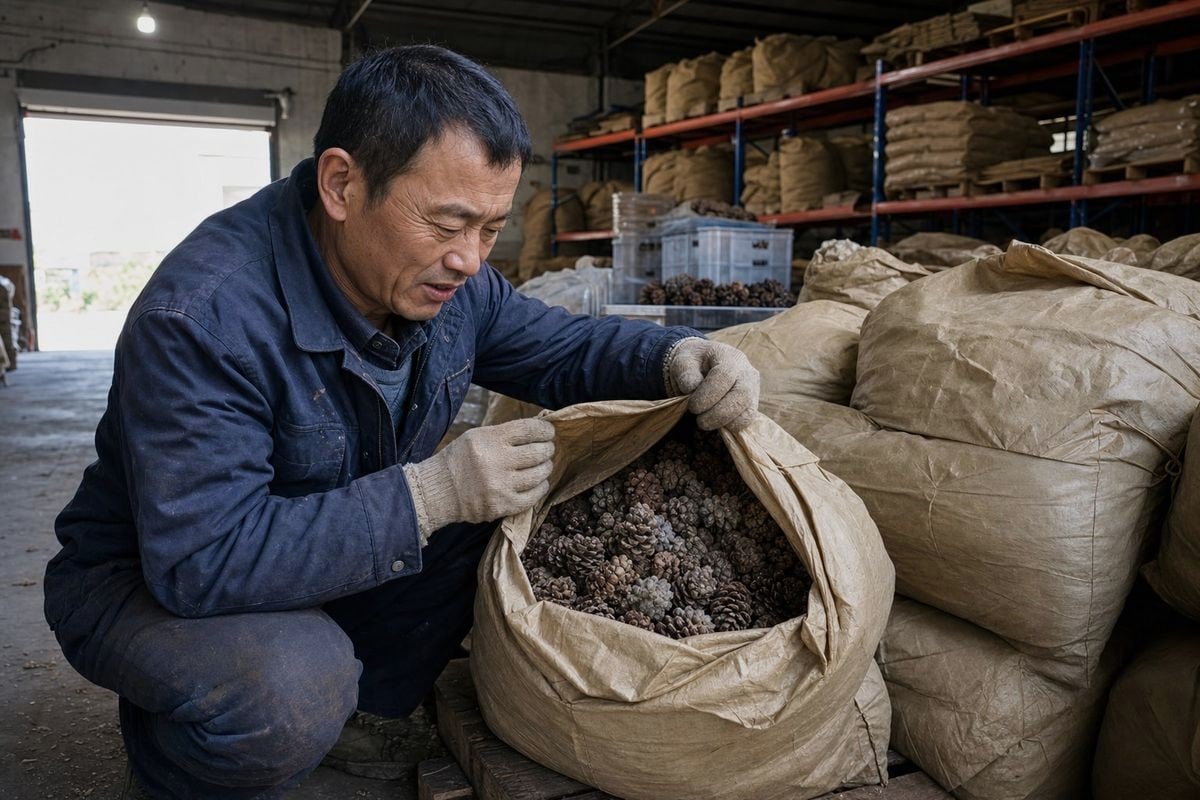
Odor drift between batches is one of the clearest early warnings a purchasing manager can get. Chemistry does not change smell by accident. When it changes, something in the process changed with it.
Common Root Causes of Batch-to-Batch Odor Drift
- Colorant substitution. The supplier swapped in a cheaper metal-salt source mid-contract to protect margin.
- Binder changes. A different wax or paraffin grade was used, often without notification.
- Inconsistent drying or curing. Under-cured coatings retain solvents that smell sharp when burned.
- Moisture exposure in storage. Cones stored in humid warehouses develop musty odors and degraded coatings.
- Raw pinecone sourcing shifts. Different pine species or unseasoned cones carry different resin loads.
Each of these causes affects more than smell. Colorant substitution can push heavy-metal content past tested limits. Under-cured coatings can flake and burn unevenly. Moisture-damaged cones can produce weak or muddy Flammenfarbe 6s, which triggers customer complaints and returns.
The practical fix is a retained-sample protocol. Keep two or three cones from every accepted batch. When a new shipment arrives, burn one old and one new cone side by side. Compare smell, flame color, and Brenndauer. On our lines, we run this comparison internally before goods ship, precisely so the first sample a buyer approves still matches container number ten. If your supplier cannot explain an odor change with a documented process record, treat it as a red flag, not a coincidence.
What Should I Ask My Manufacturer About Ingredients Before Placing a Bulk Order?
A US buyer once sent us a nine-question ingredient checklist before a trial order. We answered every line with documentation. He later told us that half the factories he contacted simply went silent. The questions themselves did the filtering for him.
Ask for the full colorant list with concentrations, the binder type and grade, confirmation that no chlorinated or prohibited compounds are used, third-party toxicity test reports, shelf-life and storage guidance, and written confirmation that the formulation will not change without notice during your contract.
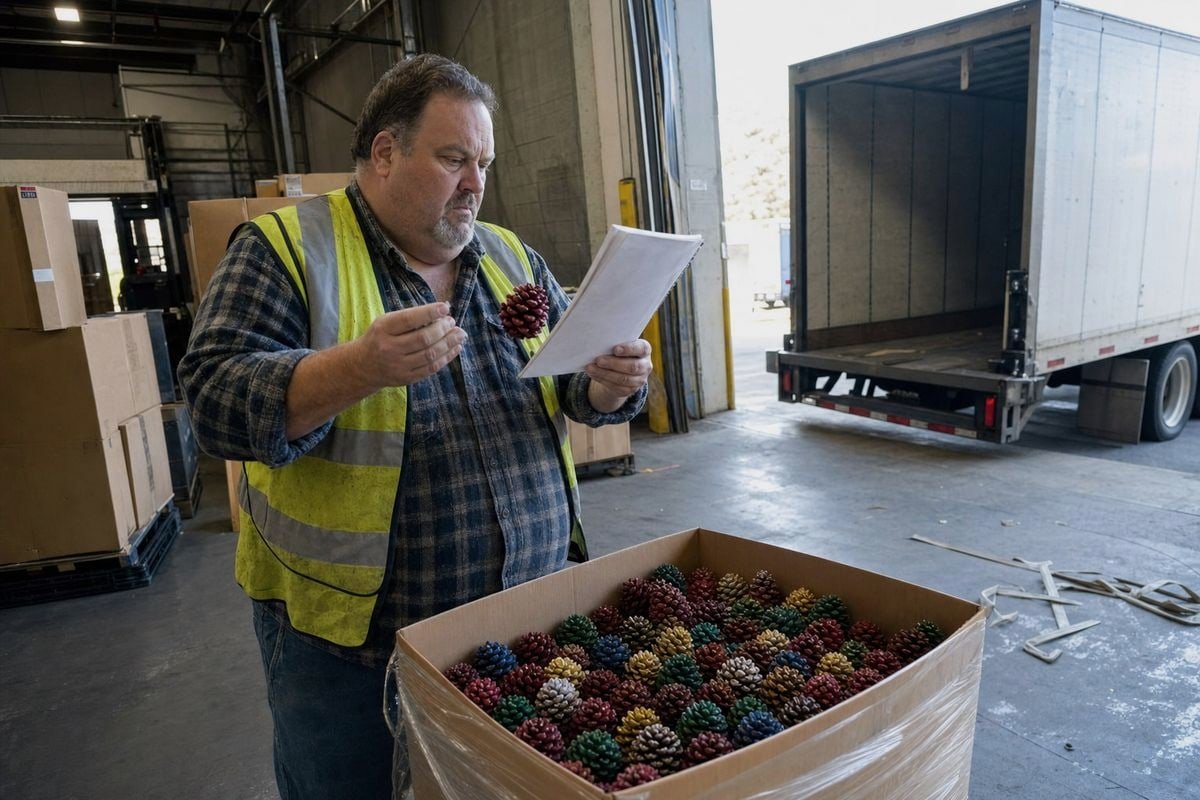
The right questions do two jobs at once. They surface safety risks before you commit capital, and they reveal how transparent your supplier will be after the deposit clears. Here is the checklist we recommend, based on what our most careful buyers ask us.
The Pre-Order Ingredient Checklist
| Zu stellende Frage | Warum es wichtig ist | Acceptable Answer Looks Like |
|---|---|---|
| Welche Metallsalze erzeugen welche Flammenfarbe? | Confirms the chemistry is standard and testable | Named compounds, not "proprietary blend" only |
| What binder holds the coating on? | Cheap binders cause burnt-plastic odors | Specified wax or paraffin grade |
| Are any chlorinated compounds used? | Some chlorides raise regulatory and fume concerns in certain markets | Clear yes/no with test data |
| Can you share heavy-metal test results? | Verifies consumer safety limits | Current SGS or Intertek report |
| What is the shelf life and storage condition? | Prevents degraded, sharp-smelling stock | Written spec with humidity guidance |
| Will you notify me of formulation changes? | Locks batch consistency into the relationship | Written change-notification commitment |
Beyond the Ingredient List
Also ask about Warnhinweise 7 und packaging compliance for your market. In our OEM work for EU and North American brands, we prepare market-specific warning labels, barcodes, and retail-ready display packaging, because a compliant product with a non-compliant label still gets pulled from shelves. Ask whether the factory produces in-house or outsources coating — outsourced coating is where formulation control usually breaks down. Finally, request a small trial order with the explicit agreement that it represents mass-production quality. A factory with real production depth will accept that condition without hesitation, because their sample and their container are made on the same line, the same way.
Schlussfolgerung
A strong odor from fireplace colored pine cones is a diagnostic clue. Read it, test it, demand certifications and batch consistency — and partner with factories that document everything.
Fußnoten
1. EPA reference on safer chemical ingredients supports discussion of metal-salt coating safety. ↩︎
2. SGS is a leading third-party lab issuing heavy-metal and toxicity test reports mentioned. ↩︎
3. General reference on copper chemistry used to produce blue-green flame coloring. ↩︎
4. Official ISO standard reference for the quality management certification mentioned. ↩︎
5. Official site of SGS, a leading third-party testing lab referenced for product verification. ↩︎
6. Background on flame testing science relevant to comparing burn consistency between batches. ↩︎
7. US Consumer Product Safety Commission governs labeling compliance for consumer fire products. ↩︎



 English
  Spanish
  German
  French
  Arabic
  Portuguese
Diskutieren Sie mit